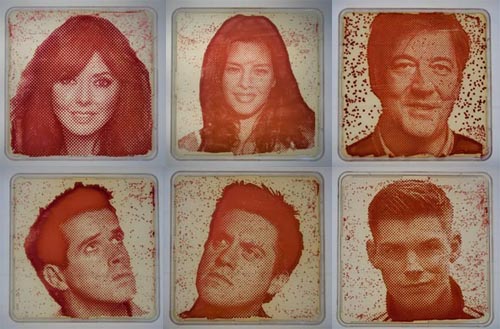
An Artistic Portrait of Stephen Fry Made From His Own Bacteria

Stephen Fry is tak­ing part in a curi­ous sci­ence exper­i­ment. It involves cre­at­ing a por­trait of the writer/comedian/science enthu­si­ast, using noth­ing but his own bac­te­ria and cells. Accord­ing to the web site of The Big Bang UK Young Sci­en­tists & Engi­neers Fair, the “bac­te­ri­ographs” — as the por­traits are called — are “made from the sub­jects’ own cells – and have been grown by Zachary Copfer, an Amer­i­can micro­bi­ol­o­gist and pho­tog­ra­ph­er.” “To make the Pop Art style images, Zachary clev­er­ly expos­es areas of a petri dish to radi­a­tion in order to stim­u­late the bacteria’s growth. This cre­ates a pho­to­graph grown entire­ly from the bac­te­ria itself.” Find more of Copfer­’s work below, and oth­er sci­en­tif­ic work fea­tur­ing Stephen Fry fur­ther down the page.

Bacteriographs

Relat­ed Con­tent

Stephen Fry Hosts “The Sci­ence of Opera,” a Dis­cus­sion of How Music Moves Us Phys­i­cal­ly to Tears

Stephen Fry Explains Cloud Com­put­ing in a Short Ani­mat­ed Video

Stephen Fry Intro­duces the Strange New World of Nanoscience

Free Online Biol­o­gy Cours­es

by | Permalink | Make a Comment ( 1 ) |

“Exceptional, Spooky and Beautiful” Moments With Birds: Dennis Hlynsky’s Creepy Nature Videos

If, by some stretch of the imag­i­na­tion, the end timers have it right, I hope artist Den­nis Hlyn­sky will con­sid­er set­ting up his tri­pod as demons spew forth from the earth­’s crust.

His small brains en masse project has me con­vinced that he is the per­fect per­son to cap­ture such an event. Have a look at how he doc­u­ments the com­ings and goings of birds.

I’ve nev­er expe­ri­enced a star­ling mur­mu­ra­tion myself, out­side of the famous, shot-on-the-fly footage (right above) of Sophie Wind­sor Clive and Lib­er­ty Smith, indie film­mak­ers who chanced to find them­selves in the right canoe at the right time, ornitho­log­i­cal­ly speak­ing. I admire these young wom­en’s sang-froid. I would’ve been cow­er­ing and slash­ing at the air with my pad­dles. That fun­nel cloud of black wings is unnerv­ing even from the safe remove of my liv­ing room, but a groovy sound­track by Nomad Soul Col­lec­tive encour­ages even the most bird-pho­bic amongst us (me) to see it as some­thing gor­geous and awe-inspir­ing, too.

Hlyn­sky does­n’t attempt to lead the wit­ness with reas­sur­ing sound cues. Instead, he amps up the creepy via “extrud­ed time,” lay­er­ing sequences of frames atop one anoth­er until the dark­est pix­els become trac­ers empha­siz­ing flight paths. The com­bi­na­tion of every­day sound and visu­al por­tent makes it dread­ful­ly easy to imag­ine one’s truck break­ing down at an inter­sec­tion right around the 7 minute mark.

Per­haps I’ve seen too many zom­bie movies.

Or have I?

Hlyn­sky is obvi­ous­ly fas­ci­nat­ed by nature, but he also states that “to some degree these videos are stud­ies of mob behav­ior. Are these deci­sions instinc­tu­al or small thought­ful con­sid­er­a­tions? Does one leader guide the group or is there a com­mon brain? Is a virus a sin­gle crea­ture or a dif­fused body that we inhab­it?”

Put anoth­er way, per­haps there’s a rea­son it’s called a mur­der of crows, as opposed to a brunch, hug or sweat­shirt of crows. Hlyn­sky, who’s the type of guy to seek their com­pa­ny out, describes his time spent film­ing them to be among the most “excep­tion­al, spooky and beau­ti­ful” moments of his life.

As for these New Jer­sey seag­ulls, “throw a french fry in the air and with­in 30 sec­onds the entire screech of birds will come.” Yikes. Here, extrud­ed time con­spires with the ambi­ent sounds of a board­walk amuse­ment park, in a tour-de-force of avian-inspired psy­chic unrest.

Pag­ing Tip­pi  Hedren… I’m out of here!

Relat­ed Con­tent:

The Fal­con and the Mur­mu­ra­tion: Nature’s Aer­i­al Bat­tle Above Rome

Cor­nell Launch­es Archive of 150,000 Bird Calls and Ani­mal Sounds, with Record­ings Going Back to 1929

Para­Hawk­ing in Nepal: What It’s Real­ly Like to Fly with Birds

Ayun Hal­l­i­day wish­es she had a cat instead of a mean, orange-striped owl. Fol­low her @AyunHalliday

Download 100,000+ Images From The History of Medicine, All Free Courtesy of The Wellcome Library

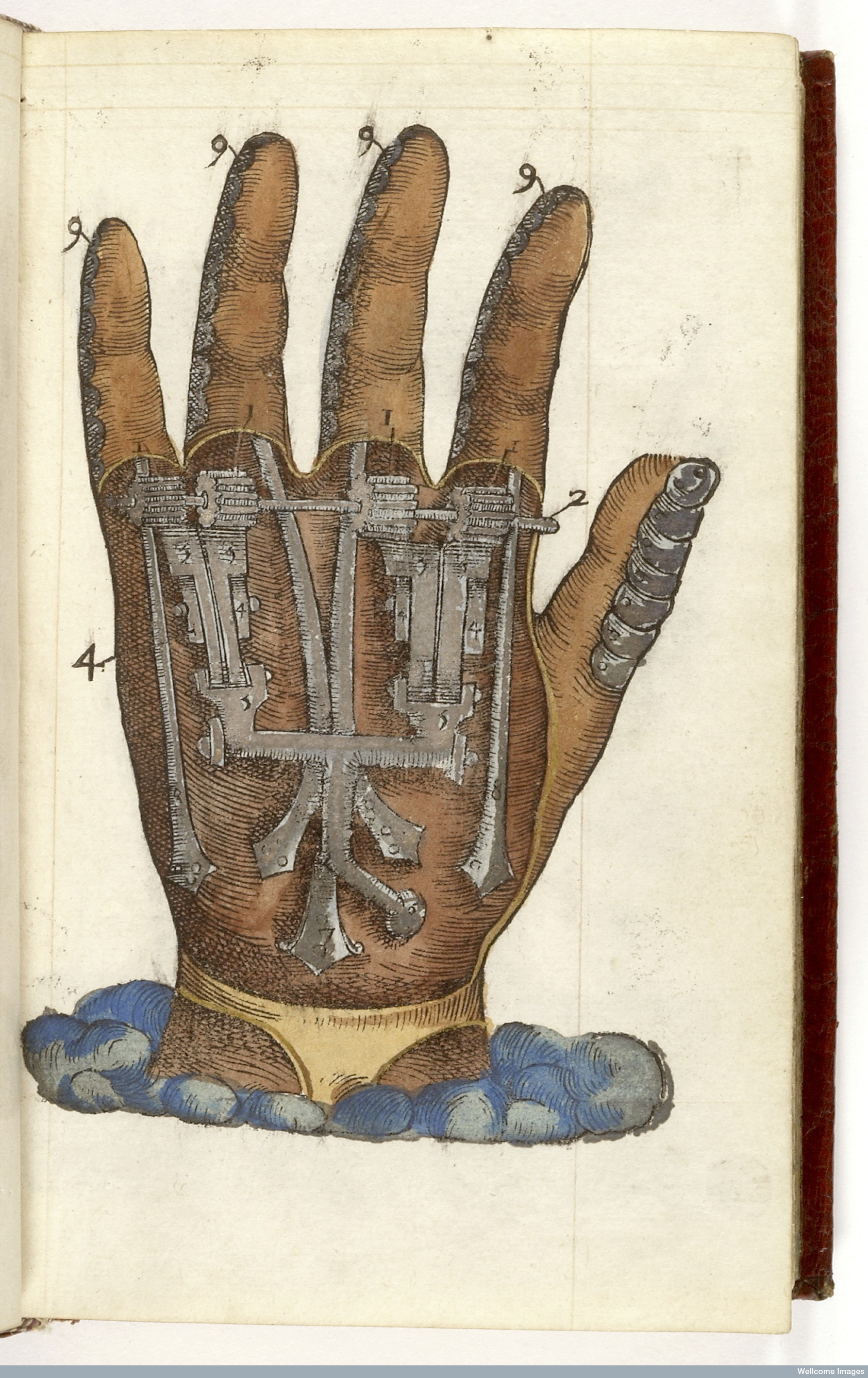
L0043496 Ambroise Pare: prosthetics, mechanical hand

The Well­come Library, in Lon­don, spe­cial­izes in the his­to­ry of med­i­cine. While the insti­tu­tion has long offered a good dig­i­tal col­lec­tion for brows­ing, the library announced yes­ter­day that they are mak­ing more than 100,000 his­tor­i­cal images free to down­load under a Cre­ative Com­mons CC-BY license. (Users can dis­trib­ute, edit, or remix at will; the license even allows for com­mer­cial use, with attri­bu­tion.)

The Wellcome’s hold­ings rep­re­sent the institution’s long-term inter­est in col­lect­ing art relat­ed to med­i­cine, the body, pub­lic health, and med­ical sci­ence. The drop-down menu labeled “Tech­nique” in the stan­dard search box returns a stag­ger­ing array of types of visu­al cul­ture, from aquatint to carv­ing to fres­co to X‑ray. The library reports that the ear­li­est image avail­able is from 400 AD: a frag­ment of papyrus from an illus­trat­ed herbal man­u­script, fea­tur­ing a fad­ed col­or draw­ing of a plant.

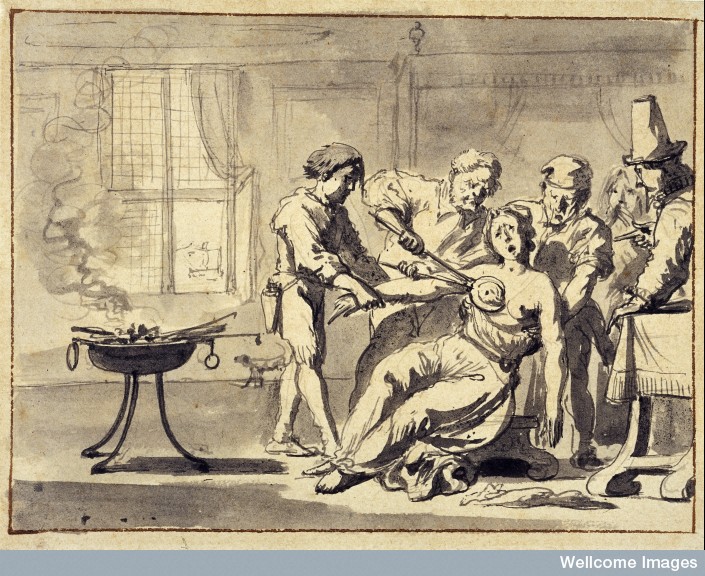
L0031627 Mastectomy, attributed to a Dutch artist, 17th century

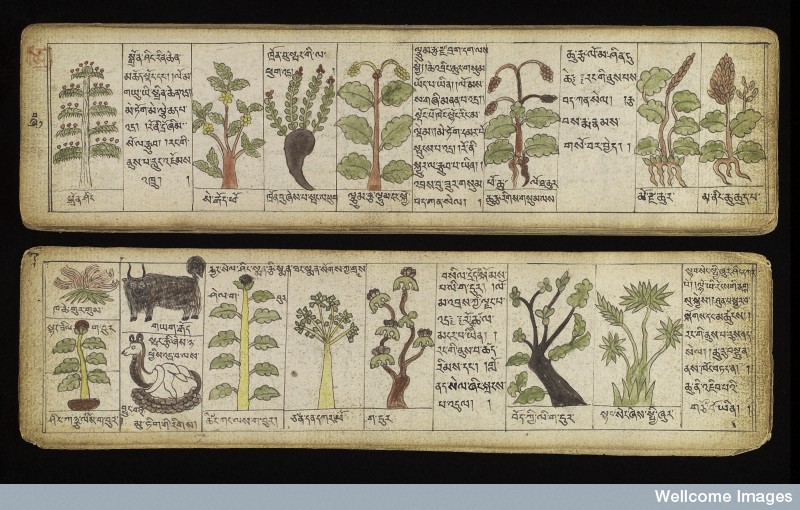
Some images in the col­lec­tion are, per­haps unsur­pris­ing­ly, squirm-induc­ing (an 1851 Japan­ese wood­cut show­ing an ampu­ta­tion of the low­er leg; a Dutch etch­ing depict­ing a 17th-c mas­tec­to­my; a Ger­man illus­tra­tion show­ing 17th-cen­tu­ry monks per­form­ing eye surgery). But there is plen­ty of beau­ty here, as well. I loved an a 19th-c wood­cut of a sumo match, and a Tibetan illus­trat­ed man­u­script used in the pro­duc­tion of med­i­cines.

L0038345 Tibetan plant manuscript Credit: Wellcome Library, London. Wellcome Images images@wellcome.ac.uk http://wellcomeimages.org Illustrations of Tibetan materia medica, plant and animal, used in the production of medicine. Title: 'A Selection of Substances used for the Production of Medicine based on the Teaching of the four (medical) Tantras' This anonymous manuscript is written in the 'Trungpa' ('khrungs dpe) genre of Tibetan medical literature. Entitled, 'Sman bla'i dgongs rgyan rgud bzhi'i nang gi 'khrungs dpe re zhig', it deals with various material medica, plant and animal, used in the production of medicine. The book comprises unbound sheets of thick (perhaps Russian?) paper held together by two boards and wrapped in a piece of cloth. The medical illustrations are finished in colour. The manuscript is very rare and obviously very expensive. Its owner made a significant effort to obtain illustrations for every medicine mentioned, including plants, stones and animals. There are several suggestions about the origin of the manuscript. It might well be a copy from Sangye Gyatso's 'tankas', possibly written by a painter or doctor who travelled from Mongolia to Lhasa. It could have been transcribed in Tibet and subsequently sold to Mongolia. There is a similarity between the images of material medica in this manuscript and those found in the 19th century Tibetan xylographs of medical works, like the 'Mdzes mtshar mig rgyan', which circulated in the territory of Mongolia in the nineteenth century. 18th century Sman bla'i dgongs rgyan rgud bzhi'i nang gi 'khrungs dpe re zhig 'A Selection of Substances used for the Production of Medicine based on the Teaching of the four (medical) Tantras Published: - Copyrighted work available under Creative Commons Attribution only licence CC BY 4.0 http://creativecommons.org/licenses/by/4.0/

Browsers inter­est­ed in dip­ping a toe into the stream of images may try out the gal­leries list­ed on the Images home­page. The “Olympic Sports” gallery offers an 1829 engrav­ing of the famous con­joined twins Chang and Eng hold­ing bad­minton rack­ets, and an 1870 illus­tra­tion of rec­om­mend­ed ring exer­cis­es for lady gym­nasts. The “Witch­craft” col­lec­tion (under the “Favourites” tab) con­tains many illus­tra­tions from his­tor­i­cal books cov­er­ing witch­craft in Europe and the Amer­i­can colonies, along with a more sur­pris­ing 19th-cen­tu­ry Malayan black-mag­ic charm.

Rights-man­aged images are marked as such in the thumb­nail results that appear after a search. Although the archive requires you to enter a CAPTCHA to access the free images, you can select sev­er­al thumb­nails on the search-results page in order to bulk-down­load files for many images at the same time. The sam­ple files I request­ed arrived on my desk­top at 300 dpi.

The image above is an illus­tra­tion of a mechan­i­cal hand from 1564.

h/t @kirstinbutler

Rebec­ca Onion is a writer and aca­d­e­m­ic liv­ing in Philadel­phia. She runs Slate.com’s his­to­ry blog, The Vault. Fol­low her on Twit­ter: @rebeccaonion

Relat­ed Con­tent:

The British Library Puts 1,000,000 Images into the Pub­lic Domain, Mak­ing Them Free to Reuse & Remix

The Get­ty Puts 4600 Art Images Into the Pub­lic Domain (and There’s More to Come)

The Nation­al Gallery Makes 25,000 Images of Art­work Freely Avail­able Online

Watch Morgan Spurlock’s Documentary on the 15-Year-Old Who Invented a New Way to Detect Early Stage Pancreatic Cancer

If you believe, as Whit­ney Hous­ton once did, that chil­dren are our future, you’ll be grat­i­fied by the work of Jack Andra­ka, age 15.

Describ­ing him as a kid with a pas­sion for sci­ence is an under­state­ment on par with call­ing Mr. Peabody a car­toon dog.

Not that I’ve got a crys­tal ball or any­thing, but let’s just say if you or your loved one come down with pan­cre­at­ic can­cer a decade from now, you’ll be very glad this young man—the 2012 grand prize win­ner of the Intel Inter­na­tion­al Sci­ence and Engi­neer­ing Fair, as well as the Smith­son­ian Amer­i­can Inge­nu­ity Award—did­n’t squan­der his fresh­man year’s extracur­ric­u­lar hours on sports and glee club.

Instead, he became the “can­cer paper boy.” His men­tor, Johns Hop­kins pathol­o­gist and researcher, Anir­ban Maitra floats com­par­isons to Edi­son. As Mor­gan Spur­lock points out in his show doc­u­men­tary on Andra­ka — You Don’t Know Jack (above) — many of Ein­stein’s dis­cov­er­ies were made before he stuck his tongue out beneath that white mane.

Spurred on in part by the death of a fam­i­ly friend, Jack, then 14, devel­oped an inex­pen­sive pro­ce­dure that can diag­nose the pres­ence of the noto­ri­ous­ly stealthy can­cer of the pan­creas while treat­ment is still an option. Through tri­al and error, he devel­oped an absorbent fil­ter paper dip­stick that helps mea­sure the elec­tri­cal sig­nal of a nan­otube net­work laced with anti­bod­ies spe­cif­ic to the pro­tein mesothe­lin, after a sixth of a drop of blood has been intro­duced.

As a the­ater major, I fear I may not be sum­ma­riz­ing the sci­ence with suf­fi­cient accu­ra­cy. The Smith­son­ian pub­lished an arti­cle describ­ing Jack­’s process in detail.  While I don’t know much about pan­cre­at­ic func­tion, can­cer­ous or oth­er­wise, I do know enough to have deep respect for Jack­’s sup­port­ive par­ents, and Johns Hop­kins Uni­ver­si­ty, the only insti­tu­tion (of 200 con­tact­ed) to respond in the affir­ma­tive when the then-14-year ‑old got in touch, seek­ing lab space. (Host­ing the Cen­ter for Tal­ent­ed Youth may have primed them for such queries.) If this sci­ence thing does­n’t work out, Jack could total­ly make a go of it as a pub­li­cist. He’s got the tenac­i­ty.

Again, it’ll take anoth­er ten years or so before the fruits of Jack­’s labors can be part of main­stream med­ical prac­tice, but it does give one hope for the future. Some paper boy!

This lit­tle Spur­lock film will be added to the Doc­u­men­tary sec­tion of our col­lec­tion of Free Movies Online.

Relat­ed Con­tent:

Micro­scop­ic Bat­tle­field: Watch as a Killer T Cell Attacks a Can­cer Cell

Can­cer Patients’ Extreme Makeovers Let Them To For­get Their Ill­ness ‘If Only For A Sec­ond’

Come­di­an Tig Notaro’s “Tru­ly Great” Can­cer Stand-up Set Now Avail­able on Louis C.K.’s Web­site

Ayun Hal­l­i­day is an author and  Chief Pri­ma­tol­o­gist of the East Vil­lage Inky, an award-win­ning, hand­writ­ten zine. Fol­low her @AyunHalliday

Trace Darwin’s Footsteps with Google’s New Virtual Tour of the Galapagos Islands

As famous­ly stud­ied as they are, the 18 Gala­pa­gos Islands haven’t been well mapped. And research in the Gala­pa­gos, sit­u­at­ed more than 500 miles west of Ecuador, is expen­sive and dif­fi­cult. Maybe that’s part of the islands’ allure—that and the stun­ning bio­di­ver­si­ty.

In part­ner­ship with the Charles Dar­win Foun­da­tion and Gala­pa­gos Nation­al Park, Google sent a team armed with Street View Trekker cam­eras to cre­ate an entire­ly new 360 degree Street View expe­ri­ence that makes three major islands, a frag­ile tor­toise breed­ing area and coastal areas, avail­able to vis­i­tors locat­ed any­where with an Inter­net con­nec­tion.

Dar­win made his first expe­di­tion to the islands 178 years ago. This might have been his first view of San Cristo­bal Island.

GalapagosApproach

After explor­ing San Cristobal’s rocky coast, Google trekkers made their way to Gala­pa­guera, a giant tor­toise breed­ing cen­ter, where they saw new­ly hatched babies and adults munch­ing on leaves and stalks.

Off the coast of Flo­re­ana Island, trekkers went under­wa­ter and caught images of seals play­ing in the water. They also shot images inside the Charles Dar­win Research Station’s ver­te­brate, inver­te­brate and plant col­lec­tions.

Google does a good job of doc­u­ment­ing its own process. Trekkers trav­eled to Gala­pa­gos in May and spent 10 days hik­ing, boat­ing, and div­ing. It’s fun to watch them climb and scoot around the islands loaded with a geo­des­ic cam­era back­pack.

Sci­en­tists get real­ly excit­ed when they find new tools to do their work. And why shouldn’t they? These islands are amaz­ing and are home to so many unique species, like the Marine Igua­na. We land­lub­bers may not get there any­time soon, but this is the next best thing.

Relat­ed Con­tent:

Read the Orig­i­nal Let­ters Where Charles Dar­win Worked Out His The­o­ry of Evo­lu­tion

The Genius of Charles Dar­win Revealed in Three-Part Series by Richard Dawkins

Dar­win: A 1993 Film by Peter Green­away

Kate Rix writes about edu­ca­tion and dig­i­tal media. Fol­low her on Twit­ter.

Real Women Talk About Their Careers in Science

A year ago the Euro­pean Union launched a cam­paign to attract more young women into the sci­en­tif­ic pro­fes­sions. In Europe, women lag behind men in sci­ence and engi­neer­ing, mak­ing up only a third of sci­ence researchers. But the video the EU made was laugh­able.

You may recall. It was called, Sci­ence: It’s a Girl Thing! and fea­tured three young fash­ion­istas parad­ing around in high heels while a male sci­en­tist peers quizzi­cal­ly at them over his micro­scope.

Along comes sci­ence jour­nal­ist Ker­stin Hop­pen­haus to set the record straight. Hoppenhaus’s new series for the Ger­man sci­ence site SciLogs is called Sig­nif­i­cant Details: Con­ver­sa­tions with Women in Sci­ence. The inter­views are fresh, infor­ma­tive, and acces­si­ble.

It’s inspir­ing to see such a range of women explain their research and walk us through their process for doing it.

A recent inter­view fea­tured Dr. Kris­ten Pan­fil­io (above), an Amer­i­can biol­o­gist on fac­ul­ty at the Uni­ver­si­ty of Cologne. Panfilio’s work focus­es on insect extraem­bry­on­ic devel­op­ment, which means she stud­ies how insect tis­sues devel­op into the bug’s ulti­mate shape by com­par­ing the process in two insects: the milk­weed bug and the red flour bee­tle.

Each con­ver­sa­tion begins with a “sig­nif­i­cant detail” of the woman’s work. With the wry humor and pre­ci­sion of a true sci­en­tist, Pan­fil­io demon­strates how she pre­pares her favorite tool, a glass stick, by soft­en­ing the end with a cig­a­rette lighter.

Panfilio’s spe­cif­ic field is evo­lu­tion­ary devel­op­men­tal genet­ics. Along with her lab assis­tants she stud­ies how embry­on­ic cells know what role they should play in form­ing a spe­cif­ic organ­ism shape. How does a bone cell know it’s a bone cell?

The inter­view is about as much like Sci­ence: It’s a Girl Thing! as Meryl Streep is like Lind­say Lohan. This is a real per­son talk­ing about how she has built her career (she want­ed to be an artist when she was a teenag­er and stud­ied ancient Chi­nese his­to­ry at a small lib­er­al arts col­lege) and explain­ing her high­ly spe­cial­ized work.

She also touch­es on one of the most won­der­ful things about sci­en­tif­ic research: Some of the most excit­ing moments are when the results don’t align at all with expec­ta­tions.

Best of all, it’s just one of the won­der­ful inter­views in Hoppenhaus’s series.

Relat­ed Con­tent:

MAKERS Tells the Sto­ry of 50 Years of Progress for Women in the U.S.

No Women Need Apply: A Dis­heart­en­ing 1938 Rejec­tion Let­ter from Dis­ney Ani­ma­tion

Kate Rix writes about dig­i­tal media and edu­ca­tion. Fol­low her on Twit­ter @mskaterix and vis­it her web­site to learn more.


The Greatness of Charles Darwin Explained with Rap Music

Read Open Cul­ture long enough, and soon­er or lat­er you’ll encounter “geek rap­per” Baba Brinkman, the Cana­di­an MC whose rhyming sub­jects of choice include evo­lu­tion, The Can­ter­bury Tales, and British ver­sus Cana­di­an Eng­lish. Though the hard-read­ing Brinkman has, it seems, staked out the musi­cal genre of “lit hop” for him­self, he’s gained just as much of his dis­tinc­tive brand of rig­or­ous­ly fac­tu­al hip-hop noto­ri­ety by rap­ping for the oth­er of what C.P. Snow defined as the “two cul­tures.” His par­al­lel sci­ence rap­ping career began on a com­mis­sion from Uni­ver­si­ty of War­wick micro­bi­ol­o­gist and Rough Guide to Evo­lu­tion author Mark Pallen. Out of all this came “the first peer-reviewed rap” show, The Rap Guide to Evo­lu­tion, whose devel­op­ment we’ve pre­vi­ous­ly fea­tured.

Above, you’ll find the music video for “Artif­i­cal Selec­tion,” one song from The Rap Guide to Evo­lu­tion. “Arti­fi­cial selec­tion, it starts with a ques­tion,” Brinkman raps. “How did peo­ple ever get cows, chick­ens and pigs / And oth­er ani­mals and plants to act so domes­tic? / We took them from the wild and we bred them, brethren.” He explores the top­ic fur­ther, touch­ing on Charles Dar­win’s The Ori­gin of Species, the inad­ver­tent usage of evo­lu­tion by ear­ly farm­ers and live­stock breed­ers, domes­tic aphids kept by ant colonies, and even the nat­ur­al selec­tion inher­ent in the MC’s devel­op­ment of his per­for­mance tech­niques. On Brinkman’s offi­cial site, the video comes with tags like “Hered­i­ty,” “Lamark­ism,” and “Uni­ty of Com­mon Descent.” How many rap videos could cred­i­bly do the same?

Relat­ed Con­tent:

Baba Brinkman: The Rap Guide to Evo­lu­tion

The Can­ter­bury Tales Remixed: Baba Brinkman’s New Album Uses Hip Hop to Bring Chaucer Into the 21st Cen­tu­ry, Yo

What’s Your Eng­lish? British v. Cana­di­an Rap Bat­tle

Col­in Mar­shall hosts and pro­duces Note­book on Cities and Cul­ture and writes essays on lit­er­a­ture, film, cities, Asia, and aes­thet­ics. He’s at work on a book about Los Ange­lesA Los Ange­les Primer. Fol­low him on Twit­ter at @colinmarshall.

Watch Isabella Rossellini Embody the Animal Kingdom’s Most Shocking Maternal Instincts in Mammas

Moth­er’s Day can elic­it com­pli­cat­ed emo­tions in the human ani­mal. Not so Moth­er Ham­ster. While you were out to brunch, she was mat­ter-of-fact­ly devour­ing the run­ti­est of her lit­ter. And not because he failed to present her with a bou­quet and flow­ery card. “It’s a good morsel to recoup some of the vit­a­mins and pro­tein that are lost dur­ing child­birth,” she explains with a shrug.

This heart­warm­ing vignette is but one of the rev­e­la­tions in Mam­mas, the lat­est web series from the inquis­i­tive and extreme­ly game Isabel­la Rosselli­ni. Hav­ing embod­ied a vari­ety of insects, arach­nids, and marine life in the sci­ence-based Green Porno and its fol­low-up Seduce Me, the moth­er of two is cur­rent­ly suit­ing up to play some of the Ani­mal King­dom’s most noto­ri­ous moth­ers, from the oppor­tunis­tic Cuck­oo to the self-sac­ri­fic­ing Aus­tralian sub­so­cial crab spi­der (Diaea ergan­dros).

The com­i­cal­ly inven­tive cos­tumes are an added bonus, par­tic­u­lar­ly for any human moth­er (or father) with an aver­sion to dress­ing their ani­mal-lov­ing off­spring in store bought dis­guis­es, come Hal­loween. Catch the com­plete series here.

Relat­ed Con­tent:

The Wild King­dom: Brought to You by Mutu­al of Oma­ha (and YouTube)

Film­ing a Sprint­ing Chee­tah at 1,200 Frames Per Sec­ond

Rainn Wil­son Talks About Life’s Big Ques­tions in His Web Series Meta­phys­i­cal Milk­shake

Ayun Hal­l­i­day thinks Isabel­la Rosselli­ni is the bee’s knees, espe­cial­ly when her glass legs are filled with beer. Fol­low her @AyunHalliday

« Go BackMore in this category... »
Quantcast