Playing an Instrument Is a Great Workout For Your Brain: New Animation Explains Why

Get me a piano teacher, stat!

When I was a child, my father, enchant­ed by the notion that I might some­day pro­vide live piano accom­pa­ni­ment to his evening cock­tails, signed me up for lessons with a mild-man­nered wid­ow who—if mem­o­ry serves—charged 50¢ an hour.

Had I only been forced to prac­tice more reg­u­lar­ly, I’d have no trou­ble remem­ber­ing the exact price of these lessons. My mem­o­ry would be a supreme­ly robust thing of beau­ty. Dit­to my math skills, my cog­ni­tive func­tion, my abil­i­ty to mul­ti­task.

Instead, my dad even­tu­al­ly con­ced­ed that I was not cut out to be a musi­cian (or a bal­le­ri­na, or a ten­nis whiz…) and Mrs. Arnold was out a pupil.

Would that I stuck with it beyond my halt­ing ver­sions of “The Enter­tain­er” and “FĂĽr Elise.” Accord­ing to the TED-Ed video above, play­ing an instru­ment is one of the very best things you can do for your brain. Tal­ent does­n’t mat­ter in this con­text, just ongo­ing prac­tice.

Neu­ro­sci­en­tists using fMRI (Func­tion­al Mag­net­ic Res­o­nance Imag­ing) and PET (Positron Emis­sion Tomog­ra­phy) tech­nol­o­gy to mon­i­tor the brain activ­i­ty of sub­jects lis­ten­ing to music saw engage­ment in many areas, but when the sub­jects trad­ed in head­phones for actu­al instru­ments, this activ­i­ty mor­phed into a grand fire­works dis­play.

(The ani­mat­ed expla­na­tion of the inter­play between var­i­ous musi­cal­ly engaged areas of the brain sug­gests the New York City sub­way map, a metaphor I find more apt.)

This mas­sive full brain work­out is avail­able to any­one will­ing to put in the time with an instru­ment. Read­ing the score, fig­ur­ing out tim­ing and fin­ger­ing, and pour­ing one’s soul into cre­ative inter­pre­ta­tion results in an interof­fice cere­bral com­mu­ni­ca­tion that strength­ens the cor­pus calos­sum and exec­u­tive func­tion.

 Vin­di­ca­tion for drum­mers at last!

Though to bring up the specter of anoth­er stereo­type, stay away from the hard stuff, guys…don’t fry those beau­ti­ful minds.

If you’d like to know more about the sci­en­tif­ic impli­ca­tions of music lessons, WBUR’s series “Brain Mat­ters” has a good overview here. And good luck break­ing the good news to your chil­dren.

Relat­ed Con­tent:

Watch a New Music Video Shot Entire­ly With­in an MRI Machine

TED-Ed Brings the Edgi­ness of TED to Learn­ing

“Hum­ming­bird,” A New Form of Music Nota­tion That’s Eas­i­er to Learn and Faster to Read

Ayun Hal­l­i­day is an author, home­school­er, and Chief Pri­ma­tol­o­gist of the East Vil­lage Inky zine. Fol­low her @AyunHalliday

What Does the Spleen Do? A Music Video Starring Harvard School of Medicine’s Class of 2016

Accord­ing to Har­vard Med­ical School’s Admis­sions depart­ment, “to study med­i­cine at Har­vard is to pre­pare to play a lead­ing role” in the “quest to improve the human con­di­tion.”

It might also pre­pare you to play a giant spleen, as Richard Ngo, Class of 2016, does in this video for the Har­vard Med­ical School and Har­vard School of Den­tal Med­i­cine’s 107th Annu­al Sec­ond Year Show. 

In this anatom­i­cal homage to  “The Fox,” Nor­we­gian com­e­dy duo Ylvis’ delib­er­ate­ly bizarre hit, the Crim­sonites demon­strate a pret­ty straight­for­ward grasp of their stud­ies:

Lungs go whoosh

Help you breathe

Kid­neys fil­ter

Make your pee

If, as they freely admit,  they’re a bit murky on sple­net­ic func­tion, well, that’s why they’re at the top ranked med­ical school in the coun­try, right? To learn?

And to dance?

Their par­ents, par­tic­u­lar­ly the hard work­ing immi­grant ones, must have been so relieved to learn that music videos are a fall­back should the doc­tor thing not work out.

Though why would­n’t it? Secret male uterus? Ves­ti­gial fin? Pos­si­bly a back­up tongue?

They may be guess­es, but they’re edu­cat­ed guess­es!

For com­par­ison’s sake, here are two of the win­ning entries in the Med­ical and Den­tal School’s Organ Chal­lenge, an anato­my-based music video con­test for kids K‑12Oak­land’s Pacif­ic Boy­choir Acad­e­my’s Miley Cyrus-inspired take on the Diges­tive Sys­tem (above) and Poolesville, Mary­land’s local high school’s  “Hap­py”-fla­vored anthem to healthy car­diac func­tion (below).

I’d say those kids stand a good chance of get­ting into Har­vard.

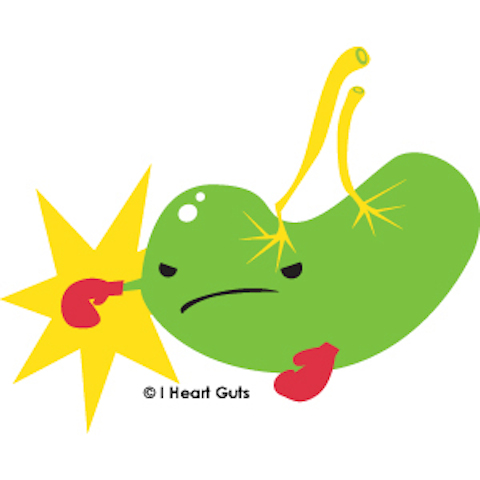
(Don’t be embar­rassed if you remain a bit shaky on what exact­ly the spleen’s there to do. This sim­ple, non-musi­cal primer on the “Queen of Clean,” com­pli­ments of I Heart Guts, should clear things up right away.
spleen1

Relat­ed Con­tent:

Down­load 100,000+ Images From The His­to­ry of Med­i­cine, All Free Cour­tesy of The Well­come Library

The Stan­ford Mini Med School: The Com­plete Col­lec­tion

Sci­ence & Cook­ing: Har­vard Profs Meet World-Class Chefs in Unique Online Course

Learn to Code with Harvard’s Intro to Com­put­er Sci­ence Course And Oth­er Free Tech Class­es

Ayun Hal­l­i­day is an author, home­school­er and the Chief Pri­ma­tol­o­gist of The East Vil­lage Inky zine. Fol­low her @AyunHalliday

The Celebrity Encounters of Koko the Gorilla. For Her 43rd Birthday Today.

Koko the Goril­la, who cel­e­brates her 43rd birth­day today, keeps pret­ty down-to-earth com­pa­ny for a celebri­ty. While oth­ers court the paparazzi with their pub­lic canoodling and high pro­file Twit­ter feuds, Koko’s most com­fort­able hang­ing with non-mar­quee-name kit­tens and pals Pen­ny Pat­ter­son and Ron Cohn, the human doc­tors who’ve head­ed her care­giv­ing team for the past 41 years.

Her pri­va­cy is close­ly guard­ed, but there have been a hand­ful of times over the years when her name has been linked to oth­er celebs…

Above, actor William Shat­ner recalls how, as a younger man, he called upon her in her quar­ters. He was ner­vous, approach­ing sub­mis­sive­ly, but deter­mined not to retreat. “I love you, Koko,” he told her. “I love you.”

She respond­ed by grip­ping a part of his anato­my that just hap­pens to be one of the thou­sand or so words that com­prise her Amer­i­can Sign Lan­guage vocab­u­lary. One that takes two hands to sign…

Their time was fleet­ing, but as evi­denced below, the con­nec­tion was intense.

Come­di­an Robin Williams also claims to have shared “some­thing extra­or­di­nary” with Koko. Their flir­ta­tion seems inno­cent enough, despite Williams’ NSFW descrip­tion of their encounter, below. (He under­cuts his cred­i­bil­i­ty by refer­ring to her as a “sil­ver­back”.)

leokoko1

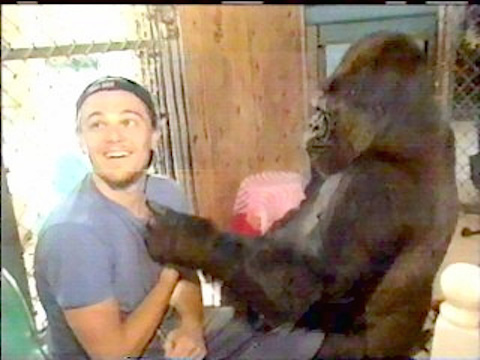
Leonar­do DiCaprio is yet anoth­er famous admir­er to be caught on cam­era with Koko. Is it any won­der that she embod­ies all of the qual­i­ties he claims to look for in a poten­tial love inter­est: “humil­i­ty, a sense of humor and not a lot of dra­ma”? No word as to how the Titan­ic hunk mea­sures up against the qual­i­ties Koko looks for in a mate, though footage of their one and only meet­ing has been known to get fans fan­ta­siz­ing in the com­ments sec­tion: “I wish I was that goril­la ;) lol I looooooooooooooooove u Leo”

From the lady’s per­spec­tive, Koko’s sweet­est celebri­ty encounter was almost cer­tain­ly with her favorite, the late chil­dren’s tele­vi­sion host, Fred Rogers. She removed his shoes and socks, he stud­ied her lips, love was a pri­ma­ry top­ic and yet their time togeth­er does not invite pruri­ent spec­u­la­tion. I can’t think of anoth­er human male as deserv­ing of her affec­tion.

Relat­ed Con­tent:

Plan­et of the Apes: A Species Mis­un­der­stood

Ayun Hal­l­i­day invites you to read her thoughts on anoth­er July 4 birth­day on Rewire Me. Fol­low her @AyunHalliday

E.O. Wilson’s Life on Earth Released as a Free eBook and Free Course on iTunes

Yes­ter­day, E.O. Wilson’s Life on Earth was released as a free iBook on iTunes. It fea­tures â€śstate-of-the-art dig­i­tal media ani­ma­tions, video, and inter­ac­tive mod­ules in a com­pre­hen­sive 41-chap­ter text cov­er­ing stan­dards-based biol­o­gy cur­ricu­lum.” Cre­at­ed under the direc­tion of Pulitzer Prize-win­ning author and Har­vard nat­u­ral­ist Edward O.Wilson, Life on Earth can be down­loaded in 7 units on iTunes. The free book also comes with a free iTune­sU course. In addi­tion to read­ing assign­ments, the course “incor­po­rates activ­i­ties such as field obser­va­tions, writ­ing assign­ments, project-based learn­ing exer­cis­es,” using apps and oth­er mate­ri­als. Com­bin­ing infor­ma­tion from the Smith­son­ian Nation­al Muse­um of Nat­ur­al His­to­ry, Nation­al Geo­graph­ic, and the Ency­clo­pe­dia of Life, the course cov­ers a vari­ety of impor­tant themes — cit­i­zen sci­ence, evo­lu­tion, cli­mate change, and pro­tect­ing bio­di­ver­si­ty. The first nine chap­ters of the iTune­sU course are avail­able now, and the remain­ing mate­ri­als for the 41-chap­ter course will be released through­out 2014.

The book can be found in our col­lec­tion, 800 Free eBooks for iPad, Kin­dle & Oth­er Devices. And the course will be added to our list of Free Online Biol­o­gy Cours­es, part of our larg­er col­lec­tion: 1,700 Free Online Cours­es from Top Uni­ver­si­ties.

h/t @RandyDeutsch

Relat­ed Con­tent:

Enter E.O. Wilson’s Ency­clo­pe­dia of Life: Free Access to All The World’s Knowl­edge About Life

by | Permalink | Make a Comment ( 13 ) |

The Animals of Chernobyl: An Inside Look at the Toll That Radiation Took on Animals & Wildlife

On April 26, 1986, the num­ber 4 reac­tor at the Cher­nobyl nuclear pow­er plant blew up in what is now Ukraine. The site spewed a cloud of radioac­tive mate­r­i­al that spread over much of Europe. The area imme­di­ate­ly around Cher­nobyl received more than 400 times the radi­a­tion as Hiroshi­ma and won’t be safe­ly inhab­it­able for about 20,000 years. The gov­ern­ment set up a 1,000 square mile exclu­sion zone around the site. While short vis­its to the zone are pos­si­ble with­out too much dan­ger, liv­ing there is not advis­able. Can­cer is a real prob­lem for the cou­ple hun­dred elder­ly stal­warts who still make the zone their home.

With­in the zone, nature has tak­en its own course, dis­man­tling the Sovi­et-era bru­tal­ist ten­e­ments of the sur­round­ing aban­doned cities and turn­ing it into what at first blush looks more and more like a prelap­sar­i­an Eden. The truth proves to be more com­pli­cat­ed.

Dr. Tim­o­thy Mousseau, a biol­o­gist from the Uni­ver­si­ty of South Car­oli­na, has been exam­in­ing the wildlife around Cher­nobyl for fif­teen years. He’s dis­cov­ered that the radi­a­tion that has been bathing the area for almost 30 years is chang­ing nature. As you can see in the New York Times Op-Doc video above, birds are devel­op­ing tumors, bugs have abnor­mal spots and spi­der webs seem much more freeform than usu­al. Get more on the sto­ry over at the Times.

If you would like to sign up for Open Culture’s free email newslet­ter, please find it here. It’s a great way to see our new posts, all bun­dled in one email, each day.

If you would like to sup­port the mis­sion of Open Cul­ture, con­sid­er mak­ing a dona­tion to our site. It’s hard to rely 100% on ads, and your con­tri­bu­tions will help us con­tin­ue pro­vid­ing the best free cul­tur­al and edu­ca­tion­al mate­ri­als to learn­ers every­where. You can con­tribute through Pay­Pal, Patre­on, and Ven­mo (@openculture). Thanks!

Relat­ed Con­tent:

Scenes from HBO’s Cher­nobyl v. Real Footage Shot in 1986: A Side-By-Side Com­par­i­son

Joseph Stal­in, a Life­long Edi­tor, Wield­ed a Big, Blue, Dan­ger­ous Pen­cil

How to Spot a Com­mu­nist Using Lit­er­ary Crit­i­cism: A 1955 Man­u­al from the U.S. Mil­i­tary

Tarkovsky Films Now Free Online

Jonathan Crow is a Los Ange­les-based writer and film­mak­er whose work has appeared in Yahoo!, The Hol­ly­wood Reporter, and oth­er pub­li­ca­tions. You can fol­low him at @jonccrow.

Your Body During Adolescence: A Nakedly Unashamed Sex Ed Film from 1955

A straight shoot­ing sex ed film from 1955? That’s hard to imag­ine. In my expe­ri­ence, the films of that peri­od tend to beat around the bush. The ret­i­cence of those shar­ing its play­ing field makes Your Body Dur­ing Ado­les­cence (watch it online here) all the more remark­able. It does­n’t seem so at first. The first minute is devot­ed to observ­ing a group of coed, clean cut, and unsur­pris­ing­ly Cau­casian teens, pos­ing for a year­book pho­to.

The nar­ra­tor seems des­tined to soft ped­dle things, mild­ly tak­ing note of dif­fer­ences in height and weight. I freely admit that I under­es­ti­mat­ed him. The teens in whose class­rooms this work was screened may have audi­bly squirmed at the men­tion of cer­tain words, but our nar­ra­tor is undaunt­ed by penis­es, scro­ta and labia… Shout out to the edu­ca­tion­al con­sul­tants, Dr. Harold S. Diehl, Dean of the Uni­ver­si­ty of Min­neso­ta’s Med­ical School and Ani­ta Laton, an author and pro­fes­sor of Health and Hygiene at San Jose State. Alfred Kin­sey would’ve approved. The dia­grams are less straight­for­ward, but I kind of liked that. They look like Mid Cen­tu­ry Din­ner­ware pat­terns, which is to say, a lot sex­i­er than most of the sex organs one can find on the Inter­net. For fun and com­par­i­son, have a look at Fuzzy Bun­ny’s Guide to You Know What, the Simp­sons’ infa­mous “sex educ­ta­tion” film.

I’d say they both get it right.

via The Atlantic

Relat­ed Con­tent:

Watch Fam­i­ly Plan­ning, Walt Disney’s 1967 Sex Ed Pro­duc­tion, Star­ring Don­ald Duck

The Sto­ry Of Men­stru­a­tion: Walt Disney’s Sex Ed Film from 1946

Ayun Hal­l­i­day is the author of sev­en books, and cre­ator of the award win­ning East Vil­lage Inky zine. Fol­low her @AyunHalliday

Big Bang Big Boom: Graffiti Stop-Motion Animation Creatively Depicts the Evolution of Life

There’s a rapa­cious, run-amok ener­gy to Ital­ian street artist Blu’s stop motion ani­ma­tion, “BIG BANG BIG BOOM.” How­ev­er long it took him, assist­ed by a slew of local artists, to ren­der a host of paint­ed large-scale char­ac­ters across a pri­mar­i­ly indus­tri­al land­scape in Argenti­na and Uruguay, it takes less than ten, glo­ri­ous­ly grit­ty min­utes for his just-dawned world to destroy itself.

This is evo­lu­tion at its most apoc­ryphal (and least sci­en­tif­ic). Crus­taceans and giant lizards who mere decades ago would have ter­ror­ized the streets of Tokyo are here no match for man. In fact, man is no match for man, rapid­ly engi­neer­ing his own demise as he chas­es about an appro­pri­ate­ly cir­cu­lar, aban­doned-look­ing silo.

The nec­es­sary demise of his murals—animation frames, if you like—serves as a nifty reminder of the evo­lu­tion­ary fate of most street art. A Banksy care­ful­ly pre­served beneath Plexi is the excep­tion, and even that is no guar­an­tee of per­ma­nence. Case in point, New York City’s leg­endary “insti­tute of high­er burn­ing,” 5 Pointz, whose 200,000-square-feet were recent­ly white­washed into noth­ing­ness overnight.

Boom indeed.

 Relat­ed Con­tent:

Banksy Cre­ates a Tiny Repli­ca of The Great Sphinx Of Giza In Queens

Obey the Giant: Short Film Presents the True Sto­ry of Shep­ard Fairey’s First Act of Street Art

Artists Paint Paris, Berlin and Lon­don with High-Tech Video Graf­fi­ti

Ayun Hal­l­i­day is an author, illus­tra­tor, and Chief Pri­ma­tol­o­gist of the long run­ning zine, The East Vil­lage Inky. Fol­low her @AyunHalliday

A Playlist of Music Scientifically-Proven to Increase Cows’ Milk Production: REM, Lou Reed & More

cow-music-milking

Image by Daniel Schwen via Wiki­me­dia Com­mons

Let’s test our agri­cul­ture math skills with a lit­tle dairy indus­try sto­ry prob­lem:

If an 8‑ounce glass of whole milk pro­vides 149 calo­ries, 8 grams of pro­tein, 276 mil­ligrams of cal­ci­um, 8 grams of fat, 4.5 grams of sat­u­rat­ed fat and 24 mil­ligrams of cho­les­terol, and a cup of two-per­cent milk has 120 calo­ries, 5 grams of fat, 3 grams of sat­u­rat­ed fat and 20 mil­ligrams of cho­les­terol, what kind of music will result in an over­all milk pro­duc­tion increase of 3%?

Accord­ing to a study at the Uni­ver­si­ty of Leices­ter School of Psy­chol­o­gy, the answer is slow jams and easy lis­ten­ing.

Huh. Based on the con­cert tees of the boys I grew up around in Indi­ana, I would have guessed Rush or Guns N’ Ros­es. (Maybe there was some Bar­ry Manilow going on behind closed barn doors?)

Actu­al­ly, research shows that bovine musi­cal pref­er­ence, like that of aer­o­bics instruc­tors, hinges less on any spe­cif­ic artist than on beats per minute.

…I hope they did­n’t spend too much on this study. Upon reflec­tion, isn’t it just com­mon sense that noise-sen­si­tive herd ani­mals attached to machines via their udders would choose a mel­low groove over death met­al or psy­chobil­ly?

(Poor Bana­nara­ma. It must’ve stung when the Uni­ver­si­ty of Leices­ter’s team told the world that 1,000 Hol­stein Friesian cat­tle liked lis­ten­ing to noth­ing at all bet­ter than their 1986 Bill­board Hot 100 #1 hit, “Venus.”)

To para­phrase anoth­er 80’s fave, I know what cows like, thanks to a pan­el of five Hol­steins who got to pick the win­ner of the British Colum­bia Dairy Asso­ci­a­tion’s 2012 “Music Makes More Milk” con­test. Brace your­self:

Did any­one else just imag­ine a thou­sand cows with phones to their ears, chew­ing their cuds and swish­ing their tails, con­tent to remain on hold indef­i­nite­ly?

Should the above tune ever grow old (doubt­ful) there’s always Shake­speare. Accord­ing to NPR, a the­atri­cal read­ing of “The Mer­ry Wives of Wind­sor” proved pop­u­lar, milk-wise, with an audi­ence of UK cows. And Mod­ern Farmer has hon­ored Lou Reed by includ­ing one of his com­po­si­tions (no, not “Met­al Machine Music, Part 1”) in their recent Playlist To Milk By:

“Every­body Hurts,” REM

“What a Dif­fer­ence A Day Makes,” Aretha Franklin

“Bridge Over Trou­bled Water,” Simon & Gar­funkel

“Moon Riv­er,” Dan­ny Williams

“Orinoco Flow,” Celtic Woman

“Per­fect Day,” Lou Reed (The Lit­tle Willie’s Lou Reed cow-tip­ping song aside, can you pic­ture him milk­ing one?)

via Grist

Relat­ed Con­tent:

Jazz for Cows

Sir Patrick Stew­art Demon­strates How Cows Moo in Dif­fer­ent Eng­lish Accents

Ayun Hal­l­i­day is an author, zine pub­lish­er, and recent con­vert to almond milk. Fol­low her @AyunHalliday

« Go BackMore in this category... »
Quantcast