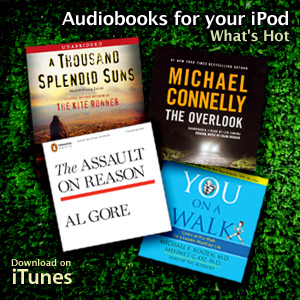
Pirating The Long Tail: The Audio Book Dilemma

Longtail See Open Cul­ture’s col­lec­tion of Audio Book Pod­casts.

Let us quick­ly excerpt from the lat­est blog entry by Chris Ander­son, the author of the best-sell­ing
busi­ness book (and now over-used expres­sion), The Long Tail. This is Chris speak­ing:

“I know I should­n’t say this, but I’m frankly delight­ed to see that my book has been pirat­ed and is avail­able on Bit­tor­rent. (Pre­sum­ably this is the audio book ver­sion, even though it claims to be an “ebook”, which I was­n’t aware exist­ed).

My pub­lish­ers want to make mon­ey, and I like them so I usu­al­ly do what it
takes to keep them hap­py, but in truth I just want to be read/listened
to by the largest num­ber of peo­ple. Leave it to me to fig­ure out how to
con­vert that rep­u­ta­tion­al cur­ren­cy into cash –just get me in front of the biggest audi­ence and I’ll do the rest…

As Tim O’Reil­ly puts it, “Obscu­ri­ty is a far greater threat to authors and cre­ative artists than pira­cy”.

Of the near­ly 200,000 books pub­lished last year, only about 2,000 (1%)
made any mon­ey for any­one. The rest of them were pub­lished for oth­er
rea­sons, which range from mar­ket­ing con­sult­ing ser­vices to sim­ple
expres­sion. Out­side of a rel­a­tive hand­ful of celebri­ty authors and
self-help ped­dlers, almost nobody writes books for a liv­ing.

As for my own book, I imag­ine that approx­i­mate­ly zero (give or take a few dozen) peo­ple who would have oth­er­wise bought the prop­er audio book ver­sion will put up with the incred­i­bly slow down­load required to pirate it (cur­rent­ly five days, accord­ing to my Bit­tor­rent client)…

But all that said, I have mixed feel­ing about pur­pose­ly dis­trib­ut­ing a free
audio­book in its cur­rent incar­na­tion (the pirat­ed ver­sion on Bit­torent
isn’t going to mat­ter one way or anoth­er). On one hand, I think that
zero-mar­gin­al costs ought to result in zero price. On the oth­er, this
is not an infe­ri­or ver­sion serv­ing as mar­ket­ing for a supe­ri­or
experience–for peo­ple who like audio­books, it is the expe­ri­ence. As such it real­ly does appear to be a replace­ment for the CD/Audible.com ver­sion. Hype­r­i­on put a lot of mon­ey into pro­duc­ing that audio­book and they deserve a return. I’m con­fi­dent that a free ebook would sell more of the print ver­sions, but I’m less sure that peo­ple would buy a dig­i­tal audio­book if there was a free ver­sion cir­cu­lat­ing wide­ly online.

Any for­ward-think­ing book indus­try folks out there who want to explore the eco­nom­ics of this a bit fur­ther with me?”

In read­ing his post, sev­er­al ques­tions came to mind. Who knew that writ­ing books had become such a depress­ing propo­si­tion, an exer­cise in cre­at­ing loss lead­ers? And how hard did some VP at Hype­r­i­on (the pub­lish­er of Ander­son­’s audio book) swal­low when see­ing Chris pub­li­cize, even take some delight in dis­cov­er­ing, a pirat­ed ver­sion of their audio book prod­uct?

Ander­son­’s com­men­tary under­scores an impor­tant prob­lem in the audio book mar­ket. Where­as Lawrence Lessig and Cory Doc­torow have demon­strat­ed that tra­di­tion­al book sales can be stim­u­lat­ed by mak­ing avail­able free dig­i­tal copies of the work (read: e‑books), there’s no par­al­lel in the audio book mar­ket. Dig­i­tal copies of audio books, pirat­ed ver­sions or oth­er­wise, pret­ty much only lead to can­ni­bal­iza­tion of the orig­i­nal audio books. Pira­cy presents a prob­lem for the indus­try. And it’s all exac­er­bat­ed by the fact that audio book prices are almost illog­i­cal­ly high. Con­sid­er this: Although the main virtue of the inter­net is that it low­ers the cost of deliv­er­ing infor­ma­tion-based goods, and allows for prices to come down in kind, the audio book ver­sion of the Long Tail runs $31.95 on iTunes and $27.99 on Audi­ble, which com­pares very poor­ly to the $16.47 that you pay for the paper copy on Ama­zon. This skewed pric­ing struc­ture not only sti­fles demand, but also cre­ates an incen­tive for knock-offs, leav­ing the audio book world in a bind. At this point, the audio book indus­try should have every incen­tive to do some­thing cre­ative with the dig­i­tal tools avail­able to it, much as the music indus­try has done over the past sev­er­al years. We’ll keep an eye on whether any for­ward-think­ing pub­lish­ers take up Ander­son­’s invi­ta­tion to sort this one out.

by | Permalink | Make a Comment ( 3 ) |

New Cory Doctorow Book Available for Free Download (Under Creative Commons)

Overclocked_2A cou­ple weeks ago, we told you about
45 recent­ly pub­lished books, most of them of very high
qual­i­ty, that you can down­load for free under a Cre­ative Com­mons license. Giv­en the exu­ber­ant response to that post, it seemed worth men­tion­ing that Cory Doc­torow — the sci-fi author, Boing­Bo­ing blog­ger, and advo­cate of open­ing up copy­right restric­tions — is now releas­ing a new col­lec­tion of short sto­ries called Over­clocked. As usu­al, you can buy the book, down­load the short sto­ries for free, or do both. It’s your call. He fig­ures he’ll win either way. And, by the way, you can freely down­load the rest of Doc­torow’s books here.

Now, final­ly, it’s worth point­ing out that the Boing­Bo­ing (iTunes — feed) crowd has a pod­cast worth check­ing out. The lat­est episode — the first 10 min­utes, in fact — gives you some of Doc­torow’s thoughts on what the future of e‑books looks like, the pros and cons, etc.  Cer­tain­ly worth a lis­ten. Enjoy.


Book Talks on Demand

Okay, this prob­a­bly won’t be our high­est rat­ed post ever. We’ll con­cede that. There’s noth­ing chic
and hip about C‑SPAN. But there’s some good sub­stance here, and sub­stance is what we’re about first and fore­most. So give us the ben­e­fit of the doubt for a moment.

C‑SPAN’s Book-TV lets you stream videos of talks, long and sub­stan­tive ones, giv­en by most­ly seri­ous authors. You can catch Pres­i­dent Jim­my Carter talk­ing about his new con­tro­ver­sial book, Pales­tine Peace Not Apartheid (plus Alan Der­show­itz’s response); Niall Fer­gu­son, the Har­vard his­to­ri­an, speak­ing on his recent work, The War of the World: Twen­ti­eth-Cen­tu­ry Con­flict and the Descent of the West; Howard Zinn, anoth­er his­to­ri­an, dis­cussing his col­lec­tion of essays, A Pow­er Gov­ern­ments Can­not Sup­press; and Adri­an Goldswor­thy giv­ing a talk on his new biog­ra­phy, Cae­sar: Life of a Colos­sus. For a com­plete list of book talks, click here.

In many ways, C‑SPAN’s offer­ing is no dif­fer­ent in qual­i­ty or sub­stance from the video ser­vices offered by FORA.TV and Prince­ton’s Uni­ver­si­ty Chan­nel — two oth­er high-qual­i­ty ser­vices that we like and have pre­viewed here before. If you can set aside your gen­er­al impres­sion of C‑SPAN — your mem­o­ries of the unedit­ed, end­less talks from the Sen­ate floor that lead to nowhere — you’ll find enlight­ened video here that’s well worth your lim­it­ed time.


45 Free Cutting-Edge Books … Courtesy of Creative Commons

Yes­ter­day, we alert­ed you to the free audio and text ver­sions of Lawrence’s Lessig’s book, Free Cul­ture: How Big Media Uses Tech­nol­o­gy and the Law to Lock Down Cul­ture and Con­trol Cre­ativ­i­ty. Today, we’re point­ing you to a larg­er col­lec­tion of high-qual­i­ty books (45 in total) that you can down­load legal­ly thanks to Lessig’s Cre­ative Com­mons. The trove includes a good mix of gen­res. In fic­tion, you’ll find three works by sci-fi writer and blog­ger Cory Doc­torow — East­ern Stan­dard Tribe, Some­one Comes To Town, Some­one Leaves Town and Down and Out in the Mag­ic King­dom. Under non-fic­tion, you can freely access Gamer The­o­ry by McKen­zie Wark (Har­vard Uni­ver­si­ty Press), Democ­ra­tiz­ing Inno­va­tion by Eric von Hip­pel (MIT Press), Yochai Ben­kler’s The Wealth of Net­works (Yale Uni­ver­si­ty Press), and Dan Gilmor’s We the Media: Grass­roots Jour­nal­ism by the Peo­ple, For the Peo­ple. Final­ly, on the “how-to” side of things, you’ll stum­ble upon titles along the lines of 55 Ways to Have Fun With Google. Not a bad col­lec­tion of works, and cer­tain­ly worth the price.

Most of these books are issued in tra­di­tion­al print ($$$) and free down­load ver­sions, which rais­es the obvi­ous ques­tion: does this make any busi­ness sense for pub­lish­ers, let alone authors? Lawrence Lessig, who ini­ti­at­ed the con­cept, asserts that it does, not­ing that more read­ers who access the free down­load copy will ulti­mate­ly buy the print ver­sion than those who don’t. Or, put more sim­ply: the con­verts will exceed can­ni­bals, which results in a win-win-win-win sit­u­a­tion. The read­ers win one way or anoth­er; the authors and pub­lish­ers win; soci­ety wins; and so does the free flow of infor­ma­tion. What more can you want?

by | Permalink | Make a Comment ( 10 ) |

Norman Mailer’s Fuhrer in MultiMedia


Mailer
Nor­man Mail­er, now 84 years old, has just pub­lished his first nov­el in a decade. And what becomes imme­di­ate­ly clear is that age has done lit­tle to stop Mail­er from tak­ing his trade­mark lit­er­ary risks. Just as he felt free to inhab­it the mind of Jesus in The Gospel Accord­ing to the Son (1997), he has now dared to get deep inside anoth­er world-his­tor­i­cal fig­ure, the anti-Christ fig­ure of the last cen­tu­ry, Adolph Hitler. Nar­rat­ed by a min­ion of Satan, who oth­er­wise masqua­rades as a for­mer SS offi­cer named Dieter, The Cas­tle in the For­est takes a Freudi­an look at Hitler’s youth and his tan­gled famil­ial rela­tion­ships. But how well Mail­er pulls it off is open to debate. Up front, it’s worth men­tion­ing that you can freely access the first chap­ter of the new book and start judg­ing for your­self. And, for that mat­ter, you can also get Mail­er’s own take on the book in this NPR inter­view. How­ev­er, if you want some guid­ance before decid­ing whether to plunge into this lengthy book (450+ pages), you can check out the reviews that have start­ed rolling out. So far, assess­ments are mixed: The audio pod­cast issued by The New York Times Book Review (which is itself based on a thought­ful review appear­ing in print) con­sid­ers Mail­er’s lat­est to be among his best. But it’s an opin­ion that stands some­what alone, at least so far. The reviews in The Wash­ing­ton Post and the Eng­lish ver­sion of Ger­many’s Spiegel Online take less glow­ing posi­tions, and, as you’d expect, the crit­i­cism is more stri­dent and polit­i­cal­ly-charged over in Europe, Ger­many in par­tic­u­lar.

Final­ly, we leave you with this — Mail­er read­ing from his new work, describ­ing the con­cep­tion of Hitler, as told from the dev­il’s per­spec­tive, in some­what racy terms. (NOTE: the video qual­i­ty is very Youtube-esque, but it gets the job done):
 

The American Idol for Thinking People: The New Twist on Book Publishing

Firstchapters
It was prob­a­bly only a mat­ter of time before this hap­pened. Accord­ing to The New York Times, Touch­stone, an imprint of Simon & Schus­ter, has agreed to pub­lish a work by whichev­er new writer takes first prize in a con­test spon­sored by the social-net­work­ing site, Gather.com. A la Amer­i­can Idol, every­day peo­ple and pan­el of experts will read and vote on the first chap­ter of books sub­mit­ted by every­day peo­ple.  And although the win­ner will need to sign the “stan­dard Simon & Schus­ter con­tract,” he/she will get their work fast tracked to pub­li­ca­tion and for­go the  has­sle of shop­ping a book. Also, there’s a $5,000 cash prize and the promise of pro­mo­tion at local Bor­ders’ book stores.

The under­ly­ing log­ic behind the con­test, called “First Chap­ters,” comes down to this: It’s ulti­mate­ly peo­ple who buy books, so why not let a good sam­ple demo­graph­ic (Gather.com’s 175,000 old­er and more mature users) pre­view the sub­mis­sions, decide what they like, and save the edi­tor the effort of guess­ing what will fly. That makes a cer­tain amount of sense if you’re a pub­lish­er, work­ing in a slug­gish indus­try with nar­row mar­gins, who is always look­ing to max­i­mize the odds of putting out win­ners. How­ev­er, whether it will fur­ther the pub­lish­er’s mis­sion of bring­ing qual­i­ty books to our cul­ture is an alto­geth­er dif­fer­ent ques­tion, and the jury remains out on this one. You can get more infor­ma­tion about the con­test by click­ing here.

by | Permalink | Make a Comment ( 1 ) |

Philip Roth’s Everyman and Beyond


Cour­tesy of the radio pro­gram Open Source, we get an intrigu­ing and widerang­ing inter­view with Philip
Roth, where he talks can­did­ly about his lat­est and 27th nov­el Every­man, a work that takes an exis­ten­tial­ly anguish­ing look at the end of life. We also get Roth read­ing from oth­er past nov­els, talk­ing about the day-to-day prac­tice of writ­ing, and offer­ing thoughts on the cur­rent state of Amer­i­can pol­i­tics. You can catch the inter­view in one of three ways: iTunes, Rss feed, mp3 stream.

For oth­er inter­views with promi­nent thinkers, see our page called Smart Talks — Lead­ing Thinkers in Mul­ti-Media.

A Christmas Carol by Charles Dickens

Let’s go into Christ­mas on the right note, with a free pod­cast of Charles Dick­en’s A Christ­mas Car­ol. (Find it here on iTunes.) Writ­ten in 1843, Dick­en’s tale remains one of the most pop­u­lar Christ­mas sto­ries of all time. It gave us the indeli­ble char­ac­ters of Ebenez­er Scrooge, Tiny Tim, and the Ghosts of Christ­mas Past, Present, and Future. And it invent­ed the notion of “christ­mas spir­it.” This pod­cast is rather well read. If you’d like to read along with the actu­al text, you can get a free etext here, cour­tesy of Project Guten­berg.

Also, you can find oth­er free Christ­mas sto­ries at Lib­rivox. On this page, you can stream mp3s of many dif­fer­ent hol­i­day tales.

For more free audio books, check out our Audio Book Pod­cast Col­lec­tion. We now have over 40 clas­sics list­ed and ready to down­load. Hap­py hol­i­days.

« Go BackMore in this category... »
Quantcast