Woody Allen once said that “sex without love is a meaningless experience, but as far as meaningless experiences go it’s pretty damn good.” Most readers would be compelled to think that Allen’s slight frame, trademark horn-rimmed glasses, and stuttering delivery would preclude his characters from achieving much of anything in the sexual realm. After all, how could the consummate nebbishes that Allen portrays in most of his films possibly impress a member of the fairer sex? Somehow, however, in spite of their whinging neuroticism, Allen’s geek incarnates transform into gallants of prodigious proportions in almost every role. Those wanting concrete evidence may take a look at Take the Money and Run(1969), Annie Hall (1977), or Manhattan (1979), among myriad others, and note that Allen’s characters repeatedly end up with women who seemed to make a gross error in sexual selection.
If you would like to support the mission of Open Culture, consider making a donation to our site. It’s hard to rely 100% on ads, and your contributions will help us continue providing the best free cultural and educational materials to learners everywhere. You can contribute through PayPal, Patreon, and Venmo (@openculture). Thanks!
Every year, around this time, I give thanks that I no longer work retail. Sore feet and rude customers go with the territory, but December (nay, November) brings with it a terrifying onslaught of Little Drummer Boys. I know folks who can’t abide Grandma Got Run Over By a Reindeer, or the Singing Dogs’ Jingle Bells, but as far as I’m concerned, nothing hastens a psychotic break faster than a few dozen pa rum pa pum pum pum rum pa pum pum pum rum pa pum pum pums.
It seems horror legend Christopher Lee, familiar to younger fans as Star Wars’ Count Dooku, feels my pain..and relishes it. It’s a cliche for an aging actor to release an album of seasonal chestnuts, but the 91-year-old Lee’s A Heavy Metal Christmas is a thing apart. His take on The Little Drummer Boy is the sonic equivalent of Rosemary’s Baby.
I can’t say that I prefer Lee’s to any other version — they’re all tortuous in my book- but I’m at peace with admiring it in the abstract. A stunt? Maybe, but he seems wholly sincere in his video greeting below, wishing us all a very happy Christmas and “for the sake of the world and those people in it” a safe New Year.
Yakov Smirnoff has the distinction of being the most famous Russian comic in America. He’s also the only Russian comic in America (ba-dum-dum). But seriously: In his mid-80s heyday, he had the market cornered on Soviet humor in the U.S. Whatever demand there was, Smirnoff supplied it, singlehandedly, as a fixture in ads, TV show and film appearances, comedy specials, late-night talk shows…. His was the only face of Russian humor anyone knew in the 80s (unless we’re counting Ivan Drago). Smirnoff even warranted a Family Guy reference, which pretty much cements his reputation as endlessly recyclable pop culture syndication fodder.
And yet, post-Soviet Russia, it’s hard to imagine there’s a place for Yakov Smirnoff, since corny jokes at the expense of end-stage Russian communism were not only his bread and butter, but his whole comedic menu, such that Marc Maron introduces Smirnoff as a guest on his WTF Podcast above with: “that guy, with his hook, that certainly isn’t relevant anymore. How does a guy like that survive?” Ouch. But what a hook it was, says Maron: a wonderstruck immigrant exclaiming “What a country!” as he took in each new capitalist marvel. He was like a real-life version of one of Andy Kaufman’s characters, or a pre-Borat Eastern European innocent abroad. The act carried him beyond his mid-eighties 15 minutes of fame and through a 20-year career entertaining middle-class Americans in Branson, Missouri.
But was there much demand for Smirnoff’s brand of humor even at his peak? If you didn’t have the great fortune of living through the 80s, you might be surprised at just how popular his sort of thing could be—“a Russian comic talking about how great America was.” But it wasn’t only Smirnoff’s persona that flattered our sense of economic, political, and moral superiority. A whole genre of Soviet jokes had a prominent place in the discourse, with knee-slappers about KGB surveillance and bread lines and other privations commonly tossed around at dinner parties. Even Ronald Reagan tried his hand at it, as you can see here. Reagan’s delivery was never my cup of tea, but you can also see Smirnoff do his impression of Reagan telling the same joke in the video at the top of the post.
And while revisiting Smirnoff’s not exactly meteoric rise to fame in the U.S. is fun for its own sake, what’s even more interesting are Smirnoff’s serious reminiscences of his time growing up and working as a comic in Russia. The serious Smirnoff is full of psychological insights (he has a masters degree in the subject from Penn) and sociological anecdotes about life under a repressive communist regime—though he never misses a chance for some of the old Smirnoff material, complete with his honking, donkey-like laughter.
For example, about twenty minutes into his WTF interview, Smirnoff discuss the serious subject of joke approval in the Soviet Union. That’s right, in all seriousness, he tells us, comics were required to submit their material to a Department of Jokes. Smirnoff also once spoke expansively on the subject in a 1985 Chicago Tribune piece on him at his peak.
Yep. There’s a Department of Jokes. Actually, the Ministry of Culture has a very big department of humor. I’m serious now. Once a year they censor your material, and then you have to stay with what they have approved. You can‘t improvise or do anything like that. You write out your material and mail it to them, and they send it back to you with corrections. After that, you stay with it for a year.
It is perhaps for this reason that comics in Soviet Russia borrowed liberally from each other, rarely did original material, and never, ever improvised. Says Smirnoff: “I would do some original material, but that would be unusual. Also, it was OK for comedians to borrow—if one of the big comedians went on television and did a monolog, next day 10 or 20 other comedians would do the same thing in clubs. That wasn’t considered stealing.”
It also turns out that serious Yakov Smirnoff explains the comic stylings of his persona, the cornball character:
It was old jokes, more vaudeville type of humor. More like English-style comedy. Or like Henny Youngman. One-liners or stories that have been told over and over again but they’re still funny. No improvisation comedy. You don’t improvise. You don’t tell stories about yourself the way American comics do.
So it turns out that a lot of those bad jokes about Russia at the tail end of the Cold War actually descended from the source. Take this one from Smirnoff:
A funeral procession is going by, and they’re walking a goat behind the coffin. A guy comes over and says, “Why are you walking a goat behind the coffin?” The other guys says, “That goat killed my mother-in-law.” The first guy says, “Can I borrow this goat for a week?” The second guy says, “You see all these people in the procession? They’re all waiting. Get in line.”
See? It’s a joke about standing in line! Also, about mothers-in-law, which must be a truly universal subject. Find more of Smirnoff’s insights into Soviet humor and joke censorship at the full Chicago Tribune interview piece and on Maron’s WTF podcast.
The season of giving can be an unseemly time for nonprofits. As New Year’s approaches, every charitable institution down in Charitable Institutionville must bang its tar-tinker and blow its hoo-hoover, in hope of donations.
No doubt they’re all deserving, but the onslaught of requests can leave supporters feeling a bit Grinchy. When that happens, I recommend the video above, which documents a hoax of Borat-like proportions. The perpetrator is the Mimi Foundation, a Belgium-based group that offers psychological counseling, beauty treatments, and hairstyle tips to people with cancer.
The unsuspecting victims? Twenty cancer patients who took it on good faith that they were being treated to standard makeovers, the sort of professional artistry that creates an illusion of health, what many think passes for normalcy. All the Mimi Foundation asked for in return was that the recipients keep their eyes closed as the magic was being worked.
Meanwhile, photographer Vincent Dixon crouched behind a one-way mirror, poised to capture each sitters’ reaction to his or her transformation.
One doesn’t want to say too much. The end results are not what you think, unless you were thinking of one of those over-the-top bizarre America’s Next Top Model photo challenges.
Dixon’s images record the shock and involuntary spontaneity. The video, called “If Only for a Second, shows those initial responses blossoming into …well, let’s just say the Mimi Foundation, assisted by a phalanx of stylists, achieved their goal.
How have you been sharpening your pencils? Regardless of your answer, rest assured that you’re doing it wrong.
Lest there be any doubt that I’m geographically situated smack dab in the middle of former cartoonist’s David Rees’ target demographic, I almost didn’t click on the link to the pitch perfect send up above because I believed it was real.
Here in non-Caribbean, non-Southeast-Asian, non-Russian, non-Mexican Brooklyn—think Girls, the Jonathans Ames and Letham, brownstone-dwelling movie stars and the very latest in n’est plus ultrastrollers—it’s entirely plausible that a humorless young artisan might take to the Internet to teach us regular schlubs How to Sharpen Pencils.
Just wait ’til he brings out his leather strop. (Misplaced yours? Look in your basement, or your grandfather’s tomb.)
Please note that though the video may be satirical, Rees makes actual money sharpening—and authenticating—customers’ Number Two pencils, using the same techniques demonstrated in the video. (Sorry, holiday shoppers, as per his website, he won’t be taking orders for his live pencil sharpening services until the New Year, but he does have a book out.)
Like you need any more excuse to whip out your knife, place it in your dominant hand, and start carving.
In 1992, the Health Education Authority (HEA) began running a series of ads on British television starring the Monty Python comedian and ex-smoker, John Cleese. Smoking remained the #1 cause of premature death in the UK, and the HEA wanted to see if a media campaign could make a dent in the epidemic. As part of a controlled experiment (all detailed here), ads starring Cleese were shown in certain parts of the UK (but not others), and they used morbid humor and macabre scenarios “first to engage the viewers’ curiosity,” and then to “highlight the dangers of smoking, show[ing] the ridiculousness of the smoking habit.” Finally, viewers were given a phone number to call where they could get more information on how to quit.
So what were the results? During the campaign (which ran from 1992 to 1994), the “quitline” received around 20,000 calls overall. Data crunchers later found that the control groups exposed to the ads quit smoking at a higher rate than groups that hadn’t seen the commercials. Plus the relapse rates of the control group were lower than the norm. All of this led the government to conclude that “anti-smoking TV advertising should be undertaken routinely as an essential component of any population smoking reduction strategy.” In this post, we’ve highlighted three of the better preserved ads in the campaign.
You know what I say when someone tells me they “can’t” draw?
Pshaw.
Even those who’ve yet to discover the transformative effects of Lynda Barry’s wonderfully corrective Picture This know how to draw something. Very few children make it to adulthood without picking up some simple geometric formula by which a series of ovals, rectangles and lines can be configured to resemble a doggie head or a brave astride his cantering pony.
A couple thousand renderings later, such magic still satisfies, but you might want to consider branching out. May I recommend the teachings of artist and visual storyteller,Karl Gude? This laid-back former Director of Information Graphics at Newsweek can — and will! — teach you how to draw “great butts” with just five lines.
Gude’s command of posterior essentials is downright heady. (I say this as a former artist’s model whose rear end has been misrepresented on paper more times than I’d care to mention.) Who knew that capturing this part of human anatomy could prove so simple? Gude’s easygoing online instruction style may be traceable to some sort of adult beverage (I’m not casting stones…), but his methods are easy enough for a child to master.
Speaking of which, if you want to make a friend for life, share the above video with an actual child, preferably one who claims he or she “can’t” draw. Put a Sharpie in his or her paw, and within five minutes, Gude will have the little twerp cranking out butts of all shapes and sizes. After which, pride of accomplishment may well lead to some of Gude’s more advanced tutorials, like the detailed human eye seen below.
If that proves too challenging, there’s no shame in sticking with the glutes. To my way of thinking, the mindset that allows the artist to keep going when his pencil snaps mid-demonstration is lesson enough.
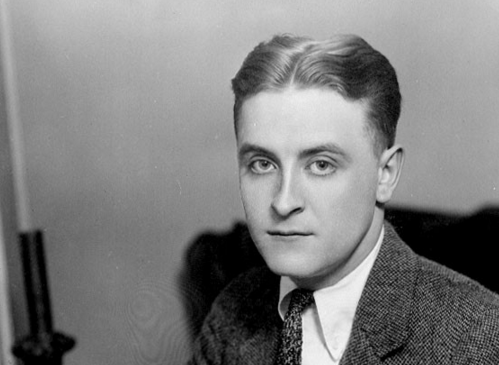
“At this post holiday season, the refrigerators of the nation are overstuffed with large masses of turkey, the sight of which is calculated to give an adult an attack of dizziness. It seems, therefore, an appropriate time to give the owners the benefit of my experience as an old gourmet, in using this surplus material.” There writes no less a legend of American letters than F. Scott Fitzgerald, author of The Great Gatsby and Tender is the Night (both available in our Free eBooks collection). His words quoted here, from “Turkey Remains and How to Inter Them with Numerous Scarce Recipes,” a column found in the Fitzgerald miscellany collection The Crack-Up, hold just as true this day-after-Thanksgiving as they did during those his lifetime. Lists of Note offers the full piece, which itself offers thirteen potential uses for your leftover bird, some of which, Fitzgerald writes, “have been in my family for generations”:
1. Turkey Cocktail: To one large turkey add one gallon of vermouth and a demijohn of angostura bitters. Shake.
2. Turkey à la Francais: Take a large ripe turkey, prepare as for basting and stuff with old watches and chains and monkey meat. Proceed as with cottage pudding.
3. Turkey and Water: Take one turkey and one pan of water. Heat the latter to the boiling point and then put in the refrigerator. When it has jelled, drown the turkey in it. Eat. In preparing this recipe it is best to have a few ham sandwiches around in case things go wrong.
4. Turkey Mongole: Take three butts of salami and a large turkey skeleton, from which the feathers and natural stuffing have been removed. Lay them out on the table and call up some Mongole in the neighborhood to tell you how to proceed from there.
5. Turkey Mousse: Seed a large prone turkey, being careful to remove the bones, flesh, fins, gravy, etc. Blow up with a bicycle pump. Mount in becoming style and hang in the front hall.
6. Stolen Turkey: Walk quickly from the market, and, if accosted, remark with a laugh that it had just flown into your arms and you hadn’t noticed it. Then drop the turkey with the white of one egg—well, anyhow, beat it.
7. Turkey à la Crême: Prepare the crême a day in advance. Deluge the turkey with it and cook for six days over a blast furnace. Wrap in fly paper and serve.
8. Turkey Hash: This is the delight of all connoisseurs of the holiday beast, but few understand how really to prepare it. Like a lobster, it must be plunged alive into boiling water, until it becomes bright red or purple or something, and then before the color fades, placed quickly in a washing machine and allowed to stew in its own gore as it is whirled around. Only then is it ready for hash. To hash, take a large sharp tool like a nail-file or, if none is handy, a bayonet will serve the purpose—and then get at it! Hash it well! Bind the remains with dental floss and serve.
9. Feathered Turkey: To prepare this, a turkey is necessary and a one pounder cannon to compel anyone to eat it. Broil the feathers and stuff with sage-brush, old clothes, almost anything you can dig up. Then sit down and simmer. The feathers are to be eaten like artichokes (and this is not to be confused with the old Roman custom of tickling the throat.)
10. Turkey à la Maryland: Take a plump turkey to a barber’s and have him shaved, or if a female bird, given a facial and a water wave. Then, before killing him, stuff with old newspapers and put him to roost. He can then be served hot or raw, usually with a thick gravy of mineral oil and rubbing alcohol. (Note: This recipe was given me by an old black mammy.)
11. Turkey Remnant: This is one of the most useful recipes for, though not, “chic,” it tells what to do with the turkey after the holiday, and how to extract the most value from it. Take the remants, or, if they have been consumed, take the various plates on which the turkey or its parts have rested and stew them for two hours in milk of magnesia. Stuff with moth-balls.
12. Turkey with Whiskey Sauce: This recipe is for a party of four. Obtain a gallon of whiskey, and allow it to age for several hours. Then serve, allowing one quart for each guest. The next day the turkey should be added, little by little, constantly stirring and basting.
13. For Weddings or Funerals: Obtain a gross of small white boxes such as are used for bride’s cake. Cut the turkey into small squares, roast, stuff, kill, boil, bake and allow to skewer. Now we are ready to begin. Fill each box with a quantity of soup stock and pile in a handy place. As the liquid elapses, the prepared turkey is added until the guests arrive. The boxes delicately tied with white ribbons are then placed in the handbags of the ladies, or in the men’s side pockets.
What, you expected recipes more… followable than these? And perhaps recipes with less alcohol involved? These all make much more sense if you bear in mind Fitzgerald’s formidable creativity, his even more formidable penchant for the drink, and his mordant sense of humor about it all. “I guess that’s enough turkey talk,” concludes this literary icon of my Thanksgiving-celebrating nation. “I hope I’ll never see or hear of another until—well, until next year.” If you haven’t had enough, and indeed feel like getting the jump on next year, see also the Airship’s list of twelve Thanksgiving recipes from favorite authors, including Jonathan Franzen’s pasta with kale, Alice Munro’s rosemary bread pudding, and Ralph Ellison’s sweet yams.
We're hoping to rely on loyal readers, rather than erratic ads. Please click the Donate button and support Open Culture. You can use Paypal, Venmo, Patreon, even Crypto! We thank you!
Open Culture scours the web for the best educational media. We find the free courses and audio books you need, the language lessons & educational videos you want, and plenty of enlightenment in between.