In the mid 1960s, when the Batman TV show was in full swing, a New Jersey toy company released a children’s record of Batman & Robin songs. Called The Sensational Guitars Of Dan & Dale, Batman & Robin, the album featured, as WFMU’s Beware of the Blog notes, “one of the greatest uncredited session combos of all time, including the core of Sun Ra’s Arkestra and Al Kooper’s Blues Project.” Anonymously, Sun Ra played on organ, Jimmy Owens on trumpet, Tom McIntosh on trombone & Danny Kalb on guitar.
Follow Open Culture on Facebook and Twitter and share intelligent media with your friends. Or better yet, sign up for our daily email and get a daily dose of Open Culture in your inbox. And if you want to make sure that our posts definitely appear in your Facebook newsfeed, just follow these simple steps.
Jean Giraud, better known as Mœbius, may have passed away in 2012, but he gave his many fans glimpses into his unparalleled artistic imagination right up until the end. In 2010 and 2012, the Fondation Cartier pour l’Art Contemporain put on Mœbius-Transe-Forme, the first major exhibition in Paris devoted to his work, and one that, at Mœbius’ request, explored “the theme of metamorphosis, a leitmotif that runs throughout his comics, drawings, and film projects” and that presented his work in a variety of ways that even some of his most avid readers, used to experiencing his work only on the page, would never have seen before.
One such way took the form of The Dancing Line, a series of videos which capture Mœbius drawing live on a graphic tablet, offering an artist’s-eye-view into how he transformed a blank digital canvas into a window on the world he spent his career creating. Here we have three selections from the series: at the top we have Mœbius filling in the details on the face of Malvina from The Airtight Garage.
Just above, he draws the title character from his even better known comic series Blueberry, the unconventional Western he created with Jean-Michel Charlier. Below, you can watch the creation of a piece called “Inside Mœbius” — not a self-portrait, exactly, but a portrait of the sort of artist that exists in Mœbius’ world drawing a portrait of Mœbius himself.
“Staying alive for an artist means to always be in an unknown part of himself, to be out of himself,” Mœbius told the Los Angeles Times in 2011. “The exhibition in Paris, the theme was transformation. Art is the big door but real life is a lot of small doors that you must pass through to create something new. You don’t always need to go far.” Nobody, artist or otherwise, stays alive forever, but Mœbius knew how, in the time he had, to stay as alive as possible by constantly seeking out those unknown parts. The Dancing Line videos show us how he felt his way through that terra incognita, pointing the way with the expansive body of work he left behind toward all those small doors we, too, must pass through to create something new of our own.
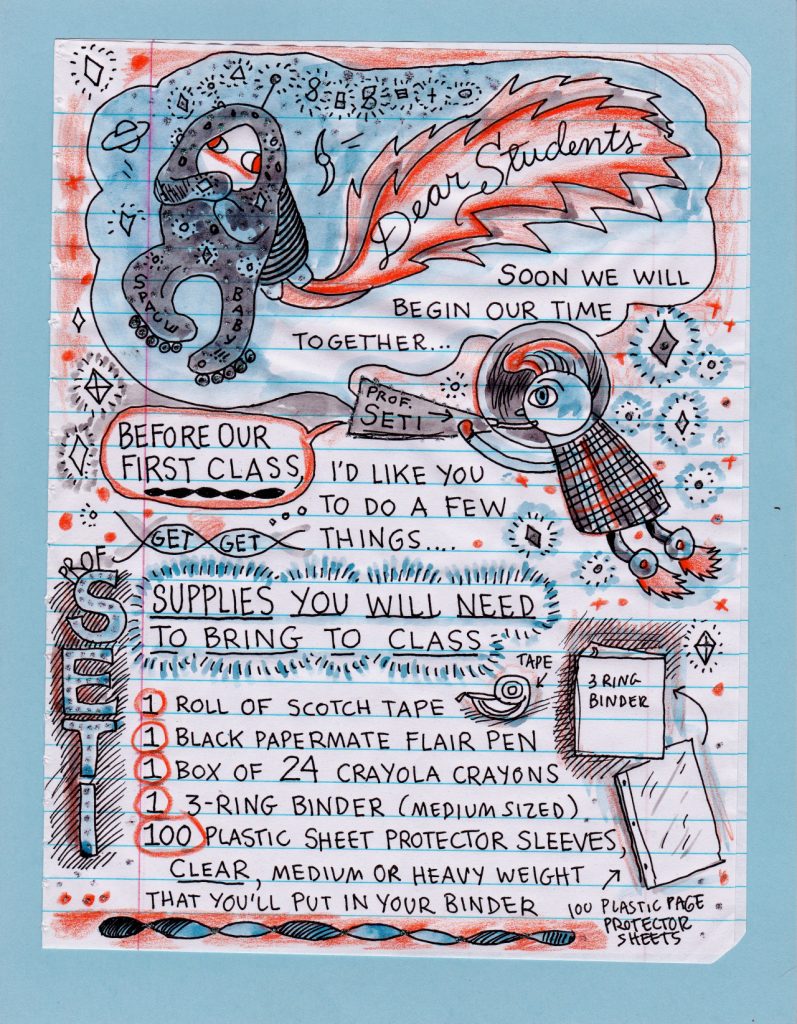
Cartoonist turned educator Lynda Barry is again permitting the world at large to freely audit one of her fascinating University of Wisconsin-Madison classes via her Tumblr. (To get to the start of the class, click here and then scroll down the page until you reach the syllabus, then start working your way backwards.)
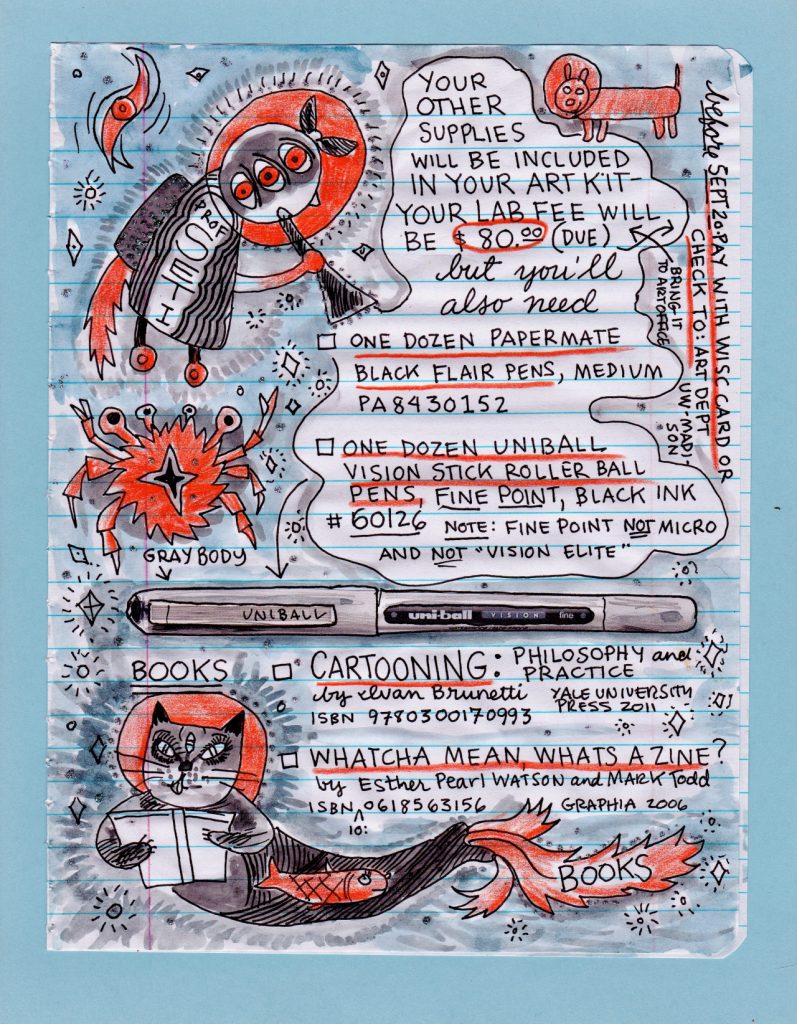
As in previous classes, the syllabus, above, spells out a highly specialized set of required supplies, including a number of items rarely called for at the college level.
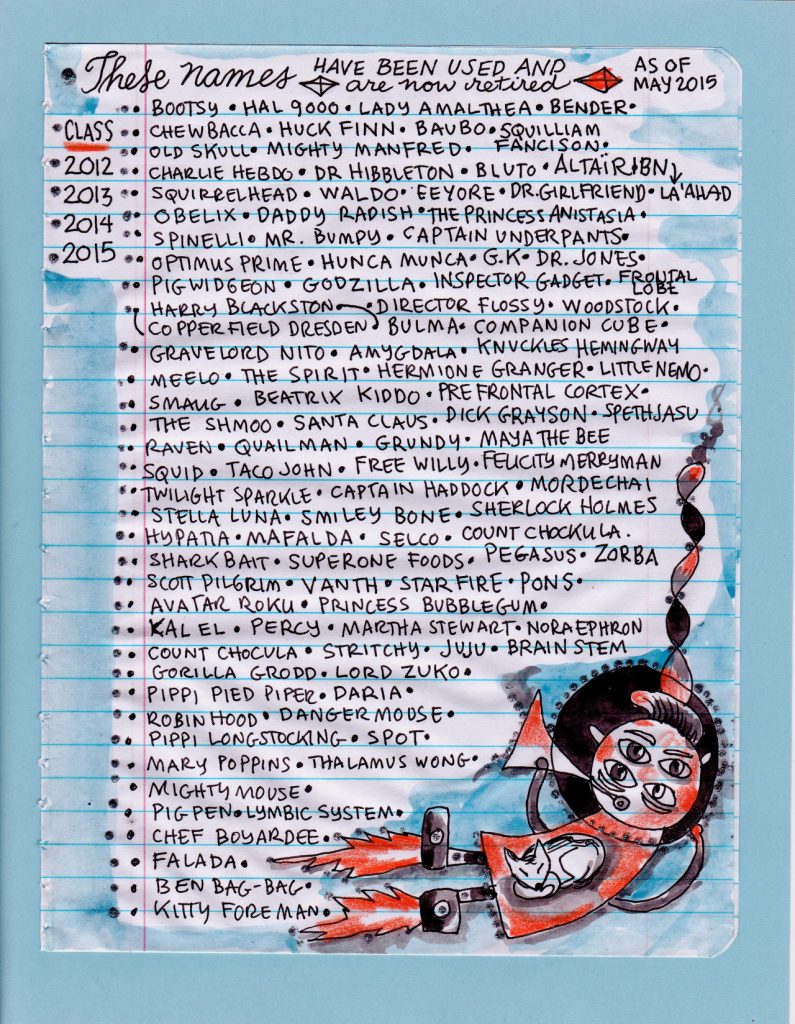
It’s become a time honored tradition for Barry’s students to adopt new names by which to refer to each other in-class, something they’ll enjoy hearing spoken aloud. For “Making Comics,” Barry is flying under the handle Professor SETI (as in “search for extraterrestrial intelligence”), telling the class that “images are the ETI in SETI.”
The students have responded with the following handles: Chef Boyardee, Ginger, Lois Lane, Rosie the Riveter, Regina Phalange, Arabella, Snoopy, Skeeter, Tigger, Arya Stark, Nala, Nostalgia, Akira, Lapus Lazuli, The Buffalo,Mr. November, The Short Giraffe, Nicki Minaj, Neko, Vincent Brooks, Regular Sized Rudy, and Zef.
(Sounds like a rough and ready crew. What name would you choose, and why?)
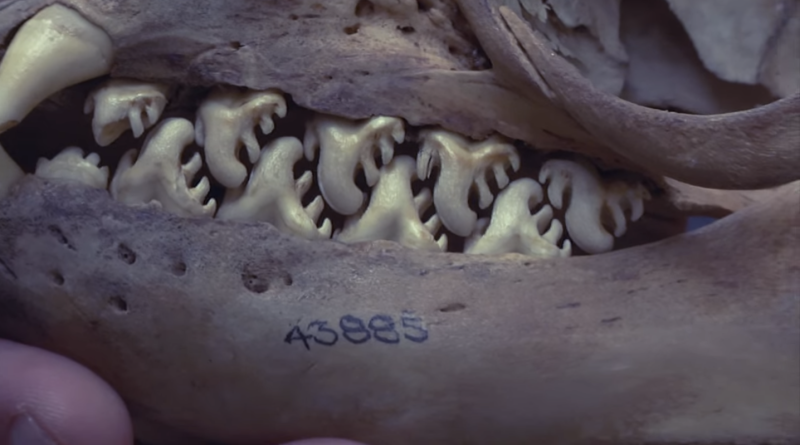
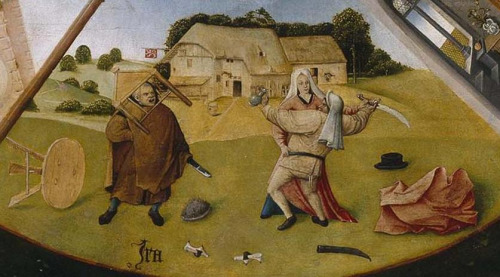
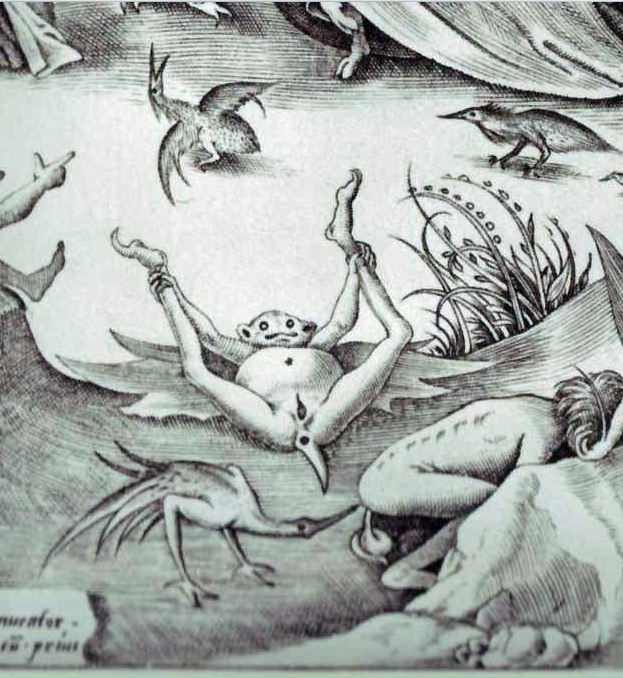
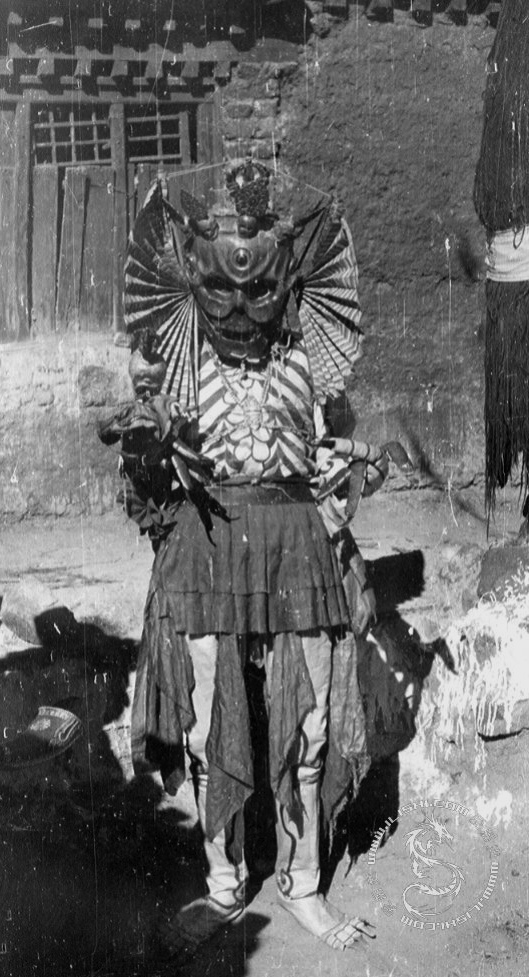
As usual, Barry draws inspiration from the dizzying bounty of images available on the net, bombarding her pupils with findings such as the lobed teeth of the crab-eater seal, above.
What to do with all of these images? Draw them, of course! As Barry tells her students:
Drawing is a language. It’s hard to understand what that really means until you’ve ‘spoken’ and ‘listened’ to it enough in a reliable regular way like the reliable regular way we will have together this semester.
That’s an important definition for those lacking confidence in their drawing abilities to keep in mind. Barry may revere the inky blacks of comics legend Jaime Hernandez, but she’s also a devotee of the wild, unbridled line that may be a beginner’s truest expression. (Stick figures, however, “don’t cut it.”) To her way of thinking, everyone is capable of communicating fluently in visual language. The current crop of student work reveals a range of training and natural talent, but all are worthy when viewed through Barry’s lens.
The teacher’s philosophy is the binding element here, but don’t fret if you are unable to take the class in person:
We rarely speak directly about the work we do in our class though we look at it together. We stare at it and sometimes it makes us laugh or we silently point out some part of it to the classmate beside us. To be able to speak this unspoken language we need to practice seeing (hearing) the way it talks.
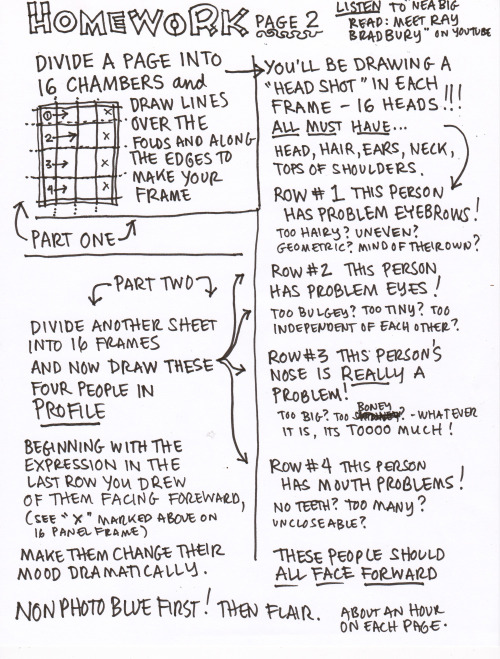
That earlier-alluded-to rigor is no joke. Daily diary comics, 3 minute self portraits on index cards, pages folded to yield 16 frames in need of filling, and found images copied while listening to prescribed music, lectures, and readingsare a constant, non-negotiable expectation of all participants. Her methodology may sound goose‑y but it’s far from loose‑y.
In other words, if you want to play along, prepare to set aside a large chunk of time to complete her weekly assignments with the vigor demanded of non-virtual students.
Those who aren’t able to commit to going the distance at this time can reconstruct the class later. Barry leaves both the assignments and examples of student work on her Tumblr for perpetuity. (You can see an example here.) For now, try completing the 20 minute exercise using the assigned image above, or by choosing from one of her “extra credit” images, below:
Set timer for three minutes and begin this drawing using a yellow color pencil. Try to draw as much of the drawing as you can in three minutes. You can draw fast, and in a messy way, The important thing is to get as much covered as you can in three minutes. You can color things in if you like. Look for the darkest areas of the photo and color those in.
Set a timer for another three minutes and using your non-dominant hand, draw with orange or color pencil to draw the entire drawing again, drawing right on top of the first drawing layer. The lines don’t have to match or be right on top of each other, you can change your mind as you add this layer. You can move a bit to the right rather than try to draw directly onto the first set of lines.
Set a timer for another 3 minutes and use a red pencil and draw it again, using you dominant hand, adding another layer to the drawing. Again, you don’t have to follow your original lines. Just draw on top of them.
Set a timer for another 3 minutes and use a dark green pencil to draw the entire drawing one more time on top of all the others.
Set a timer for 8 minutes and use a dark blue pencil to draw it one more time.
Spend the last 8 minutes inking the image in with your uniball pen. Remember that solid black is the very last thing you’d do given your time limit. You want to make sure to draw all the parts of the picture first.
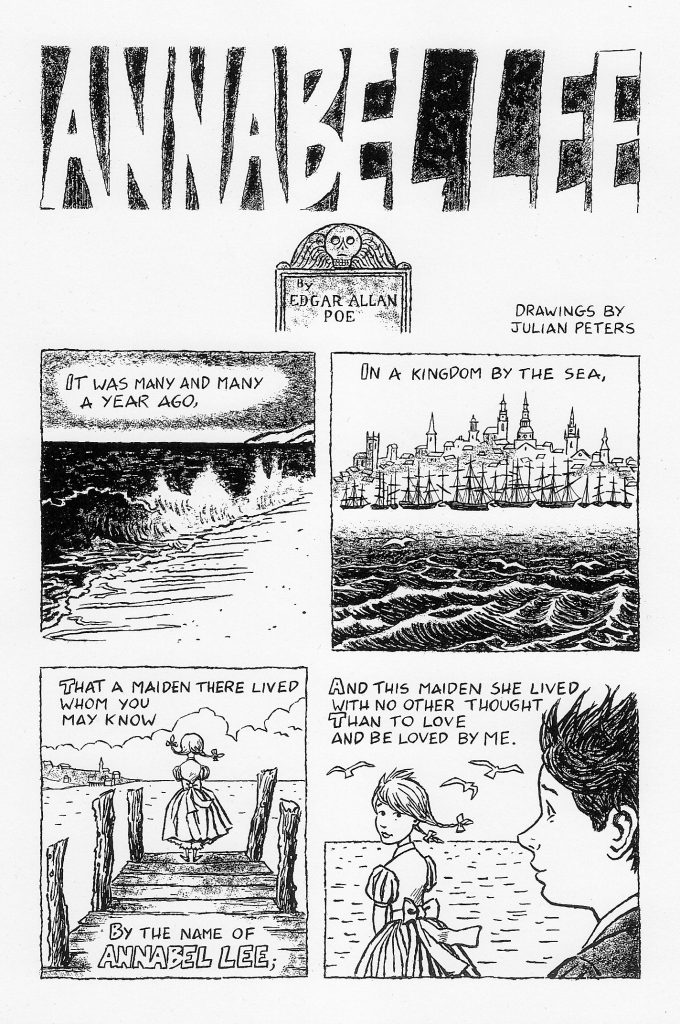
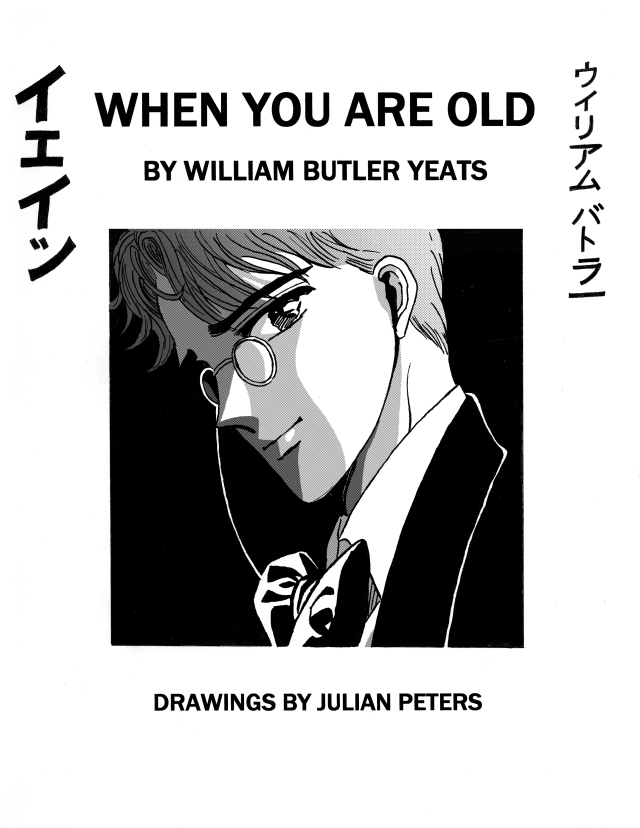
We’ve highlighted the comic art of Montreal-based Julian Peters before on Open Culture. He’s the man who undertook a 24-page illustrated adaptation of T.S. Eliot’s “The Love Song of J. Alfred Prufrock” and then also delivered a manga version of W. B. Yeats’ “When You Are Old,” recreating the style of Japanese romance comics to a T.
While studying in a Masters program early examples of literary graphic novels, Peters is also turning into a fine illustrator of poetry whether classic (Rimbaud, Keats) or contemporary (teaming up with John Philip Johnson on an upcoming book of illustrated poems, one of which you can find here.)
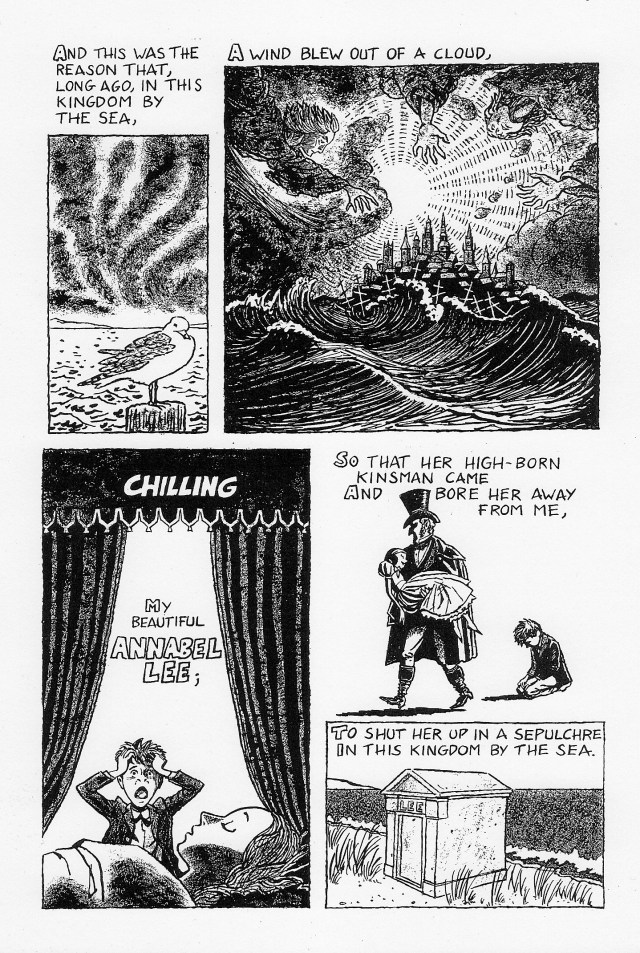
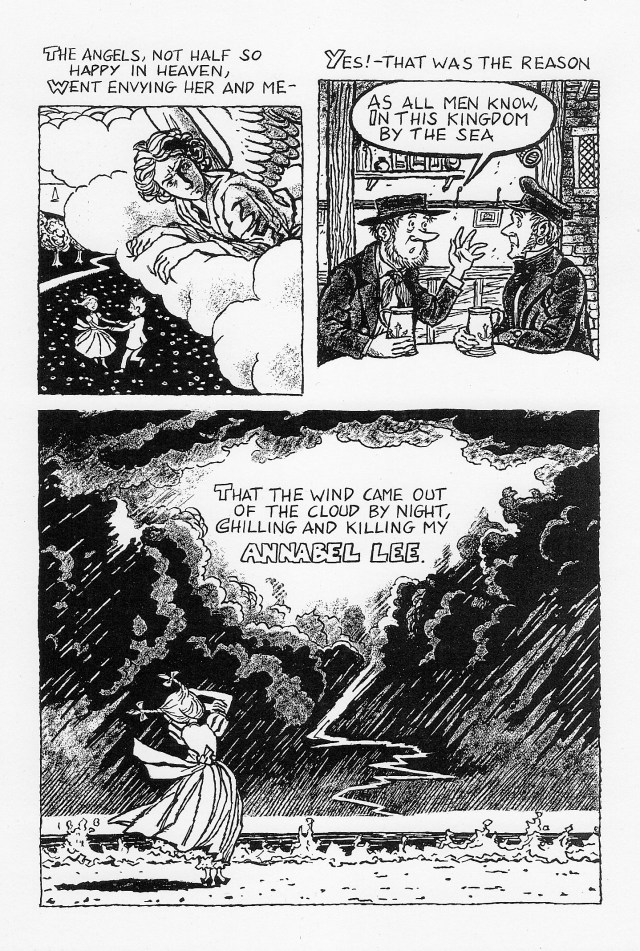
This adaptation (above) of Edgar Allan Poe’s “Annabel Lee” dates from 2011. Poe’s work gives illustrators narrative aplenty, but it also gives them repetition and ellipses. In his rendition, Peters gives us two pre-teen sweethearts similar to Tom Sawyer and Becky Thatcher, and when Annabel Lee dies from “the wind that came out of the cloud by night,” we get a full panel of Annabel’s final healthy moments. Wind is everywhere to be found in the comic, forming white caps on the ocean, and blowing Annabel’s pigtails when we first see her.
Scholars tend to agree that “AnnabelLee” was based on Poe’s first cousin and teen bride Virginia Clemm, whom he married when she was 13 (and Poe was 27), but who passed away from tuberculosis at 24 years of age. The image of the beautiful corpse continues through his work from “The Raven” to “Ligeia”.
You can find the first few panels of Peters’ adaptation above. Read the rest here.
Ted Mills is a freelance writer on the arts who currently hosts the FunkZone Podcast. You can also follow him on Twitter at @tedmills, read his other arts writing at tedmills.com and/or watch his films here.
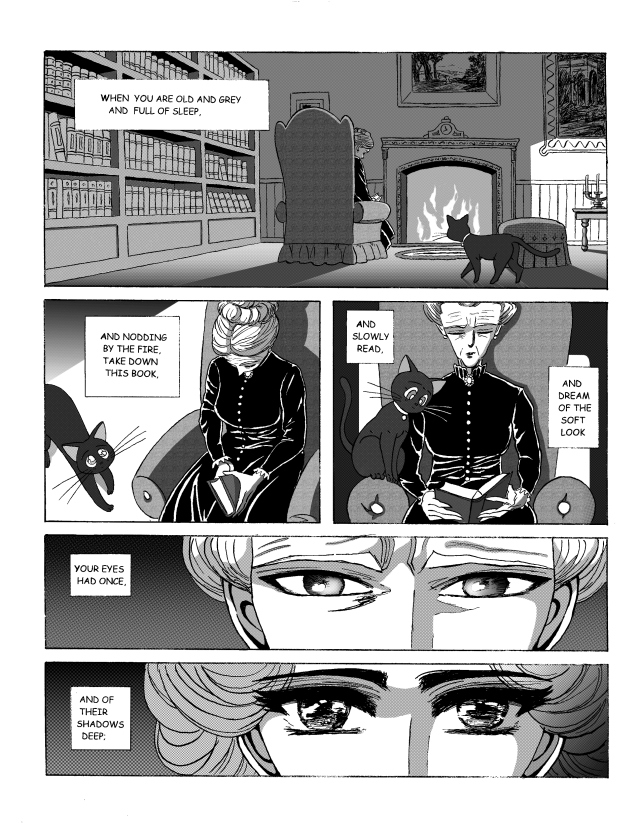
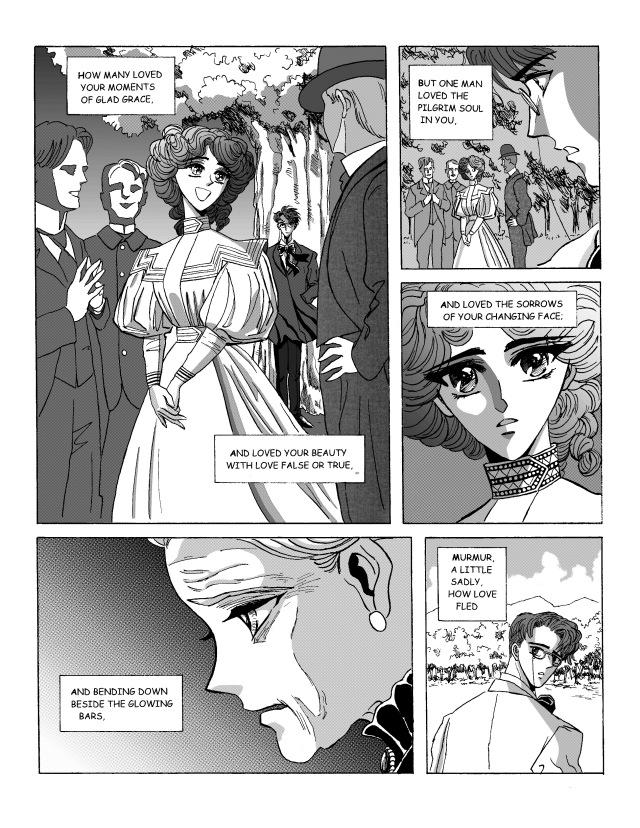
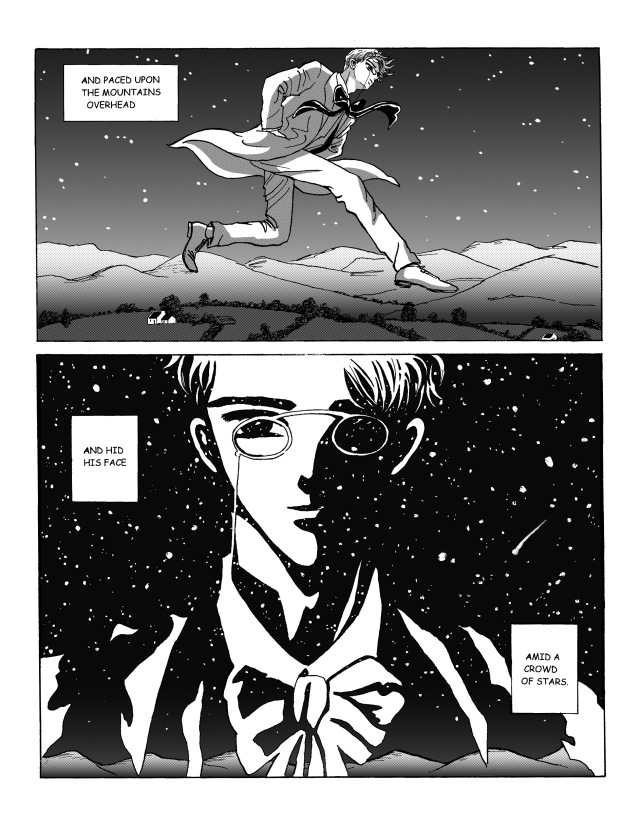
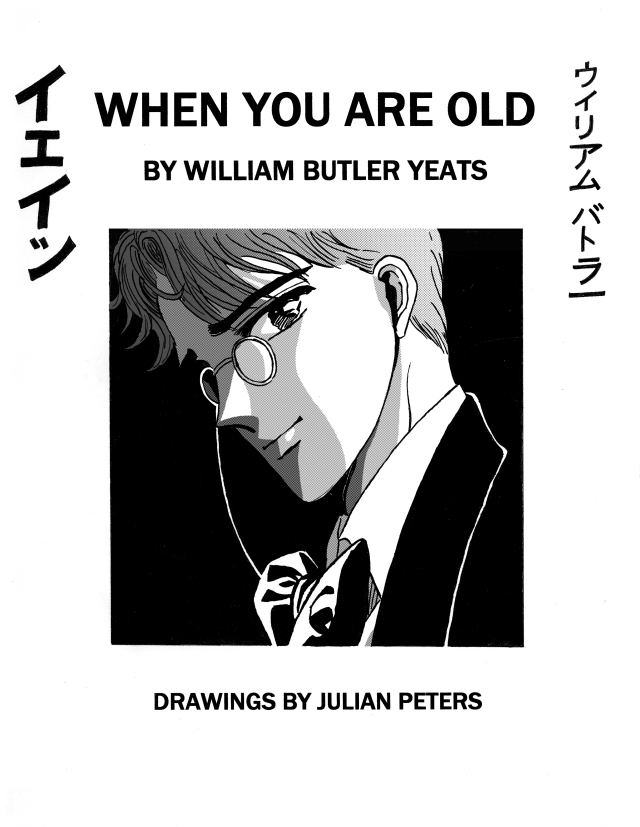
You see here the versatile Peters’ visual interpretation of W.B. Yeats’ “When You Are Old,” a natural choice given his apparent poetic interests, but one drawn in the style of Japanese manga. In adapting Yeats’ words to a lady in the twilight of life, Peters has paid specific tribute to the work of Clamp, Japan’s famous all-female comic-artist collective known for series like RG Veda, Tokyo Babylon, and X/1999.
Clamp fans will find that, in three brief pages, Peters touches on quite a few of the aesthetic tropes that have long characterized the collective’s work. (You’ll want to click through to Peters’ own “When You Are Old” page to see an extra illustration that also fits well into the Clamp sensibility.) Yeats fans will no doubt appreciate the chance to see the poet’s work in an entirely new way. I, for one, had never before pictured a cat on the lap of the woman “old and grey and full of sleep” reflecting on the “moments of glad grace” of her youth and the one man who loved her “pilgrim soul,” but now I always will — and I imagine both Yeats and Clamp would approve of that. You can read and hear Yeats’ 1892 poem here. If you click on the images on this page, you can view them in a larger format.
Did Bram Stoker’s world-famous Dracula character—perhaps the most culturally unkillable of all horror monsters—derive from Irish folklore? Search the Gaelic “Droch-Fhoula” (pronounced droc’ola) and, in addition to the requisite metal bands, you’ll find references to the “Castle of the Blood Visage,” to a blood-drinking chieftain named Abhartach, and to other possible native sources of Irish writer Bram Stoker’s 1897 novel. These Celtic legends, the BBC writes, “may have shaped the story as much as European myths and Gothic literature.”
Despite all this intriguing speculation about Dracula’s Irish origins, the actors playing him have come from a variety of places. One recent incarnation, TV series Dracula, did cast an Irish actor, Jonathan Rhys Meyers, in the role.
Hungarian Bela Lugosi comes closest to the fictional character’s nationality, as well as that of another, perhaps dubious source, Romanian warlord Vlad the Impaler. Protean Brit Gary Oldman played up the character as Slavic aristocrat in Francis Ford Coppola’s somewhat more faithful take. But one too-oft-overlooked portrayal by another English actor, Christopher Lee, deserves much more attention than it receives.
The audio here was also recorded in 1966 by the book’s editor Russ Jones. Comics blogger Steven Thompson remarks that “since Dracula is made up of a series of letters, journal and diary entries, the writers here logically take a more straightforward route of telling the tale while maintaining the episodic feel quite well.” Rather than the voice of Count Dracula, Lee reads as the novel’s epistolary narrator Jonathan Harker, and the Dracula in the artwork, drawn by artist Al McWilliams, “bears more than a passing resemblance here to actor John Carradine,” a notable American actor who played the character in Universal’s House of Frankenstein and House of Dracula. Nonetheless, Lee’s voice is enough to conjure his many exceptional performances as the prototypical vampire, a character and concept that will likely never die.
Scholar and writer Bob Curran, a proponent of the Irish origins of Dracula, argues in his book Vampires that legends of undead, blood-drinking ghouls are found all over the world, which goes a long way toward explaining the enduring popularity of Dracula in particular and vampires in general. We’ll probably see another actor inherit the role of Stoker’s seductively creepy count in the near future. Whoever it is will have to measure himself against not only the performances of Lugosi, Carradine, Oldman, and Meyers, but also against the debonair Christopher Lee. He would do well, wherever he comes from, to study Lee’s Dracula films closely, and listen to him read the story in the adaptation above.
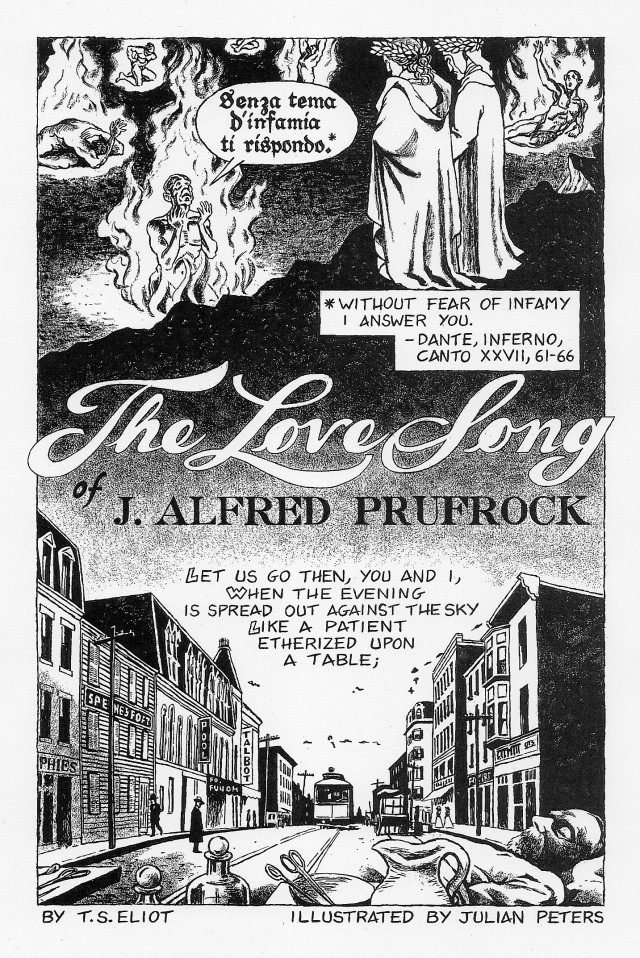
Two years ago, we highlighted for you the beginning of a promising project — Julian Peters’ comic book adaptation of T.S. Eliot’s 1910 poem “The Love Song of J. Alfred Prufrock.” At the time of our post, Peters had only completed the first nine pages of his adaptation. And, about those first pages, our Josh Jones had this to say:
Dante is where “Prufrock” begins, with an epigraph from the Inferno. Peters’ first page illustrates the agonized speaker of Dante’s lines, Guido da Montefeltro, a soul confined to the eighth circle, whom you can see at the top of the title page shown above. Peters’ visual choices place us firmly in the hellish emotional realm of “Prufrock,” a seeming catalogue of the mundane that harbors a darker import. Peters gives us no hint of when we might expect new pages, but I for one am eager to see more.
Note: Julian is looking for a publisher to help put his comic book in print. If any publishers want to chat with him, you can find his contact info on his web site.
Follow Open Culture on Facebook and Twitter and share intelligent media with your friends. Or better yet, sign up for our daily email and get a daily dose of Open Culture in your inbox. And if you want to make sure that our posts definitely appear in your Facebook newsfeed, just follow these simple steps.
In the past, we’ve brought you the creative work of R. Sikoryak. An illustrator who teaches at the Parsons School of Design in NYC, Sikoryak has a penchant for creating comic book adaptations of literary classics. Take for example Dostoyevsky Comics where Batman stars in a comic book version of Crime & Punishment. Or Waiting to Go, which marries Waiting for Godot with Beavis and Butt-Head.
In his latest project, Sikoryak veers sharply away from literature toward language that is much more technical. Now, on his tumblr, you can findiTunes Terms & Conditions: The Graphic Novel.
Adding a new page every day, Sikoryak is creating an illustrated version of the “complete, unabridged legal agreement.” You can currently view the first 49 pages. Click here. Go to the bottom of the page. Then start scrolling up as you read.
Follow Open Culture on Facebook and Twitter and share intelligent media with your friends. Or better yet, sign up for our daily email and get a daily dose of Open Culture in your inbox. And if you want to make sure that our posts definitely appear in your Facebook newsfeed, just follow these simple steps.
We're hoping to rely on loyal readers, rather than erratic ads. Please click the Donate button and support Open Culture. You can use Paypal, Venmo, Patreon, even Crypto! We thank you!
Open Culture scours the web for the best educational media. We find the free courses and audio books you need, the language lessons & educational videos you want, and plenty of enlightenment in between.