Umberto Eco Explains the Poetic Power of Charles Schulz’s Peanuts

eco loves peanuts

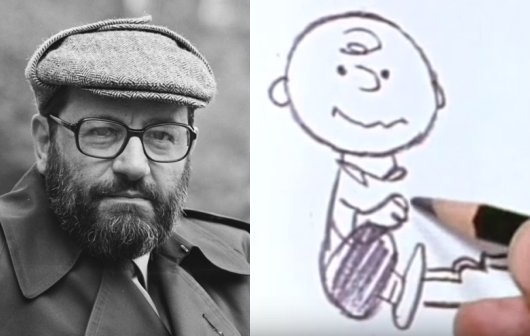
Image via Wiki­me­dia Com­mons and Snoopy­’s YouTube Channel

Anthro­pol­o­gy, authen­tic­i­ty, medieval aes­thet­ics, the media, lit­er­ary the­o­ry, con­spir­a­cy the­o­ry, semi­otics, ugli­ness: the late Umber­to Eco, as any­one who’s read a piece of his bib­li­og­ra­phy (which includes such intel­lec­tu­al­ly seri­ous but thor­ough­ly enter­tain­ing nov­els as The Name of the RoseFou­cault’s Pen­du­lum, and the still-new Numero Zero) can attest, had the widest pos­si­ble range of inter­ests. That infi­nite-seem­ing list extend­ed even to com­ic strips, and espe­cial­ly Charles Schulz’s Peanuts (which did tend to fas­ci­nate literati, even those of very dif­fer­ent tra­di­tions).

Just over thir­ty years ago, the Ital­ian nov­el­ist-essay­ist-crit­ic-philoso­pher-semi­oti­cian wrote an essay in The New York Review of Books about what made that strip one of the most, if not the most com­pelling of the twen­ti­eth cen­tu­ry.

“The cast of char­ac­ters is ele­men­tary,” writes Eco, rat­tling off the names and lat­er enu­mer­at­ing the res­o­nant qual­i­ties of Char­lie Brown, Lucy, Vio­let, Pat­ty, Frie­da, Linus, Schroed­er, Pig Pen, and “the dog Snoopy, who is involved in their games and their talk.” But from this sim­ple design aris­es a rich and com­plex read­er expe­ri­ence:

Over this basic scheme, there is a steady flow of vari­a­tions, fol­low­ing a rhythm found in cer­tain prim­i­tive epics. (Prim­i­tive, too, is the habit of refer­ring to the pro­tag­o­nist always by his full name—even his moth­er address­es Char­lie Brown in that fash­ion, like an epic hero.) Thus you could nev­er grasp the poet­ic pow­er of Schulz’s work by read­ing only one or two or ten episodes: you must thor­ough­ly under­stand the char­ac­ters and the sit­u­a­tions, for the grace, ten­der­ness, and laugh­ter are born only from the infi­nite­ly shift­ing rep­e­ti­tion of the pat­terns, and from fideli­ty to the fun­da­men­tal inspi­ra­tions. They demand from the read­er a con­tin­u­ous act of empa­thy, a par­tic­i­pa­tion in the inner warmth that per­vades the events.

In this sense, Peanuts suc­ceeds on the same lev­el as Krazy Kat, George Her­ri­man’s high­ly absurd, high­ly artis­tic, and enor­mous­ly respect­ed strip (though it some­times took up entire pages) that ran from 1913 to 1944. Thanks only to the ear­li­er work’s rig­or­ous adher­ence to themes and vari­a­tions, Eco writes, “the mouse’s arro­gance, the dog’s unre­ward­ed com­pas­sion, and the cat’s des­per­ate love could arrive at what many crit­ics felt was a gen­uine state of poet­ry, an unin­ter­rupt­ed ele­gy based on sor­row­ing inno­cence.” But Peanuts’ cast of chil­dren adds anoth­er dimen­sion entire­ly:

The poet­ry of these chil­dren aris­es from the fact that we find in them all the prob­lems, all the suf­fer­ings of the adults, who remain off­stage. These chil­dren affect us because in a cer­tain sense they are mon­sters: they are the mon­strous infan­tile reduc­tions of all the neu­roses of a mod­ern cit­i­zen of indus­tri­al civ­i­liza­tion.

They affect us because we real­ize that if they are mon­sters it is because we, the adults, have made them so. In them we find every­thing: Freud, mass cul­ture, digest cul­ture, frus­trat­ed strug­gle for suc­cess, crav­ing for affec­tion, lone­li­ness, pas­sive acqui­es­cence, and neu­rot­ic protest. But all these ele­ments do not blos­som direct­ly, as we know them, from the mouths of a group of chil­dren: they are con­ceived and spo­ken after pass­ing through the fil­ter of inno­cence. Schulz’s chil­dren are not a sly instru­ment to han­dle our adult prob­lems: they expe­ri­ence these prob­lems accord­ing to a child­ish psy­chol­o­gy, and for this very rea­son they seem to us touch­ing and hope­less, as if we were sud­den­ly aware that our ills have pol­lut­ed every­thing, at the root.

But the capa­cious mind of Eco finds even more than that in the out­ward­ly hum­ble Schulz’s work. If we read enough of it, “we real­ize that we have emerged from the banal round of con­sump­tion and escapism, and have almost reached the thresh­old of med­i­ta­tion.” And aston­ish­ing­ly, it works equal­ly well for all audi­ences: “Peanuts charms both sophis­ti­cat­ed adults and chil­dren with equal inten­si­ty, as if each read­er found there some­thing for him­self, and it is always the same thing, to be enjoyed in two dif­fer­ent keys.” And Schultz con­tin­ues, even six­teen years after his own death and the strip’s end, to show us, “in the face of Char­lie Brown, with two strokes of his pen­cil, his ver­sion of the human con­di­tion.”

You can read Eco’s com­plete essay, On ‘Krazy Kat’ and ‘Peanuts,’ over at The New York Review of Books.

Relat­ed Con­tent:

Charles Schulz Draws Char­lie Brown in 45 Sec­onds and Exor­cis­es His Demons

Umber­to Eco Dies at 84; Leaves Behind Advice to Aspir­ing Writ­ers

Umber­to Eco’s How To Write a The­sis: A Wit­ty, Irrev­er­ent & High­ly Prac­ti­cal Guide Now Out in Eng­lish

Based in Seoul, Col­in Mar­shall writes and broad­casts on cities, lan­guage, and style. He’s at work on a book about Los Ange­les, A Los Ange­les Primer, the video series The City in Cin­e­ma, the crowd­fund­ed jour­nal­ism project Where Is the City of the Future?, and the Los Ange­les Review of Books’ Korea Blog. Fol­low him on Twit­ter at @colinmarshall or on Face­book.

Russian Superheroes: Artist Draws Traditional Russian Folk Heroes in a Modern Fantasy Style

A pho­to post­ed by amokrus (@amokrus) on

Where do super­heroes come from? The con­cept did­n’t just emerge ful­ly formed into the world when, say, Super­man showed up on the cov­er of Action Comics in 1938. Human­i­ty has enjoyed sto­ries of super­hu­man hero fig­ures since time immemo­r­i­al; you can find prece­dents for the super­hero deep in the mytholo­gies of a vari­ety of cul­tures. When the Russ­ian illus­tra­tor Roman Pap­suev looked deep into the mythol­o­gy of his own cul­ture, he found plen­ty of mate­r­i­al he could car­ry right over into a mod­ern visu­al idiom. And what with the cur­rent Game of Thrones-dri­ven wave of swords and sor­cery in the glob­al pop-cul­ture zeit­geist, he picked the right time indeed to pub­lish his elab­o­rate draw­ings of Russ­ian folk­lore heroes in the style of today’s high-fan­ta­sy com­ic books, movies, TV shows, and video games.

A pho­to post­ed by amokrus (@amokrus) on

“The first char­ac­ters were based on the author’s feel­ings and fan­tasies,” writes Daria Don­ina at Rus­sia Beyond the Head­lines. “He began, of course, with Ilya Muromets — the main Russ­ian epic hero and the strongest bogatyr or war­rior.” Then, “the more the author got immersed in the sub­ject, the more accu­rate his pic­tures became.

A pho­to post­ed by amokrus (@amokrus) on

He began to reread the tales and study the works of famous folk­lorists.” Don­ina quotes Pap­suev him­self: “ ‘What I like most is when peo­ple look at my pic­tures and then begin to read the tales and under­stand why, for instance, Vasil­isa the Beau­ti­ful has a doll in her bag or why Vodyanoy rides a giant cat­fish. This grass­roots revival of ancient folk­lore through my hum­ble project gives me great plea­sure.’ ”

A pho­to post­ed by amokrus (@amokrus) on

You can browse all of these illus­tra­tions and more at Pap­suev’s Insta­gram page, which includes not just fin­ished pieces but works in progress as well, so you can get an idea of just what sort of process it takes to ren­der a Russ­ian hero for the 21st cen­tu­ry. To a non-Russ­ian, this all may seem like sim­ply a neat art project, but any Russ­ian will rec­og­nize these char­ac­ters as cen­tral to a set of sto­ries them­selves cen­tral to the cul­ture. “The tales are stamped in the sub­con­scious from child­hood,” Pap­suev says in the Rus­sia Beyond the Head­line arti­cle, and as with any mate­r­i­al with which peo­ple grew up, any rein­ter­preter takes them into his own hands at his per­il.

A pho­to post­ed by amokrus (@amokrus) on

“This project has no rela­tion to real his­to­ry or real life,” says the artist. “These are just tales, trapped in a world of games. It’s a fun project. Don’t take it too seri­ous­ly.” But which enter­pris­ing Russ­ian devel­op­er, I won­der, will take it seri­ous­ly enough to go ahead and make an actu­al video game based on Pap­suev’s too-hero­ic-to-waste folk­loric char­ac­ters?

A pho­to post­ed by amokrus (@amokrus) on

Find more draw­ings at at Pap­suev’s Insta­gram page.

Relat­ed Con­tent:

Down­load 650 Sovi­et Book Cov­ers, Many Sport­ing Won­der­ful Avant-Garde Designs (1917–1942)

Bat­man & Oth­er Super Friends Sit for 17th Cen­tu­ry Flem­ish Style Por­traits

The 1982 DC Comics Style Guide Is Online: A Blue­print for Super­man, Bat­man & Your Oth­er Favorite Super­heroes

Based in Seoul, Col­in Mar­shall writes and broad­casts on cities and cul­ture. He’s at work on a book about Los Ange­les, A Los Ange­les Primer, the video series The City in Cin­e­ma, the crowd­fund­ed jour­nal­ism project Where Is the City of the Future?, and the Los Ange­les Review of Books’ Korea Blog. Fol­low him on Twit­ter at @colinmarshall or on Face­book.


Take a Free Online Course on Making Comic Books, Compliments of the California College of the Arts

Gath­er round, chil­dren and lis­ten to Grand­ma rem­i­niscin’ ‘bout the days when study­ing comics meant chang­ing out of your paja­mas and show­ing up at the bursar’s office, check in hand.

Actu­al­ly, Grandma’s full of it. Graph­ic nov­els are enjoy­ing unprece­dent­ed pop­u­lar­i­ty and edu­ca­tors are turn­ing to comics to reach reluc­tant read­ers, but as of this writ­ing, there still aren’t that many pro­grams for those inter­est­ed in mak­ing a career of this art form.

The Cal­i­for­nia Col­lege of the Arts is a notable excep­tion. You can get your MFA in Comics there.

Even bet­ter, you need not enroll to sam­ple the 5 week course, Comics: Art in Rela­tion­ship, led by Comics MFA chair and Eis­ner Award-nom­i­nat­ed author of The Home­less Chan­nel, Matt Sila­dy.

You might write the next Scott Pil­grim.

Or ink the next Fun Home.

At the very least, you’ll learn a thing or two about lay­out, the rela­tion­ship of art to text, and using com­pres­sion to denote the pas­sage of time.

It’s the sort of nit­ty grit­ty train­ing that would ben­e­fit both vet­er­ans and new­bies alike.

Ready to sign up? The free course, which starts in Feb­ru­ary, will require approx­i­mate­ly 10 hours per week. The syl­labus is below.

Ses­sion 1: Defin­ing Comics

Iden­ti­fy key rela­tion­ships in sam­ple texts & demon­strate the use of var­i­ous cam­era angles on a comics page

Ses­sion 2: Comics Rela­tion­ships

Cre­ate Text-Image and Image-Image Pan­els

Ses­sion 3: Time And Space

One Sec­ond, One Hour, One Day Comics Chal­lenge

Ses­sion 4: Lay­out And Grid Design

Apply mul­ti­ple pan­el grids to pro­vid­ed script

Ses­sion 5: Thumb­nails

Cre­ate thumb­nail sketch­es of a mul­ti­page scene

Enroll here.

via io9

Relat­ed Con­tent:

Kapow! Stan Lee Is Co-Teach­ing a Free Com­ic Book MOOC, and You Can Enroll for Free

Lyn­da Barry’s Illus­trat­ed Syl­labus & Home­work Assign­ments from Her New UW-Madi­son Course, “Mak­ing Comics”

In Ani­mat­ed Car­toon, Ali­son Bechdel Sees Her Life Go From Puli­tiz­er Prize Win­ning Com­ic to Broad­way Musi­cal

Down­load 15,000+ Free Gold­en Age Comics from the Dig­i­tal Com­ic Muse­um

1,700 Free Online Cours­es from Top Uni­ver­si­ties

Ayun Hal­l­i­day is an author, illus­tra­tor, and Chief Pri­ma­tol­o­gist of the East Vil­lage Inky zine.  Fol­low her @AyunHalliday

Stan Lee Reads “The Night Before Christmas,” Telling the Tale of Santa Claus, the Greatest of Super Heroes

“He would turn over in his grave if he knew I’m about to read this,” says Stan Lee, Mar­vel Comics’ grand poo-bah, before launch­ing into Clement Clarke Moore’s “The Night Before Christ­mas.” Moore’s 1823 poem helped solid­i­fy var­i­ous ideas about San­ta Claus and Christ­mas, espe­cial­ly in Amer­i­ca, much like Lee and his co-cre­ators forged the mut­li-char­ac­ter Mar­vel Uni­verse that now dom­i­nates 21st cen­tu­ry mythol­o­gy.

So who bet­ter to read the ori­gin sto­ry of this cos­tumed super­hero than Stan the Man? Because we’re talk­ing about Good St. Nick, a beloved non-human who is able to tra­verse the earth in the span of one night, squeeze down chim­neys with­out get­ting stuck, burned, or even dirty­ing his clothes, gives presents freely, and whose sled is pow­ered pure­ly by mag­i­cal rein­deer, all with their own names. Plus he lives in a fortress of toy­mak­ing qua­si-soli­tude at the North Pole.

Lee real­ly gets into the car­ni­val bark­er style in his read­ing from 2009, much like his own over­heat­ed prose in the pages of his comics. You can still hear the busy pulse of his native Man­hat­tan in that grav­el­ly voice. And if you’re won­der­ing if Lee puts his own spin on things, wait till the end.

And for those look­ing for more Stan Lee Read­ing the Clas­sics, here he is read­ing Poe’s “The Raven.”

You’ll find both­er read­ings in our col­lec­tion, 1,000 Free Audio Books: Down­load Great Books for Free.

Relat­ed Con­tent:

15-Year-Old George R.R. Mar­tin Writes a Fan Let­ter to Stan Lee & Jack Kir­by (1963)

X‑Men: Sci­ence Can Build Them, But Is It Eth­i­cal?

Down­load 15,000+ Free Gold­en Age Comics from the Dig­i­tal Com­ic Muse­um

Ted Mills is a free­lance writer on the arts who cur­rent­ly hosts the artist inter­view-based FunkZone Pod­cast. You can also fol­low him on Twit­ter at @tedmills, read his oth­er arts writ­ing at tedmills.com and/or watch his films here.

Hear Sun Ra, the Avant-Garde Jazz Legend, Play on a 1966 Batman and Robin Album for Kids

In the mid 1960s, when the Bat­man TV show was in full swing, a New Jer­sey toy com­pa­ny released a chil­dren’s record of Bat­man & Robin songs. Called The Sen­sa­tion­al Gui­tars Of Dan & Dale, Bat­man & Robin, the album fea­tured, as WFMU’s Beware of the Blog notes, “one of the great­est uncred­it­ed ses­sion com­bos of all time, includ­ing the core of Sun Ra’s Arkestra and Al Koop­er’s Blues Project.” Anony­mous­ly, Sun Ra played on organ, Jim­my Owens on trum­pet, Tom McIn­tosh on trom­bone & Dan­ny Kalb on gui­tar.

Oth­er than the well-known Bat­man and Robin themes (above), the kid’s album was cre­at­ed around music that had fall­en into the pub­lic domain–e.g. Chopin’s Polon­aise Op. 53, Tchaikovsky’s Fifth Sym­pho­ny and the love theme from Romeo and Juli­et. Over at WFMU, you can hear var­i­ous tracks, includ­ing Bat­man’s Bat­marangBat­man and Robin Over The RoofsFlight of the Bat­manThe Rid­dler’s RetreatJok­er is WildPen­guin’s Umbrel­la, and more. Enjoy.

Fol­low Open Cul­ture on Face­book and Twit­ter and share intel­li­gent media with your friends. Or bet­ter yet, sign up for our dai­ly email and get a dai­ly dose of Open Cul­ture in your inbox. And if you want to make sure that our posts def­i­nite­ly appear in your Face­book news­feed, just fol­low these sim­ple steps.

via WFMU

Relat­ed Con­tent:

Sun Ra’s Full Lec­ture & Read­ing List From His 1971 UC Berke­ley Course, “The Black Man in the Cos­mos”

Sun Ra Plays a Music Ther­a­py Gig at a Men­tal Hos­pi­tal; Inspires Patient to Talk for the First Time in Years

Hear Sun Ra’s 1971 UC Berke­ley Lec­ture “The Pow­er of Words”

A Sun Ra Christ­mas: Hear His 1976 Radio Broad­cast of Poet­ry and Music

The Evo­lu­tion of Bat­man in Cin­e­ma: From 1939 to Present

by | Permalink | Make a Comment ( 1 ) |

Watch Groundbreaking Comic Artist Mœbius Draw His Characters in Real Time

Jean Giraud, bet­ter known as Mœbius, may have passed away in 2012, but he gave his many fans glimpses into his unpar­al­leled artis­tic imag­i­na­tion right up until the end. In 2010 and 2012, the Fon­da­tion Carti­er pour l’Art Con­tem­po­rain put on Mœbius-Transe-Forme, the first major exhi­bi­tion in Paris devot­ed to his work, and one that, at Mœbius’ request, explored “the theme of meta­mor­pho­sis, a leit­mo­tif that runs through­out his comics, draw­ings, and film projects” and that pre­sent­ed his work in a vari­ety of ways that even some of his most avid read­ers, used to expe­ri­enc­ing his work only on the page, would nev­er have seen before.

One such way took the form of The Danc­ing Line, a series of videos which cap­ture Mœbius draw­ing live on a graph­ic tablet, offer­ing an artist’s-eye-view into how he trans­formed a blank dig­i­tal can­vas into a win­dow on the world he spent his career cre­at­ing. Here we have three selec­tions from the series: at the top we have Mœbius fill­ing in the details on the face of Malv­ina from The Air­tight Garage.

Just above, he draws the title char­ac­ter from his even bet­ter known com­ic series Blue­ber­ry, the uncon­ven­tion­al West­ern he cre­at­ed with Jean-Michel Char­li­er. Below, you can watch the cre­ation of a piece called “Inside Mœbius” — not a self-por­trait, exact­ly, but a por­trait of the sort of artist that exists in Mœbius’ world draw­ing a por­trait of Mœbius him­self.

“Stay­ing alive for an artist means to always be in an unknown part of him­self, to be out of him­self,” Mœbius told the Los Ange­les Times in 2011. “The exhi­bi­tion in Paris, the theme was trans­for­ma­tion. Art is the big door but real life is a lot of small doors that you must pass through to cre­ate some­thing new. You don’t always need to go far.” Nobody, artist or oth­er­wise, stays alive for­ev­er, but Mœbius knew how, in the time he had, to stay as alive as pos­si­ble by con­stant­ly seek­ing out those unknown parts. The Danc­ing Line videos show us how he felt his way through that ter­ra incog­ni­ta, point­ing the way with the expan­sive body of work he left behind toward all those small doors we, too, must pass through to cre­ate some­thing new of our own.

Relat­ed Con­tent:

Mœbius & Jodorowsky’s Sci-Fi Mas­ter­piece, The Incal, Brought to Life in a Tan­ta­liz­ing Ani­ma­tion

Moe­bius’ Sto­ry­boards & Con­cept Art for Jodorowsky’s Dune

The Inscrutable Imag­i­na­tion of the Late Com­ic Artist Mœbius

Moe­bius Gives 18 Wis­dom-Filled Tips to Aspir­ing Artists (1996)

French Stu­dent Sets Inter­net on Fire with Ani­ma­tion Inspired by Moe­bius, Syd Mead & Hayao Miyaza­ki

Mœbius Illus­trates Paulo Coelho’s Inspi­ra­tional Nov­el The Alchemist (1998)

Mœbius Illus­trates Dante’s Par­adiso

Based in Seoul, Col­in Mar­shall writes and broad­casts on cities and cul­ture. He’s at work on a book about Los Ange­les, A Los Ange­les Primer, the video series The City in Cin­e­maand the crowd­fund­ed jour­nal­ism project Where Is the City of the Future? Fol­low him on Twit­ter at @colinmarshall or on Face­book.

Lynda Barry’s Illustrated Syllabus & Homework Assignments from Her New UW-Madison Course, “Making Comics”

barrysyll1

barysyll2

Car­toon­ist turned edu­ca­tor Lyn­da Bar­ry is again per­mit­ting the world at large to freely audit one of her fas­ci­nat­ing Uni­ver­si­ty of Wis­con­sin-Madi­son class­es via her Tum­blr. (To get to the start of the class, click here and then scroll down the page until you reach the syl­labus, then start work­ing your way back­wards.)

The top­ic this fall is “Graph­ic Vices, Graph­ic Virtues: Mak­ing Comics,” a sub­ject with which Bar­ry is inti­mate­ly acquaint­ed. In the professor’s own words, this class is “a(n aca­d­e­m­i­cal­ly rig­or­ous) blast!”

As in pre­vi­ous class­es, the syl­labus, above, spells out a high­ly spe­cial­ized set of required sup­plies, includ­ing a num­ber of items rarely called for at the col­lege lev­el.

barrysyll4


It’s become a time hon­ored tra­di­tion for Barry’s stu­dents to adopt new names by which to refer to each oth­er in-class, some­thing they’ll enjoy hear­ing spo­ken aloud. For “Mak­ing Comics,” Bar­ry is fly­ing under the han­dle Pro­fes­sor SETI (as in “search for extrater­res­tri­al intel­li­gence”), telling the class that “images are the ETI in SETI.”

The stu­dents have respond­ed with the fol­low­ing han­dles: Chef Boyardee, Gin­ger, Lois Lane, Rosie the Riv­et­er, Regi­na Pha­lange, Ara­bel­la, Snoopy, Skeeter, Tig­ger, Arya Stark, Nala, Nos­tal­gia, Aki­ra, Lapus Lazuli, The Buffalo,Mr. Novem­ber, The Short Giraffe, Nic­ki Minaj, Neko, Vin­cent Brooks, Reg­u­lar Sized Rudy, and Zef.

(Sounds like a rough and ready crew. What name would you choose, and why?)

LBarry 4

As usu­al, Bar­ry draws inspi­ra­tion from the dizzy­ing boun­ty of images avail­able on the net, bom­bard­ing her pupils with find­ings such as the lobed teeth of the crab-eater seal, above.

Sci­ence and music remain pet sub­jects–Afro­fu­tur­ist band­leader Sun Ra serves as class ora­cle this go round.

LBarry 5

LBarry 6

Pro­fes­sor SETI keeps the “graph­ic vice” of the class’ offi­cial title front and cen­ter with assign­ments per­tain­ing to the 7 dead­ly sins, ask­ing stu­dents to exam­ine mod­ern equiv­a­lents of the hor­rors depict­ed by Heron­imus Bosch above and 16th-cen­tu­ry engraver Pieter van der Hey­den, below.

LBarry 7

What to do with all of these images? Draw them, of course! As Bar­ry tells her stu­dents:

Draw­ing is a lan­guage. It’s hard to under­stand what that real­ly means until you’ve ‘spo­ken’ and ‘lis­tened’ to it enough in a reli­able reg­u­lar way like the reli­able reg­u­lar way we will have togeth­er this semes­ter.

That’s an impor­tant def­i­n­i­tion for those lack­ing con­fi­dence in their draw­ing abil­i­ties to keep in mind. Bar­ry may revere the inky blacks of comics leg­end Jaime Her­nan­dez, but she’s also a devo­tee of the wild, unbri­dled line that may be a beginner’s truest expres­sion. (Stick fig­ures, how­ev­er, “don’t cut it.”) To her way of think­ing, every­one is capa­ble of com­mu­ni­cat­ing flu­ent­ly in visu­al lan­guage. The cur­rent crop of stu­dent work reveals a range of train­ing and nat­ur­al tal­ent, but all are wor­thy when viewed through Barry’s lens.

The teacher’s phi­los­o­phy is the bind­ing ele­ment here, but don’t fret if you are unable to take the class in per­son:

We rarely speak direct­ly about the work we do in our class though we look at it togeth­er. We stare at it and some­times it makes us laugh or we silent­ly point out some part of it to the class­mate beside us.  To be able to speak this unspo­ken lan­guage we need to prac­tice see­ing (hear­ing) the way it talks.

LBarry 9

That ear­li­er-allud­ed-to rig­or is no joke. Dai­ly diary comics, 3 minute self por­traits on index cards, pages fold­ed to yield 16 frames in need of fill­ing, and found images copied while lis­ten­ing to pre­scribed music, lec­tures, and read­ings are a con­stant, non-nego­tiable expec­ta­tion of all par­tic­i­pants. Her method­ol­o­gy may sound goose‑y but it’s far from loose‑y.

In oth­er words, if you want to play along, pre­pare to set aside a large chunk of time to com­plete her week­ly assign­ments with the vig­or demand­ed of non-vir­tu­al stu­dents.

LBarry 10

Those who aren’t able to com­mit to going the dis­tance at this time can recon­struct the class lat­er.  Bar­ry leaves both the assign­ments and exam­ples of stu­dent work on her Tum­blr for per­pe­tu­ity. (You can see an exam­ple here.) For now, try com­plet­ing the 20 minute exer­cise using the assigned image above, or by choos­ing from one of her “extra cred­it” images, below:

Set timer for three min­utes and begin this draw­ing using a yel­low col­or pen­cil. Try to draw as much of the draw­ing as you can in three min­utes. You can draw fast, and in a messy way, The impor­tant thing is to get as much cov­ered as you can in three min­utes. You can col­or things in if you like. Look for the dark­est areas of the pho­to and col­or those in.

Set a timer for anoth­er three min­utes and using your non-dom­i­nant hand, draw with orange or col­or pen­cil to draw the entire draw­ing again, draw­ing right on top of the first draw­ing lay­er. The lines don’t have to match or be right on top of each oth­er, you can change your mind as you add this lay­er. You can move a bit to the right rather than try to draw direct­ly onto the first set of lines.

Set a timer for anoth­er 3 min­utes and use a red pen­cil and draw it again, using you dom­i­nant hand, adding anoth­er lay­er to the draw­ing. Again, you don’t have to fol­low your orig­i­nal lines. Just draw on top of them.

Set a timer for anoth­er 3 min­utes and use a dark green pen­cil to draw the entire draw­ing one more time on top of all the oth­ers. 

Set a timer for 8 min­utes and use a dark blue pen­cil to draw it one more time.

Spend the last 8 min­utes ink­ing the image in with your uni­ball pen. Remem­ber that sol­id black is the very last thing you’d do giv­en your time lim­it. You want to make sure to draw all the parts of the pic­ture first.

LBarry 11

LBarry 12

LBarry 14

LBarry 15

LBarry 16

LBarry 17

Relat­ed Con­tent:

Car­toon­ist Lyn­da Bar­ry Shows You How to Draw Bat­man in Her UW-Madi­son Course, “Mak­ing Comics”

Lyn­da Barry’s Won­der­ful­ly Illus­trat­ed Syl­labus & Home­work Assign­ments from Her UW-Madi­son Class, “The Unthink­able Mind”

Watch Lyn­da Barry’s Grad­u­a­tion Speech; Give a Shout Out to the Teach­ers Who Changed Your Life

1,700 Free Online Cours­es from Top Uni­ver­si­ties

Ayun Hal­l­i­day is an author, illus­tra­tor, and Chief Pri­ma­tol­o­gist of the East Vil­lage Inky zine. Fol­low her @AyunHalliday

A Comic Book Adaptation of Edgar Allan Poe’s Poignant Poem, Annabel Lee

annabellee1

We’ve high­light­ed the com­ic art of Mon­tre­al-based Julian Peters before on Open Cul­ture. He’s the man who under­took a 24-page illus­trat­ed adap­ta­tion of T.S. Eliot’s “The Love Song of J. Alfred Prufrock” and then also deliv­ered a man­ga ver­sion of W. B. Yeats’ “When You Are Old,” recre­at­ing the style of Japan­ese romance comics to a T.

While study­ing in a Mas­ters pro­gram ear­ly exam­ples of lit­er­ary graph­ic nov­els, Peters is also turn­ing into a fine illus­tra­tor of poet­ry whether clas­sic (Rim­baud, Keats) or con­tem­po­rary (team­ing up with John Philip John­son on an upcom­ing book of illus­trat­ed poems, one of which you can find here.)

annabel lee 2

This adap­ta­tion (above) of Edgar Allan Poe’s “Annabel Lee” dates from 2011. Poe’s work gives illus­tra­tors nar­ra­tive aplen­ty, but it also gives them rep­e­ti­tion and ellipses. In his ren­di­tion, Peters gives us two pre-teen sweet­hearts sim­i­lar to Tom Sawyer and Becky Thatch­er, and when Annabel Lee dies from “the wind that came out of the cloud by night,” we get a full pan­el of Annabel’s final healthy moments. Wind is every­where to be found in the com­ic, form­ing white caps on the ocean, and blow­ing Annabel’s pig­tails when we first see her.

annabel lee 3

Schol­ars tend to agree that “Annabel Lee” was based on Poe’s first cousin and teen bride Vir­ginia Clemm, whom he mar­ried when she was 13 (and Poe was 27), but who passed away from tuber­cu­lo­sis at 24 years of age. The image of the beau­ti­ful corpse con­tin­ues through his work from “The Raven” to “Ligeia”.

You can find the first few pan­els of Peters’ adap­ta­tion above. Read the rest here.

Relat­ed con­tent:

Clas­sics Sto­ries by Edgar Allan Poe Nar­rat­ed by James Mason in a 1953 Oscar-Nom­i­nat­ed Ani­ma­tion & 1958 Dec­ca Album

Bob Dylan Reads From T.S. Eliot’s Great Mod­ernist Poem The Waste Land

Watch the 1953 Ani­ma­tion of Edgar Allan Poe’s “The Tell-Tale Heart,” Nar­rat­ed by James Mason

Ted Mills is a free­lance writer on the arts who cur­rent­ly hosts the FunkZone Pod­cast. You can also fol­low him on Twit­ter at @tedmills, read his oth­er arts writ­ing at tedmills.com and/or watch his films here.

« Go BackMore in this category... »
Quantcast