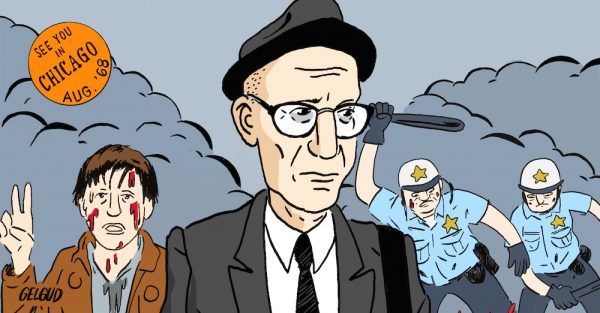
Drawing of William S. Burroughs by Nathan Gelgud/The Paris Review
America’s political circus will soon roll through Cleveland and then Philadelphia–the sites of the Republican and Democratic National Conventions. And, not without some merit, there’s concern that the carnivals could turn violent, as happened in 1968, when Chicago’s mayor Richard Daley, backed by 23,000 police and National Guardsmen, assaulted protesters in the streets. A federal report later called it a display of “unrestrained and indiscriminate police violence.”
This week, that tumultuous ’68 convention is being commemorated in a comic over at The Paris Review. Issued in daily installments by illustrator Nathan Gelgud, the comic–simply titled “Unconventional”–looks at the writers, artists, and demonstrators who attended the convention.Part 1 features poet, singer, activist Ed Sanders. Part 2 puts Jean Genet center stage (who knew he was there?). Part 3 focuses on Norman Mailer, who was always ready for a fight. Part 4 gives us the inimitable William S. Burroughs, and Part 5, Terry Southern. You can follow the series here.
If you would like to support the mission of Open Culture, consider making a donation to our site. It’s hard to rely 100% on ads, and your contributions will help us continue providing the best free cultural and educational materials to learners everywhere. You can contribute through PayPal, Patreon, and Venmo (@openculture). Thanks!
Nature’s way is to take away from those that have too much and give to those that have too little. Man’s way, on the contrary, is to take away from those who have too little to give more to those who already have too much.
Two and a half thousand years later, the ancient sage’s quote continues to resonate, especially in this election year.
Lest we get too gloomy, there is another quote I would like to submit:
And isn’t this a nutty kinda country where you can draw any irreverent, degrading thing about the most powerful people and nobody cares! You don’t get jailed. You don’t get persecuted. They just ice you out of the marketplace.
Crumb is to underground comix as Lao Tzu was to Taoism, but the fame Crumb achieved in the late 60s and early 70s did not protect him from the 80s, “an awful decade” as he told the Observer. His astonishing creative output never flagged, but he hated the culture and struggled to make ends meet:
…it all gradually fell apart through the 70s, and by the 80s with the rise of the yuppies, Reagan’s election and the real estate boom. In California it was always about real estate ever since the Gold Rush, but the 80’s saw a new explosion of it. They went crazy. Everybody was getting their real estate license. They kept on building these hideous housing developments where we lived. It used to be farmland there when we first arrived, then everything became a fight. Dow Chemical tried to come there, we fought that. Then the Super Collider, we fought that. It was this constant battle against these forces of development and business.
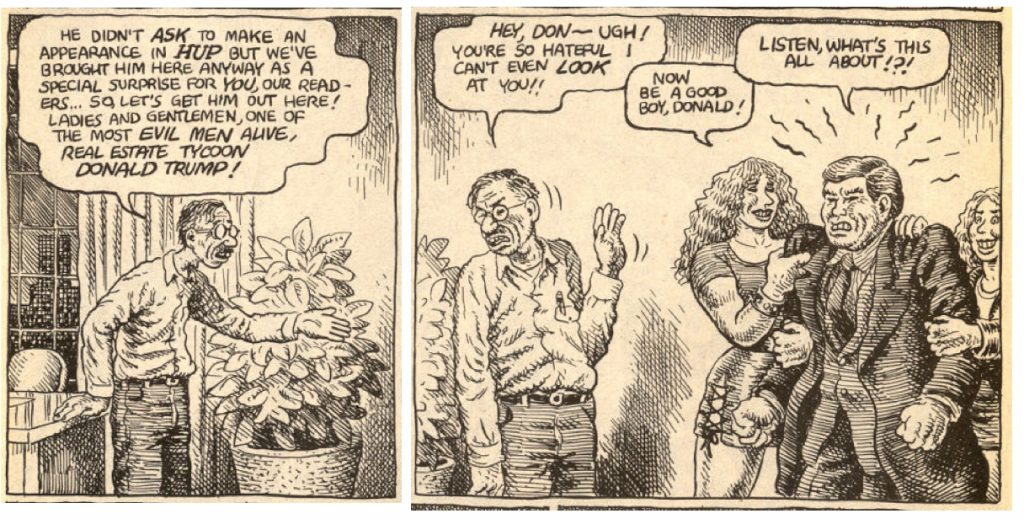
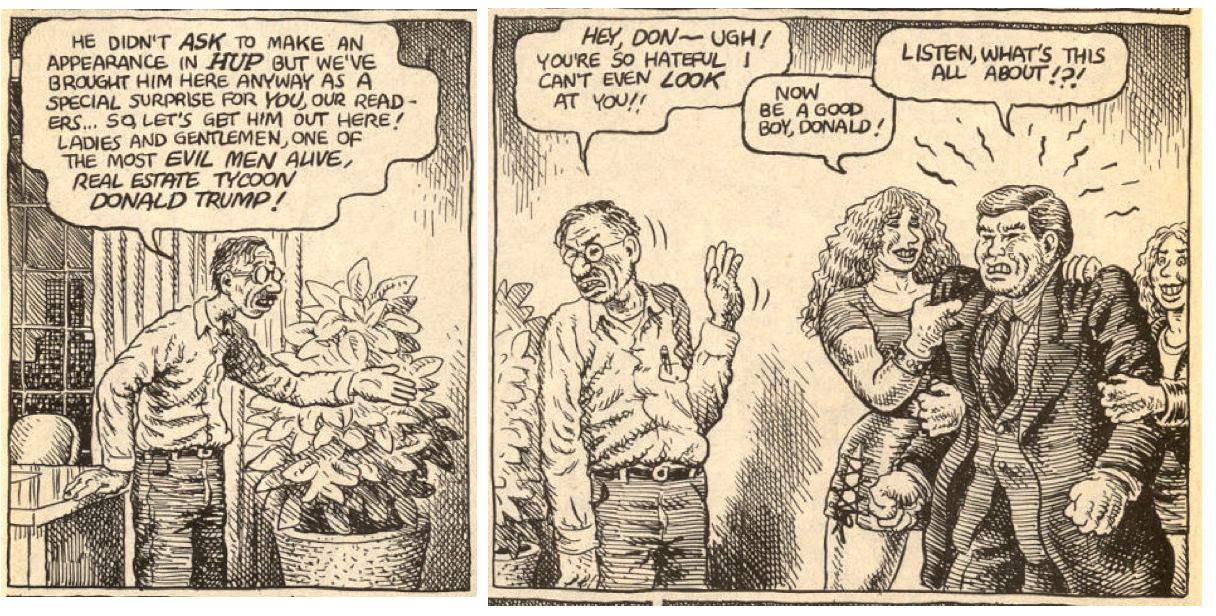
In 1991, he fled America for a small village in Southern France, a prescient move, given “Point the Finger,” a comic published two years earlier in his short-lived Hup series. The semi-fictional five-pager pits Crumb himself against real estate developer Donald Trump, billed as “one of the more visible big time predators who feed on society,” as well as “one of the most evil men alive.”
The then-42-year-old Trump is quick to take Crumb’s bait, piling on some insults of his own. He may not be familiar with the cartoonist’s work, but he knows how to mount an attack, with labels like “crass,” “venal,” “some kind of self-styled terrorist,” “the picture of negativity,” and “filled with hate.” Had Crumb set this smack down on a beach, Trump would be the bully kicking sand in the scrawny nerd’s face, as a couple of hot babes look on, admiringly.
In fact, the comic comes very close to ending on such a note. Two of Crumb’s characteristically powerfully-thighed females are on hand, ostensibly as members of his camp. Their heads are quickly turned, however, by an invitation to Mar-a-Lago, Trump’s lavish Palm Beach estate. The Donald starts looking pretty good to Tracy and Marny, bedazzled by the promise of banquets, manicures, world-class entertainment, and a hedonistic after-hours romp with Trump and his then-wife Ivana.
The cartoonist, defeated, compares the tycoon to Trimalchio, the vulgar but loaded host of Petronius’ Satyricon, before preparing to take things out with the Lao Tzu quote at the top of this post.
It’s here that things take a turn for the meta, as Stan “the Man” Shnooter, the self-assured fictional producer of Hup, rallies Crumb to assert authorial control.
Crumb rewinds to a pivotal moment. In this redo, Tracy and Marny remain steadfast. The bully is frogmarched to the toilet to be given a taste of his own medicine. The saga draws to a close with the sort of acrobatic, questionably consensual, NSFW sex that has rained feminist ire on Crumb for years, as the unlikely conquerer savors victory in his preferred style.
Is it fantasy? Reality? All just a dream?
(Any way you slice it, I’m pretty sure Tracy and Marny aren’t the winners…)
You can check out Crumb’s 1989 Trump comic in its extremely NSFW entirety here or buy Hup, Issue 3 to read it the old fashioned way. Some of the tamer panels can be sampled here.
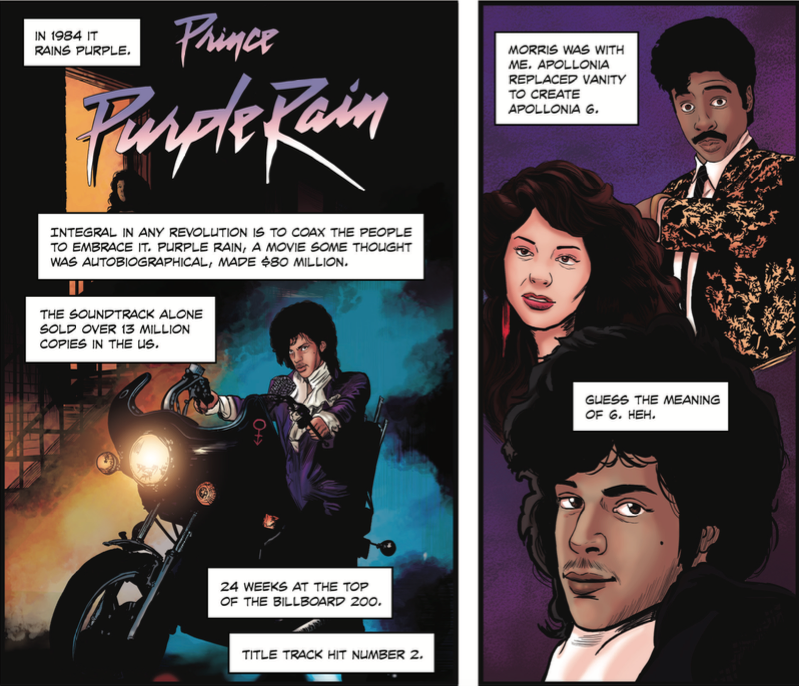
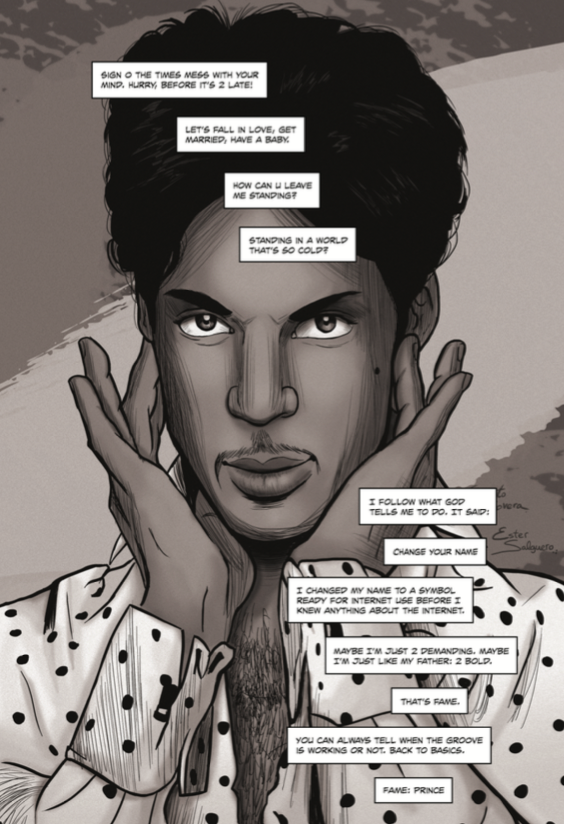
Since Prince’s death in April, writers have been trying to sum up a life lived that was both very private and yet also felt like it existed in our DNA. Much like Bowie, the Prince we knew was the one we shared and we saw and we sang. So how to get that life into a 24 page comic book?
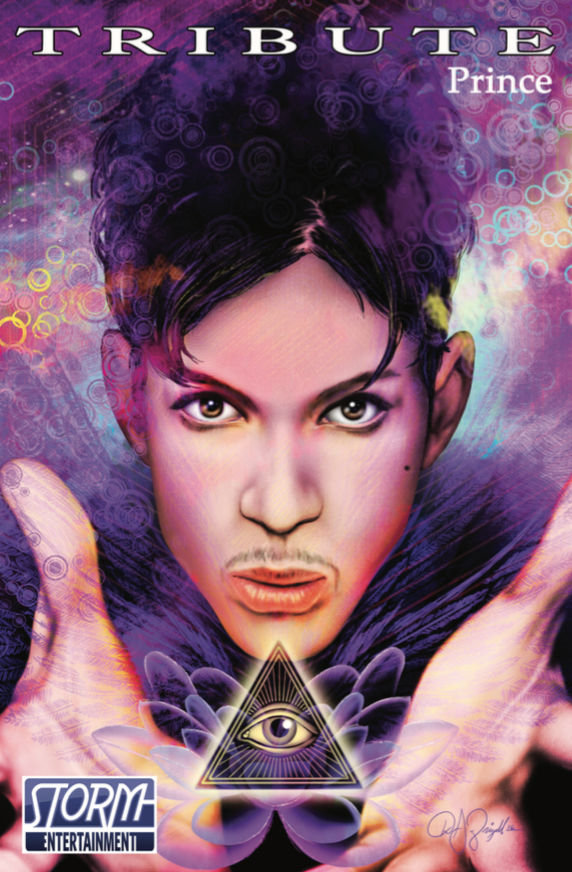
Released June 7th on Prince’s birthday, Tribute: Prince is a primer on the musician’s life and passing written by Michael L. Frizell and illustrated by Spanish artist Ernesto Lovera. The comic actually dates from 2013, when it was released as Fame: Prince, but Italian illustrator Vincenzo Sansone has concluded the story of his life with three extra pages now added to the tale, which alludes to Prince’s opioid use, his demanding schedule, and the public reaction to his passing.
Frizell starts the tale from a fan’s perspective, as a teen girl in 1984, secretly enjoying his music, hiding the fact from her parents. The story then jumps back to Prince’s childhood, his struggle to get a recording contract, and his explosive fame. Readers will spot numerous allusions to Prince’s lyrics in the text, as well. Frizell has also written issues of Tribute about David Bowie and Motley Crüe, and said in a promo statement, “The subjects of [Prince’s] songs spoke to me in ways I didn’t understand until I was older, but the dark poetry of them compelled me to keep listening. To this day, my iPod is full of his work and I listen to it as I write.”
Ted Mills is a freelance writer on the arts who currently hosts the artist interview-based FunkZone Podcast. You can also follow him on Twitter at @tedmills, read his other arts writing at tedmills.com and/or watch his films here.
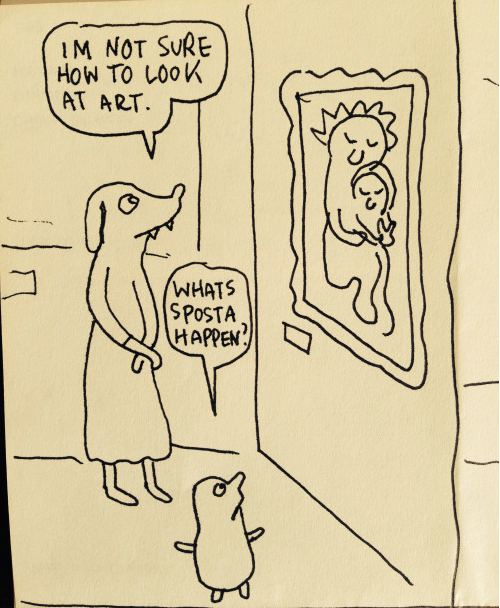
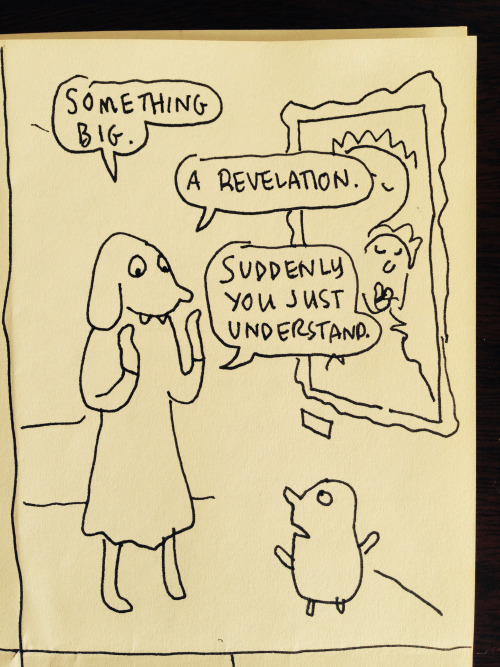
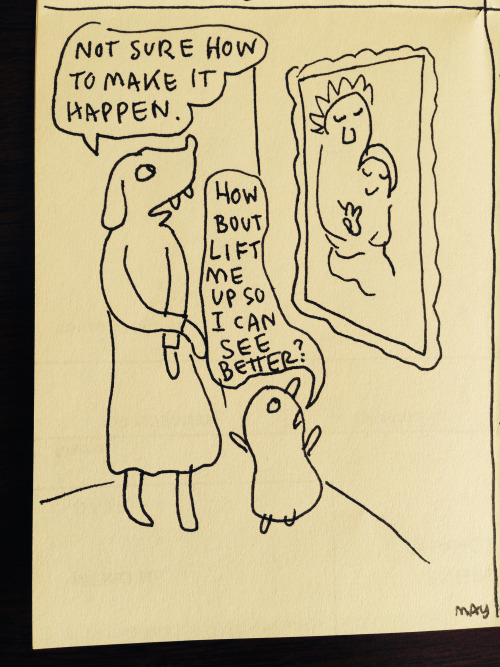
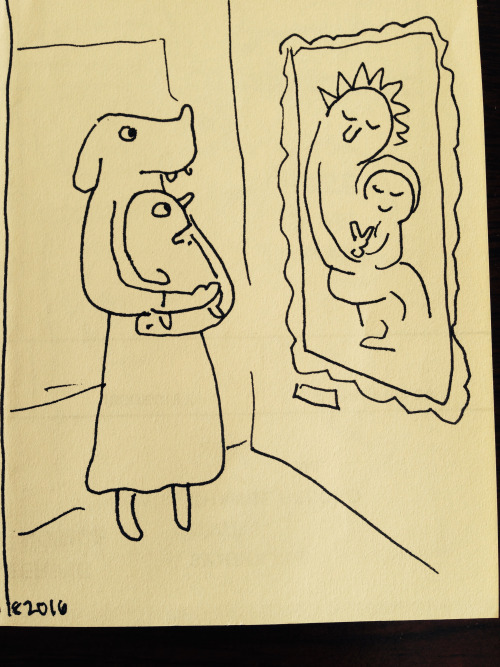
Despite the small, narrative doodle posted to her Tumblr a couple of weeks back, inspirational teacher and cartoonist Lynda Barry clearly has no shortage of strategies for viewing art in a meaningful way.
She takes a Socratic approach with students and readers eager to forge a deeper personal connection to images.
She traces this tendency back forty years, to when she studied with Marilyn Frasca at Evergreen State College. Could Frasca have anticipated what she wrought when she asked the young Barry, “What is an image?”
For Barry, who claims to have spent over forty years trying to answer the above question, there will almost always be an emotional component. In a 2010 interview with The Paris Review, she addressed the ways in which art, visual and otherwise, can fill certain crucial holes:
In the course of human life we have a million phantom-limb pains—losing a parent when you’re little, being in a war, even something as dumb as having a mean teacher—and seeing it somehow reflected, whether it’s in our own work or listening to a song, is a way to deal with it.
The Greeks knew about it. They called it catharsis, right? And without it we’re fucked. I think this is the thing that keeps our mental health or emotional health in balance, and we’re born with an impulse toward it.
No wonder the snaggle-toothed dog woman on Barry’s Tumblr looks so anxious. She craves that elusive something that never much troubled Helen Hockinson’s museum-going comic matrons.
(Had revelation been on the menu, those ladies would have dutifully paged through the most highly recommended guidebook of the day, confident they’d find it within those pages.)
These days, the internet abounds with pointers on how to get the most from art.
Another critic, New York magazine’s firebrand, Jerry Saltz, recommends an aggressively tactile approach for those who would look at art like an artist. Get up close. Cop a feel. Try to see how any given piece is made. (He himself is given to contemplating art with his hips thrust forward and head tilted back as far as it will go, in duplication of Jasper Johns’ stance.)
Of course, some of us don’t mind a hint or two to help us feel we’re on the right track. Those in that camp might enjoy the Metropolitan Museum of Art’s 82nd and 5th series, in which expert curators wax rhapsodic about their love of particular works in the collection.
You understand that this is just the tip of the proverbial ‘berg…
Readers, if you have any tips for achieving revelation through art, please share them by leaving a comment below.
And don’t forget to lift your shorter companion up so he can see better.
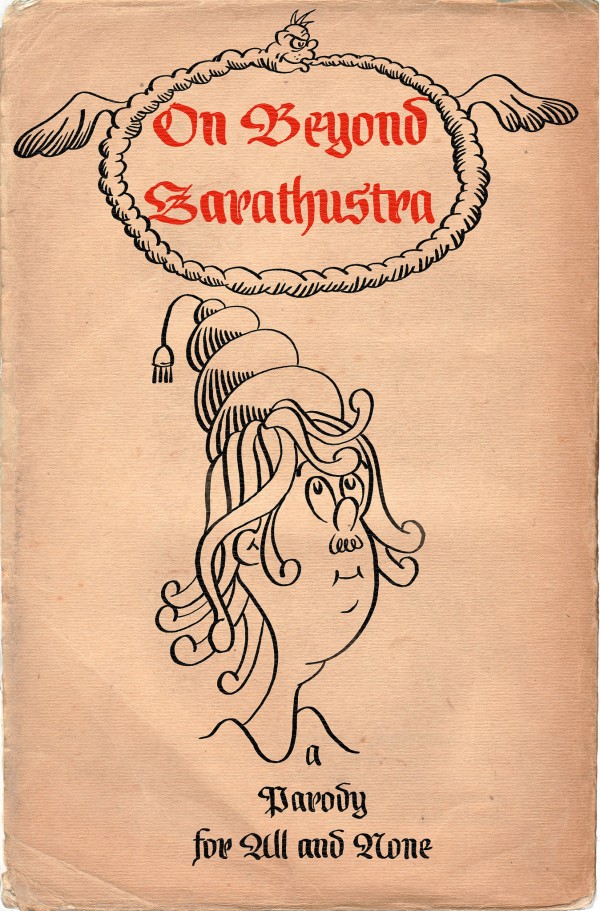
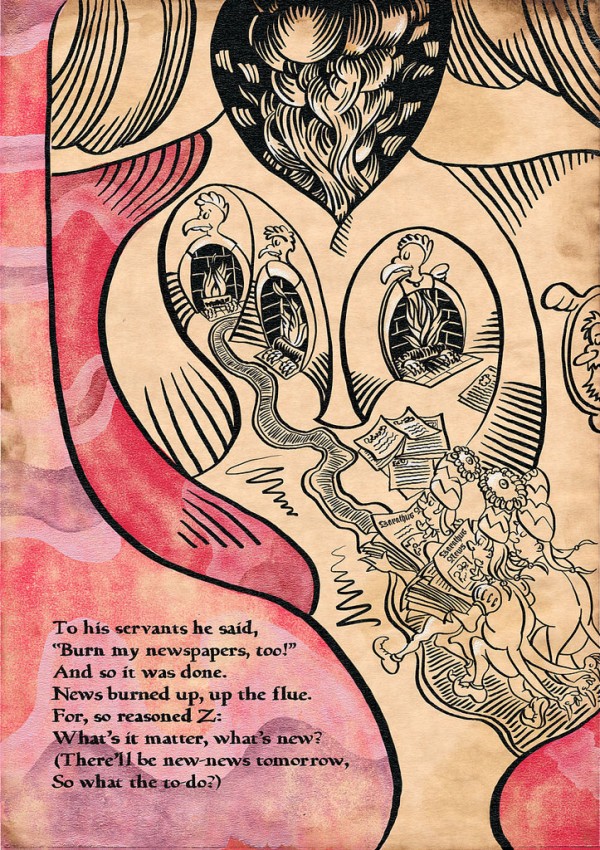
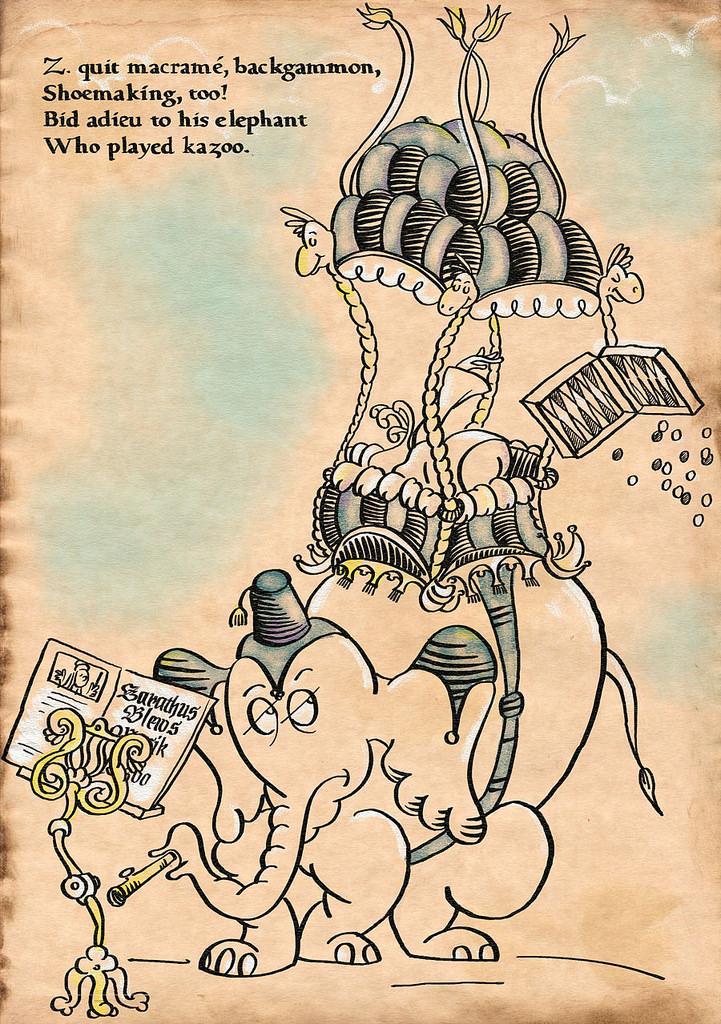
John Holbo, a philosophy prof at the National University of Singapore, recently gave the world a free illustrated edition of three dialogues by Plato (get it as a free PDF, or via Amazon). Now he’s embarking on a new creative project called On Beyond Zarathustra.
Over on the Crooked Timber blog, Holbo light-heartedly launched the project with these words:
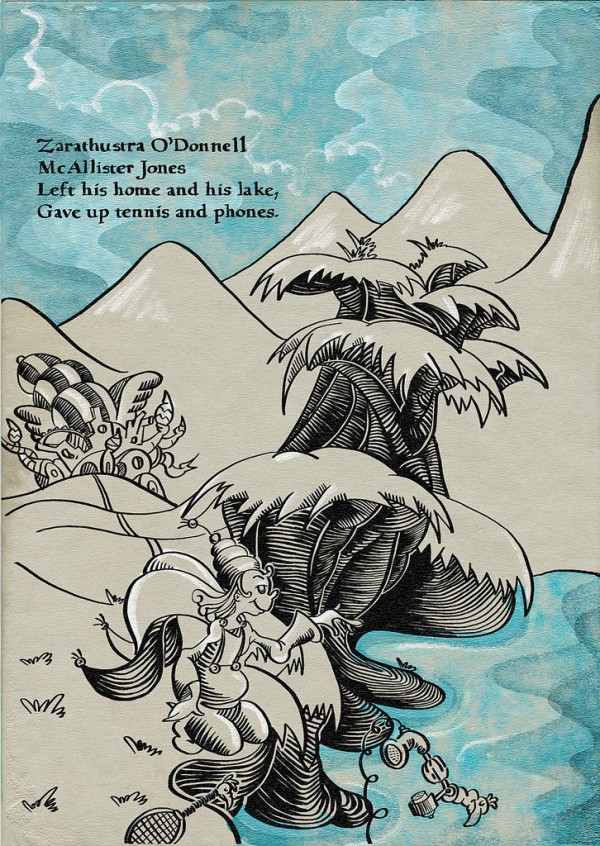
Ever since Plato wrote Socrates “Will You Please Go Now!” and “If I Ran The Polis!” great philosophers have mostly started out as authors of (what we would now call) Dr. Seuss-style children’s books. A lot of this old stuff has been lost. Scholars have neglected it. But I’m undertaking a project of restoration and study, starting with Nietzsche.
I’ll be posting updates regularly to the Flickr page – few pages a week as my work proceeds. We’re just getting to the good bits: The Rope Dancer and the Last Man!
Please do feel to share with any friends who may have a scholarly interest in the historiography of philosophy. (I’ll have some more notes about that soon.)
We’ve posted here the first four pages of Holbo’s new graphical project.
To see how the project unfolds, you can regularly visit this album on Flickr. The are currently 22 pages, with the promise of many more to come soon.
And, take note, once he’s done with Friedrich, Holbo promises to turn to Descartes and Kierkegaard and give them the same Dr. Seuss treatment. Enjoy the ride.
If you would like to support the mission of Open Culture, consider making a donation to our site. It’s hard to rely 100% on ads, and your contributions will help us continue providing the best free cultural and educational materials to learners everywhere. You can contribute through PayPal, Patreon, and Venmo (@openculture). Thanks!
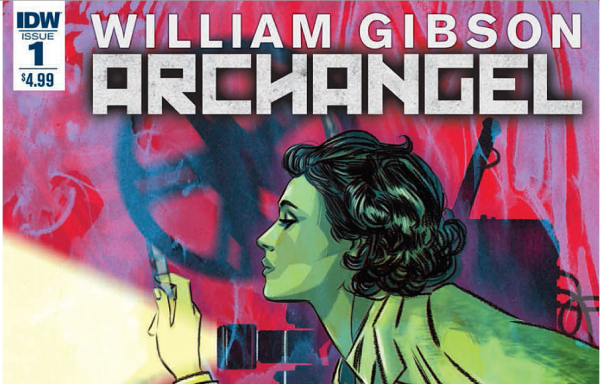
“The world is in ruins. The White House relocated to the ominous-sounding National Emergency Federal District in Montana. They have technology that far outstrips our own.” A dystopian vision of the distant future? Nope, a dystopian vision of February 2016 — the February 2016 of Archangel, a new comic-book series from actor-writer Michael St. John Smith, artist Butch Guice, and none other than novelist William Gibson, author of such sui generis works of science fiction, pillars of cyberpunk, or prophecies of the present as Neuromancer, All Tomorrow’s Parties, Pattern Recognition, and most recently The Peripheral, a predecessor, in a way, of Archangel’s story that plays out on more than one timeline.
“A father and son occupy the new White House as President and Vice President,” writes Ars Technica’s Jonathan M. Gitlin. The younger overlord of America “has been surgically altered to resemble his grandfather, because Junior is about travel to an alternate Earth in 1945 to take grandpa’s place, with the intent of remaking that world more to his liking.” In response, “a pair of tattooed Marines go back in time to stop him, but things start to unravel when their stealth plane materializes in a formation of B‑17s in the skies above Berlin.” In that alternate 1945, “British intelligence officer Naomi Givens is tasked with finding out what just fell out of the skies of Berlin.” If you feel your curiosity piqued — and how couldn’t you? — you can read through (above) pages of Archangel’s first issue, whose paper version quickly sold out. (You can also purchase the digital one here.)
As the series goes on, it will surely deliver more of the “alternate-history/cross-worlds story” that Gibson describes as “Band Of Brothers vs. Blackwater,” not to mention plenty of heroics on the part of another one of his signature protagonists, the “over-the-top female character who just never gets killed.” Enthusiasts of both comic books and William Gibson have long and patiently waited for those worlds to collide, and they’ll presumably wait a little less patiently for Archangel’s next issue, since its first one holds out enough promise to make them want to time-travel back to an alternate 1984, the year of Neuromancer’s publication, and get its author writing comics right away.
It is widely accepted among scholars that the first few books of the Bible—including, of course, Genesis, with its creation myths and flood story—are a patchwork of several different sources, pieced together by so-called redactors. This “documentary hypothesis” identifies the literary characteristics of each source, and attempts to reconstruct their different theological and political contexts. Primarily refined by German scholars in the late nineteenth century, the theory is very persuasive, but can also seem pretty schematic and dry, robbing the original texts of much of their liveliness, rhetorical power, and ancient strangeness.
Another German scholar, Hermann Gunkel, approached Genesis a little differently. “Everyone knows”—write the editors of a scholarly collection on the foundational Biblical text—Gunkel’s “motto”: “Genesis ist eine Sammlung von Sagen”—“Genesis is a collection of popular tales.” Rather than reading the various stories contained within as historical narratives or theological treatises, Gunkel saw them as redacted legends, myths, and folk tales—as ancient literature. “Legends are not lies,” he writes in The Legends of Genesis, “on the contrary, they are a particular form of poetry.”
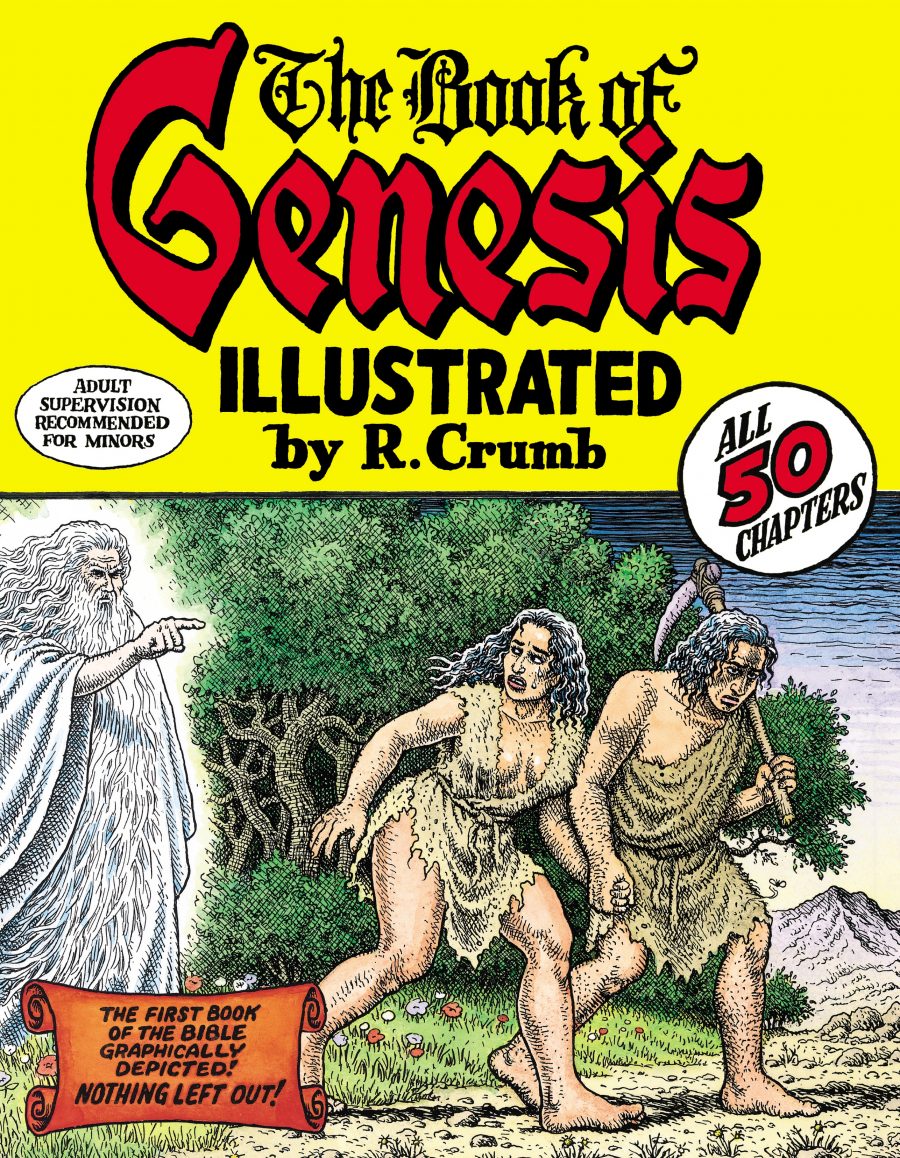
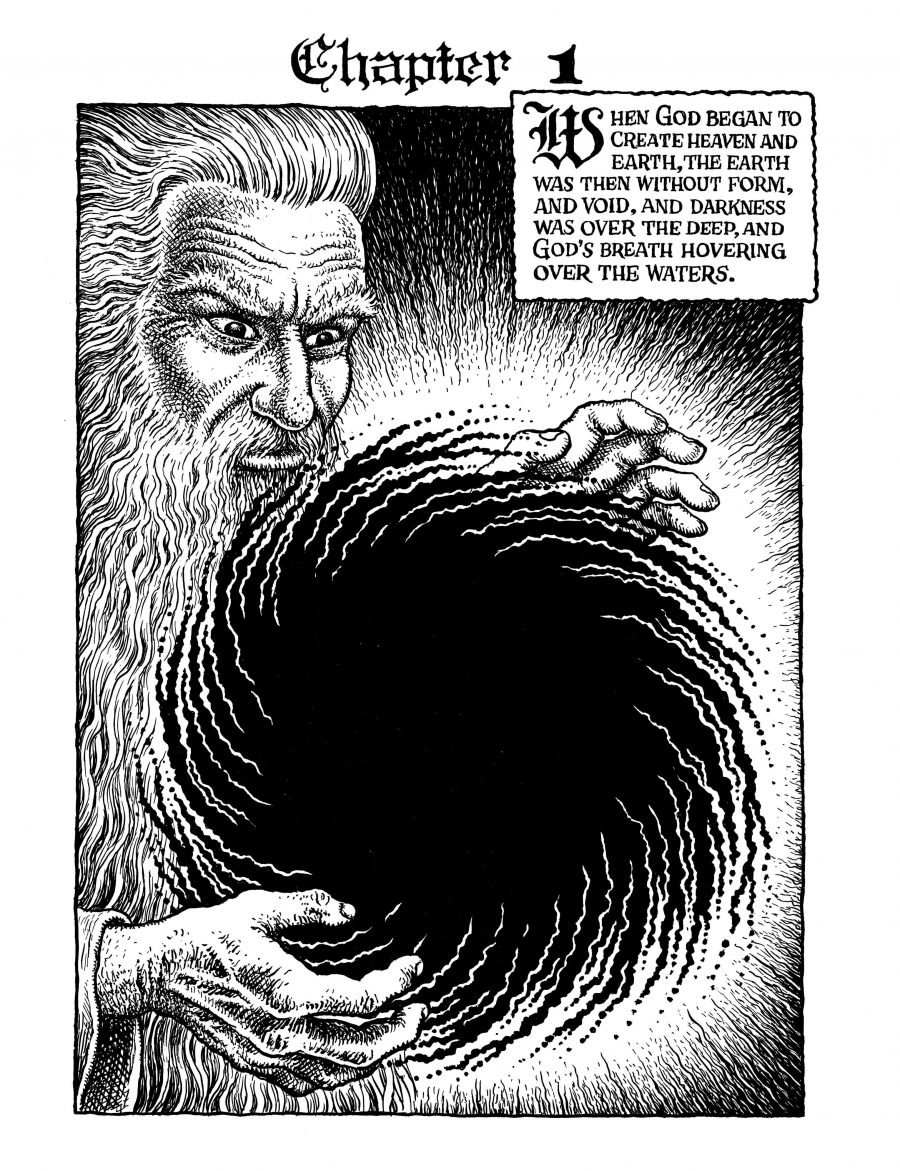
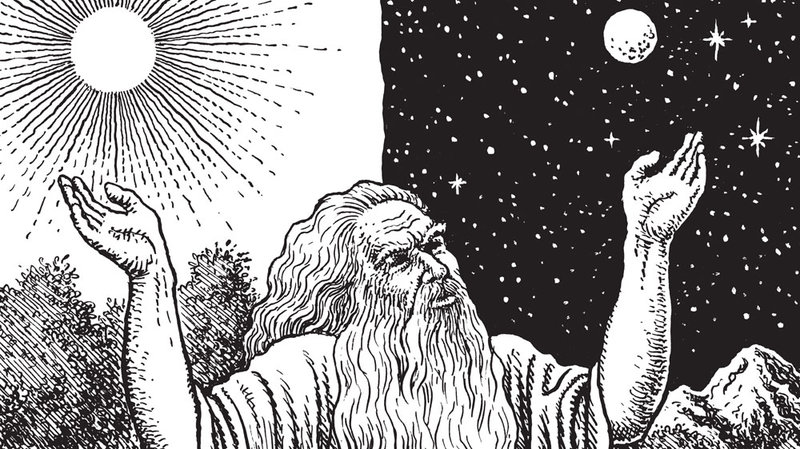
Such was the approach of cartoonist and illustrator Robert Crumb, who took on illustrating the entire book of Genesis, “a text so great and so strange,” he says, “that it lends itself readily to graphic depictions.” In the short video above, Crumb describes the creation narrative in the ancient Hebrew book as “an archetypal story of our culture, such a strong story with all kinds of metaphorical meaning.” He also talks about his genuine respect and admiration for the stories of Genesis and their origins. “You study ancient Mesopotamian writings,” says Crumb, “and there’s all of these references in the oldest Sumerian legends about the tree of knowledge” and other elements that appear in Genesis, mixed up and redacted: “That’s how folk legends and all that shit evolve over centuries.”
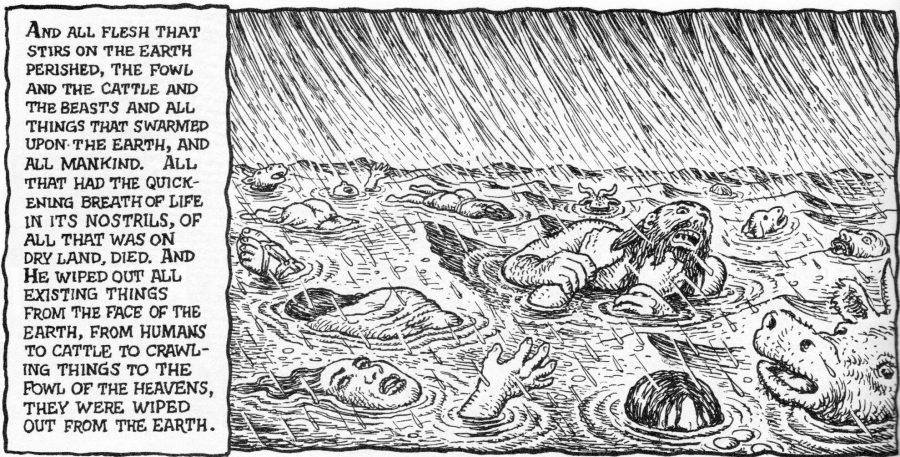
The Biblical book first struck Crumb as “something to satirize,” and his initial approach leans on the irreverent, scatological tropes we know so well in his work. But he instead decided to produce a faithful visual interpretation of the text just as it is, illustrating each chapter, all 50, word for word. The result, writes Colin Smith at Sequart, is “idiosyncratic, tender-hearted and ultimately inspiring.” It is also a critical visual commentary on the text’s central character: Crumb’s God “is regularly, if not exclusively, portrayed as an unambiguously self-obsessed and bloodthirsty despot, terrifying in his demands, terrifying in his brutality.” Arguably, these traits emerge from the stories unaided, yet when we’re told, for example, that “The Lord regretted having made man on Earth and it grieved him in his heart,” Crumb “shows us nothing of regret and grief, but rather a furious old dictator apparently tottering on the edge of madness.”
“It’s not the evil of men that Crumb’s concerned with,” writes Smith, “so much as the psychology of a creature who’d slaughter an entire world.” In that interpretation, he echoes critics of the Bible’s theology since the Enlightenment, from Voltaire to Christopher Hitchens. But he doesn’t shy away from graphic depictions of human brutality, either. Crumb’s move away from satire and decision to “do it straight,” as he told NPR, came from his sense that the sweeping, violent mythology and “soap opera” relationships already lend themselves “to lurid illustration”—his forté. Originally intending to do just the first couple chapters “as a comic story,” he soon found he had a market for all 50 and “stupidly said, ‘okay, I’ll do it.’” The work—undertaken over four years—proved so exhausting, he says he “earned every penny.”
Does Crumb himself identify with the religious traditions in Genesis? Raised a Catholic, he left the church at 16: “I have my own little spiritual quest,” Crumb says, “but I don’t associate it with any particular traditional religion. I think that the traditional Western religions all are very problematic in my view.” That said, like many nonreligious people who read and respect religious texts, he knows the Bible well—better, it turned out, than his editor, a self-described expert. “I just illustrate it as it’s written,” said Crumb, “and the contradictions stand.”
When I first illustrated that part, the creation, where there’s basically two different creation stories that do contradict each other, and I sent it to the editor at Norton, the publisher, who told me he was a Bible scholar. And he read it, and he said wait a minute, this doesn’t make sense. This contradicts itself. Can we rewrite this so it makes sense? And I said that’s the way it’s written. He said, that’s the way it’s written? I said, yeah, you’re a Bible scholar. Check it out.
It would be a long time before such innovations as seat belts, baby seats, and airbags were introduced. These safety measures do a fine job of minimizing human damage in motor vehicle accidents, but they can’t prevent the collisions themselves.
To remedy this, Ford, the company responsible for the Model T and hundreds of motor vehicles since, recently enlisted Jaffee and his fellow cartoonists, MK Brown and Bill Plympton, to educate the public on the dangers of distracted driving. Turns out this preventable scourge rivals intoxication and hazardous road conditions as a leading cause of accidents.
Jaffee’s take, animated by J.J. Sedelmaier, above, will never be mistaken for filmmaker Werner Herzog’s harrowing anti-texting documentary PSA, From One Second to the Next, or even Jaffee’s own anti-drunk driving fold-in from MAD’s March 1975 issue.
Instead, he offers a gentle, child-friendly metaphor in which an uncaged bird becomes a havoc-wreaking distraction. (Fortunately, everyone’s wearing his seatbelt, and the little boy is riding in back, in compliance with CDC recommendations.)
National Lampoon alum, Brown, tiptoes closer to the true causes of distraction, with the alien-themed segment, above, also animated by Sedelmaier. If it seems likelier that the alien’s earthling wife might do her henpecking via text rather than actual call these days—well, sometimes dramatic liberties are warranted to get the message across.
Unsurprisingly, Plympton’s self-animated contribution is the most graphic, a direct descendent of his fabulously grotesque cartoon primers 25 Ways To Quit Smoking and How To Kiss. Moral? Assuming you want to keep your teeth in your head, the vegetable matter wedged in between can wait ’til you reach your destination.
Ayun Halliday is an author, illustrator, and Chief Primatologist of the East Village Inky. Her plan for avoiding accidents is to refrain from driving whenever possible. Follow her @AyunHalliday
We're hoping to rely on loyal readers, rather than erratic ads. Please click the Donate button and support Open Culture. You can use Paypal, Venmo, Patreon, even Crypto! We thank you!
Open Culture scours the web for the best educational media. We find the free courses and audio books you need, the language lessons & educational videos you want, and plenty of enlightenment in between.