What Does Jorge Luis Borges’ “Library of Babel” Look Like? An Accurate Illustration Created with 3D Modeling Software

babel-offcenter2

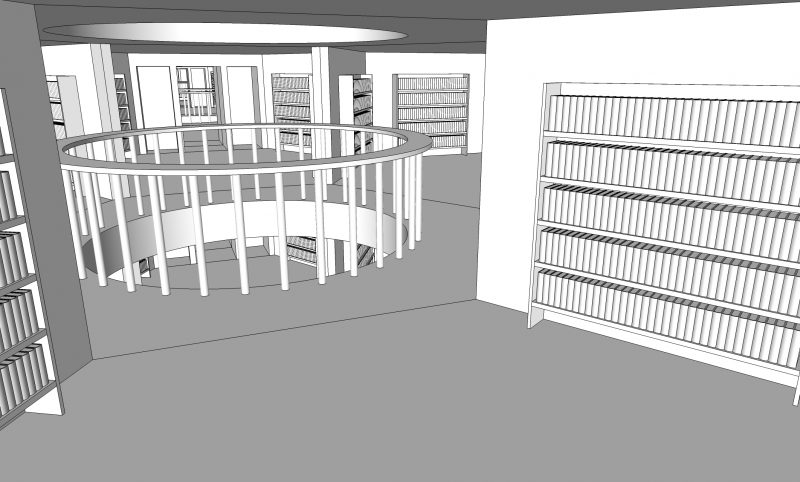
Sketchup ren­der­ings of the Library of Babel. Images cour­tesy of Jamie Zaw­in­s­ki.

Ful­fill­ing the max­im “write what you know,” Argen­tine fab­u­list Jorge Luis Borges penned one of his most extra­or­di­nary and bewil­der­ing sto­ries, “The Library of Babel,” while employed as an assis­tant librar­i­an. Borges, it has been noted—by Borges him­self in his 1970 New York­er essay “Auto­bi­o­graph­i­cal Notes”—found the work drea­ry and unful­fill­ing: “nine years of sol­id unhap­pi­ness,” as he put it plain­ly. “Some­times in the evening, as I walked the ten blocks to the tram­line, my eyes would be filled with tears.”

babel7

And yet, for all of its tedi­um, his library posi­tion suit­ed his needs as a writer like none oth­er could. “I would do all my library work in the first hour,” he remem­bers, “and then steal away to the base­ment and pass the oth­er five hours in read­ing or writ­ing.” Dur­ing those stolen hours, Borges dreamed up a library the size of the uni­verse, “com­posed of an indef­i­nite and per­haps infi­nite num­ber of hexag­o­nal gal­leries, with vast air shafts between, sur­round­ed by very low rail­ings.” Like so many of the objects and places in Borges’ sto­ries, this fan­tas­tic struc­ture, Esch­er-like, is both vivid­ly described and impos­si­ble to imag­ine.

babel5

Many have tried their hand at visu­al­ly ren­der­ing the Library of Babel, but accord­ing to pro­gram­mer Jamie Zaw­in­s­ki, “past attempts,” writes Carey Dunne at Hyper­al­ler­gic, “aren’t faith­ful to the text,” omit­ting cru­cial struc­tures like the “sleep cham­ber, lava­to­ry, and hall­way” and screw­ing up “the place­ment of the spi­ral stair­way.” You can see Zawinski’s var­i­ous cri­tiques of these sup­posed fail­ures on his blog, JWZ. And you may won­der how it’s even pos­si­ble to con­struct an accu­rate mod­el of a struc­ture that may have no finite bound­aries and whose inter­nal archi­tec­ture the sto­ry itself calls into ques­tion. Nonethe­less, Zaw­in­s­ki has bold­ly giv­en it a try.

babel9

Using the 3D mod­el­ing pro­gram Sketchup, he has designed what he believes to be a mod­el supe­ri­or to the rest, though he admits “I don’t think this is quite right either.” If you’re won­der­ing “Why is he doing this?” Zaw­in­s­ki writes, “you and I have that in com­mon.” The Bor­ge­sian task, like that of the librar­i­an, is an end­less one, pur­sued with scholas­tic rig­or for its own sake rather than for some great reward. And once one enters the labyrinth of his twist­ing designs, there may be no way out but eter­nal­ly through. “The pos­si­bil­i­ty of a man’s find­ing his Vin­di­ca­tion,” writes Borges weari­ly of cer­tain librar­i­ans’ attempts to solve the library’s rid­dles, “or some treach­er­ous vari­a­tion there­of, can be com­put­ed as zero.”

babel4

So Zaw­in­s­ki trudges on. His “wrestling with the details of his ren­der­ing,” writes Dunne, “his obses­sive analy­sis of the word­ing of Borges’ descrip­tion, recalls the library inhab­i­tants’ futile quests to deci­pher the mys­ter­ies of the library.” The programmer’s admirable atten­tion to the physics of the space may at times sound like a rather lead­en way to approach what is essen­tial­ly an elab­o­rate metaphor: “I can’t help but think about the weight and pres­sure of a col­umn of air that high,” he mus­es in his ini­tial explo­rations, “and what is it sit­ting on, and how to route the plumb­ing from all of those toi­lets, and that toi­lets imply diges­tion, so where does the food come from?”

Such ques­tions take him far afield of Borges’ theo-philo­soph­i­cal para­ble: “Is there a sec­tion of the library devot­ed to farm­ing, and met­al­lur­gy?” Nonethe­less, Zawinski’s detailed analy­sis has pro­duced a visu­al­iza­tion of the space like none oth­er, and he admits to “over­think­ing a sub-infi­nite but near­ly bound­less hill of beans.” Borges’ imag­i­nary librar­i­an has aban­doned try­ing to solve the library’s mys­ter­ies. Hum­bled by the fail­ures of those who came before him, he per­sists in the “ele­gant hope” that the library “is unlim­it­ed and cycli­cal… repeat­ed in the same dis­or­der… which, thus repeat­ed, would be an order: the Order.” He wise­ly leaves the ulti­mate meta­phys­i­cal dis­cov­ery, how­ev­er, to “an eter­nal trav­el­er” with infi­nite time on their hands.

You can view Zawinski’s com­men­tary here, and see his designs here. On the bot­tom of this page, he lets you down­load his Sketchup file.

via Hyper­al­ler­gic

Relat­ed Con­tent:

Vis­it The Online Library of Babel: New Web Site Turns Borges’ “Library of Babel” Into a Vir­tu­al Real­i­ty

Jorge Luis Borges Selects 74 Books for Your Per­son­al Library

Jorge Luis Borges’ Favorite Short Sto­ries (Read 7 Free Online)

Josh Jones is a writer and musi­cian based in Durham, NC. Fol­low him at @jdmagness

Learn to Code with Harvard’s Popular Intro to Computer Science Course: The 2016 Edition

This fall, Har­vard has been rolling out videos from the 2016 edi­tion of Com­put­er Sci­ence 50 (CS50), the uni­ver­si­ty’s intro­duc­to­ry cod­ing course designed for majors and non-majors alike. Taught by David Malan, a peren­ni­al­ly pop­u­lar pro­fes­sor (you’ll imme­di­ate­ly see why), the one-semes­ter course (taught most­ly in C) com­bines cours­es typ­i­cal­ly known else­where as “CS1” and “CS2.”

Even if you’re not a Har­vard stu­dent, you’re wel­come to fol­low CS50 online by head­ing over to this site here. There you will find video lec­tures (stream them all above or access them indi­vid­u­al­ly here), prob­lem sets, quizzes, and oth­er use­ful course mate­ri­als. Once you’ve mas­tered the mate­r­i­al cov­ered in CS50, you can start branch­ing out into new areas of cod­ing by perus­ing our big col­lec­tion of Free Online Com­put­er Sci­ence Cours­es, a sub­set of our larg­er col­lec­tion, 1,700 Free Online Cours­es from Top Uni­ver­si­ties

If you would like to sup­port the mis­sion of Open Cul­ture, con­sid­er mak­ing a dona­tion to our site. It’s hard to rely 100% on ads, and your con­tri­bu­tions will help us con­tin­ue pro­vid­ing the best free cul­tur­al and edu­ca­tion­al mate­ri­als to learn­ers every­where. You can con­tribute through Pay­Pal, Patre­on, and Ven­mo (@openculture). Thanks!

Relat­ed Con­tent:

Free Text­books: Com­put­er Sci­ence

Free Online Com­put­er Sci­ence Cours­es

Codecademy’s Free Cours­es Democ­ra­tize Com­put­er Pro­gram­ming

by | Permalink | Make a Comment ( 2 ) |

Hear the First Recording of Computer Generated Music: Researchers Restore Music Programmed on Alan Turing’s Computer (1951)

1944colossus

How­ev­er you feel about elec­tron­ic music, you’ll still find your­self lis­ten­ing to it most places you go. For bet­ter or worse, it has become mood music, sooth­ing the jan­gled nerves of cus­tomers in cof­fee shops and lulling bou­tique shop­pers into a pleas­ant sense of hip. Some com­put­er music pio­neers have moved on from com­pos­ing their own music to mak­ing com­put­ers do it for them. It’s pre­cise­ly the kind of thing I imag­ine Alan Tur­ing might have pur­sued had the com­put­er sci­ence giant also been a musi­cian.

In fact, Tur­ing did inad­ver­tent­ly cre­ate a com­put­er that could play music when he input a sequence of instruc­tions into it, which relayed sound to a loud­speak­er Tur­ing called “the hoot­er.” By vary­ing the “hoot” com­mands, Tur­ing found that he could make the hoot­er pro­duce dif­fer­ent notes, but he was “not very inter­est­ed in pro­gram­ming the com­put­er to play con­ven­tion­al pieces of music,” note Jack Copeland and Jason Long at the British Library’s Sound and Vision blog. Tur­ing “used the dif­fer­ent notes” as a rudi­men­ta­ry noti­fi­ca­tion sys­tem, “to indi­cate what was going on in the com­put­er.”

Instead, the task fell to school­teacher, pianist, and future com­put­er sci­en­tist Christo­pher Stra­chey to cre­ate the first com­put­er-gen­er­at­ed music, using Turing’s gigan­tic Mark II, its pro­gram­ming man­u­al, and “the longest com­put­er pro­gram ever to be attempt­ed.” After an all-night ses­sion, Stra­chey had taught the com­put­er to hoot out “God Save the Queen.” Upon hear­ing the com­po­si­tion the next morn­ing, Tur­ing exclaimed, “good show,” and Stra­chey received a job offer just a few weeks lat­er.

Once the BBC heard of the achieve­ment, they vis­it­ed Turing’s Com­put­ing Machine Lab­o­ra­to­ry and made the record­ings above in 1951, which include a ver­sion of Strachey’s “God Save the Queen” pro­gram and ren­di­tions of “Baa Baa Black Sheep” and Glenn Miller’s “In the Mood.” The “orig­i­nal 12-inch disc the melodies were record­ed on,” writes The Verge, “has been known about for a while, but when Copeland (a pro­fes­sor) and Long (a com­pos­er) lis­tened to it, they found the audio was not accu­rate.” The two describe in their blog post how they went about restor­ing the audio and how it came to exist in the first place.

While the music Turing’s com­put­er pro­duced sounds painful­ly prim­i­tive, it would be sev­er­al more years before com­posers began to real­ly exper­i­ment with com­put­er-gen­er­at­ed music beyond the rudi­men­ta­ry first steps, and well over a decade before the design of sys­tems that could oper­ate in real time.

Now, although they still require human input (“the sin­gu­lar­i­ty isn’t upon us,” writes Spin)com­put­ers have begun to com­pose their own music, like “Daddy’s Car,” a Bea­t­les-esque song gen­er­at­ed by a SONY CSL Research Lab­o­ra­to­ry AI called Flow Machine. Here, a com­pos­er mix­es and match­es dif­fer­ent ele­ments, a style, melody, lyrics, etc. from var­i­ous data­bas­es. The machine pro­duces the sounds. SONY labs have been gen­er­at­ing com­put­er-made jazz and clas­si­cal music for some time now—some of which we may have already heard as back­ground music.

As Spin points out, already a new start­up called Jukedeck promis­es to “gen­er­ate a song in the genre and mood of your choos­ing…” per­haps as “back­ground music for adver­tise­ments or YouTube vlogs.” True to the spir­it of the man who inad­ver­tent­ly invent­ed com­put­er music, and who the­o­rized how a com­put­er might demon­strate con­scious­ness, the soft­ware will ask you to con­firm that you are not a robot.

via The Verge

Relat­ed Con­tent:

The Enig­ma Machine: How Alan Tur­ing Helped Break the Unbreak­able Nazi Code

The His­to­ry of Elec­tron­ic Music, 1800–2015: Free Web Project Cat­a­logues the Theremin, Fairlight & Oth­er Instru­ments That Rev­o­lu­tion­ized Music

Pio­neer­ing Elec­tron­ic Com­pos­er Karl­heinz Stock­hausen Presents “Four Cri­te­ria of Elec­tron­ic Music” & Oth­er Lec­tures in Eng­lish (1972)

Josh Jones is a writer and musi­cian based in Durham, NC. Fol­low him at @jdmagness

Learn How to Code for Free: A DIY Guide for Learning HTML, Python, Javascript & More

free computer coding resources

This week, we’re launch­ing the begin­ning of a new, ongo­ing series. We’re cre­at­ing guides that will teach you how to learn impor­tant sub­jects on your own, using free resources avail­able on the web. Want an exam­ple? Just look below. Here you’ll find a list of free resources–online cours­es, instruc­tion­al videos, YouTube chan­nels, text­books, etc.–that will teach how to code for free. If we’re miss­ing great items, please add your sug­ges­tions in the com­ments below.

This col­lec­tion is just a start, and it will con­tin­ue to grow over time. In the mean­time, if there are oth­er guides you’d like to see us devel­op in the com­ing weeks, please let us know in the com­ments sec­tion too. We’re hap­py to get your feed­back.

How to Code (Soft­ware)

  • Codecad­e­my: A free site for learn­ing every­thing from Mak­ing a Web­site to Python in a “user active” style—meaning that users can use tuto­ri­als to design projects of their own choos­ing. The site also makes it easy to track your progress. Oth­er top­ics you can learn include: Cre­ate an Inter­ac­tive Web­siteRuby, Javascript, HTML & CSS, SQL and more. Reg­is­ter and sign up for all class­es here. (See our post on Codecad­e­my here.)
  • Code School: Code School cours­es are built around a cre­ative theme and sto­ry­line so that it feels like you’re play­ing a game, not sit­ting in a class­room. The site offers a set of free cours­es cov­er­ing JavaScript, jQuery, Python, Ruby and more.
  • Free Code Camp: An open source com­mu­ni­ty that helps you learn to code. You can work through self-paced cod­ing chal­lenges, build projects, and earn cer­ti­fi­ca­tions. Accord­ing to Wired, the site “fea­tures a sequence of online tuto­ri­als to help the absolute begin­ner learn become a web devel­op­er, start­ing with build­ing a sim­ple web­page. Stu­dents move on to pro­gram­ming with JavaScript and, even­tu­al­ly, learn­ing to build com­plete web appli­ca­tions using mod­ern frame­works such as Angu­lar and Node.”
  • The Odin Project: Made by the cre­ators of Viking Code School, an online cod­ing boot­camp, the Odin Project offers free cod­ing lessons in web devel­op­ment. Top­ics include: HTML, CSS, JavaScript & jQuery, Ruby pro­gram­ming, Ruby on Rails. Find an intro­duc­tion to the cur­ricu­lum here.
  • YouTube Chan­nels for Learn­ing Cod­ing: Chan­nels you might want to vis­it include:
    • Coder’s Guide: Fea­tures videos on HTML web devel­op­ment, cross-plat­­form Java pro­gram­ming, begin­ner .net pro­gram­ming with Visu­al Basic and client side JavaScript web devel­op­ment.
    • Code Course: Learn to code and build things with easy to fol­low tuto­ri­als. A num­ber of videos focus on PHP. Find more mate­ri­als on the chan­nel’s web site.
    • LearnCode.academyHTML, CSS, JavaScript, CSS Lay­outs, Respon­sive Design etc.
    • DevTips: Web design and web devel­op­ment.
    • The New Boston: Pro­gram­ming, web design, net­work­ing, video game devel­op­ment, graph­ic design, etc.
    • The Google Devel­op­ers Chan­nel: Offers lessons, talks, the lat­est news & best prac­tices in sub­jects like Android, Chrome, Web Devel­op­ment, Poly­mer, Per­for­mance, iOS & more.
    • You can find more YouTube Chan­nels here: 33 Use­ful Youtube-chan­nels for learn­ing Web Design and Devel­op­ment.
  • Free Pro­gram­ming Text­books from Github: Access 500+ “free pro­gram­ming books that cov­er more than 80 dif­fer­ent pro­gram­ming lan­guages on the pop­u­lar web-based Git repos­i­to­ry host­ing ser­vice.”
  • Free Com­put­er Sci­ence Text­books: On our site, find a list of free text­books (aka open text­books) writ­ten by knowl­edgable schol­ars.

Sources that helped us cre­ate this list above include: Inc., Learn to Code with Me, and Web­Build­De­sign.

If you would like to sup­port the mis­sion of Open Cul­ture, con­sid­er mak­ing a dona­tion to our site. It’s hard to rely 100% on ads, and your con­tri­bu­tions will help us con­tin­ue pro­vid­ing the best free cul­tur­al and edu­ca­tion­al mate­ri­als to learn­ers every­where. You can con­tribute through Pay­Pal, Patre­on, and Ven­mo (@openculture). Thanks!

by | Permalink | Make a Comment ( 6 ) |

The Princeton Bitcoin Textbook Is Now Free Online

free princeton bitcoin textbook

Image by Jason Ben­jamin, via Flickr Com­mons

On the Free­dom to Tin­ker blog, Arvind Narayanan, a com­put­er sci­ence pro­fes­sor at Prince­ton, announced yes­ter­day:

The first com­plete draft of the Prince­ton Bit­coin text­book is now freely avail­able. We’re very hap­py with how the book turned out: it’s com­pre­hen­sive, at over 300 pages, but has a con­ver­sa­tion­al style that keeps it read­able.

If you’re look­ing to tru­ly under­stand how Bit­coin works at a tech­ni­cal lev­el and have a basic famil­iar­i­ty with com­put­er sci­ence and pro­gram­ming, this book is for you. Researchers and advanced stu­dents will find the book use­ful as well — start­ing around Chap­ter 5, most chap­ters have nov­el intel­lec­tu­al con­tri­bu­tions.

Prince­ton Uni­ver­si­ty Press is pub­lish­ing the offi­cial, peer-reviewed, pol­ished, and pro­fes­sion­al­ly done ver­sion of this book. It will be out this sum­mer. If you’d like to be noti­fied when it comes out, you should sign up here.

The Prince­ton Bit­coin text­book is already being used in Amer­i­can uni­ver­si­ty class­rooms (includ­ing at Stan­ford) and it’s also the text that sup­ports a Prince­ton Bit­coin course being taught on Cours­era.

You can now find it added to our col­lec­tion of Free Text­books.

via Boing­Bo­ing

If you would like to sup­port the mis­sion of Open Cul­ture, con­sid­er mak­ing a dona­tion to our site. It’s hard to rely 100% on ads, and your con­tri­bu­tions will help us con­tin­ue pro­vid­ing the best free cul­tur­al and edu­ca­tion­al mate­ri­als to learn­ers every­where. You can con­tribute through Pay­Pal, Patre­on, and Ven­mo (@openculture). Thanks!

Relat­ed Con­tent:

Bit­coin, the New Decen­tral­ized Dig­i­tal Cur­ren­cy, Demys­ti­fied in a Three Minute Video

Harvard’s Free Com­put­er Sci­ence Course Teach­es You to Code in 12 Weeks

Cal­cu­lus Life­saver: A Free Online Course from Prince­ton

The Society of Mind: A Free Online Course from Marvin Minsky, Pioneer of Artificial Intelligence

This past week­end, Mar­vin Minksy, one of the found­ing fathers of com­put­er sci­ence, passed away at the age of 88. Edu­cat­ed at Har­vard and Prince­ton, The MIT Tech­nol­o­gy Review recalls, “Min­sky believed that the human mind was fun­da­men­tal­ly no dif­fer­ent than a com­put­er, and he chose to focus on engi­neer­ing intel­li­gent machines, first at Lin­coln Lab, and then lat­er as a pro­fes­sor at MIT, where he cofound­ed the Arti­fi­cial Intel­li­gence Lab in 1959 with anoth­er pio­neer of the field, John McCarthy.” Dur­ing the 1980s, Min­sky pub­lished The Soci­ety of Mind, a sem­i­nal work which posit­ed that there’s no essen­tial dif­fer­ence between humans and machines, because humans are “actu­al­ly machines of a kind whose brains are made up of many semi­au­tonomous but unin­tel­li­gent ‘agents’.” (Quote comes from this NYTimes obit, not Min­sky direct­ly).

Above, you can watch The Soci­ety of Mind taught as a free online course. Pre­sent­ed at MIT in 2011, Min­sky takes you through his the­o­ries about how the human mind works, empha­siz­ing “aspects of think­ing that are so poor­ly under­stood that they are still con­sid­ered to be more philo­soph­i­cal than sci­en­tif­ic.” The goal, how­ev­er, is to “replace ill-defined folk the­o­ries of ‘con­scious­ness’, ‘self’ and ’emo­tion’ with more con­crete com­pu­ta­tion­al con­cepts.” Lec­tures in the course include ones intrigu­ing­ly called “Falling in Love,” “From Pan­ic to Suf­fer­ing,” and “Com­mon Sense.” In addi­tion to The Soci­ety of Mind, the course also cen­ters around anoth­er book by Min­sky, The Emo­tion Machine, which you can pur­chase online here.

Min­sky’s course will be added to our col­lec­tion, 1,700 Free Online Cours­es from Top Uni­ver­si­ties. His book, The Emo­tion Machine, can be found in our oth­er col­lec­tion: 800 Free eBooks for iPad, Kin­dle & Oth­er Devices.

via Boing Boing/O’Reil­ly Radar

Relat­ed Con­tent:

Free Online Com­put­er Sci­ence Cours­es

The Feyn­man Lec­tures on Physics, The Most Pop­u­lar Physics Book Ever Writ­ten, Now Com­plete­ly Online

Harvard’s Free Com­put­er Sci­ence Course Teach­es You to Code in 12 Weeks

by | Permalink | Make a Comment ( 2 ) |

Learn to Code with Harvard’s Popular Intro to Computer Science Course: The 2015 Edition

Briefly not­ed: This fall, Har­vard has been rolling out videos from the 2015 edi­tion of Com­put­er Sci­ence 50 (CS50), the uni­ver­si­ty’s intro­duc­to­ry cod­ing course designed for majors and non-majors alike. Taught by David Malan, a peren­ni­al­ly pop­u­lar pro­fes­sor (you’ll imme­di­ate­ly see why), the one-semes­ter course (taught most­ly in C) com­bines cours­es typ­i­cal­ly known else­where as “CS1” and “CS2.”

Even if you’re not a Har­vard stu­dent, you’re wel­come to fol­low CS50 online by head­ing over to the This is CS50 web­site, or this alter­na­tive site here. There you will find video lec­tures (stream them all above or access them indi­vid­u­al­ly here), prob­lem sets, quizzes, and oth­er use­ful course mate­ri­als. Once you’ve mas­tered the mate­r­i­al cov­ered in CS50, you can start branch­ing out into new areas of cod­ing by perus­ing our big col­lec­tion of Free Online Com­put­er Sci­ence Cours­es, a sub­set of our larg­er col­lec­tion, 1,700 Free Online Cours­es from Top Uni­ver­si­ties.

If you would like to sup­port the mis­sion of Open Cul­ture, con­sid­er mak­ing a dona­tion to our site. It’s hard to rely 100% on ads, and your con­tri­bu­tions will help us con­tin­ue pro­vid­ing the best free cul­tur­al and edu­ca­tion­al mate­ri­als to learn­ers every­where. You can con­tribute through Pay­Pal, Patre­on, and Ven­mo (@openculture). Thanks!

Learn to Code with Star Wars: The Force Awakens and Minecraft

Code.org, a non-prof­it ded­i­cat­ed to expand­ing access to com­put­er sci­ence, has cre­at­ed a fun way for stu­dents to learn the basics of cod­ing. Team­ing up with Dis­ney and Lucas­film, they’ve launched Star Wars: Build­ing a Galaxy with Code, a tuto­r­i­al designed to teach stu­dents to write JavaScript as they guide Star Wars char­ac­ters through a fun mis­sion. The mod­ule is designed for kids 11 and up. (Adults, that could def­i­nite­ly apply to you.) There’s also a sep­a­rate begin­ner’s tuto­r­i­al for kids between the ages of 6 and 10.

If Star Wars does­n’t hold appeal, then you can always learn to code through the ever-pop­u­lar video game Minecraft. The Minecraft tuto­r­i­al, cre­at­ed in part­ner­ship with Microsoft, got some pret­ty nice reviews over on Moth­er­board.

More Code.org tuto­ri­als can be found here. And you’ll find oth­er intro­duc­to­ry cod­ing cours­es (some designed with an old­er demo­graph­ic in mind) in the Relat­eds below.

Relat­ed Con­tent:

Harvard’s Free Com­put­er Sci­ence Course Teach­es You to Code in 12 Weeks

Codecademy’s Free Cours­es Democ­ra­tize Com­put­er Pro­gram­ming

Free Online Com­put­er Sci­ence Cours­es

by | Permalink | Make a Comment ( 2 ) |

« Go BackMore in this category... »
Quantcast