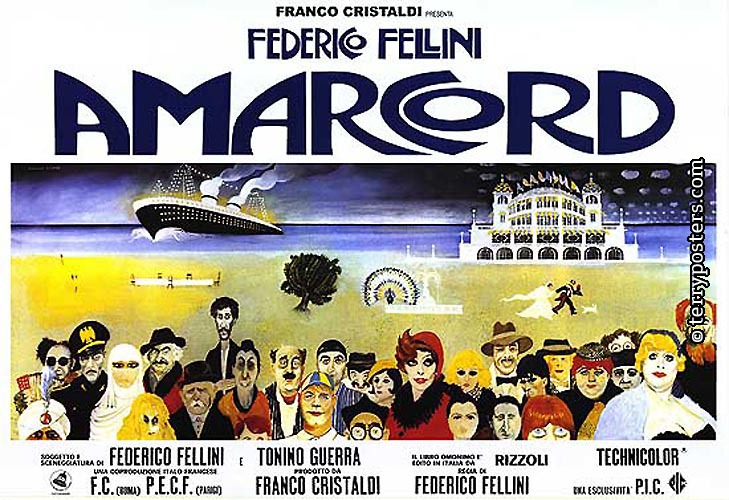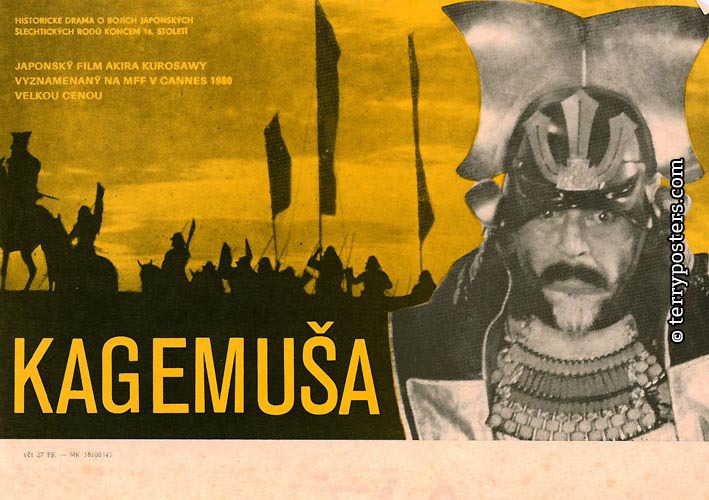
FYI. For the next 13 hours, the Criterion Collection is running a flash sale (click here), giving you a chance to purchase “all in-stock Blu-rays & DVDs at 50% off.” Just use the promo code COOP and get classic films by Hitchcock, Lynch, Welles, Kubrick, the Coen Brothers, and many others.
I hated sports at camp, so at this camp I think we should reward every team that loses. This would be the camp where the fat people get picked first in dodge ball.
- Filmmaker-cum-Camp Director John Waters
I can think of many children who would scramble toward the refuge of the compassionate statement above, but Camp John Waters is a decidedly adult activity.
The Pope of Trash shares actor Bill Murray’s relish for oddball settings in which he can meet the public as something close to a peer. But whereas Murray specializes in surprise drop-in appearances—reciting poetry to construction workers, crashing parties—Waters favors more immersive experiences, such as hitchhiking coast to coast.
His latest stunt brought him and 300 fellow travelers to a rustic Connecticut facility (from Sept 22–24) that normally hosts corporate team building events, family camps, and weekend getaways for playful 20-to-30-somethings keen to make new friends while zip lining, playing pingpong, and partying in the main lodge.
The Waters camp combines two of the more absurd developments in contemporary leisure: the celebrity-based getaway (see also: the Gronk Cruise) and a certain recreational aesthetic that seems to advocate for a sort of developmental purgatory.
Here, there were no reluctant, homesick campers, weeping into their Sloppy Joes. This was a self-selecting bunch, eager to break out their wigs and leopard print, weave enemy bracelets at the arts and crafts station, and bypass anything smacking of official outdoor recreation, save the lake, where inflatable pink flamingos were available for aquatic lollygagging.
“Who really wants to go wall climbing?” the founder himself snorted in his welcoming speech, adding that he would if Joe Dallesandro, the Warhol superstar who according to Waters “forever changed male sexuality in cinema,” waited up top.
Naughty references to water sports aside, certain aspects of the camp were downright wholesome. Pine trees and s’mores. Canoes and cabins. Presumably there was a camp nurse. (In Waters’ ideal world, this position would be filled by Cry Baby’s Traci Lords.)
Waters’ recollections of his own stint at Maryland’s Camp Happy Hollow seem primarily fond. It makes sense. Anyone who truly loathed summer camp would be unlikely to recreate the experience for themselves and their fellow adults.
Camp Waters harkens back to the 1950s transgressions its director merrily fesses up to having participated in: unfiltered cigarettes and short sheeted beds, circle jerks and panty raids. From here on out the subversion will be taking place in the sunlight.
Another special camp memory for Waters is regaling his cabin mates with an original, serialized horror story. He retells it on Celebrity Ghost Stories, above:
At the end there was this hideous gory thing and then all the kids had nightmares and their parents called the camp and complained — and I’m still doing that! It was the beginning of my career…. It was a wonderful lesson for me as a 10-year-old kid that I think helped me become whatever I am today. It gave me the confidence to go ahead, to believe in things, to believe in behavior I couldn’t understand, to be drawn to subject matter I couldn’t understand.
Ayun Halliday is an author, illustrator, theater maker and Chief Primatologist of the East Village Inky zine. She attended Gnawbone Camp in Gnawbone, Indiana, recapturing that happy experience three decades later as the Mail Lady of Beam Camp. Follow her @AyunHalliday.
Our country’s bipartisan system ensures that every election will give rise to a winning side and a losing side—and depressingly, a sizable group who refrained from casting a vote either way.
There are times when the divide between the factions does not seem insurmountable, when leaders in the highest positions of authority seem sincerely committed to reaching across the divide….
And then there are other times.
Earlier in the year, the Women’s March on Washington and its hundreds of sister marches gave many of us reason to hope. The numbers alone were inspiring.
But history shows how great numbers can go the other way too.
With many American high school history curriculums whizzing through World War II in a week, if that, it’s doubly important to slow down long enough to watch the 7 minute documentary above.
What you’re looking at is the 1939 “Pro-American Rally” (aka Pro-Nazi Rally) sponsored by the German American Bund at Madison Square Garden on George Washington’s 207th Birthday. Banners emblazoned with such slogans as “Stop Jewish Domination of Christian Americans,” “Wake Up America. Smash Jewish Communism,” and “1,000,000 Bund Members by 1940” decorated the great hall.
New York City Mayor Fiorello LaGuardia—an Episcopalian with a Jewish mother—considered canceling the event, but ultimately he, along with the American Jewish Committee and the American Civil Liberties Committee decreed that the Bund was exercising its right to free speech and free assembly.
A crowd of 20,000 filled the famous sports venue in mid-town Manhattan to capacity. 1,500 police officers were present to render the Garden “a fortress impregnable to anti-Nazis.” An estimated 100,000 counter-demonstrators were gathering outside.
The most disturbing moment in the short film comes at the 3:50 mark, when another security force—the Bund’s Ordnungsdienst or “Order Service” pile on Isidore Greenbaum, a 26-year-old Jewish worker who rushed the podium where bundesführerFritz Julius Kuhn was fanning the flames of hatred. Valentine’s men eventually pulled them off, just barely managing to save the “anti-Nazi” from the vicious beating he was undergoing.
Reportedly he was beaten again, as the crowd inside the Garden howled for his blood.
The uniformed youth performing a spontaneous hornpipe in the row behind the Bund’s drum and bugle corps is a chilling sight to see.
Director Marshall Curry was spurred to bring the historic footage to Field of Vision, a filmmaker-driven documentary unit that commissions short films as a rapid response to developing stories around the globe. In this case, the developing story was the “Unite the Right” white nationalist rally in Charlottesville, which had occurred a mere two days before.
“The footage is so powerful,” Curry told an interviewer, “it seems amazing that it isn’t a stock part of every high school history class. But I think the rally has slipped out of our collective memory in part because it’s scary and embarrassing. It tells a story about our country that we’d prefer to forget. We’d like to think that when Nazism rose up, all Americans were instantly appalled. But while the vast majority of Americans were appalled by the Nazis, there was also a significant group of Americans who were sympathetic to their white supremacist, anti-Semitic message. When you see 20,000 Americans gathering in Madison Square Garden you can be sure that many times that were passively supportive.”
Field of Vision co-founder Laura Poitras recalled how after meeting with Curry, “my first thought was, ‘we need to put this film in cinemas,’ and release it like a newsreel.”’ The Alamo Drafthouse cinema chain screened it before features on September 26 of this year.
BoingBoing recently ran a short profile on a new documentary that takes you inside the intriguing Ritman Library. Located in Amsterdam, the library houses 23,000 rare books from hermetic/esoteric/occult traditions–Alchemy, Hermetica, Cabala, Magic, Rosicrucianism, Mystic, Theosophy, Freemasonry, Pansophy and much more.
The same deal applies to other films we’ve featured during the past year. Jim Jarmusch’s new documentary Gimme Danger–his “love letter” to punk icons Iggy Pop and The Stooges. And also Long Strange Trip, the new 4‑hour documentary on the Grateful Dead.
If you would like to sign up for Open Culture’s free email newsletter, please find it here. It’s a great way to see our new posts, all bundled in one email, each day.
If you would like to support the mission of Open Culture, consider making a donation to our site. It’s hard to rely 100% on ads, and your contributions will help us continue providing the best free cultural and educational materials to learners everywhere. You can contribute through PayPal, Patreon, and Venmo (@openculture). Thanks!
Rock photography is an art form in itself, as demonstrated by books and exhibitions of some of its masters like Mick Rock, Jenny Lens, Pennie Smith, and so many others. But two years ago, the Smithsonian turned to the crowd, to the fan, to the amateur photographer, with a call to submit photos from over six decades of rock and roll that weren’t hanging on gallery walls, but sitting in a shoebox somewhere. From fans with instamatic cameras to amateurs covering concerts for their school paper, the Smithsonian wanted another angle on our cultural obsession.
Websites Mashable and Dangerous Minds present a selection of photos from the book, such as a shot of Sly Stone at the height of his powers (and belt buckle size), a pic of the Talking Heads on stage in Berkeley, 1977; a dark and mysterious glimpse of Bonnie Raitt, circa 1974; and a shot of Cream playing the Chicago Coliseum taken from the side of the stage, with Ginger Baker’s head a complete blur. Also find Joni Mitchell at Kleinhans Music Hall. And The Ramones in Tempe, Arizona, circa 1978.
Bonnie Raitt at the Harvard Square Theatre, by Barry Schneier/Smithsonian Books
It’s a reminder of how unpretentious these live shows could be, happening in a world with the simplest of lighting rigs and decades from the big screen projections even up-and-coming bands now indulge in. For the most part, this was an intimate contract between the artist and the audience, all crammed into small clubs with smoke, sweat, heat, and, most importantly, electricity in the air.
The new book also features tales from the people who took the photos, along with some more professional photos to “flesh out this overview of rock and roll,” according to the introduction by organizer Bill Bentley. He adds: “The results, spanning six decades, aim for neither encyclopedic authority nor comprehensive finality, but rather an index of supreme influence.”
The Ramones in Tempe, Arizona, by Dorian Boese/Smithsonian Books
That supreme influence continues to be felt, for sure. Although the submission window is now closed, the Smithsonian’s website allows you to look through the hundreds of submissions to the project.
Ted Mills is a freelance writer on the arts who currently hosts the FunkZone Podcast. You can also follow him on Twitter at @tedmills, read his other arts writing at tedmills.com and/or watch his films here.
Even if you’ve spent each and every day since you first saw Ridley Scott’s Blade Runner waiting for a sequel, you still might not be fully prepared for Denis Villeneuve’s Blade Runner 2049 when it opens in theaters this Friday. The 1981 original took place in the Los Angeles of the then-far-flung future of 2019, meaning that 30 years have elapsed in the Blade Runner universe between its first feature film and its second. Much has taken place over those three decades, some of it portrayed by the three official short prequels released to the internet over the past month. Today we present them all in chronological order to catch you up with what happened after Harrison Ford’s Blade Runner Rick Deckard picked up that origami unicorn and left the building.
In 2020, the year after Blade Runner, the artificial-being-making Tyrell Corporation introduces a new model of replicant, with a longer lifespan, called the Nexus 8S. Two years later comes “the Blackout,” an electromagnetic pulse attack that destroys all technology within its reach. You can see it happen in Blade Runner Black Out 2022, the short at the top of the post directed by respected Japanese animator Shinichiro Watanabe (and featuring a score by Flying Lotus as well as a reprisal of the role of the quasi-Esperanto-speaking police officer Gaff by Edward James Olmos).
Replicants having taken the blame for the Blackout, their production gets legally prohibited until the efforts of an organization called the Wallace Corporation get the ban overturned in 2030. The man at the top of the Wallace Corporation, a certain Niander Wallace, first appears in 2036: Nexus Dawn (middle video), directed by Ridley Scott’s son Luke.
In that prequel we see Wallace, who rose to prominence on his company’s solution to global food shortages, submitting for approval his latest replicant, the Nexus 9 (although his negotiation strategy leaves little room for compromise). The younger Scott’s 2048: Nowhere to Run(below), which introduces a new and imposing replicant character by the name of Sapper Morton, takes place just a year before the sequel, by which time, according to the timeline unveiled at this past summer’s Comic-Con, “life on Earth has reached its limit and society divides between replicant and human.” Enter Ryan Gosling’s K, one of a new generation of replicant- hunters, who goes out in search of a predecessor who went missing some 30 years ago. All of this, of course, still leaves questions unanswered. Chiefly: will Blade Runner 2049 deliver what we’ve been waiting even more than three deacades for?
Based in Seoul, Colin Marshall writes and broadcasts on cities and culture. His projects include the book The Stateless City: a Walk through 21st-Century Los Angeles and the video series The City in Cinema. Follow him on Twitter at @colinmarshall or on Facebook.

The artist passed most of his working life in cramped space at 46 rue Hippolyte. Early on, he entertained plans to relocate “because it was too small – just a hole.”
Others visitors to the studio described the artist’s environs in more literary terms:
In a charming little forgotten garden he has a studio, submerged in plaster, and he lives next to this in a kind of hangar, vast and cold, with neither furniture nor food. He works very hard for fifteen hours at a stretch, above all at night: the cold, his frozen hands – he takes no notice, he works. - Simone de Beauvoir
And:
This ground floor studio… is going to cave in at any moment now. It is made of worm-eaten wood and grey powder.… Everything is stained and ready for the bin, everything is precarious and about to collapse, everything is about to dissolve, everything is floating.… And yet it all appears to be captured in an absolute reality. When I leave the studio, when I am outside on the street, then nothing that surrounds me is true. — Playwright Jean Genet
And:
The whole place looking as if it had been thrown together with a few old sticks and a lot of chewing gum.… In short, a dump. Anyway he said come in when I knocked.… He turned and glanced at me, holding out his hand which was covered in clay, so I shook his wrist.… He immediately resumed work, running his fingers up and down the clay so fiercely that lumps fell onto the floor -Essayist James Lord
These impressions paint a portrait of a driven, and disciplined artist, who logged untold hours modeling his formes elongee in clay, unceremoniously crumpling and rebuilding in the pursuit of excellence.
The camera documents this intensity, though his untranslated remarks suggest a man capable of taking himself lightly, certainly more so than the accompanying narration does.
Like the narration, Roger Smalley’s dissonant score lays it on thick, the sonic equivalent of heads like blades and “limbs bound as though bandaged for the grave.” Perhaps we should conceive of the studio as a scary place?
In actuality, it proved a hospitable work environment and the impulse to relocate eventually waned, with the artist observing that “the longer I stayed, the bigger it became. I could fit anything I wanted into it.”
Explore the recent Tate Modern Giacometti retrospective here and take a closer look at the studio via Ernst Scheidegger’s photos.
The run-up to Blade Runner 2049, befitting what now looks like the cinematic event of the decade, has consisted of not just marketing hype (though it does include plenty of that) but genuine artistic material as well. Last month we featured Nexus: 2036, the first of three short “prequels” to Denis Villeneuve’s upcoming Blade Runner sequel. That one and its follow up 2048: Nowhere to Run, both directed by Luke Scott (son of Blade Runner director Ridley Scott), use live action to fill in some of the story between the 2019 of the first movie and the 2049 of the second. The just-released third short, Black Out 2022,from Cowboy Bebop director Shinichirō Watanabe, brings the Blade Runner universe into the realm of Japanese animation.
“Blade Runner was definitely the movie that influenced me the most as an anime director,” says Watanabe in the preview of his prequel down below. He and other Japanese viewers understood the film’s power long before most anyone in the West (with the notable exception of Philip K. Dick, author of its source material), and Japanese artists began paying tribute to it almost immediately.
In a sense, Blade Runner took anime form thirty years ago: Katsuhito Akiyama’s animated series Bubblegum Crisis, the story of artificial humans (called “booomers” instead of replicants) run amok and the advanced police team (called “Knight Sabers” instead of “Blade Runners”) who hunt them down in a Tokyo of the future rebuilt after a disastrous earthquake, could hardly wear its influence more openly.
Filled with visual, sonic, and thematic references to the original Blade Runner while taking the story in new directions — and also introducing two new replicant characters — Watanabe’s Black Out 2022–viewable up top–depicts the events leading up to the detonation of an electromagnetic pulse that destroys the electronics and machinery on which humanity has become so reliant. Humanity blames the replicants, and so begins a period of prohibition on replicant production, only brought to an end by the efforts of Niander Wallace, the character so eerily played by Jared Leto in Nexus: 2036. Blade Runner 2049 will pick things up 26 years after the EMP attack. What shape will Los Angeles be in then? What shape will the cat-and-mouse game between replicants and Blade Runners take there? We’ll find out, and surely in no small amount of detail, next month.
Based in Seoul, Colin Marshall writes and broadcasts on cities and culture. His projects include the book The Stateless City: a Walk through 21st-Century Los Angeles and the video series The City in Cinema. Follow him on Twitter at @colinmarshall or on Facebook.
We're hoping to rely on loyal readers, rather than erratic ads. Please click the Donate button and support Open Culture. You can use Paypal, Venmo, Patreon, even Crypto! We thank you!
Open Culture scours the web for the best educational media. We find the free courses and audio books you need, the language lessons & educational videos you want, and plenty of enlightenment in between.