Mark Bittman’s Most Loved Recipes from The New York Times: Learn to Cook Healthy, Earth-Friendly Meals

Food writer and healthy eat­ing advo­cate Mark Bittman has “no patience” for those who say, “I’d love to cook but I have a lousy kitchen,” but that does­n’t make him a hec­tor­ing meanie in the Top Chef pan­elist mold:

To me the ques­tion was not, “Would I cook this as a native would?” but rather, “How would a native cook this if he had my ingre­di­ents, my kitchen, my back­ground?” It’s obvi­ous­ly a dif­fer­ent dish. But as Jacques Pépin once said to me, you nev­er cook a recipe the same way twice, even if you try. I nev­er main­tained that my way of cook­ing was the “best” way to cook, only that it’s a prac­ti­cal way to cook. (I’m lazy, I’m rushed, and I’m not all that skill­ful, and many peo­ple share those qual­i­ties.)

If you’ve made it to adult­hood with­out learn­ing how to cook, or for that mat­ter, how to eat for the good of your body and the plan­et, Bittman is your man.

With the excep­tion of his baroque, James Beard-inspired scram­bled eggs, his recipes are swift and sim­ple, and his well doc­u­ment­ed flex­i­bil­i­ty makes him a good fit for any num­ber of palates and dietary restric­tions.

Hav­ing intro­duced the world to the idea of eat­ing “veg­an before six,” he ditched his cushy New York Times colum­nist gig to start a plant-based meal kit ser­vice in San Fran­cis­co. The Pur­ple Car­rot’s stat­ed goal is not to get peo­ple to give up meat, but rather to up their intake of home cooked dish­es that are good for their health as well as the envi­ron­ment.

Ergo, he’s like­ly not too cha­grinned that this col­lec­tion of Bittman’s “most-loved recipes,” in a career span­ning more than 1500 bylines at the New York Times, includes such ingre­di­ents as chori­zo, may­on­naise, chick­en, and eggs.

Below you can find a selec­tion (a bak­er’s dozen) of favorite Bittman recipes for chefs at all lev­els, includ­ing absolute begin­ners, to try. (The com­plete list is here.) Their ingre­di­ents are fair­ly straight­for­ward, though Hol­ly Golight­ly types who store books in the oven, may have to upgrade the kitchen with some ramekins and a pas­try cut­ter.

  • Veg­etable Soup: This one pre­sumes a microwave. You can do it the old fash­ioned way by adding some water or boxed veg­etable stock to a stove­top pot. See? Cook­ing is easy!

Find all of Bittman’s New York Times recipes here. And even more on his web­site.

Relat­ed Con­tent:

Michael Pol­lan Explains How Cook­ing Can Change Your Life; Rec­om­mends Cook­ing Books, Videos & Recipes

53 New York Times Videos Teach Essen­tial Cook­ing Tech­niques: From Poach­ing Eggs to Shuck­ing Oys­ters

MIT Teach­es You How to Speak Ital­ian & Cook Ital­ian Food All at Once (Free Online Course)

Ayun Hal­l­i­day is an author, illus­tra­tor, and Chief Pri­ma­tol­o­gist of the East Vil­lage Inky zine. Fol­low her @AyunHalliday

Coffee Entrepreneur Renato Bialetti Gets Buried in the Espresso Maker He Made Famous

At OC HQ you will find two Bialet­ti espres­so mak­ers on the stove–one small, the oth­er large–and togeth­er they pow­er us through the day. Invent­ed by Alfon­so Bialet­ti in 1933, the octag­o­nal, Art Deco-designed cof­fee mak­er even­tu­al­ly became a sta­ple in Ital­ian homes (90% of them), thanks to his son Rena­to, who died last week at the age of 93. A savvy mar­keter to the end, Bialet­ti went to the grave with his prod­uct, buried, as he was, in an espres­so mak­er that dou­bled as an urn. All in all, I can’t think of much bet­ter ways to spend eter­ni­ty.

If you would like to sign up for Open Culture’s free email newslet­ter, please find it here. It’s a great way to see our new posts, all bun­dled in one email, each day.

If you would like to sup­port the mis­sion of Open Cul­ture, con­sid­er mak­ing a dona­tion to our site. It’s hard to rely 100% on ads, and your con­tri­bu­tions will help us con­tin­ue pro­vid­ing the best free cul­tur­al and edu­ca­tion­al mate­ri­als to learn­ers every­where. You can con­tribute through Pay­Pal, Patre­on, and Ven­mo (@openculture). Thanks!

Relat­ed Con­tent:

Paul Gia­mat­ti Plays Hon­oré de Balzac, Hopped Up on 50 Cof­fees Per Day

Hon­oré de Balzac Writes About “The Plea­sures and Pains of Cof­fee,” and His Epic Cof­fee Addic­tion

The Cof­fee Pot That Fueled Hon­oré de Balzac’s Cof­fee Addic­tion

Philoso­phers Drink­ing Cof­fee: The Exces­sive Habits of Kant, Voltaire & Kierkegaard

J.S. Bach’s Com­ic Opera, “The Cof­fee Can­ta­ta,” Sings the Prais­es of the Great Stim­u­lat­ing Drink (1735)

Paul Giamatti Plays Honoré de Balzac, Hopped Up on 50 Coffees Per Day

It’s the stuff of leg­end. Hon­oré de Balzac cranked out 50+ nov­els in 20 years and died at 51. The cause? Too much work and caf­feine. How much cof­fee? Up to 50 cups per day, they say.

Whether true or not, it’s fun to imag­ine what that scene might have looked like. Enter Paul Gia­mat­ti, known for his roles in Side­ways, Amer­i­can Splen­dor and John Adams, who gives us his com­ic take. This new short film comes from The New York­er, which has just released the first sea­son of The New York­er Presents on Ama­zon.

For more on Balza­c’s cof­fee habit, see the first two items in the Relat­eds below.

Relat­ed Con­tent:

Hon­oré de Balzac Writes About “The Plea­sures and Pains of Cof­fee,” and His Epic Cof­fee Addic­tion

The Cof­fee Pot That Fueled Hon­oré de Balzac’s Cof­fee Addic­tion

Philoso­phers Drink­ing Cof­fee: The Exces­sive Habits of Kant, Voltaire & Kierkegaard

J.S. Bach’s Com­ic Opera, “The Cof­fee Can­ta­ta,” Sings the Prais­es of the Great Stim­u­lat­ing Drink (1735)

by | Permalink | Make a Comment ( 1 ) |

In Japanese Schools, Lunch Is As Much About Learning As It’s About Eating

I grew up in the Unit­ed States, and we Amer­i­cans don’t, in the main, look back on our school days with par­tic­u­lar­ly fond mem­o­ries of lunch. Some schools do a superb job of serv­ing up deli­cious and nutri­tious meals. Oth­ers can bare­ly get their act togeth­er to reheat yes­ter­day’s chick­en fin­gers, and, as with much else in Amer­i­ca, it all aver­ages out to a frus­trat­ing medi­oc­rity. These days, the culi­nary stan­dards of Amer­i­can school lunch­es often come in for pun­ish­ing com­par­isons in the media to those of oth­er soci­eties, espe­cial­ly France, which has long held up eat­ing well as one of its high­est pri­or­i­ties, and Japan, known for its atten­tion to detail as well as the health of its peo­ple.

Just have a look at the nine-minute doc­u­men­tary above on one lunch peri­od at an ele­men­tary school in Saita­ma (about fif­teen miles out­side Tokyo) and you’ll have a vivid sense of the dif­fer­ence — a dif­fer­ence that goes well beyond what gets eat­en. At 12:25 in the after­noon, the kids all bow and thank their teacher for the first half of the day’s instruc­tion. Then they put on their caps and smocks and lay their place­mats and chop­sticks on their desks. A rotat­ing team of stu­dents goes to col­lect every­one’s meals from the kitchen (thank­ing the lunch­ladies before wheel­ing their carts away) while the rest arrange the fur­ni­ture into the stan­dard lunch for­ma­tion. Back in the class­room, the stu­dents serve each oth­er the day’s fried fish with pear sauce, five-veg­etable soup, and mashed pota­toes grown on the school’s own farm by stu­dents.

But wait, there’s more: the kids all brush their teeth after lunch, then break down their milk car­tons, wash them, and set them aside to dry before plac­ing them in the next day’s recy­cling. The video then shows how, after lunch, they all clean their class­room togeth­er. Lunch becomes an oppor­tu­ni­ty not just to eat healthy food, but to teach stu­dents a num­ber of valu­able life lessons–good man­ners, ethics, team­work and more.

I could­n’t have imag­ined any of this hap­pen­ing in my own fifth-grade class­room, and if you could­n’t have either, you can read more about how the phe­nom­e­non of the Japan­ese school lunch came to be at Japan­ese School Lunch, the site of Japan schol­ar Alex­is Agliano San­born. She delves into the his­to­ry, the goals, the mechan­ics (right down to sea­son­al menu plan­ning), and the suc­cess­es of Japan’s school lunch sys­tem. “Per­haps no oth­er coun­try in the world can offer school lunch cook­books, school lunch-themed restau­rants or even school lunch-themed para­pher­na­lia,” she writes. Cer­tain­ly not the one I came from!

(via Twist­ed Sifter)

Relat­ed Com­ment:

A Wealth of Free Doc­u­men­taries on All Things Japan­ese: From Ben­to Box­es to Tea Gar­dens, Ramen & Bul­let Trains

Dis­cov­er Japan’s Earth­quake Proof Under­ground Bike Stor­age Sys­tem: The Future is Now

Cook­pad, the Largest Recipe Site in Japan, Launch­es New Site in Eng­lish

What Pris­on­ers Ate at Alca­traz in 1946: A Vin­tage Prison Menu

Based in Seoul, Col­in Mar­shall writes and broad­casts on cities, lan­guage, and style. He’s at work on a book about Los Ange­les, A Los Ange­les Primer, the video series The City in Cin­e­ma, the crowd­fund­ed jour­nal­ism project Where Is the City of the Future?, and the Los Ange­les Review of Books’ Korea Blog. Fol­low him on Twit­ter at @colinmarshall or on Face­book.

Artist Julie Green Paints the Last Suppers of 600+ Death Row Inmates on Ceramic Plates

What would you choose for your last meal?

The com­fort food of your child­hood?

Or some lav­ish dish you nev­er had a chance to taste?

What might your choice reveal about your race, region­al ori­gins, or eco­nom­ic cir­cum­stances?

Artist Julie Green devel­oped a fas­ci­na­tion with death row inmates’ final meals while teach­ing in Okla­homa, where the per capi­ta exe­cu­tion rate exceeds Texas’ and con­demned pris­on­ers’ spe­cial menu requests are a mat­ter of pub­lic record:

Fried fish fil­lets with red cock­tail sauce from Long John Silver’s

Large pep­per­oni piz­za with sausage and extra mush­rooms and a large grape soda.

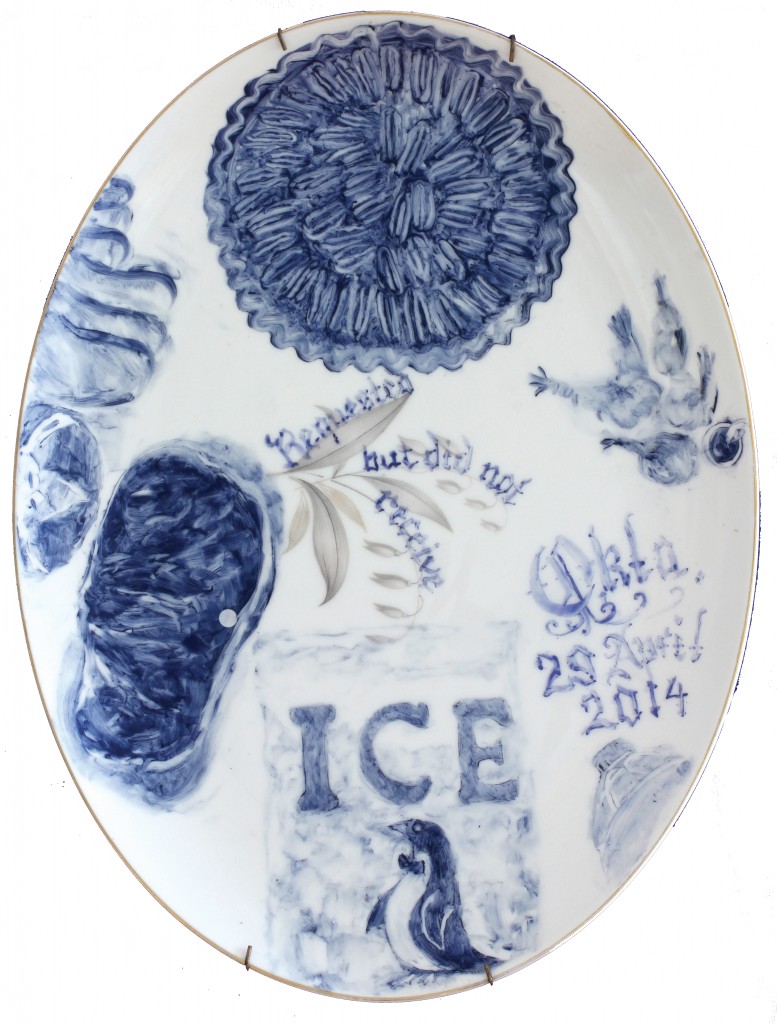
Chateaubriand steak, medi­um rare with A‑1 steak sauce, fried shrimp entree with cock­tail sauce, large baked pota­to with but­ter, sour cream, chopped scal­lions, bacon bits, salt and pep­per, six pieces of gar­lic but­ter toast, whole Ken­tucky Bour­bon pecan pie, one liter of Coca Cola Clas­sic, and bag of ice

Last Meal Plate

The lat­ter order, from April 29, 2014, was denied on the grounds that it would have exceed­ed the $15-per-cus­tomer max. The pris­on­er who’d made the request skipped his last meal in protest.

Green recre­ates these, and hun­dreds of oth­er death row pris­on­ers’ last sup­pers in cobalt blue min­er­al paint on care­ful­ly select­ed sec­ond-hand plates. The influ­ence of Dutch Delft­ware and Span­ish still life paint­ing are evi­dent in her depic­tion of burg­ers, Ken­tucky Fried Chick­en, and pie.

Many of the requests betray a child­like poignan­cy:

A sin­gle hon­ey bun (North Car­oli­na, Jan­u­ary 30, 1998) 

Shrimp and ice cream  (New Mex­i­co, Novem­ber 6, 2001)

 A peanut but­ter and jel­ly sand­wich (Flori­da, Feb­ru­ary 26, 2014)

One man got per­mis­sion for his moth­er to pre­pare his last meal in the prison kitchen. Anoth­er was sur­prised with a birth­day cake after prison staff learned he had nev­er had one before.

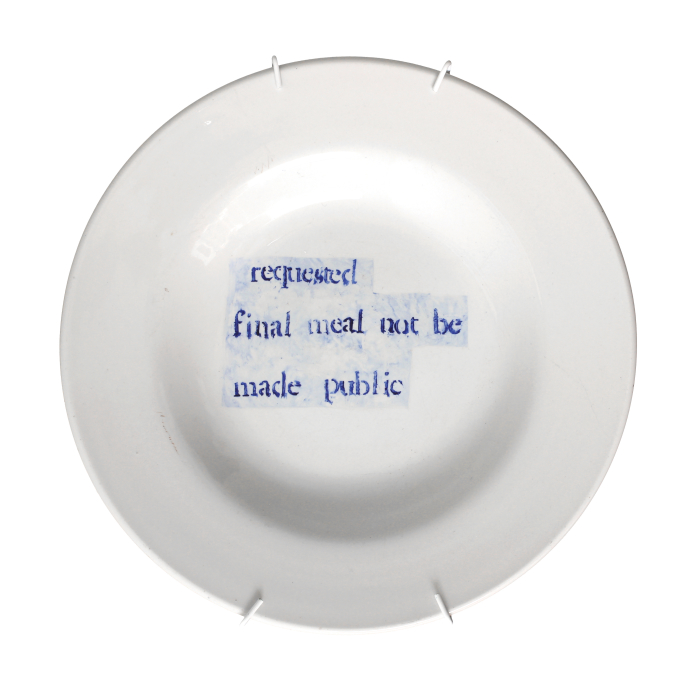
Some refrain from exer­cis­ing their right to a spe­cial request, a choice Green doc­u­ments in text. She resorts to sim­i­lar tac­tics when a pris­on­er requests that his final meal be kept con­fi­den­tial.

Final Meal Not Made Public

Each meal Green paints is accom­pa­nied by a menu, the date, and the state in which it was served, but the pris­on­ers and their crimes go unnamed. She has com­mit­ted to pro­duc­ing fifty plates a year until cap­i­tal pun­ish­ment is abol­ished.

Green nar­rates a Last Sup­per slideshow above, or you can browse all the plates in the project, orga­nized by state here.

Relat­ed Con­tent:

What Pris­on­ers Ate at Alca­traz in 1946: A Vin­tage Prison Menu

The Odd Col­lec­tion of Books in the Guan­tanamo Prison Library

Mod­ern Art Was Used As a Tor­ture Tech­nique in Prison Cells Dur­ing the Span­ish Civ­il War

Ayun Hal­l­i­day is an author, illus­tra­tor, and Chief Pri­ma­tol­o­gist of the East Vil­lage Inky zine. Fol­low her @AyunHalliday

Making Chocolate the Traditional Way, From Bean to Bar: A Short French Film

Chef turned restau­ra­teur Alain Ducasse has rather a lot to say on the sub­ject of choco­late.

On the web­site of Le Man­u­fac­ture, the small-batch choco­late fac­to­ry he found­ed in a for­mer Renault Garage, he wax­es poet­ic, shar­ing wide-eyed child­hood mem­o­ries of the “ter­ri­bly sen­su­al and bewitch­ing sub­stance.”

He’s a bit more mer­ce­nary in the pages of the The Wall Street Jour­nal and Har­vard Busi­ness Review, not­ing that the choco­late oper­a­tion grew out of his desire to con­trol the process from cacao beans to dessert plates in his numer­ous fine din­ing estab­lish­ments.

His involve­ment in the day-to-day oper­a­tions is like­ly cer­e­mo­ni­al, but in a choco­late mak­ing stint ear­ly in his career, he found the “olfac­to­ry uni­verse” plea­sur­able and “intox­i­cat­ing to the point of being dis­turb­ing.”

Take that, Her­sheys!

His fond­ness for vin­tage machin­ery and tra­di­tion­al meth­ods opens the door to some seri­ous cacao porn, above, star­ring for­mer exec­u­tive pas­try chef Nico­las Berg­er.

The word “metic­u­lous” comes up more than once in the voiceover nar­ra­tion. Hope­ful­ly, Sat­ur­day Night Live will take note. Tasked by Epi­cu­ri­ous to iden­ti­fy a guilty plea­sure on the order of choco­late or wine, Ducasse named BLT sand­wich­es, but he musters the req­ui­site, par­o­dy-wor­thy roman­ti­cism for direc­tor Simon Péno­chet:

Beyond gour­man­dise, we are seek­ing truth, a quest which is more pri­mal than orig­i­nal.

via Men­tal Floss

Relat­ed Con­tent:

The Mar­velous Health Ben­e­fits of Choco­late: A Curi­ous Med­ical Essay from 1631

An Ivory Coast Cocoa Farmer Gets His Very First Taste of Choco­late

How to Make Sushi: Free Video Lessons from a Mas­ter Sushi Chef

Ayun Hal­l­i­day is an author, illus­tra­tor, and Chief Pri­ma­tol­o­gist of the East Vil­lage Inky zine. Fol­low her @AyunHalliday

The Overlook Hotel from The Shining Recreated with Gingerbread & Rice Krispies

From “eudi­cotyle­don” on Red­dit comes a hol­i­day project you, too, can maybe try at home. He says: “My fam­i­ly made a gin­ger­bread ren­di­tion of the Over­look Hotel from Kubrick­’s “The Shin­ing,” com­plete with a Rice Krispies treat maze and inte­ri­or rooms depict­ing famous scenes.” You can flip through 29 images in the gallery above, show­ing the edi­ble cre­ation from dif­fer­ent points of view. Then see a “mak­ing-of” gallery here. Enjoy.

Relat­ed Con­tent:

Free Doc­u­men­tary View from the Over­look: Craft­ing The Shin­ing Looks at How Kubrick Made “the World’s Scari­est Movie”

Stan­ley Kubrick’s Anno­tat­ed Copy of Stephen King’s The Shin­ing

The Hedge Maze from The Shin­ing Gets Recre­at­ed by Mythbuster’s Adam Sav­age

The Mak­ing of The Shin­ing

How To Make the Perfect Cappuccino According to the World Barista Champion (Almost NSFW)

What do I want for Christ­mas? I’ll set­tle for a lit­tle more insight into how to make the per­fect cap­puc­ci­no, the stuff that has reli­ably kept this site run­ning day in, day out, for the past 9 years.

Enter Michael Phillips, Direc­tor for Edu­ca­tion at Blue Bot­tle Cof­fee and the 2010 World Barista Cham­pi­on, who, in this video pro­duced by Munchies, offers a six minute primer on cap­puc­ci­no-mak­ing. When all is said and done, what’s my take­away? To achieve cof­fee Nir­vana, maybe I need some bet­ter gear, like a La Mar­zoc­co. Or maybe, real­ly, I need to take my love of cof­fee to anoth­er lev­el, as Phillips clear­ly does in a near­ly x‑rated moment at the very end. As with so many things, it’s not the gear, but the love and ded­i­ca­tion, that makes the dif­fer­ence.

via Devour

Relat­ed Con­tent:

David Lynch Directs a Mini-Sea­son of Twin Peaks in the Form of Japan­ese Cof­fee Com­mer­cials

Philoso­phers Drink­ing Cof­fee: The Exces­sive Habits of Kant, Voltaire & Kierkegaard

“The Vertue of the COFFEE Drink”: London’s First Cafe Cre­ates Ad for Cof­fee in the 1650s

J.S. Bach’s Com­ic Opera, “The Cof­fee Can­ta­ta,” Sings the Prais­es of the Great Stim­u­lat­ing Drink (1735)

« Go BackMore in this category... »
Quantcast