Versailles 3D, Created by Google, Gives You an Impressive Tour of Louis XIV’s Famous Palace

With 3D scale mod­els, music, and video, Google’s Ver­sailles 3D brings the best of 21st cen­tu­ry web arts to 18th cen­tu­ry art his­to­ry. The palace was built by Louis XIV, the “Sun King,” who exem­pli­fied all of the author­i­tar­i­an excess­es of the French monar­chy. For­tu­nate­ly for pos­ter­i­ty, he was also a patron of the arts, to whom we owe much of the work of Moliere, Racine and painters such as Charles Le Brun. And then there is his archi­tec­tur­al lega­cy, the palace of Ver­sailles, which start­ed out as a hum­ble hunt­ing lodge, built by his father Louis XIII in 1624. In the next sev­er­al decades, father, then son, com­mis­sioned the elab­o­rate set of build­ings that con­sti­tute Europe’s largest chateau and the seat of French gov­ern­ment from Louis XIV’s ascen­sion until the Rev­o­lu­tion of 1789. If you’re think­ing of vis­it­ing, the offi­cial chateau de Ver­sailles web­site has slideshows of grounds and gal­leries, a bou­tique, and some worth­while inter­ac­tive fea­tures. But Google, as usu­al, has tried to out­do its com­pe­ti­tion, this time by part­ner­ing with it. In con­nec­tion with the Ver­sailles cura­tors, The Google Cul­tur­al Insti­tute has cre­at­ed a mul­ti­me­dia almost-sub­sti­tute for a real life excur­sion to the gar­gan­tu­an and endur­ing sym­bol of Ancien Regime France.

The next video is a pre­view of a “Google Chrome Exper­i­ment” called “Chaos to Per­fec­tion,” an “inter­ac­tive stroll around the palace,” accom­pa­nied by an orig­i­nal sound­track from French band Phoenix. (The “exper­i­ment” itself is some­what slow load­ing, and requires the Chrome brows­er).

Final­ly, the engi­neers at Google (and part­ners Aloest, Wes­t­im­ages, le Fab­Shop and Les 84) give us a look behind the scenes of Ver­sailles 3D. Won­der how they cre­at­ed the elab­o­rate 3D scale mod­els of the palace grounds and build­ings? Well, the video below pro­vides a bar­rage of back­stage glimpses of the process, along with scenes from the open­ing of the Palace His­to­ry Gallery on June 14th.

And, of course, there will be mobile apps, Google promis­es, “soon.”

Josh Jones is a doc­tor­al can­di­date in Eng­lish at Ford­ham Uni­ver­si­ty and a co-founder and for­mer man­ag­ing edi­tor of Guer­ni­ca / A Mag­a­zine of Arts and Pol­i­tics.

Google Street View Opens Up a Look at Shackleton’s Antarctic

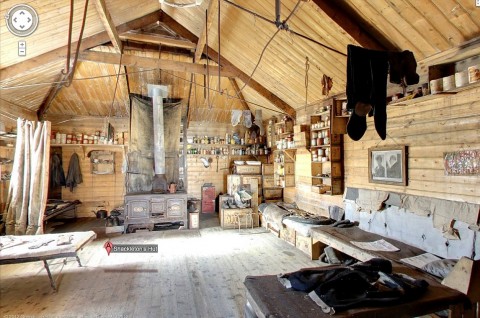
The dis­cov­ery of the South Pole is a sto­ry whose hero seems to change with every telling. Some­times it’s Robert Scott, some­times Nor­we­gian Roald Amund­sen, and, most recent­ly, Scott’s pro­tégé, Sir Ernest Shack­le­ton. All three—and geol­o­gist Sir Dou­glas Mawson—are essen­tial char­ac­ters in a series of ear­ly 20th cen­tu­ry expe­di­tions to a for­bid­ding ter­ri­to­ry near­ly inac­ces­si­ble to the aver­age human being. Now, Google has opened up the Antarc­tic for every­one to explore from the safe­ty of padded office chairs, com­fy couch­es, and cof­fee-shop seat­ing. Google Street View was launched in May 2007 and has since expand­ed its scope to give the aver­age user visu­al access to some fair­ly remote and exot­ic loca­tions. Google’s World Won­ders Project pro­vides aston­ish­ing views of an ancient Zen Tem­ple in Kyoto and the coasts of Dorset and East Devon in Eng­land, among many oth­er stun­ning sites. Most recent­ly, Google Street View has made avail­able 360-degree views of the wood­en huts used by Robert Scott and Ernest Shack­le­ton a cen­tu­ry ago dur­ing their Antarc­tic expe­di­tions. (Start your tour here.)

Both Scot­t’s and Shack­le­ton’s huts have been pre­served intact as his­tor­i­cal sites by New Zealand’s Antarc­tic Her­itage Trust. The explor­ers’ tools and sup­plies, in their orig­i­nal arrange­ment, are on full dis­play in detailed panoram­ic images of the huts’ interiors—a depar­ture from the typ­i­cal exte­ri­or per­spec­tives of Street View. Also view­able in the Antarc­tic series of views is the Cape Royds Adelie Pen­guin Rook­ery, the world’s south­ern­most pen­guin colony and home to many thou­sands of Adelie pen­guins. Like all Street View images, includ­ing the Scott and Shack­le­ton huts, the Rook­ery views are static—images of bygone moments frozen in time—but they are no less breath­tak­ing for it.

The image below shows the inte­ri­or of Shackleton’s hut and all of its belong­ings.

Relat­ed Con­tent:

Tour the Ama­zon with Google Street View; No Pass­port Need­ed

Google Art Project Expands, Bring­ing 30,000 Works of Art from 151 Muse­ums to the Web

Josh Jones is cur­rent­ly a doc­tor­al stu­dent in Eng­lish at Ford­ham Uni­ver­si­ty and a co-founder and for­mer man­ag­ing edi­tor of Guer­ni­ca / A Mag­a­zine of Arts and Pol­i­tics.

Google Gives 360° Tour of the White House

Ear­li­er this week, we men­tioned the expan­sion of Google Art Project, which now gives you vir­tu­al access to 30,000 works of art from 151 muse­ums world­wide. What we did­n’t men­tion is that the expand­ed Art Project also includes a 360 degree walk through the White House — the same one vis­i­tors expe­ri­ence when they take a pub­lic tour of the man­sion. The White House tour was made with Google Street View tech­nol­o­gy, which oth­er­wise lets you take a jour­ney to the Ama­zon Basin, the Swiss Alps, and var­i­ous oth­er his­tor­i­cal sites (Pom­peii, Stone­henge and Ver­sailles).

If you would like to sign up for Open Culture’s free email newslet­ter, please find it here. It’s a great way to see our new posts, all bun­dled in one email, each day.

If you would like to sup­port the mis­sion of Open Cul­ture, con­sid­er mak­ing a dona­tion to our site. It’s hard to rely 100% on ads, and your con­tri­bu­tions will help us con­tin­ue pro­vid­ing the best free cul­tur­al and edu­ca­tion­al mate­ri­als to learn­ers every­where. You can con­tribute through Pay­Pal, Patre­on, and Ven­mo (@openculture). Thanks!

by | Permalink | Make a Comment ( 1 ) |

Google Art Project Expands, Bringing 30,000 Works of Art from 151 Museums to the Web

Last Feb­ru­ary, Google launched Art Project, which lets users take a vir­tu­al tour of 1,000 works of art from 17 great muse­ums — from the MoMA and Met in New York City, to the Uffizi Gallery in Flo­rence, to the Van Gogh Muse­um and Rijksmu­se­um in Ams­ter­dam. Now comes news that Art Project has great­ly expand­ed its cov­er­age, giv­ing users access to 30,000 high-res­o­lu­tion art­works appear­ing in 151 muse­ums across 40 coun­tries. The vir­tu­al tour includes paint­ings but also sculp­ture, street art and pho­tographs. And you can now explore col­lec­tions (see all) from the Nation­al Gallery of Mod­ern Art in Del­hi, the Musée d’Or­say in Paris, the Muse­um of Islam­ic Art in Qatar, the Museu De Arte Mod­er­na De São Paulo in Brazil, and the Tokyo Nation­al Muse­um. This is all part of Google’s effort to bring cul­tur­al arti­facts to the broad­est pos­si­ble audi­ence. Just last week, the folks at Google­plex helped launch the Nel­son Man­dela Dig­i­tal Archive and, before that, a high res­o­lu­tion ver­sion of The Dead Sea Scrolls. All we can say is keep it com­ing!

via Google Blog

by | Permalink | Make a Comment ( 1 ) |

Tour the Amazon with Google Street View; No Passport Needed

Google Street View launched in 2007, giv­ing web users the abil­i­ty to tour neigh­bor­hoods with a series of 360° panoram­ic maps. The tech­nol­o­gy seemed pret­ty straight­for­ward … until peo­ple real­ized that it was­n’t. Since ‘07, techies have fig­ured out some cool and unex­pect­ed uses for the soft­ware, and Google began using it to offer vir­tu­al tours of famous his­tor­i­cal sites (Pom­peii, Stone­henge and Ver­sailles) and then inter­na­tion­al muse­ums, rang­ing from the MoMA and Met in New York City, to the Uffizi Gallery in Flo­rence, and the Van Gogh Muse­um in Ams­ter­dam. (More on that here.) And now they’re push­ing the lim­its of the tech­nol­o­gy just a bit fur­ther.

Yes­ter­day Google announced that Street View will let you expe­ri­ence the beau­ty and diver­si­ty of the Ama­zon basin. Once you enter Street View’s Ama­zon tour, you can:

Take a vir­tu­al boat ride down the main sec­tion of the Rio Negro, and float up into the small­er trib­u­taries where the for­est is flood­ed. Stroll along the paths of Tumbi­ra, the largest com­mu­ni­ty in the Reserve, or vis­it some of the oth­er com­mu­ni­ties who invit­ed us to share their lives and cul­tures. Enjoy a hike along an Ama­zon for­est trail and see where Brazil nuts are har­vest­ed. You can even see a for­est crit­ter if you look hard enough!

The video above explains how the project got start­ed and how the images were gath­ered, while also offer­ing a quick demo of the online expe­ri­ence. You can start your voy­age to the Ama­zon here, or head to Google’s blog to learn more about this project cre­at­ed in part­ner­ship with the Ama­zonas Sus­tain­able Foun­da­tion (FAS).

Note: Are you a writer inter­est­ed in edu­ca­tion­al tech­nol­o­gy and open edu­ca­tion­al resources? And, do you want to write for Open Cul­ture? Then drop us a line.

by | Permalink | Make a Comment ( 2 ) |

Solve For X: Google Presents Moonshot Thinking in Short, TED-Style Talks

Last week, Google host­ed a gath­er­ing called “Solve for X,” which brought togeth­er entre­pre­neurs, inno­va­tors and sci­en­tists inter­est­ed in find­ing tech­no­log­i­cal solu­tions to the world’s great­est prob­lems. These solu­tions weren’t small in scope. No, they were all “moon­shots,” ideas that live in the “gray area between auda­cious projects and pure sci­ence fic­tion; they are 10x improve­ment, not 10%.” And these moon­shot ideas were all pre­sent­ed in TED-style talks that now live on the WeSolve­ForX web­site and the WeSolve­forX YouTube Chan­nel.

Eric Schmidt and Sergey Brin kicked off the event and framed the project, paving the way for Nicholas Negro­ponte, founder of the MIT Media Lab and One Lap­top Per Child, to dream big and ask: Can emerg­ing tech­nolo­gies empow­er chil­dren to learn to read on their own? Imag­ine how that would change the edu­ca­tion­al prob­lems beset­ting the devel­op­ing world? (Watch above.) Or how about this big thought from Adrien Treuille, assis­tant pro­fes­sor at Carnegie Mel­lon, who imag­ines a day when knowl­edge cre­ation won’t be dri­ven by uni­ver­si­ties and cor­po­ra­tions, but rather by loose groups of indi­vid­u­als tak­ing advan­tage of the inter­net and big data. That talk appears right below.

by | Permalink | Make a Comment ( 1 ) |

Google Presents YouTube for Schools, Makes Video World Safe for Teachers

On YouTube, the path to edu­ca­tion is as nar­row and as dif­fi­cult to walk as a razor’s edge. Left to their own devices, kids have a ten­den­cy to veer away from the math tuto­ri­als and head straight for the water-ski­ing squir­rels. What’s an edu­ca­tor to do?

Google believes it has the answer with “YouTube for Schools,” a new ser­vice that gives teach­ers and admin­is­tra­tors the abil­i­ty to fil­ter out every­thing but their own selec­tions from YouTube EDU, a curat­ed col­lec­tion of edu­ca­tion­al videos from sources rang­ing from Sesame Street to Har­vard.

“We’ve been hear­ing from teach­ers that they want to use the vast array of edu­ca­tion­al videos on YouTube in their class­room, but are con­cerned that stu­dents will be dis­tract­ed by the lat­est music video or a video of a cute cat, or a video that might not be appro­pri­ate for stu­dents,” writes YouTube Prod­uct Man­ag­er Bri­an Truong. “While schools that com­plete­ly restrict access to YouTube may solve this dis­trac­tion con­cern, they also lim­it access to hun­dreds of thou­sands of edu­ca­tion­al videos on YouTube that can help bring pho­to­syn­the­sis to life, or show what life was like in ancient Greece.”

To help teach­ers find the best mate­r­i­al with ease, YouTube has orga­nized the edu­ca­tion­al videos by sub­ject and grade lev­el, with more than 300 playlists to choose from at youtube.com/teachers. To learn more, or to sign up, go to youtube.com/schools.

Also don’t miss our own curat­ed list of Intel­li­gent YouTube Chan­nels, which high­lights the best video col­lec­tions on the Google-owned ser­vice.

Open Culture Now on Google +

Just a very quick fyi: Today, we launched an offi­cial Google+ page for Open Cul­ture. It’s anoth­er way to get intel­li­gent media deliv­ered to your dig­i­tal doorstep each day, and to share it with friends. If you don’t have a Google+ account, you can cre­ate one here, and Wired has a nice lit­tle primer on using the ser­vice here.

Beyond Google+, we also have an active pres­ence on Face­book and par­tic­u­lar­ly Twit­ter. So if you want a dou­ble dose of Open Cul­ture, you now know where to find it…

« Go BackMore in this category... »
Quantcast