Exercise May Prove an Effective Natural Treatment for Depression & Anxiety, New Study Shows

Image by cue­ga­los, via Flickr Com­mons

Maybe it seems intu­itive that exer­cise would be pre­scribed to treat anx­i­ety and depres­sion, low­er stress lev­els, and make peo­ple hap­pi­er. After all, exer­cise and nutri­tion­al inter­ven­tions are reg­u­lar­ly dis­cussed in the con­text of the U.S.’s oth­er major killers: heart dis­ease, dia­betes, var­i­ous can­cers, even Alzheimer’s. How often have we heard about the dan­gers of a seden­tary lifestyle or over-processed foods? Or read about reme­dies from walk­ing, yoga, and spin cycling to the Mediter­ranean diet?

But men­tal health is seem­ing­ly different—the dis­ease mod­el that guid­ed depres­sion research for so long has fal­tered. “We do not have a biol­o­gy for men­tal ill­ness,” writes Derek Beres at Big Think. Researchers lack a med­ical pathol­o­gy for mood dis­or­ders that affect over­all health, careers, rela­tion­ships, and qual­i­ty of life for mil­lions. The anti­de­pres­sants once sold as a cure-all and pre­scribed to dizzy­ing degrees proved to have lim­it­ed effi­ca­cy and unfor­tu­nate side effects. No one seems to know exact­ly how or why or if they work. “Men­tal health scripts are guess­work,” Beres writes, “more of an art than sci­ence.”

Where does this leave the state of men­tal health research these days? One team of sci­en­tists at the Uni­ver­si­ty of Ver­mont found evi­dence that exer­cise sig­nif­i­cant­ly improved mood in patients with severe and chron­ic men­tal ill­ness­es. As Newsweek reports, “a total of 100 patients signed up to par­tic­i­pate in the study,” whose results were pub­lished recent­ly in the jour­nal Glob­al Advances in Health and Med­i­cine. The study vol­un­teers came from “wards that dealt with con­di­tions such as bipo­lar dis­or­der, depres­sion, bor­der­line per­son­al­i­ty dis­or­der, gen­er­al­ized anx­i­ety dis­or­der and schiz­o­phre­nia.”

After a work­out sched­ule that includ­ed car­dio, resis­tance, and flex­i­bil­i­ty train­ing, four times a week for six­ty min­utes at a time, as well as nutri­tion­al pro­grams “tai­lored” for each patient, 95 per­cent of the par­tic­i­pants “said their mood has improved… and 63 per­cent said they were ‘hap­py’ or ‘very hap­py,’ rather than ‘neu­tral,’ ‘sad,’ or ‘very sad.’” 97.6 said they were moti­vat­ed to con­tin­ue work­ing out and eat­ing bet­ter. “The research yield­ed pos­i­tive out­comes in all areas inves­ti­gat­ed,” write authors David Tomasi, Sheri Gates, and Emi­ly Reyns of the study’s results. They con­clude that phys­i­cal exer­cise may con­tribute to “a more bal­anced and inte­grat­ed sense of self.”

The researchers also rec­om­mend exer­cise as a treat­ment before the pre­scrip­tion of psy­chi­atric drugs. There may not yet be a clear med­ical expla­na­tion for why it works. But that may be because mod­ern med­i­cine has only recent­ly begun to see the mind and the body as one, at a time when our cul­tur­al evo­lu­tion sends us hurtling toward a greater arti­fi­cial divide between the two. “We’ve con­struct­ed a world in which most of the pop­u­la­tion sur­vives by per­form­ing min­i­mal phys­i­cal activ­i­ty.” A world soon to be engulfed in VR, AR, self-dri­ving cars, and an “inter­net of things” that promis­es to elim­i­nate the few phys­i­cal tasks we have left.

We are in dan­ger of for­get­ting that our men­tal and emo­tion­al health are direct­ly tied to the needs of our phys­i­cal bod­ies, and that our bod­ies need to move, stretch, and bend in order to stay alive and thrive. Read more sum­ma­ry of the study at Newsweek and see the full results from Glob­al Advances in Health and Med­i­cine here.

via Big Think/Newsweek

Relat­ed Con­tent:

What’s a Sci­en­tif­i­cal­ly-Proven Way to Improve Your Abil­i­ty to Learn? Get Out and Exer­cise

This Is Your Brain on Exer­cise: Why Phys­i­cal Exer­cise (Not Men­tal Games) Might Be the Best Way to Keep Your Mind Sharp

How Stress Can Change Your Brain: An Ani­mat­ed Intro­duc­tion

Josh Jones is a writer and musi­cian based in Durham, NC. Fol­low him at @jdmagness.

The Amazing Franz Kafka Workout!: Discover the 15-Minute Exercise Routine That Swept the World in 1904

Does your spare tire show no signs of deflat­ing as biki­ni sea­son looms?

Is the fear of bul­lies kick­ing sand in your face begin­ning to out­strip the hor­ror of trans­form­ing into a giant bug overnight?

Do you long to expe­ri­ence last­ing health ben­e­fits along with an impres­sive­ly fit appear­ance?

Friends, we make you this promise: The Amaz­ing Franz Kaf­ka Work­out will trans­form your life along with your physique in just 15 min­utes a day.

That’s right, just 15 min­utes of dai­ly cal­is­then­ics (and some com­mon sense prac­tices with regard to diet, sleep, and hygiene) is all it takes. Even pen­cil-necked authors walk­ing around with their backs bowed, their shoul­ders droop­ing, their hands and arms all over the place, afraid of mir­rors because they show an inescapable ugli­ness, can dis­cov­er the con­fi­dence that eludes them, through improved pos­ture, breath­ing, and mus­cle tone.

(Note: the Amaz­ing Franz Kaf­ka Work­out will not pro­tect you from the per­ni­cious, even­tu­al­ly fatal effects of tuber­cu­lo­sis.)

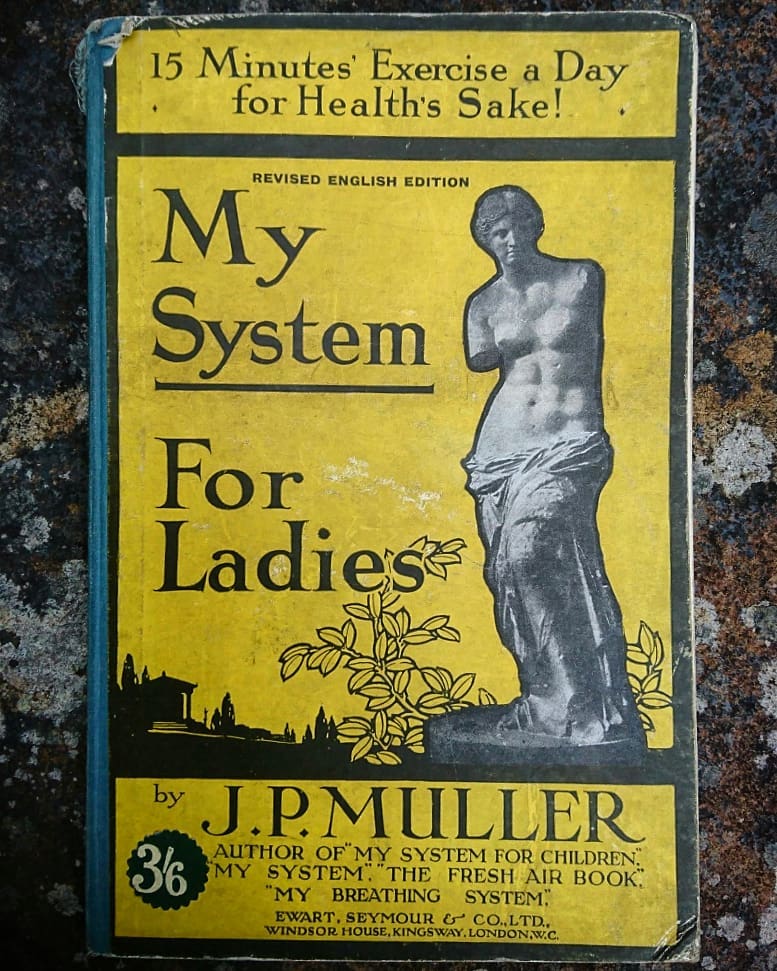
The Amaz­ing Franz Kaf­ka Work­out is more cor­rect­ly attrib­uted to fit­ness guru Jør­gen Peter Müller, above, the author of sev­er­al exer­cise reg­i­men pam­phlets, includ­ing the best­selling My Sys­tem: 15 Min­utes’ Exer­cise a Day for Health’s Sake, which was pub­lished in 1904 and then trans­lat­ed into 25 lan­guages.

Kaf­ka was def­i­nite­ly the best known of Müller’s devo­tees, scrupu­lous­ly run­ning through the pre­scribed exer­cis­es morn­ing and evening, wear­ing noth­ing more than the skin he was born in—another prac­tice Müller hearti­ly endorsed.

The chis­eled Mr. Müller was a pro­po­nent of reg­u­lar den­tal check ups, sen­si­ble footwear, and vig­or­ous  tow­el­ing (or “rub­bing”), and an ene­my of con­stric­tive woolen under­wear, closed win­dows, and seden­tary lifestyles. My Sys­tem includes some obser­va­tions that wouldn’t sound out of place in a Kaf­ka nov­el:

The town office type is often a sad phe­nom­e­non pre­ma­ture­ly bent, with shoul­ders and hips awry from his dis­lo­cat­ing posi­tion on the office stool, pale, with pim­ply face and poma­tumed head, thin neck pro­trud­ing from a col­lar that an ordi­nary man could use as a cuff, and swag­ger­ing dress in the lat­est fash­ion flap­ping round the sticks that take the place of arms and legs! At a more advanced age the spec­ta­cle is still more pitiable… the eyes are dull, and the gen­er­al appear­ance is either still more sunken and shriv­eled or else fat, flab­by, and pal­lid, and enveloped in an odour of old paper, putri­fied skin grease, and bad breath.

In an essay on Slate, Sarah Wild­man, the descen­dent of two lean Müller fans, delves into the Müller System’s pop­u­lar­i­ty, par­tic­u­lar­ly amongst 20th-cen­tu­ry Euro­pean Jews.

Just as best-sell­ing fit­ness experts do today, Müller beefed up his fran­chise with relat­ed titles: My Sys­tem for Ladies, My Sys­tem for Chil­dren, and My Sun­bathing and Fresh Air Sys­tem.

The orig­i­nal book is in the pub­lic domain and can be down­loaded for free from the Inter­net Archive, where one com­menter who has been fol­low­ing the sys­tem for near­ly sev­en­ty years gives it a hearty thumbs-up for its sta­mi­na restor­ing pow­ers.

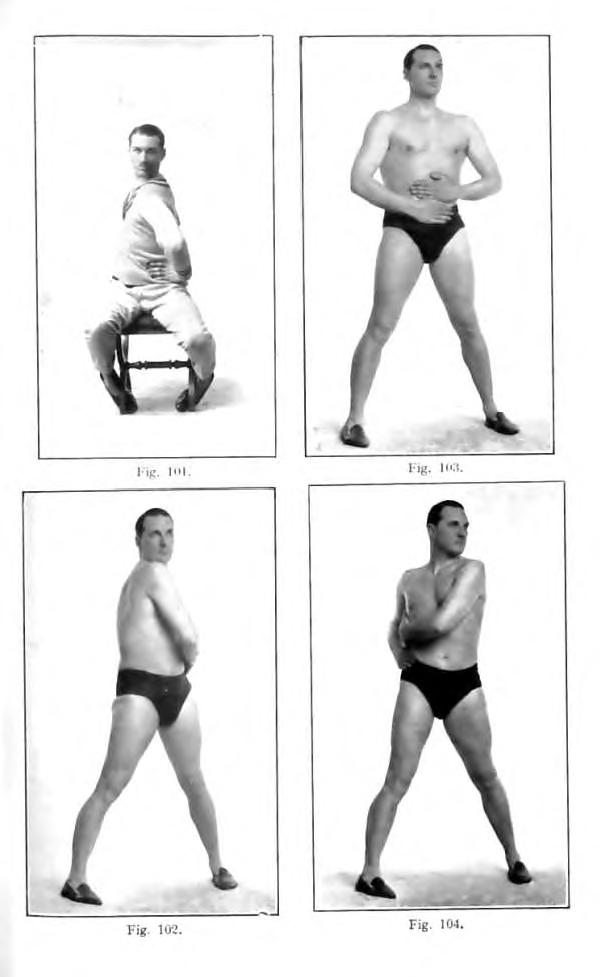
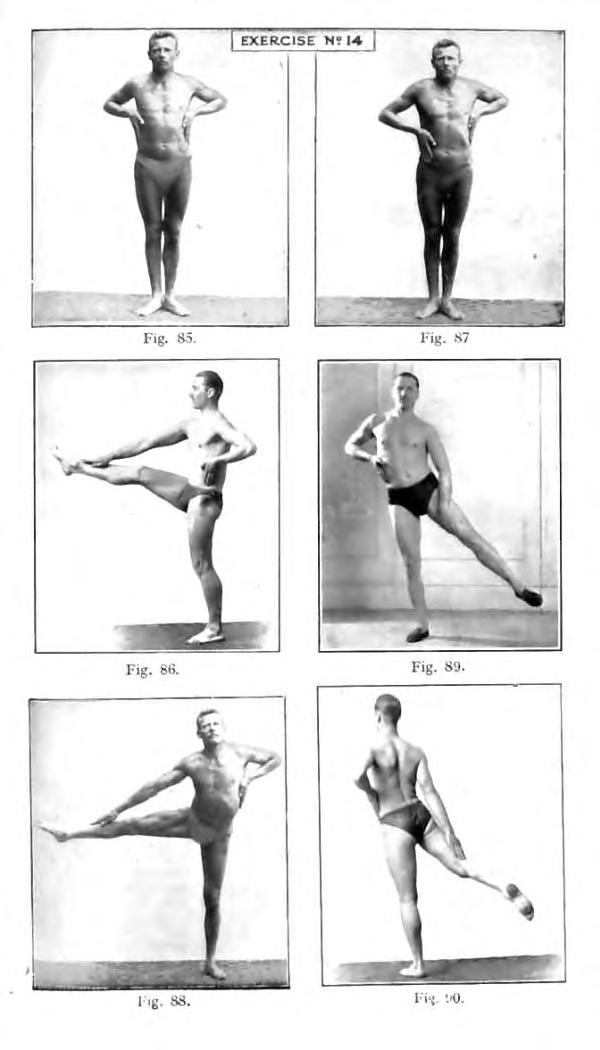
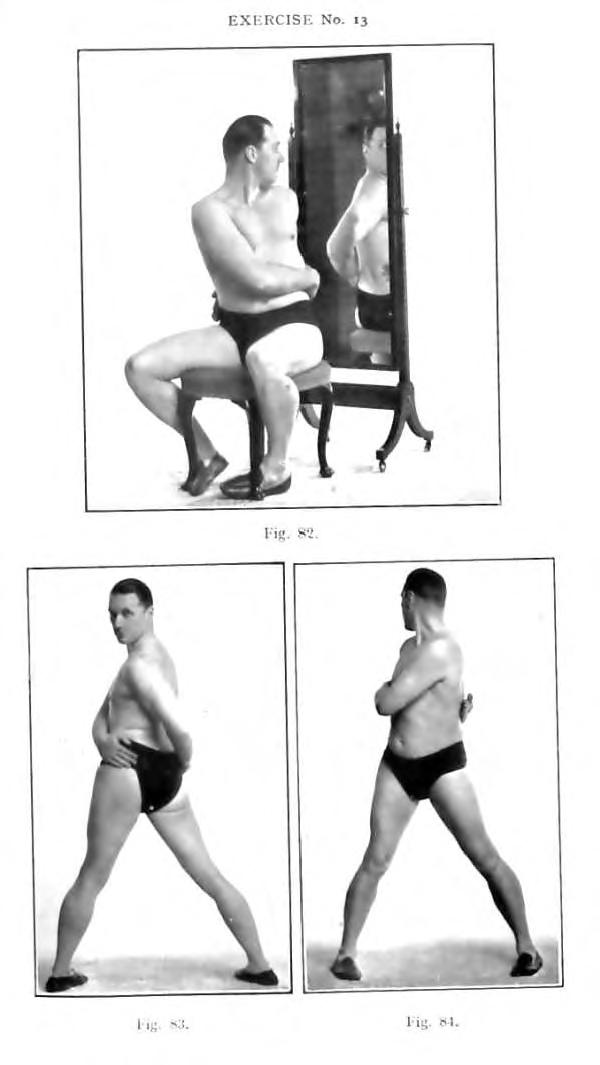
Oth­ers seek­ing to make a buck by charg­ing for Kin­dle down­loads have the decen­cy to offer free instruc­tions for each of the indi­vid­ual exer­cis­es, includ­ing Quick Side­ways Bend­ing of Trunk (with Rub­bing) and the plank‑y Bend­ing and Stretch­ing of the Arms, part­ly Loaded with the Weight of the Body.

Even those unlike­ly to per­form so much as a sin­gle deep knee bend should get a bang out of the orig­i­nal pho­to illus­tra­tions, which, back in 1904, were as ripe for erot­ic dou­ble duty as the whole­some men’s physique mags of the 50s and 60s.

Insert spec­u­la­tion as to Kafka’s sex­u­al ori­en­ta­tion here, if you must.

via Men­tal Floss

Relat­ed Con­tent:

Walt Whitman’s Unearthed Health Man­u­al, “Man­ly Health & Train­ing,” Urges Read­ers to Stand (Don’t Sit!) and Eat Plen­ty of Meat (1858)

77 Exer­cis­es: A Work­out Video For Fans of the Talk­ing Heads

What’s a Sci­en­tif­i­cal­ly-Proven Way to Improve Your Abil­i­ty to Learn? Get Out and Exer­cise

Ayun Hal­l­i­day is an author, illus­tra­tor, the­ater mak­er and Chief Pri­ma­tol­o­gist of the East Vil­lage Inky zine.  Join her in New York City tonight, March 11, for the next install­ment of her ongo­ing book-based vari­ety show, Necro­mancers of the Pub­lic Domain. Fol­low her @AyunHalliday.

Sleep or Die: Neuroscientist Matthew Walker Explains How Sleep Can Restore or Imperil Our Health

Wouldn’t it be nice if we could fix the work/life thing by chuck­ing out the dif­fer­ence? At home, you’re in the office, at the office, you’re at home, always on and nev­er off—sleep, option­al. Two-four hours per 24-hour cycle should be enough, right? Wrong. We need prop­er sleep like we need good food, low stress, engag­ing pur­suits, etc.—to thrive and live a long and hap­py life. If you wait until you’re dead to sleep, you’ll be dead soon­er than you think. “Short sleep pre­dicts a short­er life,” explains sleep researcher Matthew Walk­er in the RSA ani­ma­tion Sleep or Die, above. “Sleep,” he says, “is a non-nego­tiable bio­log­i­cal neces­si­ty.“

The Nation­al Sleep Foun­da­tion rec­om­mends that adults sleep an aver­age of eight hours a night. That num­ber may vary from per­son to per­son, but few­er than six can be high­ly detri­men­tal. Walk­er is some­thing of a “sleep evan­ge­list,” notes Berke­ley News. Ask him about “the down­side of pulling an all-nighter, and he’ll rat­tle off a list of ill effects that range from mem­o­ry loss and a com­pro­mised immune sys­tem to junk food crav­ings and wild mood swings.” The neu­ro­sci­en­tist tells Ter­ry Gross on Fresh Air, “Every dis­ease that is killing us in devel­oped nations has causal and sig­nif­i­cant links to a lack of sleep.”

Walk­er has a lot more to say about sleep in the inter­view below, includ­ing tips for get­ting there, whether you can make up for lost sleep (you can’t), and why you shouldn’t yank teenagers out of bed on the week­ends. Why should we lis­ten to him? Well, he isn’t just any sleep sci­en­tist. “To be spe­cif­ic,” writes Rachel Cooke at The Guardian, “he is the direc­tor of the Cen­ter for Human Sleep Sci­ence at the Uni­ver­si­ty of Cal­i­for­nia, a research insti­tute whose goal—possibly unachievable—is to under­stand every­thing about sleep’s impact on us, from birth to death, in sick­ness and health.”


The ben­e­fits of sound sleep include enhanced cre­ativ­i­ty and con­cen­tra­tion, low­er blood pres­sure, bet­ter mood reg­u­la­tion, and high­er immu­ni­ty and fer­til­i­ty. Lack of sleep, how­ev­er, is “increas­ing our risk of can­cer, heart attack and Alzheimer’s,” notes Cooke. Indeed, “after just one night of only four or five hours’ sleep,” Walk­er tells The Guardian, “your nat­ur­al killer cells—the ones that attack the can­cer cells that appear in your body every day—drop by 70%.” Sleep depri­va­tion has such seri­ous out­comes that “the World Health Organ­i­sa­tion has classed any form of night-time shift work as a prob­a­ble car­cino­gen.”

Sleep holds many mys­ter­ies, but one thing sci­en­tists like Walk­er seem to know: poor sleep leaves us more in sick­ness than in health. And we are in the midst of a “cat­a­stroph­ic sleep-loss epi­dem­ic.” “No one would look at an infant baby asleep, and say ‘What a lazy baby!” Walk­er observes. Yet adults have “stig­ma­tized sleep with the label of lazi­ness. We want to seem busy, and one way we express that is by pro­claim­ing how lit­tle sleep we’re get­ting.” It’s a way to broad­cast that we aren’t falling behind or miss­ing out. But our bod­ies’ nat­ur­al cycles and rhythms don’t speed up along with tech­nol­o­gy and glob­al mar­kets.

“As bed­rooms every­where glow from the screens of round-the-clock tech­nol­o­gy con­sump­tion,” Berke­ley News writes, mil­lions of peo­ple suf­fer phys­i­cal, emo­tion­al, cog­ni­tive, and psy­cho­log­i­cal stress­es. Or, put more pos­i­tive­ly, “a grow­ing body of sci­en­tif­ic work” shows that “a sol­id sev­en to nine hours of sleep a night serves func­tions beyond our wildest imag­i­na­tions.” Learn more about not only what’s gone wrong with sleep, but how to start address­ing the prob­lem in Walker’s book Why We Sleep: Unlock­ing the Pow­er of Sleep and Dreams.

Relat­ed Con­tent:

Bertrand Russell’s Advice For How (Not) to Grow Old: “Make Your Inter­ests Grad­u­al­ly Wider and More Imper­son­al”

Bri­an Eno Lists the Ben­e­fits of Singing: A Long Life, Increased Intel­li­gence, and a Sound Civ­i­liza­tion

10 Longevi­ty Tips from Dr. Shigea­ki Hino­hara, Japan’s 105-Year-Old Longevi­ty Expert

Josh Jones is a writer and musi­cian based in Durham, NC. Fol­low him at @jdmagness

Jim Morrison Declares That “Fat is Beautiful” .… And Means It

There’s a bit of cog­ni­tive dis­so­nance in a young rock god giv­ing voice to the fat pride move­ment some four decades after his death.

Years before social media ampli­fied celebri­ty weight gain cov­er­age to the realm of nation­al news, The Doors’ lead singer, Lizard King Jim Mor­ri­son, was the sub­ject of intense bod­i­ly scruti­ny.

The musician’s drug of choice—alcohol—swiftly added some extra cush­ion­ing to the sexy, shirt­less young lion image pho­tog­ra­ph­er Joel Brod­sky man­aged to cap­ture in 1967.

That lean, leather-pant­ed ver­sion is the one the Mor­ri­son direc­tor Patrick Smith went with for the Blank on Blank ani­ma­tion above, using audio from a 1969 inter­view with the Vil­lage Voice’s Howard Smith (no rela­tion).

Occa­sion­al­ly ani­ma­tor Smith bal­loons the 2‑D Morrison’s bel­ly for humor­ous effect, but let’s be frank. By today’s stan­dards, the 5’11 Mor­ri­son, who by his own esti­mate tipped the scales at 185lb, was hard­ly “fat.”

Pleas­ing­ly plump per­haps…

Fill­ing out…

Eat­ing (and drink­ing) like some­one whose bank account did­n’t require belt tight­en­ing.

His com­pas­sion toward gen­er­ous­ly pro­por­tioned bod­ies like­ly sprang from ear­ly expe­ri­ence.

As pho­tog­ra­ph­er Lin­da McCart­ney recalled in Lin­da McCartney’s The Sixties—Portrait Of An Era:

He … told me that he’d grown up as a fat kid that no one want­ed to know and that this had caused him a lot of emo­tion­al pain.

Then he explained what had brought it all to the sur­face. Appar­ent­ly he had been walk­ing around Green­wich Vil­lage that morn­ing and a girl who he knew as a child had spot­ted him and start­ed going crazy over him. That both­ered him because he sensed the hypocrisy of it all. When he was a fat mil­i­tary brat these peo­ple had reject­ed and ignored him but now, because of his new pub­lic image, they were fawn­ing over him.

That “new pub­lic image” is the one most of us think of first when think­ing of Jim Mor­ri­son, but as a flesh and blood exem­plar, it was unsus­tain­able. Pho­tog­ra­ph­er Brod­sky reflects:

The shot on the inner sleeve of the Great­est Hits album was pret­ty near the end, I think. By that time, he was so drunk he was stum­bling into the lights and we had to stop the ses­sion. Mor­ri­son nev­er real­ly looked that way again, and those pic­tures have become a big part of The Doors’ leg­end. I think I got him at his peak.

Mor­ri­son didn’t dwell on child­hood mis­eries in his Vil­lage Voice inter­view, nor did he show any self-loathing or regret for physiques past.

Rather, he gave voice to the pos­i­tive effects of his increased size. He felt like a tank, a beast—a body of con­se­quence.

(To con­sid­er the impli­ca­tions of bod­i­ly size for a female in Morrison’s world, have a look at car­toon­ist Péné­lope Bagieu’s Cal­i­for­nia Dreamin’: Cass Elliot before the Mamas and The Papas.)

Relat­ed Con­tent:

“The Lost Paris Tapes” Pre­serves Jim Morrison’s Final Poet­ry Record­ings from 1971

The Last Known Pho­tos of Jim Mor­ri­son, Tak­en Days Before His Death in Paris (June 1971)

The Doors Play Live in Den­mark & LA in 1968: See Jim Mor­ri­son Near His Charis­mat­ic Peak

Ayun Hal­l­i­day is an author, illus­tra­tor, the­ater mak­er and Chief Pri­ma­tol­o­gist of the East Vil­lage Inky zine.  Join her in New York City March 11 for the next install­ment of her book-based vari­ety show, Necro­mancers of the Pub­lic Domain. Fol­low her @AyunHalliday.

Nutritional Psychiatry: Why Diet May Play an Essential Role in Treating Mental Health Conditions, Including Depression, Anxiety & Beyond

For years neu­ro­sci­en­tists have been try­ing to cor­rect the old assump­tion that our minds are reducible to our brains. Research into what is known as the gut micro­bio­me, for exam­ple, has shown that mood and men­tal health are inti­mate­ly linked to the func­tion­ing of an ecosys­tem of microor­gan­isms with­in the diges­tive sys­tem. As researchers write in the Jour­nal of Neu­ro­science, “exper­i­men­tal changes to the gut micro­bio­me can affect emo­tion­al behav­ior and relat­ed brain sys­tems [and] may play a patho­phys­i­o­log­i­cal role in human brain dis­eases, includ­ing autism spec­trum dis­or­der, anx­i­ety, depres­sion, and chron­ic pain.”

Even Parkinson’s Dis­ease has been linked to gut bac­te­ria in stud­ies per­formed by micro­bi­ol­o­gist Sarkis Maz­man­ian, who points out that “70 per­cent of all neu­rons in the periph­er­al ner­vous system—that is, not the brain or spinal cord—are in the intestines, and the gut’s ner­vous sys­tem is direct­ly con­nect­ed to the cen­tral ner­vous sys­tem through the vagus nerve.” Our guts also sup­ply the brain with fuel, and it requires a “con­stant sup­ply,” notes Dr. Eva Sel­hub at the Har­vard Health Blog. “That ‘fuel’ comes from the foods you eat—and what’s in that fuel makes all the dif­fer­ence. Put sim­ply, what you eat direct­ly affects the struc­ture and func­tion of your brain and, ulti­mate­ly, your mood.”

Such find­ings have giv­en rise to the emerg­ing field of Nutri­tion­al Psy­chi­a­try, which you can hear described in the TEDx talk above by clin­i­cal psy­chol­o­gist Julia Ruck­lidge. Ini­tial­ly taught that “nutri­tion and diet were of triv­ial sig­nif­i­cance for men­tal health,” Ruck­lidge, like most of her col­leagues, believed that “only drugs and psy­chother­a­py could treat these seri­ous con­di­tions.” But after encoun­ter­ing evi­dence to the con­trary, she decid­ed to do her own stud­ies. Begin­ning at around 5:30, she presents com­pelling evi­dence for a dra­mat­ic reduc­tion in rates of ADHD, PTSD, depres­sion, and psy­chosis after dietary treat­ments.

That’s not to say that drugs and psy­chother­a­py do not play impor­tant roles in treat­ment, nor that they should be sup­plant­ed by a nutri­tion-only approach. But it does mean that nutri­tion­al treat­ments are shown by many fields of study to be effec­tive and per­haps essen­tial, for rea­sons con­sis­tent with wide­spread knowl­edge about the body and brain. “It is now known,” for exam­ple, as Joyce Cavaye reports at the Inde­pen­dent, “that many men­tal health con­di­tions are caused by inflam­ma­tion in the brain which ulti­mate­ly caus­es our brain cells to die.” Inflam­ma­tion is, in part, caused by “a lack of nutri­ents such as mag­ne­sium, omega‑3 fat­ty acids, pro­bi­otics, vit­a­mins and min­er­als… all essen­tial for the opti­mum func­tion­ing of our bod­ies.”

Diets con­sist­ing pri­mar­i­ly of high­ly processed foods and sug­ars are also a cause of inflam­ma­tion. “Mul­ti­ple stud­ies have found a cor­re­la­tion between a diet high in refined sug­ars and impaired brain func­tion,” Dr. Sel­hub writes. These diets pro­mote a “wors­en­ing of symp­toms of mood dis­or­ders, such as depres­sion.” Processed foods with high car­bo­hy­drate con­tent and few nutri­ents have cre­at­ed an epi­dem­ic of mal­nu­tri­tion among a sig­nif­i­cant por­tion of the pop­u­la­tion who oth­er­wise seem to have plen­ty to eat. The sit­u­a­tion seems to have major­ly con­tributed to the cor­re­spond­ing epi­demics of depres­sion and oth­er men­tal health con­di­tions.

Nutri­tion­al psy­chi­a­try is not a fad or a pro­gram claim­ing to recre­ate the diet of ear­ly humans. While “a poten­tial evo­lu­tion­ary mis­match between our ances­tral past (Pale­olith­ic, Neolith­ic) and the con­tem­po­rary nutri­tion­al envi­ron­ment” mer­its explo­ration, as researchers write in an arti­cle pub­lished at the Jour­nal of Phys­i­o­log­i­cal Anthro­pol­o­gy, many more con­tem­po­rary factors—such as eco­nom­ic devel­op­ment and the rise of sci­en­tif­ic medicine—play a role in how we under­stand diet and men­tal health.

Rather than look to pre­his­to­ry, sci­en­tists have stud­ied the diets of “tra­di­tion­al” soci­eties (those not reliant on mass-pro­duced processed foods) in the Mediter­ranean and Japan. They have found a 25–35% low­er rate of depres­sion, for exam­ple, in those who eat diets “high in veg­eta­bles, fruits, unprocessed grains, and fish and seafood,” writes Sel­hub, with “only mod­est amounts of lean meats and dairy.” There is no per­fect dietary for­mu­la, how­ev­er. Everyone’s gut process­es things dif­fer­ent­ly. Dr. Sel­hub rec­om­mends cut­ting out processed foods and sug­ar and exper­i­ment­ing with adding and sub­tract­ing foods to see how you feel. (Nutri­tion­al exper­i­ments like these are prob­a­bly best car­ried out after con­sult­ing with your doc­tor.)

Just as we will need to change the way we eat if we want to pre­serve our out­er envi­ron­ment, the health of that rich, and no less nec­es­sary, inner world known as the micro­bio­me will require what for many is a dra­mat­ic change in eat­ing habits. Sad­ly, it is not a change every­one can afford to make. But for mil­lions suf­fer­ing from men­tal ill­ness­es, nutri­tion­al psy­chi­a­try may rep­re­sent a life-alter­ing course of treat­ment.

Relat­ed Con­tent:

Stanford’s Robert Sapol­sky Demys­ti­fies Depres­sion, Which, Like Dia­betes, Is Root­ed in Biol­o­gy

Psilo­cy­bin Could Soon Be a Legal Treat­ment for Depres­sion: Johns Hop­kins Pro­fes­sor, Roland Grif­fiths, Explains How Psilo­cy­bin Can Relieve Suf­fer­ing

How Bak­ing, Cook­ing & Oth­er Dai­ly Activ­i­ties Help Pro­mote Hap­pi­ness and Alle­vi­ate Depres­sion and Anx­i­ety

Josh Jones is a writer and musi­cian based in Durham, NC. Fol­low him at @jdmagness

An Animated History of Cats: How Over 10,000 Years the Cat Went from Wild Predator to Sofa Sidekick

Dogs sees us as their mas­ters while cats sees us as their slaves. — Anony­mous

The next time your friend’s pet cat sinks its fangs into your wrist, bear in mind that the beast is prob­a­bly still labor­ing under the impres­sion that it’s guard­ing the gra­naries.

Anthro­pol­o­gist Eva-Maria Gei­gl’s ani­mat­ed Ted-Ed Les­son, The His­to­ry of the World Accord­ing to Cats, above, awards spe­cial recog­ni­tion to Unsink­able Sam, a black-and-white ship’s cat who sur­vived three WWII ship­wrecks (on both Axis and Allied sides).

It’s a cute sto­ry, but as far as direct­ing the course of his­to­ry, Felis sil­vestris lybi­ca, a sub­species of wild­cat that can be traced to the Fer­tile Cres­cent some 12,000 years ago, emerges as the true star.

In a Neolith­ic spin of “The Farmer in the Dell,” the troughs and urns in which ancient farm­ers stored sur­plus grain attract­ed mice and rats, who in turn attract­ed these mus­cu­lar, preda­to­ry cats.

They got the job done.

Human and cats’ mutu­al­ly ben­e­fi­cial rela­tion­ship spelled bad news for the rodent pop­u­la­tion, but sur­vival for today’s 600-mil­lion-some domes­tic cats, whose DNA is shock­ing­ly sim­i­lar to that of its pre­his­toric ances­tors.

Hav­ing proved their val­ue to the human pop­u­la­tion in terms of pest con­trol, cats quick­ly found them­selves ele­vat­ed to wel­come com­pan­ions of sol­diers and sailors, cel­e­brat­ed for their abil­i­ty to knock out rope-destroy­ing ver­min, as well as dan­ger­ous ani­mals on the order of snakes and scor­pi­ons.

Thus­ly did cats’ influ­ence spread.

Bastet, the Egypt­ian god­dess of domes­tic­i­ty, wom­en’s secrets, fer­til­i­ty, and child­birth is unmis­tak­ably feline.

Cats draw the char­i­ot of Freya, the Norse god­dess of love.

Their pop­u­lar­i­ty dipped briefly in the Late Mid­dle Ages, when humankind mis­tak­en­ly cred­it­ed cats as the source of the plague. In truth, that scourge was spread by rodents, who ran unchecked after men round­ed up their feline preda­tors for a grue­some slaugh­ter.

Nowa­days, a quick glimpse at Insta­gram is proof enough that cats are back on top.

(Yes, you can haz cheezburg­er with that.)

Dogs may see our ser­vice to them as proof that we are gods, buts cats sure­ly inter­pret the feed­ing and upkeep they receive at human hands as evi­dence they are the ones to be wor­shipped.

Relat­ed Con­tent:

Two Cats Keep Try­ing to Get Into a Japan­ese Art Muse­um … and Keep Get­ting Turned Away: Meet the Thwart­ed Felines, Ken-chan and Go-chan

Medieval Cats Behav­ing Bad­ly: Kit­ties That Left Paw Prints … and Peed … on 15th Cen­tu­ry Man­u­scripts

Edward Gorey Talks About His Love Cats & More in the Ani­mat­ed Series, “Goreytelling”

What Hap­pens When a Cat Watch­es Hitchcock’s Psy­cho

Ayun Hal­l­i­day is an author, illus­tra­tor, the­ater mak­er and Chief Pri­ma­tol­o­gist of the East Vil­lage Inky zine.  See her onstage in New York City Jan­u­ary 14 as host of  The­ater of the Apes book-based vari­ety show, Necro­mancers of the Pub­lic Domain. Fol­low her @AyunHalliday.

Jazz Musician Plays Acoustic Guitar While Undergoing Brain Surgery, Helping Doctors Monitor Their Progress

Unlike many col­or­ful expres­sions in Eng­lish whose ori­gins are lost to us, the com­par­i­son of major­ly con­se­quen­tial tasks to brain surgery makes per­fect sense. One false move or mis­cal­cu­la­tion can result in instant death. The chances of irre­versible, life-alter­ing dam­age are high, should a scalpel slip or a sur­geon mis­take healthy brain tis­sue for dis­eased. This can hap­pen more read­i­ly than we might like to think. “It can be very dif­fi­cult to tell the dif­fer­ence between the tumor and nor­mal brain tis­sue,” admits Dr. Basil Enick­er, a spe­cial­ist neu­ro­sur­geon at Inkosi Albert Luthuli Cen­tral Hos­pi­tal in South Africa.

An oper­a­tion Enick­er led makes the pro­ce­dure seem like just as much an art as a sci­ence. Dur­ing an “awake cran­ioto­my,” the sur­geon and his team removed a tumor from the brain of Musa Manzi­ni, a South African jazz bassist.

To help them mon­i­tor the oper­a­tion as they went, they had him strum an acoustic gui­tar in the OR. “Pre­sum­ably, had he hit a wrong note,” writes Kimon de Greef at The New York Times, “it would have been an imme­di­ate sig­nal for the sur­geons to probe else­where.” He also car­ried on an extend­ed con­ver­sa­tion with one of the sur­geons, as you can see in the video above.

Such pro­ce­dures are not at all unusu­al. In a sim­i­lar case at the Uni­ver­si­ty of Texas’ MD Ander­son Can­cer Cen­ter, young musi­cian Robert Alvarez strummed his gui­tar while sur­geons removed a tumor near his speech and move­ment cen­ters. In 2014, de Greef reports, “a tenor in the Dutch Nation­al Opera, Ambroz Bajec-Lapa­jne, sang Schubert’s ‘Gute Nacht’ as doc­tors removed a tumor. In 2015, the sax­o­phon­ist Car­los Aguil­era read music and per­formed dur­ing an oper­a­tion in Spain.” That same year, a Brazil­ian man played the Bea­t­les while he under­went brain surgery.

Not all of them are musi­cal, but awake cran­iotomies are so com­mon that Manzi­ni “watched quite a lot of YouTube videos,” he says, “to pre­pare myself men­tal­ly.” As for the shock of being con­scious while sur­geons poke around in your most pre­cious of bod­i­ly organs, mil­lime­ters from pos­si­ble paral­y­sis, etc., well… it’s cer­tain­ly more com­fort­able now than in some of the ear­li­est brain surg­eries we have on fos­sil record—some 8,000 years ago. One won­ders how Neolith­ic patients passed their time under the knife.

Relat­ed Con­tent:

Oliv­er Sacks Explains the Biol­o­gy of Hal­lu­ci­na­tions: “We See with the Eyes, But with the Brain as Well”

This is Your Brain on Sex and Reli­gion: Exper­i­ments in Neu­ro­science

The Brains of Jazz and Clas­si­cal Musi­cians Work Dif­fer­ent­ly, New Research Shows

Josh Jones is a writer and musi­cian based in Durham, NC. Fol­low him at @jdmagness

How Music Can Awaken Patients with Alzheimer’s and Dementia

In the late 1950’s, pio­neer­ing free jazz band­leader Sun Ra played a gig at a Chica­go men­tal hos­pi­tal, booked there by his man­ag­er Alton Abra­ham, who had an inter­est in alter­na­tive med­i­cine. The exper­i­ment in musi­cal ther­a­py worked won­ders. One patient who had not moved or spo­ken in years report­ed­ly got up, walked over to the piano, and yelled out, “you call that music!”

The anec­dote illus­trates just one expe­ri­ence among untold mil­lions in which a per­son suf­fer­ing from a debil­i­tat­ing neu­ro­log­i­cal con­di­tion responds pos­i­tive­ly, even mirac­u­lous­ly, it seems, to music.

As famed neu­rol­o­gist and writer Oliv­er Sacks puts it in his book Musi­cophil­ia, “musi­cal per­cep­tion, musi­cal sen­si­bil­i­ty, musi­cal emo­tion and musi­cal mem­o­ry can sur­vive long after oth­er forms of mem­o­ry have dis­ap­peared.”

This med­ical fact makes musi­cal ther­a­py an ide­al inter­ven­tion for patients suf­fer­ing from Alzheimer’s dis­ease and demen­tia. In the short video above, Sacks describes his vis­its to patients in var­i­ous old age homes. “Some of them are con­fused, some are agi­tat­ed, some are lethar­gic, some have almost lost lan­guage,” he says, “but all of them, with­out excep­tion, respond to music.”

We can see just such a response in the clip at the top, in which the bare­ly respon­sive Hen­ry Dry­er, a 92-year-old nurs­ing home res­i­dent with demen­tia, trans­forms when he hears music. “The philoso­pher Kant called music ‘the quick­en­ing art,’ and Henry’s being quick­ened,” says Sacks says of the dra­mat­ic change, “he’s being brought to life.” Sud­den­ly lucid and hap­py, Hen­ry looks up and says, “I’m crazy about music. Beau­ti­ful sounds.”

The clip comes from a doc­u­men­tary called Alive Inside, win­ner of a 2014 Sun­dance Audi­ence Award (see the trail­er above), a film that shows us sev­er­al musi­cal “quick­en­ings” like Henry’s. “Before Dry­er start­ed using his iPod,” notes The Week, “he could only answer yes-or-no questions—and some­times he sat silent­ly and still for hours at a time.” Now, he sings, car­ries on con­ver­sa­tions and can “even recall things from years ago.”

Sacks com­ments that “music imprints itself on the brain deep­er than any oth­er human expe­ri­ence,” evok­ing emo­tions in ways that noth­ing else can. A 2010 Boston Uni­ver­si­ty study showed that Alzheimer’s patients “learned more lyrics when they were set to music rather than just spo­ken.” Like­wise, researchers at the Uni­ver­si­ty of Utah found music to be “an alter­na­tive route for com­mu­ni­cat­ing with patients.”

As senior author of the Utah study, Dr. Nor­man Fos­ter, says, “lan­guage and visu­al mem­o­ry path­ways are dam­aged ear­ly as the dis­ease pro­gress­es, but per­son­al­ized music pro­grams can acti­vate the brain, espe­cial­ly for patients who are los­ing con­tact with their envi­ron­ment.” See the effects for your­self in this extra­or­di­nary film, and learn more about Sacks’ adven­tures with music and the brain in the 2007 dis­cus­sion of Musi­cophil­ia, just above.

Relat­ed Con­tent:

Sun Ra Plays a Music Ther­a­py Gig at a Men­tal Hos­pi­tal; Inspires Patient to Talk for the First Time in Years

Dis­cov­er the Retire­ment Home for Elder­ly Musi­cians Cre­at­ed by Giuseppe Ver­di: Cre­at­ed in 1899, It Still Lives On Today

The French Vil­lage Designed to Pro­mote the Well-Being of Alzheimer’s Patients: A Visu­al Intro­duc­tion to the Pio­neer­ing Exper­i­ment

In Touch­ing Video, Peo­ple with Alzheimer’s Tell Us Which Mem­o­ries They Nev­er Want to For­get

Josh Jones is a writer and musi­cian based in Durham, NC. Fol­low him at @jdmagness

« Go BackMore in this category... »
Quantcast