How to Use Psychedelic Drugs to Improve Mental Health: Michael Pollan’s New Book, How to Change Your Mind, Makes the Case

The his­to­ry of research on psy­che­del­ic drugs is so sen­sa­tion­al that more sober-mind­ed exper­i­ments (so to speak) often get obscured by the hip, the weird, and the nefar­i­ous, the lat­ter includ­ing secret CIA and Army test­ing of LSD and oth­er drugs as a means of psy­cho­log­i­cal war­fare and “enhanced inter­ro­ga­tion.” These exper­i­ments inad­ver­tent­ly led to Ken Kesey’s infa­mous “Acid Tests” in North­ern Cal­i­for­nia. On the oth­er side of the coun­try, Har­vard psy­chol­o­gist Tim­o­thy Leary used ques­tion­able meth­ods in his psilo­cy­bin exper­i­ments with pris­on­ers and stu­dents, before get­ting fired and going on to expand the mind of the coun­ter­cul­ture, earn­ing the dis­tinc­tion of hav­ing Richard Nixon call him “the most dan­ger­ous man in Amer­i­ca.”

Mean­while, work­ing in rel­a­tive obscu­ri­ty in very dif­fer­ent cir­cum­stances in the late 50s, a UC Irvine psy­chi­a­trist named Oscar Janiger brought vol­un­teer sub­jects, includ­ing sev­er­al dozen artists, to a house out­side L.A., where they were giv­en LSD and psy­chother­a­py. Janiger’s work has its sen­sa­tion­al side—a cousin of Allen Gins­berg, he report­ed­ly intro­duced Cary Grant, Anais Nin, Jack Nichol­son, and Aldous Hux­ley to acid. But his pri­ma­ry achieve­ment, in data that remained most­ly unpub­lished dur­ing his life­time, were his dis­cov­er­ies of the ther­a­peu­tic and cre­ative use of psy­che­del­ic drugs under con­trolled con­di­tions with sub­jects who were pre­pared for the expe­ri­ence and guid­ed through it by trained pro­fes­sion­als.

The exper­i­ments con­duct­ed by Janiger and oth­ers dif­fered marked­ly from the free­wheel­ing recre­ation­al drug use of the coun­ter­cul­ture and the weaponiza­tion of psy­che­delics by the U.S. gov­ern­ment. In recent years, sci­en­tists and psy­chol­o­gists have con­duct­ed sim­i­lar kinds of research under even more tight­ly con­trolled con­di­tions, sub­stan­ti­at­ing and expand­ing on the con­clu­sions of ear­ly exper­i­menters who found that psy­che­delics seem remark­ably effec­tive in treat­ing depres­sion, anx­i­ety, alco­holism, drug addic­tion, and oth­er stub­born­ly destruc­tive human ills. This research sup­ports with sound evi­dence LSD inven­tor Albert Hoff­man’s descrip­tion of his drug as “med­i­cine for the soul.”

While research orga­ni­za­tions like MAPS (Mul­ti­dis­ci­pli­nary Asso­ci­a­tion for Psy­che­del­ic Stud­ies) have cen­tral­ized and pro­mot­ed much of the cur­rent research, it’s now get­ting a huge pop­u­lar boost from none oth­er than food writer Michael Pol­lan, best­selling author of books like The Omnivore’s Dilem­ma and In Defense of Food. “A self-described ‘reluc­tant psy­cho­naut,’” writes NPR, Pol­lan sub­mit­ted him­self as a test sub­ject for exper­i­ments with “LSD, psilo­cy­bin and 5‑MeO-DMT, a sub­stance in the ven­om of the Sono­ran Desert toad.” He has described his expe­ri­ences and the work of the research com­mu­ni­ty in a new book titled How to Change Your Mind: What the New Sci­ence of Psy­che­delics Teach­es Us About Con­scious­ness, Dying, Addic­tion, Depres­sion, and Tran­scen­dence.

At the top of the post, see Pol­lan describe the book in a short video from Pen­guin. He dis­cuss­es such ancient ideas (as he has in past writ­ings) of psy­choac­tive drugs as “entheagens”—or chem­i­cal con­duits to the divine. “In the Dar­win­ian sense,” he says, the evo­lu­tion­ary pur­pose of psy­che­del­ic expe­ri­ences may be an increase in cog­ni­tive vari­ety and the stim­u­la­tion of “more metaphors, more insights.” In his Fresh Air inter­view above, Pol­lan fur­ther explains how this works ther­a­peu­ti­cal­ly. “One of the things our mind does is tell sto­ries about our­selves,” he says. “If you’re depressed, you’re being told a sto­ry per­haps that you’re worth­less, that no one could pos­si­bly love you… that life will not get bet­ter.”

“These sto­ries,” Pol­lan says, “trap us in these rumi­na­tive loops that are very hard to get out of. They’re very destruc­tive pat­terns of thought.” Psy­che­del­ic drugs “dis­able for a peri­od of time the part of the brain where the self talks to itself. It’s called the default mode net­work, and it’s a group of struc­tures that con­nect parts of the cor­tex — the evo­lu­tion­ar­i­ly most recent part of the brain — to deep­er lev­els where emo­tion and mem­o­ry reside.” Dis­rupt­ing old nar­ra­tives helps peo­ple to write bet­ter, health­i­er sto­ries.

As Pol­lan says in the Time video above, psy­che­delics have been pop­u­lar­ly con­ceived as drugs that make you crazy—and in some cas­es, that hap­pens. But they are also “drugs that can make you sane, or more sane.”  One of the major dif­fer­ences between one out­come and the oth­er is the con­di­tions under which the drug is tak­en. When qual­i­ty and dosage of the drugs are con­trolled, and when sub­jects are pre­pared for “bad trips” with spe­cif­ic instruc­tions, even fright­en­ing hal­lu­ci­na­tions can con­tribute to bet­ter men­tal health.

In his psilo­cy­bin exper­i­ment, for exam­ple, Pol­lan was accom­pa­nied by two “guides” and giv­en “a set of ‘flight instruc­tions,” includ­ing what to do if you see a mon­ster.

…don’t try to run away. Walk right up to it, plant your feet and say, “What do you have to teach me? What are you doing in my mind?” And if you do that, accord­ing to the flight instruc­tions, your fear will morph into some­thing much more pos­i­tive very quick­ly.

In anoth­er exam­ple, anoth­er psy­lo­cy­bin sub­ject, Alana, describes in the Vox video below her guid­ed expe­ri­ence with the drug dur­ing a smok­ing ces­sa­tion tri­al at Johns Hop­kins. “There were scary parts, fore­bod­ing parts,” she says, but thanks to con­trolled con­di­tions and the reas­sur­ing pres­ence of a guide, “I always knew there was joy and peace on the oth­er side of it. It was free­ing.”

Using psy­che­delics to con­front and con­quer fears goes back many thou­sands of years in tra­di­tion­al soci­eties. Mod­ern tech­no­log­i­cal cul­ture has large­ly turned to anti­de­pres­sants and oth­er phar­ma­ceu­ti­cals to reg­u­late anx­i­ety, but as Pol­lan points out, “Prozac doesn’t help when you’re con­fronting mor­tal­i­ty,” the deep­est, most uni­ver­sal fear of all. But psychedelics—as Aldous Hux­ley found when he took LSD on his deathbed—can “occa­sion an expe­ri­ence in people—a mys­ti­cal experience—that some­how makes it eas­i­er to let go.” Sure­ly, there are oth­er ways to do so. In any case, psy­che­del­ic drugs seem so ben­e­fi­cial to psy­cho­log­i­cal well-being that they can be, and hope­ful­ly will be in the future, used to pos­i­tive­ly (respon­si­bly) shift the con­scious­ness and cre­ative poten­tial of mil­lions of suf­fer­ing peo­ple.

For more on this sub­ject, read Pol­lan’s lat­est book–How to Change Your Mind: What the New Sci­ence of Psy­che­delics Teach­es Us About Con­scious­ness, Dying, Addic­tion, Depres­sion, and Tran­scen­dence.

Relat­ed Con­tent:

Watch The Bicy­cle Trip: An Ani­ma­tion of The World’s First LSD Trip Which Took Place on April 19, 1943

Rare Footage Shows US and British Sol­diers Get­ting Dosed with LSD in Gov­ern­ment-Spon­sored Tests (1958 + 1964)

Artist Draws 9 Por­traits While on LSD: Inside the 1950s Exper­i­ments to Turn LSD into a “Cre­ativ­i­ty Pill”

Aldous Huxley’s Most Beau­ti­ful, LSD-Assist­ed Death: A Let­ter from His Wid­ow

Ken Kesey Talks About the Mean­ing of the Acid Tests

Josh Jones is a writer and musi­cian based in Durham, NC. Fol­low him at @jdmagness

Why Sitting Is The New Smoking: An Animated Explanation

In recent years, sit­ting has become the new smok­ing. “Past stud­ies have found,” declares a 2014 arti­cle in The New York Times, “the more hours that peo­ple spend sit­ting, the more like­ly they are to devel­op dia­betes, heart dis­ease and oth­er con­di­tions, and poten­tial­ly to die pre­ma­ture­ly — even if they exer­cise reg­u­lar­ly.” What’s the sci­ence behind this alarm­ing claim? The ani­mat­ed TED-ED video (watch above) begins to paint the pic­ture. But it does­n’t get into the lat­est and per­haps most impor­tant research. Accord­ing to sci­ence writer Gretchen Reynolds, a recent Swedish study pub­lished in the British Jour­nal of Sports Med­i­cine sug­gests that when you sit all day, your telom­eres (the tiny caps on the ends of DNA strands) get short­er. Which is not a good thing. As telom­eres get short­er, the rate at which the body ages and decays speeds up. Con­verse­ly, the study found “that the telom­eres in [those] who were sit­ting the least had length­ened. Their cells seemed to be grow­ing phys­i­o­log­i­cal­ly younger.”

Sev­er­al years ago, KQED radio in San Fran­cis­co aired a pro­gram ded­i­cat­ed to this ques­tion, fea­tur­ing med­ical and ergonom­ics experts. To delve deep­er into it, lis­ten below.

Note: An ear­li­er ver­sion of this post appeared on our site in 2015.

If you would like to sign up for Open Culture’s free email newslet­ter, please find it here. It’s a great way to see our new posts, all bun­dled in one email, each day.

If you would like to sup­port the mis­sion of Open Cul­ture, con­sid­er mak­ing a dona­tion to our site. It’s hard to rely 100% on ads, and your con­tri­bu­tions will help us con­tin­ue pro­vid­ing the best free cul­tur­al and edu­ca­tion­al mate­ri­als to learn­ers every­where. You can con­tribute through Pay­Pal, Patre­on, and Ven­mo (@openculture). Thanks!

Relat­ed Con­tent:

This Is Your Brain on Exer­cise: Why Phys­i­cal Exer­cise (Not Men­tal Games) Might Be the Best Way to Keep Your Mind Sharp

Play­ing an Instru­ment Is a Great Work­out For Your Brain: New Ani­ma­tion Explains Why

What’s a Sci­en­tif­i­cal­ly-Proven Way to Improve Your Abil­i­ty to Learn? Get Out and Exer­cise

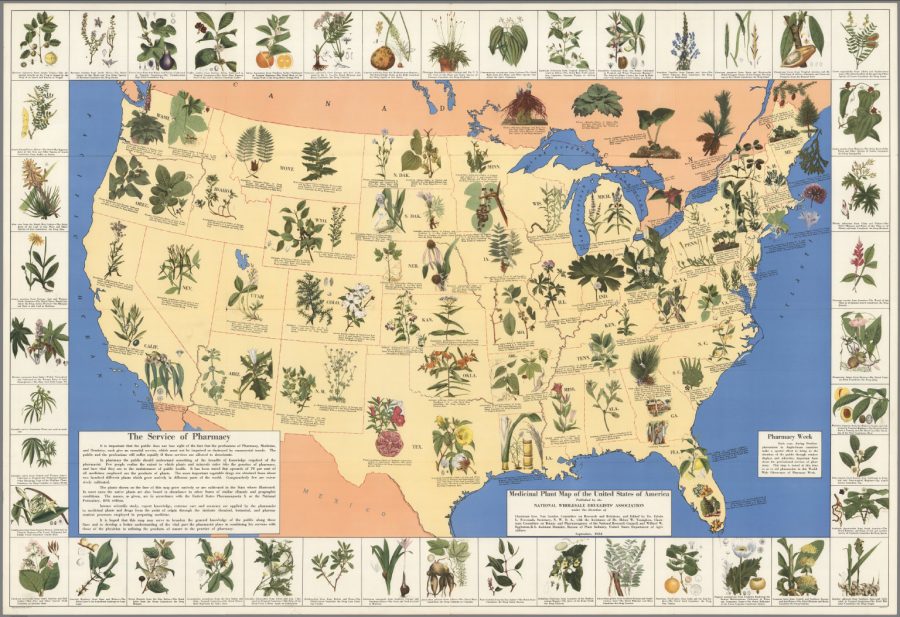
The Illustrated Medicinal Plant Map of the United States of America (1932): Download It in High Resolution

Two years ago, we high­light­ed col­lec­tor David Rumsey’s huge map archive, which he donat­ed to Stan­ford Uni­ver­si­ty in April of 2016 and which now resides at Stanford’s David Rum­sey Map Cen­ter. The open­ing of this phys­i­cal col­lec­tion was a pret­ty big deal, but the dig­i­tal col­lec­tion has been on the web, in some part, and avail­able to the online pub­lic since 1996. Twen­ty years ago, how­ev­er, though the inter­net was decid­ed­ly becom­ing an every­day fea­ture of mod­ern life, it was dif­fi­cult for the aver­age per­son to imag­ine the degree to which dig­i­tal tech­nol­o­gy would com­plete­ly over­take our lives, not to men­tion the almost unbe­liev­able wealth and pow­er tech com­pa­nies would amass in such short time.

Sim­i­lar­ly, when the above 1932 Med­i­c­i­nal Plant Map of the Unit­ed States (see in a larg­er for­mat here) first appeared—one of the tens of thou­sands of maps avail­able in the dig­i­tal Rum­sey col­lec­tion—few peo­ple oth­er than Aldous Hux­ley could have fore­seen the expo­nen­tial advances, and the rise of wealth and pow­er, to come in the phar­ma­ceu­ti­cal indus­try.

But the phar­ma­cists had a clue. The map, pro­duced by the Nation­al Whole­sale Drug­gists’ Asso­ci­a­tion, “was intend­ed to boost the image of the pro­fes­sion,” writes Rebec­ca Onion at Slate, “at a time when com­pa­nies were increas­ing­ly com­pound­ing new phar­ma­ceu­ti­cals in labs,” there­by ren­der­ing much of the drug-mak­ing knowl­edge and skill of old-time drug­gists obso­lete.

Although the com­mer­cial phar­ma­ceu­ti­cal indus­try began tak­ing shape in the late 19th cen­tu­ry, it didn’t ful­ly come into its own until the so-called “gold­en era” of 1930–1960, when, says Onion, researchers devel­oped “a flood of new antibi­otics, psy­chotrop­ics, anti­his­t­a­mines, and vac­cines, increas­ing­ly rely­ing on syn­thet­ic chem­istry to do so.” Over-the-counter med­ica­tions pro­lif­er­at­ed, and phar­ma­cists became alarmed. They sought to per­suade the pub­lic of their con­tin­ued rel­e­vance by point­ing out, as a short blurb at the bot­tom left cor­ner of the map notes, that “few peo­ple real­ize the extent to which plants and min­er­als enter into the prac­tice of phar­ma­cy.”

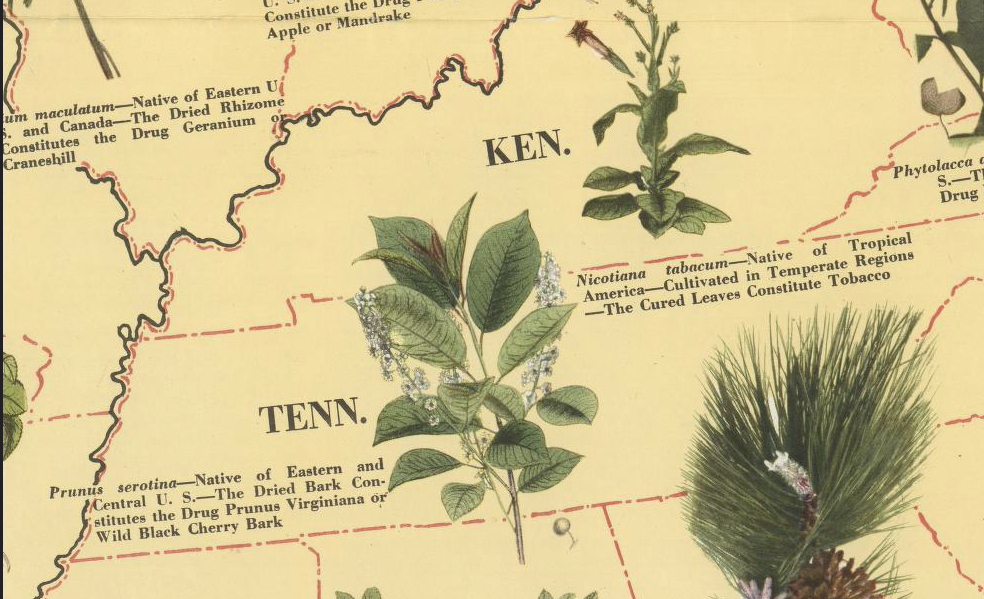
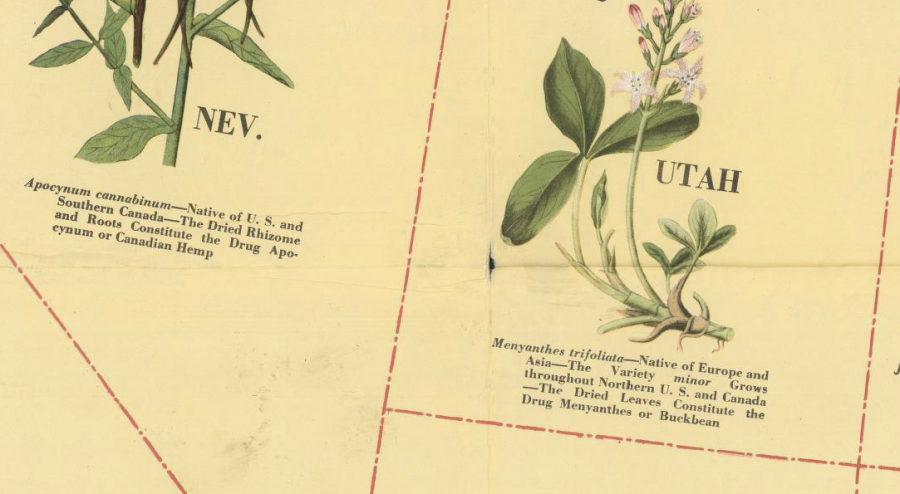
The map appeared dur­ing “Phar­ma­cy Week” in Octo­ber, when “phar­ma­cists in Anglo-Sax­on coun­tries” pro­mote their ser­vices. Los­ing sight of those impor­tant ser­vices, the Drug­gists’ Asso­ci­a­tion writes, will lead to suf­fer­ing, should the tra­di­tion­al phar­ma­cist’s func­tion “be impaired or destroyed by com­mer­cial trends.” Thus we have this visu­al demon­stra­tion of com­pe­tence. The map iden­ti­fies impor­tant species—native or cultivated—in each region of the coun­try. In Ken­tucky, we see Nicoti­na tabacum, whose cured leaves, you guessed it, “con­sti­tute tobac­co.” Across the coun­try in Neva­da, we are intro­duced to Apoc­ynum cannabinum, “native of U.S. and South­ern Canada—the dried rhi­zome and roots con­sti­tute the drug apoc­ynum or Cana­di­an hemp.”

The bet­ter-known Can­nibus sati­va also appears, in one of the box­es around the map’s bor­der that intro­duce plants from out­side North Amer­i­ca, includ­ing Ery­throx­y­lon coca, from Bolivia and Peru, and Papaver som­nifer­um, from which opi­um derives. Many of the oth­er med­ica­tions will be less famil­iar to us—and belong to what we now call natur­opa­thy, herbal­ism, or, more gen­er­al­ly, “tra­di­tion­al med­i­cine.” Though these med­i­c­i­nal prac­tices are many thou­sands of years old, the drug­gists try to project a cut­ting-edge image, assur­ing the map’s read­ers that “intense sci­en­tif­ic study, expert knowl­edge, extreme care and accu­ra­cy are applied by the phar­ma­cist to med­i­c­i­nal plants.”

While phar­ma­cists today are high­ly-trained pro­fes­sion­als, the part of their jobs that involved the mak­ing of drugs from scratch has been ced­ed to mas­sive cor­po­ra­tions and their research lab­o­ra­to­ries. The drug­gists of 1932 saw this com­ing, and no amount of col­or­ful pub­lic rela­tions could stem the tide. But it may be the case, giv­en chang­ing laws, chang­ing atti­tudes, the back­lash against over­med­ica­tion, and the dev­as­tat­ing opi­oid epi­dem­ic, that their craft is more rel­e­vant than it has been in decades, though today’s “drug­gists” work in mar­i­jua­na dis­pen­saries and health food stores instead of nation­al phar­ma­cy chains.

View and down­load the map in a high res­o­lu­tion scan at the David Rum­sey Map Col­lec­tion, where you can zoom in to every plant on the map and read its descrip­tion.

via Slate

Relat­ed Con­tent:

Down­load 67,000 His­toric Maps (in High Res­o­lu­tion) from the Won­der­ful David Rum­sey Map Col­lec­tion

The His­to­ry of Car­tog­ra­phy, the “Most Ambi­tious Overview of Map Mak­ing Ever,” Is Now Free Online

1,000-Year-Old Illus­trat­ed Guide to the Med­i­c­i­nal Use of Plants Now Dig­i­tized & Put Online

Josh Jones is a writer and musi­cian based in Durham, NC. Fol­low him at @jdmagness

“Every Concussion in the NFL This Year” Documented in a Chilling Five Minute Video

Over at  The Inter­cept, Josh Beg­ley, a data visu­al­iza­tion artist, has post­ed a video enti­tled “Field of Vision — Con­cus­sion Pro­to­col.” By way of intro­duc­tion, he writes:

Since the sea­son start­ed, there have been more than 280 con­cus­sions in the NFL. That is an aver­age of 12 con­cus­sions per week. Though it claims to take head injuries very seri­ous­ly, the Nation­al Foot­ball League holds this data rel­a­tive­ly close. It releas­es year­ly sta­tis­tics, but those num­bers are pub­lished in aggre­gate, mak­ing it dif­fi­cult to glean spe­cif­ic insights.

I have been track­ing these injuries all sea­son. Using a vari­ety of meth­ods, includ­ing review­ing dai­ly injury reports from NFL.com, I have cre­at­ed what I believe is the most com­plete dataset of indi­vid­ual con­cus­sions sus­tained dur­ing the 2017–2018 sea­son.

The result­ing film, “Con­cus­sion Pro­to­col,” is a visu­al record of every con­cus­sion in the NFL this year.

He goes on to add: “This film does not make an argu­ment for end­ing foot­ball. Rather, it invites a set of ques­tions… When we watch Amer­i­can foot­ball, what are we see­ing?” Or, real­ly, what are we miss­ing? It’s only by “cut­ting togeth­er these scenes of injury — moments of impact, of inti­ma­cy, of trau­ma — and revers­ing them,” that we “see some of this vio­lence anew” and under­score the sheer bru­tal­i­ty of the game.

It’s worth read­ing Beg­ley’s arti­cle in full here.

via Kot­tke

Relat­ed Con­tent:

This Is Your Brain on Exer­cise: Why Phys­i­cal Exer­cise (Not Men­tal Games) Might Be the Best Way to Keep Your Mind Sharp

Your Brain on Art: The Emerg­ing Sci­ence of Neu­roaes­thet­ics Probes What Art Does to Our Brains

How Stress Can Change Your Brain: An Ani­mat­ed Intro­duc­tion

by | Permalink | Make a Comment ( 1 ) |

The Health Benefits of Drumming: Less Stress, Lower Blood Pressure, Pain Relief, and Altered States of Consciousness

Drumming—from tablas to tym­pa­ni to djembes—is uni­ver­sal, so much so, says author Say­er Ji, that it seems “hard-wired into our bio­log­i­cal, social and spir­i­tu­al DNA.” Drum­ming may well be “an inborn capac­i­ty and arche­typ­al social activ­i­ty.” But many mod­ern peo­ple have become alien­at­ed from the drum. We out­source drum­ming to pro­fes­sion­als, and machines. Neu­ro­sci­en­tists the­o­rize that drum­mers may have dif­fer­ent brains than “non-drummers”—findings that sug­gest the activ­i­ty is con­fined to spe­cial­ly-designed peo­ple. Not so, say many sci­en­tists who believe that “drum­ming has some pro­found and holis­tic uses,” as Luke Sumpter writes at Reset.me, “to enhance phys­i­cal, men­tal and emo­tion­al health.”

In addi­tion to anthro­po­log­i­cal evi­dence not­ing the cen­tral­i­ty of drum­ming to human cul­ture, abun­dant research has demon­strat­ed its poten­tial for per­son­al heal­ing. While drum ther­a­py may be noth­ing new for cul­tures who have retained the prac­tice, those who haven’t can learn group drum­ming eas­i­ly enough with teach­ers like Peter Mari­no in the short clip above. The ben­e­fits, as stud­ies have shown, include reduced stress and increased immu­ni­ty. Group drum­ming may reduce anx­i­ety and blood pres­sure, it may work as pain relief and boost pos­i­tive emo­tions, and may even lead to “improved exec­u­tive func­tion” and a growth in white mat­ter in the brains of patients with Huntington’s dis­ease and oth­er neu­ro­log­i­cal con­di­tions.

The evi­dence-based approach to group drumming’s socio-phys­i­cal ben­e­fits should sway skep­tics, even those like­ly to see drum cir­cle ther­a­py as some kind of hip­py-dip­py woo. Sci­ence-mind­ed peo­ple with­out such hangups may also take an inter­est in stud­ies of drum­ming as a “shaman­ic” activ­i­ty that “induces spe­cif­ic sub­jec­tive expe­ri­ences.” As Michael Drake reports, one recent study “demon­strates that even a brief drum­ming ses­sion can dou­ble alpha brain wave activ­i­ty,” which is “asso­ci­at­ed with med­i­ta­tion, shaman­ic trance, and inte­gra­tive modes of con­scious­ness.” Drum­ming with oth­ers “pro­duces greater self-aware­ness” as well as a sense of inter­con­nect­ed­ness, and can strength­en social bonds among adults as well as chil­dren.

While much of the writ­ing about group drum­ming as ther­a­py stress­es more intan­gi­ble, mys­ti­cal ben­e­fits, no small amount of data sug­gests that the phys­i­cal effects are mea­sur­able and sig­nif­i­cant. This is not to min­i­mize the musi­cal prowess of your favorite drum­mers, or to belit­tle the musi­cal val­ue of machine-made beats. But the research strong­ly sug­gests that not only is most every­one able to pick up a drum and get into a groove, but also that most every­one who does so will be hap­pi­er, health­i­er, and more peace­ful and tuned-in.

via Reset

Relat­ed Con­tent:

The Neu­ro­science of Drum­ming: Researchers Dis­cov­er the Secrets of Drum­ming & The Human Brain

Play­ing an Instru­ment Is a Great Work­out For Your Brain: New Ani­ma­tion Explains Why

Iso­lat­ed Drum Tracks From Six of Rock’s Great­est: Bon­ham, Moon, Peart, Copeland, Grohl & Starr

Bri­an Eno Lists the Ben­e­fits of Singing: A Long Life, Increased Intel­li­gence, and a Sound Civ­i­liza­tion

Josh Jones is a writer and musi­cian based in Durham, NC. Fol­low him at @jdmagness.

“Inemuri,” the Japanese Art of Taking Power Naps at Work, on the Subway, and Other Public Places

If you’ve vis­it­ed any big city in Japan, you’ve no doubt seen a fair few com­muters sleep­ing on the sub­way. The more time you spend there, the more places in which you’ll see nor­mal, every­day-look­ing folks fast asleep: parks, cof­fee shops, book­stores, even the work­place dur­ing office hours. Peo­ple in Korea, where I live, have also been known to fall asleep in places not nor­mal­ly asso­ci­at­ed with sleep­ing, but the Japan­ese take it to such a lev­el that they’ve actu­al­ly got a word for it: inemuri (居眠り, a mash-up of the verb for being present and the one for sleep­ing.

“I first encoun­tered these intrigu­ing atti­tudes to sleep dur­ing my first stay in Japan in the late 1980s,” writes Uni­ver­si­ty of Cam­bridge lec­tur­er Brigitte Ste­ger. “At that time Japan was at the peak of what became known as the Bub­ble Econ­o­my, a phase of extra­or­di­nary spec­u­la­tive boom. Dai­ly life was cor­re­spond­ing­ly hec­tic. Peo­ple filled their sched­ules with work and leisure appoint­ments, and had hard­ly any time to sleep.” Amid it all, she heard many a boast­ful com­plaint that “We Japan­ese are crazy to work so much!” Yet “at the same time, I observed count­less peo­ple doz­ing on under­ground trains dur­ing my dai­ly com­mute. Some even slept while stand­ing up, and no one appeared to be at all sur­prised by this.”

Ste­ger, who research­es the social and cul­tur­al aspects of sleep in Japan, has found a rich sub­ject in inemuri, which on a cer­tain lev­el “is not con­sid­ered sleep at all,” and in fact works more like “a sub­or­di­nate involve­ment which can be indulged in as long as it does not dis­turb the social sit­u­a­tion at hand – sim­i­lar to day­dream­ing. Even though the sleep­er might be men­tal­ly ‘away’, they have to be able to return to the social sit­u­a­tion at hand when active con­tri­bu­tion is required. They also have to main­tain the impres­sion of fit­ting in with the dom­i­nant involve­ment by means of body pos­ture, body lan­guage, dress code and the like.”

Inemuri, a phe­nom­e­non whose doc­u­men­ta­tion goes back a mil­len­ni­um, also offers an uncon­ven­tion­al­ly angled win­dow onto sev­er­al aspects of Japan­ese cul­ture, such as the belief that “co-sleep­ing with chil­dren until they are at least at school age will reas­sure them and help them devel­op into inde­pen­dent and social­ly sta­ble adults.” That sure­ly gets peo­ple more com­fort­able, in every sense, with the idea of falling asleep in a pub­lic or qua­si-pub­lic space, as does Japan’s famous­ly high lev­el of pub­lic safe­ty. (Nobody who has some­where else to sleep does so on, say, the New York sub­way.)

In recent years, as you can see in the TRT World report above, Japan­ese com­pa­nies have actu­al­ly made pro­vi­sions for prop­er work­day nap­ping on the the­o­ry that a bet­ter-rest­ed work­er is the more pro­duc­tive work­er. (And they could­n’t be much worse-rest­ed there: “accord­ing to the US Nation­al Sleep Foun­da­tion’s poll of sleep­ing habits around the world,” reports the Guardian, “Japan­ese work­ers sleep, on aver­age, for just six hours 22 min­utes on work nights – less than those in any oth­er coun­try.”) That sounds for­ward-think­ing enough, and the most intense days of the Bub­ble Econ­o­my have indeed long gone, but do bear in mind that in Japan, one still does occa­sion­al­ly hear the word karōshi (過労死) — death by over­work.

Relat­ed Con­tent:

The Pow­er of Pow­er Naps: Sal­vador Dali Teach­es You How Micro-Naps Can Give You Cre­ative Inspi­ra­tion

How a Good Night’s Sleep — and a Bad Night’s Sleep — Can Enhance Your Cre­ativ­i­ty

Buck­min­ster Fuller’s Dymax­ion Sleep Plan: He Slept Two Hours a Day for Two Years & Felt “Vig­or­ous” and “Alert”

Dr. Weil’s 60-Sec­ond Tech­nique for Falling Asleep

“Tsun­doku,” the Japan­ese Word for the New Books That Pile Up on Our Shelves, Should Enter the Eng­lish Lan­guage

Based in Seoul, Col­in Mar­shall writes and broad­casts on cities and cul­ture. His projects include the book The State­less City: a Walk through 21st-Cen­tu­ry Los Ange­les and the video series The City in Cin­e­ma. Fol­low him on Twit­ter at @colinmarshall or on Face­book.

How the Japanese Practice of “Forest Bathing”—Or Just Hanging Out in the Woods—Can Lower Stress Levels and Fight Disease

When the U.S. media began report­ing on the phe­nom­e­non of “for­est bathing” as a ther­a­py for men­tal and phys­i­cal health, the online commentariat—as it will—mocked the con­cept relent­less­ly as yet anoth­er pre­ten­tious, bour­geois repack­ag­ing of some­thing thor­ough­ly mun­dane. Didn’t we just used to call it “going out­side”?

Well, yes, if all “for­est bathing” means is “going out­side,” then it does sound like a grandiose and unnec­es­sary phrase. The term, how­ev­er, is not an Amer­i­can mar­ket­ing inven­tion but a trans­la­tion of the Japan­ese shin­rin-yoku. “Coined by the Japan­ese Min­istry of Agri­cul­ture, Forestry and Fish­eries in 1982,” writes Meeri Kim at The Wash­ing­ton Post, “the word lit­er­al­ly trans­lates to ‘tak­ing in the for­est atmos­phere’ or ‘for­est bathing’ and refers to the process of soak­ing up the sights, smells and sounds of a nat­ur­al set­ting to pro­mote phys­i­o­log­i­cal and psy­cho­log­i­cal health.”

So what? We already have the exam­ples of thou­sands years of Bud­dhist monks (and Thich Nat Hanh), of Hen­ry David Thore­au, and the saints of the Sier­ra Club. But the old­est and most use­ful ideas and prac­tices can get care­less­ly dis­card­ed in the fran­tic pur­suit of inno­va­tion at all costs. The push­ing of hi-tech out­door gear, wear­able activ­i­ty track­ers, and health apps that ask us to log every move­ment can make going out­side feel like a daunt­ing, expen­sive chore or a com­pet­i­tive event.

For­est bathing involves none of those things. “Just be with the trees,” as Ephrat Livni describes the prac­tice, “no hik­ing, no count­ing steps on a Fit­bit. You can sit or mean­der, but the point is to relax rather than accom­plish any­thing.” You don’t have to hug the trees if you don’t want to, but at least sit under one for a spell. Even if you don’t attain enlight­en­ment, you very well may reduce stress and boost immune func­tion, accord­ing to sev­er­al Japan­ese stud­ies con­duct­ed between 2004 and 2012.

The Japan­ese gov­ern­ment spent around four mil­lion dol­lars on stud­ies con­duct­ed with hun­dreds of peo­ple “bathing” on 48 des­ig­nat­ed ther­a­py trails. In his work, Qing Li, asso­ciate pro­fes­sor at Nip­pon Med­ical School in Tokyo, found “sig­nif­i­cant increas­es in NK [nat­ur­al killer] cell activ­i­ty in the week after a for­est vis­it… pos­i­tive effects last­ed a month fol­low­ing each week­end in the woods.” Nat­ur­al killer cells fight virus­es and can­cers, and are appar­ent­ly stim­u­lat­ed by the oils that trees them­selves secrete to ward off germs and pests. See the pro­fes­sor explain in the video above (he trans­lates shin­rin-yoku as tak­ing a “for­est show­er,” and also claims to have bot­tled some of the effects).

Addi­tion­al­ly, exper­i­ments con­duct­ed by Japan’s Chi­ba Uni­ver­si­ty found that for­est bathing low­ered heart rate and blood pres­sure and brought down lev­els of cor­ti­sol, the stress hor­mone that can wreak hav­oc on every sys­tem when large amounts cir­cu­late through the body. Then there are the less tan­gi­ble psy­cho­log­i­cal ben­e­fits of tak­ing in the trees. Sub­jects in one study “showed sig­nif­i­cant­ly reduced hos­til­i­ty and depres­sion scores” after a walk in the woods. These find­ings under­score that spend­ing time in the for­est is a med­ical inter­ven­tion as well as an aes­thet­ic and spir­i­tu­al one, some­thing sci­en­tists have long observed but haven’t been able to quan­ti­fy.

In their review of a book called Your Brain on Nature, Moth­er Earth News quotes Franklin Hough, first chief of the U.S. Divi­sion of Forestry, who remarked in a 19th cen­tu­ry med­ical jour­nal that forests have “a cheer­ful and tran­quil­iz­ing influ­ence which they exert upon the mind, more espe­cial­ly when worn down by men­tal labor.” Hough’s hypoth­e­sis has been con­firmed, and despite what might sound to Eng­lish speak­ers like a slight­ly ridicu­lous name, for­est bathing is seri­ous ther­a­py, espe­cial­ly for the ever-increas­ing num­ber of urban­ites and those who spend their days in strip malls, office com­plex­es, and oth­er over­built envi­ron­ments.

What is a guid­ed for­est bathing expe­ri­ence like? You can lis­ten to NPR’s Ali­son Aubrey describe one above. She quotes Amos Clif­ford, founder of the Asso­ci­a­tion of Nature & For­est Ther­a­py, the cer­ti­fy­ing orga­ni­za­tion, as say­ing that a guide “helps you be here, not there,” sort of like a med­i­ta­tion instruc­tor. Clif­ford has been push­ing health care providers to “incor­po­rate for­est ther­a­py as a stress-reduc­tion strat­e­gy” in the U.S., and there’s no ques­tion that more stress reduc­tion tools are sore­ly need­ed.

But, you may won­der, do you have to call it “for­est bathing,” or pay for a cer­ti­fied guide, join a group, and buy some fan­cy out­er­wear to get the ben­e­fits hang­ing out with trees? I say, con­sid­er the words of John Muir, the inde­fati­ga­ble 19th nat­u­ral­ist, “father of the Nation­al Park Sys­tem,” and found­ing saint of the Sier­ra Club: In the eter­nal youth of Nature you may renew your own. Go qui­et­ly, alone; no harm will befall you. The quote may under­es­ti­mate the amount of risk or over­state the ben­e­fits, but you get the idea. Muir was not one to get tan­gled up in seman­tics or over­ly detailed analy­sis. Nonethe­less, his work inspired Amer­i­cans to step in and pre­serve so much of the coun­try’s for­est in the 19th and 20th cen­turies. Maybe the pre­ven­ta­tive med­i­cine of “for­est bathing” can help do the same in the 21st.

Relat­ed Con­tent:

How Walk­ing Fos­ters Cre­ativ­i­ty: Stan­ford Researchers Con­firm What Philoso­phers and Writ­ers Have Always Known

How Mind­ful­ness Makes Us Hap­pi­er & Bet­ter Able to Meet Life’s Chal­lenges: Two Ani­mat­ed Primers Explain

This Is Your Brain on Exer­cise: Why Phys­i­cal Exer­cise (Not Men­tal Games) Might Be the Best Way to Keep Your Mind Sharp

Josh Jones is a writer and musi­cian based in Durham, NC. Fol­low him at @jdmagness

Why Coffee Naps Will Perk You Up More Than Either Coffee, or Naps, Alone

We’ve all had a cup of cof­fee after a nap. But maybe we’ve been doing it all wrong. Maybe we should put the cup of cof­fee before the nap. It sounds coun­ter­in­tu­itive. But appar­ent­ly the cof­fee nap–a cup of joe fol­lowed imme­di­ate­ly by a quick nap–has some sci­en­tif­ic mer­its and unex­pect­ed health ben­e­fits.

Over at Vox, they’ve sum­ma­rized the find­ings of researchers at Lough­bor­ough Uni­ver­si­ty in the UK, who found that “when tired par­tic­i­pants took a 15-minute cof­fee nap, they went on to com­mit few­er errors in a dri­ving sim­u­la­tor than when they were giv­en only cof­fee, or only took a nap.”

Or “a Japan­ese study found that peo­ple who took a caf­feine nap before tak­ing a series of mem­o­ry tests per­formed sig­nif­i­cant­ly bet­ter on them com­pared with peo­ple who sole­ly took a nap, or took a nap and then washed their faces or had a bright light shone in their eyes.”

The accom­pa­ny­ing Vox video above explains how the cof­fee nap works its mag­ic. The biol­o­gy and chem­istry all get dis­cussed in a quick two-minute clip.

If you would like to sign up for Open Culture’s free email newslet­ter, please find it here. It’s a great way to see our new posts, all bun­dled in one email, each day.

If you would like to sup­port the mis­sion of Open Cul­ture, con­sid­er mak­ing a dona­tion to our site. It’s hard to rely 100% on ads, and your con­tri­bu­tions will help us con­tin­ue pro­vid­ing the best free cul­tur­al and edu­ca­tion­al mate­ri­als to learn­ers every­where. You can con­tribute through Pay­Pal, Patre­on, and Ven­mo (@openculture). Thanks!

Relat­ed Con­tent:

The Pow­er of Pow­er Naps: Sal­vador Dali Teach­es You How Micro-Naps Can Give You Cre­ative Inspi­ra­tion

Buck­min­ster Fuller’s Dymax­ion Sleep Plan: He Slept Two Hours a Day for Two Years & Felt “Vig­or­ous” and “Alert”

Stream 72 Hours of Ambi­ent Sounds from Blade Run­ner: Relax, Go to Sleep in a Dystopi­an Future

10 Hours of Ambi­ent Arc­tic Sounds Will Help You Relax, Med­i­tate, Study & Sleep

Dr. Weil’s 60-Sec­ond Tech­nique for Falling Asleep

« Go BackMore in this category... »
Quantcast