Colorful Animation Visualizes 200 Years of Immigration to the U.S. (1820-Present)

Many of us, whether born there, resid­ing there, or just inter­est­ed in the place, describe the Unit­ed States of Amer­i­ca as “a nation of immi­grants.” What exact­ly that phrase means has in recent times become the sub­ject of heat­ed pub­lic debate. As this year’s pres­i­den­tial can­di­dates strain to appeal to vot­ers with a wide vari­ety of views on the ques­tion of what role immi­gra­tion should play in Amer­i­ca’s future (to say noth­ing of what’s going on in Britain right now), it might help to look at what role immi­gra­tion has played in its past, and a new ani­mat­ed info­graph­ic of who has immi­grat­ed from where since 1820 gives the clear­est pos­si­ble look at the whole pic­ture.

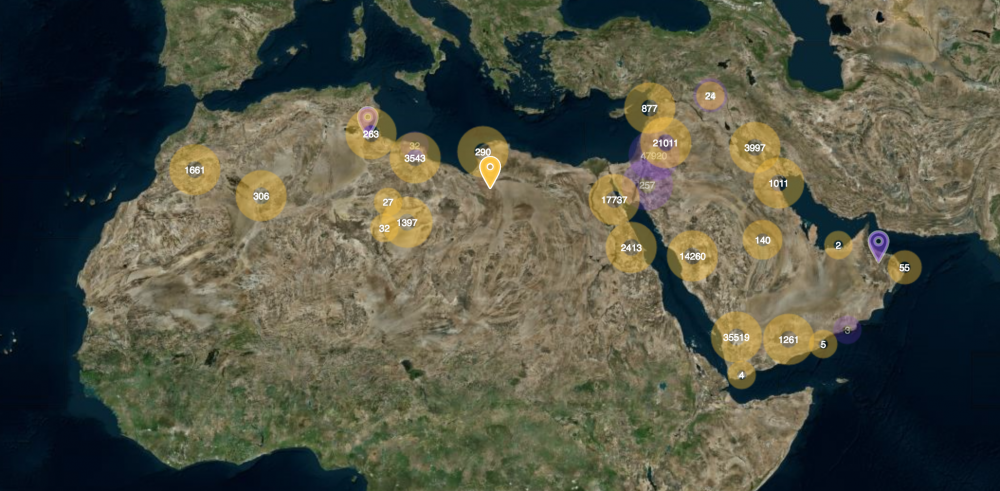
“Through most of the 1800s, immi­gra­tion came pre­dom­i­nant­ly from West­ern Europe (Ire­land, Ger­many, the U.K.),” writes the data visu­al­iza­tion’s cre­ator Max Gal­ka at Metro­cosm. “Toward the end of the cen­tu­ry, coun­tries fur­ther east in Europe (Italy, Rus­sia, Hun­gary) took over as the largest source of migra­tion. Begin­ning in the ear­ly 1900’s, most immi­grants arrived from the Amer­i­c­as (Cana­da, Mex­i­co). And the last few decades have seen a rise in migra­tion from Asia.”

Each col­ored dot fly­ing toward the U.S. rep­re­sents a part of that coun­try’s pop­u­la­tion, and the bright­ness of a coun­try’s col­or on the map cor­re­sponds to its total migra­tion to the U.S. at that par­tic­u­lar time. Gal­ka pro­vides oth­er charts that show immi­gra­tion flows by coun­try of ori­gin over time, which makes immi­gra­tion look high­er than ever, and then the same data as a per­cent­age of the total pop­u­la­tion of the Unit­ed States, which makes it look almost low­er than ever. (And as an Amer­i­can who moved to Korea last year, I can’t help but ask whether we should now give as much thought to emi­gra­tion out of the U.S. as we have to immi­gra­tion into it.)

To real­ly feel the advan­tages and com­pli­ca­tions of the nation of immi­grants first-hand, you’ll want to spend time in a major Amer­i­can city, those always vibrant, often trou­bled places that peo­ple like The Wire cre­ator David Simon have ded­i­cat­ed them­selves to observ­ing. “You look at what New Orleans is capa­ble of, as a prod­uct of the Amer­i­can melt­ing pot, and it’s glo­ri­ous,” he once said. “It’s in the fric­tion and in the dynam­ic between the var­i­ous groups that inhab­it a city that cre­ativ­i­ty real­ly hap­pens. What makes cities work is a lev­el of tol­er­ance and human endeav­or and wit that is absolute­ly required on the part of all peo­ple. Whether or not we suc­ceed as an urban peo­ple is the only ques­tion worth ask­ing.” And in Amer­i­ca, an urban peo­ple has always been a diverse peo­ple.

via Men­tal Floss

Relat­ed Con­tent:

Rare Audio: Albert Ein­stein Explains “Why I Am an Amer­i­can” on Day He Pass­es Cit­i­zen­ship Test (1940)

Noam Chom­sky on Whether the Rise of Trump Resem­bles the Rise of Fas­cism in 1930s Ger­many

Brex­it 101: The UK’s Stun­ning Vote Explained in 4 Min­utes

The Syr­i­an Con­flict & The Euro­pean Refugee Cri­sis Explained in an Ani­mat­ed Primer

John Green’s Crash Course in U.S. His­to­ry: From Colo­nial­ism to Oba­ma in 47 Videos

Based in Seoul, Col­in Mar­shall writes and broad­casts on cities and cul­ture. He’s at work on a book about Los Ange­les, A Los Ange­les Primer, the video series The City in Cin­e­ma, the crowd­fund­ed jour­nal­ism project Where Is the City of the Future?, and the Los Ange­les Review of Books’ Korea Blog. Fol­low him on Twit­ter at @colinmarshall or on Face­book.

1930s Fashion Designers Predict How People Would Dress in the Year 2000

From 1930 to 1941, Pathetone Week­ly ran film clips that high­light­ed ‘the nov­el, the amus­ing and the strange.’ At some point dur­ing the 1930s (the exact date isn’t clear), Pathetone asked Amer­i­can design­ers to look rough­ly 70 years into the future and haz­ard a guess about how women might dress in Year 2000. Appar­ent­ly, fash­ion design­ers don’t make great futur­ists, and the designs fell rather wide of the mark — unless you want to count Lady Gaga’s wardrobe, in which case they didn’t do a half bad job. Or, for that mat­ter, the male con­nect­ed 24/7 to his phone and sundry gad­gets…

If you would like to sign up for Open Culture’s free email newslet­ter, please find it here. It’s a great way to see our new posts, all bun­dled in one email, each day.

If you would like to sup­port the mis­sion of Open Cul­ture, con­sid­er mak­ing a dona­tion to our site. It’s hard to rely 100% on ads, and your con­tri­bu­tions will help us con­tin­ue pro­vid­ing the best free cul­tur­al and edu­ca­tion­al mate­ri­als to learn­ers every­where. You can con­tribute through Pay­Pal, Patre­on, and Ven­mo (@openculture). Thanks!

Relat­ed Con­tent:

How French Artists in 1899 Envi­sioned Life in the Year 2000: Draw­ing the Future

Isaac Asimov’s 1964 Pre­dic­tions About What the World Will Look 50 Years Lat­er — in 2014

Arthur C. Clarke Pre­dicts the Future in 1964 … And Kind of Nails It

In 1900, Ladies’ Home Jour­nal Pub­lish­es 28 Pre­dic­tions for the Year 2000

by | Permalink | Make a Comment ( 4 ) |

Hear the Only Castrato Ever Recorded Sing “Ave Maria” and Other Classics (1904)

Every human cul­ture has prac­ticed some form of rit­u­al muti­la­tion, from the mild mar­ring of a Spring Break tat­too to the dis­fig­ure­ment of foot-bind­ing. On the more extreme end of the scale, we have the ear­ly mod­ern Euro­pean prac­tice of cas­trat­ing young boys to inhib­it growth of their vocal cords and thy­roid glands dur­ing puber­ty. Such singers, known as cas­trati, became “high-sopra­nos, mez­zos, and altos, stri­dent voic­es and sweet ones, loud and mel­low voic­es,” writes Martha Feld­man in her book The Cas­tra­to.

The pur­pose of muti­lat­ing these singers ini­tial­ly had to do with a ban on women in church choirs. Cas­trati took their place, and were in very high demand. “Oppor­tu­ni­ties for cas­trati were stag­ger­ing,” writes i09, “and many fam­i­lies were fac­ing star­va­tion” in 16th cen­tu­ry Italy, where the prac­tice began. Despite a church pro­hi­bi­tion on unnec­es­sary ampu­ta­tion, par­ents and sur­geons con­spired to ille­gal­ly cas­trate boys cho­sen to ful­fill the role, and the prac­tice con­tin­ued into the 19th cen­tu­ry.

Sev­er­al cas­trati achieved last­ing pop­u­lar fame. “The best cas­trati were super­stars,” remarks Sarah Bard­well of the Han­del House Muse­um, “adored by female fans.” Oth­ers, io9 points out, “were low-rent singers who spent their time doing small gigs in small towns, and oth­ers spun their singing careers into posi­tions as min­is­ters at roy­al courts.” One of the more glam­orous fates await­ed one of the last of the cas­trati, Alessan­dro Moreschi, who may have been cas­trat­ed to rem­e­dy an inguinal her­nia or may have been inten­tion­al­ly muti­lat­ed to become a cas­tra­to.

How­ev­er he came by it, Moreschi’s voice so impressed a Roman choir­mas­ter that he appoint­ed the singer first sopra­no of the Papal basil­i­ca of St. John Lat­er­an in 1873 at age 15. Soon after, Moreschi, his fame spread­ing wide­ly, joined the Sis­tine Chapel Choir and took on sev­er­al admin­is­tra­tive duties. By this time, it’s said that Moreschi was so pop­u­lar that audi­ences would call out “Evi­va il coltel­lo” (“Long live the knife!”) dur­ing his per­for­mances. While still with the Sis­tine Choir and near the end of his career, Moreschi began to make record­ings for the Gramo­phone & Type­writer Com­pa­ny of London—the only known record­ings of a cas­tra­to.

Between 1902 and 1904, Moreschi record­ed 17 tracks, and you can hear them all here. At the top of the post, hear a restored ver­sion of “Ave Maria,” fur­ther down, a ren­di­tion of Euge­nio Terziani’s “Hos­tias et Pre­ces,” and here, the com­plete record­ings of Alessan­dro Moreschi, in their noisy orig­i­nal state. Nicholas Clap­ton, cura­tor of a 2006 cas­trati exhib­it at the Han­del House Muse­um in Lon­don, describes Moreschi’s voice as “Pavarot­ti on heli­um” and his­tor­i­can David Starkey tells of the “full hor­ror” of the pro­ce­dure, but also adds, “it’s hor­ri­bly like the child star of today, forced into this arti­fi­cial­i­ty, forced… to deliv­er that ineluctable, strange, desir­able thing of star qual­i­ty.”

Sad­ly, like many of today’s har­ried child singers and actors, few cas­trati actu­al­ly achieved star­dom. But those few who did, like Moreschi, “had a tremen­dous emo­tion­al impact on the audi­ences of the day,” Bard­well tells us. Moreschi’s record­ings, made while he was in his mid-for­ties, sound alien to us not only because of the strange­ness of cas­trati singing but because of the high­ly melo­dra­mat­ic style pop­u­lar at the time. His singing may not be rep­re­sen­ta­tive of some of the most renowned cas­trati in his­to­ry, like the 18th cen­tu­ry sen­sa­tion Farinel­li, but it is—barring a resur­gence of the pret­ty bar­bar­ic practice—probably the clos­est we’ll come to hear­ing the infa­mous cas­trati voice.

via His­to­ry Buff

Relat­ed Con­tent:

Rare Video Cap­tures 29-Year-Old Luciano Pavarot­ti in One of His Ear­li­est Record­ed Per­for­mances (1964)

Watch Clas­sic Per­for­mances from Maria Callas’ Won­drous and Trag­i­cal­ly-Short Opera Career

What Beat­box­ing and Opera Singing Look Like Inside an MRI Machine

Josh Jones is a writer and musi­cian based in Durham, NC. Fol­low him at @jdmagness

1,000 Vintage Postcards Show Famous Actors Performing Shakespeare’s Plays from 1880 to 1914

TEMP_Kerin_Gill_01_front

We’ll nev­er ful­ly know how any­thing looked in Shake­speare’s time, much less how the Bard’s own plays did when first per­formed on the stage of the Globe The­atre. Thor­ough schol­ar­ship of his­to­ry in gen­er­al and Shake­speare in par­tic­u­lar has enabled us to imag­ine and recon­struct such a sight with rea­son­able cred­i­bil­i­ty, but only so much direct accu­ra­cy, since the devel­op­ment of pho­tog­ra­phy would­n’t hap­pen for a cou­ple hun­dred years. But not long after human­i­ty got its pho­tog­ra­phers did those pho­tog­ra­phers begin tak­ing pic­tures of human­i­ty’s best-known dra­mas, and a set of par­tic­u­lar­ly vivid exam­ples sur­vives on Emory Uni­ver­si­ty’s relaunched web site Shake­speare and the Play­ers.

OTH_Waller_Millard_01_front

The site describes itself as “an online exhi­bi­tion of near­ly 1,000 post­cards fea­tur­ing many famous Eng­lish and Amer­i­can actors who per­formed Shakespeare’s plays for late Vic­to­ri­an and Edwar­dian audi­ences,” speci­fi­cial­ly from around 1880 to 1914. It “show­cas­es post­cards fea­tur­ing the dom­i­nat­ing actors of the time in roles from some of the more pop­u­lar and oft-per­formed plays, like Ham­let and Romeo & Juli­et, as well as those from plays not often per­formed, like Cym­be­line and The Mer­ry Wives of Wind­sor.”

R3_Mantell_R_01_front

Slate’s Rebec­ca Onion refers to schol­ar Lawrence W. Levine, who writes of how, in the 19th cen­tu­ry, “many Amer­i­cans, even if illit­er­ate, knew and loved Shake­speare’s plays; they were the source mate­r­i­al for end­less par­o­dies, skits, and songs on the Amer­i­can stage. Nor was Shake­speare fan­dom con­fined to the elite; in the first half of the 19th cen­tu­ry, the­ater ‘played the role that movies played in the first half of the twen­ti­eth … a kalei­do­scop­ic, demo­c­ra­t­ic insti­tu­tion pre­sent­ing a wide­ly vary­ing bill of fare to all class­es and socioe­co­nom­ic groups.’ ”

WINTERS_cast_01_front

Shake­speare and the Play­ers first went live back in the 1990s, a project of Eng­lish pro­fes­sor Har­ry Rusche, who has writ­ten an infor­ma­tive pref­ace for the site in its recent­ly redesigned form (with its images com­plete­ly re-dig­i­tized). “Post­cards on Shake­speare appeared in a dizzy­ing array of con­texts,” he explains, “some humor­ous and some seri­ous; these cards of actors were only a small part of Shake­speare and of the card-indus­try as a whole.” A “mania for col­lect­ing” swept up their con­tem­po­rary buy­ers, not to men­tion an appre­ci­a­tion for the stars of the day: “hand­some men and beau­ti­ful women are always pop­u­lar in any medi­um.”

LEAR_Mantell_R_03_back

But plen­ty of them actu­al­ly used these post­cards for their intend­ed pur­pose, about which you can learn more on the site’s post­card backs sec­tion. It notes that “the philoso­pher Jacques Der­ri­da, in The Post­card, encour­ages us to read the two con­flict­ing, yet res­onat­ing scenes — in our case, the Shake­speare image and the hand­writ­ing on the back — two sides of the post­cards togeth­er,” an expe­ri­ence that may “be espe­cial­ly inter­est­ing to those of us born in the age of email, video con­fer­ences, Twit­ter, and text mes­sag­ing,” those who will now won­der when a set of Shake­speare emo­ji will come along, pro­vid­ing us a means of con­tin­u­ing to incor­po­rate these eter­nal char­ac­ters into our cor­re­spon­dence today.

via Slate

Relat­ed Con­tent:

Free Online Shake­speare Cours­es: Primers on the Bard from Oxford, Har­vard, Berke­ley & More

Read All of Shakespeare’s Plays Free Online, Cour­tesy of the Fol­ger Shake­speare Library

Shakespeare’s Rest­less World: A Por­trait of the Bard’s Era in 20 Pod­casts

Take a Vir­tu­al Tour of Shakespeare’s Globe The­atre

What Shake­speare Sound­ed Like to Shake­speare: Recon­struct­ing the Bard’s Orig­i­nal Pro­nun­ci­a­tion

Hear What Ham­let, Richard III & King Lear Sound­ed Like in Shakespeare’s Orig­i­nal Pro­nun­ci­a­tion

Drunk Shake­speare: The Trendy Way to Stage the Bard’s Plays in the US & the UK

Tol­stoy Calls Shake­speare an “Insignif­i­cant, Inartis­tic Writer”; 40 Years Lat­er, George Orwell Weighs in on the Debate

Based in Seoul, Col­in Mar­shall writes and broad­casts on cities, lan­guage, and style. He’s at work on a book about Los Ange­les, A Los Ange­les Primer, the video series The City in Cin­e­ma, the crowd­fund­ed jour­nal­ism project Where Is the City of the Future?, and the Los Ange­les Review of Books’ Korea Blog. Fol­low him on Twit­ter at @colinmarshall or on Face­book.

Hear Ernest Shackleton Speak About His Antarctic Expedition in a Rare 1909 Recording

What more har­row­ing sto­ry has the his­to­ry of twen­ti­eth-cen­tu­ry explo­ration pro­duced than that of Ernest Shack­le­ton’s dis­as­trous Impe­r­i­al Trans-Antarc­tic Expe­di­tion of 1914–17? With one of their ships, the appro­pri­ate­ly named Endurance, crushed by pack ice, Shack­le­ton and com­pa­ny had to spend years far out­side civ­i­liza­tion, liv­ing in makeshift camps and ulti­mate­ly using a lifeboat to make the gru­el­ing 800-mile jour­ney to the hope of res­cue. Though the hero­ic efforts of Shack­le­ton and oth­ers ensured no loss of life among the men they led, mak­ing the expe­di­tion at least a suc­cess in sur­vival terms, the famed explor­er had had much bet­ter luck last time.

Shack­le­ton’s British Antarc­tic Expe­di­tion of 1907-09, also known as the Nim­rod Expe­di­tion, took him and his crew near­ly to the South Pole, set­ting a record for the longest south­ern polar expe­di­tion to that date. Or, to describe the achieve­ment in Shack­le­ton’s own words, “We reached a point with­in 97 geo­graph­i­cal miles of the South Pole; the only thing that stopped us from reach­ing the actu­al point was the lack of fifty pounds of food. Anoth­er par­ty reached, for the first time, the South Mag­net­ic Pole; anoth­er par­ty reached the sum­mit of a great active vol­cano, Mount Ere­bus. We made many inter­est­ing geo­log­i­cal and sci­en­tif­ic dis­cov­er­ies and had many nar­row escapes through­out the whole time.”

You can even hear that account giv­en in Shack­le­ton’s own voice in the video above, which cap­tures the play­back of My South Polar Expe­di­tion, an Edi­son Amberol wax cylin­der record he record­ed in New Zealand just a week after re-enter­ing civ­i­liza­tion. He returned to great acclaim, but also in seri­ous debt, and so putting out a piece of mer­chan­dise like this, and set­ting out on the exten­sive lec­ture tour that fol­lowed, only made good finan­cial sense. But before long, the cel­e­brat­ed Shack­le­ton found him­self at loose ends, becom­ing, in the words of jour­nal­ist and politi­cian Sir Har­ry Brit­tain, “a bit of a float­ing gent,” one who must have felt more than ready to take on a chal­lenge as an ambi­tious Impe­r­i­al Trans-Antarc­tic Expe­di­tion.

As vivid­ly as his­to­ry has remem­bered Shack­le­ton’s Endurance expe­ri­ence, he him­self came home from that sec­ond gru­el­ing voy­age to lit­tle fan­fare. He arrived in Eng­land not just dur­ing the news-dom­i­nat­ing Great War but lat­er than the rest of his crew, hav­ing giv­en anoth­er lec­ture tour in Amer­i­ca first. But this explor­er, it seems, did not live for fan­fare. Despite what hap­pened in his sec­ond Antarc­tic expe­di­tion, he orga­nized a third, the Shack­le­ton-Rowett Expe­di­tion, in 1921, though he died of a heart attack the fol­low­ing year, with the jour­ney still under­way. Shack­le­ton enthu­si­asts, and there are many, can only imag­ine what tales that expe­di­tion would have giv­en their hero to tell — and how they might have sound­ed on the slight­ly high­er-fideli­ty record­ing media devel­oped by the time he’d planned to return.

To hear an audio ver­sion of Shack­le­ton’s har­row­ing 1914–17 voy­age, lis­ten to Endurance: Shack­le­ton’s Incred­i­ble Voy­age, which you can down­load for free if you sign up for Audible.com’s 30-day Free Tri­al pro­gram.

Relat­ed Con­tent:

Google Street View Opens Up a Look at Shackleton’s Antarc­tic

A Beau­ti­ful Drone’s Eye View of Antarc­ti­ca

Based in Seoul, Col­in Mar­shall writes and broad­casts on cities, lan­guage, and style. He’s at work on a book about Los Ange­les, A Los Ange­les Primer, the video series The City in Cin­e­ma, the crowd­fund­ed jour­nal­ism project Where Is the City of the Future?, and the Los Ange­les Review of Books’ Korea Blog. Fol­low him on Twit­ter at @colinmarshall or on Face­book.

The Atlantic Slave Trade Visualized in Two Minutes: 10 Million Lives, 20,000 Voyages, Over 315 Years

Not since the six­ties and sev­en­ties, with the black pow­er move­ment, flow­er­ing of Afro­cen­tric schol­ar­ship, and debut of Alex Haley’s Roots, nov­el and mini-series, has there been so much pop­u­lar inter­est in the his­to­ry of slav­ery. We have seen Roots remade; award-win­ning books like Edward Baptist’s The Half Has Nev­er Been Told climb best­seller lists; and The Freedman’s Bureau Project’s dig­i­ti­za­tion of 1.5 mil­lion slav­ery-era doc­u­ments gives cit­i­zen-schol­ars the tools to research the his­to­ry on their own.

In addi­tion to these devel­op­ments, Slate mag­a­zine has designed a mul­ti­part, mul­ti­me­dia course, “The His­to­ry of Amer­i­can Slav­ery,” as part of its online edu­ca­tion­al ini­tia­tive, “Slate Acad­e­my.” Host­ed by Slate’s Jamelle Bouie and Rebec­ca Onion and fea­tur­ing guest his­to­ri­ans like Bap­tist, Hen­ry Louis Gates, Jr., Annette Gor­don-Reed, Eric Fon­er and more, this thor­ough sur­vey con­sists of a nine-part pod­cast, with copi­ous sup­ple­men­tary essays, book excerpts, and oth­er resources draw­ing on pri­ma­ry doc­u­ments and arti­facts. One sup­ple­ment, the ani­ma­tion above, shows us the “The Atlantic Slave Trade in Two Min­utes.”

Visu­al­iz­ing 315 years—“from the trade’s begin­ning in the 16th cen­tu­ry to its con­clu­sion in the 19th”—the ani­ma­tion dis­plays slave ships as increas­ing num­bers of black dots zip­ping across the Atlantic to the Amer­i­c­as from the African coasts. The dots “also cor­re­spond to the size of each voy­age. The larg­er the dot, the more enslaved peo­ple on board.” The Youtube video above pro­vides only a par­tial rep­re­sen­ta­tion of this impres­sive graph­ic. The full ani­ma­tion at Slate allows users to pause, click on indi­vid­ual dots, and get detailed infor­ma­tion, when avail­able, about the name of the ship, num­ber of enslaved peo­ple trans­port­ed, and points of ori­gin and entry in the New World.

In all, we see ani­mat­ed “more than 20,000 voy­ages cat­a­logued in the Trans-Atlantic Slave Trade Data­base.” And though we typ­i­cal­ly, with typ­i­cal U.S. solip­sism, think of Amer­i­can slav­ery as a most­ly North Amer­i­can phe­nom­e­non, the truth is quite the con­trary:

Of the more than 10 mil­lion enslaved Africans to even­tu­al­ly reach the West­ern Hemi­sphere, just 388,747—less than 4 per­cent of the total—came to North Amer­i­ca. This was dwarfed by the 1.3 mil­lion brought to Span­ish Cen­tral Amer­i­ca, the 4 mil­lion brought to British, French, Dutch, and Dan­ish hold­ings in the Caribbean, and the 4.8 mil­lion brought to Brazil.

Ear­ly slave expe­di­tions were con­duct­ed by the Span­ish and Por­tuguese. “In the 1700s,” writes Bouie, “Span­ish trans­port dimin­ish­es and is replaced (and exceed­ed) by British, French, Dutch, and—by the end of the century—American activ­i­ty. This hun­dred years—from approx­i­mate­ly 1725 to 1825—is also the high-water mark of the slave trade, as Euro­peans send more than 7.2 mil­lion peo­ple to forced labor, dis­ease and death in the New World.” Sur­pris­ing­ly, Por­tu­gal remained one of the lead­ing nations among enslavers for most of the slave-trade’s his­to­ry.

The ani­ma­tion and short explana­to­ry essay by Bouie show us the stag­ger­ing his­tor­i­cal scope of the immense­ly prof­itable and pro­found­ly inhu­mane enter­prise that shaped not only the Unit­ed States, but also—in many ways more so—Central and South Amer­i­ca and the Caribbean. There is no his­to­ry of the Amer­i­c­as, and no growth of many of the colonies into wealthy, world-his­tor­i­cal nations, with­out slav­ery, nor can the wealth of Europe be in any way divorced from the prof­its of the slave trade and slave indus­try. Bouie and Onion explain in the short video above why they decid­ed to pro­duce the course.

For a sense of how his­to­ri­ans’ and the public’s under­stand­ing of slav­ery have changed over many decades—for all kinds of ide­o­log­i­cal reasons—read this excerpt from Baptist’s ground­break­ing book. As he says in an inter­view with Salon, most his­to­ries and recre­ations of the peri­od of enslave­ment attempt to hide the facts: “The resis­tance to reck­on­ing with the role of slav­ery in the tra­jec­to­ry that makes the U.S. the most pow­er­ful nation on earth, that’s real; that’s very, very deep…. What­ev­er we say about the role of the U.S. in glob­al his­to­ry, it’s absolute­ly clear to me that slav­ery is essen­tial to the rise of U.S. pow­er.” Slate’s series goes a long way toward telling us the true his­to­ry of slav­ery, from the mouths of writ­ers and schol­ars who engage with it dai­ly.

Relat­ed Con­tent:

1.5 Mil­lion Slav­ery Era Doc­u­ments Will Be Dig­i­tized, Help­ing African Amer­i­cans to Learn About Their Lost Ances­tors

The “Slave Bible” Removed Key Bib­li­cal Pas­sages In Order to Legit­imize Slav­ery & Dis­cour­age a Slave Rebel­lion (1807)

Mas­sive New Data­base Will Final­ly Allow Us to Iden­ti­fy Enslaved Peo­ples and Their Descen­dants in the Amer­i­c­as

Crowd­sourced Data­base Will Locate the Bur­ial Sites of For­got­ten US Slaves

Josh Jones is a writer and musi­cian based in Durham, NC. Fol­low him at @jdmagness

Filmmaker Ken Burns Urges Stanford Graduates to Defeat Trump & the Retrograde Forces Threatening the U.S.

This time of year, we see grad­u­a­tion speech­es pop­ping up all over the web. The com­mence­ment address as a genre focus­es on the oppor­tu­ni­ties, chal­lenges, and respon­si­bil­i­ties grad­u­ates will face post-col­lege, and often espous­es time­less life lessons and philoso­phies. But this year, as you may have seen, esteemed doc­u­men­tary film­mak­er Ken Burns took the oppor­tu­ni­ty of his grad­u­a­tion speech, pre­sent­ed to the 2016 class at Stan­ford Uni­ver­si­ty, to address the timeli­est of issues: the upcom­ing pres­i­den­tial elec­tion and the threat of “an incip­i­ent pro­to-fas­cism.” The grad­u­a­tion just hap­pened to fall on the same day as the dead­liest mass-shoot­ing in recent Amer­i­can his­to­ry.

Vot­ers are angry at the sys­tem, we’re told again and again, and frankly the over­whelm­ing major­i­ty of us have every rea­son to be. But anger can be intox­i­cat­ing, and the seg­ment of the elec­torate that car­ried Don­ald Trump to pow­er seems drunk with rage and hos­til­i­ty. The promise of Trump­ism puts me in mind of his­to­ri­an and crit­ic Richard Slotkin’s clas­sic study of U.S. mythol­o­gy, Regen­er­a­tion Through Vio­lence, which describes the nation’s com­pul­sion to purge the coun­try of threat­en­ing oth­ers in order to restore some myth of lost inno­cence. “I will give you every­thing, I’m the only one,” the can­di­date vows, while scape­goat­ing group after group for the coun­try’s prob­lems.

In his Stan­ford com­mence­ment speech on Sun­day, Burns decried “the dic­ta­to­r­i­al ten­den­cies of the can­di­date with zero expe­ri­ence in the much maligned but sub­tle art of gov­er­nance; who is against lots of things, but doesn’t seem to be for any­thing, offer­ing only bom­bas­tic and con­tra­dic­to­ry promis­es and ter­ri­fy­ing Orwellian state­ments.” The Repub­li­can can­di­date for pres­i­dent is “a per­son,” Burns said in his impas­sioned speech, “who eas­i­ly lies, cre­at­ing an envi­ron­ment where truth doesn’t seem to mat­ter.”

As a stu­dent of his­to­ry, I rec­og­nize this type. He emerges every­where and in all eras. We see nur­tured in his cam­paign an incip­i­ent pro­to-fas­cism, a nativist anti-immi­grant Know Noth­ing-ism, a dis­re­spect for the judi­cia­ry, the prospect of women los­ing author­i­ty over their own bod­ies, African-Amer­i­cans again asked to go to the back of the line, vot­er sup­pres­sion glee­ful­ly pro­mot­ed, jin­go­is­tic saber-rat­tling, a total lack of his­tor­i­cal aware­ness, a polit­i­cal para­noia that, pre­dictably, points fin­gers, always mak­ing the oth­er wrong. These are all vir­u­lent strains that have at times infect­ed us in the past. But they now loom in front of us again — all hap­pen­ing at once. We know from our his­to­ry books that these are the dis­eases of ancient and now fall­en empires. The sense of com­mon­wealth, of shared sac­ri­fice, of trust, so much a part of Amer­i­can life, is erod­ing fast, spurred along and ampli­fied by an amoral inter­net that per­mits a lie to cir­cle the globe three times before the truth can get start­ed.

We no longer have the lux­u­ry of neu­tral­i­ty or “bal­ance,” or even of bemused dis­dain. Many of our media insti­tu­tions have large­ly failed to expose this char­la­tan, torn between a nag­ging respon­si­bil­i­ty to good jour­nal­ism and the big rat­ings a media cir­cus always deliv­ers. In fact, they have giv­en him the abun­dant air­time he so des­per­ate­ly craves, so much so that it has actu­al­ly worn down our nat­ur­al human revul­sion to this kind of behav­ior. Hey, he’s rich; he must be doing some­thing right. He is not. Edward R. Mur­row would have exposed this naked emper­or months ago. He is an insult to our his­to­ry. Do not be deceived by his momen­tary “good behav­ior.” It is only a spoiled, mis­be­hav­ing child hop­ing some­how to still have dessert.

And do not think that the tragedy in Orlan­do under­scores his points. It does not. We must “dis­en­thrall our­selves,” as Abra­ham Lin­coln said, from the cul­ture of vio­lence and guns. And then “we shall save our coun­try.”

The words of Lin­coln that Burns quotes come from the president’s annu­al remarks to con­gress in 1862, in which Lin­coln made the case for the Eman­ci­pa­tion Procla­ma­tion, one month before sign­ing it. (A doc­u­ment, iron­i­cal­ly, that Slotkin says “rad­i­cal­ly expand­ed the exist­ing pow­ers of the pres­i­den­cy” in its pur­suit of a just cause.) In his address, Lin­coln makes a force­ful moral argu­ment, all the more elo­quent for its char­ac­ter­is­tic brevi­ty.

Fel­low-cit­i­zens, we can­not escape his­to­ry. We of this Con­gress and this admin­is­tra­tion, will be remem­bered in spite of our­selves. No per­son­al sig­nif­i­cance, or insignif­i­cance, can spare one or anoth­er of us.

Like­wise, Burns—addressing future lead­ers at an elite institution—makes his case for heed­ing the lessons of his­to­ry, con­sid­er­ing pos­ter­i­ty, and reject­ing Trump, inde­pen­dent of par­ti­san inter­ests: “This is not a lib­er­al or con­ser­v­a­tive issue, a red state-blue state divide. This is an Amer­i­can issue.” He also implores “those ‘Vichy Repub­li­cans’ who have endorsed him to please, please recon­sid­er.” The hor­rif­ic mass mur­der in Orlan­do has fur­ther inflamed what Burns calls “the trou­bling, unfil­tered Tourette’s of [Trump’s] tribalism”—with renewed calls for bans on all Mus­lims, more inflam­ma­to­ry insin­u­a­tions that the pres­i­dent col­ludes with ter­ror­ists, and bizarre alle­ga­tions that a Clin­ton aide is a Sau­di agent.

Trump did not invent this rhetoric of big­otry, con­spir­a­cy, and para­noia, but he has manip­u­lat­ed and exploit­ed it more effec­tive­ly than any­one else, to poten­tial­ly dis­as­trous effect. “The next few months of your ‘com­mence­ment,’ ” Burns says, “that is to say, your future, will be crit­i­cal to the sur­vival of our repub­lic.” He urges the grad­u­at­ing Stan­ford class to take action: “before you do any­thing with your well-earned degree, you must do every­thing you can to defeat the ret­ro­grade forces that have invad­ed our demo­c­ra­t­ic process.” Those process­es may already be deeply com­pro­mised by mon­eyed inter­ests, but destroy­ing the edi­fice on which they’re built, Burns sug­gests, will hard­ly restore any sup­pos­ed­ly lost “great­ness.” Watch Burns’ full com­mence­ment speech above.

Relat­ed Con­tent:

Ken Burns on the Art of Sto­ry­telling: “It’s Lying Twen­ty-Four Times a Sec­ond”

Noam Chom­sky on Whether the Rise of Trump Resem­bles the Rise of Fas­cism in 1930s Ger­many

Prince­ton His­to­ri­an Sean Wilentz on How Trump May Change (If Not Destroy) the GOP

J.K. Rowl­ing Defends Don­ald Trump’s Right to Be “Offen­sive and Big­ot­ed”

Josh Jones is a writer and musi­cian based in Durham, NC. Fol­low him at @jdmagness

“Forbidden Images,” a Compilation of Scandalous Scenes from the Early Days of Cinema (NSFW in 1926)

Last night I caught a screen­ing of Park Chan-wook’s new movie The Hand­maid­en, whose dar­ing­ly frank love scenes — by the stan­dards of main­stream cin­e­ma, at least — have already drawn no small amount of inter­na­tion­al noto­ri­ety. That goes espe­cial­ly for a once cen­sor­ship-heavy coun­try like South Korea, where The Hand­maid­en came from and where I saw it. But it also comes just as one more push of the enve­lope in the process that has been broad­en­ing the range of “accept­able” imagery for high-pro­file pro­duc­tions ever since the birth of the medi­um. You can get a sense of just how much it has accom­plished by watch­ing “For­bid­den Images,” the four-minute com­pi­la­tion just above.

“I made this film for the 2007 edi­tion of the 72 Hour Film Fest in Fred­er­ick, MD,” writes its uploader, “These scenes come from a reel of 35mm nitrate that was dis­cov­ered in the pro­jec­tion booth of an old movie the­ater in Penn­syl­va­nia. The pro­jec­tion­ist spliced togeth­er this reel of banned, cen­sored scenes to meet local moral stan­dards or for late night, ‘per­son­al’ screen­ings.” And what does this dis­til­la­tion of pure cin­e­mat­ic scan­dal show us? Bathing beau­ties, jubi­lat­ing flap­pers, faint­ing damsels, whirling lady dervish­es, skirts fly­ing in the wind, and a whole lot of feet, most of them still shod — a far cry from what most of us, absent very spe­cif­ic desires indeed, would con­sid­er forms of tit­il­la­tion today.

Yet at the time, “For­bid­den Images” tells us, film­mak­ers and the­ater own­ers had to cut out these shots lest they face arrest. But what films did they have to cut them out of? The video’s com­menters on Youtube have iden­ti­fied scenes from Fritz Lang’s Metrop­o­lis and Gre­ta Gar­bo in The Temptress, and a 1926 pic­ture called The Black White Sheep. We may laugh at what peo­ple in the silent era con­sid­ered unshow­able, but this com­pi­la­tion presents us with the unavoid­able ques­tion: “Will our cur­rent forms of cen­sor­ship and moral stan­dards appear just as ridicu­lous to future audi­ences?” After all, we can always push the enve­lope a lit­tle fur­ther — and thus far, we always have.

Relat­ed Con­tent:

Watch After the Ball, the 1897 “Adult” Film by Pio­neer­ing Direc­tor Georges Méliès (Almost NSFW)

Metrop­o­lis: Watch a Restored Ver­sion of Fritz Lang’s Mas­ter­piece (1927)

Watch Scar­let Street, Fritz Lang’s Cen­sored Noir Film, Star­ring the Great Edward G. Robin­son (1945)

Watch Jean Genet’s Only Film, the Cen­sored A Song of Love (1950)

Based in Seoul, Col­in Mar­shall writes and broad­casts on cities, lan­guage, and style. He’s at work on a book about Los Ange­les, A Los Ange­les Primer, the video series The City in Cin­e­ma, the crowd­fund­ed jour­nal­ism project Where Is the City of the Future?, and the Los Ange­les Review of Books’ Korea Blog. Fol­low him on Twit­ter at @colinmarshall or on Face­book.

« Go BackMore in this category... »
Quantcast