My costume design professor at Northwestern University, Virgil Johnson, delighted students with his formula for period clothing. I have forgotten some of the mathematic and semantic particulars—does dressing someone five years behind the times a “frumpy” character make? Or is it merely one?
I do recall some anxious hours, preparing for the school’s main stage production of the incestuous Jacobean revenge tragedy, ’Tis Pity She’s a Whore. The societal corruption of the play was underscored by having the supporting characters slouch around, snorting mimed cocaine in cutting edge, mid-80s Vogue Patterns … those big unstructured jackets were very a la mode, but they gobbled up a lot of high-budget fabric, and I didn’t want to be the one to make a costly sewing mistake.
What sticks in my mind most clearly is that 20 years was the sweet spot, the appropriate amount of elapsed time to ensure that one would not appear dumpy, dowdy, or oblivious, but rather prudent and discerning. Donning a garment that was 15 years out of fashion might be daringly “retro,” but another five and that same garment could be heralded as “vintage.”
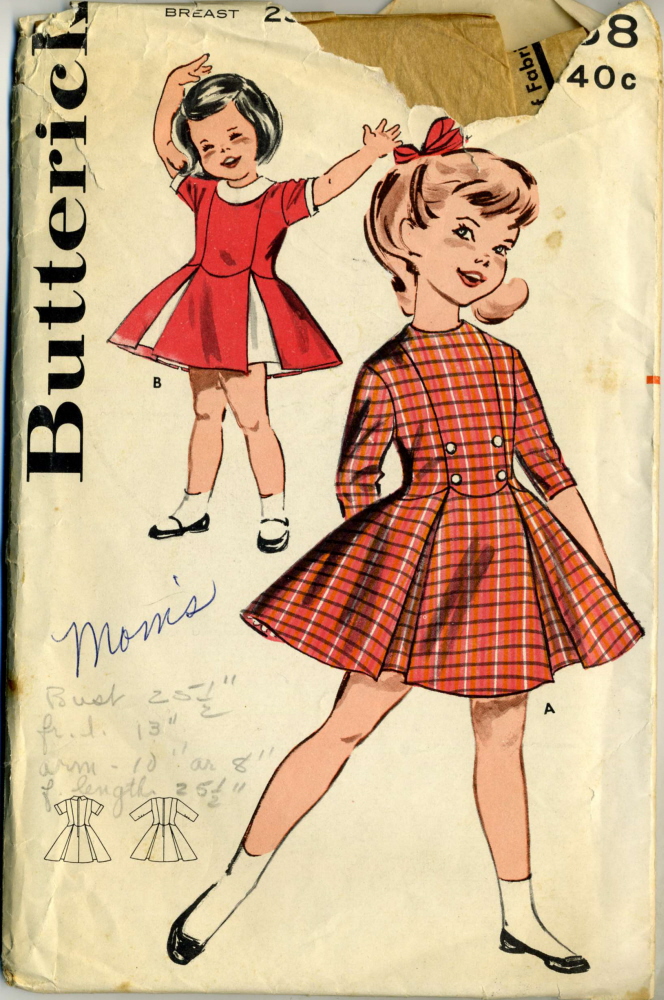
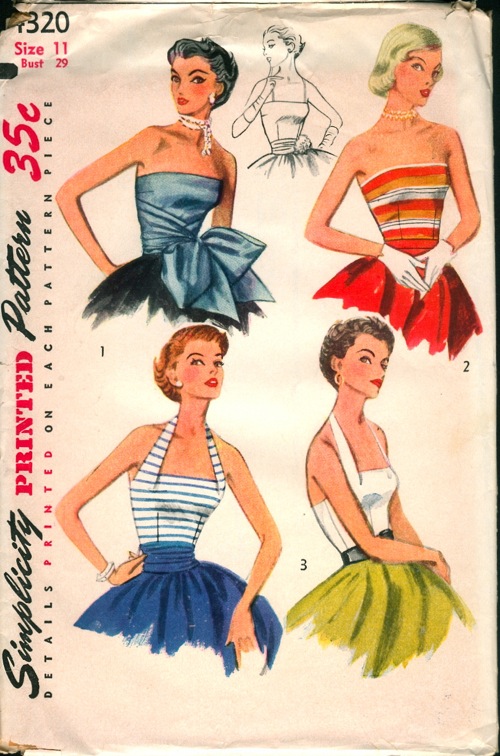
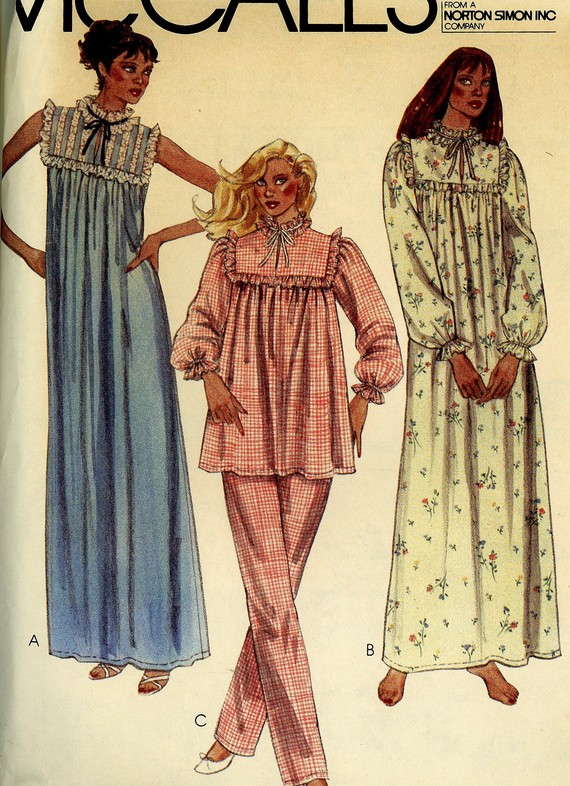
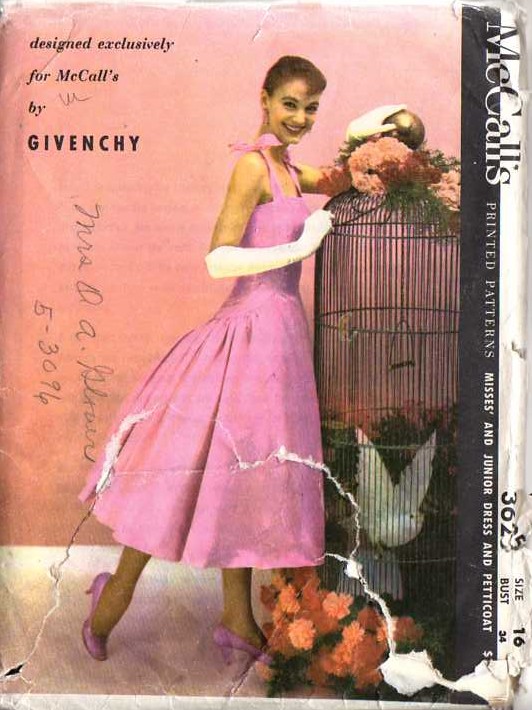
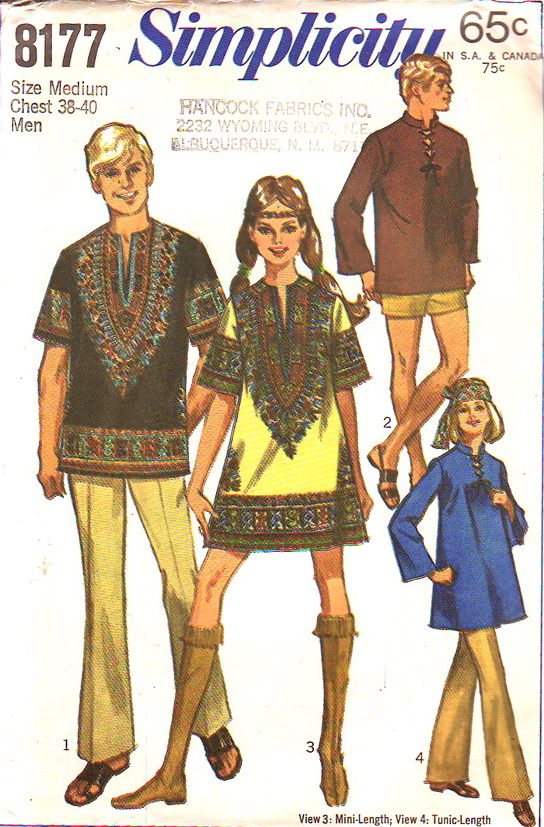
The collaborative Vintage Pattern Wiki puts the magic number at 25, requesting that contributors make sure the patterns they post are from 1992 or earlier, and also out-of-print.
Visitors can narrow their search to focus on a particular garment, designer or decade. If you click these links, you can see patterns from the following decades: 1920s, 1930s, 1940s, 1950s, 1960s, 1970s, and 1980s.
And it goes without saying that the dog days of summer are the perfect time to get a jump on your Halloween costume.
Those who are itching to get sewing should check the links below each pattern envelope cover for vendors who have the pattern in stock and photos and posts by community members who have made that same garment.
The prices and handwritten jottings of the original owners will also put you in a vintage mood.
You’d be forgiven for assuming that the Bauhaus, the modern art and design movement that emerged from the eponymous German art school in the 1920s and 30s, didn’t involve many women. Perhaps the famous near-industrial austerity of its aesthetic, especially at large scales, has stereotypical associations with maleness, but also, Bauhaus’ most oft-referenced leading lights — Paul Klee, Walter Gropius, Wassily Kandinsky, László Moholy-Nagy, Oskar Schlemmer — all happened to be men. But if we seek out the women of the Bauhaus, what can we learn?
“When it opened, the Bauhaus school declared itself progressive and modern and advocated equality for the sexes, which was rare at the time,” says Evelyn Adams in her short video on the Women of the Bauhaus above. “Value was placed on skill rather than gender. Classes weren’t segregated, and women were free to select whichever subjects they wanted.”
This had an understandable appeal, and in the school’s first year more women applied than men. But alas, “in reality, despite having radical aspirations, the men in charge of the school represented the societal attitudes of the time. If everyone was welcomed as equals, then why did none of the women reach the same level of recognition as Paul Klee or Wassily Kandinsky?”
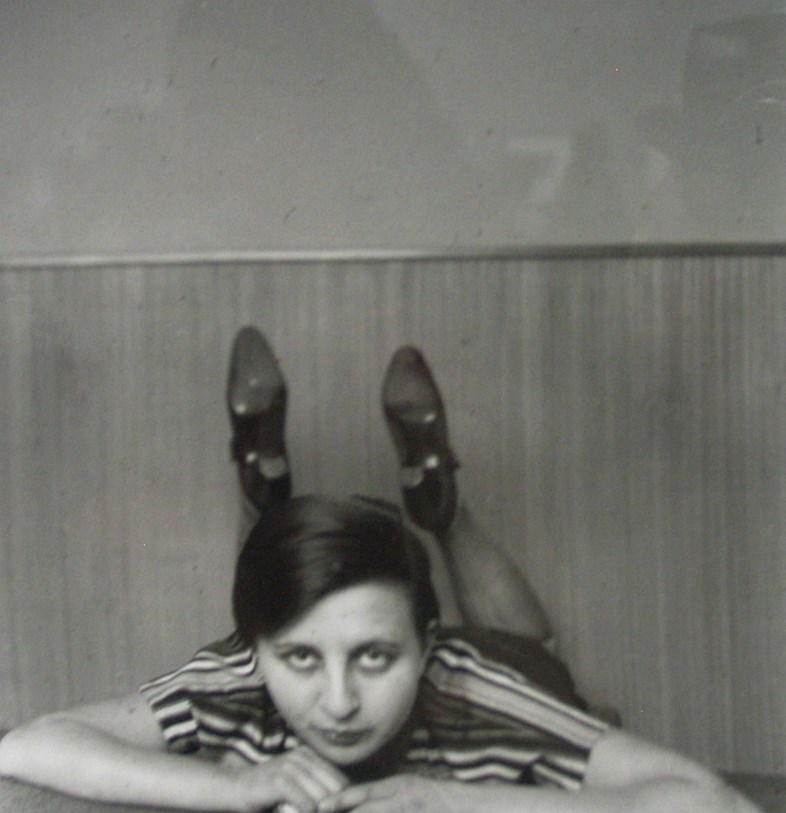
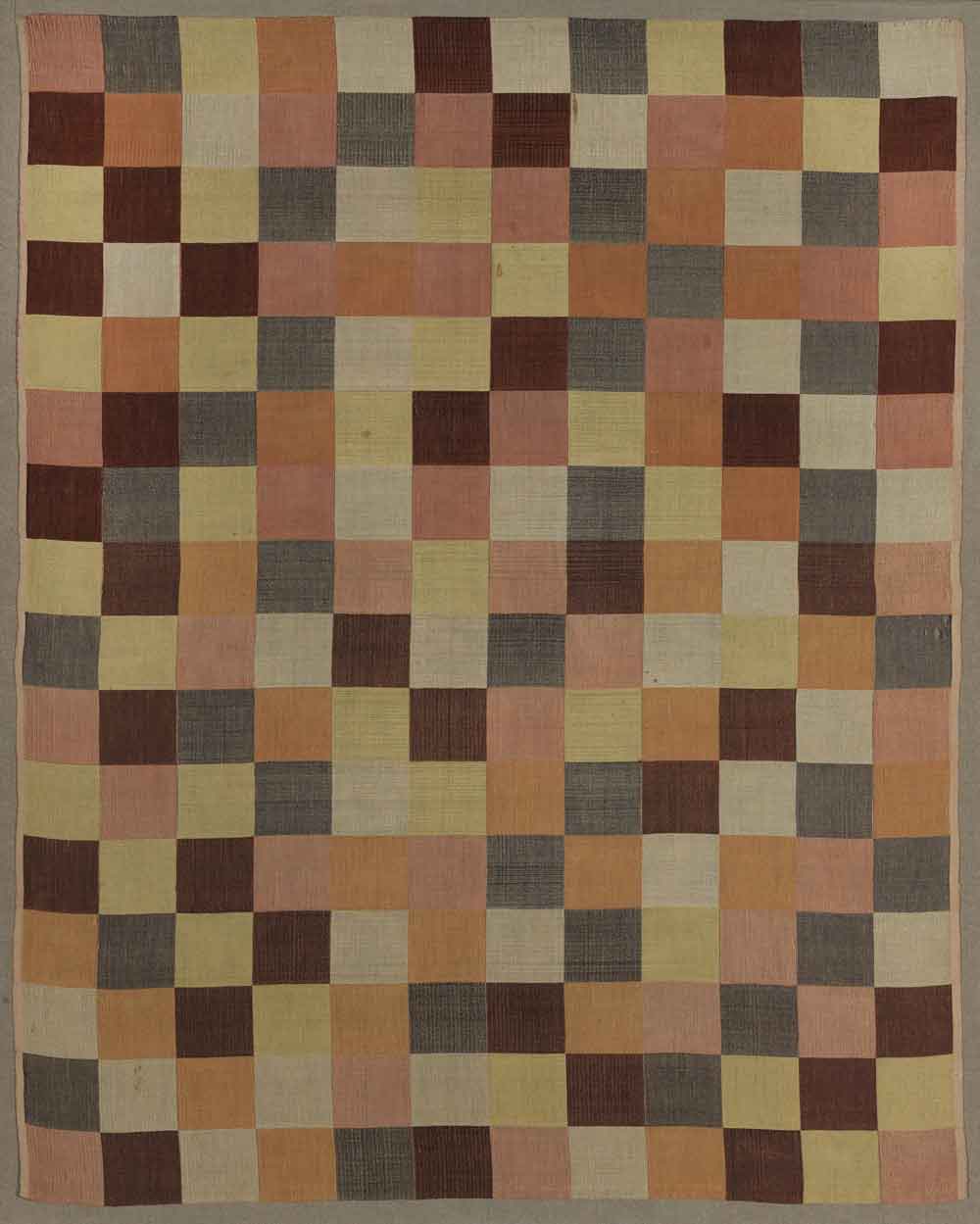
The story of Gertrud Arndt, one of whose self-portraits appears above and one of whose textiles appears below that, sheds some light on the answer. “She must have felt so optimistic,” writes the New York Times’ Alice Rawsthorn, when she arrived at the Bauhaus school of art and design in 1923 as “a gifted, spirited 20-year-old who had won a scholarship to pay for her studies. Having spent several years working as an apprentice to a firm of architects, she had set her heart on studying architecture.” But because of a “long-running battle between its founding director, the architect Walter Gropius, and one of its most charismatic teachers, Johannes Itten, who wanted to use the school as a vehicle for his quasi-spiritual approach to art and design,” the Bauhaus’ house, as it were, had fallen out of order.
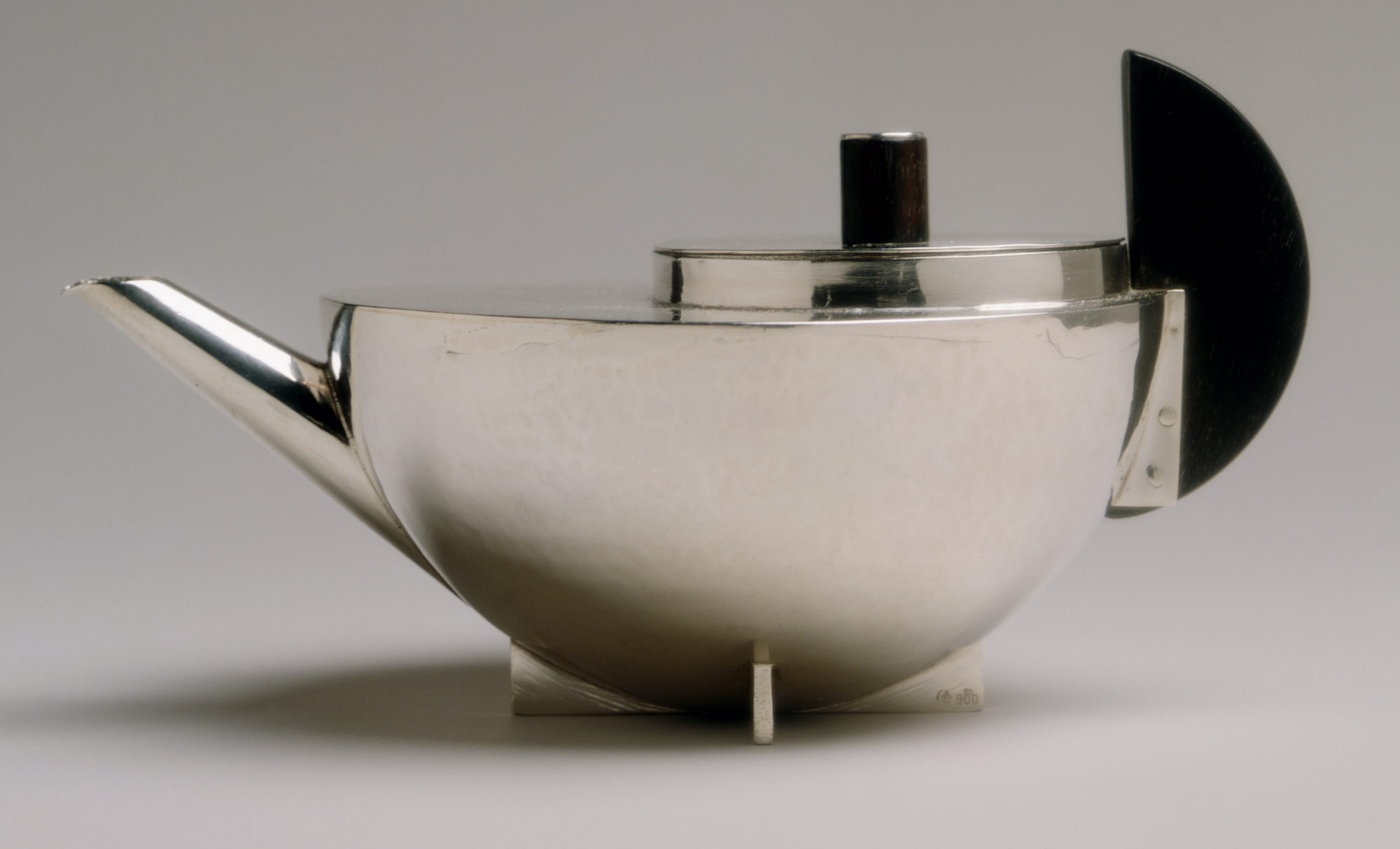
Alas, “Arndt was told that there was no architecture course for her to join and was dispatched to the weaving workshop.” In recent years, the Bauhaus Archive in Berlin has put on shows to honor female Bauhausers like Ardnt, textile designer Benita Koch-Otte, and theater designer, illustrator, and color theorist Lou Scheper-Berkenkamp. “The situation improved after Gropius succeeded in ousting Itten in 1923,” writes Rawsthorn, hiring Moholy-Nagy in Itten’s place. “Having ensured that female students were given greater freedom, Moholy encouraged one of them, Marianne Brandt, to join the metal workshop. She was to become one of Germany’s foremost industrial designers during the 1930s,” and her 1924 tea infuser and strainer appears just above.
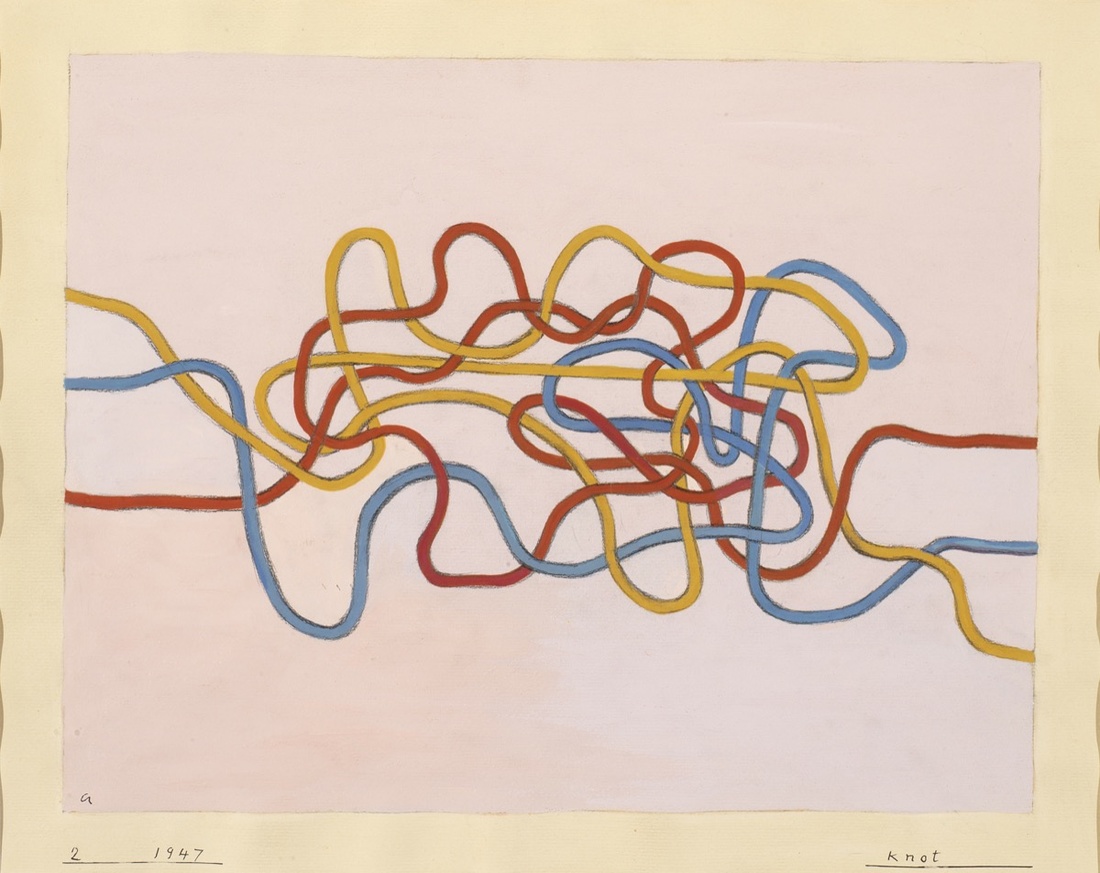
Artsy’s Alexxa Gotthardt has the stories of more women of the Bauhaus, including Anni Albers, whose 1947 Knot 2 appears just above. Her other work includes “a cotton and cellophane curtain that simultaneously absorbed sound and reflected light” and tapestries that “would go on to have a considerable impact on the development of geometric abstraction in the visual arts.” Alma Siedhoff-Buscher, writes Gotthardt, dared “to switch from the weaving workshop to the male-dominated wood-sculpture department,” where she invented a “small ship-building game,” pictured below and still in production today, that “manifested Bauhaus’s central tenets: its 22 blocks, forged in primary colors, could be constructed into the shape of a boat, but could also be rearranged to allow for creative experimentation.”
Bauhaus art and design took criticism in its heyday, as it still takes criticism now, for a certain coldness and sterility — or at least the work of the men of the Bauhaus does. But the more we discover about the lesser-known women of the Bauhaus, the more we see how they managed to bring no small degree of humanity to its artistic fruits, even to those of its most rigorous branches. “There is no difference between the beautiful sex and the strong sex,” Gropius once insisted in a somewhat self-defeating pronouncement, but the differences between the male and female Bauhausers — in their personalities as well as in their work — make the movement look all the richer in retrospect.
It’s rare for Disney to overlook a marketing opportunity. For years, Mouse Ears were the film studio’s theme park souvenir of choice, but recently the gift shops have started stocking white four-fingered gloves too.
Perhaps not the most sensible choice for dipping into a bucket of jalapeño poppers or a $6 Mickey Pretzel with Cheese Sauce, but the gloves have undeniable reach when it comes to cartoon history. Bugs Bunny wears them. So does Woody Woodpecker, Tom (though not Jerry), and Betty Boop’s anthropomorphic doggie pal, Bimbo.
As Vox’sEstelle Caswell points out above, the choice to glove Mickey and his early 20th-century cartoon brethren was born of practicality. The limited palette of black and white animation meant that most animal characters had black bodies—their arms disappeared against every inky expanse.
We didn’t want him to have mouse hands, because he was supposed to be more human. So we gave him gloves. Five Fingers looked like too much on such a little figure, so we took one away. That was just one less finger to animate.
Caswell digs deeper than that, unearthing a surprising cultural comparison. White gloves were a standard part of blackface performers’ minstrel show costumes. Audiences who packed theaters for touring minstrel shows were the same people lining up for Steamboat Willie.
Comic animation has evolved both visually and in terms of content over its near hundred year history, but animators have a tendency to revere the history of their profession.
Thusly do South Park’s animators bestow spotless white gloves upon Mr. Hankey the Christmas Poo.
“America’s favorite cat and mouse team,” the Simpsons’ Itchy and Scratchy, mete out their horrifically violent punishment in pristine white gloves.
Ayun Halliday is an author, illustrator, theater maker and Chief Primatologist of the East Village Inky zine, appearing onstage in New York City through June 26 in Paul David Young’s Faust 3. Follow her @AyunHalliday.
How old is the Torah, the first five books of the Hebrew Bible? As with most such questions about disputed religious texts, it depends on whom you ask. Many conservative Jewish and Christian scholars—or “maximalists”—have long accepted the text as containing genuine historical records, and dated them as early as possible. Modern critical scholars, the “minimalists,” informed by archeology, have made strong empirical cases against historicity, and date the texts much later.
These debates can become highly speculative the further back scholars attempt to push the Biblical origins. One has to take certain claims on faith. As far as the textual evidence goes, the earliest complete manuscripts we have are the so-called “Masoretic Text,” copied, edited, and disseminated between the 7th and 10th centuries CE. But we have fragments that date back over two thousand years, discovered in the Qumran Caves among the Dead Sea Scrolls in the mid-twentieth century. Prior to their discovery, the oldest known fragment was known as the “Nash Papyrus,” which dates from the second century, BCE.
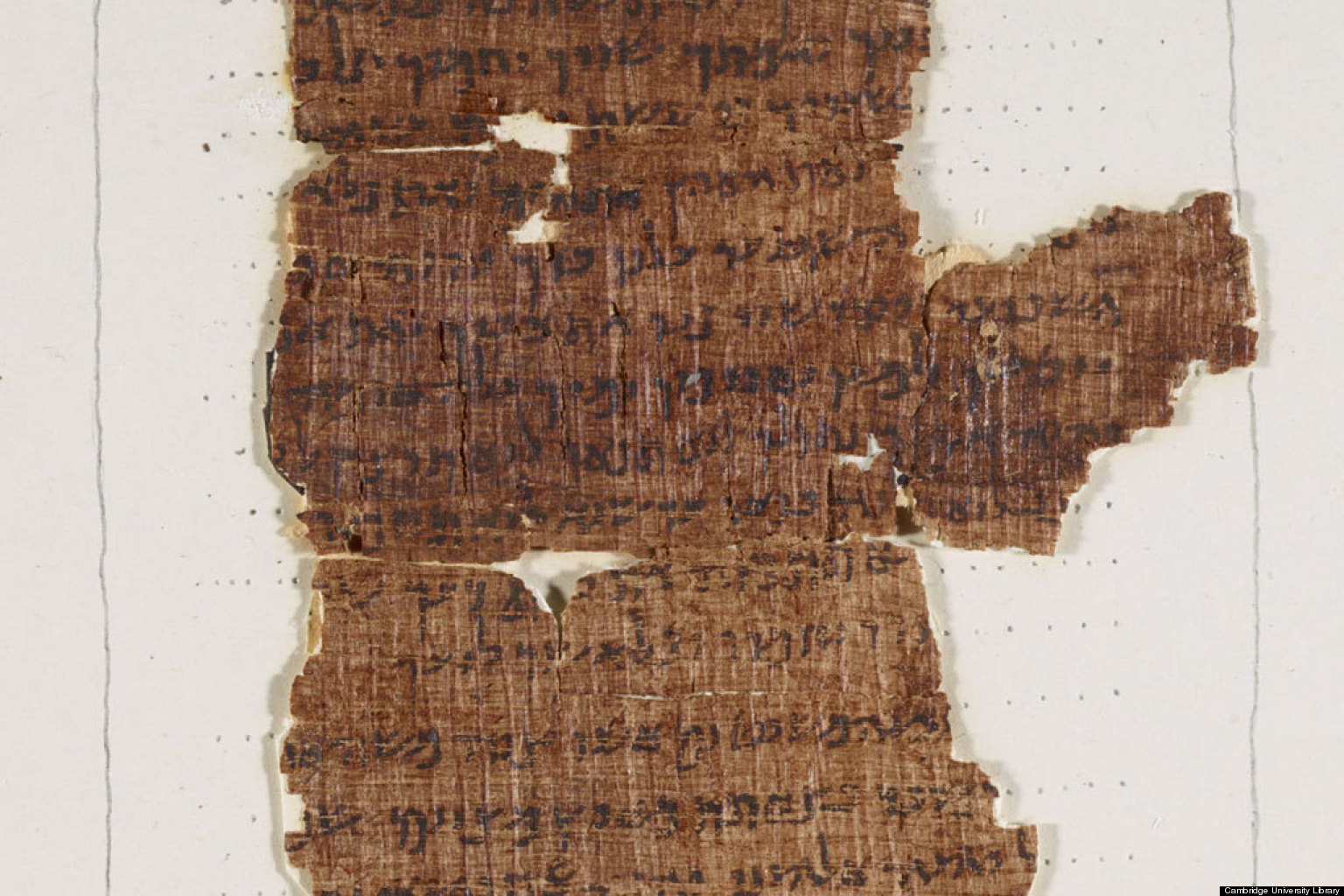
Purchased from an Egyptian antiquities dealer in 1902 by Egyptologist Dr. Walter Llewllyn Nash and donated to the Cambridge University Library the following year, the papyrus contains a composite of the two different versions of the Ten Commandments, from Exodus 20 and Deuteronomy 5, and the Shema, a prayer from Deuteronomy 6. In 2012, the Nash Papyrus was digitized, “one of the latest treasures of humanity,” reported Reuters, “to join Isaac Newton’s notebooks, the Nuremberg Chronicle and other rare texts as part of the Cambridge Digital Library.”
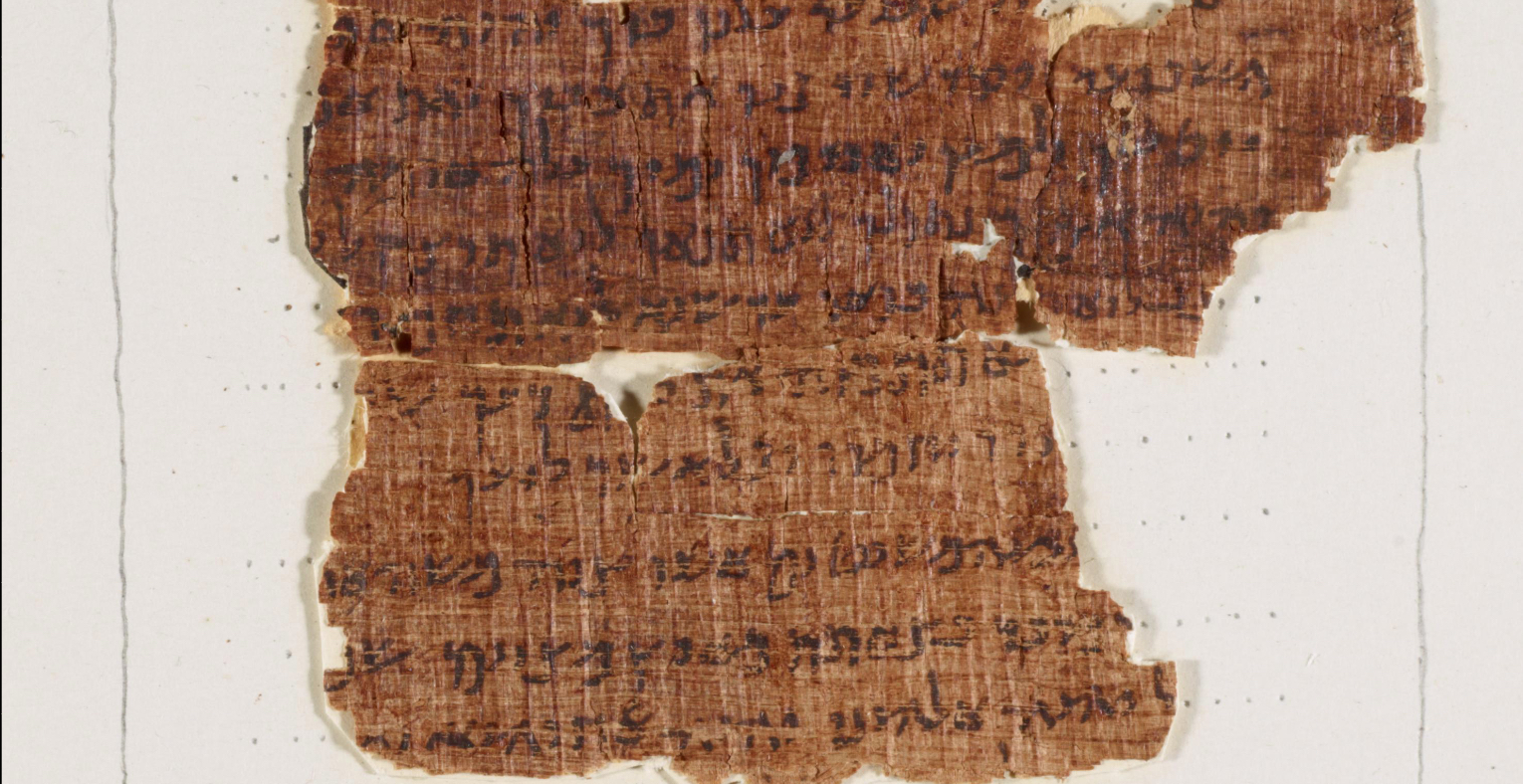
“It has been suggested,” notes the Cambridge description of the ancient manuscript, “that it is, in fact, from a phylactery (tefillin, used in daily prayer).” But the papyrus’ actual origins are uncertain, though it “was said to have come from the Fayyum,” a city near Cairo. And while the Nash Papyrus may not resolve any debates about the Torah’s origins, its open accessibility is a boon for scholars grappling with the questions. As university librarian Anne Jarvis said upon its digital release, the “age and delicacy” of the manuscript make it “seldom able to be viewed” in person. The leaf papyrus is, as the Cambridge Digital Library notes, full of holes, “barely legible” and composed of “four separate pieces fixed together.”
At the library site, users can see it in high resolution, zooming in very closely to any area they choose. You can also download the image, embed it, or share it on social media. And if that gets your ancient Biblical engines running, you can then see digital Dead Sea Scroll manuscripts of the Ten Commandmentshere and get an up close look at many other texts from that ancient treasure trove—as well as learn about them in a free online Rutgers course—here.
A popular thought experiment asks us to imagine an advanced alien species arriving on Earth, not in an H.G. Wells-style invasion, but as advanced, bemused, and benevolent observers. “Wouldn’t they be appalled,” we wonder, “shocked, confused at how backward we are?” It’s a purely rhetorical device—the secular equivalent of taking a “god’s eye view” of human folly. Few people seriously entertain the possibility in polite company. Unless they work at NASA or the SETI program.
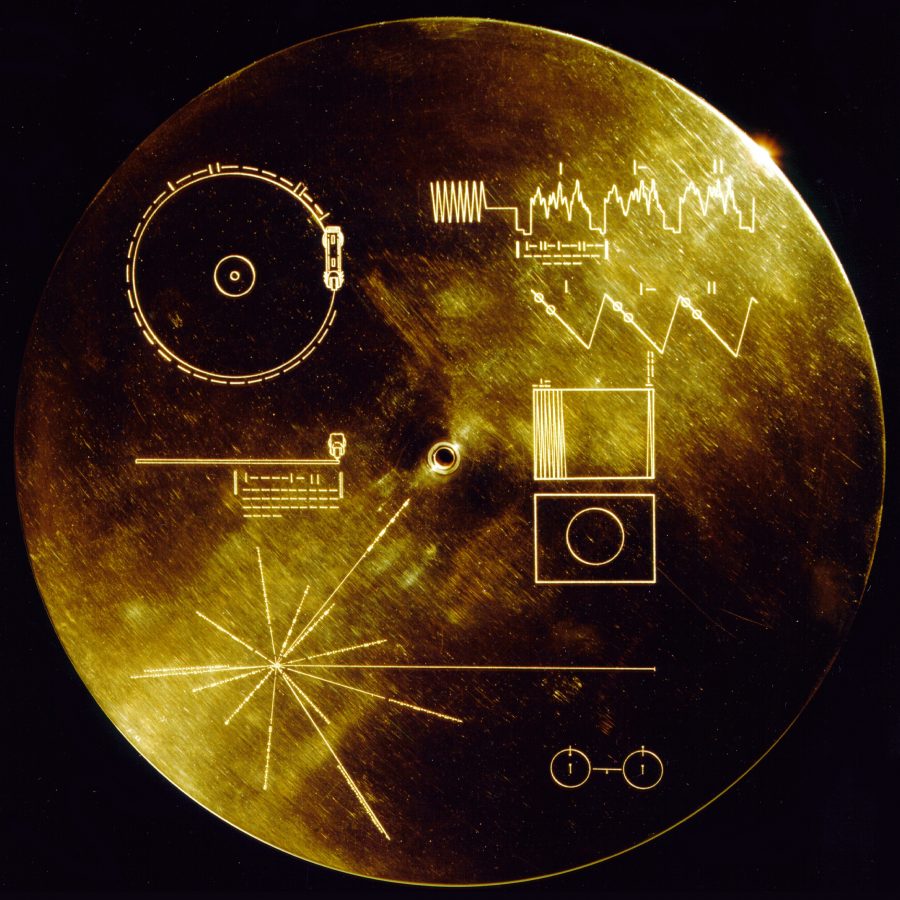
In 1977, upon the launching of Voyager 1 and Voyager 2, a committee working under Carl Sagan produced the so-called “Golden Records,” actual phonographic LPs made of copper containing “a collection of sounds and images,” writes Joss Fong at Vox, “that will probably outlast all human artifacts on Earth.” While they weren’t preparing for a visitation on Earth, they did—relying not on wishful thinking but on the controversial Drake Equation—fully expect that other technological civilizations might well exist in the cosmos, and assumed a likelihood we might encounter one, at least via remote.
Sagan tasked himself with compiling what he called a “bottle” in “the cosmic ocean,” and something of a time capsule of humanity. Over a year’s time, Sagan and his team collected 116 images and diagrams, natural sounds, spoken greetings in 55 languages, printed messages, and musical selections from around the world–things that would communicate to aliens what our human civilization is essentially all about. The images were encoded onto the records in black and white (you can see them all in the Vox video above in color). The audio, which you can play in its entirety below, was etched into the surface of the record. On the cover were etched a series of pictographic instructions for how to play and decode its contents. (Scroll over the interactive image at the top to see each symbol explained.)
Fong outlines those contents, writing, “any aliens who come across the Golden Record are in for a treat.” That is, if they are able to make sense of it and don’t find us horribly backward. Among the audio selections are greetings from then-UN Secretary General Kurt Waldheim, whale songs, Bach’s Brandenberg Concerto No. 2 in F, Senegalese percussion, Aborigine songs, Peruvian panpipes and drums, Navajo chant, Blind Willie Johnson’s “Dark Was the Night” (playing in the Vox video), more Bach, Beethoven, and “Johnny B. Goode.” Challenged over including “adolescent” rock and roll, Sagan replied, “there are a lot of adolescents on the planet.” The Beatles reportedly wanted to contribute “Here Comes the Sun,” but their record company wouldn’t allow it, presumably fearing copyright infringement from aliens.
Also contained in the spacefaring archive is a message from then-president Jimmy Carter, who writes optimistically, “We are a community of 240 million human beings among the more than 4 billion who inhabit planet Earth. We human beings are still divided into nation states, but these states are rapidly becoming a single global civilization.” The messages on Voyagers 1 and 2, Carter forecasts, are “likely to survive a billion years into our future, when our civilization is profoundly altered and the surface of the Earth may be vastly changed.” The team chose not to include images of war and human cruelty.
We only have a few years left to find out whether either Voyager will encounter other beings. “Incredibly,” writes Fong, the probes “are still communicating with Earth—they aren’t expected to lose power until the 2020s.” It seems even more incredible, forty years later, when we consider their primitive technology: “an 8‑track memory system and onboard computers that are thousands of times weaker than the phone in your pocket.”
The Voyagers were not the first probes sent to interstellar space. Pioneer 10 and 11 were launched in 1972 and 1973, each containing a Sagan-designed aluminum plaque with a few simple messages and depictions of a nude man and woman, an addition that scandalized some puritanical critics. NASA has since lost touch with both Pioneers, but you may recall that in 2006, the agency launched the New Horizons probe, which passed by Pluto in 2015 and should reach interstellar space in another thirty years.
Perhaps due to the lack of the departed Sagan’s involvement, the latest “bottle” contains no introductions. But there is time to upload some, and one of the Golden Record team members, Jon Lomberg, wants to do just that, sending a crowdsourced “message to the stars.” Lomberg’s New Horizon’s Message Initiative is a “global project that brings the people of the world together to speak as one.” The limitations of analog technology have made the Golden Record selections seem quite narrow from our data-saturated point of view. The new message might contain almost anything we can imagine. Visit the project’s site to sign the petition, donate, and consider, just what would you want an alien civilization to hear, see, and understand about the best of humanity circa 2017?
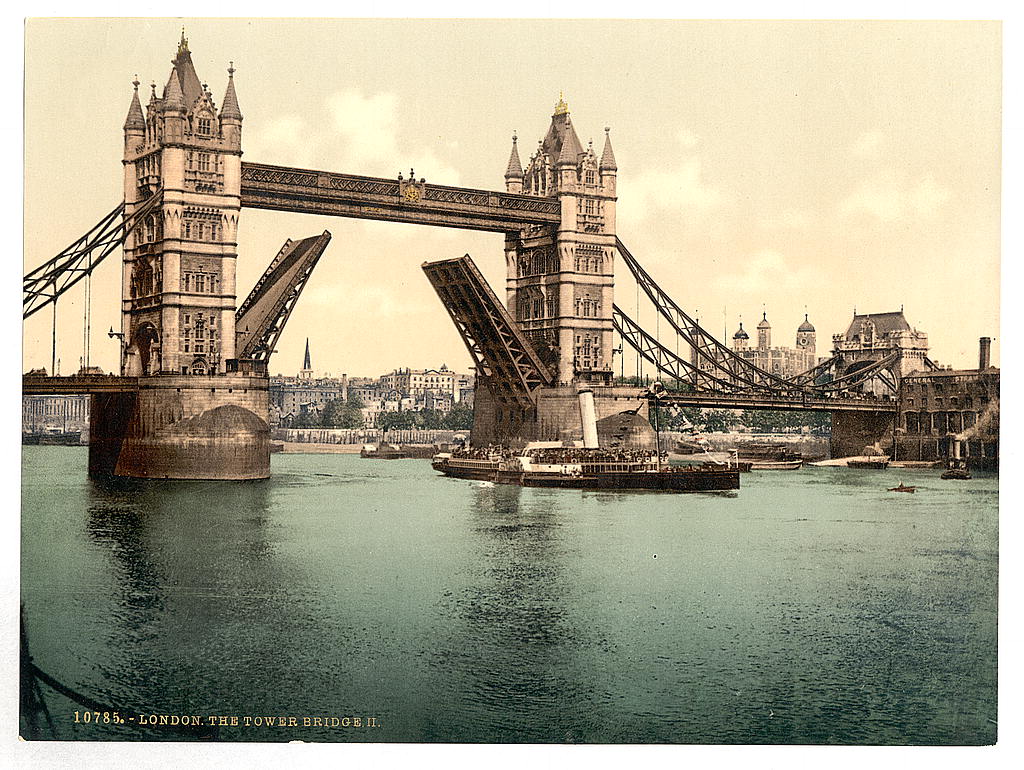
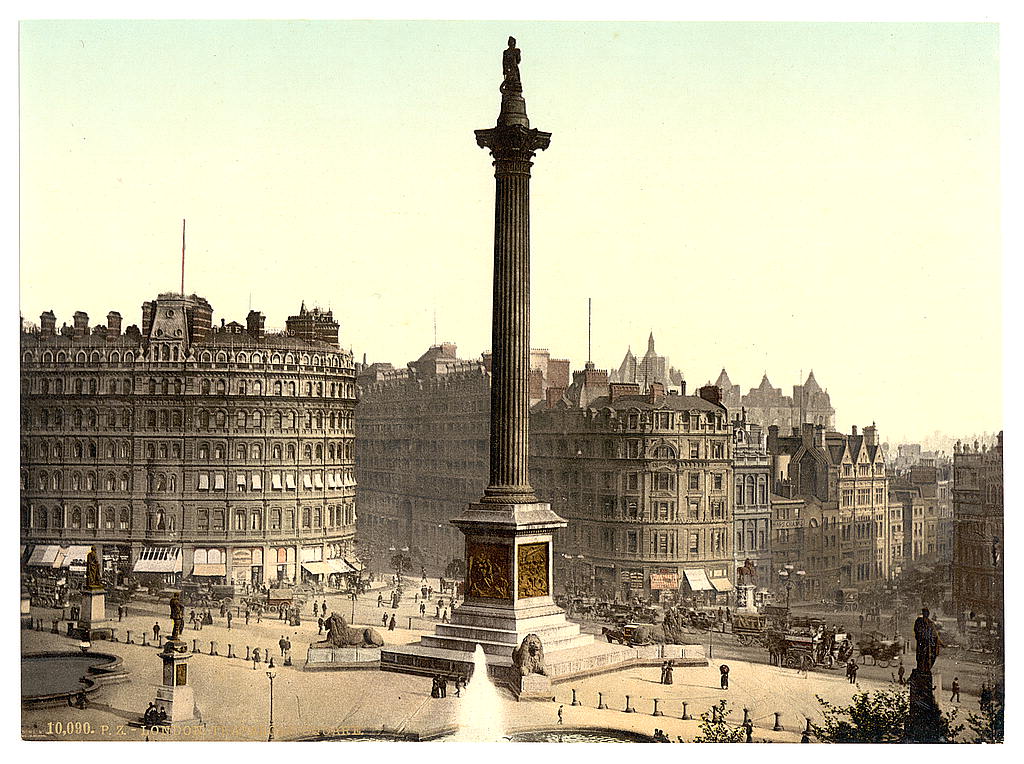
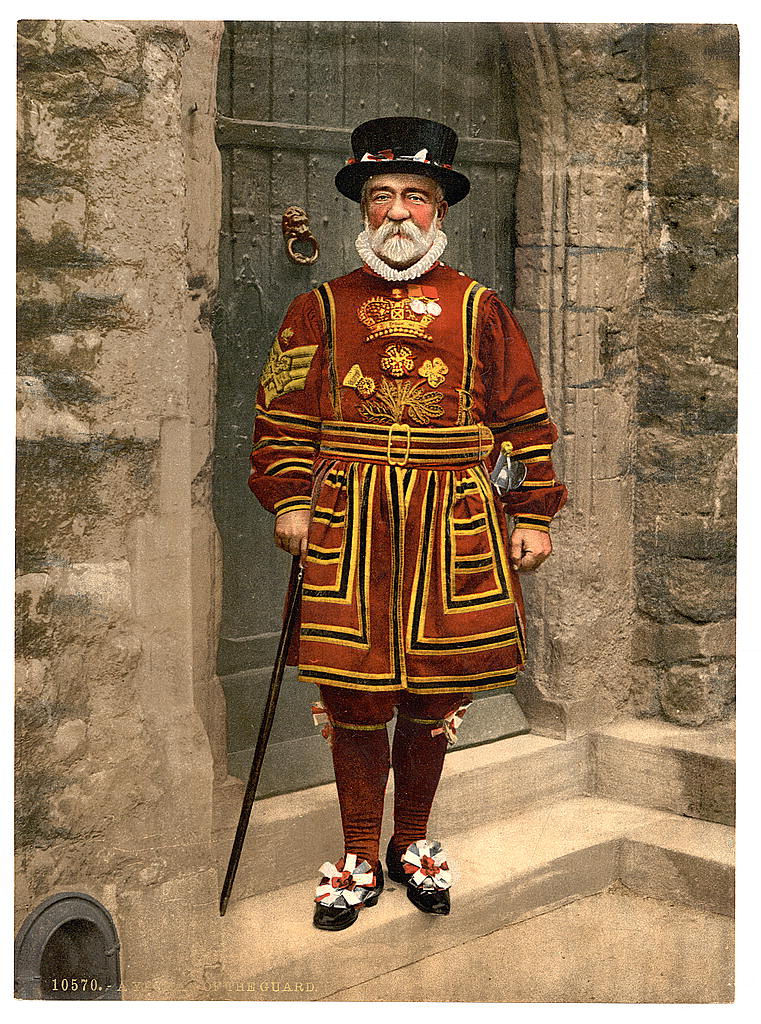
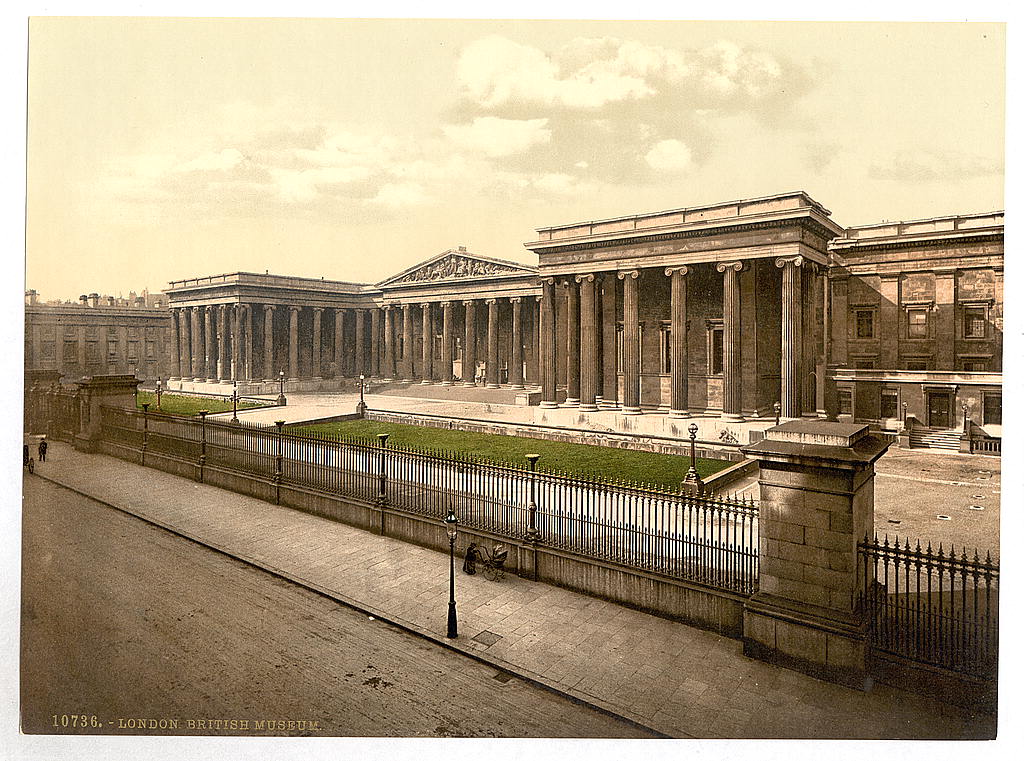
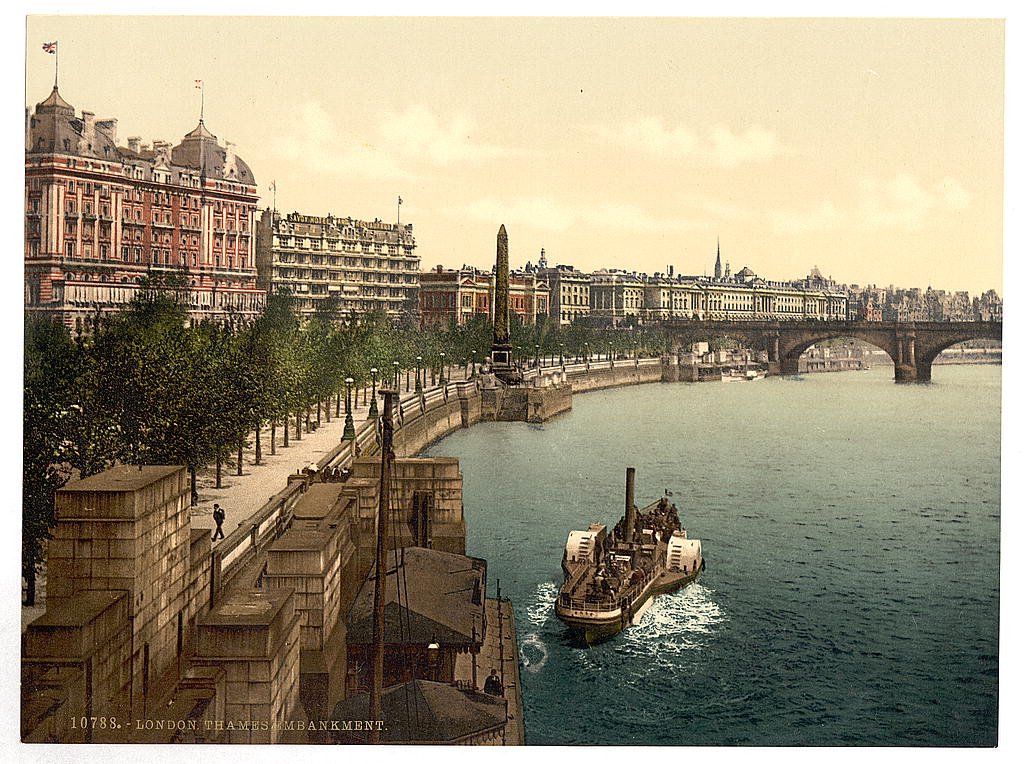
“When a man is tired of London,” Samuel Johnson so famously said, “he is tired of life.” Of course, P.J. O’Rourke later added that “he might just be tired of shabby, sad crowds, low-income housing that looks worse than the weather, and tattoo-faced, spike-haired pea brains on the dole,” but then, everyone experiences the English capital a bit differently. Johnson’s London, the London of the eighteenth century, looks to some like a city at its zenith; others might even think the same about the London O’Rourke made fun of in the 1980s. Every era in London is a golden age to someone.
They may “look deceptively like color photographs,” but “when viewed with a magnifying glass the small dots that comprise the ink-based photomechanical image are visible. The photomechanical process permitted mass production of the vivid color prints.”
The late nineteenth and early twentieth century saw the emergence of a robust market for photocrom prints, “sold at tourist sites and through mail order catalogs to globe trotters, armchair travelers, educators, and others to preserve in albums or put on display.” Hence, perhaps, the focus on London sites of touristic appeal: Tower Bridge, Trafalgar Square, the British Museum, and even the fully outfitted “Yeoman of the Guard” you see just above. But print also (and by appearances more correctly) describes him as a “Beefeater,” the popular name for the different body of ceremonial tower guardians the Yeomen Warders of Her Majesty’s Royal Palace and Fortress the Tower of London, and Members of the Sovereign’s Body Guard of the Yeoman Guard Extraordinary. (Got that?)
You can browse, and in various formats download, the 33 images in the Library of Congress’ London photocrom print collection here. They all date from between 1890 and 1900, as do the nearly 1000 images in their England photocrom print collection, whose locations extend far beyond London. Go to England today and you’ll notice how much has changed in the past 125 or so years, of course, but how much hasn’t. Grumbling being something of a national sport over there, especially in London, the traveler hears no end of complaints about how the city and country have gone to the dogs, but can also take some comfort in the fact that, even back in the picturesque photocrom era, people were airing all the same gripes.
We might assume that philosophy is an ivory tower discipline that has little effect on the unlovely operations of government, driven as they are by the concerns of middle class wallets, upper class stock portfolios, and the ever-present problem of poverty. But we would be wrong. In times when presidents, cabinet members, or senators have been thoughtful and well-read, the ideas of thinkers like Francis Fukuyama, Leo Strauss, Jurgen Habermas, and John Rawls—a favorite of the previous president—have exercised considerable sway. Few philosophers have been as historically influential as the German thinker Carl Schmitt, though in a thoroughly destructive way. Then there’s John Locke, Jean-Jacques Rousseau, Thomas Hobbes, Aristotle… even Socrates, who made himself a thorn in the side of the powerful.
But when it comes to the mostly French school of thinkers we associate with postmodernism—Michel Foucault, Roland Barthes, the Jacques Lacan and Derrida, and many others—such influence is far less direct. The work of these writers has been often dismissed as frivolous and inconsequential, speaking a language no one understands to out of touch coastal elites on the left edge of the spectrum. Perhaps this is so in the United States, where power is often theorized but rarely radically critiqued in mainstream publications. But it has not been so in France. At least not according to the CIA, who closely monitored the effects of French philosophy on the country’s domestic and foreign policy during their long-running culture war against Communism and “anti-Americanism,” and who, in 1985, compiled a research paper to document their investigations. (See a sample page above.)
…the undercover cultural warriors applaud what they see as a double movement that has contributed to the intelligentsia shifting its critical focus away from the US and toward the USSR. On the left, there was a gradual intellectual disaffection with Stalinism and Marxism, a progressive withdrawal of radical intellectuals from public debate, and a theoretical move away from socialism and the socialist party. Further to the right, the ideological opportunists referred to as the New Philosophers and the New Right intellectuals launched a high-profile media smear campaign against Marxism.
The “spirit of anti-Marxism and anti-Sovietism,” write the agents in their report, “will make it difficult for anyone to mobilize significant intellectual opposition to US policies.” The influence of “New Left intellectuals” over French culture and government was such, they surmised, that “President [Francois] Mitterrand’s notable coolness toward Moscow derives, at least in part, from this pervasive attitude.”
These observations stand in contrast to the previous generation of “left-leaning intellectuals of the immediate postwar period,” writes Rockhill, who “had been openly critical of US imperialism” and actively worked against the machinations of American operatives. Jean-Paul Sartre even played a role in “blowing the cover of the CIA station officer in Paris and dozens of undercover operatives,” and as a result was “closely monitored by the Agency and considered a very serious problem.” By the mid-eighties, the Agency stated, triumphantly, “there are no more Sartres, no more Gides.” The “last clique of Communist savants,” they write, “came under fire from their former proteges, but none had any stomach for fighting a rearguard defense of Marxism.” As such, the late Cold War period saw a “broader retreat from ideology among intellectuals of all political colors.”
A certain weariness had taken hold, brought about by the indefensible totalitarian abuses of the “cult of Stalinism” and the seeming inescapability of the Washington Consensus and the multinational corporatism engendered by it. By the time of Communism’s collapse, U.S. philosophers waxed apocalyptic, even as they celebrated the triumph of what Francis Fukuyama called “liberal democracy” over socialism. Fukuyama’s book The End of History and the Last Man made its startling thesis plain in the title. There would be no more revolutions. Harvard thinker Samuel Huntington declared it the era of “endism,” amidst a rash of hyperbolic arguments about “the end of art,” the “end of nature,” and so on. And, in France, in the years just prior to the fall of the Berlin wall, the previously vigorous philosophical left, the CIA believed, had “succumbed to a kind of listlessness.”
While the agency credited the diffidence of post-structuralist philosophers with swaying popular opinion away from socialism and “hardening public attitudes toward Marxism and the Soviet Union,” it also wrote that “their influence appears to be waning, and they are unlikely to have much direct impact on political affairs any time soon.” Is this true? If we take seriously critics of so-called “Identity Politics,” the answer is a resounding No. As those who closely identify postmodern philosophy with several recent waves of leftist thought and activism might argue, the CIA was shortsighted in its conclusions. Perhaps, bound to a Manichean view fostered by decades of Cold War maneuvering, they could not conceive of a politics that opposed both American and Soviet empire at once.
And yet, the retreat from ideology was hardly a retreat from politics. We might say, over thirty years since this curious research essay circulated among intelligence gatherers, that concepts like Foucault’s biopower or Derrida’s skeptical interrogations of identity have more currency and relevance than ever, even if we don’t always understand, or read, their work. But while the agency may not have foreseen the pervasive impact of postmodern thought, they never dismissed it as obscurantist or inconsequential sophistry. Their newly-released report, writes Rockhill, “should be a cogent reminder that if some presume that intellectuals are powerless, and that our political orientations do not matter, the organization that has been one of the most potent power brokers in contemporary world politics does not agree.”
Here’s a fascinating glimpse of the very first Bloomsday celebration, filmed in Dublin in 1954.
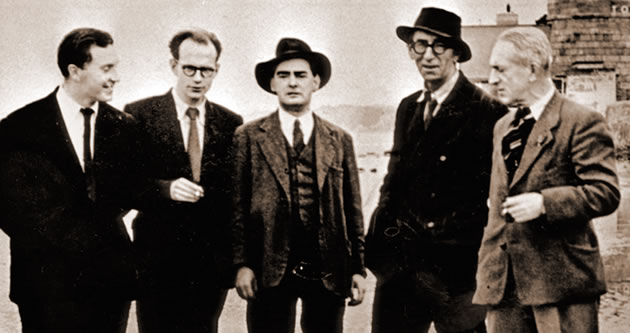
The footage shows the great Irish comedic writer Brian O’Nolan, better known by his pen name Flann O’Brien, appearing very drunk as he sets off with two other renowned post-war Irish writers, Patrick Kavanagh and Anthony Cronin, and a cousin of James Joyce, a dentist named Tom Joyce, on a pilgrimage to visit the sites in James Joyce’s epic novel Ulysses.
The footage was taken by John Ryan, an artist, publisher and pub owner who organized the event. The idea was to retrace the steps of Leopold Bloom and other characters from the novel, but as Peter Costello and Peter van de Kamp explain in this humorous passage from their book, Flann O’Brien: An Illustrated Biography, things began to go awry right from the start:
The date was 16 June, 1954, and though it was only mid-morning, Brian O’Nolan was already drunk.
This day was the fiftieth anniversary of Mr. Leopold Bloom’s wanderings through Dublin, which James Joyce had immortalised in Ulysses.
To mark this occasion a small group of Dublin literati had gathered at the Sandycove home of Michael Scott, a well-known architect, just below the Martello tower in which the opening scene of Joyce’s novel is set. They planned to travel round the city through the day, visiting in turn the scenes of the novel, ending at night in what had once been the brothel quarter of the city, the area which Joyce had called Nighttown.
Sadly, no-one expected O’Nolan to be sober. By reputation, if not by sight, everyone in Dublin knew Brian O’Nolan, otherwise Myles na Gopaleen, the writer of the Cruiskeen Lawn column in the Irish Times. A few knew that under the name of Flann O’Brien, he had written in his youth a now nearly forgotten novel, At Swim-Two-Birds. Seeing him about the city, many must have wondered how a man with such extreme drinking habits, even for the city of Dublin, could have sustained a career as a writer.
As was his custom, he had been drinking that morning in the pubs around the Cattle Market, where customers, supposedly about their lawful business, would be served from 7:30 in the morning. Now retired from the Civil Service, on grounds of “ill-health”, he was earning his living as a free-lance journalist, writing not only for the Irish Times, but for other papers and magazines under several pen-names. He needed to write for money as his pension was a tiny one. But this left little time for more creative work. In fact, O’Nolan no longer felt the urge to write other novels.
The rest of the party, that first Bloomsday, was made up of the poet Patrick Kavanagh, the young critic Anthony Cronin, a dentist named Tom Joyce, who as Joyce’s cousin represented the family interest, and John Ryan, the painter and businessman who owned and edited the literary magazine Envoy. The idea of the Bloomsday celebration had been Ryan’s, growing naturally out of a special Joyce issue of his magazine, for which O’Nolan had been guest editor.
Ryan had engaged two horse drawn cabs, of the old fashioned kind, which in Ulysses Mr. Bloom and his friends drive to poor Paddy Dignam’s funeral. The party were assigned roles from the novel. Cronin stood in for Stephen Dedalus, O’Nolan for his father, Simon Dedalus, John Ryan for the journalist Martin Cunningham, and A.J. Leventhal, the Registrar of Trinity College, being Jewish, was recruited to fill (unkown to himself according to John Ryan) the role of Leopold Bloom.
Kavanagh and O’Nolan began the day by deciding they must climb up to the Martello tower itself, which stood on a granite shoulder behind the house. As Cronin recalls, Kavanagh hoisted himself up the steep slope above O’Nolan, who snarled in anger and laid hold of his ankle. Kavanagh roared, and lashed out with his foot. Fearful that O’Nolan would be kicked in the face by the poet’s enormous farmer’s boot, the others hastened to rescue and restrain the rivals.
With some difficulty O’Nolan was stuffed into one of the cabs by Cronin and the others. Then they were off, along the seafront of Dublin Bay, and into the city.
In pubs along the way an enormous amount of alcohol was consumed, so much so that on Sandymount Strand they had to relieve themselves as Stephen Dedalus does in Ulysses. Tom Joyce and Cronin sang the sentimental songs of Tom Moore which Joyce had loved, such as Silent, O Moyle. They stopped in Irishtown to listen to the running of the Ascot Gold Cup on a radio in a betting shop, but eventually they arrived in Duke Street in the city centre, and the Bailey, which John Ryan then ran as a literary pub.
They went no further. Once there, another drink seemed more attractive than a long tour of Joycean slums, and the siren call of the long vanished pleasures of Nighttown.
Celebrants of the first Bloomsday pause for a photo in Sandymount, Dublin on the morning of June 16, 1954. From left are John Ryan, Anthony Cronin, Brian O’Nolan (a.k.a. Flann O’Brien), Patrick Kavanagh and Tom Joyce, cousin of James Joyce.
Note: This post originally appeared on our site in 2013–likely before many of you started to frequent our site. So it’s time to bring it back.
We're hoping to rely on loyal readers, rather than erratic ads. Please click the Donate button and support Open Culture. You can use Paypal, Venmo, Patreon, even Crypto! We thank you!
Open Culture scours the web for the best educational media. We find the free courses and audio books you need, the language lessons & educational videos you want, and plenty of enlightenment in between.