The Epistemology of Dr. Seuss & More Philosophy Lessons from Great Children’s Stories

horton-hears-philosophy

Now for a sto­ry which “rais­es ques­tions about the the­o­ry and nature of knowl­edge.” An ele­phant “hears a faint noise com­ing from a small speck of dust; it seems to him like a tiny per­son is call­ing out for help.” He “finds it pecu­liar that a dust speck could speak so he rea­sons that there must be a very small crea­ture on it. With­out being able to see the crea­ture, he seems to know it is there and that it is his duty to save it from harm. The oth­er ani­mals in the jun­gle see him speak to the dust speck and find it impos­si­ble that there could be a crea­ture liv­ing on it.” Met with only dis­be­lief, “he holds tight to what he knows is true and learns from the voice that there exists an entire uni­verse.” At last, the speck­’s res­i­dent tiny towns­peo­ple “come togeth­er and make enough noise for the ani­mals to hear; they have proven their exis­tence and the jun­gle ani­mals are able to know what Hor­ton has known all along.” Most of us have read this clas­sic chil­dren’s book, Hor­ton Hears a Who!  by Dr. Seuss. But how many of us have probed its “ques­tions about the nature of human knowl­edge”?

The last para­graph’s quot­ed text all comes from Teach­ing Chil­dren Phi­los­o­phy’s Hor­ton Hears a Who mod­ule. The project, an out­growth of Mount Holyoke Col­lege pro­fes­sor Tom Warten­berg’s course “Phi­los­o­phy for Chil­dren,” comes premised on the notion not only that young­sters can learn phi­los­o­phy, but that they pos­sess minds par­tic­u­lar­ly well-suit­ed to its study. Teach­ing Chil­dren Phi­los­o­phy draws out the rel­e­vant philo­soph­i­cal issues and ques­tions from the books they’ve been read­ing already, from the epis­te­mol­o­gy of Hor­ton Hears a Who! to the meta­physics of Sylvester and the Mag­ic Peb­ble to phi­los­o­phy of mind in Harold and the Pur­ple Cray­on. Tar­get­ed toward par­ents, edu­ca­tors, and kids them­selves, the site promis­es great solace to any philo­soph­i­cal­ly mind­ed read­er (or read­er-aloud) of chil­dren’s sto­ries who feel they have long since exhaust­ed the depths of these beloved slim vol­umes. “How does Hor­ton know that this voice means there is a per­son on the speck?” “Is the moon that Harold draws the same as the moon we can see in the sky at night?” “If Sylvester is still a don­key because he thinks, what hap­pens when Sylvester is not think­ing?” You sup­ply the chil­dren’s books, and Warten­berg and com­pa­ny sup­ply the phi­los­o­phy.

Relat­ed con­tent:

Free Phi­los­o­phy Cours­es from our Col­lec­tion of 550 Free Online Cours­es from Top Uni­ver­si­ties

Col­in Mar­shall hosts and pro­duces Note­book on Cities and Cul­ture. Fol­low him on Twit­ter at @colinmarshall.

Leonard Bernstein’s First “Young People’s Concert” at Carnegie Hall Asks, “What Does Music Mean?”

We’ve writ­ten before about the pub­lic ser­vice Leonard Bern­stein ren­dered the Amer­i­can pub­lic as an ambas­sador of clas­si­cal music. Bern­stein made some appear­ances on an arts and cul­ture pro­gram called Omnibus in the 50s, and in 1972, as the Charles Eliot Nor­ton Pro­fes­sor of Poet­ry at Har­vard, he deliv­ered a mas­ter­ful series of pub­lic lec­tures. Through his var­i­ous appear­ances on radio and tele­vi­sion pro­grams, he suc­ceed­ed bril­liant­ly in mak­ing high art acces­si­ble to the aver­age per­son. In Jan­u­ary of 1958, just two weeks after tak­ing over duties as the direc­tor of the New York Phil­har­mon­ic, Bern­stein took up a tra­di­tion in Amer­i­can orches­tras called “young people’s con­certs.”  He would lead a total of 53 such con­certs, even after his tenure at the Phil­har­mon­ic end­ed in 1969, con­tin­u­ing as con­duc­tor emer­i­tus until 1972. The con­certs were first broad­cast on Sat­ur­day morn­ings, but for a few years, CBS—probably in reac­tion to FCC direc­tor New­ton Minow’s 1961 â€śvast waste­land” speech about the state of television—moved the pro­gram to prime time. Bern­stein made the con­certs cen­tral to his work at the Phil­har­mon­ic, describ­ing them in hind­sight as “among my favorite, most high­ly prized activ­i­ties of my life.”

The first con­cert (above), enti­tled “What Music Means,” begins with Rossini’s “William Tell Over­ture.” While the orches­tra works away with pre­ci­sion, the cam­era cuts to the faces of aston­ished kids react­ing to what they knew at the time as the theme to The Lone Ranger TV show. Bern­stein then stops the piece, the kids cry out “Lone Ranger!” and he deft­ly piv­ots from this dis­arm­ing moment to a fas­ci­nat­ing dis­cus­sion of why music isn’t about “sto­ries,” isn’t about “any­thing, it just is.” He com­mu­ni­cates his for­mal­ist the­o­ry with­out dumb­ing-down or con­de­scen­sion, but with clar­i­ty and pas­sion. Strip­ping away the pop­u­lar notion that every work of art has some inher­ent “mean­ing” (or “hid­den,” or “deep” mean­ing), Bern­stein shows his young audi­ence instead how all art–“high” or “low”–is first and fore­most about aes­thet­ic plea­sure, and appre­ci­a­tion begins with an under­stand­ing of how any giv­en work can only appeal to our emo­tions through the sens­es. Music, Bern­stein insists, is just “made of notes.”

This con­cert, at Carnegie Hall, was the first of its kind to be tele­vised. Lat­er episodes marked the first con­certs to be tele­vised from New York’s Lin­coln Cen­ter. The remain­ing three parts of “What Music Means” are avail­able here (Part 2, Part 3, Part 4), and a full ver­sion (with Span­ish sub­ti­tles) can be found here.

Josh Jones is a doc­tor­al can­di­date in Eng­lish at Ford­ham Uni­ver­si­ty and a co-founder and for­mer man­ag­ing edi­tor of Guer­ni­ca / A Mag­a­zine of Arts and Pol­i­tics.


Google Presents an Interactive Visualization of 100,000 Stars

Stargaz­ers of all ages will enjoy the lat­est Google exper­i­ment designed for Chrome. One Hun­dred Thou­sand Stars is an inter­ac­tive map of space includ­ing the loca­tions of—you guessed it—more than 100,000 stars.

Ren­dered in three dimen­sions, our know­able, mapped galaxy is both stag­ger­ing­ly vast and easy to nav­i­gate. With imagery and data from NASA and the Euro­pean Space Agency, Google’s Chrome Work­shop built a 3D mod­el of our lit­tle cor­ner of the uni­verse.

You can pre­view One Hun­dred Thou­sand Stars above. Or you can enter the map, click on the upper left cor­ner, and take a tour of your own. You’ll start just beyond the stars that astronomers have stud­ied and named. Swipe all the way into our own solar sys­tem. The first thing you’ll notice is that Plu­to isn’t includ­ed, invit­ing a new mnemon­ic for the plan­et names (My Very Earnest Moth­er Just Served Us Nec­tarines?). That hazy cloud about a light year from the sun is the Oort Cloud, a mass of comets that’s thought to mark the out­er edge of the sun’s grav­i­ta­tion­al pull.

Swipe out a bit to see 87 rel­a­tive­ly near­by stars. Click on their names to read about them. Sir­ius is the bright­est in the night sky, part­ly because of its own lumi­nos­i­ty but also because it is com­par­a­tive­ly close to Earth. Vega is so well stud­ied that its bright­ness is used as the base­line to clas­si­fy stars accord­ing to their col­or.

Swipe out fur­ther for a galac­tic view of the Milky Way. It appears as a beau­ti­ful illu­mi­nat­ed disc cen­tered around a bright bulge. This shape is called the Galac­tic Plane. Click and drag to tilt the disc this way and that. Total­ing to some 400 bil­lion stars and as many plan­ets, the Milky Way does in fact bulge at its cen­ter, though astronomers think that the true core is real­ly an intense black hole.

Notice the tiny icon to “Tog­gle Spec­tral Index” up in the left cor­ner. On one set­ting, each cloud is pix­i­lat­ed to high­light its col­or (a key iden­ti­fi­er for astronomers).

Here’s where it helps to know a lit­tle about stars and how they form. Stars begin as clouds of most­ly hydro­gen, becom­ing grad­u­al­ly so dense through the process of nuclear fusion that even grav­i­ty can­not make them fly apart.

The amount of light a star gives off is mea­sured as dif­fer­ent col­ors and tem­per­a­tures. “Hot­ter” stars are younger and give off more blue light, and so are indi­cat­ed as blue. “Cool” stars are old­er, give off less blue light, and are indi­cat­ed as red.

By the way, the music behind One Hun­dred Thou­sand Stars is by Sam Hulick, whose music gamers may rec­og­nize  from Mass Effect.

Kate Rix writes about dig­i­tal media and edu­ca­tion. Vis­it her web­site and her blog, thenifty.blogspot.com.

Introducing 200 Free Educational Resources for K‑12 Students: Spread the Word & Tell Us Your Favorites

We got busy dur­ing the Thanks­giv­ing hol­i­day and put togeth­er a long-planned col­lec­tion of free edu­ca­tion­al resources for K‑12 stu­dents and their par­ents and teach­ers. We’re just get­ting start­ed with the list, and we’re hop­ing you could help make it bet­ter with your own sug­ges­tions. Right now the col­lec­tion fea­tures 200 help­ful resources, includ­ing free video lessons/tutorialsfree mobile appsfree audio­books, ebooks and text­booksqual­i­ty YouTube chan­nelsfree for­eign lan­guage lessonstest prep mate­ri­als; and free web resources in aca­d­e­m­ic sub­jects such as lit­er­a­ture, his­to­ry, sci­ence and com­put­ing. We hope you make good use of it with your fam­i­lies. We hope you tell a friend. And, right now, we hope you’ll tell us what great resources we’re miss­ing. We’d real­ly appre­ci­ate it if you would send us your thoughts.

You can start brows­ing here: 200 Free K‑12 Edu­ca­tion­al Resources: Video Lessons, Web Sites, Apps & More.

You can find this list in the future by click­ing on K‑12 Resources in the top nav­i­ga­tion bar.

by | Permalink | Make a Comment ( 3 ) |

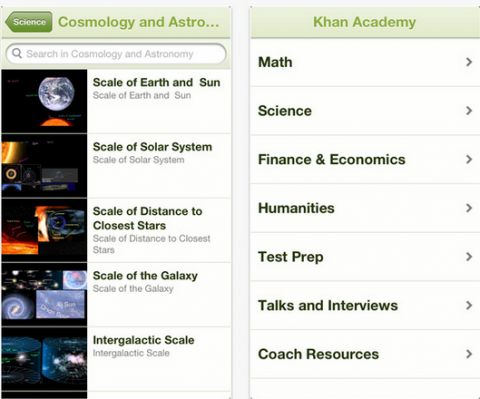
Khan Academy Releases New App for iPhone & iPod Touch, Giving You Mobile Access to 3600 Videos

Non-prof­it Khan Acad­e­my, an orga­ni­za­tion ded­i­cat­ed to “pro­vid­ing a free world-class edu­ca­tion for any­one any­where,” does so pri­mar­i­ly through online video cours­es and lec­tures. The over 3600 videos are free and access is open to any­one (any­where), allow­ing K‑12 stu­dents to study math, sci­ence, com­put­er sci­ence, finance & eco­nom­ics, human­i­ties, and test prep. The orga­ni­za­tion was found­ed in 2006 by MIT and Har­vard grad Salman Khan, who began by tutor­ing rel­a­tives and friends in Bangladesh while he worked as a hedge fund ana­lyst in the States. His videos became so in-demand that he decid­ed to quit his job and dis­trib­ute them full-time, fund­ed by dona­tions from indi­vid­u­als and major donors like the Bill and Melin­da Gates Foun­da­tion.

While there is a healthy amount of skep­ti­cism about the effi­ca­cy of Khan’s meth­ods, there’s no short­age of demand for the kind of instruc­tion he offers to stu­dents all over the world. To fur­ther meet that demand, Khan Acad­e­my has just released an app for iPhone and iPod Touch. Unlike the app released this past March for the iPad, the iPhone ver­sion does not allow inter­ac­tiv­i­ty. Users can view videos but can­not, as with the iPad app, down­load playlists, read sub­ti­tles, and log progress, mak­ing this ver­sion “more for con­sump­tion rather than full inter­ac­tion.” Nev­er­the­less, and whether crit­ics like it or not, this rep­re­sents a fur­ther step for dis­tance learn­ing, as edu­ca­tion increas­ing­ly moves out of the class­room and into the hand­held devices of net­works of stu­dents no longer restrict­ed by geog­ra­phy or phys­i­cal mobil­i­ty.

The app has been added to our brand-spank­ing new col­lec­tion: 200 Free K‑12 Edu­ca­tion­al Resources: Video Lessons, Web Sites, Apps & More

Via Makeuse­of

Josh Jones is a doc­tor­al can­di­date in Eng­lish at Ford­ham Uni­ver­si­ty and a co-founder and for­mer man­ag­ing edi­tor of Guer­ni­ca / A Mag­a­zine of Arts and Pol­i­tics.

Watch Student Science Experiments Conducted on the International Space Station at 10:30 AM EDT

When YouTube Space Lab launched a com­pe­ti­tion call­ing for exper­i­ments to be con­duct­ed aboard the Inter­na­tion­al Space Sta­tion, thou­sands of high school stu­dents around the world respond­ed. The two win­ning exper­i­ments will be per­formed live Thurs­day at 7:30am PDT / 9:30am CDT / 10:30am EDT / 3:30pm BST / 4:30pm CEST. Back on Earth, we can watch astro­naut Suni­ta Williams live in the micro­grav­i­ty cap­sule as she puts the exper­i­ments to the test.

Stu­dents sub­mit­ted short videos explain­ing the sci­en­tif­ic exper­i­ments they hoped to see test­ed aboard the space sta­tion. One of the win­ning pro­pos­als, from Amr Mohamed of Egypt, asks whether zebra spi­ders, which jump on their prey, will be able to catch their food in their usu­al way in micro­grav­i­ty. The oth­er exper­i­ment, from Dorothy Chen and Sara Ma of Michi­gan, asks whether the growth of bac­te­ria deliv­ered into space will slow down when cer­tain com­pounds are added.

YouTube view­ers helped choose the win­ners from a pool of six semi-final­ists. Then mate­ri­als need­ed to con­duct the two win­ning exper­i­ments were packed into a rock­et and sent up to the space sta­tion, 250 miles above the Earth.

Watch live as Williams observes bac­te­ria and hun­gry zebra spi­ders in micro­grav­i­ty. Will the spi­ders fig­ure out a new way to hunt?

Kate Rix is a free­lance writer in Oak­land. See more of her work at .

Kids Record Audio Tours of NY’s Museum of Modern Art (with Some Silly Results)

In an ear­ly, abortive flir­ta­tion with art school, I learned the tech­nique of saun­ter­ing around a gallery, look­ing alter­nate­ly bored and engrossed in what­ev­er hap­pened to be on the walls, the floor, the ceil­ing, nev­er com­mit­ting to any emo­tion, espe­cial­ly one that might betray my absolute befud­dle­ment with a good bit of mod­ern art. I’m hap­py to look back on that younger self and call him a pre­ten­tious dilet­tante, and hap­pi­er now that I’m old enough not to care if some­one knows that I’m con­fused, irri­tat­ed, or gen­uine­ly bored with some exper­i­men­tal piece that defies my lim­it­ed aes­thet­ic cat­e­gories. One of the things I antic­i­pate most as the father to an already wry and curi­ous one-year-old is hear­ing her unschooled reac­tions to some art­work I once fetishized but nev­er real­ly “got,” since there can often be no bet­ter means of deflat­ing the pompous auras sur­round­ing high cul­ture than let­ting kids have an irrev­er­ent, uncen­sored go at it.

Per­haps this is why Audio Tour Hack decid­ed to har­ness the unvar­nished truths con­tained in “darn­d­est things” with their unau­tho­rized gallery tour enti­tled MOMA Unadul­ter­at­ed (short pre­view above). The “hack,” a clever update on often staid and monot­o­ne gallery audio tours, fea­tures “experts” from kinder­garten to fifth grade pass­ing judg­ment on the work of mod­ern art stars like Andy Warhol, Cy Twombly, and Roy Licht­en­stein. Unadul­ter­at­ed by faux sophis­ti­ca­tion and oner­ous over-edu­cat­ed ref­er­en­tial­i­ty? Yes. A tad bid too cutesy? Per­haps. But even so, still a fun idea, with lots of silli­ness (and if it gets kids inter­est­ed in art, all the bet­ter). At times, the kid crit­ics even drop a bit of adult know­ing­ness into their “any­one could have done this” assess­ment of, say, Jack­son Pol­lack (whom one kid accus­es of “just want­i­ng a lot of mon­ey”). MOMA Unadul­ter­at­ed refers to a per­ma­nent exhib­it and instal­la­tion of paint­ing and sculp­ture on the New York Muse­um of Mod­ern Art’s fourth floor. The tour takes in thir­ty pieces of art, each accom­pa­nied by audio com­men­tary from the kid crit­ics. Vis­it the Audio Tour Hack web­site to lis­ten to the com­men­tary online and see some delight­ful pic­tures of the “unadul­ter­at­ed” com­men­ta­tors.

Cor­rec­tion 9/18/12: An ear­li­er ver­sion of this post stat­ed that MOMA Unadul­ter­at­ed was cre­at­ed by the Muse­um of Mod­ern Art. It was not, nor is Audio Tour Hack affil­i­at­ed with MoMA in any way. You can find links to MoMA’s own audio tours (includ­ing tours for kids) here.

via Kot­tke

Relat­ed Con­tent:

MoMA Puts Pol­lock, Rothko & de Koon­ing on Your iPad

Free: The Guggen­heim Puts 65 Mod­ern Art Books Online

Google “Art Project” Brings Great Paint­ings & Muse­ums to You

Jack­son Pol­lock: Lights, Cam­era, Paint! (1951)

Josh Jones is a doc­tor­al can­di­date in Eng­lish at Ford­ham Uni­ver­si­ty and a co-founder and for­mer man­ag­ing edi­tor of Guer­ni­ca / A Mag­a­zine of Arts and Pol­i­tics.

Bill Nye, The Science Guy, Says Creationism is Bad for Kids and America’s Future

Bill Nye will tell you that he’s a man on a mis­sion. He’s out there try­ing to “help fos­ter a sci­en­tif­i­cal­ly lit­er­ate soci­ety, to help peo­ple every­where under­stand and appre­ci­ate the sci­ence that makes our world work.” From 1993 to 1998, Nye host­ed Bill Nye the Sci­ence Guya Disney/PBS chil­dren’s sci­ence show that won 18 Emmys along the way. A grad­u­ate of Cor­nell and a stu­dent of Carl Sagan, Nye has also pre­sent­ed shows on the Sci­ence Chan­nel, the Dis­cov­ery Chan­nel and oth­er media out­lets.

If you’re famil­iar with Bill Nye, you’ll know that he’s not exact­ly an in-your-face kind of sci­en­tist. He’s no Richard Dawkins. Nye is mild-man­nered, affa­ble and wears a bow tie. But, like Dawkins, he’ll tell you that if you deny evo­lu­tion, you’re not liv­ing in the world of basic facts. And if you teach cre­ation­ism to kids, you’re not prepar­ing them to com­pete in a world where sci­en­tif­ic lit­er­a­cy means every­thing. That bodes ill for your kids in par­tic­u­lar, and for Amer­i­ca’s future more gen­er­al­ly.

Now you might be inclined to say that Amer­i­ca has always had cre­ation­ists, and that did­n’t stop the coun­try from becom­ing an eco­nom­ic and mil­i­tary super­pow­er. Per­haps that’s true. But you need to recall this. Amer­i­ca reached its zenith when every oth­er pow­er had blown them­selves to smithereens. We were the only game in town. And it almost did­n’t mat­ter what we thought, or how much we thought. We just need­ed to show up to work. Nowa­days, we don’t have that lux­u­ry. We face stiff com­pe­ti­tion from ambi­tious nations that take sci­ence and edu­ca­tion seri­ous­ly. A coun­try that scoffs at sci­en­tif­ic rea­son­ing, that dis­miss­es it all as “elit­ist,”  has only one way to go, and that’s down. God help us.

You can find more clips from Nye’s talk here.

Relat­ed Con­tent:

Carl Sagan Presents Six Lec­tures on Earth, Mars & Our Solar Sys­tem … For Kids (1977)

Grow­ing Up in the Uni­verse: Richard Dawkins Presents Cap­ti­vat­ing Sci­ence Lec­tures for Kids (1991)

by | Permalink | Make a Comment ( 18 ) |

« Go BackMore in this category... »
Quantcast