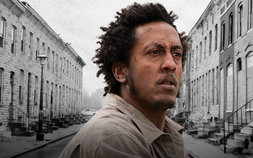
 David Simon once called his HBO series, The Wire, “a political tract masquerading as a cop show.” Think of it as a five season, 3600 minute, artistic depiction of the escalating breakdown of urban society. The show is art. But it is also life in the biggest sense. And it’s why some thinkers have likened the epic series to (or even elevated it above) Tolstoy’s War & Peace. Now comes this… According to The Harvard Crimson, William J. Wilson, a Harvard sociology professor, will teach a new course that uses The Wire as “a case study for poverty in America,” saying that “The Wire has done more to enhance our understanding of the systemic urban inequality that constrains the lives of the poor than any published study.” If you haven’t seen this series, and if this whets your appetite, you can find a nice deal on Amazon. The full series now goes for $125.00, 50% off the list price.
“The Wire” @ Harvard
Anthropologist Claude Lévi-Strauss Remembered
News broke today that Claude Lévi-Strauss, one of France’s towering intellectuals, has died. He was 100 years old. The New York Times has a lengthy obit that covers the career of the anthropologist who brought us “structuralism” and helped us look at diverse cultures in new ways. NPR has also aired a short piece (in audio) that highlights Lévi-Strauss’ intellectual accomplishments. You can listen below.
Audible Starter Kit: Get 3 Audiobooks, Plus a Free Phillips Spark 2GB MP3 Player
Anne Frank: The Only Existing Video Now Online
There’s no sound, and the clip only runs 20 seconds. But this is the only known footage of Anne Frank, and it’s now online. The Anne Frank House does a good job of setting the scene for the video taken on July 22, 1941. “The girl next door is getting married. Anne Frank is leaning out of the window of her house in Amsterdam to get a good look at the bride and groom… At the time of her wedding, the bride lived on the second floor at Merwedeplein 39. The Frank family lived at number 37, also on the second floor. The Anne Frank House can offer you this film footage thanks to the cooperation of the couple.” Find more videos on YouTube’s Anne Frank Channel.
If you would like to support the mission of Open Culture, consider making a donation to our site. It’s hard to rely 100% on ads, and your contributions will help us continue providing the best free cultural and educational materials to learners everywhere. You can contribute through PayPal, Patreon, and Venmo (@openculture). Thanks!
Be a 2010 TED Fellow!
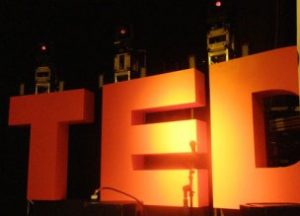 Want to attend the 2010 TED Conference and hang with some of the world’s greatest minds? Here’s your chance. Apply to the TED Fellows program. Organizers of the TED Conference are looking for 25 promising Fellows from around the world to participate in TED 2010, and they’re accepting applications through September 25, 2009. Fellowships include conference admission, round-trip transportation, housing and all meals. Fellows will also participate in a pre-conference with the opportunity to present a short talk for consideration for TED.com. Applicants should generally between 21–40 years of age, though anyone over 18 and over 40 may apply. They must also be fluent in English. Click here and get started with your application today!
Related Content:
Plastics Out, Statistics In
A memorable scene from The Graduate (1967). But, as the New York Times tells us today, plastics is out; statistics is now in.
Martin Sheen’s Senior Moment
On the lighter side. Thanks Rachel for sending this along…
Find the link to the original video here.
Ira Glass, Host of This American Life, Explains Why Creative Excellence Takes Time
Ira Glass, host of the beloved radio show This American Life, offers a helpful reminder that excellence doesn’t come automatically. It takes effort, years of it. And he revisits some of his early radio work in order to prove it. A good reminder for anyone with serious artistic or creative ambitions.
Support Us
We're hoping to rely on loyal readers, rather than erratic ads. Please click the Donate button and support Open Culture. You can use Paypal, Venmo, Patreon, even Crypto! We thank you!

About Us

Open Culture scours the web for the best educational media. We find the free courses and audio books you need, the language lessons & educational videos you want, and plenty of enlightenment in between.
Advertise With Us

