Alan Watts came to San Francisco during the early 1950s, wrote his bestseller Way of Zen, and became one of the foremost popularizers of Zen Buddhism, Hinduism, Taoism and various forms of Eastern philosophy. His TV show, Eastern Wisdom and Modern Life (1960), introduced Americans to the seemingly exotic concept of meditation (watch here). And his radio show and lectures forced listeners to pause and look at their lives from a fresh perspective. Again and again, Watts challenged the Western emphasis on money-making to the exclusion of all else. We’ve heard Watts rail against this soul-crushing value in a lecture animated by the creators of South Park. (I’m not kidding you.) And, in the newly-produced video above, he continues along the same trajectory. So, as you drink your morning coffee and ponder your day, ask yourself: Are you putting money-making before happiness itself? Or are you pursuing the passions that bring happiness, achieving excellence, and then letting the money follow? With that, I’ll let you continue with your day.
If you would like to support the mission of Open Culture, consider making a donation to our site. It’s hard to rely 100% on ads, and your contributions will help us continue providing the best free cultural and educational materials to learners everywhere. You can contribute through PayPal, Patreon, and Venmo (@openculture). Thanks!
I’ve always thought of writer, actor and filmmaker Miranda July as someone who creates her own opportunities. Long before her stories in The New Yorker, and before Me and You and Everyone We Know, the award-winning first feature that cemented her indie darling status, she was circulating video chain letters featuring her own work and that of other young, female filmmakers. She recorded LPs and toured original performance art pieces.
What a relief to find out she’s a procrastinator, too.
July insists that her chattering monkey mind nearly deprived her of the concentration necessary to finish writing The Future, her second full-length film. One of its most compelling parts actually wound up on the cutting room floor. In it (above), we see Sophie, the under-employed would-be dancer played by July, coming to grips with her own self-sabotaging tendency toward procrastination.
Of course, the reason we’re able to see it at all is that July, whose industriousness surely has earned her the right to spend a decade or so doing nothing but watching YouTube and Googling her own name, repurposed it as a short, instructional film (A Handy Tip for the Easily Distracted), which offers an antidote for those of us who share her affliction.
(Admit it. You’re procrastinating now, aren’t you?)
In addition to the soundness of her advice, her methodology is endearingly low-tech. As one who’s been known to attribute a lack of creative output to a less than ideal workspace, I found the cluttered, shabby apartment set both familiar and galvanizing. If we’re going to make excuses, we may as well own them. July takes yet another step by harnessing them and forcing them to work for her.
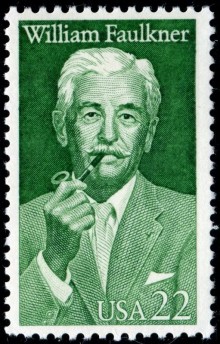
Long before William Faulkner got his big break in literature, he, like many of us, had a good old-fashioned day job. Faulkner had a series of odd jobs in fact. But, most famously, he worked from 1921 to 1924 as the postmaster at the University of Mississippi, where, according to legend, he did the following: sometimes threw mail in the garbage, other times read magazines before bringing them to people’s homes, often played cards and wrote fiction during working hours, occasionally went golfing instead of delivering mail, and generally ignored his colleagues and customers. But, who could blame him? Especially when he earned $20,000 in today’s money and had great literary ambitions to pursue. Eventually, when a postal inspector came to investigate, Faulkner resigned. The resignation letter, recently highlighted by Letters of Note, is short (a mere 56 words) and cutting. But, scathing as it was, it didn’t stop the US postal system from issuing a commemorative Faulkner stamp in 1987.
October, 1924
As long as I live under the capitalistic system, I expect to have my life influenced by the demands of moneyed people. But I will be damned if I propose to be at the beck and call of every itinerant scoundrel who has two cents to invest in a postage stamp.
“In this program,” says narrator Peter Capaldi at the outset, “we’re going to show you how to be more rational, and deal with some of life’s biggest decisions.” It’s a pretty big claim, and you may doubt that it’s true (especially during the silly opening scene involving a group of nerds trying to score a date) but give this 2008 BBC Horizon program a little time and you might come away with a few things to think about. How to Make Better Decisions takes us inside cognitive science laboratories and out on the streets to demonstrate how the emotional part of our brain gets the better of the rational part. The film introduces a number of intriguing concepts, including Prospect Theory, “the framing effect,” and “priming.” More controversially, it highlights some research that suggests the possibility that our intuition may have something to do with an ability to sense future events. How to Make Better Decisions is 49 minutes long, and we’ve decided to add it to our growing collection of Free Movies Online.
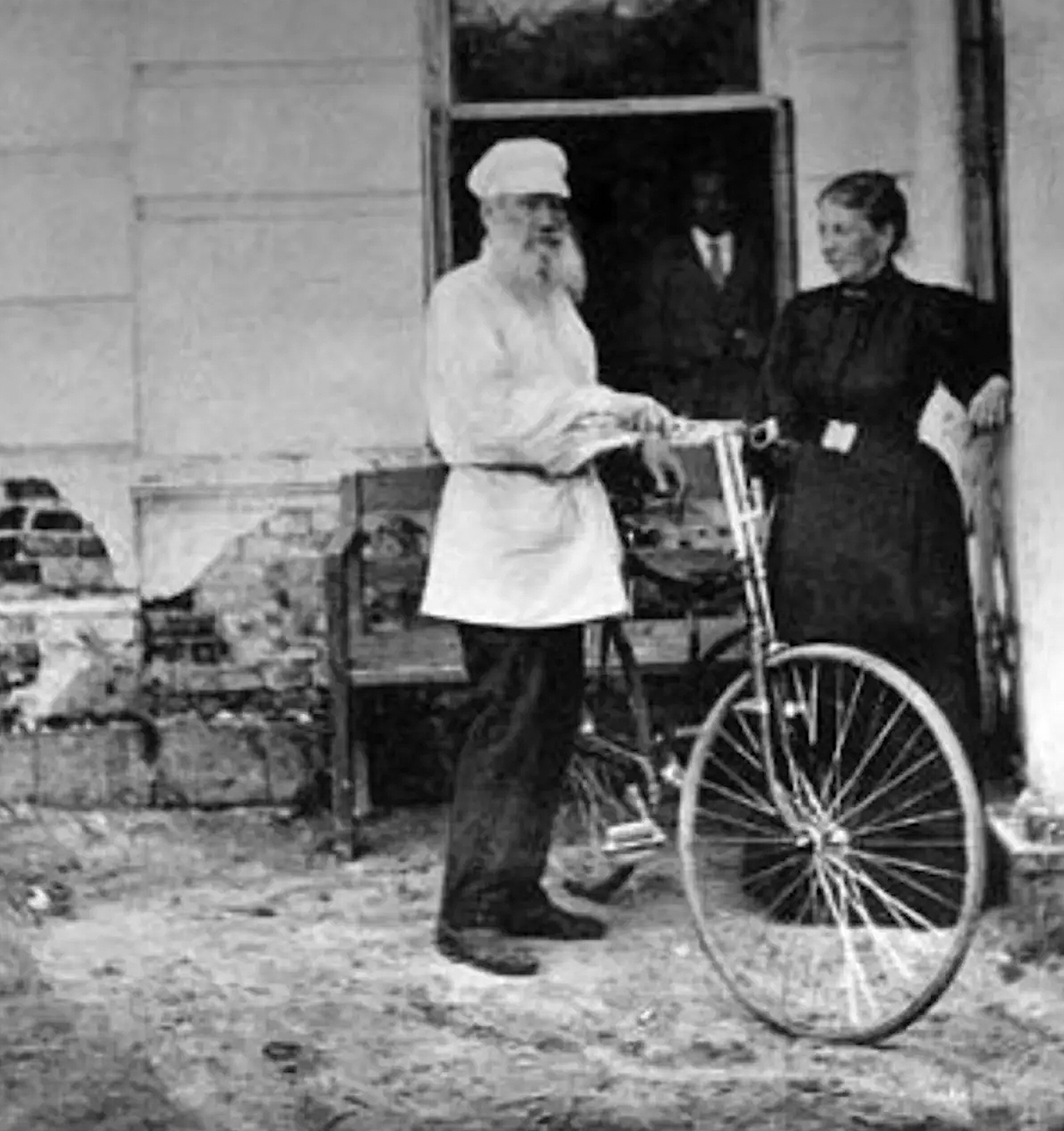
Some say you’re never too old to learn something new. Others say you can’t teach an old dog new tricks. Well, you know where we come down on this. And we’ve got some celebrity case studies to back us up. In a blog post yesterday, The New York Times featured four cultural icons and one war hero who learned new skills later in life. Miles Davis started boxing when most boxers are hanging up their gloves. Ayn Rand, in her 60s, improbably took up the hobby of stamp collecting. Marie Curie learned to swim in her 50s. And the great novelist Leo Tolstoy took his first bike ride at the age of 67. The Times writes that he started cycling:
only a month after the death of his 7‑year-old son, Vanichka. He was still grieving, and the Moscow Society of Velocipede-Lovers provided him a free bike and instruction along the garden paths on his estate. He became a devotee, taking rides after his morning chores. “Count Leo Tolstoy … now rides the wheel,” declared Scientific American in 1896, “much to the astonishment of the peasants on his estate.”
Charles Bukowski, “Hank” to his friends, was once called the “best poet in America” by kindred spirit Jean Genet. He was a writer who told the truth, when he wasn’t lying, and who could tell a great story, whether sober or drunk. Bukowski once told Sean Penn in a 1987 Interview magazine piece: “Alcohol is probably one of the greatest things to arrive upon the earth — alongside of me. Yes…these are two of the greatest arrivals upon the surface of the earth. So…we get along.” This statement encapsulates the qualities Bukowski is best known for—lifelong heavy drinking and bravado. They tend to go hand in hand, especially in novelists of his generation. But what made him a poet was another quality the booze helped him cope with, his tendency to be “a shy, withdrawn person,” an almost tender person, and humane in his own low-rent way. In the video above, he tells the story of his worst hangover ever. I’ll let him tell it. There’s no way a paraphrase could come close to Bukowski’s own voice.
Josh Jones is a doctoral candidate in English at Fordham University and a co-founder and former managing editor of Guernica / A Magazine of Arts and Politics.
Johnny Cash wrote down at least two lists in his lifetime. Let’s start with the big one. In 1973, when his daughter Roseanne turned 18, the legendary musician pulled out a sheet of yellow legal paper and began writing down 100 Essential Country Songs, the songs she needed to know if she wanted to start her own musical career. The list, writes the website FolkWorks, didn’t construe country music narrowly. It was eclectic, taking in old folk songs, Appalachian ballads, and also protest songs, early country classics, and modern folks songs sung by artists like Bob Dylan. (Don’t miss our post on Dylan and Cash’s 1969 collaboration here.) This essential list never went public, at least not in full. Roseanne Cash guarded it closely until 2009, when she released an albumfeaturing interpretations of 12 titles from her father’s list. The other 88 songs still remain a mystery.
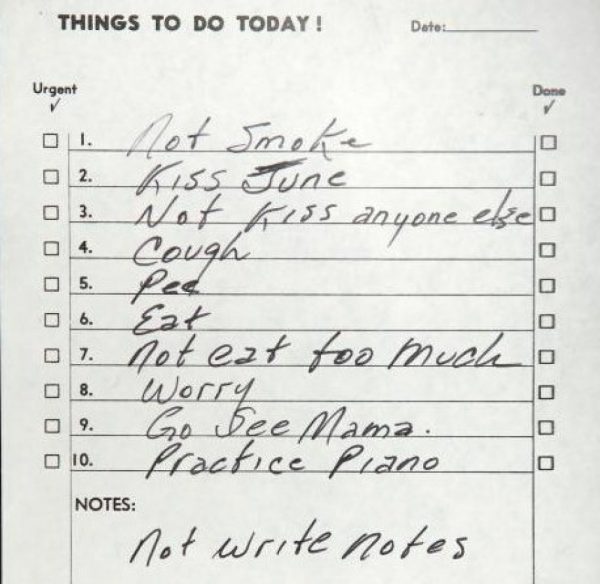
Now on to that other list: Somewhere along the way (we’re not sure when) The Man in Black jotted down 10 “Things to Do Today!” This list feels almost like something you and I could have written, the stuff of mortals. Heck, in a given day, we all “Cough,” “Eat” and “Pee.” We struggle with will power (not eating too much, perhaps not smoking, maybe not fooling around with anyone but our spouse). And we’re hopefully good to our loved ones. So what sets Johnny Cash apart from us? Just June and that piano.
Johnny’s to-do list sold at auction for $6,250 in 2010.
If you would like to support the mission of Open Culture, consider making a donation to our site. It’s hard to rely 100% on ads, and your contributions will help us continue providing the best free cultural and educational materials to learners everywhere. You can contribute through PayPal, Patreon, and Venmo (@openculture). Thanks!
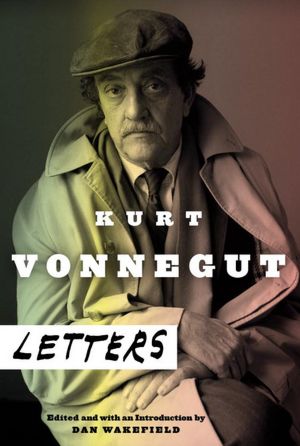
Kurt Vonnegut never did things the conventional way. He didn’t write particularly conventional novels. He certainly didn’t make very conventional speeches at universities. But he did make semi-conventional domestic agreements. Take, for example, this contract written on January 26, 1947. Posted on the Harper’s website in full, this odd little document, dubbed “The Chore List of Champions,” finds Vonnegut outlining all of the tasks he promised to do around the house — this while his young wife, Jane, prepared to give birth to their first child. The contract (the content is conventional, the form is not) will be published in Kurt Vonnegut: Letters next month. And it begins:
I, Kurt Vonnegut, Jr., that is, do hereby swear that I will be faithful to the commitments hereunder listed:
I. With the agreement that my wife will not nag, heckle, or otherwise disturb me on the subject, I promise to scrub the bathroom and kitchen floors once a week, on a day and hour of my own choosing. Not only that, but I will do a good and thorough job, and by that she means that I will get under the bathtub, behind the toilet, under the sink, under the icebox, into the corners; and I will pick up and put in some other location whatever movable objects happen to be on said floors at the time so as to get under them too, and not just around them. Furthermore, while I am undertaking these tasks I will refrain from indulging in such remarks as “Shit,” “Goddamn sonofabitch,” and similar vulgarities, as such language is nerve-wracking to have around the house when nothing more drastic is taking place than the facing of Necessity. If I do not live up to this agreement, my wife is to feel free to nag, heckle, and otherwise disturb me until I am driven to scrub the floors anyway—no matter how busy I am.
And then later continues:
g. When smoking I will make every effort to keep the ashtray I am using at the time upon a surface that does not slant, sag, slope, dip, wrinkle, or give way upon the slightest provocation; such surfaces may be understood to include stacks of books precariously mounted on the edge of a chair, the arms of the chair that has arms, and my own knees;
h. I will not put out cigarettes upon the sides of, or throw ashes into, either the red leather wastebasket or the stamp wastebasket that my loving wife made me for Christmas, 1945, as such practice noticeably impairs the beauty and ultimate practicability of said wastebaskets;
j. An exception to the above three-day time limit is the taking out of the garbage, which, as any fool knows, had better not wait that long; I will take out the garbage within three hours after the need for disposal has been pointed out to me by my wife. It would be nice, however, if, upon observing the need for disposal with my own two eyes, I should perform this particular task upon my own initiative, and thus not make it necessary for my wife to bring up a subject that is moderately distasteful to her;
l. The terms of this contract are understood to be binding up until that time after the arrival of our child (to be specified by the doctor) when my wife will once again be in full possession of all her faculties, and able to undertake more arduous pursuits than are now advisable.
We're hoping to rely on loyal readers, rather than erratic ads. Please click the Donate button and support Open Culture. You can use Paypal, Venmo, Patreon, even Crypto! We thank you!
Open Culture scours the web for the best educational media. We find the free courses and audio books you need, the language lessons & educational videos you want, and plenty of enlightenment in between.