The First World War (1914–1918) changed Britain to a degree that was unthinkable in 1914. Pre-war certainties and values such as honor, fatherland and progress disintegrated on the battlefields and trenches in France and Belgium. New technology such as tanks, machine guns, grenades, flame throwers and poison gas were used to destroy the enemy; constant fire for days on end was intended to break the soldiers in the trenches. Unspeakable horrors led to psychological problems of unknown proportions.
Coping with these horrors during and after The Great War (as it’s still called in Britain today) seemed like a Herculean task to poets — how do you put the unspeakable into words? Some poets, e.g. Rupert Brooke, still celebrated the heroism of the English soldiers (e.g., 1914 II. Safety), whereas others, such as Wilfred Owen, tried to describe the horrors of this war (e.g., Dulce et Decorum Est).
Every year on the Sunday closest to November 11, Britain remembers the dead of the First World War. For Remembrance Day 2012, famous British actors were asked to recite First World War poetry. The finished clips were to be shown on TV that day. The video above shows three actors reciting four poems by Rupert Brooke and Wilfred Owen (click the names of the actors for information about them and the titles of the poems for the full text):
By profession, Matthias Rascher teaches English and History at a High School in northern Bavaria, Germany. In his free time he scours the web for good links and posts the best finds on Twitter.
Another year gone by. Another 1200+ cultural blog posts in the books. Which ones did you like best? We let the data decide. Below, you’ll find the 17 that struck a chord with you. Free Art Books from The Guggenheim and The Met: Way back in January, the Guggenheim made 65 art catalogues available online, all free of charge. The catalogues offer an intellectual and visual introduction to the work of Calder, Munch, Bacon, and Kandinsky, among others. Then, months later, The Met followed suit and launched MetPublications, a portal that now makes available 370 out-of-print art titles, including works on Vermeer, da Vinci, Degas and more.
The Best Animated Films of All Time, According to Terry Gilliam: Terry Gilliam knows something about animation. For years, he produced wonderful animations for Monty Python (watch his cutout animation primer here), creating the opening credits and distinctive buffers that linked together the offbeat comedy sketches. Given these bona fides, you don’t want to miss Gilliam’s list, The 10 Best Animated Films of All Time.
Here Comes The Sun: The Lost Guitar Solo by George Harrison: Here’s another great discovery — the long lost guitar solo by George Harrison from my favorite Beatles’ song, “Here Comes the Sun.” In this clip, George Martin (Beatles’ producer) and Dhani Harrison (the guitarist’s son) bring the forgotten solo back to life. When you’re done taking this sentimental journey, also see another favorite of mine: guitarist Randy Bachman demystifying the opening chord of ‘A Hard Day’s Night’.
Ray Bradbury Offers 12 Essential Writing Tips and Explains Why Literature Saves Civilization: In June, we lost Ray Bradbury, who now joins Isaac Asimov, Arthur C. Clarke, Robert A. Heinlein, and Philip K. Dick in the pantheon of science fiction. In this post, we revisit two moments when Bradbury offered his personal thoughts on the art and purpose of writing — something he contemplated during the 74 years that separated his first story from the last.
Free Science Fiction Classics on the Web: Speaking of science fiction, we brought you a roundup of some of the great Science Fiction, Fantasy and Dystopian classics available on the web in audio, video and text formats. They include Orwell’s 1984, Huxley’s Brave New World, Asimov’s Foundation Trilogy, C.S. Lewis’ Chronicles of Narnia,many stories by Philip K. Dick and Neil Gaiman, and much more. Find more great works in our collections of Free Audio Books and Free eBooks.
This is Your Brain in Love: Scenes from the Stanford Love Competition: Can one person experience love more deeply than another? That’s what Stanford researchers and filmmaker Brent Hoff set out to understand when they hosted the 1st Annual Love Competition. Seven contestants, ranging from 10 to 75 years of age, took part. And they each spent five minutes in an fMRI machine. It’s to hard watch this short film and not shed a happy tear.
Rare 1959 Audio: Flannery O’Connor Reads ‘A Good Man is Hard to Find’: In April of 1959–five years before her death at the age of 39 from lupus–Flannery O’Connor ventured away from her secluded family farm in Milledgeville, Georgia, to give a reading at Vanderbilt University. She read one of her most famous and unsettling stories, “A Good Man is Hard to Find.” The audio is one of two known recordings of the author reading that story.
33 Free Oscar Winning Films Available on the Web: On the eve of the 2012 Academy Awards, we scouted around the web and found 33 Oscar-winning (or nominated) films from previous years. The list includes many short films, but also some long ones, like Sergei Bondarchuk’s epic version of War & Peace. Sit back, enjoy, and don’t forget our collection of 500 Free Movies Online, where you’ll find many great noir films, westerns, classics, documentaries and more.
The Story Of Menstruation: Walt Disney’s Sex Ed Film from 1946: Staying with movies for a second, we also showed you a very different mid-1940s Disney production – The Story of Menstruation. Made in the 1940s, an estimated 105 million students watched the film in sex ed classes across the US.
30 Free Essays & Stories by David Foster Wallace on the Web: We spent some time tracking down 23 free stories and essays published by David Foster Wallace between 1989 and 2011, mostly in major U.S. publications like The New Yorker, Harper’s, The Atlantic, and The Paris Review. Enjoy, and don’t miss our other collections of free writings by Philip K. Dick and Neil Gaiman.
Everything I Know: 42 Hours of Buckminster Fuller’s Visionary Lectures Free Online (1975): In January 1975, Buckminster Fuller sat down to deliver the twelve lectures that make up Everything I Know, all captured on video and enhanced with the most exciting bluescreen technology of the day. The lecture series is now online and free to enjoy, so please do so.
Kurt Vonnegut’s Eight Tips on How to Write a Good Short Story: When it came to giving advice to writers, Kurt Vonnegut was never dull. He once tried to warn people away from using semicolons by characterizing them as “transvestite hermaphrodites representing absolutely nothing.” In this brief video, Vonnegut offers eight tips on how to write a short story.
Free Online Certificate Courses & MOOCs from Great Universities: A Complete List: We gathered a list of 200 free massive open online courses (MOOCs) offered by leading universities. Most of these free courses offer “certificates” or “statements of completion.” Many new courses start in January 2013. So be sure to check it out. Also don’t miss our other new resource collection: 200 Free Kids Educational Resources: Video Lessons, Apps, Books, Websites & Beyond.
The American writer Richard Ford (The Sportswriter, Independence Day, Rock Springs) chose to read “The Student’s Wife” by his late friend Raymond Carver. The story was first published in America in 1976, in Carver’s debut short story collection, Will You Please Be Quiet, Please. It exemplifies Carver’s direct, economical style. But don’t make the mistake of calling Carver a “minimalist” around Ford. He describes the story, and the richness of Carver’s writing, in TheGuardian:
Its verbal resources are spare, direct, rarely polysyllabic, restrained, intense, never melodramatic, and real-sounding while being obviously literary in intent. (You always know, pleasurably, that you’re reading a made short story.) These affecting qualities led some dunderheads to call his stories “minimalist”, which they are most assuredly not, inasmuch as they’re full-to-the-brim with the stuff of human intimacy, of longing, of barely unearthable humour, of exquisite nuance, of pathos, of unlooked-for dred, and often of love–expressed in words and gestures not frequently associated with love. More than they are minimal, they are replete with the renewings and the fresh awarenesses we go to great literature to find.
I wager that we could all recount the plot points of A Christmas Carol by heart. Furthermore, I wager that most of us inadvertently committed these to memory not by reading and re-reading Charles Dickens’ 1843 novella (available in our Free eBooks and Free Audio Books collections), but by having seen or heard a different adaptation of it each Christmas. The work has produced an almost confusing abundance of productions on film, television, and the stage, from Thomas Edison’s 1910 silent short to a Doctor Who Christmas special two years ago. Beyond that, we have countless reimaginings, like the animated Mickey’s Christmas Carol featuring Scrooge McDuck as Ebenezer Scrooge, and loosely Christmas Carol-inspired projects, like Scrooged with Bill Murray. The story has also made its way to the radio many times, most notably in the 1930s, when Campbell’s Soup would sponsor its yearly appearance. In 1939, the “Campbell Playhouse” brought in two especially formidable thespians, Orson Welles and Lionel Barrymore, and you can listen to the result at archive.org, or right below.
Welles, of course, came in as no stranger to adapting literature for radio; he’d pulled off his infamously realistic Halloween dramatization of H.G. Wells’ The War of the Worlds just the year before. My personal favorite of his adaptations remains the hauntingly askew Orson Welles Show version of Carl Ewald’s My Little Boy, but I can’t deny that he brings an entirely suitable tone of mild grandeur, initially stern but ultimately pleased, to A Christmas Carol. Barrymore, an actor of both the nineteenth and twentieth centuries who managed to succeed on stage, in silent films, and then in sound films, plays the now-archetypal miserly curmudgeon Ebenezer Scrooge with a style that, for my money, falls second only to Scrooge McDuck’s. But then, we can’t go comparing cartoon characters to flesh-and-blood performers, and Disney’s Scrooge surely drew his own signature miserliness and curmudgeonhood (not to mention his name) from Dickens’, a figure already firmly lodged in our collective holiday consciousness, thanks especially to performances like Barrymore’s.
Colin Marshall hosts and produces Notebook on Cities and Cultureand writes essays on literature, film, cities, Asia, and aesthetics. Follow him on Twitter at @colinmarshall.
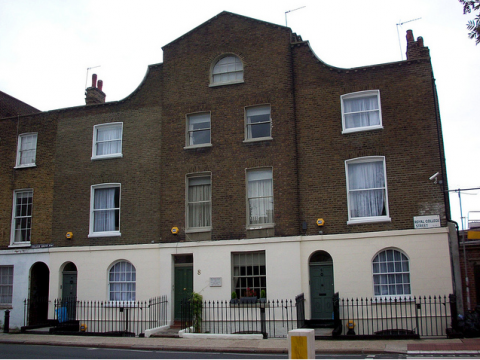
I’ve always been somewhat amused by the accounts of Paul Verlaine and Arthur Rimbaud’s brief bohemian affair. The older, married, and internally tortured Catholic Verlaine’s pining for the self-destructive and precocious young Rimbaud always presents a ridiculous picture in prose. But it’s a picture that takes on much clearer contours when, for the first time, I get to see the house they occupied on 8 Royal College Street (above). The image of the house, with its forbidding brick façade, gives their really pretty unpleasant story a gravitas that literary history can’t approach. Whether seen in person or in a photograph, the effect of viewing any revered author’s home is similar: histories once subject to biographers’ caprice take on the irrefutable weight of physical reality. And while I’d love to have the luxury of a pilgrimage to all my literary heroes’ homes, I’m content with the next best thing: an internet tour in pictures. That’s exactly what one gets at the Writers’ Houses site, which has collected dozens of images of famous writers’ homes, sourced mainly from user photos.
And so homebodies like myself can read their favorite Edna St. Vincent Millay sonnets while gazing at her Austerlitz, NY home “Steepletop” (below, a bit more modest than I’d imagined):
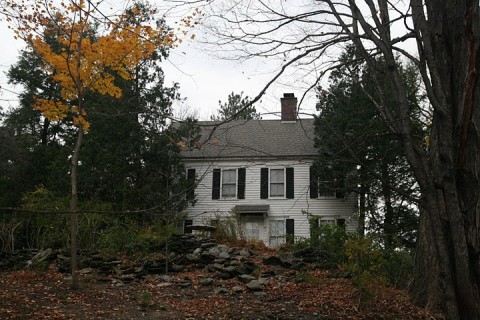
Likewise, I can read Flannery O’Connor’s grotesque little stories and be continually amazed that she did not emerge from some Medieval cloister in a fiery Southern wild but from the bright, rambling farmhouse called “Andalusia” (below).
And while I can only connect Thomas Hardy’s country gothic novels and bleak poetry with the terminal despair of a man who never leaves his firelit study in some sturdy, formal estate, his little cottage (below) is really kind of cheery and resembles something out of Peter Jackson’s Shire (though Hardy’s “Max Gate” home in Dorchester is exactly what I picture him in).
The Writers’ Houses site allows you to browse by author, state, and city, with a separate category for “international houses.” Its main page is a regular blog with a wealth of current information on writers’ homes, replete with links to other sites and sources. For lovers of travel and architectural and literary history, this is not to be missed.
Josh Jones is a doctoral candidate in English at Fordham University and a co-founder and former managing editor of Guernica / A Magazine of Arts and Politics.
If you’re into William S. Burroughs, maybe you’ve watched all the Burroughs-related material we’ve featured here on Open Culture, like his 1981 Saturday Night Live appearance or the 1991 documentary Commissioner of Sewers. But another documentary on Burroughs exists — the earliest one of all — and we can’t show it to you. Nobody can show Burroughs: The Movie to you, or at least they can’t show it to you in any crisp, clear, accessible form. Sure you could pay between 25 and 90 dollars for a VHS copy on Amazon, but that money might be more productively put toward restoring the original film. As you can see in the video above, such a restoration is in the works, provided the restorers can raise the $20,000 they need to do it on Kickstarter by the end of this month.
Aaron Brookner, nephew of Burroughs: The Movie’s director Howard Brookner, found a print of the film in good condition, but now needs the funding to remaster it cleanly into a modern digital form. Begun in 1979 and debuted on the BBC in 1983, the documentary includes interviews not just with Burroughs but with Allen Ginsberg, Brion Gysin, Francis Bacon, Herbert Hunke, Patti Smith, Terry Southern, and Lauren Hutton. Howard Brookner, who died in 1989, made it as his New York University film school thesis, and to operate the camera and record the sound he enlisted two soon-to-be famous classmates, Tom DiCillo and Jim Jarmusch. As of this writing, Aaron Brookner has received $9,425 in pledges, nearly half of his goal. Burroughs enthusiasts interested in chipping in — backing premiums include limited-edition DVDs, never-before-heard audio recordings, and Burroughs: The Movie photobooks — should visit the project’s Kickstarter page.
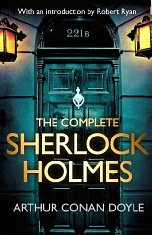
It’s surely worth giving you the quick heads up that, starting today, “the complete collection of Sir Arthur Conan Doyle’s Sherlock Holmes tales, both long and short, have been compiled together for the first time.” The Complete Sherlock Holmes (download it here)is free on the Kindle thanks to Simon & Schuster. Unlike many free texts, the formatting looks quite nice on my Kindle Paperwhite as well as on the iPad using the Free Kindle app. So, we’re gladly adding this one to our collection of 375 Free eBooks, which gives you immediate access to many more classics.
NOTE: We have unfortunately discovered that this particular text is not available in some countries. Sorry, there was no way for us to know that in advance. But, fear not, you can find other versions of Sherlock Holmes on the web. Give these links a try:
Doyle, Arthur Conan - The Adventures of Sherlock Holmes
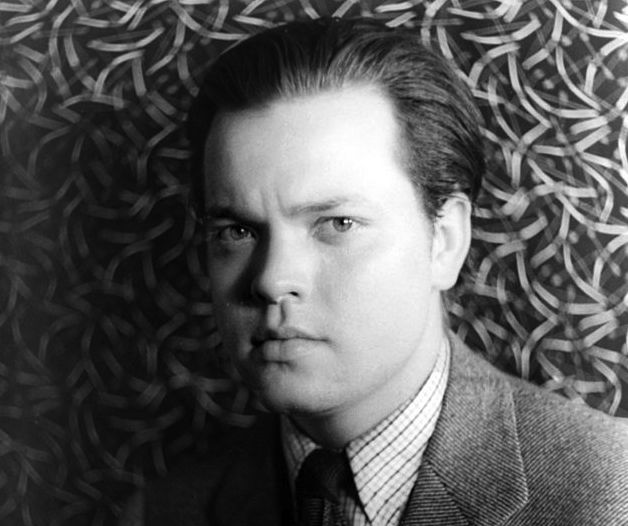
Yesterday we featured Piotr Dumala’s 2000 animation of Fyodor Dostoyevsky’s classic novel, Crime and Punishment, and it reminded us of many other literary works that have been wonderfully re-imagined by animators — many that we’ve featured here over the years. Rather than leaving these wondrous works buried in the archives, we’re bringing them back and putting them all on display. And what better place to start than with a foundational text — Plato’s Republic. We were tempted to show you a claymation version of the seminal philosophical work (watch here), but we decided to go instead with Orson Welles’ 1973 narration of The Cave Allegory, which features the surreal artistic work of Dick Oden.
Staying with the Greeks for another moment … This one may have Sophocles and Aeschylus spinning in their graves. Or, who knows, perhaps they would have enjoyed this bizarre twist on the Oedipus myth. Running eight minutes, Jason Wishnow’s 2004 film features vegetables in the starring roles. One of the first stop-motion films shot with a digital still camera, Oedipus took two years to make with a volunteer staff of 100. The film has since been screened at 70+ film festivals and was eventually acquired by the Sundance Channel. Separate videos show you the behind-the-scenes making of the film, plus the storyboards used during production.
The animated sequence above is from the 1974 film adaptation of Herman Hesse’s 1927 novel Steppenwolf. In this scene, the Harry Haller character played by Max von Sydow reads from the “Tractate on the Steppenwolf.” The visual imagery was created by Czech artist Jaroslav Bradác.
In 1999, Aleksandr Petrov won the Academy Award for Short Film (among other awards) for a film that follows the plot line of Ernest Hemingway’s classic novella, The Old Man and the Sea (1952). As noted here, Petrov’s technique involves painting pastels on glass, and he and his son painted a total of 29,000 images for this work. (For another remarkable display of their talents, also watch his adaptation of Dostoevsky’s “The Dream of a Ridiculous Man”.)The Old Man and the Sea is permanently listed in our collection of Oscar Winning Films Available Online and our collection of 700 Free Movies Online.
Emily Dickinson’s poetry is widely celebrated for its beauty and originality. To celebrate her birthday (it just passed us by earlier this week) we bring you this little film of her poem, “I Started Early–Took My Dog,” from the “Poetry Everywhere” series by PBS and the Poetry Foundation. The poem is animated by Maria Vasilkovsky and read by actress Blair Brown.
E.B. White, beloved author of Charlotte’s Web, Stuart Little, and the classic English writing guide The Elements of Style, died in 1985. Not long before his death, he agreed to narrate an adaptation of “The Family That Dwelt Apart,” a touching story he wrote for The New Yorker. The 1983 film was animated by the Canadian director Yvon Malette, and it received an Oscar nomination.
Shel Silverstein wrote The Giving Treein 1964, a widely loved children’s book now translated into more than 30 languages. It’s a story about the human condition, about giving and receiving, using and getting used, neediness and greediness, although many finer points of the story are open to interpretation. Today, we’re rewinding the videotape to 1973, when Silverstein’s little book was turned into a 10 minute animated film. Silverstein narrates the story himself and also plays the harmonica.
During the Cold War, one American was held in high regard in the Soviet Union, and that was Ray Bradbury. A handful of Soviet animators demonstrated their esteem for the author by adapting his short stories. Vladimir Samsonov directed Bradbury’s Here There Be Tygers, which you can see above. And here you can see another adaptation of “There Will Come Soft Rains.”
The online bookseller Good Books created an animated mash-up of the spirits of Franz Kafka and Hunter S. Thompson. Under a bucket hat, behind aviator sunglasses, and deep into an altered mental state, our narrator feels the sudden, urgent need for a copy of Kafka’s Metamorphosis. Unwilling to make the purchase in “the great river of mediocrity,” he instead makes the buy from “a bunch of rose-tinted, willfully delusional Pollyannas giving away all the money they make — every guilt-ridden cent.” The animation, created by a studio called Buck, should easily meet the aesthetic demands of any viewer in their own altered state or looking to get into one.
39 Degrees North, a Beijing motion graphics studio, started developing an unconventional Christmas card last year. And once they got going, there was no turning back. Above, we have the end result – an animated version of an uber dark Christmas poem (read text here) written by Neil Gaiman, the bestselling author of sci-fi and fantasy short stories. The poem was published in Gaiman’s collection, Smoke and Mirrors.
This collaboration between filmmaker Spike Jonze and handbag designer Olympia Le-Tan doesn’t bring a particular literary tale to life. Rather this stop motion film uses 3,000 pieces of cut felt to show famous books springing into motion in the iconic Parisian bookstore, Shakespeare and Company. It’s called Mourir Auprès de Toi.
Are there impressive literary animations that didn’t make our list? Please let us know in the comments below. We’d love to know about them.
We're hoping to rely on loyal readers, rather than erratic ads. Please click the Donate button and support Open Culture. You can use Paypal, Venmo, Patreon, even Crypto! We thank you!
Open Culture scours the web for the best educational media. We find the free courses and audio books you need, the language lessons & educational videos you want, and plenty of enlightenment in between.