Mark Knopfler Gives a Short Masterclass on His Favorite Guitars & Guitar Sounds

Amer­i­can gui­tar came of age in the fifties, with the blues, folk, coun­try, and jazz play­ing of Mis­sis­sip­pi John Hurt, Sis­ter Roset­ta Tharpe, Mer­le Travis, Chet Atkins, Wes Mont­gomery, Les Paul, and so many oth­er incred­i­ble play­ers who per­fect­ed the sound of Amer­i­cana before it became insep­a­ra­ble from nos­tal­gia and revival­ism. Though it has usu­al­ly been Chuck Berry who gets—or who took—most of the cred­it for rock and roll, and who is often enough named as a favorite influ­ence of so many UK gui­tar heroes, one star British play­er who made his name a few years lat­er always stuck fast to rock and roll’s deep­est roots. We can hear all of those gold­en age players—Hurt, Tharpe, Travis, Atkins, Mont­gomery, Paul—in Mark Knopfler’s fin­gers, in some of the unlike­li­est hits of the 80s, songs long on style and flashy solos, but also unques­tion­ably root­ed in roots music.

We may not have real­ized until we heard Knopfler’s coun­try records just how much his Dire Straits sound grew out of acoustic music. (“Sul­tans of Swing” was first writ­ten on a Nation­al gui­tar in open tun­ing.) But he is, and has always been, a bril­liant coun­try and coun­try blues player—recording with George Jones, Emmy­lou Har­ris, and Mary Chapin Car­pen­ter and col­lab­o­rat­ing with Chet Atkins on record and on stage.

For Knopfler fans, the joy of slow­ly dis­cov­er­ing the many angles in his play­ing, the many lay­ers of influ­ence and blends of tra­di­tion, con­sti­tutes much of the fun in watch­ing him over the decades. You get an accel­er­at­ed sense of the expe­ri­ence in the short video above, in which he dis­cuss­es his favorite guitars—including the famous red Stra­to­cast­er (“my lust object as a child”) that car­ried him, with match­ing head­bands, through those MTV years.

Hear­ing any beloved play­er talk about his or her gui­tars can be a treat in itself, but with Knopfler, each instru­ment offers an occa­sion to reveal, and effort­less­ly demon­strate, all of the ways his play­ing style devel­oped and incor­po­rat­ed new tech­niques. As much as he learned from end­less prac­tice and from emu­lat­ing his favorite play­ers, he learned from the gui­tars; the tonal­i­ty of the Strat “made me want to write anoth­er way.” He learned from a 1958 Les Paul that one might “get to the end of a song and have noth­ing left to say… but the gui­tar has.” Knopfler nev­er deploys his impec­ca­ble vibra­to, unique fin­ger­pick­ing style, or gor­geous sin­gle notes wails just to show off—they arrive in ser­vice to the emo­tions of the song, and come out of the dis­tinc­tive prop­er­ties of each gui­tar. He may be the most taste­ful, even restrained, of super­star rock gui­tarists.

Not every gui­tarist is as thought­ful about their instru­ments as Knopfler, and few are simul­ta­ne­ous­ly as elo­quent and genial­ly demon­stra­tive of their mas­tery of form and func­tion. The clip at the top comes from the PBS doc­u­men­tary series Sound­break­ing. In the 45-minute doc­u­men­tary, Gui­tar Sto­ries, above, which we’ve fea­tured here before, Knopfler tells the sto­ry of the six gui­tars that shaped his career. The host and inter­view­er is none oth­er than bassist and Dire Straits co-founder John Ill­s­ley, who is as awestruck by Knopfler as any oth­er fan—meaning not that he thinks Knopfler is super­hu­man or god­like, but that the gui­tarist is sim­ply, unpre­ten­tious­ly, and unques­tion­ably, “one of the tru­ly great play­ers,” a des­ig­na­tion that both Ill­s­ley and his for­mer band­mate real­ize can­not be divorced from the tru­ly great instru­ments Knopfler has played.

Relat­ed Con­tent:

Gui­tar Sto­ries: Mark Knopfler on the Six Gui­tars That Shaped His Career

Ste­vie Ray Vaugh­an Plays the Acoustic Gui­tar in Rare Footage, Let­ting Us See His Gui­tar Vir­tu­os­i­ty in Its Purest Form

Hear Jimi Hendrix’s Vir­tu­oso Gui­tar Per­for­mances in Iso­lat­ed Tracks: “Fire,” “Pur­ple Haze,” “Third Stone from the Sun” & More

Josh Jones is a writer and musi­cian based in Durham, NC. Fol­low him at @jdmagness

Watch the World’s Oldest Violin in Action: Marco Rizzi Performs Schumann’s Sonata No. 2 on a 1566 Amati Violin

Most of us are acquaint­ed with the sor­row­ful sound of the world’s small­est vio­lin, but what of the world’s old­est?

The instru­ment in the video above dates back to 1566.

Mean­ing, if it were the patri­arch of a human fam­i­ly, sir­ing musi­cal sons every 20 to 25 years, it would take more than 10 gen­er­a­tions to get to com­pos­er Robert Schu­mann, born in 1810.

And then anoth­er 31 years for Schu­mann to com­pose Sonata No. 2 for Vio­lin and Piano in D minor, Op . 121, the piece vio­lin­ist Mar­co Rizzi–age unknown–coaxes from this love­ly piece of wood.

Were you to peek at the back, you’d see traces of King Charles IX of France’s coat of arms. The Latin mot­to Pietate et Justi­tia–piety and justice–still lingers on its rib.

It was con­struct­ed by the mas­ter cre­ator, Andrea Amati, as part of a large set of stringed instru­ments, of which it is one of four sur­vivors of its size and class.

After leav­ing Charles’ court, the vio­lin spent time in the Hen­ry Hot­tinger col­lec­tion, which was even­tu­al­ly acquired by the Wurl­itzer Com­pa­ny in New York. In 1966, it was donat­ed to Cre­mona, Italy, Amati’s birth­place and home to an inter­na­tion­al school of vio­lin mak­ing.

Ven­er­a­ble unto the point of price­less­ness, from time to time it is tak­en out and played–to won­drous effect–by world class vio­lin­ists. It’s tempt­ing to keep anthro­po­mor­phiz­ing, so as to won­der if it might not pre­fer a for­ev­er home with a gift­ed young musi­cian who would take it out and play it every day. I know what a chil­dren’s author would say on that sub­ject.

You can view Amati’s Charles IX vio­lin in more detail here, but why stop there, when you can also like it on Face­book!

Relat­ed Con­tent:

What Makes the Stradi­var­ius Spe­cial? It Was Designed to Sound Like a Female Sopra­no Voice, With Notes Sound­ing Like Vow­els, Says Researcher

Why Vio­lins Have F‑Holes: The Sci­ence & His­to­ry of a Remark­able Renais­sance Design

Watch the Mak­ing of a Hand-Craft­ed Vio­lin, from Start to Fin­ish, in a Beau­ti­ful­ly-Shot Doc­u­men­tary

Ayun Hal­l­i­day is an author, illus­tra­tor, the­ater mak­er and Chief Pri­ma­tol­o­gist of the East Vil­lage Inky zine — issue 58 is hot off the press. Fol­low her @AyunHalliday.

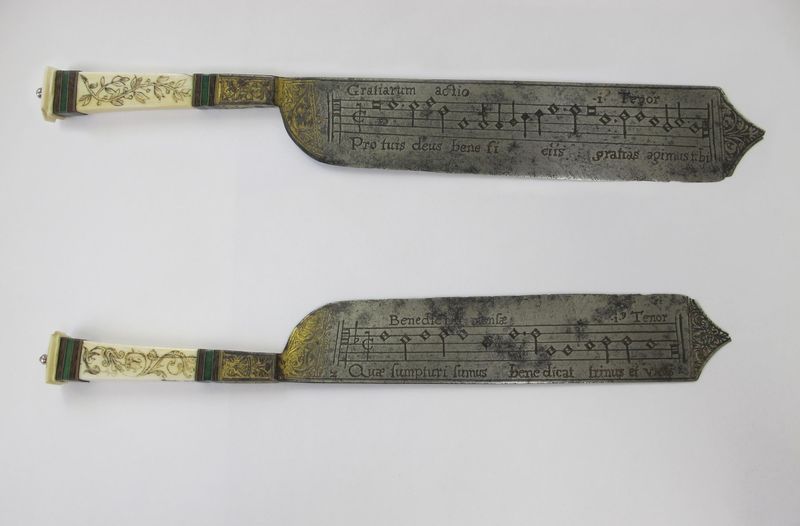
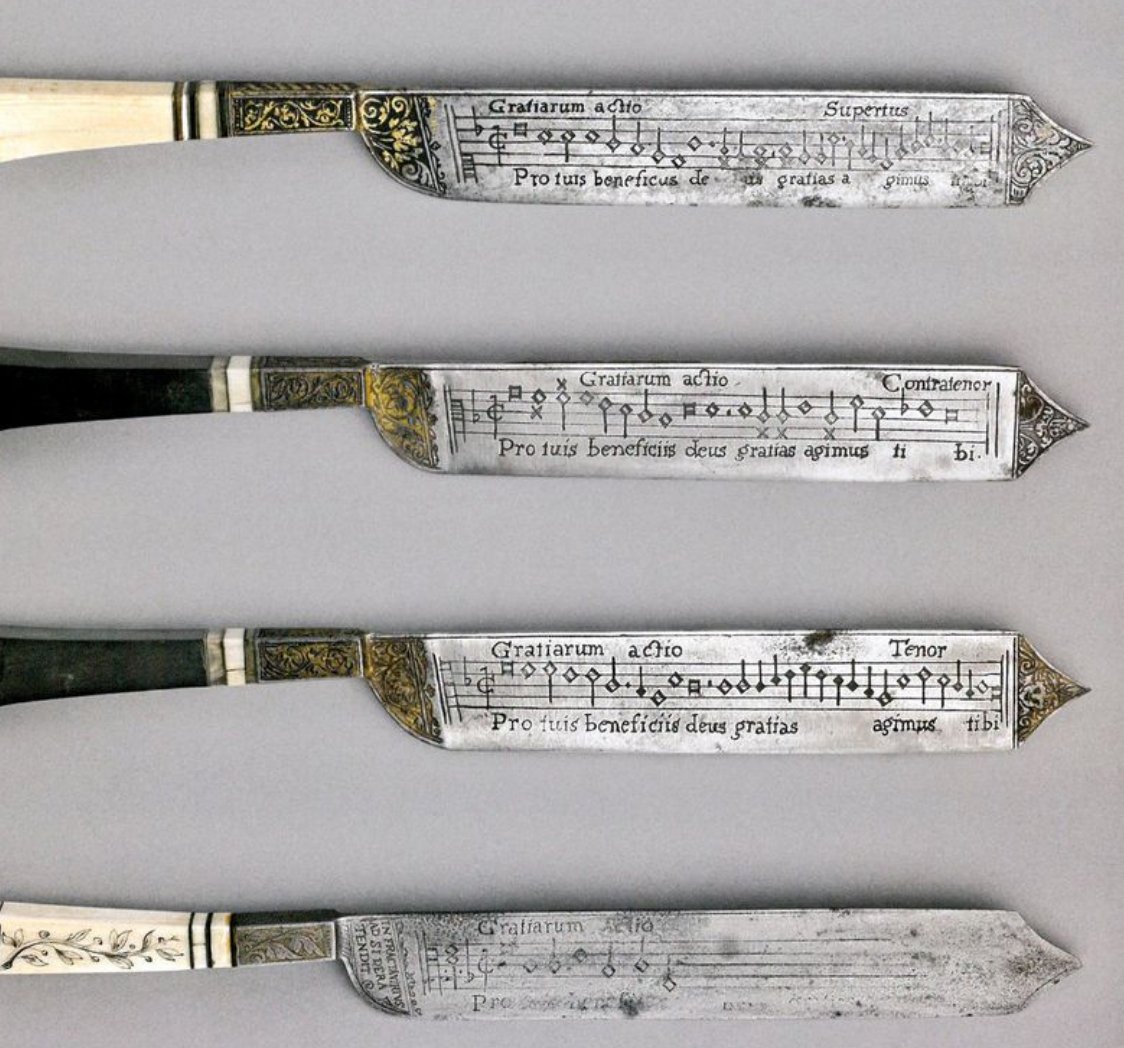
Renaissance Knives Had Music Engraved on the Blades; Now Hear the Songs Performed by Modern Singers

Image cour­tesy of The Vic­to­ria and Albert Muse­um

On any giv­en week­end, in any part of the state where I live, you can find your­self stand­ing in a hall full of knives, if that’s the kind of thing you like to do. It is a very niche kind of expe­ri­ence. Not so in some oth­er weapons expos—like the Arms and Armor gal­leries at the Met­ro­pol­i­tan Muse­um of Art, where every­one, from the most war­like to the staunchest of paci­fists, stands in awe at the intri­cate orna­men­ta­tion and incred­i­bly deft crafts­man­ship on dis­play in the suits of armor, lances, shields, and lots and lots of knives.

We must acknowl­edge in such a space that the worlds of art and of killing for fame and prof­it were nev­er very far apart dur­ing Europe’s late Medieval and Renais­sance peri­ods. Yet we encounter many sim­i­lar arti­sanal instru­ments from the time, just as fine­ly tuned, but made for far less bel­liger­ent pur­pos­es.

As Maya Cor­ry of the Fitzwilliam Muse­um in Cam­bridge—an insti­tu­tion with its own impres­sive arms and armor col­lec­tion—com­ments in the video above (at 2:30), one unusu­al kind of 16th cen­tu­ry knife meant for the table, not the bat­tle­field, offers “insight into that har­mo­nious, audi­ble aspect of fam­i­ly devo­tions,” prayer and song.

From the col­lec­tion of the Fitzwilliam Muse­um, in Cam­bridge. (Johan Oost­er­man )

These knives, which have musi­cal scores engraved in their blades, brought a table togeth­er in singing their prayers, and may have been used to carve the lamb or beef in their “strik­ing bal­ance of dec­o­ra­tive and util­i­tar­i­an func­tion.” At least his­to­ri­ans think such “nota­tion knives,” which date from the ear­ly 1500s, were used at ban­quets. “The sharp, wide steel would have been ide­al for cut­ting and serv­ing meat,” writes Eliza Grace Mar­tin at the WQXR blog, “and the accen­tu­at­ed tip would have made for a per­fect skew­er.” But as Kris­ten Kalber, cura­tor at the Vic­to­ria and Albert Muse­um, which hous­es the knives at the top of the post, tells us “din­ers in very grand feasts didn’t cut their own meat.” It’s unlike­ly they would have sung from the bloody knives held by their ser­vants.

The knives’ true pur­pose “remains a mys­tery,” Mar­tin remarks, like many “rit­u­als of the Renais­sance table.”  Vic­to­ria and Albert Muse­um cura­tor Kirstin Kennedy admits in the video above that “we are not entire­ly sure” what the “splen­did knife” she holds was used for. But we do know that each knife had a dif­fer­ent piece of music on each side, and that a set of them togeth­er con­tained dif­fer­ent har­mo­ny parts in order to turn a room­ful of din­ers into a cho­rus. One set of blades had the grace on one side, with the inscrip­tion, “the bless­ing of the table. May the three-in-one bless that which we are about to eat.” The oth­er side holds the bene­dic­tion, to be sung after the din­ner: “The say­ing of grace. We give thanks to you God for your gen­eros­i­ty.”

Com­mon enough ver­biage for any house­hold in Renais­sance Europe, but when sung, at least by a cho­rus from the Roy­al Col­lege of Music, who recre­at­ed the music and made the record­ings here, the prayers are superbly grace­ful. Above, hear one ver­sion of the Grace and Bene­dic­tion from the Vic­to­ria and Albert Muse­um knives; below, hear a sec­ond ver­sion. You can hear a cap­ti­vat­ing set of choral prayers from the Fitzwilliam Muse­um knives at WQXR’s site, record­ed for the Fitzwilliam’s “Madon­nas & Mir­a­cles” exhib­it. We are as unlike­ly now to encounter singing kitchen knives as we are to run into a horse and rid­er bear­ing 100 pounds of fine­ly-wrought wear­able steel sculp­ture. Such strange arti­facts seem to speak of a strange peo­ple who val­ued beau­ty whether carv­ing up the main course or cut­ting down their ene­mies.

via WQXR/@tedgioia

Relat­ed Con­tent:

An Ancient Philo­soph­i­cal Song Recon­struct­ed and Played for the First Time in 1,000 Years

See The Guidon­ian Hand, the Medieval Sys­tem for Read­ing Music, Get Brought Back to Life

Hear the Ear­li­est Known Piece of Poly­phon­ic Music: This Com­po­si­tion, Dat­ing Back to 900 AD, Changed West­ern Music

Josh Jones is a writer and musi­cian based in Durham, NC. Fol­low him at @jdmagness

Syd Barrett’s “Effervescing Elephant” Comes to Life in a New Retro-Style Animation

The sto­ry is well known. Syd Bar­rett, spi­ralling into depres­sion, “hal­lu­ci­na­tions, dis­or­ga­nized speech, mem­o­ry laps­es, intense mood swings, and peri­ods of cata­to­nia,” left Pink Floyd in April, 1968, before record­ing two solo albums (The Mad­cap Laughs and Bar­rett) and then fad­ing into obscu­ri­ty. Above you can watch a delight­ful, new ani­ma­tion of “Effer­vesc­ing Ele­phant,” a song Bar­rett first wrote dur­ing his teenage years and record­ed in 1970. The new “retro-style” ani­ma­tion comes from Yoann Her­vo. Below, find anoth­er ani­mat­ed take on â€śEffer­vesc­ing Ele­phant,” this one from Steve Bobinksi.

If you would like to sup­port the mis­sion of Open Cul­ture, con­sid­er mak­ing a dona­tion to our site. It’s hard to rely 100% on ads, and your con­tri­bu­tions will help us con­tin­ue pro­vid­ing the best free cul­tur­al and edu­ca­tion­al mate­ri­als to learn­ers every­where. You can con­tribute through Pay­Pal, Patre­on, and Ven­mo (@openculture). Thanks!

Relat­ed Con­tent:

Psy­che­del­ic Scenes of Pink Floyd’s Ear­ly Days with Syd Bar­rett, 1967

Short Film Syd Barrett’s First Trip Reveals the Pink Floyd Founder’s Psy­che­del­ic Exper­i­men­ta­tion (1967)

Pink Floyd Per­forms on US Tele­vi­sion for the First Time: Amer­i­can Band­stand, 1967

by | Permalink | Make a Comment ( 1 ) |

Watch the Making of a Hand-Crafted Violin, from Start to Finish, in a Beautifully-Shot Documentary

The his­to­ry of the vio­lin can be traced back to 1530, when a vio­lin-like instru­ment first appeared in Gau­den­zio Fer­rar­i’s paint­ing, “Madon­na of the Orange Tree.” By the 1550s, Andrea Amati and his descen­dants began to craft price­less vio­lins, in the form we know them today. And then fol­lowed oth­er fam­i­lies close­ly asso­ci­at­ed with the gold­en age of these stringed instruments–the Bergonzi, the Guarneri, the Stradi­vari.

Today, luthiers like Dominique Nicosia con­tin­ue the same tra­di­tion. Above you can watch Nicosia hand-craft a vio­lin at the MusĂ©e de la lutherie et de l’archè­terie français­es in north­east­ern France.

Shot by Bap­tiste Buob, the word­less doc­u­men­tary walks you through the mak­ing of a vio­lin, from start to fin­ish. A process that takes a luthi­er 3–4 weeks, work­ing full-time, gets cov­ered in 33 ele­gant min­utes. Savor each and every one of them.

Bonus: Below, watch anoth­er film by Bap­tiste Buob–this one a 28-minute film detail­ing how French bow mak­er Roch Petit­de­mange prac­tices his craft, again from begin­ning to end. A per­fect com­ple­ment.

If you would like to sup­port the mis­sion of Open Cul­ture, con­sid­er mak­ing a dona­tion to our site. It’s hard to rely 100% on ads, and your con­tri­bu­tions will help us con­tin­ue pro­vid­ing the best free cul­tur­al and edu­ca­tion­al mate­ri­als to learn­ers every­where. You can con­tribute through Pay­Pal, Patre­on, and Ven­mo (@openculture). Thanks!

Relat­ed Con­tent:

Watch Price­less 17-Cen­tu­ry Stradi­var­ius and Amati Vio­lins Get Tak­en for a Test Dri­ve by Pro­fes­sion­al Vio­lin­ists

What Does a $45 Mil­lion Vio­la Sound Like? Vio­list David Aaron Car­pen­ter Gives You a Pre­view

What Makes the Stradi­var­ius Spe­cial? It Was Designed to Sound Like a Female Sopra­no Voice, With Notes Sound­ing Like Vow­els, Says Researcher

The Art and Sci­ence of Vio­lin Mak­ing

Why Vio­lins Have F‑Holes: The Sci­ence & His­to­ry of a Remark­able Renais­sance Design

Behold the “3Dvarius,” the World’s First 3‑D Print­ed Vio­lin

by | Permalink | Make a Comment ( 1 ) |

Miles Davis Dishes Dirt on His Fellow Jazz Musicians: “The Trombone Player Should be Shot”; That Ornette is “F‑ing Up the Trumpet”

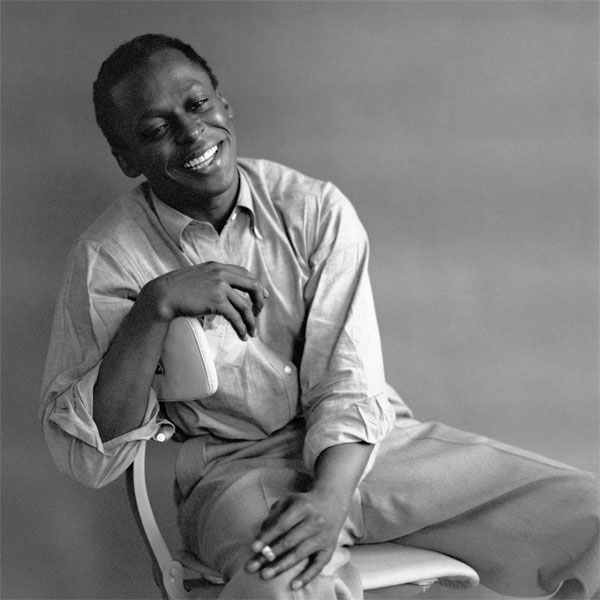
Cre­ative Com­mons pho­to by Tom Palum­bo

The wan­der­ing bards of old dis­ap­peared when the print­ing press came to town. So too have the great band­lead­ers large­ly van­ished in the age of the super pro­duc­er and jet-set­ting DJ. But for a time in the jazz and rock worlds, Olympian fig­ures like Frank Zap­pa and Miles Davis played sev­er­al impor­tant roles: find­ing and men­tor­ing the best musi­cians; mas­ter­ing old forms and mak­ing them new again; serv­ing as cura­tors, arbiters, and con­trar­i­ans… issu­ing loud pro­nounce­ments on any­thing and every­thing as unspar­ing cul­tur­al crit­ics.

Do we need tongues as sharp as Zap­pa and Davis’s in con­tem­po­rary pop cul­ture? Maybe, maybe not. They didn’t seem to enjoy much of any­thing they weren’t direct­ly involved in cre­at­ing. But man, was it fun to watch them dis­pense with the niceties and speak their bru­tal truths. We’ve heard from Zap­pa on every­thing from his loathing of the Vel­vet Under­ground to the fas­cism of the PMRC to the mor­bid­i­ty of the entire music indus­try. Davis’ obser­va­tions  were equal­ly cut­ting. “His fas­ci­nat­ing auto­bi­og­ra­phy,” writes Kirk Hamil­ton at Kotaku, “is loaded with shit-talk­ing, dis­missals, and gen­er­al acer­bic jerk­i­ness. It is fan­tas­tic.”

But you needn’t pick up Miles’ book to get an ear­ful of his acid-tongued judg­ments. We need only revis­it the series of “blind­fold tests” he did for Down­beat mag­a­zine in the fifties and six­ties. These exper­i­ments had famous musi­cians lis­ten to new music, “try to pick out who is play­ing,” then offer their off-the-cuff takes. Davis’ first ses­sion, in 1955, began char­i­ta­bly enough, though not with­out some sweep­ing crit­i­cisms. He dis­missed all of the soloists on Clif­ford Brown’s “Falling in Love with Love,” for exam­ple, except for a Swedish pianist whose name escaped him. But he gave the record four stars all the same. “The arrange­ment was pret­ty good.”

In 1958, Davis sat for his sec­ond blind­fold test, with mixed results. He near­ly oblit­er­at­ed Tiny Grimes and Cole­man Hawkins’ “A Smooth One,” giv­ing it “half a star just because… Hawkins is on it.” But in an effu­sive moment, he gush­es over John Lewis’ “Wareme­land (Dear Old Stock­holm)” with a ten star rat­ing. “All the stars are for John,” he says. By 1964, lit­tle evi­dence of that rare enthu­si­asm remained in the third blind­fold test. Davis was at that moment, writes Richard Brody, “torn apart.” In a par­tic­u­lar­ly irri­ta­ble state of mind he “flung insults at Eric Dol­phy,” Son­ny Rollins, Cecil Tay­lor, and a few more greats. His com­men­tary “per­fect­ly cap­tures his gen­er­al dis­taste,” writes Hamil­ton, “for, well, every­thing.”

Of Dolphy’s “Miss Ann” (above), he says, “nobody else could sound that bad!” Of the Jazz Cru­saders’ “All Blues”: “What’s that sup­posed to be? That ain’t noth­in’.” Of Duke Elling­ton, Max Roach and Charles Min­gus’ “Car­a­van”: “What am I sup­posed to say to that? That’s ridicu­lous. You see the way they can fuck up music?” Like anoth­er infa­mous trash-talk­er who cur­rent­ly dom­i­nates every con­ver­sa­tion with his unbe­liev­able  ego­ma­nia, Davis toss­es out the con­de­scend­ing adjec­tive “sad” at every oppor­tu­ni­ty. Clark Terry’s “Cieli­to Lin­do” is a “sad record.” Dol­phy is “a sad moth­er­fuck­er.” Cecil Taylor’s “Lena” is “some sad shit, man.”

It’s not all bad. Miles loves Stan Getz and Joao Gilberto’s “Desa­fi­nan­do,” giv­ing the record five stars and its two star play­ers the high­est of praise. Four years lat­er, his typ­i­cal mood had not improved. In 1968, Davis sat for his last blind­fold test. He tore into Ornette Cole­man, mis­tak­ing him for Archie Shepp on “Funer­al.” Of Fred­die Hubbard’s “On the Que-Tee,” he says, “I wouldn’t even put that shit on a record.” Sun Ra’s “Brainville” gets a seri­ous slam: “They must be joking—the Flori­da A&M band sounds bet­ter than that. They should record them, rather than this shit.” It ain’t all pure cat­ti­ness. Davis tends to like music that stays out of his musi­cal lane, like The Elec­tric Flag’s “Over Lovin’ You,”—a “nice record,” he says. “It’s a plea­sure to get a record like that.” Like­wise, the pro­logue from the Fifth Dimension’s Mag­ic Gar­den gets a thumbs up.

When Down­beat­’s Leonard Feath­er vis­it­ed the iras­ci­ble trum­pet play­er in his hotel room for the last test, the crit­ic “seemed shocked to find records by the Byrds, James Brown, Dionne War­wick, Aretha Franklin, Tony Ben­nett, and the Fifth Dimen­sion scat­tered around his room,” notes Davis biog­ra­ph­er John Szwed. “Miles seemed to have lost all inter­est in what was then con­sid­ered jazz.” No doubt about it, no musi­cian then or now would want to be on the receiv­ing end of his crit­i­cal barbs. Per­haps the only jazz play­er he nev­er put down was the “young savant drum­mer” Tony Williams. Oth­er­wise, “at some point or anoth­er,” writes Hamil­ton, “Davis lays low just about every oth­er lumi­nary in the his­to­ry of jazz.” But behind the vit­ri­ol lay true genius. No one was as competitive—or as demand­ing of him­self as he was of others—as Miles Davis.

Relat­ed Con­tent:

Miles Davis Opens for Neil Young and “That Sor­ry-Ass Cat” Steve Miller at The Fill­more East (1970)

Chuck Berry (RIP) Reviews Punk Songs by The Ramones, Sex Pis­tols, The Clash, Talk­ing Heads & More (1980)

Frank Zap­pa Explains the Decline of the Music Busi­ness (1987)

Josh Jones is a writer and musi­cian based in Durham, NC. Fol­low him at @jdmagness

Watch 12-Year-Old Joe Bonamassa Shred the Blues as He Opens for B.B. King in 1989

There are gui­tar play­ers, who can play a hand­ful of songs and pick out some pleas­ing riffs, and there are gui­tarists: play­ers who’ve mas­tered sev­er­al styles, have a back pock­et full of stan­dards, and tour and record for a liv­ing. And then there are gui­tar gods, god­dess­es, heroes, or what­ev­er… men and women like St. Vin­cent, Joe Satri­ani, Jeff Beck, Nan­cy Wil­son, Steve Vai, Ste­vie Ray Vaughn, Mer­le Travis, Jimi Hen­drix, and Joe Bona­mas­sa, elec­tric blues wun­derkind who, in a way, is a suc­ces­sor to some the past mas­ters. Many gui­tar heroes are child prodi­gies, and many of them had the oppor­tu­ni­ty to learn from genius musi­cians in their youth. Bona­mas­sa is no excep­tion in either case, as you can see in the video up top, in which a 12-year-old “Smokin’ Joe Bona­mas­sa” opens for B.B. King.

Bona­mas­sa start­ed play­ing at 4 and stud­ied under the late, great Wash­ing­ton, DC gui­tarist Dan­ny Gat­ton at 11, per­haps the most unsung, most nat­u­ral­ly gift­ed gui­tarist of all time. In 1989, he had the oppor­tu­ni­ty to tour with King, play­ing over 20 shows, after he had already made a name for him­self in “places like Buf­fa­lo and Scran­ton, PA,” writes For­got­ten Gui­tar.

In the video above, you can see Bona­mas­sa, 12 years old, destroy on Gatton’s sig­na­ture but­ter­scotch Tele­cast­er. It takes him and the band a cou­ple min­utes to get going, and the skep­ti­cal audi­ence begins to shuf­fle their feet impa­tient­ly. Then he pro­ceeds to blow their minds, just as he blew the minds of tele­vi­sion audi­ences who saw the news seg­ment below on Bona­mas­sa that same year.

At thir­teen, Bona­mas­sa attract­ed the nation­al atten­tion of a pro­gram called Real Life, host­ed by Jane Pauley. In the clip below, we have the plea­sure of see­ing the awk­ward mid­dle school­er in his oth­er ele­ment, the lock­er-lined hall­ways and the libraries at his day job. But the live footage of Bona­mas­sa removes any doubt about how extra­or­di­nary his abil­i­ties are.

An ear­ly child­hood affin­i­ty for the instru­ment and parental urg­ing has had a lot to do with Bonamassa’s phe­nom­e­nal skill, but as he often acknowl­edges, so has his tute­lage under some of the great­est gui­tar heroes to ever live. (See him pay trib­ute to B.B. King below.) And as every­one who plays gui­tar will acknowl­edge, what often dis­tin­guish­es gui­tar play­ers from gui­tarists and gui­tar heroes is an awful lot of prac­tice. Read Bonamassa’s top 5 prac­tice tips for gui­tarists here.

via For­got­ten Gui­tar

Relat­ed Con­tent:

B.B. King Plays Live at Sing Sing Prison in One of His Great­est Per­for­mances (1972)

Ste­vie Ray Vaugh­an Plays the Acoustic Gui­tar in Rare Footage, Let­ting Us See His Gui­tar Vir­tu­os­i­ty in Its Purest Form

Hear Iso­lat­ed Gui­tar Tracks From Some of Rock’s Great­est: Slash, Eddie Van Halen, Eric Clap­ton & More

Josh Jones is a writer and musi­cian based in Durham, NC. Fol­low him at @jdmagness

Meet Clara Rockmore, the Pioneering Electronic Musician Who First Rocked the Theremin in the Early 1920s

Fas­ci­na­tion with the theremin, the oth­er­world­ly elec­tron­ic musi­cal instru­ment devel­oped in the late 1910s and ear­ly 1920s out of Sovi­et research into prox­im­i­ty sen­sors, may nev­er cease. Some of that has to do with the unusu­al nature of its touch­less inter­face, con­sist­ing of twin anten­nas that the play­er moves their hands around in order to con­trol the tone. More of it has to do with what the few who have dared to mas­ter the theremin have achieved with it, and no dis­cus­sion of the mas­ters of the theremin can be com­plete with­out the name Clara Rock­more.

“Born in Rus­sia, March 9, 1911, Clara inher­it­ed the fam­i­ly trait of per­fect pitch and could pick out melodies on the piano at age two,” says the Nadia Reis­berg and Clara Rock­more Foun­da­tion’s biog­ra­phy. Accept­ed into the pres­ti­gious St. Peters­burg Impe­r­i­al Con­ser­va­to­ry as a vio­lin stu­dent at the unprece­dent­ed­ly young age of four, it seemed like she’d already found her path to musi­cal star­dom — until the Russ­ian Rev­o­lu­tion got in the way.

The fam­i­ly fled to Amer­i­ca, with Clara and her pianist sis­ter Nadia giv­ing con­certs to make mon­ey through­out the ardu­ous jour­ney. They arrived in New York in Decem­ber 1921, but before Clara could con­tin­ue her stud­ies there, “she devel­oped an arthrit­ic prob­lem with her bow arm, and had to give up the vio­lin.”

But all was not lost: she met Leon Theremin, inven­tor and name­sake of the theremin (pre­vi­ous­ly fea­tured here), and found her­self “fas­ci­nat­ed by the aes­thet­ic part of it, the visu­al beau­ty, the idea of play­ing in the air.” Soon devel­op­ing “her own fin­ger tech­nique, allow­ing her infi­nite­ly greater con­trol of pitch and phras­ing” and lat­er sug­gest­ing mod­i­fi­ca­tions to the instru­ment to improve its range and sen­si­tiv­i­ty, she could with­in years play clas­si­cal pieces on the theremin, mak­ing sounds no clas­si­cal com­pos­er could have imag­ined. Her per­for­mances, some­times accom­pa­nied by Nadia and some­times as a part of an orches­tra, led to the release of her first album (record­ed by Robert Moog, whose name also echoes down the halls of elec­tron­ic music), The Art of the Theremin in 1977. (Stream it on Spo­ti­fy below.)

Rock­more passed away in 1998, hav­ing been brought back into the pub­lic eye a few years ear­li­er, at least to an extent, by Steve M. Mar­t­in’s doc­u­men­tary Theremin: an Elec­tron­ic Odyssey. Just last year, count­less many more of us learned not just the word theremin but the name Clara Rock­more when Google’s front-page “doo­dle” cel­e­brat­ed her 105 birth­day. Those who clicked on it could receive a brief, game-like theremin les­son from an ani­mat­ed ver­sion of Rock­more her­self, all while hear­ing sounds pre­cise­ly engi­neered to repli­cate her dis­tinc­tive play­ing style. You can see the real Rock­more play­ing Saint-SaĂ«ns’ “The Swan” at the top of the post. Any­one who’s heard the theremin knows that no oth­er instru­ment sounds quite like it — and any­one who’s heard Rock­more play­ing the theremin knows no oth­er theremin has ever sound­ed quite like hers.

Relat­ed Con­tent:

Watch Jim­my Page Rock the Theremin, the Ear­ly Sovi­et Elec­tron­ic Instru­ment, in Some Hyp­not­ic Live Per­for­mances

Sovi­et Inven­tor Léon Theremin Shows Off the Theremin, the Ear­ly Elec­tron­ic Instru­ment That Could Be Played With­out Being Touched (1954)

See Japan­ese Musi­cians Play “Amaz­ing Grace” with 273 Theremins Placed Inside Matryosh­ka Dolls–Then Learn How They Per­form Their Mag­ic

Hear Sev­en Hours of Women Mak­ing Elec­tron­ic Music (1938–2014)

Based in Seoul, Col­in Mar­shall writes and broad­casts on cities and cul­ture. He’s at work on the book The State­less City: a Walk through 21st-Cen­tu­ry Los Ange­les, the video series The City in Cin­e­ma, the crowd­fund­ed jour­nal­ism project Where Is the City of the Future?, and the Los Ange­les Review of Books’ Korea Blog. Fol­low him on Twit­ter at @colinmarshall or on Face­book.

« Go BackMore in this category... »
Quantcast