The Crazy, Iconic Life of Nico; Andy Warhol Muse, Velvet Underground Vocalist, Enigma in Amber

There’s no deny­ing that train wrecks make great doc­u­men­tary sub­jects.

Not that Abra­ham Lin­coln doesn’t, but watch­ing some­one come unglued is a whole ‘nother sort of com­pelling. Upset­ting, even.

Docs in this genre usu­al­ly require the sub­ject to have left the build­ing in order to reach a sat­is­fy­ing con­clu­sion. The final word belongs to an assort­ment of friends, col­leagues, admir­ers, enemies…some of whom may be har­bor­ing ulte­ri­or motives.

Sure­ly Ger­man chanteuse Nico’s appear­ance fac­tored into Andy Warhol’s deci­sion to ele­vate her to Fac­to­ry super­star sta­tus. (See his video of her imme­di­ate­ly above.) She was a mod­el after all, arrest­ing enough to have appeared as her­self in La Dolce Vita. She romanced rock gods, film direc­tors, and movie stars, many of whom have their say in Susanne Ofteringer’s doc­u­men­tary Nico-Icon, view­able in its entire­ty up top.

It’s a fas­ci­nat­ing, cau­tion­ary por­trait, but as the back­seat psy­cho­analy­sis mount­ed, I found myself want­i­ng to hear from the sub­ject more.  With apolo­gies to Neil Dia­mond fans, we decid­ed  it was only fit­ting to show you Nico hav­ing her own say.

Maybe she was a night­mare. For­mer key­boardist, James Young, wrote a book about his time on tour with her. He’s in the doc­u­men­tary, of course. Aspir­ing icons, you’ve been fore­warned:

When I worked with her her looks were gone and she wasn’t this Chelsea Girl crea­ture, this per­ox­ide blonde Mar­lene Diet­rich moon god­dess vamp. She was a mid­dle aged junkie.

Nice. You reck­on he might have gone eas­i­er on her, had she been one of John Waters’ super­stars, the late Edith Massey or the still-thriv­ing Mink Stole?

For­get sticks and stones. It takes a lot more hero­in and hard liv­ing to kill the looks of any­one with her bone struc­ture.

Did Nico real­ly have such lit­tle use for anyone’s approval but her own? The art she made after her icon­ic work with the Vel­vet Under­ground con­vinces me that her embrace of ugly–what Chelsea Girls direc­tor referred to as her “stu­pid Ger­man perversity”–was sin­cere.

She’s still an enig­ma trapped in amber. She’ll be your mir­ror.

Find 200 free doc­u­men­taries in our col­lec­tion, 4,000+ Free Movies Online: Great Clas­sics, Indies, Noir, West­erns, Doc­u­men­taries & More.

Relat­ed Con­tent:

Andy Warhol Shoots “Screen Tests” of Nico, Bob Dylan & Sal­vador Dalí

Nico Sings “Chelsea Girls” in the Famous Chelsea Hotel

Lou Reed, John Cale & Nico Reunite, Play Acoustic Vel­vet Under­ground Songs on French TV, 1972

Ayun Hal­l­i­day is an author, home­school­er, and Chief Pri­ma­tol­o­gist of the East Vil­lage Inky zine. Fol­low her @AyunHalliday

French Couple Sings an Achingly Charming Version of VU’s “Femme Fatale”

Day in, day out, we rum­mage around the inter­net, look­ing for new mate­r­i­al to bring your way. I start search­ing, and I nev­er quite know where the search will take me. Some paths lead to dead ends, oth­ers to inter­est­ing side streets. Speak­ing of inter­est­ing side streets.… Yes­ter­day a trip through some old Vel­vet Under­ground mate­r­i­al (more on that tomor­row) led me to this small, unex­pect­ed delight. Above, we have Math­ieu and Pauline, two young French musi­cians, singing an aching­ly charm­ing ver­sion of VU’s “Femme Fatale”. There’s so much beau­ty and youth in it, it kin­da hurts. Below, see them sing a cov­er of Serge Gains­bourg’s “Elisa.”

Fol­low us on Face­bookTwit­ter and Google Plus and share intel­li­gent media with your friends. Or bet­ter yet, sign up for our dai­ly email and get a dai­ly dose of Open Cul­ture in your inbox.

Relat­ed Con­tent:

Andy Warhol Shoots the Only Col­or Film of The Vel­vet Under­ground Play­ing Live in Con­cert (1967)

Hear New­ly-Released Mate­r­i­al from the Lost Acetate Ver­sion of The Vel­vet Under­ground & Nico (1966)

A Sym­pho­ny of Sound (1966): Vel­vet Under­ground Impro­vis­es, Warhol Films It, Until the Cops Turn Up

by | Permalink | Make a Comment ( 4 ) |

The Jimi Hendrix Experience Plays “Hey Joe” & “Wild Thing” on The Band’s Very First Tour: Paris, 1966

Jimi Hen­drix lived fast, and I don’t just mean to evoke a rock star cliché, but to get at the speed at which his career moved. He arrived in Eng­land near the end of Sep­tem­ber, 1966, at the ten­der age of 23. In less than a month, he and his man­ag­er Chas Chan­dler had recruit­ed Noel Red­ding and Mitch Mitchell into the Expe­ri­ence and booked the band’s first gig on Octo­ber 13 across the chan­nel in Évreux, France, one of four French book­ings as a sup­port­ing act for The Black­birds and John­ny Hal­ly­day. They played most­ly cov­ers, includ­ing Howl­in’ Wolf’s “Killing Floor,” Otis Redding’s “Respect,” Don Covay’s “Mer­cy, Mer­cy,” and Chris Kenner’s “Land of a Thou­sand Dances,” and tra­di­tion­al song “Hey Joe,” soon to become the band’s first sin­gle. It’s unclear whether any­one record­ed that first gig, but we do have some audio of the fourth, on Octo­ber 18 at the Olympia in Paris. Just above hear them play “Hey Joe” from that night, and below, they do The Trog­gs’ “Wild Thing.”

Hen­drix was already a high­ly sea­soned per­former by this time, hav­ing blown minds all over the South while tour­ing with, among oth­ers, the Isley Broth­ers, Lit­tle Richard, and King Cur­tis in the ear­ly six­ties. He had been high­ly in demand as a back­ing and ses­sion play­er, but he grew tired of stand­ing in the back and want­ed to go solo. He met man­ag­er Chan­dler, then bassist for the Ani­mals, while fronting his own band in New York. Chan­dler, writes PRI, “knew just what to do with the young gui­tarist” upon their arrival in Eng­land.

Six days after the short tour through France, the band played its first offi­cial show in the UK, at the Scotch of St. James, where the Bea­t­les had a pri­vate booth. Hen­drix pro­ceed­ed to blow minds all over Eng­land, includ­ing, of course, those of all the British gui­tar greats: “Everyone’s eyes were glued to him,” remem­bers then girl­friend Kathy Etch­ing­ham, “He looked dif­fer­ent. His gui­tar play­ing was superb. Peo­ple in Eng­land hadn’t seen any­thing like it before. It was quite… out of this world.”

Peo­ple in the U.S. hadn’t seen any­thing like it either. While Hen­drix had honed many of his sig­na­ture stage tricks on the soul cir­cuit, by the time he appeared at the Mon­terey Pop Fes­ti­val in 1967, he had ful­ly come into his own as a charis­mat­ic singer as well as a “near mirac­u­lous” gui­tarist. But in his move from R&B to rock and roll, he nev­er lost his blues roots. “Hen­drix wasn’t a typ­i­cal pop or rock musi­cian,” says Hen­drix schol­ar and Eng­lish pro­fes­sor Joel Brat­tin. He “was an impro­vis­er. So, if there are 100 dif­fer­ent record­ed ver­sions of Pur­ple Haze, it’s real­ly worth lis­ten­ing to all 100 because he does some­thing dif­fer­ent each time.” The same can be said of the songs he cov­ered, and made his own. Just above, see them play “Hey Joe” at The Mar­quee for Ger­man TV show Beat Club just months before the release of their 1967 debut album. And below, Hen­drix exhorts the crowd to sing along before launch­ing into “Wild Thing,” in a Paris appear­ance one full year after the record­ing above at the Olympia. Com­pare, con­trast, get your mind blown.

Relat­ed Con­tent:

See Jimi Hendrix’s First TV Appear­ance, and His Last as a Back­ing Musi­cian (1965)

Jimi Hen­drix at Wood­stock: The Com­plete Per­for­mance in Video & Audio (1969)

Jimi Hendrix’s Final Inter­view Ani­mat­ed (1970)

Josh Jones is a writer and musi­cian based in Durham, NC. Fol­low him at @jdmagness

Handmade Animation Shows You “How To Make a 1930 Paramount Record”

The his­to­ry of Amer­i­can music—the blues, jazz, gospel, etc.—has been told, and sold, so many times over that it seems hard to jus­ti­fy yet anoth­er ret­ro­spec­tive. And yet, I for one am very hap­py to see the huge two-vol­ume box set The Rise & Fall of Para­mount Records appear on the scene. Grant­ed, I can’t cough up $800 for, in total, 1600 remas­tered dig­i­tal tracks, 12 LPs, 900 pages of artist bios, por­traits, discogra­phies, and ful­ly-restored adver­tise­ments from the Mid­west­ern musi­cal pow­er­house of the 20s and 30s. And that’s not to men­tion the beau­ti­ful, peri­od pack­ag­ing, “first-of-its-kind music and image play­er app… housed on cus­tom met­al USB dri­ve,” and more. But even those of us too skint to afford all the glo­ri­ous swag can sam­ple some of the fruit of the enor­mous labors that went into this joint pro­duc­tion of Jack White’s Third Man Records and folk gui­tar hero John Fahey’s Revenant Records (if only by proxy). And we can learn a lit­tle about the labors that went in to mak­ing the orig­i­nal records them­selves.

Paramount records label

Just above, we have a beau­ti­ful hand­made video by Kel­li Ander­son which “recre­ates the inner work­ings of the defunct Para­mount Records Fac­to­ry (where records by artists like Blind Lemon Jef­fer­son, Louis Arm­strong and Charley Pat­ton were pressed in the 1920s and ‘30s).” Made “entire­ly from paper atop a ply­wood set,” the stop-motion ani­ma­tion sim­u­lates the pro­duc­tion of Paramount’s “race records,” accom­pa­nied by Charley Patton’s 1930 “High Water Every­where, Part 1,” whose “thick, ana­log noise,” Ander­son writes on her blog, “is a reminder that some of history’s most inven­tive musi­cians were record­ed on the most infe­ri­or equip­ment of their day.” She quotes Dean Black­wood of Revenant, who writes that the Para­mount fac­to­ry “sat perched above the Mil­wau­kee Riv­er riverbed. Dirt from that riverbed was one of the key ingre­di­ents in their shel­lac dough, which was low­er on shel­lac con­tent and high­er on unex­pect­ed com­po­nents like riverbed clay, cot­ton flock, and lamp black.”

But from these hum­ble, dirty, cheap mate­ri­als came a sound like no other—one that can nev­er be dupli­cat­ed and which deserves the high­est qual­i­ty preser­va­tion. Just above, see a video trail­er for vol­ume 1 of the mas­sive box set, and read much more about this project at Third Man’s site (Vol­ume 1, Vol­ume 2).

Relat­ed Con­tent:

R. Crumb’s Heroes of Blues, Jazz & Coun­try Fea­tures 114 Illus­tra­tions of the Artist’s Favorite Musi­cians

Mud­dy Waters, Howl­in’ Wolf, Sis­ter Roset­ta Tharpe & Oth­er Amer­i­can Blues Leg­ends Per­form in the UK (1963–66)

‘Boom Boom’ and ‘Hobo Blues’: Great Per­for­mances by John Lee Hook­er

Josh Jones is a writer and musi­cian based in Durham, NC. Fol­low him at @jdmagness

Radio David Byrne: Stream Free Music Playlists Created Every Month by the Frontman of Talking Heads

640px-David_Byrne_2009.04.24_016
Pho­to cour­tesy of LivePict.com CC-BY-SA‑3.0.

David Byrne has played many roles: front­man of Talk­ing Heads, archi­tec­tur­al observ­er, com­pos­er of opera (specif­i­cal­ly opera about Imel­da Mar­cos, for­mer first lady of the Philip­pines, the coun­try from which I write this post today), enthu­si­as­tic musi­cal col­lab­o­ra­tor, urban cycling advo­cate — and that only counts the ones he’s played here in Open Cul­ture posts. (Some­day, we’ve got to write up his love of Pow­er­point.) But did you know he’s also done a free inter­net radio show, and for near­ly a decade at that? “For one or two days a month I queue up David Byrne’s Radio Sta­tion on the web and lis­ten to his two-hour loop of new, won­der­ful, deli­cious tunes,” writes Kevin Kel­ly in a Cool Tools post from 2008, just over halfway into the life of the show so far. “Rock-star Byrne is a pro­fes­sion­al musi­cal pio­neer, admirably eclec­tic in his taste, yet astute­ly dis­crim­i­nat­ing at the same time. Over years of lis­ten­ing to all kinds of music — exper­i­men­tal, indie, inter­na­tion­al, fringe, clas­si­cal, pop — he’s heard enough to make some great rec­om­men­da­tions.”

Kel­ly cites such tan­ta­liz­ing Byrnean playlists as “Ice­landic Pop,” “Opera high­lights,” “Eclec­tic Stuff,” and “African Fusion Pop.” More recent ses­sions, which can run for three hours or longer, include “South­ern Writ­ers,” “Songs of Burt Bacharach,” and “Raga Rock.” A new playlist comes out every month. You can list to his August playlist, “Cus­tom Jack­ets, Now and Then,” a cel­e­bra­tion of women “who have been taint­ed or touched by coun­try music” includ­ing Neko Case, Emmy­lou Har­ris, Gillian Welch, and Lucin­da Williams. You can also hear a brand new Novem­ber playlist on the davidbyrne.com front page, which uses a new­er audio play­er than all the pre­vi­ous install­ments. “Viva Mex­i­co Part 1” promis­es a selec­tion of artists from that vibrant coun­try who “have found ways to incor­po­rate their Mex­i­can musi­cal her­itage and cul­ture into what might be called the glob­al pop form,” result­ing not in “imi­ta­tions of North Amer­i­can or UK alt-rock” but songs that “sound like noth­ing but them­selves.” And if you can’t trust David Byrne to know musi­cal unique­ness when he hears it, who can you trust?

Relat­ed Con­tent:

David Byrne: How Archi­tec­ture Helped Music Evolve

David Byrne: From Talk­ing Heads Front­man to Lead­ing Urban Cyclist

David Byrne’s Grad­u­a­tion Speech Offers Trou­bling and Encour­ag­ing Advice for Stu­dents in the Arts

Col­in Mar­shall hosts and pro­duces Note­book on Cities and Cul­ture and writes essays on cities, lan­guage, Asia, and men’s style. He’s at work on a book about Los Ange­les, A Los Ange­les Primer. Fol­low him on Twit­ter at @colinmarshall or on Face­book.

Hear The Ramones’ Raw Demo Recordings For Their Debut Album (1975)

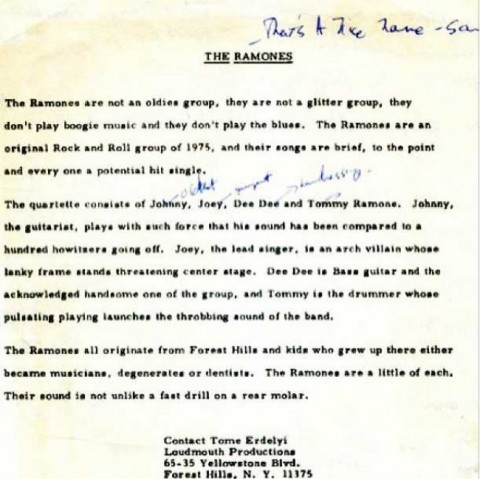
Try to imag­ine a world with­out The Ramones. Just close your eyes and try…. Okay, maybe you can do it, but I can’t. Poof! Sev­er­al dozen scuzzy punk bands that played the sound­track to my ado­les­cence sud­den­ly van­ish. The Queens, NY band’s brat­ty take on 50s girl group pop and doo wop—played at dou­ble and triple speeds, har­monies chant­ed more than sung—saved rock and roll from its bloat­ed, delu­sion­al self. They made dumb music for smart peo­ple, and if they tend­ed toward self-par­o­dy in their lat­er years, includ­ing the sad spec­ta­cle of Dee Dee’s abortive rap career, they can and should be for­giv­en.

In a dis­dain­ful swipe at sev­en­ties pro­gres­sive rock, crit­ic Robert Christ­gau once attrib­uted to Chuck Berry the words “beware of mid­dle­brows bear­ing elec­tric gui­tars.” Cat­ty, but it’s true that when bud­gets swelled and the music busi­ness boomed, rock went full-on MOR; The Ramones pro­vid­ed the per­fect anti­dote. With songs like “Now I Wan­na Sniff Some Glue” and “I Don’t Wan­na Be Learned/I Don’t Wan­na Be Tamed” they pro­claimed them­selves defi­ant low­brows and proud of it. Both tunes show up on their first demo record, above (at 10:40 and 18:22), a glo­ri­ous­ly fuzzy, lo-fi affair fea­tur­ing a few cuts that didn’t appear on their self-titled 1976 debut.

Record­ed in 1975—and some per­haps as ear­ly as ’74—these record­ings cap­ture the band at their most raw and unmedi­at­ed. The blog Ramones: Hum­ming a Sick­en­ing Tune has an excel­lent break­down of each demo song, and sums up this pre­cious arti­fact nice­ly: “[The ear­ly demo record­ings] offer a fas­ci­nat­ing alter­na­tive insight into how the even­tu­al debut album might have oth­er­wise sound­ed. Their dense, pri­mal sound reveals the sur­pris­ing amount of dilu­tion that the first record’s some­what con­cep­tu­al mix wrought upon the quar­tet’s fun­da­men­tal pow­er.”

The increas­ing pro­fes­sion­al­iza­tion of the Ramones, and their grad­ual tran­si­tion to almost-pop, has served to obscure the tru­ly hyp­not­ic, pound­ing, buz­z­saw drone they made as com­plete ama­teur unknowns. Dare I say I like their ear­ly work bet­ter? If only because they made a sound every lo-fi DIY band from my youth, includ­ing my own high school garage out­fit, strove might­i­ly to emu­late, whether they could actu­al­ly play their instru­ments or not. None of this praise is meant to dimin­ish the bril­liance of Ramones, which can­not be called a tra­di­tion­al stu­dio rock record by any stretch. Record­ed for Sire Records in sev­en days on a $6,400 bud­get, the band’s first album is as lean and scrap­py as major label prod­uct gets. But the demos above show us that they could do just as well, maybe bet­ter, with almost noth­ing but their instru­ments and sui gener­is genius. Or as blog­ger Bun­combeShi­no­la puts it: “crunchy and charged, these record­ings make the six grand spent on The Ramones seem like a dubi­ous extrav­a­gance.” Indeed.

Songs you can hear above include:

1. 53rd & 3rd Demo
2. I Wan­na Be Your Boyfriend Demo
3. Judy Is A Punk Demo
4. Now I Wan­na Sniff Some Glue Demo
5. I Can’t Be Demo
6. I Don’t Wan­na Be Learned I Don’t Wan­na Be Tamed Demo
7. You Should Nev­er Open That Door Demo

Relat­ed Con­tent:

The Ramones, a New Punk Band, Play One of Their Very First Shows at CBGB (1974)

The Ramones in Their Hey­day, Filmed “Live at CBGB,” 1977

The Ramones Play New Year’s Eve Con­cert in Lon­don, 1977

Josh Jones is a writer and musi­cian based in Durham, NC. Fol­low him at @jdmagness

Peter Gabriel’s First Solo Concert, Post-Genesis: Hear the Complete Audio Recording (1977)

After retir­ing for per­son­al rea­sons from prog-rock giants Gen­e­sis, Peter Gabriel went on to record a total of four solo records enti­tled Peter Gabriel, dis­tin­guished from each oth­er by ref­er­ences to their cov­er art (“Car,” “Scratch,” “Melt”) and an alter­nate title insist­ed upon by his label (“Secu­ri­ty”). This inten­sive focus on the epony­mous per­haps bespeaks of ego, per­haps humil­i­ty. It also maybe sig­ni­fies the decep­tive­ly straight­for­ward pre­sen­ta­tion Gabriel would offer the world—shorn of the make­up and cos­tumes of his Gen­e­sis days, he might appear to have become anoth­er earnest, bal­ladeer­ing singer/songwriter. (See our post on clas­sic Gabriel-era Gen­e­sis from yes­ter­day.) Yet that first, 1977, solo out­ing was as imag­i­na­tive, baroque, and glee­ful­ly exper­i­men­tal as his pre­vi­ous work. His expan­sive musi­cal vocab­u­lary gave the first Peter Gabriel what Stere­ogum calls “a pur­pose­ful­ly eclec­tic, any­thing-flies approach to songcraft” that some­times worked, some­times didn’t.

Some of the uneven­ness of the first solo album is due to what Gabriel him­self felt was over­pro­duc­tion on the part of Bob Ezrin, par­tic­u­lar­ly on the song “Here Comes the Flood.” He would there­after per­form this song solo on piano—re-record­ing it thus in 1990. At the top of the post, you can hear him play it as the open­er for his first ever solo show at the Capi­tol The­atre in Pas­sa­ic, New Jer­sey.

The March 5, 1977 con­cert kicked off the tour for the first Peter Gabriel, for which he assem­bled an all-star band, some of whom had fea­tured on the album, includ­ing King Crim­son gui­tarist Robert Fripp (appear­ing under the name “Dusty Rhodes” and appar­ent­ly play­ing off­stage behind the cur­tain). After “Here Comes the Flood” is “On the Air,” and just above, hear the weird, wob­bly “Mori­bund the Burg­er­meis­ter” from that night. Below, in four parts, hear the remain­ing songs in the set (see the full setlist here). Over the audio in each Youtube clip, see mon­tages of still images—some pre­sum­ably from the tour, some of album and pro­mo art­work.

While Gabriel may have ditched the flam­boy­ant onstage per­son­ae, he nev­er aban­doned his visu­al flair, as we know from those ground­break­ing music videos. Wit­ness the artis­tic pedi­gree on dis­play in the cov­er art of Peter Gabriel (Car)—a pho­to­graph by Throb­bing Gris­tle mem­ber and artist Peter “Sleazy” Christo­pher­son of Gabriel slumped in a car owned by famed album cov­er design­er Storm Thorg­er­son.

But the new Peter Gabriel, the solo artist, had—as he put it in the first album’s big sin­gle “Sols­bury Hill”—“walked right out of the machin­ery” of Gen­e­sis’ exces­sive pre­sen­ta­tion. That song, still one of his most mem­o­rable, has been cov­ered by every­one from Lou Reed to Era­sure. Speak­ing to his strength as a song­writer, the tune with per­haps the broad­est appeal is also one of his most personal—purportedly about his deci­sion to leave Gen­e­sis. Hear it live in Part 5 below.

Though he may have left behind the band that made him famous, he still pays trib­ute to them in his first solo concert’s finale. At the close of the set, below, he ends with a Gen­e­sis song, “Back in N.Y.C.,” from the last, dou­ble con­cept album he record­ed with them. It doesn’t feel out of place at all, prov­ing per­haps that, even with­out the makeup—as All­mu­sic writesPeter Gabriel was “unde­ni­ably the work of the same man behind The Lamb Lies Down on Broad­way.”

Relat­ed Con­tent:

Watch Gen­e­sis (from the Peter Gabriel-Era) Per­form in a Glo­ri­ous, 1973 Restored Con­cert Film

Peter Gabriel and Gen­e­sis Live on Bel­gian TV in 1972: The Full Show

Josh Jones is a writer and musi­cian based in Durham, NC. Fol­low him at @jdmagness

Watch Genesis (from the Peter Gabriel Era) Perform in a Glorious, 1973 Restored Concert Film

If you’re of a cer­tain vintage—let’s just say old enough to bore mil­len­ni­als to death with nos­tal­gic rants about how MTV used to play music videos, man—then you will remem­ber Peter Gabriel’s visu­al­ly stun­ning “Sledge­ham­mer” video from his award-win­ning 1986 album So. You will have had your heart­strings tugged by his “In Your Eyes” and its pitch-per­fect appro­pri­a­tion in Cameron Crowe’s Say Any­thing. And you will know—though maybe not as well as Patrick Bate­man—the sounds and images of Phil Collins’ “In the Air Tonight.” This music may not have aged as well as those of us who grew up hear­ing it (or vice ver­sa), but it left an indeli­ble impres­sion on a gen­er­a­tion and defined 80s pop cul­ture as much as Michael Jack­son or The Ban­gles.

But if you are of a slight­ly ear­li­er vin­tage, you will remem­ber these fine musi­cians for an entire­ly dif­fer­ent rea­son. Before the catchy dance-pop silli­ness of “Sus­su­dio” and “Big Time,” there was the arty, high-seri­ous­ness of Gen­e­sis, as front­ed in its hey­day by Gabriel, with Collins pound­ing the drums. Though the band per­sist­ed well into the 80s and 90s after Gabriel’s 1975 depar­ture, meld­ing funk, soul, and pop in inno­v­a­tive ways as Collins took the lead, die-hard Gen­e­sis fans swear by its clas­sic con­fig­u­ra­tion, with its sur­re­al con­cept albums and stage shows rival­ing Wall-era Pink Floyd or Bowie’s Star­dust phase. If you’re none too keen on lat­er Gen­e­sis, the slick synth-rock hit machine, and if the afore­men­tioned flam­boy­ant pro­duc­tions are your cup of Eng­lish prog-rock tea, then we have a treat for you.

Just above is a ful­ly restored con­cert film of a 1973 per­for­mance at England’s Shep­per­ton Stu­dios, “per­haps,” writes Dan­ger­ous Minds, “the sin­gle best rep­re­sen­ta­tion of Peter Gabriel-era Gen­e­sis on film.” Though the con­cert pre­cedes the band’s Gabriel-era swan song—double con­cept album, The Lamb Lies Down on Broad­way—it does show­case the strongest mate­r­i­al from their two pre­vi­ous records, Fox­trot and the tru­ly excel­lent Sell­ing Eng­land by the Pound. Promi­nent­ly on dis­play are the eccen­tric­i­ties that sharply divid­ed crit­ics and enam­ored fans: the odd time-sig­na­tures and abrupt tem­po changes, vir­tu­osic musi­cian­ship, lit­er­ate, eso­teric lyrics, and Gabriel’s the­atri­cal make­up and cos­tum­ing. The effect of it all is some­times a bit like Rush in a pro­duc­tion of God­spell, and while This is Spinal Tap took a lot of the air out of this sort of thing three decades ago, the film remains an impres­sive doc­u­ment even if the per­for­mances are hard to take entire­ly seri­ous­ly at times. See below for a full track­list:

“Watch­er of the Skies” (8:04)
“Danc­ing with the Moon­lit Knight” (9:02)
“I Know What I Like” (5:46)
“The Musi­cal Box” (11:39)
“Sup­per’s Ready” (23:59)

The sto­ry of the film’s restora­tion is intrigu­ing in its own right. The Shep­per­ton footage was res­cued by a small group who pooled resources to buy it in a New York estate sale. Since then, Youtube uploader King Lerch and his con­fr­eres have upgrad­ed the orig­i­nal restora­tion to the HD ver­sion you see above.

Relat­ed Con­tent:

Peter Gabriel and Gen­e­sis Live on Bel­gian TV in 1972: The Full Show

Watch Pink Floyd Play Live in the Ruins of Pom­peii (1972)

David Bowie’s Final Gig as Zig­gy Star­dust Doc­u­ment­ed in 1973 Con­cert Film

Josh Jones is a writer and musi­cian based in Durham, NC. Fol­low him at @jdmagness

« Go BackMore in this category... »
Quantcast