With Or Without U: Promoting a Scrabble Book to the Tune of U2

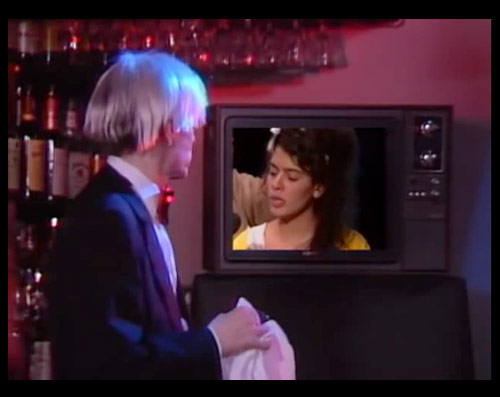
David Buk­sz­pan’s new book for Scrab­ble afi­ciona­dos is out — Is That a Word? From AA to ZZZ, the Weird and Won­der­ful Lan­guage of SCRABBLE®. And, when it comes to pro­mot­ing the book, Buk­sz­pan and his pub­lish­ers aren’t cut­ting cor­ners. In the book trail­er above, we find the author chan­nel­ing the young Bono — the Bono who came into star­dom in 1987’s wide­ly-played video for “With or With Out You” (below). Watch­ing the two clips togeth­er, you’ll see that the aes­thet­ic remains entire­ly the same. But the “You” in “With or With­out You” takes on a new mean­ing. H/T Gal­l­ey­Cat

by | Permalink | Make a Comment ( 2 ) |

Revisit the Radio Sessions and Record Collection of Groundbreaking BBC DJ John Peel

Will any radio DJ ever draw more respect than John Peel has? It seems unlike­ly, espe­cial­ly since so many fas­ci­nat­ing arti­facts of his life and career have become avail­able on the inter­net since his death in 2004. You can now explore, thanks to the John Peel Archive, Peel’s dig­i­tized office, a repos­i­to­ry of videos, sound record­ings, pho­tos and broad­casts. But for its obvi­ous pièce de résis­tance, look no fur­ther than Peel’s record col­lec­tion, made vir­tu­al for your brows­ing enjoy­ment. There you’ll find stream­able albums, pop-cul­tur­al arti­facts, and tes­ti­mo­ny from many a famous musi­cian about the vital impor­tance of John Peel to their careers. Those too young or too non-Eng­lish to have tuned in to BBC Radio 1 dur­ing Peel’s hey­day may not real­ize that this is no ordi­nary record col­lec­tion. This is a trea­sure trove of 25,000 LPs and 40,000 sin­gles assem­bled by a man who brought to the rock-enthu­si­ast pub­lic the likes of Bil­ly Bragg, Orches­tral Manoeu­vres in the Dark, The Fall, Pave­ment Buz­zcocks, Elvis Costel­lo, David Bowie… the list goes on.

Peel show­cased such artists on his famous Peel Ses­sions, which would bring these per­form­ers into the BBC’s stu­dios to lay down four or five songs. Quick­ly mixed and read­ied for broad­cast, these songs would retain a rougher, loos­er, often more impro­vi­sa­tion­al feel than the records that made these play­ers famous. Tapes of a band’s Peel Ses­sion thus imme­di­ate­ly became a hot­ly trad­ed com­mod­i­ty among that band’s fans. Today, Peel’s own fans have help­ful­ly uploaded a selec­tion of his broad­casts, offi­cial Peel Ses­sions and oth­er­wise, to the audio-shar­ing site Sound­cloud. Per­haps you’d like to hear a snap­shot of Peel’s view or the rock world on Christ­mas Eve 1979. Or how about Octo­ber 13, 2004? Maybe April 4, 1988? Then, when you’re ready — and if you use Spo­ti­fy — make a return to the John Peel Archive and pull up his Ses­sions with a favorite band, be it The Cure, Smash­ing Pump­kins, PJ Har­vey, Cin­era­ma, or whomev­er. You’ll hear why, 45 years on from his broad­cast­ing debut and eight from his pass­ing, John Peel remains the locus clas­si­cus of knowl­edge­able, dis­cern­ing rock-radio cool.

Col­in Mar­shall hosts and pro­duces Note­book on Cities and Cul­ture. Fol­low him on Twit­ter at @colinmarshall.

Fear of a Female Planet: Kim Gordon (Sonic Youth) on Why Russia and the US Need a Pussy Riot

Coura­geous fem­i­nist punk band Pussy Riot has received more pub­lic expo­sure than they ever could have hoped for since three mem­bers were arrest­ed after a Feb­ru­ary 21st per­for­mance at Moscow’s Christ the Sav­ior Cathe­dral and charged with “hooli­gan­ism.” The band formed last Sep­tem­ber in direct response to Vladimir Putin’s deci­sion to seek the pres­i­den­cy again in March 2012, and they have demon­strat­ed against his rule ever since, stag­ing con­fronta­tion­al, but non-vio­lent, protest per­for­mances in Red Square and oth­er Russ­ian land­marks. They draw much of their ener­gy and inspi­ra­tion from work­ing-class British Oi! bands of the 80s, the Amer­i­can fem­i­nist punk of the 90s Riot Grrrl move­ment, and from the stal­wart Son­ic Youth, whose three decade run has put singer/bassist Kim Gor­don in the spot­light as a musi­cian, artist, and icon.

In the video inter­view above from Explod­ed View, Gor­don offers her take on Pussy Riot’s sig­nif­i­cance and their rel­e­vance to the polit­i­cal strug­gles of women in the U.S.. Gor­don reads Pussy Riot as “dis­si­dent art… tar­get­ed as a weapon” against a sys­tem, and its author­i­tar­i­an leader, that has wide­ly sup­pressed dis­sent. Like the noto­ri­ous online col­lec­tive Anony­mous and their end­less­ly pro­lif­er­at­ing Guy Fawkes masks, Pussy Riot eschews the trap­pings of indi­vid­ual fame, wear­ing bal­a­clavas to obscure their iden­ti­ties. As they state in a Vice Mag­a­zine inter­view before the arrests, “new mem­bers can join the bunch and it does not real­ly mat­ter who takes part in the next act—there can be three of us or eight, like in our last gig on the Red Square, or even 15. Pussy Riot is a pul­sat­ing and grow­ing body.” The band keeps its focus on the body, as a grow­ing col­lec­tive or as a sym­bol of resis­tance to patri­ar­chal con­trol. One mem­ber explains the band’s name in the Vice inter­view:

A female sex organ, which is sup­posed to be receiv­ing and shape­less, sud­den­ly starts a rad­i­cal rebel­lion against the cul­tur­al order, which tries to con­stant­ly define it and show its appro­pri­ate place. Sex­ists have cer­tain ideas about how a woman should behave, and Putin, by the way, also has a cou­ple thoughts on how Rus­sians should live. Fight­ing against all that—that’s Pussy Riot.

The choice of name—which has forced dozens of news­cast­ers to say the word “pussy” with a straight face—is, in all seri­ous­ness, a point­ed ref­er­ence to what Gor­don calls a “fear of women,” which may explain what near­ly every­one who has an opin­ion on the case char­ac­ter­izes as an extreme­ly dis­pro­por­tion­ate sen­tence for the three con­vict­ed mem­bers. As Gor­don says above, “Clear­ly Putin is afraid.” Relat­ing the events in Rus­sia to the back­lash against women’s leg­isla­tive gains in this coun­try, Gor­don says, “what’s going on in Wash­ing­ton is real­ly indica­tive of that [fear],” and she won­ders “why there aren’t more men who aren’t con­cerned about it or bring­ing it up. It’s beyond a women’s issue.” Nev­er­the­less, she strong­ly implies that the U.S. is ripe for a “pussy riot”—a new punk-rock women’s movement—since “women make nat­ur­al anar­chists and rev­o­lu­tion­ar­ies because they’ve always been sec­ond-class cit­i­zens and had to claw their way up.”

Pussy Riot has cit­ed Son­ic Youth’s “Kool Thing” (above) as an influ­ence, a taunt­ing fem­i­nist retort to male come-ons that asks its tar­get “are you gonna lib­er­ate us girls / From male white cor­po­rate oppres­sion?” The unstat­ed answer is, no, he isn’t. As Gor­don implies above, and as Pussy Riot explain in an inter­view with The Guardian below, the only response to so-called “wars on women” every­where may be a “fem­i­nist whip”:

Josh Jones is a doc­tor­al can­di­date in Eng­lish at Ford­ham Uni­ver­si­ty and a co-founder and for­mer man­ag­ing edi­tor of Guer­ni­ca / A Mag­a­zine of Arts and Pol­i­tics.


Classic Ray Charles Performance: ‘What’d I Say’ Live in Paris, 1968

Late one night in 1958, Ray Charles and his band were near­ing the end of a very long per­for­mance at a dance some­where in the Mid­west when they found them­selves in a jam. They were out of mate­r­i­al. What Charles came up with that night to kill a lit­tle time would wind up mak­ing music his­to­ry.

In his mem­oir Broth­er Ray: Ray Charles’ Own Sto­ry, co-writ­ten with David Ritz, Charles describes the scene:

It was near­ly 1:00 A.M., I remem­ber, and we had played our whole book. There was noth­ing left that I could think of, so I final­ly said to the band and the Raeletts, “Lis­ten, I’m going to fool around and y’all just fol­low me.”

So I began noodling. Just a lit­tle riff which float­ed up into my head. It felt good and I kept on going. One thing led to anoth­er, and sud­den­ly I found myself singing and want­i­ng the girls to repeat after me. So I told ’em, “Now!”

Then I could feel the whole room bounc­ing and shak­ing and car­ry­ing on some­thing fierce. So I kept the thing going, tight­en­ing it up a lit­tle here, adding a dash of Latin rhythm there. When I got through, folk came up and asked where they could buy the record. “Ain’t no record,” I said, “just some­thing I made up to kill a lit­tle time.”

The song, “What’d I Say,” became a hit not only on the rhythm and blues charts, where Charles had already had some suc­cess, but on the pop charts as well. It was Charles’s first cross-over hit, and his first gold record. It was wide­ly cov­ered by oth­er artists and became Charles’s sig­na­ture song, the one he end­ed his con­certs with.

The video above was made almost exact­ly ten years after “What’d I Say” was writ­ten. It’s from one of a pair of con­certs Charles gave on Octo­ber 8 and 9, 1968, at the Salle Pleyel in Paris. The orches­tra was led by Wal­lace Dav­en­port, and the back-up singers, the Raeletts, were: Susaye Greene, Ver­lyn Fle­naugh, Bar­bara Ann Lesure, and Bar­bara Nell Ter­rault.

Despite the even­tu­al tri­umph of “What’d I Say,” the song encoun­tered strong resis­tance when it was first released by Atlantic Records in 1959. Some radio sta­tions banned it. “They said it was sug­ges­tive,” writes Charles. “Well, I agreed. I’m not one to inter­pret my own songs, but if you can’t fig­ure out ‘What I Say,’ then some­thing’s wrong. Either that, or you’re not accus­tomed to the sweet sounds of love.”

Relat­ed con­tent:

‘Willie and the Hand Jive,’ by the Late Great John­ny Otis

The Queen of Soul Con­quers Europe: Aretha Franklin in Ams­ter­dam, 1968

Goodnight Keith Moon: “The Most Inappropriate Bedtime Story Ever”

Lit­tle known fact. My first adven­ture in pub­lish­ing began as a 16 year old, when I teamed up with my best friend, anoth­er ardent fan of The Who, and togeth­er we pub­lished a fanzine ded­i­cat­ed to the British rock band. We called it Tales from The Who, a name tak­en from a boot­leg con­cert album record­ed in our native Philadel­phia dur­ing the ’70s. To get the zine going, we bor­rowed an elec­tric type­writer, cut out pic­tures, col­laged it all togeth­er, made copies on a pho­to­copy machine, then start­ed mar­ket­ing the pub­li­ca­tion in Rolling Stone mag­a­zine. When actu­al sub­scrip­tions rolled into our P.O. Box, we could­n’t believe it.

Alas, Tales from the Who did­n’t enjoy a long run. We maybe pub­lished three edi­tions, if that. But it did teach me the val­ue of Ray Brad­bury’s say­ing — “The things that you love should be things that you do.” And, years lat­er, I still get pangs of nos­tal­gia when­ev­er I encounter Who mem­o­ra­bil­ia on the web, whether it’s footage of Kei­th Moon pass­ing out at a 1973 con­cert and a fan tak­ing over, or videos that iso­late the great drum, bass, gui­tar, and vocal tracks of The Who’s anthem, “Won’t Get Fooled Again.” And you should­n’t begrudge me when I give you this: Good­night Kei­th Moon: A Par­o­dy.

If you liked Adam Mans­bach’s Go the F**k to Sleep, you’ll like­ly enjoy Clare Cross and Bruce Wor­den’s par­o­dy of the chil­dren’s clas­sic Good­night Moon. This twist­ed lit­tle rock tale can be pur­chased on Ama­zon. But it also lives freely on the web, just as it ought to. It begins:

In the great green room / There was a tele­phone / And a dead Kei­th Moon.

And Tow­shend jump­ing over the moon.

And there were four lit­tle gents piss­ing on cement.

And two bro­ken sticks and a pile of sick.

Find the rest here, and, don’t be the “cool” par­ent who actu­al­ly reads this to your kids. It is, after all, “the most inap­pro­pri­ate bed­time sto­ry ever,” accord­ing to The New York­er.

via Coudal

Relat­ed Con­tent:

Wern­er Her­zog Reads “Go the F**k to Sleep” in NYC (NSFW)

Leonard Cohen’s 1983 Musical for Canadian Television: I Am a Hotel

One of the more curi­ous pieces in Leonard Cohen’s illus­tri­ous cat­a­logue is his roman­tic half-hour musi­cal, I Am a Hotel, made for Cana­di­an tele­vi­sion in 1983. The film is essen­tial­ly a long-form music video. It was inspired by his song “The Guests,” which begins:

One by one, the guests arrive
The guests are com­ing through
The open-heart­ed many
The bro­ken-heart­ed few

The film tells the sto­ry, through music and dance, of the roman­tic yearn­ings of the hotel’s staff and guests, with Cohen appear­ing through­out the film as the detached but sym­pa­thet­ic sto­ry­teller. “It’s light enter­tain­ment,” Cohen told the Tole­do Blade in 1985. “It uses songs from my first record up through recent songs.” Those songs are:

  1. “The Guests” from the 1979 album Recent Songs.
  2. “Mem­o­ries” from the 1977 album Death of a Ladies’ Man.
  3. “The Gyp­sy’s Wife” from Recent Songs.
  4. “Chelsea Hotel #2” from the 1974 album New Skin for the Old Cer­e­mo­ny.
  5. “Suzanne” from his 1967 debut album Songs of Leonard Cohen.

I Am a Hotel was filmed at the King Edward Hotel in Toron­to over a six-day peri­od in April of 1983. It was direct­ed by Allan F. Nicholls and writ­ten by Cohen and Mark Shek­ter. The cast includ­ed ice skat­ing cham­pi­on Toller Cranston as “The Man­ag­er,” dancer and chore­o­g­ra­ph­er Anne Ditch­burn as “The Gyp­sy Wife,” and Celia Fran­ca, founder of the Nation­al Bal­let of Cana­da, as “The Diva.” The film was first broad­cast in Cana­da on May 7, 1984, and although it went on to win a Gold­en Rose at the Mon­treux Inter­na­tion­al Tele­vi­sion Fes­ti­val, it has rarely been shown since. The ver­sion above is from Dutch tele­vi­sion.

Relat­ed con­tent:

Leonard Cohen Reads “The Future”

The 2005 Doc­u­men­tary, Leonard Cohen: I’m Your Man

The 1965 Doc­u­men­tary, Ladies and Gentlemen…Mr. Leonard Cohen

The Story of Ziggy Stardust: How David Bowie Created the Character that Made Him Famous

In 1973, leg­endary direc­tor D.A. Pen­nebak­er decid­ed to film the Lon­don leg of David Bowie’s tour of Britain in sup­port of Aladdin Sane. Lit­tle did Pen­nebak­er know that Bowie, in his most famous incar­na­tion as Zig­gy Star­dust, would announce his retire­ment after the final encore. What Bowie retired, of course, was the Zig­gy persona—fans of that incar­na­tion are indebt­ed to Pen­nebak­er for catch­ing the final act in his film Zig­gy Star­dust and the Spi­ders from Mars.

Pulling footage from Pennebaker’s con­cert film, and a great deal of rare footage, and nar­rat­ed by Jarvis Cock­er, the BBC doc­u­men­tary David Bowie: The Sto­ry of Zig­gy Star­dust (above) does what Pennebaker’s film refused to; it tells a sto­ry, in typ­i­cal TV doc­u­men­tary fash­ion, of the rise of Zig­gy. And it’s not a sto­ry that many fans know. The first part of the film address­es Cocker’s ques­tion: “What made this mys­te­ri­ous extra-ter­res­tri­al one of the most influ­en­tial cul­tur­al icons of the 20th cen­tu­ry?” It turns out, quite a lot went into the mak­ing of Bowie’s 1973 break­through as Zig­gy Star­dust. In fact, says Cock­er, “at that time,” when Bowie emerged as this seem­ing­ly ful­ly-formed char­ac­ter, “we didn’t real­ize that he’d been try­ing to be suc­cess­ful for 10 years.”

Bowie had front­ed a num­ber of deriv­a­tive R&B groups in the ear­ly six­ties under his giv­en name Davy (or Davie) Jones. Since his name invit­ed con­fu­sion with the then-famous Mon­kee, he changed it in 1967 and released his first sin­gle as David Bowie, a creepy nov­el­ty record called The Laugh­ing Gnome, which was includ­ed on his first self-titled album. The album, “a strange mix of musi­cal and pop,” was inspired by light com­ic enter­tain­er Antho­ny New­ley–whose “sur­re­al com­e­dy paved the way for Mon­ty Python”–and it was a fail­ure. But, Cock­er informs us, Bowie was learn­ing from his mis­takes: “Newley’s quirky ver­sa­til­i­ty would inform the the­atri­cal DNA of Zig­gy Star­dust.” Bowie was cast­ing around, try­ing to find a per­sona to suit the latent tal­ent it seemed only he believed in. His long­time drum­mer Woody Wood­mansey says above, “he was going through a tri­al and error peri­od, and there was a lot of error.”

One break­through came when he met dancer Lind­say Kemp, who taught him mime and with whom Bowie toured in a the­ater pro­duc­tion and had an affair. Dur­ing these years of seem­ing fail­ure, Bowie learned all of the skills that he would use to con­struct Zig­gy: dance, mime, stage and tele­vi­sion act­ing, and sex­u­al expres­sion. As Kemp tells it, “he had an enor­mous sex­u­al appetite”—a cen­tral part of Zig­gy, and Bowie’s, pull. Anoth­er break­through came with 1970’s “Space Odd­i­ty, which hit #5 on the UK charts. But the album of the same name did not fare well. Filled with mean­der­ing psych-folk bal­lads more Dono­van than Queen Bitch, Space Odd­i­ty dis­ap­point­ed. Bowie had not yet found his voice, nor his muse, and he would not until he met his first wife Ang­ie, who “made him brave” and helped him put togeth­er his first glam-rock project The Hype, with gui­tarist Mick Ron­son. The hype went nowhere, but Ron­son and Bowie col­lab­o­rat­ed on his next album, The Man Who Sold the World.

Final­ly, says Bowie, after those years of near-obscu­ri­ty, “some­body did come along and grab me by the emp­ty wal­let and said, I’m Tony Defries and I’m going to make you a star.” Defries intro­duced him to Andy Warhol’s New York scene and he became some­thing of a scen­ester him­self, but he was still too shy to ful­ly inhab­it Zig­gy Star­dust, so he used a surrogate—a fash­ion design­er named Fred­die Bur­ret­ti. Bur­ret­ti was to serve as the face, while Bowie wrote and sang the songs. He called the project “Arnold Corns.” Bowie pro­duced the Arnold Corns record with many of the songs that would even­tu­al­ly make it to the Zig­gy Star­dust album—including “Moon­age Daydream”—but they were rudi­men­ta­ry and flat and the project was a fail­ure, though the idea lived on while Bowie wrote and record­ed Hunky Dory with Ron­son, Woody Wood­mansey, and Trevor Bold­er, the line­up of Zig­gy’s future Spi­ders From Mars. Just two weeks after the 1972 wrap of Hunky Dory, the ses­sions for Zig­gy Star­dust and the Spi­ders from Mars began.

Though Bowie seemed to come out of nowhere in the ear­ly 70s as an androg­y­nous young har­bin­ger of rock and roll to come, those ten years he spent work­ing to find the per­fect for­mu­la for fame had made him reflec­tive. A 2002 New York Times review­er of Pen­nebak­er’s film writes that in 1973, Bowie’s, “lyrics often find Mr. Bowie wrestling with the threats of time and aging, as if he were already, at age 26, star­ing decrepi­tude in the face. Mr. Bowie is now 55 and, super­fi­cial­ly at least, seems none the worse for wear.”

Josh Jones is a doc­tor­al can­di­date in Eng­lish at Ford­ham Uni­ver­si­ty and a co-founder and for­mer man­ag­ing edi­tor of Guer­ni­ca / A Mag­a­zine of Arts and Pol­i­tics.

Jimi Hendrix Wreaks Havoc on the Lulu Show, Gets Banned From the BBC (1969)

Can you imag­ine Jimi Hen­drix singing a duet with Lulu? Well, nei­ther could Hen­drix. So when the icon­o­clas­tic gui­tar play­er showed up with his band at the BBC stu­dios in Lon­don on Jan­u­ary 4, 1969 to appear on Hap­pen­ing for Lulu, he was hor­ri­fied to learn that the show’s pro­duc­er want­ed him to sing with the win­some star of To Sir, With Love. The plan called for The Jimi Hen­drix Expe­ri­ence to open their set with “Voodoo Child (Slight Return)” and then play their ear­ly hit “Hey Joe,” with Lulu join­ing Hen­drix onstage at the end to sing the final bars with him before segue­ing into her reg­u­lar show-clos­ing num­ber. “We cringed,” writes bassist Noel Red­ding in his mem­oir, Are You Expe­ri­enced? The Inside Sto­ry of The Jimi Hen­drix Expe­ri­ence.

Red­ding describes the scene that he, Hen­drix, and drum­mer Mitch Mitchell walked into that day as being “so straight it was only nat­ur­al that we would try to com­bat that atmos­phere by hav­ing a smoke in our dress­ing room.” He con­tin­ues:

In our haste, the lump of hash got away and slipped down the sink drain­pipe. Pan­ic! We just could­n’t do this show straight–Lulu did­n’t approve of smok­ing! She was then mar­ried to Mau­rice Gibb of the Bee Gees, whom I’d vis­it­ed and shared a smoke with. I could always tell Lulu was due home when Mau­rice start­ed throw­ing open all the win­dows. Any­way, I found a main­te­nance man and begged tools from him with the sto­ry of a lost ring. He was too help­ful, offer­ing to dis­man­tle the drain for us. It took ages to dis­suade him, but we suc­ceed­ed in our task and had a great smoke.

When it was time for The Jimi Hen­drix Expe­ri­ence to go on cam­era, they were feel­ing fair­ly loose. They tore through “Voodoo Child” and then the pro­gram cut to Lulu, who was squeezed awk­ward­ly into a chair next to an audi­ence mem­ber in the front row. “That was real­ly hot,” she said. “Yeah. Well ladies and gen­tle­men, in case you did­n’t know, Jimi and the boys won in a big Amer­i­can mag­a­zine called Bill­board the group of the year.” As Lulu spoke a loud shriek of feed­back threw her off bal­ance. Was it an acci­dent? Hen­drix, of course, was a pio­neer in the inten­tion­al use of feed­back. A bit flus­tered, she con­tin­ued: “And they’re gonna sing for you now the song that absolute­ly made them in this coun­try, and I’d love to hear them sing it: ‘Hey Joe.’ ”

The band launched into the song, but mid­way through–before Lulu had a chance to join them onstage–Hendrix sig­naled to the oth­ers to quit play­ing. “We’d like to stop play­ing this rub­bish,” he said, “and ded­i­cate a song to the Cream, regard­less of what kind of group they may be in. We ded­i­cate this to Eric Clap­ton, Gin­ger Bak­er and Jack Bruce.” With that the band veered off into an instru­men­tal ver­sion of “Sun­shine of Your Love” by the recent­ly dis­band­ed Cream. Noel Red­ding con­tin­ues the sto­ry:

This was fun for us, but pro­duc­er Stan­ley Dorf­man did­n’t take it at all well as the min­utes ticked by on his live show. Short of run­ning onto the set to stop us or pulling the plug, there was noth­ing he could do. We played past the point where Lulu might have joined us, played through the time for talk­ing at the end, played through Stan­ley tear­ing his hair, point­ing to his watch and silent­ly scream­ing at us. We played out the show. After­wards, Dorf­man refused to speak to us but the result is one of the most wide­ly used bits of film we ever did. Cer­tain­ly, it’s the most relaxed.

The stunt report­ed­ly got Hen­drix banned from the BBC–but it made rock and roll his­to­ry. Years lat­er, Elvis Costel­lo paid homage to Hen­drix’s antics when he per­formed on Sat­ur­day Night Live. You can watch The Stunt That Got Elvis Costel­lo Banned From SNL here.

Relat­ed con­tent:

‘Elec­tric Church’: The Jimi Hen­drix Expe­ri­ence Live in Stock­holm, 1969

« Go BackMore in this category... »
Quantcast