Russian Punk Band, Sentenced to Two Years in Prison for Deriding Putin, Releases New Single

Yes­ter­day was­n’t par­tic­u­lar­ly a good day for the free­dom of expres­sion in Rus­sia. On the same day that a top court banned gay pride march­es in Moscow for the next 100 years, three young mem­bers of the punk band Pussy Riot were sen­tenced to two years in a penal colony. Their crime?  Stag­ing an anti Putin protest on the altar of the Cathe­dral of Christ the Sav­ior in Moscow. Protests sup­port­ing Pussy Riot were held in 60 cities world­wide (includ­ing one in the cap­i­tal where chess cham­pi­on Gar­ry Kas­parov was beat­en by police); West­ern gov­ern­ments called the sen­tence dis­pro­por­tion­ate; and already the band has released a new sin­gle called “Putin Lights Up the Fires.” The Guardian has cre­at­ed an accom­pa­ny­ing video. Watch it above.…

via Boing­Bo­ing

by | Permalink | Make a Comment ( 9 ) |

Bob Dylan and Allen Ginsberg Visit the Grave of Jack Kerouac (1975)

Above you can watch a rare 1975 meet­ing, of sorts, of three huge­ly influ­en­tial twen­ti­eth-cen­tu­ry cul­tur­al minds: Bob Dylan, Allen Gins­berg, and — in spir­it, any­way — Jack Ker­ouac, who died six years before. This clip, though brief, would be fas­ci­nat­ing enough by itself, but Sean Wilentz pro­vides exten­sive back­sto­ry in “Pen­e­trat­ing Aether: The Beat Gen­er­a­tion and Allen Ginsberg’s Amer­i­ca,” an essay fron the New York­er. “On a crisp scar­let-ocher Novem­ber after­noon at Edson Ceme­tery in Low­ell,” as he describes it, “Bob Dylan and Allen Gins­berg vis­it­ed Kerouac’s grave, trailed by a reporter, a pho­tog­ra­ph­er, a film crew, and var­i­ous oth­ers (includ­ing the young play­wright Sam Shep­ard).” There “Gins­berg recit­ed not from Kerouac’s prose but from poet­ry out of Mex­i­co City Blues [ … ] invok­ing specters, fatigue, mor­tal­i­ty, Mex­i­co, and John Steinbeck’s box­car Amer­i­ca, while he and Dylan con­tem­plat­ed Kerouac’s head­stone.” Why that par­tic­u­lar col­lec­tion? “Some­one hand­ed me Mex­i­co City Blues in St. Paul in 1959,” Wilentz quotes Dylan as hav­ing told Gins­berg. “It blew my mind.”

In the piece, which comes adapt­ed from his book Bob Dylan in Amer­i­ca, Wilentz goes into great detail describ­ing Dylan as a link between two some­times com­pat­i­ble and some­times antag­o­nis­tic sub­cul­tures in mid­cen­tu­ry Amer­i­ca: the folk music move­ment and the Beat gen­er­a­tion.  “I came out of the wilder­ness and just nat­u­ral­ly fell in with the Beat scene, the bohemi­an, Be Bop crowd, it was all pret­ty much con­nect­ed,” Wilentz quotes Dylan as say­ing in 1985. “It was Jack Ker­ouac, Gins­berg, Cor­so, Fer­linghet­ti … I got in at the tail end of that and it was mag­ic … it had just as big an impact on me as Elvis Pres­ley.” Wilentz describes Dylan relat­ing to Ker­ouac as “a young man from a small declin­ing indus­tri­al town who had come to New York as a cul­tur­al out­sider more than twen­ty years earlier—an unknown burst­ing with ideas and whom the insid­ers pro­ceed­ed either to lion­ize or to con­demn, and, in any case, bad­ly mis­con­strue.” The Beats showed Dylan a path to main­tain­ing his cul­tur­al rel­e­vance, a trick he’s man­aged over and over again in the decades since. “Even though Dylan invent­ed him­self with­in one cur­rent of musi­cal pop­ulism that came out of the 1930s and 1940s,” Wilentz writes, “he escaped that cur­rent in the 1960s—without ever com­plete­ly reject­ing it—by embrac­ing anew some of the spir­it and imagery of the Beat generation’s entire­ly dif­fer­ent rebel­lious dis­af­fil­i­a­tion and poet­ic tran­scen­dence.”

Note: Do you want to hear Sean Wilentz read Bob Dylan in Amer­i­ca for free? (Find an audio sam­ple here.) Just head over to Audible.com and reg­is­ter for a 30-day free tri­al. You can down­load any audio­book for free. Then, when the tri­al is over, you can con­tin­ue your Audi­ble sub­scrip­tion, or can­cel it, and still keep the audio book. The choice is entire­ly yours. And, in full dis­clo­sure, let me tell you that we have a nice arrange­ment with Audi­ble. When­ev­er some­one signs up for a free tri­al, it helps sup­port Open Cul­ture.

Relat­ed con­tent:

‘The Bal­lad of the Skele­tons’: Allen Ginsberg’s 1996 Col­lab­o­ra­tion with Philip Glass and Paul McCart­ney

Allen Gins­berg Reads His Clas­sic Beat Poem, Howl

Bob Dylan and Van Mor­ri­son Sing Togeth­er in Athens, on His­toric Hill Over­look­ing the Acrop­o­lis

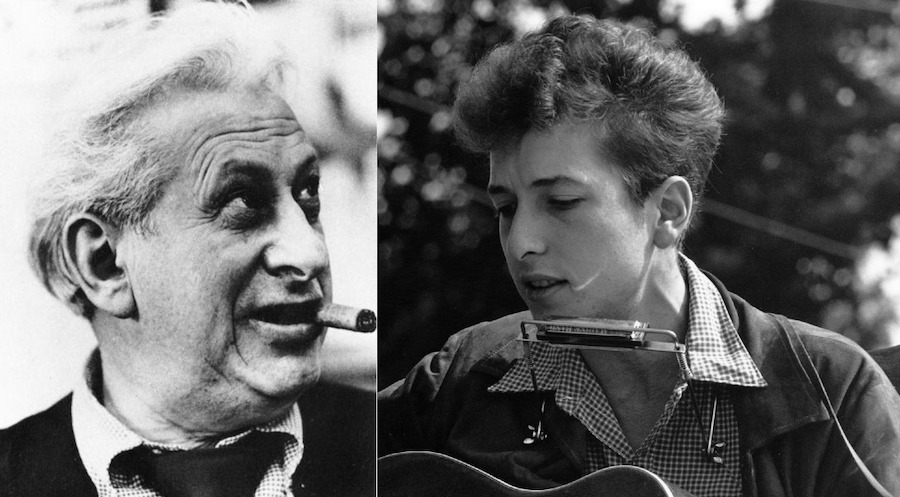
Two Leg­ends Togeth­er: A Young Bob Dylan Talks and Plays on The Studs Terkel Pro­gram, 1963

Col­in Mar­shall hosts and pro­duces Note­book on Cities and Cul­ture. Fol­low him on Twit­ter at @colinmarshall.

Mnozil Brass: Europe’s Most Imaginative Brass Band

Here’s some­thing fun. And a bit weird. Mnozil Brass is an Aus­tri­an septet that com­bines musi­cal vir­tu­os­i­ty with absur­dist the­atre. The group’s name means “noz­zle,” and refers to the Mnozil Pub, a lit­tle place near the Vien­na Col­lege of Music where the found­ing mem­bers used to get togeth­er to drink and play music. Since form­ing in 1992, and the group’s enter­tain­ing mix­ture of music and clown­ing has grown steadi­ly in pop­u­lar­i­ty. Above is a skit called “Slow Motion” from Mnozil Brass’s new DVD, Mag­ic Moments. Think of it as a sort of “spaghet­ti west­ern music recital.” There are sev­er­al more sam­ples below, to give you a sense of the luna­cy:

The William Tell Over­ture:

Lone­ly Boy:

Bohemi­an Rhap­sody:


The Joy of Making Artistic Homemade Guitars

We’ve shown you the Art of Mak­ing a Fla­men­co Gui­tar, how Fend­er elec­tric gui­tars were made way back in 1959, and what goes into build­ing the Hofn­er bass gui­tar made famous by Paul McCart­ney. Next up: a mini doc­u­men­tary on Mark Nilsen and his artis­tic, home­made gui­tars. Much like Dan Philips, an artist who builds sus­tain­able homes out of every­day mate­ri­als (see our post from yes­ter­day), Nilsen makes instru­ments with mate­ri­als found in our local envi­ron­ment. It is all part of his belief that if you make your own gui­tars, you’ll make your­self a bet­ter musi­cian.

This video comes from Gui­tarka­di­a’s mini doc­u­men­tary series avail­able here.

via The Atlantic

Relat­ed Con­tent:

The Sto­ry of the Gui­tar


by | Permalink | Make a Comment ( 1 ) |

“Glitch” Artists Compose with Software Crashes and Corrupted Files

A the­o­ry: one of the dri­vers of our cur­rent wave of nostalgia—lo-fi ana­log hiss and pop in music and ready­made vin­tage fil­ters in dig­i­tal photography—is the loss of imper­fec­tion. Increas­ing­ly pow­er­ful tech­nolo­gies ren­der sound and vision too slick­ly pris­tine, glossy, hyper­re­al, and thus imper­son­al and alien. The lat­est episode of PBS Arts’ “Off Book” series (above) fea­tures a trend toward dis­rupt­ing dig­i­tal over­pro­duc­tion by delib­er­ate­ly exploit­ing the weak­ness­es in new tech­nolo­gies. Glitch artists makes use of “nat­u­ral­ly occur­ring” (so to speak) cor­rup­tions of soft­ware, or cre­ate their own cor­rup­tions in a process called “data­bend­ing”—open­ing images as text files, for exam­ple, and adding and/or delet­ing infor­ma­tion from the image.

Unlike punk rock, to which glitch is com­pared by one of the artists above, some glitch art requires a fair­ly sophis­ti­cat­ed under­stand­ing of dig­i­tal tech­nolo­gies. For exam­ple, video artist Anton Mari­ni describes how he writes his own soft­ware to pro­duce glitch effects. But since vir­tu­al­ly any­one can access a pc and stan­dard text and image-edit­ing soft­ware, it remains a fair­ly demo­c­ra­t­ic aes­thet­ic, sim­i­lar to the bed­room tech­nolo­gies that enable almost any­one to pro­duce and dis­trib­ute their own musi­cal com­po­si­tions. There are sites offer­ing tuto­ri­als on how to cre­ate your own glitch art and even a Flickr account called Glitch­bot that will auto­mat­i­cal­ly gen­er­ate glitch images for you, like Hip­sta­mat­ic or Insta­gram will con­vert your care­less snap­shots into intrigu­ing vin­tage arti­facts. Sound too easy? Maybe, but so was Duchamp’s uri­nal. Con­text, as always, mat­ters, and whether glitch art is “art” may ulti­mate­ly become a his­tor­i­cal ques­tion. At the moment, glitch images, video and music offer a way to human­ize all-too-inhu­man cor­po­rate prod­ucts and tech­nolo­gies.

Josh Jones is a doc­tor­al can­di­date in Eng­lish at Ford­ham Uni­ver­si­ty and a co-founder and for­mer man­ag­ing edi­tor of Guer­ni­ca / A Mag­a­zine of Arts and Pol­i­tics.

Django Reinhardt and the Inspiring Story Behind His Guitar Technique

When you hear the gui­tar play­ing of Djan­go Rein­hardt, with its flu­id phras­ing and light­ning-fast arpeg­gios, it’s incred­i­ble to think that he had only two good fin­gers on his left hand.

When Rein­hardt was 18 years old he was bad­ly burned in a fire. It was late on the night of Novem­ber 2, 1928. The young gui­tarist was at home with his com­mon-law wife, Bel­la, in their gyp­sy car­a­van on the edge of Paris. To scrape togeth­er a lit­tle mon­ey, Bel­la had been mak­ing arti­fi­cial flow­ers out of paper and high­ly flam­ma­ble cel­lu­loid. When Djan­go acci­dent­ly knocked over a can­dle, the mate­r­i­al from the flow­ers ignit­ed and the trail­er was quick­ly engulfed in flames.

They both sur­vived, but Djan­go would spend the next 18 months recov­er­ing from ter­ri­ble injuries. When a doc­tor expressed inter­est in ampu­tat­ing his right leg, Rein­hardt left the hos­pi­tal and moved into a nurs­ing home, where he even­tu­al­ly got bet­ter. The two small­est fin­gers on his left hand–crucial to a gui­tarist for artic­u­lat­ing notes on the fretboard–were par­a­lyzed. A less­er musi­cian would have giv­en up, but Rein­hardt over­came the lim­i­ta­tion by invent­ing his own method of play­ing. With his two good fin­gers he moved rapid­ly up and down the gui­tar neck while mak­ing very lim­it­ed use of his two shriv­eled fin­gers on chords, dou­ble-stops and triple-stops. He rose above his hand­i­cap to cre­ate one of the most dis­tinc­tive instru­men­tal styles in 20th cen­tu­ry music.

For a rare look at Rein­hardt’s amaz­ing tech­nique, watch the excerpt above from the 1938 short film, Jazz “Hot.”  It fea­tures Rein­hardt with vio­lin­ist Stéphane Grap­pel­li and their band, Quin­tette du Hot Club de France, play­ing a swing ver­sion of the pop­u­lar song “J’at­tendrai.” (It means “I will wait.”)

If you would like to sign up for Open Culture’s free email newslet­ter, please find it here. It’s a great way to see our new posts, all bun­dled in one email, each day.

If you would like to sup­port the mis­sion of Open Cul­ture, con­sid­er mak­ing a dona­tion to our site. It’s hard to rely 100% on ads, and your con­tri­bu­tions will help us con­tin­ue pro­vid­ing the best free cul­tur­al and edu­ca­tion­al mate­ri­als to learn­ers every­where. You can con­tribute through Pay­Pal, Patre­on, and Ven­mo (@openculture). Thanks!

The Story of the Guitar: The Complete Three-Part Documentary

It start­ed back in the 1950s. Bill Haley and Elvis burst onto the scene. Rock ‘n’ roll was born. The gui­tar took cen­ter stage, and it nev­er left. How the gui­tar came to “dom­i­nate the sound­track of our lives” is the sub­ject of The Sto­ry of the Gui­tar, a three part doc­u­men­tary nar­rat­ed by the BBC’s cre­ative direc­tor Alan Yen­tob.

The sto­ry of the gui­tar is, of course, a big one. The instru­ment, and its stringed pre­cur­sors, goes way back — all the way to the Greeks. And the influ­ence of the gui­tar can be felt far and wide. It plays a lead role in clas­si­cal music in Spain (and Chi­na); jazz in France (think Djan­go); the blues in the Mis­sis­sip­pi Delta, and beyond. Yen­tob paints the big­ger pic­ture for you in the first seg­ment, “In the Begin­ning” (above). Part II (Out of the Fry­ing Pan) focus­es on the big moment when the gui­tar went elec­tric. And Part III gets you up close and per­son­al with the mas­ters of the elec­tric gui­tar. The doc­u­men­tary fea­tures inter­views with Pink Floy­d’s David Gilmour, The Who’s Pete Town­shend, Iggy Pop, and The Edge from U2 (Part 1Part 2 and Part 3), to name a few. We’ve got more great gui­tar-relat­ed resources list­ed below. H/T Men­tal Floss

Part 2 — Out of the Fry­ing Pan

Part 3 — This Time it’s Per­son­al

Relat­ed Con­tent:

A His­to­ry of Rock ‘n’ Roll in 100 Riffs

Here Comes The Sun: The Lost Gui­tar Solo by George Har­ri­son

Mak­ing Fend­er Gui­tars, Then (1959) and Now (2012)

Jim­my Page Tells the Sto­ry of “Kash­mir”

Bob Dylan’s (In)Famous Elec­tric Gui­tar From the New­port Folk Fes­ti­val Dis­cov­ered?

by | Permalink | Make a Comment ( 4 ) |

Watch Tom Waits’ Classic Appearance on Australian TV, 1979

Here’s a rare gem from the video vault: Tom Waits on the Aus­tralian TV pro­gram, The Don Lane Show, in 1979.

Don Lane was an Amer­i­can night­club per­former who some­how man­aged to become the John­ny Car­son of Aus­tralia. The Don Lane Show ran from 1975 to 1983, and fea­tured com­e­dy, inter­views and musi­cal per­for­mances by a vari­ety of inter­na­tion­al stars who were tour­ing Aus­tralia, includ­ing Elton John, Ste­vie Won­der, Jer­ry Lee Lewis and, on more than one occa­sion, Tom Waits.

On his first appear­ance in 1979, the 29-year-old Waits gave a dis­joint­ed, com­ic inter­view (above), before going to the piano (below) to per­form “On the Nick­el,” which he wrote for the sound­track of the 1980 film of the same name. “The Nick­el” refers to the skid row area of Los Ange­les, along 5th Street. The song was includ­ed on Wait­s’s 1980 album, Heartat­tack and VineAus­tralian TV view­ers appar­ent­ly did­n’t know what to think about the mum­bling, chain-smok­ing singer. When Waits returned in 1981, Lane said, “The last time Tom Waits appeared with us, his unusu­al style and sense of humor lit up our switch­board for about an hour after the show. And not all with com­pli­ments, either.”

Relat­ed Con­tent:

A Brief His­to­ry of John Baldessari, Nar­rat­ed by Tom Waits

Tom Waits Reads Charles Bukows­ki

Tom Waits and David Let­ter­man: An Amer­i­can Tele­vi­sion Tra­di­tion

« Go BackMore in this category... »
Quantcast