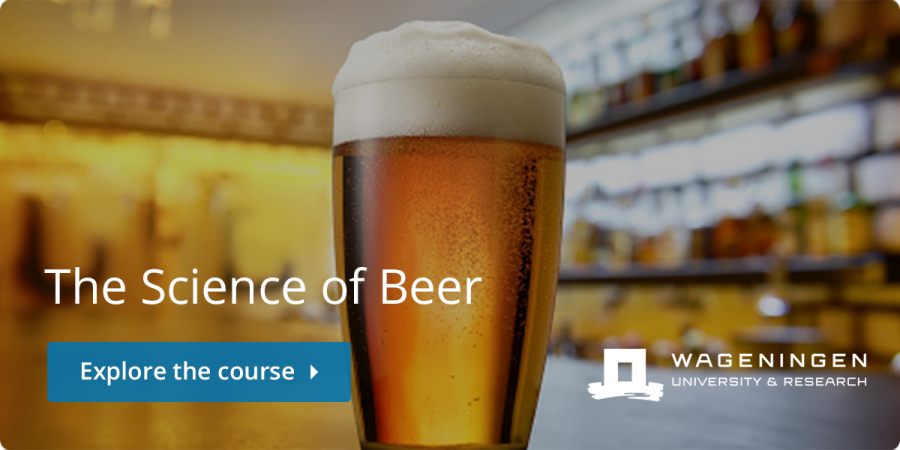
The Science of Beer: A New Free Online Course Promises to Enhance Your Appreciation of the Timeless Beverage

The brew­ing of beer is as old as agri­cul­ture, which is to say as old as set­tled civ­i­liza­tion. The old­est recipe we know of dates to 1800 B.C. Over cen­turies, beer moved up and down the class lad­der depend­ing on its pri­ma­ry con­sumers. Medieval monks brewed many fine vari­eties and were renowned for their tech­nique. Beer descend­ed into pubs and row­dy beer halls, whet­ting the whis­tles not only of farm­ers, sol­diers, sailors, and pil­grims, but also of burghers and a bud­ding indus­tri­al work­force. Dur­ing the age of mod­ern empire, beer became, on both sides of the Atlantic, the bev­er­age of work­ing-class sports fans in bleach­ers and La-Z-Boys.

A craft beer Renais­sance at the end of last cen­tu­ry brought back a monk­ish mys­tique to this most ancient bev­er­age, turn­ing beer into wine, so to speak, with com­pa­ra­ble lev­els of con­nois­seur­ship. Beer bars became gal­leries of fine pol­ished brass, pun­gent, fruity aro­mas, dark and seri­ous wood appoint­ments. Craft beer is fun—with its quirky names and labels—it is also intim­i­dat­ing, in the breadth of com­pli­cat­ed con­coc­tions on offer. (Hip­sters and penu­ri­ous rev­el­ers revolt­ed, made a fetish of Pab­st Blue Rib­bon, Milwaukee’s Best, and ye olde malt liquor.)

“Has craft beer peaked?” won­ders The Wash­ing­ton Post’s Rachel Siegel. You can prob­a­bly guess from the ques­tion that most trends point to “yes.” But as long as there is wheat, bar­ley, and hops, we will have beer, no mat­ter who is drink­ing it and where. One last­ing effect of beer’s high­brow few decades remains: a pop­u­lar schol­ar­ly appre­ci­a­tion for its cul­ture and com­po­si­tion. You can study the typog­ra­phy of beer, for exam­ple, as Print mag­a­zine has done in recent years. A new online course applies the tools of empir­i­cal and soci­o­log­i­cal research to beer drink­ing.

“The Sci­ence of Beer,” taught by a cadre of stu­dent teach­ers from Wagenin­gen Uni­ver­si­ty in Hol­land, explores “how [beer is] made, the raw mate­ri­als used, its sup­ply chain, how it’s mar­ket­ed and the effect of beer con­sump­tion on your body.” (This last point—in a world turned against sug­ar, carbs, and gluten—being part­ly the rea­son for craft beer’s decline.) Should your voice qua­ver when you approach the upscale reclaimed wal­nut bar and sur­vey unfa­mil­iar lagers, ales, stouts, bocks, porters, and hefeweizens… should you hes­i­tate at Whole Foods when faced with a wall of bev­er­ages with names like incan­ta­tions, this free class may set you at ease.

Not only will you learn about the dif­fer­ent types of beer, but “after this course, tast­ing a beer will be an entire­ly new sen­sa­tion: you will enjoy it even more since you will bet­ter under­stand what’s inside your drink.” Enroll­ment for the 5‑week course began this past Mon­day and the class is cur­rent­ly open and free. (Make sure you select the “Audit” option for the free ver­sion of the course.) You should expect to devote 2 to 4 hours per week to “The Sci­ence of Beer.” Please, study respon­si­bly.

Relat­ed Con­tent:

Dis­cov­er the Old­est Beer Recipe in His­to­ry From Ancient Sume­ria, 1800 B.C.

The First Known Pho­to­graph of Peo­ple Shar­ing a Beer (1843)

The Art and Sci­ence of Beer

Josh Jones is a writer and musi­cian based in Durham, NC. Fol­low him at @jdmagness

Martin Scorsese Teaches His First Online Course on Filmmaking: Features 30 Video Lessons

FYI: If you sign up for a Mas­ter­Class course by click­ing on the affil­i­ate links in this post, Open Cul­ture will receive a small fee that helps sup­port our oper­a­tion.

Last Sep­tem­ber, online edu­ca­tion com­pa­ny Mas­ter­class announced that they’d soon launch Mar­tin Scors­ese’s very first online course, “Mar­tin Scors­ese Teach­es Film­mak­ing.” Now it has opened for enroll­ment, at the usu­al Mas­ter­class cost of $180 for an all-access pass to the 85 cours­es on the site, a list that also includes Spike Lee and Wern­er Her­zog’s takes on the same sub­ject. For a com­pa­ny that has quick­ly made its name by enlist­ing famous instruc­tors, they could hard­ly do bet­ter than Scors­ese, whose own name has become a byword for auteurism in late 20th- and ear­ly 21st-cen­tu­ry Amer­i­can cin­e­ma.

“If you’re intrigued by moviemak­ing as a career, this isn’t the class for you,” Scors­ese says in the class’ trail­er above. “But if you need to make movies, if you feel like you can’t rest until you’ve told this par­tic­u­lar sto­ry that you’re burn­ing to tell, then I could be speak­ing to you.” Its 30 lessons, which cov­er every­thing from his life and edu­ca­tion to devel­op­ing a style to cast­ing actors to shoot­ing on a low bud­get, might also appeal to those who sim­ply love Scors­ese’s movies.

He illus­trates his instruc­tion­al points by draw­ing on his own for­mi­da­ble fil­mog­ra­phy and the vast expe­ri­ence that has gone into it (includ­ing the phys­i­cal ill­ness that descends upon him before view­ing each rough cut), a process that no doubt pro­vides count­less insights into what makes his work so pow­er­ful.

But the cur­ricu­lum also goes well beyond Scors­ese-on-Scors­ese, as one might expect from a man unabashed­ly dri­ven by a pure love of cin­e­ma — of, seem­ing­ly, all of cin­e­ma. In the final sec­tion of the course, Scors­ese breaks down scenes from Stan­ley Kubrick­’s Bar­ry Lyn­don, Jacques Tourneur’s Out of the Past, François Truf­faut’s Jules and Jim, Alfred Hitch­cock­’s Ver­ti­go, and Fed­eri­co Fellini’s 8 1/2, exam­in­ing the tech­ni­cal ele­ments that fill them with their dis­tinc­tive mag­ic. His enthu­si­asm has sure­ly inspired almost as many of his fans to go into film­mak­ing as has his work itself, but even those who lack the burn­ing desire to tell cin­e­mat­ic sto­ries them­selves know that if there’s any view­ing expe­ri­ence as com­pelling as watch­ing a Scors­ese movie, it’s watch­ing Scors­ese talk about movies. Learn more about Scors­ese’s course here.

You can take this class by sign­ing up for a Mas­ter­Class’ All Access Pass. The All Access Pass will give you instant access to this course and 85 oth­ers for a 12-month peri­od.

Relat­ed Con­tent:

Mar­tin Scors­ese Cre­ates a List of 39 Essen­tial For­eign Films for a Young Film­mak­er

Mar­tin Scors­ese Makes a List of 85 Films Every Aspir­ing Film­mak­er Needs to See

Spike Lee to Teach an Online Course on Film­mak­ing; Get Ready By Watch­ing His List of 95 Essen­tial Films

Aaron Sorkin, Cre­ator of The West Wing & The Social Net­work, Teach­es Screen­writ­ing in an Online Class

Great Film­mak­ers Offer Advice to Young Direc­tors: Taran­ti­no, Her­zog, Cop­po­la, Scors­ese, Ander­son, Felli­ni & More

Wern­er Her­zog Teach­es His First Online Course on Film­mak­ing

Based in Seoul, Col­in Mar­shall writes and broad­casts on cities and cul­ture. His projects include the book The State­less City: a Walk through 21st-Cen­tu­ry Los Ange­les and the video series The City in Cin­e­ma. Fol­low him on Twit­ter at @colinmarshall or on Face­book.

UC Berkeley Is Offering Data Science, Its Fastest-Growing Course Ever, for Free Online

It’s worth pass­ing along a mes­sage from UC Berke­ley. Accord­ing to its news ser­vice, the “fastest-grow­ing course in UC Berkeley’s his­to­ry — Foun­da­tions of Data Sci­ence [aka Data 8X] — is being offered free online this spring for the first time through the campus’s online edu­ca­tion hub, edX.” More than 1,000 stu­dents are now tak­ing the course each semes­ter at the uni­ver­si­ty.

Designed for stu­dents who have not pre­vi­ous­ly tak­en sta­tis­tics or com­put­er sci­ence cours­es, Foun­da­tions of Data Sci­ence will teach you in a three-course sequence “how to com­bine data with Python pro­gram­ming skills to ask ques­tions and explore prob­lems that you encounter in any field of study, in a future job, and even in every­day life.”

When you sign up for the cours­es, you will be giv­en two options: 1) the abil­i­ty to “audit” the cours­es for free, or 2) pay to take the cours­es and receive a pro­fes­sion­al cer­tifi­cate. If you’re look­ing for free, the audit option is your friend.

If you would like to sign up for Open Culture’s free email newslet­ter, please find it here. It’s a great way to see our new posts, all bun­dled in one email, each day.

If you would like to sup­port the mis­sion of Open Cul­ture, con­sid­er mak­ing a dona­tion to our site. It’s hard to rely 100% on ads, and your con­tri­bu­tions will help us con­tin­ue pro­vid­ing the best free cul­tur­al and edu­ca­tion­al mate­ri­als to learn­ers every­where. You can con­tribute through Pay­Pal, Patre­on, and Ven­mo (@openculture). Thanks!

Relat­ed Con­tent:

Intro­duc­tion to Python, Data Sci­ence & Com­pu­ta­tion­al Think­ing: Free Online Cours­es from MIT

A Free Course on Machine Learn­ing & Data Sci­ence from Cal­tech

Algo­rithms for Big Data: A Free Course from Har­vard

by | Permalink | Make a Comment ( 3 ) |

Philosophy for Beginners: A Free Introductory Course from Oxford University

Phi­los­o­phy does­n’t have to be daunt­ing. Thanks to the Con­tin­u­ing Edu­ca­tion pro­gram at Oxford Uni­ver­si­ty, you can now ease into philo­soph­i­cal think­ing by lis­ten­ing to five lec­tures col­lec­tive­ly called Phi­los­o­phy for Begin­ners. (The video above is admit­ted­ly grainy, so you could always explore the audio options avail­able on iTunes or this Oxford web­site.) Taught by Mar­i­anne Tal­bot, Lec­ture 1 starts with a “Romp Through the His­to­ry of Phi­los­o­phy” and moves in a brief hour from Ancient Greece to the present. Sub­se­quent lec­tures (usu­al­ly run­ning about 90 min­utes) cov­er the fol­low­ing top­ics: log­ic, ethics, pol­i­tics, meta­physics, epis­te­mol­o­gy, and lan­guage.

Lec­ture One: A Romp Through the His­to­ry of Phi­los­o­phy from the Pre-Socrat­ics to the present day

Lec­ture Two: The Philo­soph­i­cal Method: Log­ic and Argu­ment

Lec­ture Three: Ethics and Pol­i­tics

Lec­ture Four: Meta­physics and Epis­te­mol­o­gy

Lec­ture Five: Phi­los­o­phy of Lan­guage and Mind

You can find more cours­es by Tal­bot in our col­lec­tion of Free Online Phi­los­o­phy Cours­es, a sub­set of our meta col­lec­tion, 1,700 Free Online Cours­es from Top Uni­ver­si­ties.

If you would like to sign up for Open Culture’s free email newslet­ter, please find it here. It’s a great way to see our new posts, all bun­dled in one email, each day.

If you would like to sup­port the mis­sion of Open Cul­ture, con­sid­er mak­ing a dona­tion to our site. It’s hard to rely 100% on ads, and your con­tri­bu­tions will help us con­tin­ue pro­vid­ing the best free cul­tur­al and edu­ca­tion­al mate­ri­als to learn­ers every­where. You can con­tribute through Pay­Pal, Patre­on, and Ven­mo (@openculture). Thanks!

Relat­ed Con­tent:

Oxford’s Free Intro­duc­tion to Phi­los­o­phy: Stream 41 Lec­tures

Oxford’s Free Course A Romp Through Ethics for Com­plete Begin­ners Will Teach You Right from Wrong

Down­load 100 Free Online Phi­los­o­phy Cours­es & Start Liv­ing the Exam­ined Life

A His­to­ry of Phi­los­o­phy in 81 Video Lec­tures: From Ancient Greece to Mod­ern Times

The Entire Archives of Rad­i­cal Phi­los­o­phy Go Online: Read Essays by Michel Fou­cault, Alain Badiou, Judith But­ler & More (1972–2018)

Death: A Free Phi­los­o­phy Course from Yale

135 Free Phi­los­o­phy eBooks

by | Permalink | Make a Comment ( 10 ) |

Spike Lee Teaching an Online Course on Independent Filmmaking: The Course Is Now Officially Live

FYI: If you sign up for a Mas­ter­Class course by click­ing on the affil­i­ate links in this post, Open Cul­ture will receive a small fee that helps sup­port our oper­a­tion.

When Spike Lee makes a movie, peo­ple talk about it. Peo­ple talked in 1986 when he made the black-and-white indie com­e­dy She’s Got­ta Have It; they talked even more when he came out with Do the Right Thing a few years lat­er; they talked, with sharply divid­ed opin­ion, about his most recent pic­ture, the crime-themed musi­cal Chi-Raq; and they’re already talk­ing about his upcom­ing Black Klans­man, and not just because of the title. Lee has man­aged to remain cul­tur­al­ly and artis­ti­cal­ly rel­e­vant through­out a career of more than thir­ty years and count­ing, and his new online course at Mas­ter­class just might let us in on how he’s done it.

“When you’re an inde­pen­dent film­mak­er, and mak­ing films out­side Hol­ly­wood, that’s hard,” says the long Brook­lyn-based Lee in the trail­er for the course above. “You have to pray on bend­ed knee at the church of cin­e­ma.” But even as an aspir­ing auteur with a pock­et-change bud­get — Lee remem­bers well when he “was a cater­er, the pro­duc­er, the direc­tor, the screen­writer, act­ed in it, and I was the first AD” on his first fea­ture â€” you already pos­sess “tools that can help you tell a sto­ry”: height­en­ing dynam­ic cam­er­a­work to height­en the emo­tions, for instance, or writ­ing char­ac­ters with strong beliefs to inten­si­fy the con­flicts of the sto­ry. He used such tech­niques when he start­ed out, and he still uses them today.

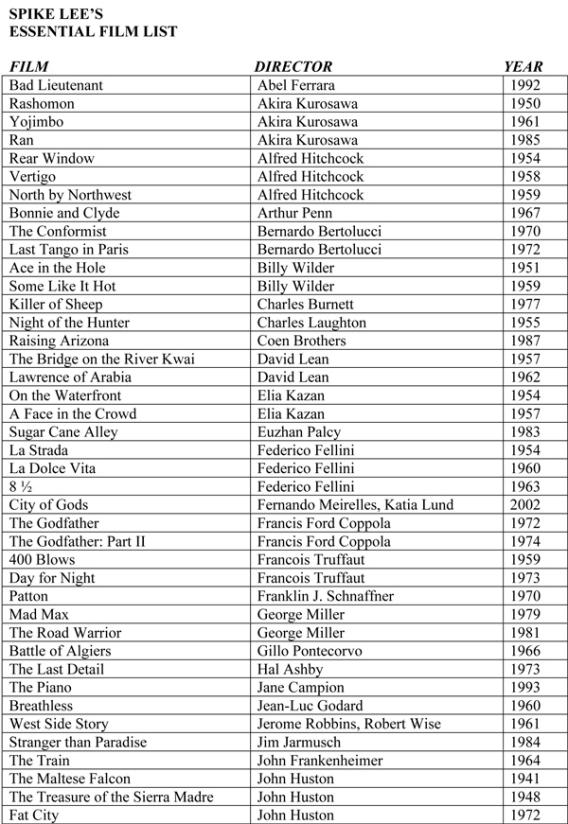
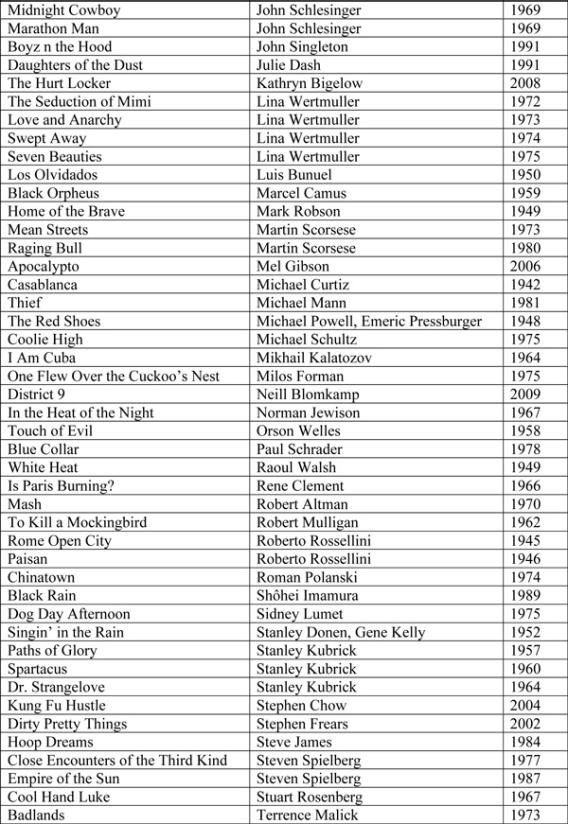
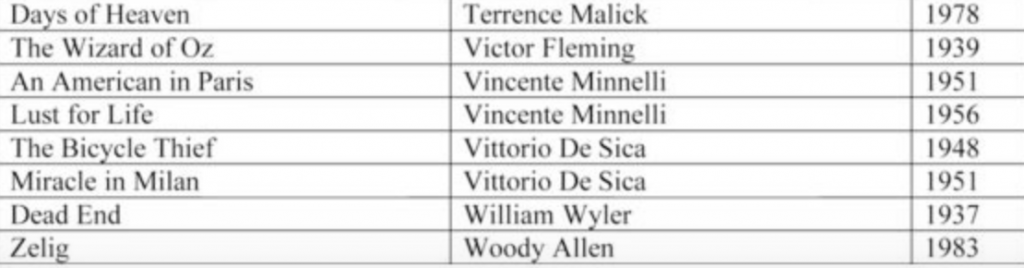
Though Lee seems more than will­ing to talk about his meth­ods, you can’t ful­ly under­stand any film­mak­er unless you under­stand that film­mak­er’s influ­ences. And so we offer you Lee’s list of 95 essen­tial movies every aspir­ing direc­tor should see, expand­ed from his orig­i­nal list of 87, drawn up to hand out to the grad­u­ate-school class­es he’s taught. Fea­tur­ing mul­ti­ple works from direc­tors like Aki­ra Kuro­sawa, Alfred Hitch­cock, Fed­eri­co Felli­ni, John Hus­ton, and Stan­ley Kubrick, the first ver­sion of the list runs as fol­lows:

Tak­en to task for that list’s lack of female film­mak­ers, Lee came up with these addi­tions:

  • The Piano — Jane Cam­pi­on (1993)
  • Daugh­ters of the Dust — Julie Dash (1991)
  • The Hurt Lock­er — Kathryn Bigelow (2008)
  • Sug­ar Cane Alley - Euzhan Pal­cy (1983)
  • The Seduc­tion of Mimi — Lina Wert­muller (1972)
  • Love and Anar­chy - Lina Wert­muller (1973)
  • Swept Away - Lina Wert­muller (1974)
  • Sev­en Beau­ties â€” Lina Wert­muller (1975)

Lee’s Mas­ter­class on film­mak­ing joins the site’s oth­er offer­ings on the same sub­ject from auteurs no less dis­tinc­tive than Mar­tin Scors­ese and Wern­er Her­zog. Though all three became major film­mak­ers at dif­fer­ent times and under dif­fer­ent cir­cum­stances — and end­ed up with very dif­fer­ent cin­e­mat­ic sen­si­bil­i­ties — they all, as Lee might put it, pray at the same church.

And just as it takes the per­spec­tive of many the­ol­o­gists to get a sense of the inef­fa­ble essence of the divine, so it takes the per­spec­tive of many film­mak­ers to get an inef­fa­ble essence of cin­e­ma. You could take all three cours­es with Mas­ter­class’ $180 all-access pass, or you could pay $90 for just Lee’s. Either way, you’ll learn how he made She’s Got­ta Have It for a then-dirt-cheap $175,000, but these days you could sure­ly go out and shoot your own film after­ward for not much more than the cost of the Mas­ter­class itself. It’s still hard out there for an indie film­mak­er, mind you; just not quite as hard as it was.

Relat­ed Con­tent:

How Spike Lee Got His First Big Break: From She’s Got­ta Have It to That Icon­ic Air Jor­dan Ad

Spike Lee’s List of 95 Essen­tial Movies – Now with Women Film­mak­ers

Mar­tin Scors­ese to Teach His First Online Course on Film­mak­ing

Wern­er Her­zog Teach­es His First Online Course on Film­mak­ing

Based in Seoul, Col­in Mar­shall writes and broad­casts on cities and cul­ture. His projects include the book The State­less City: a Walk through 21st-Cen­tu­ry Los Ange­les and the video series The City in Cin­e­ma. Fol­low him on Twit­ter at @colinmarshall or on Face­book.

A Free Oxford Course on Deep Learning: Cutting Edge Lessons in Artificial Intelligence

Nan­do de Fre­itas is a “machine learn­ing pro­fes­sor at Oxford Uni­ver­si­ty, a lead research sci­en­tist at Google Deep­Mind, and a Fel­low of the Cana­di­an Insti­tute For Advanced Research (CIFAR) in the Neur­al Com­pu­ta­tion and Adap­tive Per­cep­tion pro­gram.”

Above, you can watch him teach an Oxford course on Deep Learn­ing, a hot sub­field of machine learn­ing and arti­fi­cial intel­li­gence which cre­ates neur­al networks–essentially com­plex algo­rithms mod­eled loose­ly after the human brain–that can rec­og­nize pat­terns and learn to per­form tasks.

To com­ple­ment the 16 lec­tures you can also find lec­ture slides, prac­ti­cals, and prob­lems sets on this Oxford web site. If you’d like to learn about Deep Learn­ing in a MOOC for­mat, be sure to check out the new series of cours­es cre­at­ed by Andrew Ng on Cours­era.

Oxford’s Deep Learn­ing course will be added to our list of Free Online Com­put­er Sci­ence Cours­es, part of our meta col­lec­tion, 1,700 Free Online Cours­es from Top Uni­ver­si­ties.

Relat­ed Con­tent:

Google Launch­es Free Course on Deep Learn­ing: The Sci­ence of Teach­ing Com­put­ers How to Teach Them­selves

New Deep Learn­ing Cours­es Released on Cours­era, with Hope of Teach­ing Mil­lions the Basics of Arti­fi­cial Intel­li­gence

Neur­al Net­works for Machine Learn­ing: A Free Online Course

by | Permalink | Make a Comment ( 2 ) |

A Free Online Course Helps Us Identify Hoaxes, Rumors & Misinformation in the News

In ear­ly Feb­ru­ary, we high­light­ed for you A Field Guide to Fake News and Oth­er Infor­ma­tion Dis­or­ders, a free man­u­al pub­lished by First Draft, a non-prof­it based at Har­vard’s Shoren­stein Cen­ter that sup­ports truth and trust in news.

This month, First Draft has fol­lowed up with Ver­i­fi­ca­tion Train­ing, a free online course designed to help â€śteach­ers, jour­nal­ists and the gen­er­al pub­lic [learn] how to ver­i­fy online media, so that they don’t fall for hoax­es, rumors and mis­in­for­ma­tion.” The handy and time­ly course was devel­oped by Claire War­dle, First Draft’s exec­u­tive direc­tor. You can sign up here.

Ver­i­fi­ca­tion Train­ing will be added to our meta col­lec­tion, 1,700 Free Online Cours­es from Top Uni­ver­si­ties.

Relat­ed Con­tent:

A Field Guide to Fake News and Oth­er Infor­ma­tion Dis­or­ders: A Free Man­u­al to Down­load, Share & Re-Use

Han­nah Arendt Explains How Pro­pa­gan­da Uses Lies to Erode All Truth & Moral­i­ty: Insights from The Ori­gins of Total­i­tar­i­an­ism

Down­load Theft! A His­to­ry of Music, a New Free Graph­ic Nov­el Explor­ing 2,000 Years of Musi­cal Bor­row­ing

Coursera Now Offering Complete Bachelor’s and Master’s Programs–With Tuition Reduced by 70%

As we observed last Octo­ber, Cours­era has been under­go­ing an evo­lu­tion of sorts. When the ed tech com­pa­ny start­ed out, it offered an array of indi­vid­ual cours­es to stu­dents world­wide. A lit­tle of this. And a lit­tle of that. Now, they’re increas­ing­ly mov­ing towards cours­es that work togeth­er in sequences. First came “course spe­cial­iza­tions”–col­lec­tions of cours­es that allow stu­dents to gain a mas­tery of spe­cial­ized top­ics like Deep Learn­ing, Data Sci­ence (Johns Hop­kins), Busi­ness Fun­da­men­tals (Whar­ton), Dig­i­tal Mar­ket­ing (Uni­ver­si­ty of Illi­nois), and Big Data (UC San Diego). Next it was just a log­i­cal jump to offer­ing full-blown Bach­e­lor’s and Mas­ter’s pro­grams at a dis­count­ed price (rough­ly 1/3 the usu­al cost.) As of this month, Cours­era offers one Bach­e­lor’s pro­gram (Com­put­er Sci­ence from the Uni­ver­si­ty of Lon­don), one MBA, and eight Mas­ter’s pro­grams. The full list of degree pro­grams appears below:

If you would like to sign up for Open Culture’s free email newslet­ter, please find it here. It’s a great way to see our new posts, all bun­dled in one email, each day.

If you would like to sup­port the mis­sion of Open Cul­ture, con­sid­er mak­ing a dona­tion to our site. It’s hard to rely 100% on ads, and your con­tri­bu­tions will help us con­tin­ue pro­vid­ing the best free cul­tur­al and edu­ca­tion­al mate­ri­als to learn­ers every­where. You can con­tribute through Pay­Pal, Patre­on, and Ven­mo (@openculture). Thanks!

Note: Open Cul­ture has a part­ner­ship with Cours­era. If read­ers enroll in cer­tain Cours­era cours­es, it helps sup­port Open Cul­ture.

Relat­ed Con­tent:

Cours­era Part­ners with Lead­ing Uni­ver­si­ties to Offer Master’s Degrees at a More Afford­able Price

New Deep Learn­ing Cours­es Released on Cours­era, with Hope of Teach­ing Mil­lions the Basics of Arti­fi­cial Intel­li­gence

MOOCs from Great Uni­ver­si­ties (Many With Cer­tifi­cates)

« Go BackMore in this category... »
Quantcast