A Room With A View: Camera Obscura Captures Beauty of Venice, Inside and Out

When we hear the word “cam­era” we tend to think of a lit­tle device that fits in the hand. Actu­al­ly, the word is Latin for “vault­ed cham­ber,” or room. The first cam­eras were rooms.

Long before the inven­tion of pho­to­graph­ic film, it was dis­cov­ered that if you have a dark­ened room with a small hole in it, the light pass­ing through will project an upside-down image of the sur­round­ing scenery onto the oppo­site wall. The Chi­nese philoso­pher Mo Tzu, who died in the ear­ly 4th cen­tu­ry BCE, called it the “locked trea­sure room.” In 1604 the Ger­man math­e­mati­cian and astronomer Johannes Kepler coined the term “cam­era obscu­ra,” or dark­ened room.

Kepler and oth­er astronomers used the cam­era obscu­ra to observe the sun. The prob­lem with view­ing dim­mer objects, though, is that the tiny aper­ture lets in very lit­tle light. You can widen the hole to let in more light, but as you do so the image gets blur­ri­er. Even­tu­al­ly it was dis­cov­ered that you can have a wide aper­ture if you place a glass lens over it to focus the light.

With advances in optics, artists made more use of the device. The painter David Hock­ney and physi­cist Charles M. Fal­co have the­o­rized that as ear­ly as the 15th cen­tu­ry, Renais­sance painters were using the cam­era obscu­ra and oth­er opti­cal devices to project images onto their can­vas­es as an aid to com­po­si­tion. By the time the chem­i­cal process of pho­tog­ra­phy was invent­ed in the 1820s, the cam­era was old hat.

In the scene above from the 2007 BBC series The Genius of Pho­tog­ra­phy, pho­tog­ra­ph­er Abelar­do Morell returns to the cam­er­a’s roots to cre­ate a strik­ing image of the Basil­i­ca di San­ta Maria del­la Salute in Venice pro­ject­ed onto an inte­ri­or wall of a palaz­zo on the oth­er side of the Grand Canal. To cap­ture the strange inte­ri­or-exte­ri­or scene on film, he uses a cam­era-with­in-a-cam­era.

Morell has been com­bin­ing mod­ern pho­tog­ra­phy with the ancient cam­era obscu­ra tech­nique for over 20 years. He first tried it in the liv­ing room of his home in Quin­cy, Mass­a­chu­setts. He sealed off all the win­dows, cut a dime-sized hole in the cov­er­ing and set up a view cam­era. His first expo­sures last­ed five to 10 hours. Since then, Mor­rell has trav­eled the globe to cap­ture exot­ic exte­ri­ors pro­ject­ed onto inte­ri­or walls. He now uses high-speed dig­i­tal cam­eras to cut the expo­sure time down to min­utes. “One of the sat­is­fac­tions I get from mak­ing this imagery,” he says on his Web site, “comes from my see­ing the weird and yet nat­ur­al mar­riage of the inside and the out­side.”

You can view a selec­tion of Morel­l’s cam­era obscu­ra pho­tographs at AbelardoMorell.net. And if you’d like to try it your­self, watch the video below from Nation­al Geo­graph­ic, “Mak­ing Your Own Room With a View.”

Cindy Sherman and the Art of Impersonation

This Sat­ur­day the much-not­ed Muse­um of Mod­ern Art ret­ro­spec­tive of pho­tog­ra­ph­er Cindy Sher­man’s work will make it’s West Coast debut at the San Fran­cis­co Muse­um of Mod­ern Art. The show, says New York Times art crit­ic Rober­ta Smith, reveals “an artist with an urgent, sin­gu­lar­ly per­son­al vision, who for the past 35 years has con­sis­tent­ly turned pho­tog­ra­phy against itself.”

Where the medi­um typ­i­cal­ly involves a pho­tog­ra­pher’s direct obser­va­tion of the world, Sher­man usu­al­ly points the cam­era at her­self as she takes a vari­ety of guis­es. “Aid­ed by ever-shift­ing arrays of cos­tumes, wigs, make­up tech­niques, acces­sories, props and at times masks and pros­thet­ic body parts,” writes Smith, “Ms. Sher­man has aggres­sive­ly role-played and stage-direct­ed her way through, and in many ways laid waste to, a lex­i­con of most­ly female stereo­types.”

The role-play­ing is appar­ent­ly infec­tious, because when NPR’s Ira Glass and a friend vis­it­ed the exhib­it before it closed in New York, they met a woman claim­ing to be Sher­man. Unsure whether she was the real thing or an imper­son­ator, Glass decid­ed to tele­phone Sher­man. You can lis­ten to her response at This Amer­i­can Life.

Found: Lost Great Depression Photos Capturing Hard Times on Farms, and in Town

Dur­ing the Great Depres­sion, the Farm Secu­ri­ty Admin­is­tra­tion took on the task of “intro­duc­ing Amer­i­ca to Amer­i­cans” through pho­tog­ra­phy. The FSA hired Dorothea Lange, Walk­er Evans, Gor­don Parks and oth­er artists to cap­ture images of ordi­nary Amer­i­cans, specif­i­cal­ly poor farm­ers.

Some of the images are now icon­ic, notably Lange’s image of a des­ti­tute migrant moth­er of sev­en. That image and most oth­ers are cat­a­loged in the col­lec­tions of the Library of Con­gress, but some lan­guished and were for­got­ten. Oth­ers end­ed up in gen­er­al cir­cu­la­tion, so that, in the­o­ry, any­one with a library card could check out an orig­i­nal print.

Recent­ly a pho­tog­ra­phy cura­tor with the New York Pub­lic Library tracked down the miss­ing images—some 1,000 of them—and cre­at­ed a spe­cial online archive where they can final­ly be seen.

Many depict rur­al life: A 91-year-old woman sits in front of her North Car­oli­na cab­in. A work­er takes a break from carv­ing a dirt road into the New Mex­i­co land­scape. A black man in black face pre­pares to per­form in a trav­el­ing med­i­cine show. The chil­dren of migrant fruit pick­ers in Michi­gan sit for­lorn­ly on a truck.

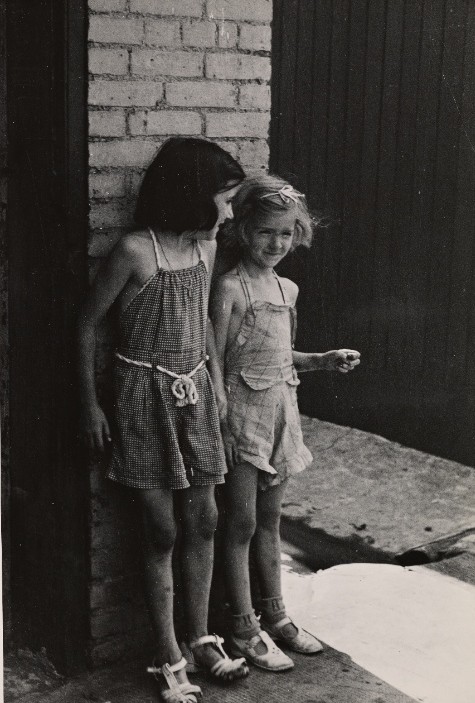
But not all the pho­tographs doc­u­ment the plight of rur­al Amer­i­ca. Some of the col­lec­tion’s most pow­er­ful images are of Amer­i­cans strug­gling in cities. Here two young girls play out­side in a Bal­ti­more slum. Three peo­ple sit out­doors on a Sun­day in New Orleans. And then we cap­ture a scene on the Low­er East Side of New York City.

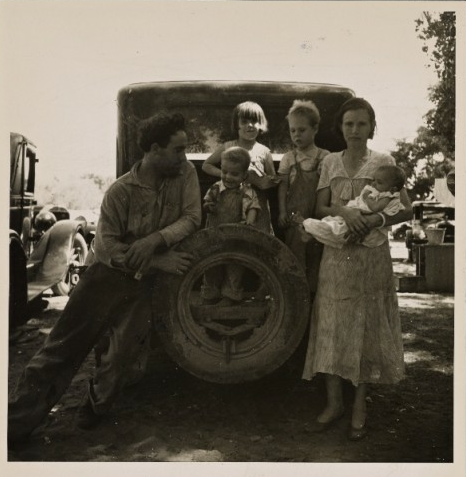
Not sur­pris­ing­ly Dorothea Lange’s work is among the strongest in this col­lec­tion. One of the most pow­er­ful images comes sev­er­al pages into her work’s archive, so be sure to click through. The sto­ry behind “From Texas ten­ant farmer to Cal­i­for­nia fruit tramp” (the first image above) sums up the era: “1927 made $7000 in cot­ton. 1928 broke even. 1929 went in the hole. 1930 went in still deep­er. 1931 lost every­thing. 1932 hit the road.”

Kate Rix is an Oak­land-based writer. See more of her work at .

Patti Smith Reads Her Final Words to Her Dear Friend Robert Mapplethorpe

Per­haps you’ve lis­tened to Pat­ti Smith’s albums. Per­haps you’ve also seen Robert Map­plethor­pe’s pho­tog­ra­phy. If you keep up with mem­oirs, you’ll sure­ly know that Smith’s Just Kids, a remem­brance of her time with Map­plethor­pe in the late six­ties, won all man­ner of acclaim, includ­ing the Nation­al Book Award, when it came out in 2010. But you might still have no idea of the close­ness and impor­tance of each artist to the oth­er, as many of their fans did­n’t before read­ing Smith’s book. While those 278 pages will tell you every­thing you need to know about it, the 178 words of Smith’s let­ter to the dying Map­plethor­pe fea­tured last week on Let­ters of Note say near­ly as much.

But don’t take it from me; in the video above, you can hear the let­ter as read by Smith her­self. She brought it out, appro­pri­ate­ly enough, at the open­ing of her exhi­bi­tion, Cam­era Solo, at Hartford’s Wadsworth Atheneum Muse­um of Art, the first show of her own ven­tures into Mapplethorpe’s craft. Alas, Map­plethor­pe did­n’t live long enough to get around to try­ing his hand at rock music â€” he did­n’t even live long enough to actu­al­ly read this let­ter â€” but his artis­tic sen­si­bil­i­ty per­sists in Smith’s own work. “I learned to see through you,” she reads, “and nev­er com­pose a line or draw a curve that does not come from the knowl­edge I derived in our pre­cious time togeth­er.”

Relat­ed con­tent:

Pat­ti Smith Remem­bers Robert Map­plethor­pe

Col­in Mar­shall hosts and pro­duces Note­book on Cities and Cul­ture. Fol­low him on Twit­ter at @colinmarshall.

Celestial Lights: Spectacular Auroras Move Across the Scandinavian Skies

Nor­we­gian pho­tog­ra­ph­er Ole C. Salomon­sen has cre­at­ed a stun­ning time-lapse film of the auro­ra bore­alis over rugged Nordic land­scapes.

Salomon­sen lives in the city of Trom­sø, 200 miles north of the Arc­tic Cir­cle, where the sun does­n’t rise above the hori­zon between Novem­ber and Jan­u­ary. Trom­sø is con­sid­ered one of the best (inhab­it­ed) places on Earth to see North­ern Lights. This past win­ter the light show was par­tic­u­lar­ly intense, as the sun moved clos­er to the peak (expect­ed in ear­ly 2013) of its 11-year cycle of elec­tro­mag­net­ic activ­i­ty.

The pho­tog­ra­ph­er went to extra­or­di­nary lengths to cap­ture these images, trav­el­ing across north­ern Nor­way, Swe­den and Fin­land over a half-year peri­od begin­ning in Sep­tem­ber and end­ing ear­li­er this month, when the day­light hours grew too long. “I have dri­ven thou­sands of km between loca­tions up here in the arc­tic this sea­son,” Salomon­sen writes on his Vimeo page. “I was run­ning between 2–3 cam­eras like a mad­man.” He esti­mates he shot about 150,000 expo­sures to get the 6,000 or so frames used in the four-and-a-half-minute video above. He writes:

The video is a merge of two parts; the first part con­tains some more wild and aggres­sive auro­ras, as well as a few milky way sequences, hence either auro­ras are mov­ing fast because they are, or they are fast due to motion of the milky way/stars. Still, some of the strait up shots are very close to real-time speed, although auro­ras most­ly are slow­er, she can also be FAST! The sec­ond part has some more slow and majes­tic auro­ras, where I have focused more on com­po­si­tion and fore­ground.

The music is by Nor­we­gian com­pos­er Kai-Anders Ryan. To learn about the tech­ni­cal aspects of Celes­tial Lights, and to see the film Salomon­sen made dur­ing last year’s auro­ra sea­son, vis­it his Vimeo page. And to see his beau­ti­ful still images, vis­it Salomon­sen on Face­book and Flikr.

via Uni­verse Today

How Film Was Made in 1958: A Kodak Nostalgia Moment


Before pix­els there were sil­ver halide crys­tals, and before mem­o­ry cards, film. Lit­tle yel­low box­es clut­tered the lives of pho­tog­ra­phers every­where, and the East­man Kodak Com­pa­ny was vir­tu­al­ly syn­ony­mous with pho­tog­ra­phy.

Things have real­ly changed. With the recent news that Kodak is tee­ter­ing on the brink of Chap­ter 11 bank­rupt­cy, many are feel­ing nos­tal­gia for those lit­tle yel­low box­es and the rolls of sil­ver gelatin film inside. To indulge this nostalgia–and per­haps learn some­thing new about an old technology–we offer a fas­ci­nat­ing 1958 doc­u­men­tary from Kodak enti­tled How Film is Made.

The doc­u­men­tary is in Dutch, but mem­bers of the Ana­log Pho­tog­ra­phy Users Group launched a project to cre­ate Eng­lish sub­ti­tles. You can read more about the project on Dutch mem­ber Mar­co Boeringa’s web­site. And you can watch the 18-minute film start­ing above and con­clud­ing below.

Fol­low Open Cul­ture on Face­book and Twit­ter and share intel­li­gent media with your friends. Or bet­ter yet, sign up for our dai­ly email and get a dai­ly dose of Open Cul­ture in your inbox. And if you want to make sure that our posts def­i­nite­ly appear in your Face­book news­feed, just fol­low these sim­ple steps.

by | Permalink | Make a Comment ( 2 ) |

Iconic Photographer Henri Cartier-Bresson Takes You Inside His Creative World: Watch “The Decisive Moment”

The great artists are often the ones who are best at rec­og­niz­ing and exploit­ing the unique char­ac­ter of their medi­um.

In the ear­ly 20th cen­tu­ry, pho­tog­ra­phy was mired in an inten­tion­al­ly fuzzy Pic­to­ri­al­ism. The pre­vail­ing view was that pho­tog­ra­phy had to imi­tate paint­ing, or it was­n’t “art.” So in the ear­ly 1930s Edward West­on, Ansel Adams and a few oth­ers on the West Coast formed Group f/64 in protest. They embraced their medi­um’s inher­ent strength by plac­ing large for­mat cam­eras on tripods and stop­ping the lens­es way down (all the way to f/64) to cap­ture scenes with a lev­el of detail and clar­i­ty that a painter could only dream of achiev­ing.

Across the Atlantic an even greater rev­o­lu­tion was tak­ing place. With the intro­duc­tion of the 35mm Leica cam­era and fast films, Euro­pean pho­tog­ra­phers in the late 1920s and ear­ly 1930s were begin­ning to explore the medi­um’s aston­ish­ing abil­i­ty to freeze time. Not only could pho­tog­ra­phy ren­der a sta­t­ic scene with more detail than paint­ing, it could iso­late and pre­serve an oth­er­wise tran­si­to­ry moment from the flux of life. No artist seized upon this essen­tial aspect of pho­tog­ra­phy with greater bril­liance and con­sis­ten­cy than the French­man Hen­ri Carti­er-Bres­son.

“In pho­tog­ra­phy,” wrote Carti­er-Bres­son, “there is a new kind of plas­tic­i­ty, the prod­uct of instan­ta­neous lines made by move­ments of the sub­ject. We work in uni­son with move­ment as though it were a pre­sen­ti­ment of the way in which life itself unfolds. But inside move­ment there is one moment at which the ele­ments in motion are in bal­ance. Pho­tog­ra­phy must seize upon this moment and hold immo­bile the equi­lib­ri­um of it.”

Carti­er-Bres­son would often say that his great­est joy was geom­e­try. When he was 20 years old he stud­ied paint­ing under the cubist AndrĂ© Lhote, who adopt­ed for his school the mot­to of Pla­to’s Acad­e­my: “Let no one igno­rant of geom­e­try enter.” Carti­er-Bres­son took an ear­ly inter­est in math­e­mat­i­cal­ly sophis­ti­cat­ed painters. “He loved Pao­lo Uccel­lo and Piero del­la Francesca because they were the painters of divine pro­por­tions,” writes Pierre Assouline in his book, Hen­ri Carti­er-Bres­son: A Biog­ra­phy. “Carti­er-Bres­son was so immersed in their works that his mind filled with pro­trac­tors and plumb lines. Like them, he dreamed of diag­o­nals and pro­por­tions, and became obsessed with the mys­tique of mea­sure­ments, as if the world was sim­ply the prod­uct of numer­i­cal com­bi­na­tions.”

At the same time the young artist fell under the sway of a teacher whose approach was decid­ed­ly less ratio­nal. While still in his teens, Carti­er-Bres­son began sit­ting in on AndrĂ© Bre­ton’s leg­endary Sur­re­al­ist gath­er­ings at the CafĂ© de la Place Blanche. He had lit­tle regard for Sur­re­al­ist paint­ing, but was intox­i­cat­ed with the Sur­re­al­ist phi­los­o­phy of life: the empha­sis on chance and intu­ition, the role of spon­ta­neous expres­sion, the all-encom­pass­ing atti­tude of revolt. It made a pro­found impres­sion. In  Hen­ri Carti­er-Bres­son: The Ear­ly Work, Peter Galas­si describes the Sur­re­al­ist approach to life in a way that also neat­ly cap­tures Carti­er-Bres­son’s even­tu­al modus operan­di as a pho­tog­ra­ph­er: “Alone, the Sur­re­al­ist wan­ders the streets with­out des­ti­na­tion but with a pre­med­i­tat­ed alert­ness for the unex­pect­ed detail that will release a mar­velous and com­pelling real­i­ty just beneath the banal sur­face of ordi­nary exis­tence.”

The geo­met­ric for­mal­ism of Renais­sance paint­ing and the serendip­i­ty of Sur­re­al­ism were two key influ­ences on Carti­er-Bres­son’s pho­tog­ra­phy. A third came as an epiphany when he stum­bled upon a repro­duc­tion of Mar­tin Munkác­si’s “Three Boys at Lake Tan­ganyi­ka.” The pic­ture showed a group of African boys frol­ick­ing in the water. If the pho­tog­ra­ph­er had pressed the shut­ter a mil­lisec­ond ear­li­er or lat­er, the beau­ti­ful­ly bal­anced, inter­lock­ing com­po­si­tion would not have exist­ed. “I sud­den­ly under­stood that pho­tog­ra­phy can fix eter­ni­ty in a moment,” Carti­er-Bres­son lat­er said. He gave up paint­ing and bought his first Leica.

Over the next half cen­tu­ry Carti­er-Bres­son would trav­el the world with a Leica in one hand, the strap twist­ed around his wrist, ready to raise it to his eye and fix eter­ni­ty at any moment. Inward­ly he held onto the spir­it of Sur­re­al­ism while out­ward­ly call­ing him­self a pho­to­jour­nal­ist. As a pho­to­jour­nal­ist he wit­nessed some of the biggest events of the 20th cen­tu­ry. He was with Gand­hi a few min­utes before he was assas­si­nat­ed in 1948. He was in Chi­na when the com­mu­nists took over in 1949. â€śHe was the Tol­stoy of pho­tog­ra­phy,” said Richard Ave­don short­ly after Carti­er-Bres­son’s death in 2004 at the age of 95. “With pro­found human­i­ty, he was the wit­ness of the 20th Cen­tu­ry.”

“To take pho­tographs,” Carti­er-Bres­son once said, “is to hold one’s breath when all fac­ul­ties con­verge in the face of flee­ing real­i­ty. It is at that moment that mas­ter­ing an image becomes a great phys­i­cal and intel­lec­tu­al joy.”

Hen­ri Carti­er-Bres­son: The Deci­sive Moment (above) is an 18-minute film pro­duced in 1973 by Scholas­tic Mag­a­zines, Inc. and the Inter­na­tion­al Cen­ter of Pho­tog­ra­phy. It fea­tures a selec­tion of Carti­er-Bres­son’s icon­ic pho­tographs, along with rare com­men­tary by the pho­tog­ra­ph­er him­self.

The First Snowflake Photos (1885)

Back on a Ver­mont farm in 1885, Wil­son A. Bent­ley attached a micro­scope to a bel­lows cam­era and became the first per­son to pho­to­graph an indi­vid­ual snowflake. Two decades lat­er, he sent 500 prints of his snowflakes to the Smith­son­ian, where they still remain. (View some here.) And then, yet anoth­er two decades lat­er, he pub­lished a book packed with 2,400 snowflake images. NPR’s web site has more of Bent­ley’s work on dis­play. And, of course, you can find an entire trib­ute site ded­i­cat­ed to his win­tery work…

by | Permalink | Make a Comment ( 2 ) |

« Go Back
Quantcast