The high level of interest in Netflix’s adaptation of the 1984 Walter Tevis novel, The Queen’s Gambit has brought this most popular game back to the forefront of pop culture. Chess expert/teacher J.J. (who’s also a grad student in philosophy) joins your hosts Mark Linsenmayer, Erica Spyres, and Brian Hirt to consider chess culture, what gives this game its edge on other contenders (why not Terra Mystica?), player personality characteristics, and the effect of chess media.
We consider gender, genius, and other issues in Gambit, plus Pawn Sacrifice, Searching for Bobby Fisher, The Luzhin Defense, and The Coldest Game.
The pandemic has kept us out of the movie theaters, forcing new streaming practices so that films can be released at all, but as these restrictions end in 2021, do we want things to go back just to the way they were?
Your hosts Mark Linsenmayer, Erica Spyres, and Brian Hirt reviewed many articles where filmmakers fretted about the future of cinema. Even before the pandemic, concerns about falling movie house attendance and the increased use of streaming have had the industry worried about films being viewed in the manner their creators intended, or even made at all.
For at least the first half our of this discussion, we largely ignored all that in favor of musing on our own past theater-going habits and experiences. What has worked and hasn’t in the shift toward more spectacle and amenities? What do we like and loathe about being in an audience with others? Is the theater experience essential just for big special effects films, or does it make any film more effective? How would we improve moviegoing and home viewing? We consider the list of films that were supposed to come out this year and were either delayed or moved to streaming, like Tenet, Soul, In the Heights, etc.
Here are those articles, in case you’re curious:
The holiday film release season has now passed, having issued only one real blockbuster, which is the return of Wonder Woman. This week’s Pretty Much Pop likewise offers a returning hero: Our college-going guest from ep. 33 on heroine journeys has now grown into a grad student in comics history, and she brings her deep WW knowledge to consider with your hosts Erica Spyres, Mark Linsenmayer, and Brian Hirt.
Part of the relevant context is the 2017 biopic Professor Marston and the Wonder Women, which revealed the unorthodox views of WW’s creator, and so of course this shows up in how WW judges us: She’s not just a Captain America-style patriot, but a foreigner who in the new film compassionately condemns our 80s greed and dishonesty. But do the themes actually make sense? And what’s with having her love interest return from the dead, hijacking another man’s body with no acknowledgment that that’s very skeevy?
Also, how does the depiction of WW’s homeland compare to other feminist utopias like Herland and “Sultana’s Dream”? Does it matter that WW was created by and initially aimed primarily at males? We learn a little about the post-Marston WW (who couldn’t join the Justice League, which was for boys only!) and talk about the ’70s TV show, the outfits, the villains, and WW in love.
What explains the immense quarantine-time popularity in America of this quaint British reality cooking show? What do we get out of watching talented amateurs bake things? Stephen Carlile, who is famous for playing Scar in The Lion King on Broadway (and is VERY British himself), joins your hosts Erica Spyres, Brian Hirt, and Mark Linsenmayer to consider the format, context, and appeal of the show.
A few articles we reviewed to prepare included:
Does removing gatekeepers mean a more distributed comic landscape, or does it inevitably end with a small number of comics dominating the world? The Internet means that people can and do judge comics based on very short clips, but also makes it easy to follow the activities of someone you discover that you like.
Tiffany comes not from stand-up but from music theater, and is active in creating character-based comedy and novelty songs for Instagram, YouTube, etc. She joins your hosts Erica Spyres, Mark Linsenmayer, and Brian Hirt to explore the types of short-form humor and viewing habits that grow out of video created for TikTok, Snapchat, and other platforms. What’s the creator’s relation to the audience? Social media blurs the line between constructed bits and extemporized commentary. It’s often reacting to current events, yet stays posted long after. “Going viral” is not typically the result of mere organic sharing or chance, and some comics (and their consultants) have really studied the medium to find out what appeals and how to get the word out.
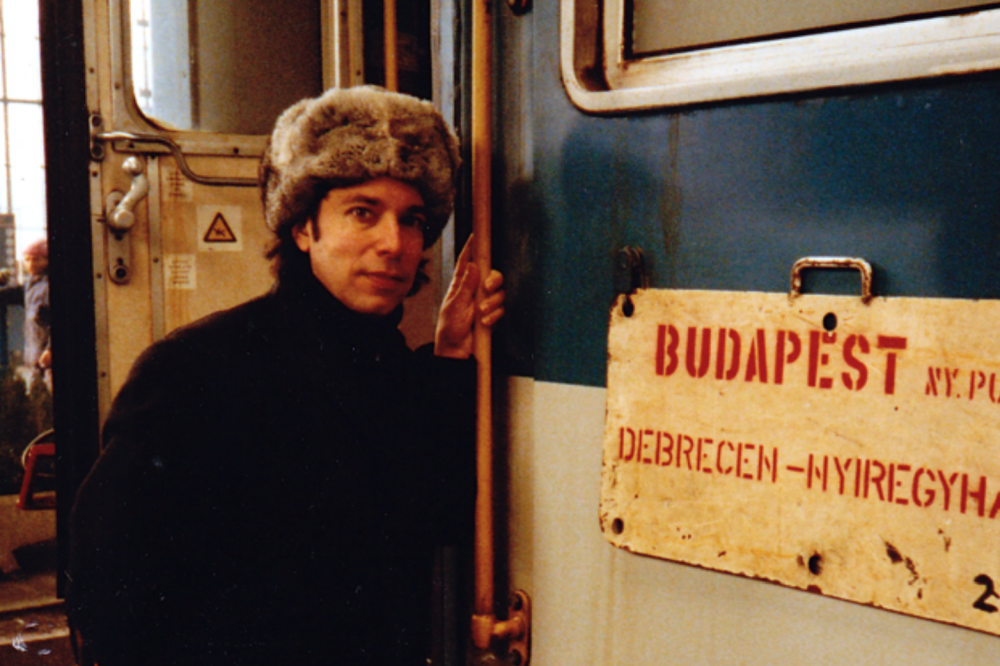
Brian started as a teen music enthusiast and journalist as early as 1970, running into folks like Jim Morrison and Nico and making connections with every musician he could lay eyes on. He leveraged this effort into finding vehicles for his songs, first with OK Savant (ca. 1990), a band that frequented CBGBs and then broke up right as it was signed to a major label. After some false starts and life changes, he likewise used his network to support his creation of three and half solo albums starting in 2008. He has also been an active producer and collaborator for artists like Ollabelle, Lucinda Williams & Taj Mahal, and several international musicians.
Each episode of the Nakedly Examined Music podcast involves picking three recordings from an artist’s catalog to play in full and discuss in detail. Your host Mark Linsenmayer here engages Brian about “Killing The Dead” (and we listen to “Wrong Birthday” at the end; see the video below) from Winter Clothes (2020, written with now-deceased Ollabelle guitarist Jimi Zhivago), “And She Said” from The Opposite of Time (2016), and “The Promise” from All Fires The Fire (2008). Intro: “The Book of Sleep” by OK Savant, recorded live at CBGBs in 1990. For more, see briancullman.com.
While there have of course been numerous attempts at movie magic that have resulted in something less than audience pleasing, only a few demonstrate such bold ineptitude as to become “so bad that they’re good.” Such a film requires a strong sense of vision coupled with a complete inability to realize that vision in a coherent way, and it must display real charm, as we see through the presentation to behold real human beings captured in the poignancy of their doomed filmic endeavor.
Some often cited candidates for this new kind of film canon include the classic Plan 9 from Outer Space, whose creation was dramatized in Tim Burton’s film Ed Wood; Tommy Wiseau’s The Room, chronicled by the book and film The Disaster Artist; Troll 2, a film that has no business or creative relation to the already dubious film Troll that was documented in Best Worst Movie; and the an up-and-comer Birdemic: Shock and Terror, self-financed by James Nguyen, whose popularity greatly increased through the treatment of his films by Rifftrax, one of the TV show Mystery Science Theater 3000’s Internet successors.
And then there’s Manos: The Hands of Fate, lauded as one of the most trippy finds of the original 1993 MST3K. It’s a film written, directed by, and starring (literal) fertilizer salesman Harold P. Warren about a family (on their “first vacation”) getting lost in Western Texas and ending up staying the night at a house with a religious cult. Jackey Neyman Jones played the six-year-old girl in the film who eventually (spoiler!) ends up tied to a stake as the cult leader’s seventh wife. Her father played the cult leader and created much of the art for the show, her mother sewed the costumes, and her voice was dubbed over by a fully grown woman who was not at all warned that she’d be having to imitate a child’s voice.
Jackey wrote a memoir about the experience, and here joins your Pretty Much Pop: A Culture Podcast hosts Mark Linsenmayer, Erica, Spyres, and Brian Hirt to talk about the ongoing interest in the film despite its initial, complete dismissal as well as the dynamics and perils of working with a supremely confident “auteur.”
The discussion also touches on other bad films like Catwoman, The Happening, and Battleship. Are these contemporary, big-budget flops worthy of such canonization? What about films made intentionally to be cheesy, whether by auteurs like Velocipastor or pumped out by a company like Syfy’s Sharknado series?
Fred Van Lente has written for more than 15 years for his own Evil Twin Comics, Marvel and other outlets. In this episode of Pretty Much Pop, he joins your hosts Mark Linsenmayer, Erica Spyres, and Brian Hirt to discuss comics as an idiosyncratic form of literature.
In the realm of non-fiction, Ryan started with the beloved Action Philosophers! series in 2004 with illustrator Ryan Dunlavey, and this team has gone on to create the very successful Comic Book History of Comics, plus more recently Action Presidents, Action Activists (available free in association with the NYC Department of Education’s Civics for All program), and have just begun releasing The Comic Book History of Animation. While the non-fiction comics format is common in places like Japan, and has a storied history in America, having been used to train soldiers in World War II, this is still something of a novelty in America as comics still struggle to overcome their reputation in (as Ryan puts it) “trash for morons.” Given that visual content is well known to help people learn as compared to text alone, the use of tools like Action Presidents in classrooms shouldn’t be surprising.
The interview also gets into Ryan’s fiction work, from Cowboys & Aliens, which was turned into a 2011 Jon Favreau/Steven Spielberg film entirely without Ryan’s involvement, to titles like Marvel Zombies and X‑Men Noir which use alternate dimension versions of popular characters to tell stories too dark and/or whimsical to have much possibility of ever being transferred to the screen. Despite comics’ reputation as being basically like elaborate film story-boards, their low overhead is exactly what distinguishes them so strongly from film: Their creativity is unlimited by budget, and creators can take tremendous risks. Whatever the mainstream palatability of (alternate dimension) Peter Parker eating Aunt May’s brain, this has been one of the most popular things that Ryan’s been involved with among comic book readers.
Learn more about Fred’s work at fredvanlente.com. You can read there about how Fred constructs scripts; the one Mark refers to with the mysteriously changed coat is right there highlighted at the top of this page, and there are also several sample scripts including the one for Action Philosophers: Immanuel Kant that demonstrates Fred’s methods for vividly explaining a complex idea.
We're hoping to rely on loyal readers, rather than erratic ads. Please click the Donate button and support Open Culture. You can use Paypal, Venmo, Patreon, even Crypto! We thank you!
Open Culture scours the web for the best educational media. We find the free courses and audio books you need, the language lessons & educational videos you want, and plenty of enlightenment in between.