Another St. Patrick’s Day has passed, and this one probably without a lot of green-beer-at-the-pub-action. Let’s talk about what sort of representation of Ireland we were supposed to get out of all that merriment, as it’s certainly not akin to the stern, very religious ceremonies that we the growing-up experience of our guest Larry, who’s written books, plays and many songs emanating from and often about his Irish heritage.
He joins Mark, Erica, and Brian to discuss the appeal in the U.S. of Irish culture and how it relates to history, who gets to define what’s authentically Irish, slurs and stereotypes, the range of Irish music, the character of Irish humor, Larry’s journey as front man for Black 47, and his new novel about Irish cops on 9/11: Rockaway Blue (enter 09FLYER at checkout on the Cornell Press site for a discount).
The newest, now concluded superhero series features characters no one asked to hear more about, one of whom was according to the Marvel franchise films definitely dead, and drops them in media res into a loving stylistic recreation of The Dick Van Dyke Show, then I Dream of Jeanie, etc. Why is this happening, and is it good?
Your Pretty Much Pop hosts Mark Linsenmayer, Erica Spyres, and Brian Hirt are joined by guest Rolando Nieves from the Remakes, Reboots, and Revivals podcast try to figure out what kind of storytelling this really is, whether this experiment was successful, whether you have to be a Marvel die-hard (or old enough to have watched those sit-coms) to get it, and the potential for future oddball superhero outings that don’t feature a big boss fight.
This episode is hot off the presses, and more articles are coming out about WandaVision now, but here are a few that might help:
There’s been an explosion of rock and roll autobiographies in recent years, with pretty much every music legend (and many others) being invited by some publisher or other to write or dictate their story. What’s the particular appeal of this kind of recounting, what’s the connection between writing and reading these books on the one hand and producing and listening to the actual music on the other? Do we get a roughly equivalent benefit from a biography, documentary, or film depiction of the person’s life?
Your hosts Mark Linsenmayer, Erica Spyres, and Brian Hirt along with guest Laura Davis-Chanin, author of her own music memoir, each picked a book, covering Elvis Costello, Carrie Brownstein, Ozzy Osbourne, and Debbie Harry respectively. Reflecting on these reading experiences we compare the author’s purposes in writing the book, how confessional or drug-addled or twisted the story is, what is emphasized and what’s not, and what resonated in the story beyond the idiosyncratic recounting of that person’s life.
At least 20% of us have some sort of disability, yet such conditions are reflected by only tiny portion of TV and film characterizations, and what characters are portrayed typically get played by non-disabled actors. Depictions often focus on what it’s like to live with the condition. This can of course be socially beneficial, but we don’t want to essentialize people as their conditions, so it’s even more useful to feature disabled actors and characters when the plot is not about their disability.
Pretty Much Pop hosts Mark Linsenmayer, Erica Spyres, and Brian Hirt are joined by playwright Kayla Dryesse to talk about hurdles to representation, disability culture, whether “disability” is even the right word, negative stereotypes (no less than five James Bond villains are in wheelchairs!), and issues in portraying disability related to theater, comedy, horror, and superheroes. Some shows mentioned include Speechless, Atypical, Everything’s Gonna Be Okay, Breaking Bad, Glee, The Stand, The Witches, and The Great British Bake-Off.
Yesterday, Barack Obama and Bruce Springsteen unveiled the first two episodes of an 8‑part podcast called “Renegades: Born In The USA.” The podcast (available on Spotify) is “a series of conversations between President Barack Obama and Bruce Springsteen about their lives, music, and enduring love of America—despite all its challenges.” The conversations were taped at Springsteen’s home between July and December of 2020. To hear the episodes, you will seemingly need to create a Spotify account, if you don’t have one already.
If you would like to support the mission of Open Culture, consider making a donation to our site. It’s hard to rely 100% on ads, and your contributions will help us continue providing the best free cultural and educational materials to learners everywhere. You can contribute through PayPal, Patreon, and Venmo (@openculture). Thanks!
Did anyone suspect that the beloved 1984 film The Karate Kid (and its decreasingly beloved sequels) would now be not just remade but revived as the YouTube-Red-turned-Netflix hit Cobra Kai? Is this new show actually good, or just living unhealthily on nostalgia and the fascination of watching teens and middle aged people fistfight and fall in love.
Your Pretty Much Pop hosts Mark-san, Erica-san, and Brian-san survey the show and all the films for nonsensical plotting, villain motivation, questionable acting, and more. It’s almost as if PMP is the best… around… and nothing’s ever gonna keep it down.
Care for some articles with more info about these shows?
Jason was music director at KRCW, the LA NPR station, is also a DJ with a lot of experienced interviewing musicians, and now hosts a new podcast, The Backstory. He joins Mark and Erica to discuss the creative and business possibilities of podcasting in comparison to radio, what their futures may hold, and his own journey between the two media.
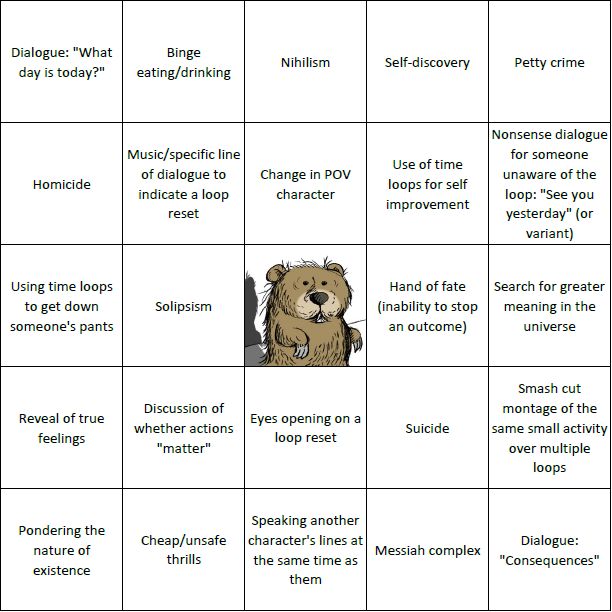
Tine looping, where a character is doomed to repeat the same day (or hour, or longer period) is a sci-fi trope dating back more than a century, but really entered American consciousness with the 1993 Bill Murray film Groundhog Day. Since then, and especially in the last five years, there have been numerous iterations of this idea in various genres from racial police-shooting drama to teen sex comedy. But do we need more of this? What are the philosophical ideas involved, and how do these change with tweaks to the scenario?
Mark, Erica, Brian, and returning guest Ken Gerber discuss not only the very recent and popular forays into this genre with Hulu’s Palm Springs and Netflix’s Russian Doll, but also touch on Edge of Tomorrow, Repeaters, 12:01 PM, Before I Fall, The Fare, and episodes of The Twilight Zone, Star Trek: Discovery, The X‑Files, and Rick & Morty.
We're hoping to rely on loyal readers, rather than erratic ads. Please click the Donate button and support Open Culture. You can use Paypal, Venmo, Patreon, even Crypto! We thank you!
Open Culture scours the web for the best educational media. We find the free courses and audio books you need, the language lessons & educational videos you want, and plenty of enlightenment in between.