Celebrate Valentine’s Day with a Charming Stop Motion Animation of an E.E. Cummings’ Love Poem

Valentine’s Day draws nigh, and we can only assume our read­ers are des­per­ate­ly won­der­ing how to declaim love poet­ry with­out look­ing like a total prat.

Set it to music?

Go for it, but let’s not for­get the fate of that soul­ful young fel­low on the stairs of Ani­mal House when his sweet airs fell upon the ears of John Belushi.

Sarah Huff, a young and relent­less­ly crafty blog­ger, hit upon a much bet­ter solu­tion when ani­mat­ing E.E. Cum­mings’ 1952 poem [i car­ry your heart with me(i car­ry it in] for an Amer­i­can Lit­er­a­ture class’ final project at Sin­clair Com­mu­ni­ty Col­lege.

Her con­struc­tion paper cutouts are charm­ing, but what real­ly makes her ren­der­ing sing is the way she takes the pres­sure off by set­ting it to an entire­ly dif­fer­ent love song. (Echoes of Cum­mings’ goat-foot­ed bal­loon man in Ter­ra Schnei­der’s Bal­loon (a.k.a. The Begin­ning)?)

Released from the poten­tial per­ils of a too sonorous inter­pre­ta­tion, the poet’s lines gam­bol play­ful­ly through­out the pro­ceed­ings, spelled out in util­i­tar­i­an alpha­bet stick­ers.

It’s pret­ty pud­dle-won­der­ful.

Watch it with your Valen­tine, and leave the read aloud to the punc­tu­a­tion-averse Cum­mings, below.

[i car­ry your heart with me(i car­ry it in]

i car­ry your heart with me(i car­ry it in

my heart)i am nev­er with­out it(anywhere

i go you go,my dear;and what­ev­er is done

by only me is your doing,my dar­ling)

                                                      i fear

no fate(for you are my fate,my sweet)i want

no world(for beau­ti­ful you are my world,my true)

and it’s you are what­ev­er a moon has always meant

and what­ev­er a sun will always sing is you

here is the deep­est secret nobody knows

(here is the root of the root and the bud of the bud

and the sky of the sky of a tree called life;which grows

high­er than soul can hope or mind can hide)

and this is the won­der that’s keep­ing the stars apart

i car­ry your heart(i car­ry it in my heart

Relat­ed Con­tent:

E.E. Cum­mings Recites ‘Any­one Lived in a Pret­ty How Town,’ 1953

Famous Writ­ers’ Report Cards: Ernest Hem­ing­way, William Faulkn­er, Nor­man Mail­er, E.E. Cum­mings & Anne Sex­ton

The Mys­ti­cal Poet­ry of Rumi Read By Til­da Swin­ton, Madon­na, Robert Bly & Cole­man Barks

Alan Rickman Recites “If Death Is Not the End,” a Moving Poem by Robyn Hitchcock

Odd­ball singer-song­writer Robyn Hitch­cock is a man who knows how to mark mile­stones. Back in 2003, he staged a con­cert at London’s Queen Eliz­a­beth Hall in hon­or of his own 50th birth­day, and in so doing, cre­at­ed a time release mile­stone of sorts for his friend, actor Alan Rick­man.

Mark­ing a half-cen­tu­ry with pas­sive aggres­sive-gag gifts and cards may suf­fice for the rab­ble, but a lyri­cist as gift­ed as Hitch­cock deserves bet­ter. No one can deny Rick­man of fail­ing to deliv­er, when he regaled the crowd in Queen Eliz­a­beth Hall with a recita­tion of Hitchcock’s own poem, “If Death Is Not the End,” above.

It’s an inim­itable per­for­mance that becomes all the more poignant when one lis­tens to it again, fol­low­ing Rickman’s recent death at the age of 69:

Life is what hap­pened to the dead.

For­ev­er we do not exist

Except for now.

Birth­day Boy Hitch­cock cap­tured Rickman’s appeal in a trib­ute post­ed to his Face­book page:

His morose erot­ic drawl and glo­ri­ous­ly dis­dain­ful demeanor shel­tered a pas­sion­ate artist and made for a charis­mat­ic per­former whom I was proud to have as a friend. I just can’t believe I’ll nev­er see him again.

As the poem says, he was made of life.

If Death Is Not the End

If death is not the end, I’d like to know what is.

For all eter­ni­ty we don’t exist,

except for now.

In my gumshoe mac, I shuf­fled to the clifftop,

Stood well back,

and struck a match to light my life;

And as it flared it fell in dark­ness

Light­ing noth­ing but itself.

I saw my life fall and thought:

Well, kiss my physics!

Time is over, or it’s not,

But this I know:

Life pass­es through us like the blade

Of bam­boo grow­ing through the pris­on­er pegged down in the glade

It pierces your blood, your scream­ing head -

Life is what hap­pened to the dead.

For­ev­er we do not exist

Except for now.

Life pass­es through us like a beam

Of char­coal green — a gold­en gleam,

The oppo­site of how it seems:

It’s not you that goes through life

- life is the knife that cuts your dream

Around the seam

And leaves you turned on in the stream, laugh­ing with your mouth

open,

Until the stream is gone,

Leav­ing you cracked mud,

Not even there to be absent,

From the heart­beat of a dying fish.

In bed, upstairs, I feel your pulse run with the clock

And reach your hand

And lock us with our fin­gers

As if we were bump­ing above the Pole.

Yet I know by dawn

Your hand will be dry bone

I’ll have slept through your good­bye, no mat­ter how long I wake.

Life winds on,

Through Cheri and Karl who can no longer smell choco­late,

Or see with won­der wind inflate the sail,

Or answer mail

Life flies on

Through Katy who was Cather­ine but is bound for Kate

Who looks over her shoul­der at the demon Azmodeus,

And sees the Dai­ly Mail

(I clutch my purse. I had it just now.)

Life slices through

The frozen but­ter in the Alpine wreck.

(I found your pho­to upside down

I nev­er kissed a girl so long,

So long, so love­ly or so wrong)

Life is what kills you in the end

And I can cry

But you won’t be there to be sor­ry

You were made of life

For ever we did not exist

We woke and for a sec­ond kissed.

via Audi­boom

Relat­ed Con­tent:

The Late, Great Alan Rick­man Reads Shake­speare, Proust & Thomas Hardy

Samuel Beck­ett Play Brought to Life in an Eerie Short Film Star­ring Alan Rick­man & Kristin Scott Thomas

Ayun Hal­l­i­day is an author, illus­tra­tor, and Chief Pri­ma­tol­o­gist of the East Vil­lage Inky zine. Her play, Fawn­book, opens in New York City lat­er this fall. Fol­low her @AyunHalliday

Hear Alec Guinness (The Legend Behind Obi-Wan Kenobi) Read T.S. Eliot’s Four Quartets & The Waste Land

Those who only know T.S. Eliot from such ear­ly poems as “The Love Song of J. Alfred Prufrock” and The Waste Land may be sur­prised to encounter what many crit­ics con­sid­er his great­est work, the Four Quar­tets. The Eliot of the ear­li­er, bet­ter-known poems alter­nates between mock­ing dis­sec­tion and trag­ic lamen­ta­tion for the sup­posed cul­tur­al decay of the West; in The Waste Land espe­cial­ly, Eliot draws upon his con­sid­er­able eru­di­tion to col­lapse cen­turies of poet­ic and reli­gious text into shards of mod­ernist inge­nu­ity and sharp frag­ments of despair­ing irony. The Four Quar­tetson the oth­er hand—first pub­lished in 1943, though writ­ten sep­a­rate­ly over a peri­od of six years—-attempts to uni­fy tra­di­tions, in ways both more earnest and more oblique than read­ers of Eliot had seen before.

The cen­tral theme tying togeth­er the four poems—“Burnt Nor­ton,” “East Cok­er,” “The Dry Sal­vages,” and “Lit­tle Gidding”—is time: as eter­ni­ty, as empti­ness, as a waste­land of words and ges­tures with­out mean­ing or pur­pose. “If all time is eter­nal­ly present / All time is unre­deemable,” the poet argues in “Burnt Nor­ton,” and he goes on to illus­trate ideas drawn from St. Augus­tine, the Chris­t­ian mys­tics, and the Upan­ishads. Although, as George Orwell wrote in a review, the poems “appear on the sur­face to be about… cer­tain local­i­ties in Eng­land and Amer­i­ca with which Mr. Eliot has ances­tral con­nex­ions,” they also serve as a philo­soph­i­cal apolo­gia for his deep­en­ing Anglo-Catholi­cism. Orwell, how­ev­er, doubt­ed Eliot’s reli­gious sin­cer­i­ty; “there is faith” in the poems, he wrote, “but not much hope, and cer­tain­ly no enthu­si­asm.”

Yet much of the appeal of the Four Quar­tets to those of a mys­ti­cal bent comes from the poems’ enact­ing of a med­i­ta­tive faith, how­ev­er ten­u­ous, held amidst tumults of mean­ing­less activ­i­ty and a chill­ing sense of cul­tur­al ener­va­tion. (One preg­nant phrase from “Burnt Nor­ton” inspired the title of a book on Zen and Chris­t­ian mys­ti­cism.) Eliot’s con­ser­vatism may pre­vent him from imag­in­ing any sort of world­ly human progress, but gen­er­a­tions of read­ers have seen in the Four Quar­tets the pro­found­est med­i­ta­tion on a spir­i­tu­al jour­ney, and it is per­haps in those late poems, writ­ten in the poet’s mid­dle age, that Eliot comes clos­est to his per­son­al lit­er­ary hero, Dante, who entered the dark wood in the Can­to I of The Infer­no while “halfway along life’s path.”

In a pre­vi­ous post on the Four Quar­tets, we fea­tured Eliot him­self read­ing the poems, and Mike Springer offered some help­ful con­text on their set­tings. Above, we have the rare treat of a read­ing by Sir Alec Guin­ness. Record­ed in 1971—six years before Guin­ness donned Obi-Wan Kenobi’s robes—we hear in his read­ing the grav­i­tas that made his Star Wars Jedi guru seem so wise and weary (though appar­ent­ly he did not rel­ish that role). As an added bonus, below, hear an audio pro­duc­tion of The Waste Land with clips of read­ings by Guin­ness, Ted Hugh­es, Fiona Shaw, Eliot him­self, and more.

It’s inter­est­ing to hear these audio ren­di­tions of the late and ear­ly poems side-by-side: Four Quar­tets held togeth­er by the sin­gu­lar sooth­ing voice of Guin­ness, The Waste Land split apart into the mul­ti­ple voic­es of its var­i­ous char­ac­ters. (Eliot orig­i­nal­ly titled the poem “He Do the Police in Dif­fer­ent Voic­es.”) Click here to hear Eliot him­self read The Waste Land, his high mod­ernist mas­ter­work of despair and epic ennui.

Relat­ed Con­tent:

T.S. Eliot Reads His Mod­ernist Mas­ter­pieces “The Waste Land” and “The Love Song of J. Alfred Prufrock”

Read the Entire Com­ic Book Adap­ta­tion of T.S. Eliot’s “The Love Song of J. Alfred Prufrock”

Lis­ten to T.S. Eliot Recite His Late Mas­ter­piece, the Four Quar­tets

Josh Jones is a writer and musi­cian based in Durham, NC. Fol­low him at @jdmagness

Patti Smith Creates a Detailed Packing List for Going on Tour: Haruki Murakami Books, Loquat Tea & More

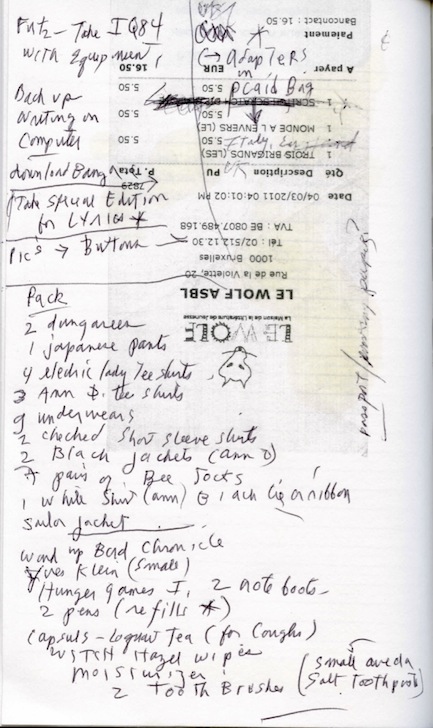
Patti Smith Packing List

Pack­ing lists are not inher­ent­ly punk rock.

But the hand­writ­ten pack­ing list God­moth­er of Punk Pat­ti Smith scrawled upside down on a pho­to­copied receipt from a children’s book­store on the eve of a 40-date Euro­pean tour comes close. One can kind of imag­ine her stuff­ing her adap­tors, her Japan­ese pants, and her “9 under­wears” into a shop­ping bag or a dirty day pack, using it as a pil­low in the back of the van…

Behold the real­i­ty, below.

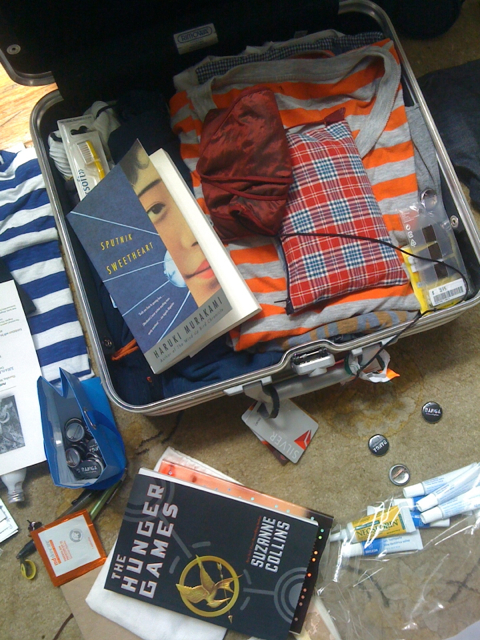
Patti Smith Suitcase

Smith’s hard shell case is kit­ted out with prac­ticed pre­ci­sion, its con­tents pared to the lean­est of  lux­u­ry-brand neces­si­ties to keep her hap­py and healthy on the road.

It’s not often you find a devo­tee of Ann Demeule­meester black jack­ets and $8 tooth­paste who’s will­ing to night­ly wring their socks and undies over a hotel room sink, but accord­ing to her Ban­ga tour diary, Smith is.

Oth­er essen­tials in Smith’s tour bag include loquat tea for her throat and plen­ty of read­ing mate­r­i­al. In addi­tion to the Hunger Games, she elect­ed to take along some old favorites from author Haru­ki Muraka­mi:

I decide this will be essen­tial­ly a Haru­ki Muraka­mi tour. So I will take sev­er­al of his books includ­ing the three vol­ume IQ84 to reread. He is a good writer to reread as he sets your mind to day­dream­ing while you are read­ing him. thus i always miss stuff.

Read­ers, use the com­ments sec­tion to let us know what indis­pens­able items you would pack when embark­ing on a 40-city tour with Pat­ti Smith.

via That Eric Alper

Relat­ed Con­tent:

Pat­ti Smith’s List of Favorite Books: From Rim­baud to Susan Son­tag

Pat­ti Smith Reviews Haru­ki Murakami’s New Nov­el, Col­or­less Tsuku­ru Taza­ki and His Years of Pil­grim­age

Pat­ti Smith Doc­u­men­tary Dream of Life Beau­ti­ful­ly Cap­tures the Author’s Life and Long Career (2008)

Ayun Hal­l­i­day is an author, illus­tra­tor, and Chief Pri­ma­tol­o­gist of the East Vil­lage Inky zine. Her play, Fawn­book, opens in New York City lat­er this fall. Fol­low her @AyunHalliday

Hear Jeremy Irons Read T.S. Eliot’s ‘The Naming of Cats’ (For a Limited Time)

Briefly not­ed: For a lim­it­ed time (for the next 23 days, to be pre­cise), you can hear Jere­my Irons read­ing “The Nam­ing of Cats,” a poem from T.S. Eliot’s Old Pos­sum’s Book of Prac­ti­cal Cats (1939). The poem will cer­tain­ly sound famil­iar to any­one who has ever seen Andrew Lloyd Web­ber’s musi­cal, Cats.

As a bonus, if you revis­it this post in our archive, you can hear Eliot, him­self, read­ing poems from the very same col­lec­tion. And this oth­er Open Cul­ture post fea­tures Eliot’s own cov­er design for Old Pos­sum’s Book of Prac­ti­cal Cats. What angle haven’t we cov­ered?

The clip above comes cour­tesy of BBC Radio 4.

Relat­ed Con­tent:

T.S. Eliot Reads Old Possum’s Book of Prac­ti­cal Cats & Oth­er Clas­sic Poems (75 Min­utes, 1955)

T.S. Eliot Illus­trates His Let­ters and Draws a Cov­er for Old Possum’s Book of Prac­ti­cal Cats

Lis­ten to T.S. Eliot Recite His Late Mas­ter­piece, the Four Quar­tets

T.S. Eliot Reads His Mod­ernist Mas­ter­pieces “The Waste Land” and “The Love Song of J. Alfred Prufrock”

1,000 Free Audio Books: Down­load Great Books for Free

by | Permalink | Make a Comment ( 9 ) |

John Astin, From The Addams Family, Recites “The Raven” as Edgar Allan Poe

How fit­ting that the head of The Addams Fam­i­ly would har­bor a life­long obses­sion with author Edgar Allan Poe.

In the spir­it of full dis­clo­sure, we should clar­i­fy that the true Poe fan­boy is not the fic­tion­al Gomez Addams, but rather the first actor to bring the char­ac­ter to life, John Astin, of tele­vi­sion fame.

Astin’s intro­duc­tion to the Mas­ter of the Macabre came as a child, when his moth­er retold him the sto­ry of “The Mur­ders in the Rue Morgue,” fol­low­ing it up with a copy of “The Pur­loined Let­ter.”

His fas­ci­na­tion with those tales foment­ed a rav­en­ous (sor­ry) appetite for all things Poe.

As Astin told the Bal­ti­more Sun:

His dis­cov­er­ies about human nature were so right, and so accu­rate, that it’s almost a won­der to read, or reread. There are con­tin­u­al­ly dis­cov­er­ies, in the read­ing of Poe, about humankind.

Now the direc­tor of Johns Hop­kins’ Under­grad­u­ate Pro­gram in The­atre Arts and Stud­ies, Astin col­lab­o­rat­ed with writ­ers Ron Magid and Paul Day Clemens on Edgar Allan Poe — Once Upon a Mid­night, a one-man show that toured exten­sive­ly through­out the late 90s and ear­ly 2000s. In addi­tion to get­ting across a pas­sel of grim bio­graph­i­cal details, the play­wrights tasked Astin’s Poe with an unabridged recita­tion of his best known poem, “The Raven,” above.

Philip Bran­des, review­ing a per­for­mance in the Los Ange­les Times wrote:

Recit­ing “The Raven” in its entire­ty, Astin can­not afford to milk each line for atmos­phere à la Vin­cent Price; it would take him most of the sec­ond act.

Instead, he races through the poem as an author would in recall­ing his own famil­iar words, grad­u­al­ly get­ting caught up in their pow­er and fin­ish­ing on a dra­mat­ic crescen­do.

Pow­er­ful stuff. Nev­er­more!

Relat­ed Con­tent:

The Great Stan Lee Reads Edgar Allan Poe’s “The Raven”

5 Hours of Edgar Allan Poe Sto­ries Read by Vin­cent Price & Basil Rath­bone

Gus­tave Doré’s Splen­did Illus­tra­tions of Edgar Allan Poe’s “The Raven” (1884)

Ayun Hal­l­i­day is an author, illus­tra­tor, and Chief Pri­ma­tol­o­gist of the East Vil­lage Inky zine. Fol­low her @AyunHalliday

Stan Lee Reads “The Night Before Christmas,” Telling the Tale of Santa Claus, the Greatest of Super Heroes

“He would turn over in his grave if he knew I’m about to read this,” says Stan Lee, Mar­vel Comics’ grand poo-bah, before launch­ing into Clement Clarke Moore’s “The Night Before Christ­mas.” Moore’s 1823 poem helped solid­i­fy var­i­ous ideas about San­ta Claus and Christ­mas, espe­cial­ly in Amer­i­ca, much like Lee and his co-cre­ators forged the mut­li-char­ac­ter Mar­vel Uni­verse that now dom­i­nates 21st cen­tu­ry mythol­o­gy.

So who bet­ter to read the ori­gin sto­ry of this cos­tumed super­hero than Stan the Man? Because we’re talk­ing about Good St. Nick, a beloved non-human who is able to tra­verse the earth in the span of one night, squeeze down chim­neys with­out get­ting stuck, burned, or even dirty­ing his clothes, gives presents freely, and whose sled is pow­ered pure­ly by mag­i­cal rein­deer, all with their own names. Plus he lives in a fortress of toy­mak­ing qua­si-soli­tude at the North Pole.

Lee real­ly gets into the car­ni­val bark­er style in his read­ing from 2009, much like his own over­heat­ed prose in the pages of his comics. You can still hear the busy pulse of his native Man­hat­tan in that grav­el­ly voice. And if you’re won­der­ing if Lee puts his own spin on things, wait till the end.

And for those look­ing for more Stan Lee Read­ing the Clas­sics, here he is read­ing Poe’s “The Raven.”

You’ll find both­er read­ings in our col­lec­tion, 1,000 Free Audio Books: Down­load Great Books for Free.

Relat­ed Con­tent:

15-Year-Old George R.R. Mar­tin Writes a Fan Let­ter to Stan Lee & Jack Kir­by (1963)

X‑Men: Sci­ence Can Build Them, But Is It Eth­i­cal?

Down­load 15,000+ Free Gold­en Age Comics from the Dig­i­tal Com­ic Muse­um

Ted Mills is a free­lance writer on the arts who cur­rent­ly hosts the artist inter­view-based FunkZone Pod­cast. You can also fol­low him on Twit­ter at @tedmills, read his oth­er arts writ­ing at tedmills.com and/or watch his films here.

Hear All Three of Jack Kerouac’s Spoken-World Albums: A Sublime Union of Beat Literature and 1950s Jazz

kerouac albums

Image by Tom Palum­bo, via Wiki­me­dia Com­mons

At the epi­cen­ter of three explo­sive forces in 1950s America—the birth of Bebop, the spread of Bud­dhism through the coun­ter­cul­ture, and Beat rev­o­lu­tion­iz­ing of poet­ry and prose—sat Jack Ker­ouac, though I don’t pic­ture him ever sit­ting for very long. The rhythms that moved through him, through his verse and prose, are too flu­id to come to rest. At the end of his life he sat… and drank, a most­ly spent force.

But in his prime, Ker­ouac was always on the move, over high­ways on those leg­endary road trips, or his fin­gers fly­ing over the typewriter’s keys as he banged out the scroll man­u­script of On the Road in three fever­ish weeks (so he said). After the pub­li­ca­tion of On the Road, Ker­ouac “became a celebri­ty,” says Steve Allen in intro­duc­tion to the Beat writer on a 1959 appear­ance, “part­ly because he’d writ­ten a pow­er­ful and suc­cess­ful book, but part­ly because he seemed to be the embod­i­ment of this new gen­er­a­tion.”

After a lit­tle back-and-forth, Allen lets Ker­ouac do what he always did so well, whether on tele­vi­sion or on record—embody the rhythms of his writ­ing in his voice, his phras­ing always musi­cal, whether he read over jazz hot or cool or over med­i­ta­tive silence. He did a lot of both, record­ing with Allen and many oth­er jazzmen, and “exper­i­ment­ing with a home reel-to-reel sys­tem, tap­ing him­self to see whether his spon­ta­neous prose out­bursts had the musi­cal rhythms F. Scott Fitzger­ald con­sid­ered the hall­mark of all great writ­ing.” So writes his­to­ri­an David Brink­ley in the lin­er notes (remem­ber those?) to the com­pi­la­tion album Jack Ker­ouac Reads On the Road, a rare col­lec­tion of haunt­ing poet­ry read­ings, play­ful croon­ing, and exper­i­ments with voice and music. Brink­ley describes how Ker­ouac, the French Cana­di­an from Low­ell, Mass­a­chu­setts, devel­oped his “bop ear” by hang­ing out at Minton’s Play­house in Harlem in the 40s, watch­ing Thelo­nious Monk, Char­lie Park­er, and Dizzy Gille­spie invent what he called a “goofy new sound.”

The sound stayed with him, as he turned his immer­sion into Amer­i­can lit­er­ary and musi­cal coun­ter­cul­ture into On the Road, The Sub­ter­raneans, The Dhar­ma Bums, etc, and through­out all the writ­ing, there was the music of his read­ing, cap­tured on the albums Poet­ry for the Beat Gen­er­a­tion with Steve Allen, Blues and Haikus with Al Cohn and Zoot Sims—both in 1959—and, the fol­low­ing year, Read­ings by Jack Ker­ouac on the Beat Gen­er­a­tion. Kerouac’s read­ing style did not come only from his inter­nal­iza­tion of bebop rhythms, how­ev­er, but also from “the dis­cov­ery of the extra­or­di­nary spo­ken-word albums of poets Langston Hugh­es, Carl Sand­berg, and Dylan Thomas,” Brink­ley tells us. The writer became “con­vinced that prose should be read aloud in pub­lic, as it had been in Homer’s Greece and Shakespeare’s Eng­land.” The albums he record­ed and released in his life­time bear out this con­vic­tion and explore “the pos­si­bil­i­ties of com­bin­ing jazz and spon­ta­neous verse.”

These records became very dif­fi­cult to find for many years, but you can now pur­chase an omnibus CD at a rea­son­able price (vinyl will set you back a cou­ple hun­dred bucks). Alter­nate­ly, you can stream all three Ker­ouac albums free on Spo­ti­fy, above in chrono­log­i­cal order of release. If you don’t have Spo­ti­fy, you can eas­i­ly down­load the soft­ware here. And if you’d rather hear Ker­ouac’s read­ings on CD or on the orig­i­nal vinyl medi­um, that’s cool too. How­ev­er you expe­ri­ence these read­ings, you should, at some point, expe­ri­ence them. Like all the very best poet­ry, Ker­ouac’s work is most alive when read aloud, and most espe­cial­ly when read aloud by Ker­ouac him­self.

Relat­ed Con­tent:

Down­load 55 Free Online Lit­er­a­ture Cours­es: From Dante and Mil­ton to Ker­ouac and Tolkien

Jack Kerouac’s 30 Beliefs and Tech­niques For Writ­ing Mod­ern Prose

Jack Ker­ouac Lists 9 Essen­tials for Writ­ing Spon­ta­neous Prose

The First Record­ing of Allen Gins­berg Read­ing “Howl” (1956)

Watch Langston Hugh­es Read Poet­ry from His First Col­lec­tion, The Weary Blues (1958)

Josh Jones is a writer and musi­cian based in Durham, NC. Fol­low him at @jdmagness


« Go BackMore in this category... »
Quantcast