Download 144 Beautiful Books of Russian Futurism: Mayakovsky, Malevich, Khlebnikov & More (1910–30)

94897ff9f58401b40984b972a33c082bac6836e4

In the years after World War II, the CIA made use of jazz musi­cians, abstract expres­sion­ist painters, and exper­i­men­tal writ­ers to pro­mote avant-garde Amer­i­can cul­ture as a Cold War weapon. At the time, down­ward cul­tur­al com­par­isons with Sovi­et art were high­ly cred­i­ble.

Many years of repres­sive Stal­in­ism and what Isa­iah Berlin called “the new ortho­doxy” had reduced so much Russ­ian art and lit­er­a­ture to didac­tic, homog­e­nized social real­ism. But in the years fol­low­ing the first World War and the Russ­ian Rev­o­lu­tion, it would not have been pos­si­ble to accuse the Sovi­ets of cul­tur­al back­ward­ness.

67611bd78ff583b023d3a65a74ad3d5ffc86c3fa

The first three decades of the twen­ti­eth cen­tu­ry pro­duced some of the most inno­v­a­tive art, film, dance, dra­ma, and poet­ry in Russ­ian his­to­ry, much of it under the ban­ner of Futur­ism, the move­ment begun in Italy in 1909 by F.T. Marinet­ti. Like the Ital­ian Futur­ists, these avant-garde Russ­ian artists and poets were, writes Poets.org, “pre­oc­cu­pied with urban imagery, eccen­tric words, neol­o­gisms, and exper­i­men­tal rhymes.” One of the movement’s most inven­tive mem­bers, Velimir Khleb­nikov, wrote poet­ry that ranged from “dense and pri­vate neol­o­gisms to exot­ic verse­forms writ­ten in palin­dromes.” Most of his poet­ry “was too impen­e­tra­ble to reach a pop­u­lar audi­ence,” and his work includ­ed not only exper­i­ments with lan­guage on the page, but also avant-garde indus­tri­al sound record­ing.

891beccb2c3dd100b5583cdbbdfc1a57b1ea8de7

Khlebnikov’s exper­i­ments in lin­guis­tic sound and form became known as “Zaum,” a word that can be trans­lat­ed as “tran­srea­son,” or “beyond sense.” He pio­neered his tech­niques with anoth­er major Futur­ist poet, Alek­sei Kruchenykh, who may have been, writes Mono­skop, “the most rad­i­cal poet of Russ­ian Futur­ism.” The most famous name to emerge from the move­ment, Vladimir Mayakovsky, embod­ied Futur­is­m’s con­fi­dent indi­vid­u­al­ism, his poet­ics “a mix­ture of extrav­a­gant exag­ger­a­tions and self-cen­tered and ardu­ous imagery.” Mayakovsky made a name for him­self as an actor, painter, poet, film­mak­er, and play­wright. Even Stal­in, who would soon pre­side over the sup­pres­sion of the Russ­ian avant-garde, called Mayakovsky after his death in 1930 “the best and most tal­ent­ed poet of the Sovi­et epoch.”

66c44403bc94acb286fdfda77ba70895de33c184

Mono­skop points us toward a siz­able online archive of 144 dig­i­tal­ly scanned Futur­ist pub­li­ca­tions, includ­ing major works by Khleb­nikov, Kruchenykh, Mayakovsky, and oth­er Futur­ist poets, writ­ers, and artists. There’s even a crit­i­cal essay by the impos­ing Russ­ian painter and founder of the aus­tere school of Supre­ma­tism, Kaz­imir Male­vich. All of the texts are in Russ­ian, as is the site that hosts them—the State Pub­lic His­tor­i­cal Library of Rus­sia—though if you load it in Google Chrome, you can trans­late the titles and the accom­pa­ny­ing bib­li­o­graph­ic infor­ma­tion.

You can also down­load full pages in high-res­o­lu­tion. Many of the texts include strong visu­al ele­ments, such as the cov­er at the top from a mul­ti-author col­lec­tion titled Radio, fea­tur­ing Mayakovsky, whose own books include pho­to mon­tages like the two fur­ther up. Just above, see the cov­er of Khleb­nikov and Kruchenykh’s Vin­tage Love, which includes many more such sketch­es. And below, the cov­er of a 1926 book by Kruchenykh called On the Fight Against Hooli­gan­ism in Lit­er­a­ture.

01b4758b3ffb34ffa3d9879e182c2f3a225489ea

Although “state con­trol was absolute through­out” Sovi­et his­to­ry, these artists flour­ished before Trotsky’s fall in 1928, wrote Isa­iah Berlin in his 1945 pro­file of Russ­ian art; there was “a vast fer­ment in Sovi­et thought, which dur­ing those ear­ly years was gen­uine­ly ani­mat­ed by the spir­it of revolt against, and chal­lenge to, the arts of the West.” The Par­ty came to view this peri­od as “the last des­per­ate strug­gle of cap­i­tal­ism” and the Futur­ists would soon be over­thrown, “by the strong, young, mate­ri­al­ist, earth­bound, pro­le­tar­i­an culture”—a cul­ture imposed from above in the mid-30s by the Writ­ers’ Union and the Cen­tral Com­mit­tee.

Thus began the regret­table per­se­cu­tions and purges of artists and dis­si­dents of all kinds, and the move­ment toward the Stal­in­ist per­son­al­i­ty cult and “col­lec­tive work on Sovi­et themes by squads of pro­le­tar­i­an writ­ers.” But dur­ing the first quar­ter of the cen­tu­ry, “a time of storm and stress,” Russ­ian lit­er­a­ture and art, Berlin adjudged, “attained its great­est height since its clas­si­cal age of Pushkin, Ler­mon­tov, and Gogol.”

via Mono­skop

Relat­ed Con­tent:

Hear Russ­ian Futur­ist Vladimir Mayakovsky Read His Strange & Vis­cer­al Poet­ry

Hear the Exper­i­men­tal Music of the Dada Move­ment: Avant-Garde Sounds from a Cen­tu­ry Ago

Exten­sive Archive of Avant-Garde & Mod­ernist Mag­a­zines (1890–1939) Now Avail­able Online

Josh Jones is a writer and musi­cian based in Durham, NC. Fol­low him at @jdmagness

4 Hours of Charles Bukowski’s Riotous Readings and Rants

bukowski readings

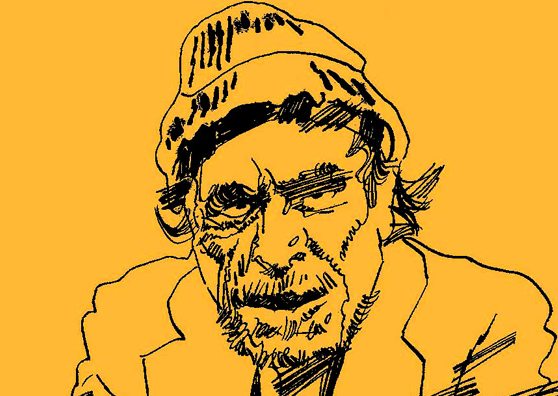
Draw­ing by Graziano Ori­ga, via Wiki­me­dia Com­mons

An old man sits alone, rant­i­ng in a nasal­ly monot­o­nous drone. He breaks into rue­ful laugh­ter, threats of vio­lence, mock­ery, maudlin lament…. An angry drunk­en uncle cry­ing out into the wilder­ness of a Tues­day night ben­der? A tough guy left behind in the world, unable to stom­ach its restric­tions and blithe hypocrisies? A mad poet on his way to the grave? An every­man ram­bler whose seen-it-all can­dor and hardass sense of humor com­mand the com­mon people’s ear?

All of the above was beloved nov­el­ist, racon­teur, poet, and tren­chant essay­ist Charles Bukows­ki. It’s easy to car­i­ca­ture Bukows­ki for his life­long romance with booze, a dom­i­nant theme in near­ly all of his auto­bi­o­graph­i­cal­ly-inspired poems and sto­ries. But in writ­ing of the life an alco­holic artist, him­self, he also uncov­ered in extrem­is gen­er­al truths about human exis­tence that many peo­ple spend their lives try­ing to avoid. The pain, and solace, of lone­li­ness, rejec­tion, and self-doubt, the des­per­ate need for for­ti­tude in the face of seem­ing hope­less­ness.

Bukows­ki is not only a hero to so many would-be writ­ers because of his epic bar­room tales and rock-star-cal­iber drink­ing bouts. If that were so, his sto­ries might quick­ly grow tedious. What Bukows­ki had over the run-of-the-mill pub reg­u­lars was a sur­pris­ing amount of emo­tion­al vul­ner­a­bil­i­ty and self-aware­ness, and a desire to com­mu­ni­cate his expe­ri­ences with the same raw hon­esty as his lit­er­ary hero, Dos­to­evsky. Put sim­ply, Bukows­ki pos­sessed an abun­dance of what Keats called “neg­a­tive capa­bil­i­ty.”

He also had a good deal of luck. If even a hand­ful of the sto­ries he tells about his life are true, it’s a won­der he didn’t die sev­er­al times over. Take his recount­ing below of a live 1979 Van­cou­ver per­for­mance, footage of which became the doc­u­men­tary film There’s Gonna Be a God Damn Riot in Here. In a let­ter that year to a friend, he wrote:

Back from Cana­di­an read­ing. Took Lin­da. Have video tapes of the thing in col­or, runs about two hours. Saw it a cou­ple nights back. Not bad. Much fight­ing with the audi­ence. New poems. Dirty stuff and the oth­er kind. Drank before the read­ing and 3 bot­tles of red wine dur­ing but read the poems out. Dumb par­ty after­wards. I fell down sev­er­al times while danc­ing. They got me back on the ele­va­tor back at the hotel and I kept hol­ler­ing for anoth­er bot­tle. Poor Lin­da. After­wards in hotel room, kept falling. Final­ly fell against the radi­a­tor and cracked a 6 inch gash in skull. Blood every­where. Hell of a trip…Nice Cana­di­an peo­ple who set up read­ing, though. Not poet types at all. All in all, a good show…

The video tapes were Bukowski’s idea—he insist­ed on the record­ing as a con­di­tion for mak­ing the trip. And you can hear audio of the entire per­for­mance at the top on Spo­ti­fy (get Spo­ti­fy’s soft­ware here; or lis­ten on Youtube here). Also on the playlist are two oth­er Bukows­ki spo­ken-word albums, Charles Bukows­ki Mas­ter Col­lec­tion, and Hostage. The lat­ter, writes Ama­zon, “has to be one of the row­di­est poet­ry records ever released, which makes sense con­sid­er­ing how drunk Bukows­ki plain­ly is.” But “the drink nev­er gets in the way of his deliv­ery,” and his tough-but-ten­der verse comes through plain­ly, even if it seems like there might be a riot any minute. Only Bukows­ki could have pulled this off and lived to tell the tale.

Find these Bukows­ki read­ings added to our col­lec­tion, 1,000 Free Audio Books: Down­load Great Books for Free.

Relat­ed Con­tent:

Lis­ten to Charles Bukows­ki Poems Being Read by Bukows­ki Him­self & the Great Tom Waits

Watch “Beer,” a Mind-Warp­ing Ani­ma­tion of Charles Bukowski’s 1971 Poem Hon­or­ing His Favorite Drink

Four Charles Bukows­ki Poems Ani­mat­ed

Josh Jones is a writer and musi­cian based in Durham, NC. Fol­low him at @jdmagness

Hear Dante’s Inferno Read Aloud by Influential Poet & Translator John Ciardi (1954)

the-inferno-canto-6-1

On the 750th birth­day of Dante Alighieri—com­pos­er of the dizzy­ing­ly epic medieval poem the Divine Com­e­dy—Eng­lish pro­fes­sor John Klein­er point­ed to one way of help­ing under­grad­u­ate stu­dents under­stand the Ital­ian poet’s impor­tance: an “obvi­ous com­par­i­son” with Shake­speare. They both occu­py sin­gu­lar­ly defin­i­tive places in their respec­tive lan­guages and lit­er­a­tures as well as in world lit­er­a­ture, Klein­er sug­gest­ed, and indeed no less a crit­i­cal per­son­age than T.S. Eliot once wrote, “Dante and Shake­speare divide the world between them. There is no third.”

And yet, those who know the epic Eng­lish poems Par­adise Lost and Par­adise Regained—heav­i­ly influ­enced by Dante’s work—may find John Mil­ton a more apt com­par­i­son. Mil­ton also made com­plex uses of the­ol­o­gy as polit­i­cal alle­go­ry, and wrote polit­i­cal tracts as pas­sion­ate and res­olute as his poet­ry. Both Mil­ton and Dante were intense­ly par­ti­san writ­ers who expand­ed their world­ly con­flicts into the eter­nal realms of heav­en and hell.

Like Mil­ton, Dante’s for­ma­tive polit­i­cal expe­ri­ence involved a civ­il war—in his case between two fac­tions known as the Guelphs and the Ghi­bellines (then fur­ther between the “White Guelphs” and the “Black Guelphs.”) And like Mil­ton, Dante had spe­cial access to the pow­er­ful of his day. Unlike the Eng­lish poet and defend­er of regi­cide, how­ev­er, Dante was a strict monar­chist who even went so far as to pro­pose a glob­al monar­chy under Holy Roman Emper­or Hen­ry VII. And while Mil­ton veiled his polit­i­cal ref­er­ences in alle­gor­i­cal sym­bol­ism, Dante bold­ly named his adver­saries in his poem, and sub­ject­ed them to gris­ly, inven­tive tor­tures in his vivid depic­tion of hell.

Indeed, Dante’s lit­er­ary per­se­cu­tion of his oppo­nents presents one of the fore­most dif­fi­cul­ties for mod­ern read­ers of the Infer­no. In addi­tion to cat­a­logu­ing the num­ber of clas­si­cal and mytho­log­i­cal char­ac­ters Dante encoun­ters in his infer­nal sojourn, we must wade through pages of con­tex­tu­al notes to find out who var­i­ous con­tem­po­rary char­ac­ters were, and why they have been con­demned to their respec­tive lev­els and tor­ments. Most of his named his­tor­i­cal sufferers—including Pope Boni­face VII—had died by the time of his writ­ing, but some still lived. Of two such cas­es, one online guide notes humor­ous­ly, “Dante explains their pres­ence in Hell by say­ing that they were so sin­ful that the dev­il did not wait for them to die before snatch­ing their souls…. Obvi­ous­ly libel laws were not that strict in Medieval Italy.”

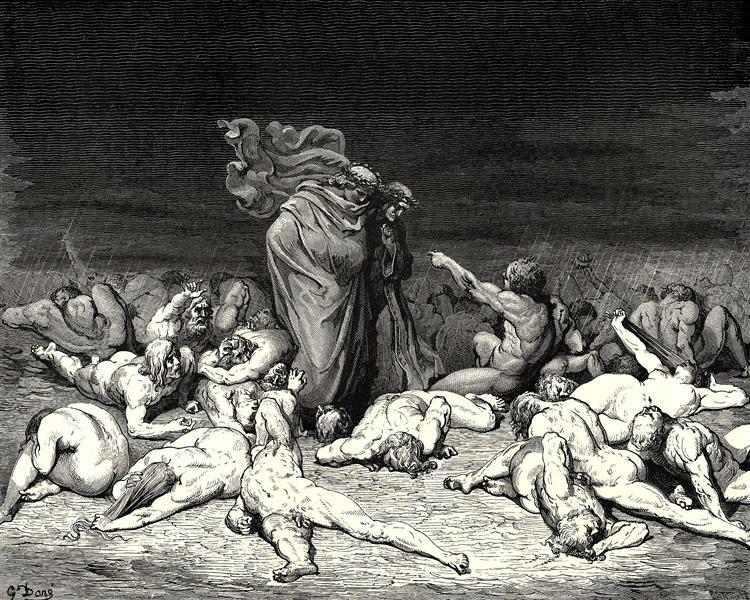
The Infer­no treats the exis­tence of hell and the griev­ous sins that con­sign its inhab­i­tants there with the utmost seri­ous­ness. And yet, the pres­ence of Dante’s many per­son­al and polit­i­cal ene­mies injects no small amount of dark humor into the poem, such that one can read it as polit­i­cal satire as well as an inge­nious mar­riage of medieval Catholic the­ol­o­gy and phi­los­o­phy with the poet­ry of court­ly love. The rich­ness of the Divine Com­e­dy’s rhetor­i­cal world invites a great many inter­pre­ta­tions, but it also demands much of its read­er. To meet its chal­lenge, we might lean on excel­lent ref­er­ence guides like the online World of Dante, which offers a ful­ly anno­tat­ed text in Eng­lish and Ital­ian, as well as maps, charts, and dia­grams of the hell­ish world, and visu­al inter­pre­ta­tions like Gus­tave Doré’s illus­tra­tion from Can­to 6 at the top.

And we might lis­ten to the poem read aloud. Here, we have one read­ing of Can­tos I‑VIII of the Infer­no by poet John Cia­r­di, from his trans­la­tion of the poem for a Signet Clas­sics Edi­tion. Cia­r­di (known as “Mr. Poet” dur­ing his day) made his record­ing in 1954 for Smith­son­ian Folk­ways records, and the lin­er notes of the LP, which you can down­load here, con­tain the excerpt­ed “verse ren­der­ing for the mod­ern read­er.” The trans­la­tion pre­serves Dante’s terza rima in very elo­quent, yet acces­si­ble lan­guage, fit­ting giv­en Dan­te’s own use and defense of the ver­nac­u­lar. You can hear the com­plete read­ing on Spo­ti­fy (down­load the soft­ware here) or on Youtube just above.

Cia­rdi’s read­ing will be added to our col­lec­tion, 1,000 Free Audio Books: Down­load Great Books for Free.

You can also find a course on Dante (from Yale) in our col­lec­tion, 1,700 Free Online Cours­es from Top Uni­ver­si­ties.

Relat­ed Con­tent:

A Free Course on Dante’s Divine Com­e­dy from Yale Uni­ver­si­ty

Mœbius Illus­trates Dante’s Par­adiso

Artists Illus­trate Dante’s Divine Com­e­dy Through the Ages: Doré, Blake, Bot­ti­cel­li, Mœbius & More

William Blake’s Last Work: Illus­tra­tions for Dante’s Divine Com­e­dy (1827)

Josh Jones is a writer and musi­cian based in Durham, NC. Fol­low him at @jdmagness

Watch “Beer,” a Mind-Warping Animation of Charles Bukowski’s 1971 Poem Honoring His Favorite Drink

Charles Bukows­ki could real­ly write. Charles Bukows­ki could real­ly drink. These two facts, sure­ly the best-known ones about the “lowlife lau­re­ate” of a poet and author of such nov­els as Post Office and Ham on Rye (as well as what we might call his lifestyle col­umn, â€śNotes of a Dirty Old Man”), go togeth­er. Drink­ing pro­vid­ed enough of the sub­ject mat­ter of his prose and verse — and, in life, enough of the fuel for the exis­tence he observed on the page with such rough-edged evoca­tive artistry â€” that we can hard­ly imag­ine Bukowski’s writ­ing with­out his drink­ing, or his drink­ing with­out his writ­ing.

We would nat­u­ral­ly expect him, then, to have writ­ten an ode to beer, one of his drinks of choice. â€śBeer,” which appeared in Bukowski’s 1971 poet­ry col­lec­tion Love Is a Dog from Hell, pays trib­ute to the count­less bot­tles the man drank “while wait­ing for things to get bet­ter,” “after splits with women,” “wait­ing for the phone to ring,” “wait­ing for the sounds of foot­steps.”

The female, he writes, knows not to con­sume beer to excess in the male man­ner, as “she knows its bad for the fig­ure.” But Bukows­ki, fig­ure be damned, finds in this most work­ing-class of all drinks a kind of solace.

“Beer” comes to life in the ani­ma­tion above by NERDO. “The com­po­si­tion is a man­i­festo of the author’s way of life, this is why we decid­ed to go inside the author’s mind, and it is not a safe jour­ney,” say the accom­pa­ny­ing notes. “A brain solo with­out fil­ter, a tale of ordi­nary mad­ness, show­ing how much lone­li­ness and deca­dence can be hid­den inside a genius mind.” This wild ride pass­es what we now rec­og­nize as many visu­al sig­ni­fiers of the Bukowskian expe­ri­ence: neon signs, cig­a­rettes, decay­ing city blocks, tawdry Polaroids — and, of course, beer, lit­er­al­ly “rivers and seas of beer,” which no less a fel­low ani­mat­ed enthu­si­ast of the bev­er­age than Homer Simp­son once, just as elo­quent­ly, pro­nounced “the cause of, and solu­tion to, all of life’s prob­lems.”

“Beer” will be added to our col­lec­tion, 1,000 Free Audio Books: Down­load Great Books for Free.

Relat­ed Con­tent:

Four Charles Bukows­ki Poems Ani­mat­ed

Tom Waits Reads Two Charles Bukows­ki Poems, “The Laugh­ing Heart” and “Nir­vana”

Hear 130 Min­utes of Charles Bukowski’s First-Ever Record­ed Read­ings (1968)

Charles Bukows­ki Rails Against 9‑to‑5 Jobs in a Bru­tal­ly Hon­est Let­ter (1986)

“Notes from a Dirty Old Man”: Charles Bukowski’s Lost Car­toons from the 60s and 70s

Based in Seoul, Col­in Mar­shall writes and broad­casts on cities, lan­guage, and style. He’s at work on a book about Los Ange­les, A Los Ange­les Primer, the video series The City in Cin­e­ma, the crowd­fund­ed jour­nal­ism project Where Is the City of the Future?, and the Los Ange­les Review of Books’ Korea Blog. Fol­low him on Twit­ter at @colinmarshall or on Face­book.

T.S. Eliot Reads From “The Waste Land,” “The Love Song of J. Alfred Prufrock” & “The Hollow Men”: His Apocalyptic Post WWI Poems

The T.S. Eliot of the post-World War I peri­od was a poet who stood Janus-faced on the thresh­old of old and new worlds. He looked back­ward to the moun­tain ranges of Euro­pean tra­di­tion and mar­veled at their alpine peaks. At the same time, he seemed acute­ly aware of what a ridicu­lous fig­ure he some­times cut in his self-seri­ous, pedan­tic ven­er­a­tion for the past. Eliot acknowl­edged the inex­orable move­ment of time in poems like “The Waste Land,” “The Love Song of J. Alfred Prufrock,” and “The Hol­low Men,” even if time only moved for­ward into entropy and medi­oc­rity. When Eliot looked ahead, after the hor­rors of war and the increas­ing speed of mod­ern­iza­tion, what he saw was frag­men­ta­tion, wreck­age, and waste. I have heard his strat­e­gy in “The Waste Land” described as a “ter­mi­nal aesthetic”—a beau­ti­ful­ly destruc­tive poet­ics, and one which could go no fur­ther.

Eliot’s high mod­ernist poems stand in very dif­fer­ent rela­tion to the post-WWI world than the work of for­ward-look­ing 20th cen­tu­ry avant-garde artists of the peri­od. As James Mar­tin Hard­ing notes in Adorno and “A Writ­ing of the Ruins,” what “dis­tin­guish­es Eliot from the avant-garde is that… the pol­i­tics of the avant-garde evinced a faith in rev­o­lu­tion­ary progress…. One would have to ally Eliot’s imagery with the dawn­ing of the postmodern”—with ideas, that is, of the “end of his­to­ry.” In terms of form—characterized by pas­tiche, irony, self-ref­er­en­tial­i­ty, and a blend­ing of high and low culture—Eliot’s poet­ics were dis­tinct­ly post-mod­ern.

But post­mod­ernists have gen­er­al­ly cel­e­brat­ed the frag­ment­ing of tra­di­tion and the loss of grand nar­ra­tives. Eliot cher­ished the old, destroyed world, and most­ly despaired of any­thing of val­ue replac­ing it. His imme­di­ate pre­de­ces­sors, whom he imi­tat­ed and ref­er­enced often, were the French sym­bol­ists and deca­dents; mod­ernist aes­thetes who mourned unnamed cat­a­stro­phes and cat­a­logued absurd cor­re­spon­dences. Crit­ic Cleanth Brooks sin­gles out one poem that Eliot quotes at the end of “The Waste Land,” Ger­ard de Nerval’s “El Des­dicha­do,” for its sug­ges­tion that â€śthe pro­tag­o­nist of the poem has been dis­in­her­it­ed, robbed of his tra­di­tion.” Even in trans­la­tion, we can hear in Nerval’s lines the dark­ly com­ic, cos­mi­cal­ly iron­ic, despair of Eliot’s Prufrock:

My very supernova’s been snuffed out, and my one
shiny-ten­doned lute has been silenced by DEPRESSION.

I think you can hear that same world-weary depres­sion and sense of cul­tur­al exhaus­tion in Eliot’s voice as he reads from both “The Waste Land” and “The Love Song of J. Alfred Prufrock” above and from “The Hol­low Men” below (unfor­tu­nate­ly drowned out near the end by some added music). I don’t mean to sug­gest that Eliot him­self suf­fered from some form of clin­i­cal depres­sion. But his poet­ic speakers—and in the case of “The Waste Land” his jum­ble of com­pet­ing voices—all join in an apoc­a­lyp­tic cho­rus as though wit­ness­ing the world’s end. Per­haps the poet­ry exag­ger­ates Eliot’s own per­son­al atti­tudes for effect, per­haps it acts as a series of guis­es for the philo­soph­i­cal and crit­i­cal ideas he explained with­out arti­fice in his essays.

This is how many peo­ple have read Eliot’s poems, myself includ­ed: as con­tain­ers for abstract ideas about cul­tur­al decay and the nature of art and tra­di­tion. But Eliot and his some­time edi­tor and friend Ezra Pound would like­ly object to this kind of approach to poet­ry. Added at the insis­tence of his pub­lish­er, Eliot’s foot­notes to “The Waste Land” seem to mock read­ers anx­ious to leap to inter­pre­ta­tion. Instead, the poet would ask us to attend not to ideas, but to the images, and the emo­tions they evoke—and in this case, to attend also to the poet­’s voice.

Relat­ed Con­tent:

1,000 Free Audio Books: Down­load Great Books for Free

Lis­ten to T.S. Eliot Recite His Late Mas­ter­piece, the Four Quar­tets

Young T.S. Eliot Writes “The Tri­umph of Bullsh*t” and Gives the Eng­lish Lan­guage a New Exple­tive (1910)

Grou­cho Marx and T.S. Eliot Become Unex­pect­ed Pen Pals, Exchang­ing Por­traits & Com­pli­ments (1961)

Josh Jones is a writer and musi­cian based in Durham, NC. Fol­low him at @jdmagness

Vincent Price Reads the Poetry of Shelley; Ralph Richardson Reads the Poetry of Coleridge

Many of us today think of Vin­cent Price as the face, and an even more so the voice, of mod­est­ly bud­get­ed mid­cen­tu­ry hor­ror movies. But over his long and pro­lif­ic career, he showed just what mul­ti­tudes he could con­tain. Price could ele­vate schlock, of course, but he could also rise to the chal­lenge of mas­ter­pieces: here on Open Cul­ture, we’ve pre­vi­ous­ly fea­tured his read­ings, on record and on cam­era, of the work of Edgar Allan Poe, the orig­i­nal mas­ter of the psy­cho­log­i­cal­ly trou­bling tale. Today, we have for you a set of recita­tions well out­side the realm of the scary: Price read­ing the poet­ry of Per­cy Bysshe Shel­ley, free on Spo­ti­fy (whose soft­ware you can down­load here).

Shel­ley, as any­one inter­est­ed in 19th-cen­tu­ry Eng­lish poet­ry knows, did­n’t have a long career, but the can­dle that burns quick­ly, as they say, burns bright. Before his death at the age of 29 in a storm on the Gulf of Spezia, he man­aged to write such immor­tal works as Music, When Soft Voic­es DieOzy­man­diasTo a Sky­lark, Ode to the West Wind, and the dra­ma Prometheus Unbound, all of which we hear Price read whole, or in part, in this playlist. And for its final four tracks, we hear famed Eng­lish stage actor Ralph Richard­son deliv­er four poems from the equal­ly endur­ing lega­cy of Shel­ley’s rough con­tem­po­rary Samuel Tay­lor Coleridge, includ­ing Kubla Khan and The Rime of the Ancient Mariner.

The vivid­ness of the imagery and the time­less res­o­nance of the themes in both poets’ work hold up well on the page, but no mat­ter how many times you’ve read it, hear­ing it inter­pret­ed by per­form­ers like Price and Richard­son can let you expe­ri­ence it in a new way. Their dra­mat­ic back­grounds empow­er them to bring out lev­els of emo­tion you might nev­er have felt in your own read­ing; cer­tain­ly Price’s world-weary yet faint­ly arch tone does well with Ozy­man­dias’ gaze-into-the-abyss evo­ca­tion of hubris, imper­ma­nence, and the ulti­mate fate in obliv­ion of all things great and small. Maybe the man who starred in The Pit and the Pen­du­lum nev­er real­ly strayed far from hor­ror after all.

The Price/Richardson read­ing will be added to our col­lec­tion, 1,000 Free Audio Books: Down­load Great Books for Free.

Relat­ed Con­tent:

5 Hours of Edgar Allan Poe Sto­ries Read by Vin­cent Price & Basil Rath­bone

Watch Vin­cent, Tim Burton’s Ani­mat­ed Trib­ute to Vin­cent Price & Edgar Allan Poe (1982)

Watch Vin­cent Price Turn Into Edgar Allan Poe & Read Four Clas­sic Poe Sto­ries (1970)

Bryan Cranston Reads Shelley’s Son­net “Ozy­man­dias” in Omi­nous Teas­er for Break­ing Bad’s Last Sea­son

Learn to Write Through a Video Game Inspired by the Roman­tic Poets: Shel­ley, Byron, Keats

Based in Seoul, Col­in Mar­shall writes and broad­casts on cities, lan­guage, and style. He’s at work on a book about Los Ange­les, A Los Ange­les Primer, the video series The City in Cin­e­ma, the crowd­fund­ed jour­nal­ism project Where Is the City of the Future?, and the Los Ange­les Review of Books’ Korea Blog. Fol­low him on Twit­ter at @colinmarshall or on Face­book.

30 Days of Shakespeare: One Reading of the Bard Per Day, by The New York Public Library, on the 400th Anniversary of His Death

April 23 is the 400th anniver­sary of Shakespeare’s death, an event so far in the past that it can be cel­e­brat­ed as a sec­ond birth­day of sorts.

The New York Pub­lic Library’s con­tri­bu­tion to the fes­tiv­i­ties has an endear­ing­ly home­made qual­i­ty.

This august insti­tu­tion boasts over 500 audio record­ings of the Bard’s work, not to men­tion 40 years’ worth of the New York Shake­speare Fes­ti­val’s records. But rather than draw­ing on the col­lec­tion to high­light the work of such supreme inter­preters as John Giel­gud, John Bar­ry­more, or Edwin Booth, the library has invit­ed thir­ty of its staffers to recite their favorite Shake­speare­an speech, mono­logue, or son­net.

Sean Fer­gu­son, of Chinatown’s Chatham Square branch, tack­les the open­ing of Richard III from a dig­ni­fied remove.

Grand Central’s man­ag­ing librar­i­an, Gen­oveve Stow­ell, goes for it with a lusty ren­di­tion of King Lear’s third act rage against the storm.

Liz Den­linger, who helms the main branch’s Carl H. Pforzheimer Col­lec­tion of Shel­ley and His Cir­cle went with Shakespeare’s tem­po­ral­ly-obsessed 12th sonnet.

Make no mis­take these are librar­i­ans, not trained actors, but their ama­teur­ish­ness is part of the fun.

The library plans to release one record­ing dai­ly through­out the month of April, adding to the playlist until the tracks num­ber thir­ty.

We are hop­ing that the pro­jec­t’s archi­tects will define â€śstaff” to include sup­port­ing depart­ments. We would love to hear a mem­ber of the secu­ri­ty or main­te­nance team take a stab—pardon the pun—at Oth­el­lo or Juli­et.

For more Shake­speare read­ings, see our post: A 68 Hour Playlist of Shakespeare’s Plays Being Per­formed by Great Actors: Giel­gud, McK­ellen & More.

Relat­ed Con­tent:

The Late, Great Alan Rick­man Reads Shake­speare, Proust & Thomas Hardy

Watch Very First Film Adap­ta­tions of Shakespeare’s Plays: King John, The Tem­pest, Richard III & More (1899–1936)

Read All of Shakespeare’s Plays Free Online, Cour­tesy of the Fol­ger Shake­speare Library

Ayun Hal­l­i­day is an author, illus­tra­tor, and Chief Pri­ma­tol­o­gist of the East Vil­lage Inky zine. Her 15-year-old son will be play­ing Puck lat­er this month in the world pre­miere of Mark York’s musi­cal stag­ing of A Mid­sum­mer Night’s Dream. Mean­while, his moth­er dreams of being cast as the Nurse. Fol­low her @AyunHalliday

Patti Smith on Virginia Woolf’s Cane, Charles Dickens’ Pen & Other Cherished Literary Talismans

Oh to be eulo­gized by Pat­ti Smith, God­moth­er of Punk, poet, best-sell­ing author.

Her mem­oir, Just Kids, was born of a sacred deathbed vow to her first boyfriend, pho­tog­ra­ph­er Robert Map­plethor­pe.

Its fol­low up, M Train, start­ed out as an exer­cise in writ­ing about “noth­ing at all,” only to wind up as an ele­gy to her late hus­band, gui­tarist Fred “Son­ic” Smith. (Their daugh­ter sug­gest­ed that her dad  “was prob­a­bly annoyed that Robert got so much atten­tion in the oth­er book.”)

Cher­ish­ing the mem­o­ries comes eas­i­ly to Smith, as she reveals in a fas­ci­nat­ing con­ver­sa­tion with the New York Pub­lic Library’s Paul Hold­en­gräber, above.

She and hus­band Smith cel­e­brat­ed their first anniver­sary by col­lect­ing stones from the French Guiana penal colony, Saint-Lau­rent-du-Maroni, in an effort to feel clos­er to Jean Genet, one of her most revered authors.

She believes in the trans­mu­ta­tion of objects, unabashed­ly lob­by­ing to lib­er­ate the walk­ing stick that accom­pa­nied Vir­ginia Woolf to her death from the NYPL’s col­lec­tion in order to com­mune with it fur­ther. She may turn into a gib­ber­ing fan­girl in face to face meet­ings with the authors she admires, but inter­act­ing with relics of those who have gone before has a cen­ter­ing effect.

Need­less to say, her fame grants her access to items the rest of us are lucky to view though the walls of a vit­rine.

She has paged through Sylvia Plath’s child­hood note­books and gripped Charles Dick­ens’ sur­pris­ing­ly mod­est pen. She has ““per­pet­u­at­ed remem­brance” by com­ing into close con­tact with Bob­by Fis­ch­er’s chess table, Fri­da Kahlo’s leg braces, and a hotel room favored by Maria Callas. Her rec­ol­lec­tion of these events is both rev­er­en­tial and imp­ish, the stuff of a dozen anec­dotes.

“I would faint to use (sculp­tor Con­stan­tin) Brân­cuși’s tooth­brush,“ she quips. “I wouldn’t use it though.”

Where tan­gi­ble sou­venirs prove elu­sive, Smith takes pho­tographs.

Inter­view­er Hold­en­gräber is unique­ly equipped to share in Smith’s lit­er­ary pas­sions, egging her on with quotes recit­ed from mem­o­ry, includ­ing this beau­ty by Rain­er Maria Rilke:

Now loss, how­ev­er cru­el, is pow­er­less against pos­ses­sion, which it com­pletes, or even, affirms: loss is, in fact, noth­ing else than a sec­ond acquisition–but now com­plete­ly interiorized–and just as intense.

(The sen­ti­ment is so love­ly, who can blame him for invok­ing it in pre­vi­ous con­ver­sa­tion with NYPL guests, artist Edmund de Waal and pianist Van Cliburn.)

The top­ic can get heavy, but Smith is a con­sum­mate enter­tain­er whose clown­ish brinkman­ship leads her to cite Jimi Hen­drix: “Hooray, I wake from yes­ter­day.”

The com­plete tran­script of the con­ver­sa­tion is avail­able for down­load here, as is an audio pod­cast.

Note: You can down­load Just Kids or M Train as free audio books if you join Audible.com’s 30-day free tri­al.

Relat­ed Con­tent:

Mas­ter Cura­tor Paul Hold­en­gräber Inter­views Hitchens, Her­zog, Goure­vitch & Oth­er Lead­ing Thinkers

Pat­ti Smith’s List of Favorite Books: From Rim­baud to Susan Son­tag

Pat­ti Smith and David Lynch Talk About the Source of Their Ideas & Cre­ative Inspi­ra­tion

Ayun Hal­l­i­day is an author, illus­tra­tor, and Chief Pri­ma­tol­o­gist of the East Vil­lage Inky zine. Fol­low her @AyunHalliday

« Go BackMore in this category... »
Quantcast