Allen Ginsberg Teaches You How to Meditate with a Rock Song Featuring Bob Dylan on Bass

dylan ginsberg meditation

Image via Elisa Dor­man, Wiki­me­dia Com­mons

What­ev­er oth­er cri­te­ria we use to lump them together—shared aims of psy­che­del­ic con­scious­ness-expand­ing through drugs and East­ern reli­gion, frank explo­rations of alter­na­tive sex­u­al­i­ties, anti-estab­lish­ment cred—the Beats were each in their own way true to the name in one very sim­ple way: they all col­lab­o­rat­ed with musi­cians, wrote song or poems as songs, and saw lit­er­a­ture as a pub­lic, per­for­ma­tive art form like music.

And though I sup­pose one could call some of their for­ays into record­ed music gim­micky at times, I can’t imag­ine Jack Kerouac’s career mak­ing a whole lot of sense with­out Bebop, or Bur­roughs’ with­out psy­che­del­ic rock and tape and noise exper­i­men­ta­tion, or Gins­berg’ with­out… well, Gins­berg got into a lit­tle bit of every­thing, didn’t he? Whether writ­ing calyp­sos about the CIA, per­form­ing and record­ing with The Clash, show­ing up on MTV with Philip Glass and Paul McCart­ney…. He nev­er worked with Kanye, but I imag­ine he prob­a­bly would have.

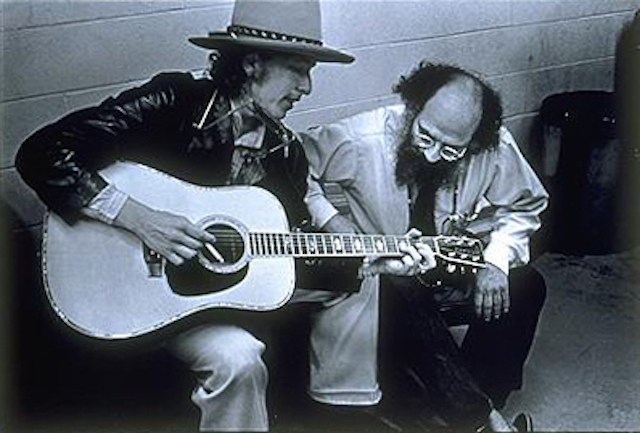
For each of these artists, the medi­um deliv­ered a mes­sage. Kerouac’s odes to jazz, lone­li­ness, and wan­der­lust; Bur­roughs’ dark, para­noid prophe­cies about gov­ern­ment con­trol; and Ginsberg’s anti-war jere­mi­ads and insis­tent pleas for peace, free­dom, tol­er­ance, and enlight­en­ment. Ever the trick­ster and teacher, Gins­berg often used humor to dis­arm his audi­ence, then went in for the kill, so to speak. We may find no more point­ed an exam­ple of this comedic ped­a­gogy than his 1981 song, “Do the Med­i­ta­tion Rock,” record­ed in 1982 as a sham­bling folk-rock jam below with gui­tarist Steven Tay­lor, and mem­bers of Bob Dylan’s tour­ing band—including Dylan him­self mak­ing a rare appear­ance on bass.

As the sto­ry goes, accord­ing to Hank Shteam­er at Rolling Stone, Gins­berg was in Los Ange­les and “eager to book some stu­dio time. Dylan oblig­ed, and agreed to foot the bill for the stu­dio costs on the con­di­tion that Gins­berg would pay the musi­cians. The two met at Dylan’s San­ta Mon­i­ca stu­dio and, as Tay­lor remem­bers it, jammed for 10 hours.” Many more record­ings from that ses­sion made it onto the recent­ly released The Last World on First Blues, which also includes con­tri­bu­tions from Jack Kerouac’s musi­cal part­ner David Amram, folk leg­end Hap­py Traum, and exper­i­men­tal cel­list, singer, and dis­co pro­duc­er Arthur Rus­sell.

See Gins­berg, Tay­lor, Rus­sell, and Ginsberg’s part­ner Peter Orlovsky (med­i­tat­ing), per­form the song above on a PBS spe­cial called “Good Morn­ing, Mr. Orwell,” cre­at­ed in 1984 by Kore­an video artist Naim June Paik. As Gins­berg explains it in the lin­er notes to his col­lec­tion Holy Soul, Jel­ly Roll, the song came togeth­er after his own med­i­ta­tion train­ing in the late sev­en­ties, when the poet got the okay from his Bud­dhist teacher Chogyam Trung­pa Rin­poche (founder of Naropa Uni­ver­si­ty) to “show basic med­i­ta­tion in his tra­di­tion­al class­rooms or groups at poet­ry readings”—his goal, he says, to “knock all the poets out with sug­ar-coat­ed dhar­ma.”

Christ­mas Eve, I stopped in the mid­dle of the block at a stoop and wrote the words down, note­book on my knee. I fig­ured that if any­one lis­tened to the words, they’d find com­plete instruc­tions for clas­si­cal sit­ting prac­tice, Samatha-Vipas­sana (“Qui­et­ing the mind and clear see­ing”). Some humor in the form, it does­n’t have to be tak­en over-seri­ous­ly, yet it’s pre­cise.

You may have noticed the famil­iar cadence of the cho­rus; it’s a take-off, he says, on “I Fought the Law,” record­ed in 1977 by his soon-to-be musi­cal part­ners, The Clash. In the live ver­sion below at New York’s Ukran­ian Nation­al Home, the song gets a more stripped-down, punk rock treat­ment with Tom Rogers on gui­tar. Like many a wan­der­ing bard, Gins­berg changes and adapts the lyrics slight­ly to the venue and occa­sion. See the Allen Gins­berg Project for sev­er­al pub­lished ver­sions of the lyrics and his changes in this ren­di­tion.

Apart from the basic med­i­ta­tion instruc­tions, which are easy to fol­low in writ­ing and song, Ginsberg’s “Do the Med­i­ta­tion Rock” had anoth­er mes­sage, spe­cif­ic to his under­stand­ing of the pow­er of med­i­ta­tion; it can change the world, in spite of “a holo­caust” or “Apoc­a­lypse in a long red car.” As Gins­berg speak/sings, “If you sit for an hour or a minute every day / you can tell the Super­pow­er, sit the same way / you can tell the Super­pow­er, watch and wait.” No mat­ter how bad things seem, he says, “it’s nev­er too late to stop and med­i­tate.” Hear anoth­er record­ed ver­sion of the song below from Holy Soul, Jel­ly Roll, record­ed live in Kansas City by William S. Bur­roughs in 1989.

Relat­ed Con­tent:

Allen Gins­berg Record­ings Brought to the Dig­i­tal Age. Lis­ten to Eight Full Tracks for Free

Allen Gins­berg & The Clash Per­form the Punk Poem “Cap­i­tal Air,” Live Onstage in Times Square (1981)

‘The Bal­lad of the Skele­tons’: Allen Ginsberg’s 1996 Col­lab­o­ra­tion with Philip Glass and Paul McCart­ney

Hear All Three of Jack Kerouac’s Spo­ken-World Albums: A Sub­lime Union of Beat Lit­er­a­ture and 1950s Jazz

Josh Jones is a writer and musi­cian based in Durham, NC. Fol­low him at @jdmagness

Marie Osmond Performs the Dadaist Poem “Karawane” on the TV Show, Ripley’s Believe It or Not (1985)

Remem­ber Don­ny and Marie Osmond, the toothy, teenage Mor­mon sib­lings whose epony­mous tele­vi­sion vari­ety show was a whole­some 70’s mix of skits, songs, and ice skat­ing?

Their sur­pris­ing­ly endur­ing theme song reduced their pop­u­lar­i­ty to an eas­i­ly gras­pable bina­ry for­mu­la:

She was a lit­tle bit coun­try. He was a lit­tle bit rock and roll.

Turns out Marie was also more than a lit­tle bit Dada.

From 1985 to 1986, Marie served as actor Jack Palance’s cohost on Ripley’s Believe It or Not, a TV series explor­ing strange occur­rences, bizarre his­tor­i­cal facts, and oth­er such crowd-pleas­ing odd­i­ties… one of which was appar­ent­ly the afore­men­tioned Euro­pean avant-garde art move­ment, found­ed a hun­dred years ago this week.

If you don’t know as much about Dada as you’d like, Ms. Osmond’s brief primer is a sur­pris­ing­ly stur­dy intro­duc­tion.

No cutesy boot­sy, easy ref­er­ences to melt­ing clocks here.

The high­light is her per­for­mance of Dada poet and man­i­festo author Hugo Bal­l’s non­sen­si­cal 1916 sound poem “Karawane.”

Lose the yel­low bathrobe and she could be a cap­tive war­rior princess on Game of Thrones, fierce­ly peti­tion­ing the Moth­er of Drag­ons on behalf of her peo­ple. (Invent some sub­ti­tles for extra Dada-inflect­ed fun!)

A sharp eyed young art stu­dent named Ethan Bates did catch one error in Marie’s les­son. The ’13’ cos­tume she pulls from a handy dress­ing room niche was not worn by Hugo Ball, but rather Dutch painter Theo Van Does­burg, one of the founders of the De Sti­jl move­ment.

Still you’ve got to hand it to Marie, who was slat­ed to per­form just a sin­gle line of the poem. When it came time to tape, she aban­doned the cue cards, blow­ing pro­duc­ers’ and crew’s minds by deliv­er­ing the poem in its unhinged entire­ty from mem­o­ry.

Now that’s rock and roll.

Below you’ll find footage of Ball him­self per­form­ing the work in 1916.

Marie’s ver­sion was even­tu­al­ly released by Rough Trade Records as a track on Lip­stick Traces, a com­pan­ion sound­track to Greil Mar­cus’ sem­i­nal book.

Relat­ed Con­tent:

Dada Was Born 100 Years Ago: Cel­e­brate the Avant-Garde Move­ment Launched by Hugo Ball on July 14, 1916

Hear the Exper­i­men­tal Music of the Dada Move­ment: Avant-Garde Sounds from a Cen­tu­ry Ago

Down­load All 8 Issues of Dada, the Arts Jour­nal That Pub­li­cized the Avant-Garde Move­ment a Cen­tu­ry Ago (1917–21)

Ayun Hal­l­i­day is an author, illus­tra­tor, and Chief Pri­ma­tol­o­gist of the East Vil­lage Inky zine. Fol­low her @AyunHalliday


Charles Bukowski’s Controversial Poem “Girl on the Escalator” Gets Literally Retold in a New Short Film

Everyone’s favorite alco­holic poet and dirty old man Charles Bukows­ki was hard­ly what you’d call a roman­tic, though he had a soft­er side: a vul­ner­a­bil­i­ty and com­pas­sion for the lone­ly, poor, and suf­fer­ing. But we don’t love Bukows­ki because he pret­tied up the nasty busi­ness of being human. We love him—those of us who do (I won’t pre­sume to speak for his detractors)—because he was hon­est: about his own desires and dis­ap­point­ments, about the beau­ty and the sor­did ugli­ness of things. Most­ly the ugli­ness.

Often the ugli­ness in Bukowski’s work comes from Bukows­ki himself—or the voice he adopts of the leer­ing old man on the cor­ner who makes women cross the street: voyeuris­tic, sar­don­ic, imag­i­na­tive, self-aware, mis­er­able, embit­tered, con­temp­tu­ous…. We see this Bukows­ki encoun­ter­ing strange women—sometimes ogling, some­times sneering—in poems like “The Girl Out­side the Super­mar­ket,” “Girl in a Miniskirt Read­ing the Bible Out­side My Win­dow,” and “Girl on the Esca­la­tor,” all in their way offer­ing can­did­ly nar­cis­sis­tic insights into the male gaze and male ego.

In “Girl on the Esca­la­tor,” Bukowski’s speak­er both ogles and sneers, and drifts into an imag­i­na­tive fugue as he con­structs a fan­ta­sy life for the “girl” of the title, then decon­structs her in the gross­est, most vis­cer­al way. Fem­i­nist he ain’t, and the new short film above, cre­at­ed by Kay­han Lannes Ozmen, gives us a very lit­er­al inter­pre­ta­tion of every one of the poem’s images, as a dead­pan nar­ra­tor reads Bukowski’s poem. One fan rec­om­mends that you read the poem your­self (find it here) before watch­ing the film, and see what you make of it first. I’d agree, but that is, of course, up to you.

via Now­ness

Relat­ed Con­tent:

4 Hours of Charles Bukowski’s Riotous Read­ings and Rants

Four Charles Bukows­ki Poems Ani­mat­ed

“Don’t Try”: Charles Bukowski’s Con­cise Phi­los­o­phy of Art and Life

Josh Jones is a writer and musi­cian based in Durham, NC. Fol­low him at @jdmagness

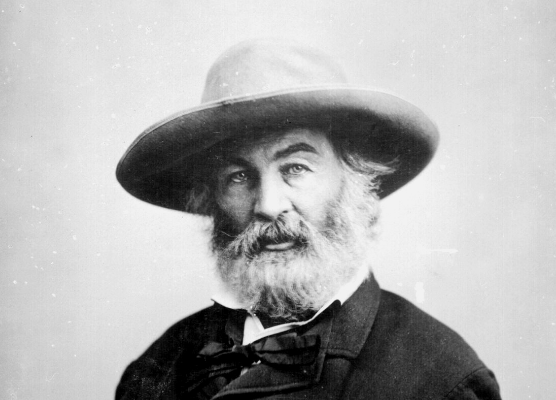
Walt Whitman Gives Advice to Aspiring Young Writers: “Don’t Write Poetry” & Other Practical Tips (1888)

whitman advice

Some of the best, most suc­cinct writ­ing advice I ever received came from the great John McPhee, via one of his for­mer stu­dents: “Writ­ing is pay­ing atten­tion.” What do you see, hear, taste, etc.? Ques­tions of style, syn­tax, and punc­tu­a­tion come lat­er. Obsess over them before you’ve learned to pay atten­tion, and you’ll have noth­ing of inter­est to write about. And in order to notice what you’re notic­ing, you’ve got to record it; so keep a note­book with you at all times to jot down over­heard expres­sions, thrilling sights and insights, dra­mat­ic chance encoun­ters… hoard­ing mate­r­i­al, all the time.

Amongst the tidal wave of advice you’ll encounter when you first begin to write—much of it con­tra­dic­to­ry and some of lit­tle prac­ti­cal benefit—you’d have a hard time find­ing any­one who dis­agrees with McPhee. Not even Walt Whit­man, who embraced con­trari­ness and con­tra­dic­tion like no oth­er Amer­i­can writer, thus becom­ing all the more an hon­est reflec­tion of the nation. Few writ­ers spent more time notic­ing than Whit­man, who seem­ing­ly record­ed every­thing he saw and heard on his trav­els. “I heard what the talk­ers were talk­ing,” he pro­claimed, “I per­ceive after all so many utter­ing tongues.” Whitman—as a project called Har­vardX Neu­ro­science dubs him—was a “poet of per­cep­tion.”

But he was also a hard-head­ed real­ist with a bent toward the util­i­tar­i­an and a scrap­py resource­ful­ness that made him an artis­tic sur­vivor. Whit­man con­tained mul­ti­tudes, not only in his poet­ry but in his writ­ing advice. When edi­tors of The Sig­nal, news­pa­per of The Col­lege of New Jer­sey, asked the poet in 1888 to advise young schol­ars on the “lit­er­ary life,” he oblig­ed, giv­ing the paper a brief inter­view in which the “gray-haired, hand­some, aged poet of Cam­den” prof­fered the fol­low­ing (con­densed in list form below):

1. Whack away at every­thing per­tain­ing to lit­er­ary life—mechanical part as well as the rest. Learn to set type, learn to work at the ‘case’, learn to be a prac­ti­cal print­er, and what­ev­er you do learn con­den­sa­tion.

2. To young lit­er­a­teurs I want to give three bits of advice: First, don’t write poet­ry; sec­ond dit­to; third dit­to. You may be sur­prised to hear me say so, but there is no par­tic­u­lar need of poet­ic expres­sion. We are util­i­tar­i­an, and the cur­rent can­not be stopped.

3. It is a good plan for every young man or woman hav­ing lit­er­ary aspi­ra­tions to car­ry a pen­cil and a piece of paper and con­stant­ly jot down strik­ing events in dai­ly life. They thus acquire a vast fund of infor­ma­tion. One of the best things you know is habit. Again, the best of read­ing is not so much in the infor­ma­tion it con­veys as the thoughts it sug­gests. Remem­ber this above all. There is no roy­al road to learn­ing.

Whit­man’s advice con­tains sound, prac­ti­cal tips on what we might today call “pro­fes­sion­al­iza­tion.” Should we take his admon­ish­ment against writ­ing poet­ry seri­ous­ly? Why not? For a good por­tion of his life, Whit­man earned a liv­ing “whack­ing away,” as he liked to say often, at more util­i­tar­i­an forms of writ­ing, from reportage to an advice col­umn. Whit­man took seri­ous­ly his role as a voice of work­ing peo­ple and per­haps saw this inter­view as an occa­sion to address them.

Whit­man’s “seething rejec­tion of poet­ry,” writes Nicole Kukaws­ki in the Walt Whit­man Quar­ter­ly Review, should not sur­prise us; it is “sim­ply part of his attack on con­ven­tion­al­i­ty in all respects… poet­ry can nev­er be ‘utilitarian’—in no way can it reach the mass­es for their ben­e­fit.” Unlike our day, poet­ry was ubiq­ui­tous in late nine­teenth cen­tu­ry Amer­i­ca, part of an entrenched, high­ly con­ven­tion­al polite dis­course. Who knows, maybe a Whit­man of the ear­ly 21st cen­tu­ry would feel very dif­fer­ent­ly on this point. Sure­ly we could use a great deal more “poet­ic expres­sion” these days.

Whit­man’s final piece of advice accords ful­ly with John McPhee’s—and sev­er­al hun­dred oth­er writ­ers and teach­ers. But in Whit­man’s esti­ma­tion, notic­ing, and acquir­ing “a vast fund of infor­ma­tion,” was not only essen­tial to the lit­er­ary life but also key to pur­su­ing an “indi­vid­u­al­is­tic,” real-world self-edu­ca­tion. “One sub­ject about which Whit­man did not con­tra­dict him­self,” writes Kukaws­ki, “was his con­sis­tent belief that the schol­ar should learn by encoun­ter­ing life instead of read­ing books alone.” There may be no bet­ter exem­plar of that phi­los­o­phy in Amer­i­can let­ters than Walt Whit­man him­self.

via Austin Kleon

Relat­ed Con­tent:

Walt Whitman’s Unearthed Health Man­u­al, “Man­ly Health & Train­ing,” Urges Read­ers to Stand (Don’t Sit!) and Eat Plen­ty of Meat (1858)

Walt Whitman’s Poem “A Noise­less Patient Spi­der” Brought to Life in Three Ani­ma­tions

Watch “The Poet­ry of Per­cep­tion”: Har­vard Ani­mates Walt Whit­man, Emi­ly Dick­in­son & William Car­los Williams

Iggy Pop Reads Walt Whit­man in Col­lab­o­ra­tions With Elec­tron­ic Artists Alva Noto and Tar­wa­ter

Josh Jones is a writer and musi­cian based in Durham, NC. Fol­low him at @jdmagness

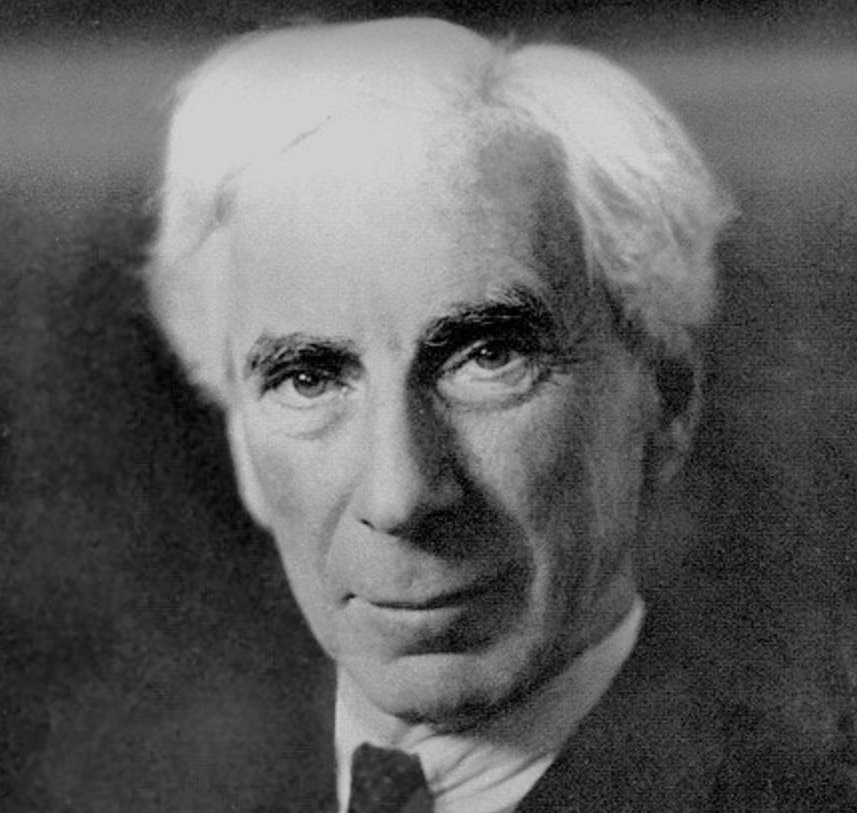
Bertrand Russell Lists His 20 Favorite Words in 1958 (and What Are Some of Yours?)

Russell_in_1938

Image via Wiki­me­dia Com­mons

Is it pos­si­ble to ful­ly sep­a­rate a word’s sound from its meaning—to val­ue words sole­ly for their music? Some poets come close: Wal­lace Stevens, Sylvia Plath, John Ash­bery. Rare pho­net­ic meta­physi­cians. Sure­ly we all do this when we hear words in a lan­guage we do not know. When I first encoun­tered the Span­ish word entonces, I thought it was the most beau­ti­ful three syl­la­bles I’d ever heard.

I still thought so, despite some dis­ap­point­ment, when I learned it was a com­mon­place adverb mean­ing “then,” not the rar­i­fied name of some mag­i­cal being. My rev­er­ence for entonces will not impress a native Span­ish speak­er. Since I do not think in Span­ish and strug­gle to find the right words when I speak it—always translating—the sound and sense of the lan­guage run on two dif­fer­ent tracks in my mind.

An exam­ple from my native tongue: the word obdu­rate, which I adore, became an instant favorite for its sound the first time I said it aloud, before I’d ever used it in a sen­tence or parsed its mean­ing. It’s not a com­mon Eng­lish word, how­ev­er, and maybe that makes it spe­cial. A word like always, which has a pret­ty sound, rarely strikes me as musi­cal or inter­est­ing, though non-Eng­lish speak­ers may find it so.

Every writer has favorite words. Some of those words are ordi­nary, some of them not so much. David Fos­ter Wallace’s lists of favorite words con­sist of obscu­ri­ties and archaisms unlike­ly to ever fea­ture in the aver­age con­ver­sa­tion. “James Joyce thought cus­pi­dor the most beau­ti­ful word in the Eng­lish lan­guage,” writes the blog Futil­i­ty Clos­et,” Arnold Ben­net chose pave­ment. J.R.R. Tolkien felt the phrase cel­lar door had an espe­cial­ly beau­ti­ful sound.”

Who’s to say how much these authors could sep­a­rate sound from sense? Futil­i­ty Clos­et illus­trates the prob­lem with a humor­ous anec­dote about Max Beer­bohm, and brings us the list below of philoso­pher Bertrand Russell’s 20 favorite words, offered in response to a reader’s ques­tion in 1958. Though Rus­sell him­self had a fas­ci­nat­ing the­o­ry about how we make words mean things, he sup­pos­ed­ly made this list with­out regard for these words’ mean­ings.

  1. wind
  2. heath
  3. gold­en
  4. begrime
  5. pil­grim
  6. quag­mire
  7. dia­pa­son
  8. alabaster
  9. chryso­prase
  10. astro­labe
  11. apoc­a­lyp­tic
  12. ineluctable
  13. ter­raque­ous
  14. inspis­sat­ed
  15. incar­na­dine
  16. sub­lu­nary
  17. choras­mean
  18. alem­bic
  19. ful­mi­nate
  20. ecsta­sy

So, what about you, read­er? What are some of your favorite words in English—or what­ev­er your native lan­guage hap­pens to be? And do you, can you, choose them for their sound alone? Please let us know in the com­ments below.

Relat­ed Con­tent:

David Fos­ter Wal­lace Cre­ates Lists of His Favorite Words: “Mau­gre,” “Taran­tism,” “Ruck,” “Prima­para” & More

“Tsun­doku,” the Japan­ese Word for the New Books That Pile Up on Our Shelves, Should Enter the Eng­lish Lan­guage

5 Won­der­ful­ly Long Lit­er­ary Sen­tences by Samuel Beck­ett, Vir­ginia Woolf, F. Scott Fitzger­ald & Oth­er Mas­ters of the Run-On

Josh Jones is a writer and musi­cian based in Durham, NC. Fol­low him at @jdmagness

8 Glorious Hours of Dylan Thomas Reading Poetry–His Own & Others’

“To choose what I should read tonight, I looked through sev­en­ty odd poems of mine, and found that many are odd indeed and that some may be poems,” said Dylan Thomas in a 1949 BBC broad­cast. “I decid­ed not to choose those that strike me, still, as pret­ty pecu­liar, but to stick to a few of the ones that do move a lit­tle way towards the state and des­ti­na­tion I imag­ine I intend­ed to be theirs when, in small rooms in Wales, arro­gant­ly and devot­ed­ly I began them.”

This intro­duc­tion to an evening’s read­ing on the radio sur­vives in Spo­ti­fy’s playlist “Read­ings from Dylan Thomas,” which col­lects eight hours of not just the poet read­ing his own work, but oth­ers’ as well. (If you don’t have Spo­ti­fy’s free soft­ware, you can down­load it here.) Though the hard-drink­ing, usu­al­ly impe­cu­nious Thomas died young in 1953, he man­aged to attain an impres­sive degree of fame dur­ing his life­time, espe­cial­ly by the stan­dards of poets. His fre­quent read­ing tours and radio gigs ulti­mate­ly made him some­thing of a “peo­ple’s poet” for Great Britain.

“My grand­fa­ther made 145 sep­a­rate engage­ments with the BBC,” says Thomas’ grand­daugh­ter Han­nah Ellis in the British Coun­cil video on Thomas and the BBC f0und here. “These includ­ed writ­ing scripts, read­ing poet­ry and short sto­ries, as well as act­ing. He also became a reg­u­lar on many pan­el dis­cus­sions, mak­ing him a well-known radio per­son­al­i­ty.” His ties with the radio world and resul­tant high pub­lic pro­file have kept his voice unusu­al­ly well-pre­served by com­par­i­son to those of his con­tem­po­raries: we can now hear him much more eas­i­ly than even his fans could at the height of his fame in the late 1940s.

“I’ve bored my wife to death for years by say­ing (among oth­er things that have also bored her to death) that when you lis­ten to poet­ry you should always be giv­en an idea of the ‘shape’ of the poem,” Thomas said in anoth­er BBC appear­ance. The 102 tracks of this Spo­ti­fy playlist include a few of those non-poet­ic speech­es, but only after a recita­tion of what we might call Thomas’ big hit, “Do Not Go Gen­tle Into That Good Night.” But as with the cat­a­log of any record­ing artist, it pays to spend more time among the deep cuts — even the poems Thomas him­self might have thought “odd indeed” — and these eight hours deliv­er plen­ty of them, each with a shape of its own.

This playlist will be added to our col­lec­tion, 1,000 Free Audio Books: Down­load Great Books for Free.

Relat­ed Con­tent:

Dylan Thomas Recites ‘Do Not Go Gen­tle into That Good Night’ and Oth­er Poems

Dylan Thomas’ “Do Not Go Gen­tle Into That Good Night” Per­formed by John Cale (and Pro­duced by Bri­an Eno)

Hear Dylan Thomas Read Three Poems by W.H. Auden, Includ­ing “Sep­tem­ber 1, 1939”

Dylan Thomas Sketch­es a Car­i­ca­ture of a Drunk­en Dylan Thomas

Based in Seoul, Col­in Mar­shall writes and broad­casts on cities, lan­guage, and style. He’s at work on a book about Los Ange­les, A Los Ange­les Primer, the video series The City in Cin­e­ma, the crowd­fund­ed jour­nal­ism project Where Is the City of the Future?, and the Los Ange­les Review of Books’ Korea Blog. Fol­low him on Twit­ter at @colinmarshall or on Face­book.

Hear Robert Frost Read His Most Famous Poems: “The Road Not Taken,” “Mending Wall,” “Nothing Gold Can Stay” & More

Robert Frost has the dubi­ous hon­or of being known the world over as the poet of a seize-the-day cliché. His poem “The Road Not Tak­en” (read by Frost above) appears on cof­fee mugs, autum­nal moti­va­tion­al posters, upbeat email sig­na­tures, and in adver­tise­ments and tele­vi­sion shows, all meant to inspire con­fi­dent deci­sion-mak­ing in uncer­tain times: unin­ten­tion­al­ly iron­ic, pop­ulist appeals to diverge from the herd.

If this is Frost’s lega­cy in the wider cul­ture, it’s a fate most poets wouldn’t wish on their bit­ter­est rival. The typ­i­cal inter­pre­ta­tion of this poem is an unfor­tu­nate mis­rep­re­sen­ta­tion of Frost’s work in gen­er­al. Indeed, “The Road Not Tak­en” may be “the most mis­read poem in Amer­i­ca,” as David Orr argues at The Paris Review.

Frost’s poet­ry does not often inspire con­fi­dence or moti­va­tion, but rather doubt, uncom­fort­able reflec­tion, fear, and some­times a kind of dread­ful awe. Like Faulkn­er was in his day, Frost was, and still is, mis­tak­en for a quaint, col­or­ful region­al­ist. But rather than a poet of New Eng­land folk sim­plic­i­ty, he is a poet of New Eng­land skep­ti­cism and a kind of hard-head­ed sub­lime. Any­one who reads “The Road Not Tak­en” close­ly, for exam­ple, will note the speaker’s ambigu­ous tone in the final stan­za, and final three lines—oft-quoted as a tri­umphant dénoue­ment.

I shall be telling this with a sigh
Some­where ages and ages hence:
Two roads diverged in a wood, and I—
I took the one less trav­eled by,
And that has made all the dif­fer­ence.

The trav­el­er does not tell us what “dif­fer­ence” the choice will have made, nor why he should tell of this cross­roads “ages and ages hence… with a sigh.” Implied in these lines, how­ev­er, is at least the sug­ges­tion of unavoid­able future regret, and a reck­on­ing with irrev­o­ca­ble fate. The ear­li­er line, “Oh, I kept the first for anoth­er day!” sounds more like an excla­ma­tion of rue than the cel­e­bra­tion of a choice well-made.

And as Orr points out, the speak­er’s ini­tial encounter presents him with two paths that “equal­ly lay / in leaves.”; the two roads are equal­ly travelled—or untrav­elled as the case may be—and the trav­eller choos­es one arbi­trar­i­ly. In these final lines, he announces his inten­tion to tell a dif­fer­ent, per­haps self-con­grat­u­la­to­ry sto­ry about his deci­sion. “The poem isn’t a salute to can-do indi­vid­u­al­ism,” Orr writes, “it’s a com­men­tary on the self-decep­tion we prac­tice when con­struct­ing the sto­ry of our own lives.”

One can hear even dark­er notes in anoth­er famous poem, “Mend­ing Wall,” in which a name­less, unfeel­ing “Some­thing” goes about its work of dis­man­tling the speaker’s best efforts, and all human work gen­er­al­ly. It’s a theme in much of Frost’s poet­ry that can, if ful­ly appre­ci­at­ed, inspire a dread as potent as that in the most baroque and florid of H.P. Lovecraft’s weird tales. Frost devel­oped his theme of cos­mic indif­fer­ence ear­ly, in “Stars,” from his first pub­lished col­lec­tion, A Boy’s Will. He intro­duces the poem in the table of con­tents with this suc­cinct descrip­tion: “There is no over­sight in human affairs,” a mat­ter-of-fact state­ment that scarce­ly pre­pares us for the unnerv­ing images to fol­low:

How count­less­ly they con­gre­gate
O’er our tumul­tuous snow,
Which flows in shapes as tall as trees
When win­try winds do blow!—

As if with keen­ness for our fate,
Our fal­ter­ing few steps on
To white rest, and a place of rest
Invis­i­ble at dawn,—

And yet with nei­ther love nor hate,
Those stars like some snow-white
Minerva’s snow-white mar­ble eyes
With­out the gift of sight.

In three short, dev­as­tat­ing stan­zas, Frost under­cuts ancient, com­fort­ing pre­ten­tions about the stars’ (or gods’) sen­tient benev­o­lence, with images and dic­tion that recall Thomas Hardy’s bleak lament “In Tene­bris” and antic­i­pate Wal­lace Stevens’ imper­son­al and chill­ing “The Snow Man.” The snow and ice in Frost’s poems are not part of the pret­ty scenery, but metonymic fig­ures of obliv­ion.

In short, the kind­ly old Robert Frost we think we know from the triv­ial mis­read­ing of “The Road Not Tak­en” is not the poet Robert Frost at all. Frost is a prick­ly, chal­leng­ing, even some­what devi­ous char­ac­ter whose pleas­ing­ly musi­cal lines and quaint, pas­toral images lure read­ers into poems that har­bor much less cheer­ful atti­tudes than they expect to find, and much more com­plex and mature ideas. The young Frost once described him­self as “not unde­sign­ing,” and in his lat­er, 1939 essay “The Fig­ure a Poem Makes,” he famous­ly declared that a poem “begins in delight and ends in wis­dom.”

In the two Spo­ti­fy playlists above (down­load Spo­ti­fy’s free soft­ware here), you can hear Frost read some of his most famous poems, includ­ing “The Road Not Tak­en,” “Mend­ing Wall,” “Noth­ing Gold Can Stay,” “After Apple Pick­ing,” “Death of a Hired Man,” and sev­er­al more. Not rep­re­sent­ed here, unfor­tu­nate­ly, are poems from the won­der­ful debut A Boy’s Will, but you can read that full col­lec­tion online here, and you should. Get to know the real Frost, if you haven’t already, and you’ll appre­ci­ate all the more why he’s one of the most cel­e­brat­ed poets in the Amer­i­can canon.

The read­ings above will be added to our col­lec­tion, 1,000 Free Audio Books: Down­load Great Books for Free.

Relat­ed Con­tent:

Lis­ten to Robert Frost Read ‘The Gift Out­right,’ the Poem He Recit­ed from Mem­o­ry at JFK’s Inau­gu­ra­tion

Robert Frost Recites ‘Stop­ping by Woods on a Snowy Evening’

Library of Con­gress Launch­es New Online Poet­ry Archive, Fea­tur­ing 75 Years of Clas­sic Poet­ry Read­ings

Josh Jones is a writer and musi­cian based in Durham, NC. Fol­low him at @jdmagness

Download 144 Beautiful Books of Russian Futurism: Mayakovsky, Malevich, Khlebnikov & More (1910–30)

94897ff9f58401b40984b972a33c082bac6836e4

In the years after World War II, the CIA made use of jazz musi­cians, abstract expres­sion­ist painters, and exper­i­men­tal writ­ers to pro­mote avant-garde Amer­i­can cul­ture as a Cold War weapon. At the time, down­ward cul­tur­al com­par­isons with Sovi­et art were high­ly cred­i­ble.

Many years of repres­sive Stal­in­ism and what Isa­iah Berlin called “the new ortho­doxy” had reduced so much Russ­ian art and lit­er­a­ture to didac­tic, homog­e­nized social real­ism. But in the years fol­low­ing the first World War and the Russ­ian Rev­o­lu­tion, it would not have been pos­si­ble to accuse the Sovi­ets of cul­tur­al back­ward­ness.

67611bd78ff583b023d3a65a74ad3d5ffc86c3fa

The first three decades of the twen­ti­eth cen­tu­ry pro­duced some of the most inno­v­a­tive art, film, dance, dra­ma, and poet­ry in Russ­ian his­to­ry, much of it under the ban­ner of Futur­ism, the move­ment begun in Italy in 1909 by F.T. Marinet­ti. Like the Ital­ian Futur­ists, these avant-garde Russ­ian artists and poets were, writes Poets.org, “pre­oc­cu­pied with urban imagery, eccen­tric words, neol­o­gisms, and exper­i­men­tal rhymes.” One of the movement’s most inven­tive mem­bers, Velimir Khleb­nikov, wrote poet­ry that ranged from “dense and pri­vate neol­o­gisms to exot­ic verse­forms writ­ten in palin­dromes.” Most of his poet­ry “was too impen­e­tra­ble to reach a pop­u­lar audi­ence,” and his work includ­ed not only exper­i­ments with lan­guage on the page, but also avant-garde indus­tri­al sound record­ing.

891beccb2c3dd100b5583cdbbdfc1a57b1ea8de7

Khlebnikov’s exper­i­ments in lin­guis­tic sound and form became known as “Zaum,” a word that can be trans­lat­ed as “tran­srea­son,” or “beyond sense.” He pio­neered his tech­niques with anoth­er major Futur­ist poet, Alek­sei Kruchenykh, who may have been, writes Mono­skop, “the most rad­i­cal poet of Russ­ian Futur­ism.” The most famous name to emerge from the move­ment, Vladimir Mayakovsky, embod­ied Futur­is­m’s con­fi­dent indi­vid­u­al­ism, his poet­ics “a mix­ture of extrav­a­gant exag­ger­a­tions and self-cen­tered and ardu­ous imagery.” Mayakovsky made a name for him­self as an actor, painter, poet, film­mak­er, and play­wright. Even Stal­in, who would soon pre­side over the sup­pres­sion of the Russ­ian avant-garde, called Mayakovsky after his death in 1930 “the best and most tal­ent­ed poet of the Sovi­et epoch.”

66c44403bc94acb286fdfda77ba70895de33c184

Mono­skop points us toward a siz­able online archive of 144 dig­i­tal­ly scanned Futur­ist pub­li­ca­tions, includ­ing major works by Khleb­nikov, Kruchenykh, Mayakovsky, and oth­er Futur­ist poets, writ­ers, and artists. There’s even a crit­i­cal essay by the impos­ing Russ­ian painter and founder of the aus­tere school of Supre­ma­tism, Kaz­imir Male­vich. All of the texts are in Russ­ian, as is the site that hosts them—the State Pub­lic His­tor­i­cal Library of Rus­sia—though if you load it in Google Chrome, you can trans­late the titles and the accom­pa­ny­ing bib­li­o­graph­ic infor­ma­tion.

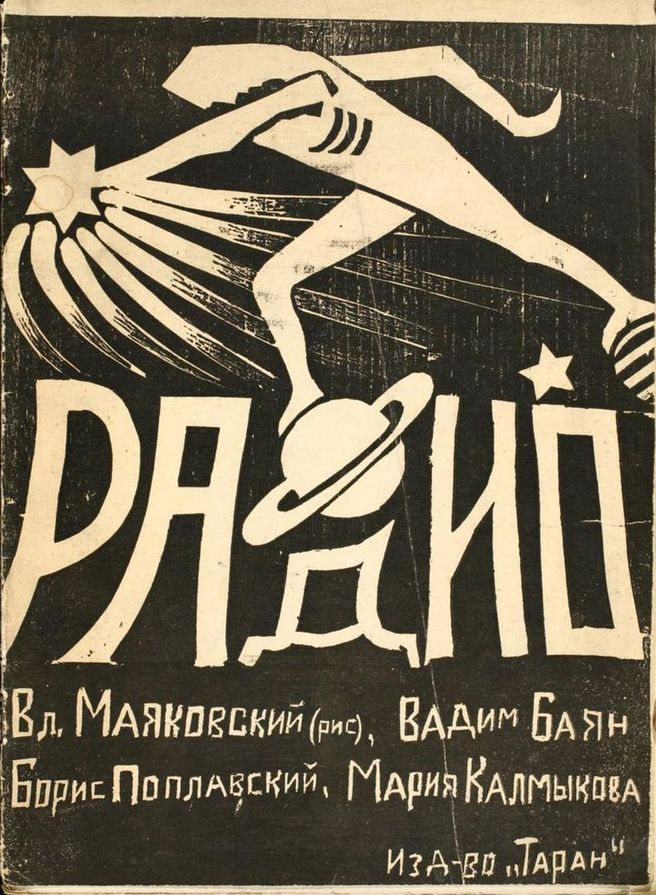
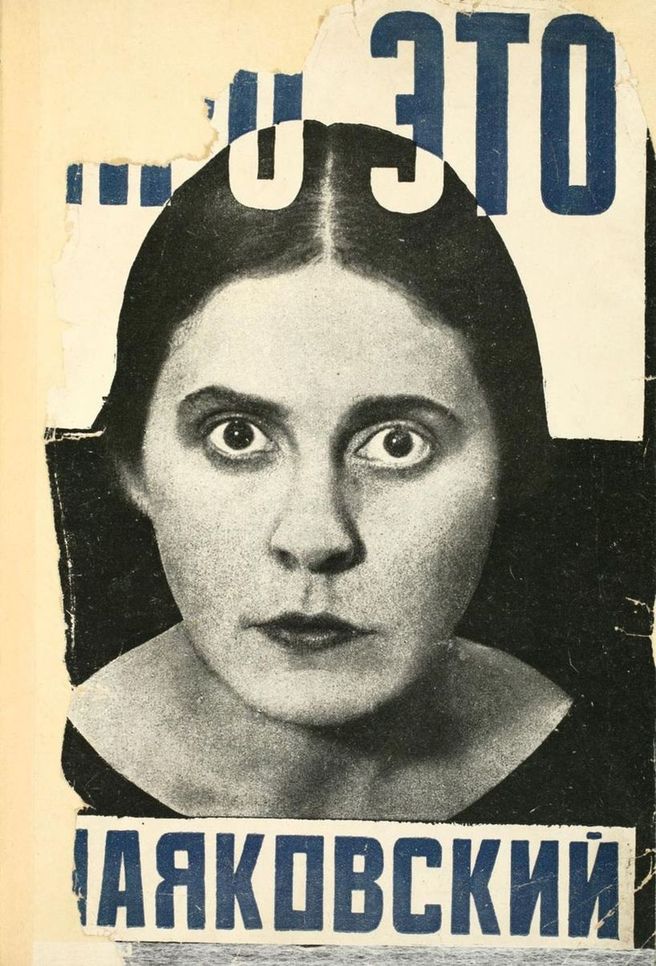
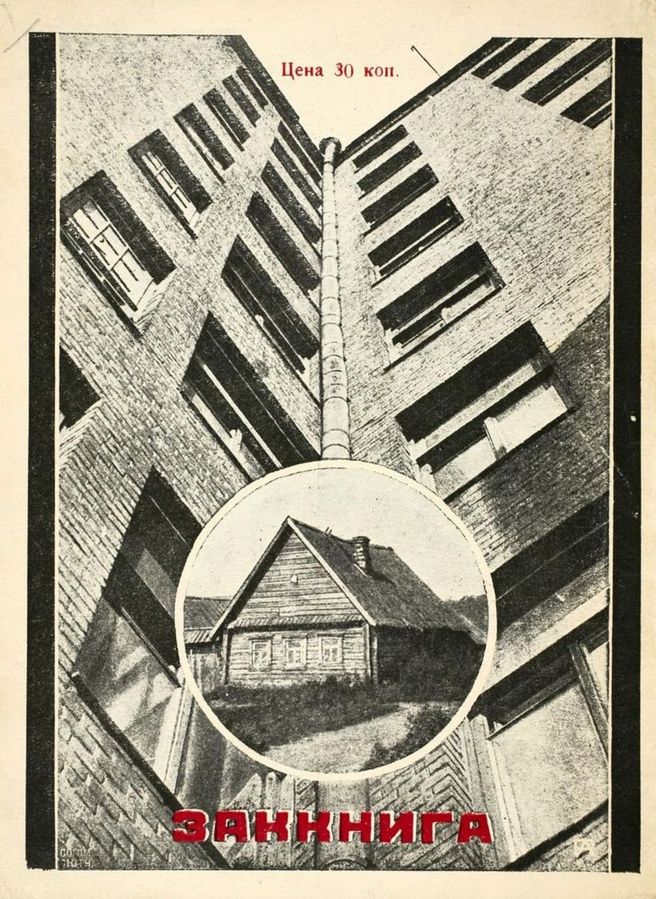
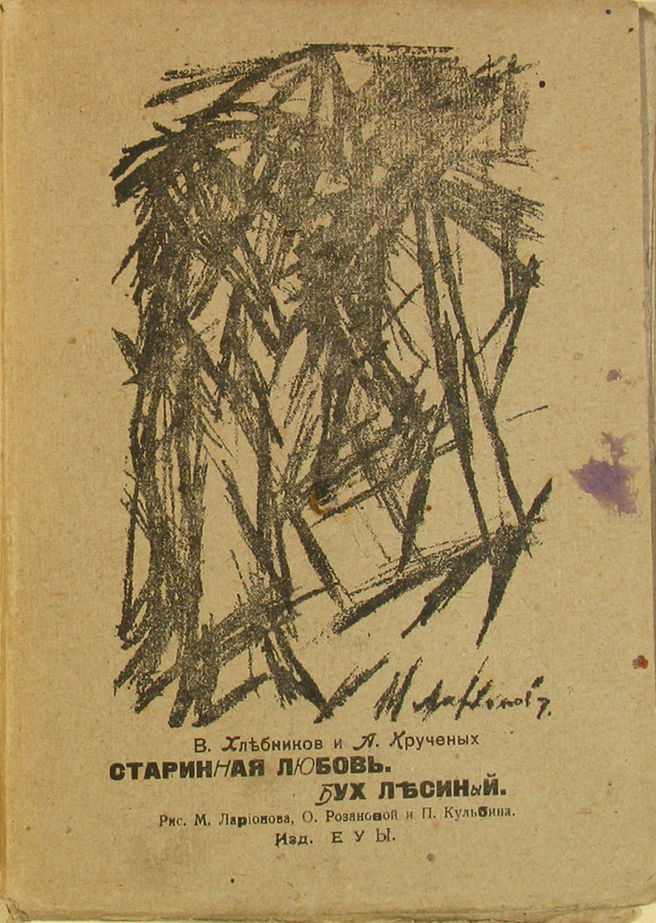
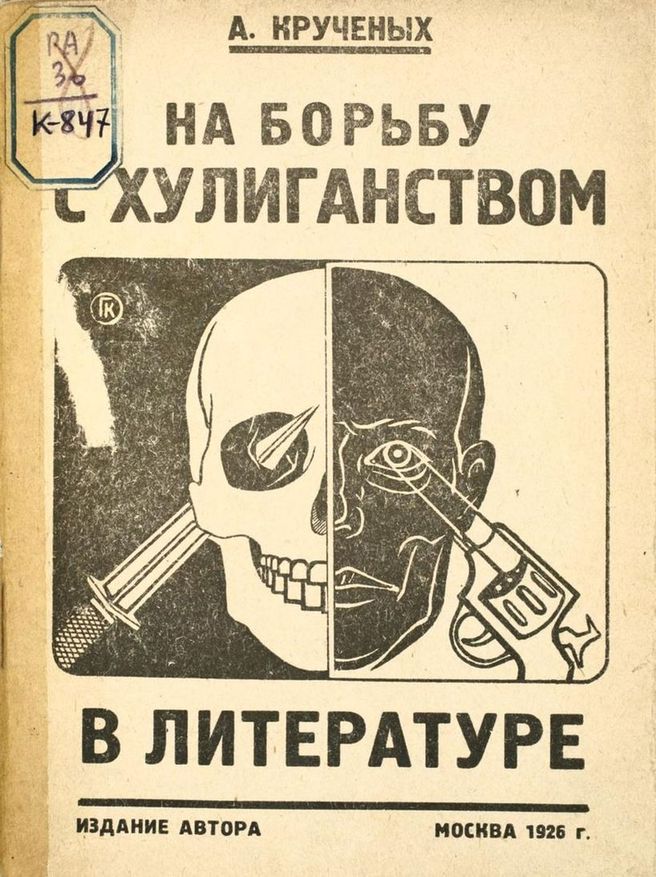
You can also down­load full pages in high-res­o­lu­tion. Many of the texts include strong visu­al ele­ments, such as the cov­er at the top from a mul­ti-author col­lec­tion titled Radio, fea­tur­ing Mayakovsky, whose own books include pho­to mon­tages like the two fur­ther up. Just above, see the cov­er of Khleb­nikov and Kruchenykh’s Vin­tage Love, which includes many more such sketch­es. And below, the cov­er of a 1926 book by Kruchenykh called On the Fight Against Hooli­gan­ism in Lit­er­a­ture.

01b4758b3ffb34ffa3d9879e182c2f3a225489ea

Although “state con­trol was absolute through­out” Sovi­et his­to­ry, these artists flour­ished before Trotsky’s fall in 1928, wrote Isa­iah Berlin in his 1945 pro­file of Russ­ian art; there was “a vast fer­ment in Sovi­et thought, which dur­ing those ear­ly years was gen­uine­ly ani­mat­ed by the spir­it of revolt against, and chal­lenge to, the arts of the West.” The Par­ty came to view this peri­od as “the last des­per­ate strug­gle of cap­i­tal­ism” and the Futur­ists would soon be over­thrown, “by the strong, young, mate­ri­al­ist, earth­bound, pro­le­tar­i­an culture”—a cul­ture imposed from above in the mid-30s by the Writ­ers’ Union and the Cen­tral Com­mit­tee.

Thus began the regret­table per­se­cu­tions and purges of artists and dis­si­dents of all kinds, and the move­ment toward the Stal­in­ist per­son­al­i­ty cult and “col­lec­tive work on Sovi­et themes by squads of pro­le­tar­i­an writ­ers.” But dur­ing the first quar­ter of the cen­tu­ry, “a time of storm and stress,” Russ­ian lit­er­a­ture and art, Berlin adjudged, “attained its great­est height since its clas­si­cal age of Pushkin, Ler­mon­tov, and Gogol.”

via Mono­skop

Relat­ed Con­tent:

Hear Russ­ian Futur­ist Vladimir Mayakovsky Read His Strange & Vis­cer­al Poet­ry

Hear the Exper­i­men­tal Music of the Dada Move­ment: Avant-Garde Sounds from a Cen­tu­ry Ago

Exten­sive Archive of Avant-Garde & Mod­ernist Mag­a­zines (1890–1939) Now Avail­able Online

Josh Jones is a writer and musi­cian based in Durham, NC. Fol­low him at @jdmagness

« Go BackMore in this category... »
Quantcast