Leonard Cohen Reads The Great World War I Poem, “In Flanders Fields”

Cour­tesy of Legion Mag­a­zine, you can hear Canada’s icon­ic singer-song­writer Leonard Cohen read­ing â€śIn Flan­ders Fields” by Lieu­tenant-Colonel John McCrae. The clip was recent­ly record­ed to com­mem­o­rate the 100th anniver­sary of the poem.

World War I inspired many poems. But this one, straight from the begin­ning, became one of the most pop­u­lar ones. Poets.org recounts the ori­gins of “In Flan­ders Fields” thus­ly:

As the first shots of World War I were fired in the sum­mer of 1914, Cana­da, as a mem­ber of the British Empire, became involved in the fight as well. [John] McCrae was appoint­ed brigade-sur­geon to the First Brigade of the Cana­di­an Field Artillery.

In April 1915, McCrae was sta­tioned in the trench­es near Ypres, Bel­gium, in an area known as Flan­ders, dur­ing the bloody Sec­ond Bat­tle of Ypres. In the midst of the trag­ic war­fare, McCrae’s friend, twen­ty-two-year-old Lieu­tenant Alex­is Helmer, was killed by artillery fire and buried in a makeshift grave. The fol­low­ing day, McCrae, after see­ing the field of makeshift graves bloom­ing with wild pop­pies, wrote his famous poem “In Flan­ders Field,” which would be the sec­ond to last poem he would ever write. It was pub­lished in England’s Punch mag­a­zine in Decem­ber 1915 and was lat­er includ­ed in the posthu­mous col­lec­tion In Flan­ders Fields and Oth­er Poems (G. P. Putnam’s Sons, 1919).

As a sad post­script, McCrae start­ed suf­fer­ing from asth­ma attacks and bron­chi­tis in the sum­mer of 1917, then died of pneu­mo­nia and menin­gi­tis in Jan­u­ary of 1918. It’s fit­ting that Leonard Cohen (an accom­plished poet before he became a musi­cian) would recite “In Flan­ders Fields,” the text of which you can read below. The sec­ond read­ing was record­ed live in Los Ange­les ear­li­er this year.

In Flan­ders fields the pop­pies blow
Between the cross­es, row on row,
That mark our place; and in the sky
The larks, still brave­ly singing, fly
Scarce heard amid the guns below.

We are the Dead. Short days ago
We lived, felt dawn, saw sun­set glow,
Loved and were loved, and now we lie
In Flan­ders fields.

Take up our quar­rel with the foe:
To you from fail­ing hands we throw
The torch; be yours to hold it high.
If ye break faith with us who die
We shall not sleep, though pop­pies grow
In Flan­ders fields.

Find Cohen’s read­ing in our col­lec­tion, 1,000 Free Audio Books: Down­load Great Books for Free.

Fol­low Open Cul­ture on Face­book and Twit­ter and share intel­li­gent media with your friends. Or bet­ter yet, sign up for our dai­ly email and get a dai­ly dose of Open Cul­ture in your inbox. And if you want to make sure that our posts def­i­nite­ly appear in your Face­book news­feed, just fol­low these sim­ple steps.

Relat­ed Con­tent

Young Leonard Cohen Reads His Poet­ry in 1966 (Before His Days as a Musi­cian Began)

Ladies and Gen­tle­men… Mr. Leonard Cohen: The Poet-Musi­cian Fea­tured in a 1965 Doc­u­men­tary

The Poet­ry of Leonard Cohen Illus­trat­ed by Two Short Films

The Great Stan Lee Reads Edgar Allan Poe’s “The Raven”

What work of Amer­i­can poet­ry has proven more irre­sistible than Edgar Allan Poe’s The Raven? Cer­tain­ly we can sel­dom refrain our­selves from fea­tur­ing it here on Open Cul­ture. We’ve post­ed illus­tra­tions by Ă‰douard Manet and Gus­tave DorĂ©, read­ings by Christo­pher Walken, Vin­cent Price, Christo­pher Lee (all avail­able here), James Earl JonesIggy Pop, and Lou Reed, who offered his own mod­ern­ized take on Poe’s words. Even nota­bles pri­mar­i­ly not­ed for some­thing oth­er than their recita­tion abil­i­ty have got in on The Raven: just above, for instance, you can see a read­ing by none oth­er than Mar­vel Comics mas­ter­mind Stan Lee.

We rec­og­nize Stan Lee, of course, as an icon of Amer­i­can cul­ture for his achieve­ments in the field of comics: doing his part to cre­ate endur­ing char­ac­ters like Spi­der-Man, Iron Man, and the X‑Men, fight­ing cen­sor­ship from the Comics Code Author­i­ty, intro­duc­ing the con­cept of coher­ent — or at least coher­ent-enough — fic­tion­al “uni­vers­es,” and much more besides. But a decent por­tion of Lee’s fame also owes to his seem­ing­ly bot­tom­less well of enthu­si­asm, from which he con­tin­ues to draw, at the age of 92, for every pub­lic address to the “true believ­ers,” and he does­n’t leave that enthu­si­asm behind when it comes time to inter­pret Edgar Allan Poe.

Hav­ing pre­vi­ous­ly gone on the record in inter­views nam­ing Poe as one of his favorite authors in child­hood (along­side oth­er such high‑, low‑, and mid­dle-browed lit­er­ary immor­tals as Edgar Rice Bur­roughs, Charles Dick­ens, Mark Twain, O. Hen­ry, and Shake­speare), he makes a cer­tain kind of sense as a Raven-read­er. (And has­n’t, say, Spi­der-Man’s ori­gin sto­ry passed into Amer­i­can myth in much the same way as Poe’s tale of a lament­ing lover tor­ment­ed by a talk­ing bird?) He also sets a high bar with his endear­ing per­for­mance itself, which should get you think­ing: if you, too, one day become an icon of Amer­i­can cul­ture, how will you approach your inevitable Raven-read­ing turn?

You can find Lee’s read­ing in our col­lec­tion, 1,000 Free Audio Books: Down­load Great Books for Free. Poe’s text lives here: 800 Free eBooks for iPad, Kin­dle & Oth­er Devices.

Relat­ed Con­tent:

Édouard Manet Illus­trates Edgar Allan Poe’s The Raven, in a French Edi­tion Trans­lat­ed by Stephane Mal­lar­mé (1875)

Gus­tave Doré’s Splen­did Illus­tra­tions of Edgar Allan Poe’s “The Raven” (1884)

Edgar Allan Poe’s “The Raven,” Read by Christo­pher Walken, Vin­cent Price, and Christo­pher Lee

James Earl Jones Reads Edgar Allan Poe’s “The Raven” and Walt Whitman’s “Song of Myself”

Lou Reed Rewrites Edgar Allan Poe’s “The Raven.” See Read­ings by Reed and Willem Dafoe

7 Tips from Edgar Allan Poe on How to Write Vivid Sto­ries and Poems

Down­load the Com­plete Works of Edgar Allan Poe on His Birth­day

Down­load 55 Free Online Lit­er­a­ture Cours­es: From Dante and Mil­ton to Ker­ouac and Tolkien

Based in Seoul, Col­in Mar­shall writes and broad­casts on cities and cul­ture. He’s at work on a book about Los Ange­les, A Los Ange­les Primer, the video series The City in Cin­e­maand the crowd­fund­ed jour­nal­ism project Where Is the City of the Future? Fol­low him on Twit­ter at @colinmarshall or on Face­book.

William S. Burroughs Reads His Sarcastic “Thanksgiving Prayer” in a 1988 Film By Gus Van Sant

Hav­ing moved to Korea a cou­ple weeks ago, I won’t have the chance to par­take this year in the beloved insti­tu­tion of Amer­i­can cul­ture known as Thanks­giv­ing. (Korea has its own Thanks­giv­ing, but it hap­pened two months ago.) Maybe you live in the Unit­ed States and thus almost cer­tain­ly have a Thanks­giv­ing din­ner of some kind, big or small, com­ing soon. Or maybe you, like me, live else­where in the world, and thus in a place with­out the same tra­di­tion. Either way, you can sure­ly par­take this Thanks­giv­ing in the beloved insti­tu­tion of Amer­i­can cul­ture known as the work of William S. Bur­roughs.

Here we have a short film of Bur­roughs, best known as the author of a body of con­tro­ver­sial and exper­i­men­tal lit­er­a­ture, includ­ing books like Junky and Naked Lunch, shot by Gus Van Sant, best known as the direc­tor of films like Good Will Hunt­ingMy Own Pri­vate Ida­ho, and Drug­store Cow­boy, the last of which includes a mem­o­rable appear­ance by Bur­roughs him­self.

It cap­tures Bur­roughs read­ing his poem â€śThanks­giv­ing Day, Nov. 28, 1986,” also known as his “Thanks­giv­ing Prayer.” Van Sant shot it two Thanks­giv­ings after that one, in 1988, the year before Drug­store Cow­boy (and six years after adapt­ing Bur­rough’s sto­ry “The Dis­ci­pline of D.E.” into an ear­ly short film).

Bur­roughs, a life­long crit­ic of Amer­i­ca, fills his prayer with bit­ter­ly sar­cas­tic “thanks” for things like “a con­ti­nent to despoil and poi­son,” “Indi­ans to pro­vide a mod­icum of chal­lenge and dan­ger,” “the KKK,” and “Pro­hi­bi­tion and the war against drugs” (about which his char­ac­ter in Drug­store Cow­boy had some par­tic­u­lar­ly choice words). He ends by express­ing iron­ic, Great Gats­by-quot­ing grat­i­tude for â€śthe last and great­est betray­al of the last and great­est of human dreams.”

Like him â€” like most every­body — I have my own, if less deep-seat­ed, frus­tra­tions with our home­land, and per­haps in leav­ing I sub­con­scious­ly emu­lat­ed his stretch­es of expa­tri­atism in Mex­i­co, Eng­land, France, and Moroc­co. But I sin­cere­ly doubt that I’ve had my last Thanks­giv­ing on U.S. soil; for all its fail­ings, Amer­i­ca remains too inter­est­ing to stay away from entire­ly. After all, what oth­er coun­try could pos­si­bly pro­duce a writer, a per­son­al­i­ty, or a crit­ic like William S. Bur­roughs?

Relat­ed Con­tent:

The Mak­ing of Drug­store Cow­boy, Gus Van Sant’s First Major Film (1989)

William S. Bur­roughs Teach­es a Free Course on Cre­ative Read­ing and Writ­ing (1979)

The Dis­ci­pline of D.E.: Gus Van Sant Adapts a Sto­ry by William S. Bur­roughs

William S. Bur­roughs Reads His First Nov­el, Junky

Based in Seoul, Col­in Mar­shall writes and broad­casts on cities and cul­ture. He’s at work on a book about Los Ange­les, A Los Ange­les Primer, the video series The City in Cin­e­maand the crowd­fund­ed jour­nal­ism project Where Is the City of the Future? Fol­low him on Twit­ter at @colinmarshall or on Face­book.

The Lost Poems of Pablo Neruda: Help Bring Them to the English Speaking World for the First Time

This past week­end, the Chilean gov­ern­ment acknowl­edged what many had long sus­pect­ed — that, writes NPR, “the Nobel Prize-win­ning poet Pablo Neru­da might have been killed [or, to be more pre­cise, mur­dered] dur­ing the after­math of the 1973 coup that brought Gen. Augus­to Pinochet to pow­er.” Pre­vi­ous­ly the gov­ern­ment had main­tained that prostate can­cer was the cause of death.

If you’re look­ing for a hap­pi­er rev­e­la­tion, then I can tell you this: Last year, Chilean archivists “dis­cov­ered a cache of pre­vi­ous­ly unseen and unpub­lished poems writ­ten by Neru­da. The collection—written in note­books and on scraps of paper in the poet’s own hand—includes a sam­pling of the ardent love poems for which Neru­da is famous.” That’s accord­ing to Cop­per Canyon Press, which has been entrust­ed by Pablo Neruda’s estate “to bring these lost poems to a North Amer­i­can audi­ence for the first time.” And it will only hap­pen with your help.

Right now, Cop­per Canyon Press has a Kick­starter cam­paign under­way to raise a total of $50,000. Funds will go towards  the pro­duc­tion of a beau­ti­ful book trans­lat­ed by the award-win­ning trans­la­tor and poet For­rest Gan­der. With 23 days to go, they have so far $32,2215 raised. But there’s still $18,000+ to go, and it would be great if Open Cul­ture read­ers could help move the nee­dle. Those who sup­port this project will be among the first to read these lost poems in Eng­lish. And speak­ing of firsts, don’t miss these relat­ed items in our archive: Hear Pablo Neru­da Read His Poet­ry In Eng­lish For the First Time, Days Before His Nobel Prize Accep­tance (1971) and Pablo Neruda’s His­toric First Read­ing in the US (1966) in our archive.

Relat­ed Con­tent:

“The Me Bird” by Pablo Neru­da: An Ani­mat­ed Inter­pre­ta­tion

Poems as Short Films: Langston Hugh­es, Pablo Neru­da and More

Read 10 Short Sto­ries by Gabriel Gar­cía Márquez Free Online (Plus More Essays & Inter­views)

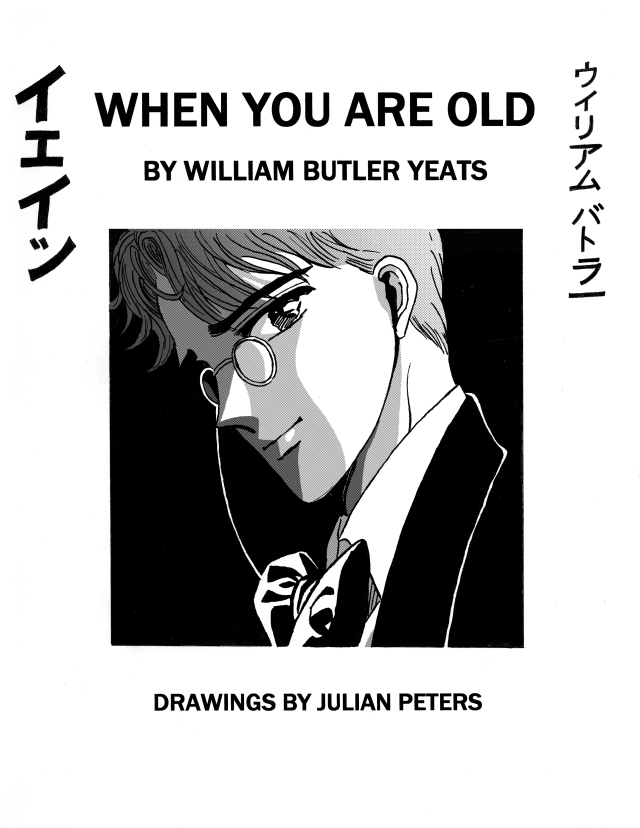
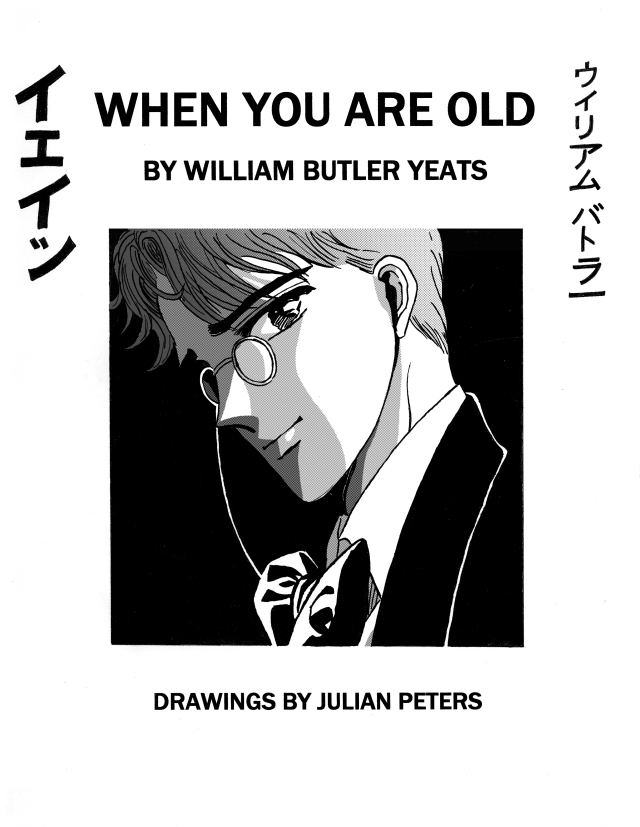
W.B. Yeats’ Poem “When You Are Old” Adapted into a Japanese Manga Comic

Yeats Manga

Click on images to view them in a larg­er for­mat.

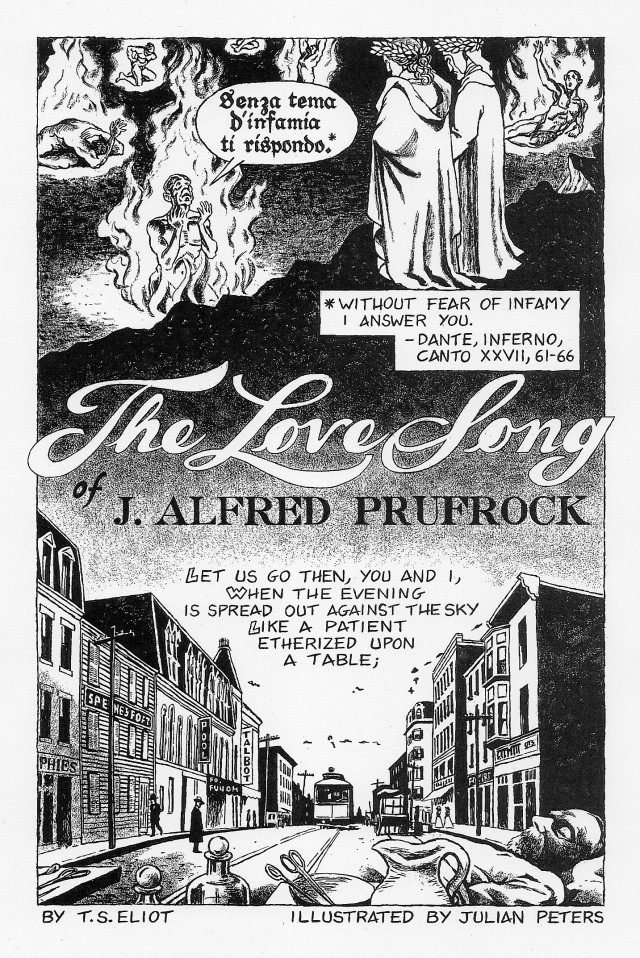
Last week we fea­tured Julian Peters’ com­ic-book adap­ta­tion of T.S. Eliot’s “The Love Song of J. Alfred Prufrock.” That might seem like an ambi­tious enough clas­sic-lit­er­a­ture-to-comics adap­ta­tion for any artist’s career, but the Mon­tre­al-based art his­to­ry grad stu­dent Peters has put him­self on a larg­er mis­sion. If you take a look at his site, you’ll find that he’s also adapt­ed poems by “Italy’s fore­most poet of the First World War” Giuseppe Ungaret­ti, Sea­mus Heaney’s 1969 poem “The Giv­en Note,” and John Philip John­son’s “Stairs Appear in a Hole Out­side of Town.”

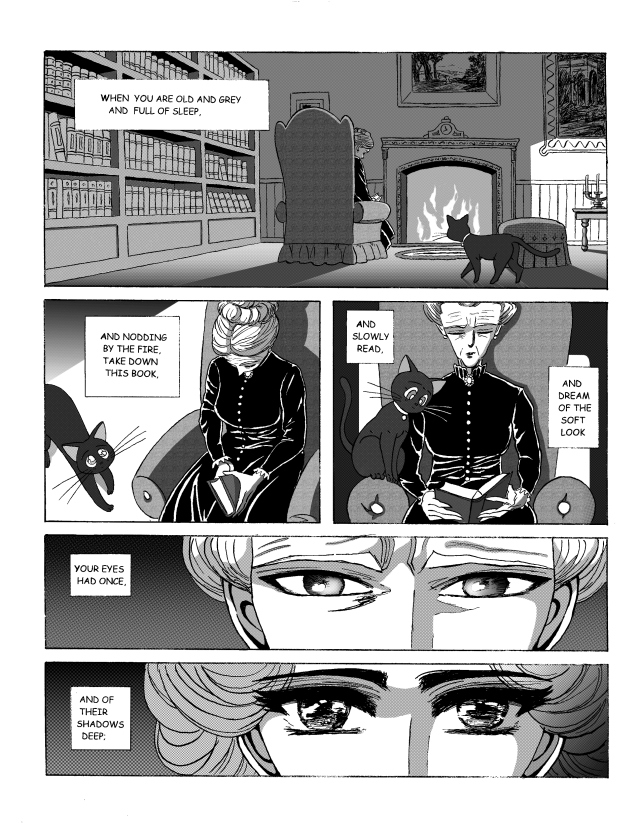
Yeats Manga 2

You see here the ver­sa­tile Peters’ visu­al inter­pre­ta­tion of W.B. Yeats’ “When You Are Old,” a nat­ur­al choice giv­en his appar­ent poet­ic inter­ests, but one drawn in the style of Japan­ese man­ga. In adapt­ing Yeats’ words to a lady in the twi­light of life, Peters has paid spe­cif­ic trib­ute to the work of Clamp, Japan’s famous all-female com­ic-artist col­lec­tive known for series like RG VedaTokyo Baby­lon, and X/1999.

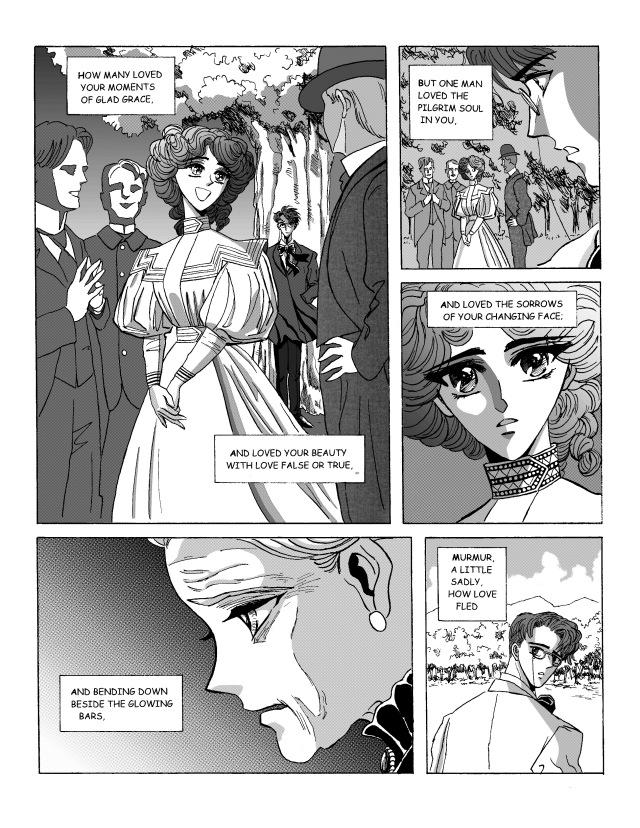
Yeats Manga 3

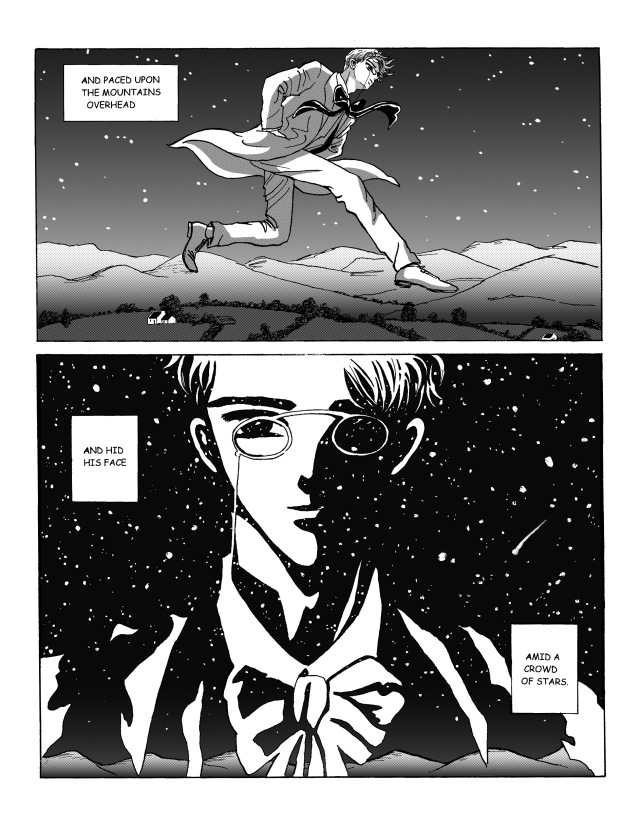
Clamp fans will find that, in three brief pages, Peters touch­es on quite a few of the aes­thet­ic tropes that have long char­ac­ter­ized the col­lec­tive’s work. (You’ll want to click through to Peters’ own “When You Are Old” page to see an extra illus­tra­tion that also fits well into the Clamp sen­si­bil­i­ty.) Yeats fans will no doubt appre­ci­ate the chance to see the poet­’s work in an entire­ly new way. I, for one, had nev­er before pic­tured a cat on the lap of the woman “old and grey and full of sleep” reflect­ing on the â€śmoments of glad grace” of her youth and the one man who loved her “pil­grim soul,” but now I always will — and I imag­ine both Yeats and Clamp would approve of that. You can read and hear Yeats’ 1892 poem here. If you click on the images on this page, you can view them in a larg­er for­mat.

Yeats Manga 4

Relat­ed Con­tent:

Read the Entire Com­ic Book Adap­ta­tion of T.S. Eliot’s “The Love Song of J. Alfred Prufrock”

Rare 1930s Audio: W.B. Yeats Reads Four of His Poems

Japan­ese Car­toons from the 1920s and 30s Reveal the Styl­is­tic Roots of Ani­me

Col­in Mar­shall writes else­where on cities, lan­guage, Asia, and men’s style. He’s at work on a book about Los Ange­les, A Los Ange­les Primer, the video series The City in Cin­e­maand the crowd­fund­ed jour­nal­ism project Where Is the City of the Future? Fol­low him on Twit­ter at @colinmarshall or on Face­book.

Read the Entire Comic Book Adaptation of T.S. Eliot’s “The Love Song of J. Alfred Prufrock”

prufrock23

Two years ago, we high­light­ed for you the begin­ning of a promis­ing project — Julian Peters’ com­ic book adap­ta­tion of T.S. Eliot’s 1910 poem â€śThe Love Song of J. Alfred Prufrock.” At the time of our post, Peters had only com­plet­ed the first nine pages of his adap­ta­tion. And, about those first pages, our Josh Jones had this to say:

Dante is where “Prufrock” begins, with an epi­graph from the Infer­no. Peters’ first page illus­trates the ago­nized speak­er of Dante’s lines, Gui­do da Mon­te­fel­tro, a soul con­fined to the eighth cir­cle, whom you can see at the top of the title page shown above. Peters’ visu­al choic­es place us firm­ly in the hell­ish emo­tion­al realm of “Prufrock,” a seem­ing cat­a­logue of the mun­dane that har­bors a dark­er import. Peters gives us no hint of when we might expect new pages, but I for one am eager to see more.

Hap­pi­ly for Josh … and the rest of us … we can now find out where Peters took the rest of the project. The adap­ta­tion is now com­plete. 24 pages in total. All now on dis­play on Peters’ web­site here.

If you’re not famil­iar with â€śThe Love Song of J. Alfred Prufrock,” I’d strong­ly encour­age you to revis­it a post in our archive where you can hear “Prufrock” being read by T.S. Eliot him­self and also Sir Antho­ny Hop­kins. There you can learn more about Eliot’s mod­ernist mas­ter­piece.

Note: Julian is look­ing for a pub­lish­er to help put his com­ic book in print. If any pub­lish­ers want to chat with him, you can find his con­tact info on his web site.

Fol­low Open Cul­ture on Face­book and Twit­ter and share intel­li­gent media with your friends. Or bet­ter yet, sign up for our dai­ly email and get a dai­ly dose of Open Cul­ture in your inbox. And if you want to make sure that our posts def­i­nite­ly appear in your Face­book news­feed, just fol­low these sim­ple steps.

Relat­ed Con­tent:

T.S. Eliot’s Rad­i­cal Poem “The Love Song of J. Alfred Prufrock,” Read by Antho­ny Hop­kins and Eliot Him­self

Lis­ten to T.S. Eliot Recite His Late Mas­ter­piece, the Four Quar­tets

T.S. Eliot Reads Old Possum’s Book of Prac­ti­cal Cats & Oth­er Clas­sic Poems (75 Min­utes, 1955)

Bob Dylan Reads From T.S. Eliot’s Great Mod­ernist Poem The Waste Land

by | Permalink | Make a Comment ( 1 ) |

Watch “The Poetry of Perception”: Harvard Animates Walt Whitman, Emily Dickinson & William Carlos Williams

Two years ago, a series of ani­mat­ed sci­ence videos began to pop up on a Vimeo account called Har­vardX Neu­ro­science. As its name sug­gests, it’s com­ing out of Har­vard Uni­ver­si­ty, and, with the help of ani­ma­tors, they orig­i­nal­ly cre­at­ed a series of sci­en­tif­ic shorts pitched between the lay­man and the seri­ous sci­en­tist. In the last month, how­ev­er, they’ve stepped fur­ther into the arts realm with a mini-series of ani­ma­tions (five and count­ing as of this writ­ing) that look to poet­ry to explain what sci­ence ren­ders dry and aca­d­e­m­ic.

The new video series fea­tures “rep­re­sen­ta­tions of per­cep­tion and sen­sa­tion” as real­ized through the poems of Walt Whit­man, America’s great tran­scen­den­tal­ist poet, Emi­ly Dick­in­son, and William Car­los Williams (whose own read­ing is used as the audio for a video). Open­ing all the sens­es to the won­ders of the world is “the ori­gin of all poems” accord­ing to Whit­man, and this cura­tion focus­es on smell, taste, sight, touch, and sound to prove his point.

The read­ers you hear in this videos, col­lec­tive­ly enti­tled Poet­ry of Per­cep­tion, include poet/artist Peter Bleg­vad, Anna Mar­tine, Harvard’s own Sarah Jes­sop, and artist/animator Nak Yong Choi. And the ani­ma­tions are brought to you by Sophie Koko Gate, Han­nah Jacobs, Lily Fang, Isaac Hol­land, Bri­an Smee, all who bring a tac­tile, muta­ble qual­i­ty to these short poems.

There will be anoth­er three videos in the series, so please book­mark the Vimeo account.

Relat­ed Con­tent:

Walt Whitman’s Poem “A Noise­less Patient Spi­der” Brought to Life in Three Ani­ma­tions

William Car­los Williams Reads His Poet­ry (1954)

Mar­i­lyn Mon­roe Reads Walt Whitman’s Leaves of Grass (1952)

The Sec­ond Known Pho­to of Emi­ly Dick­in­son Emerges

Ted Mills is a free­lance writer on the arts who cur­rent­ly hosts the artist inter­view-based FunkZone Pod­cast. You can also fol­low him on Twit­ter at @tedmills, read his oth­er arts writ­ing at tedmills.com and/or watch his films here.

Hear Sylvia Plath Read 50+ of Her Dark, Compelling Poems

No mat­ter how casu­al a rela­tion­ship you’ve had with 20th-cen­tu­ry Amer­i­can poet­ry, you’ve heard the name Sylvia Plath. Maybe you’ve already dared to expe­ri­ence her dark but com­pelling lit­er­ary world, or maybe you just know a few of the basic ele­ments of her life and career: her auto­bi­o­graph­i­cal nov­el The Bell Jar, her famous­ly har­row­ing poet­ry col­lec­tion Ariel, her stormy mar­riage to British poet lau­re­ate Ted Hugh­es, her death by her own hand at the age of thir­ty. But what bet­ter day than today, the 83rd anniver­sary of Plath’s birth, to get bet­ter acquaint­ed with her work?

And what bet­ter way than to hear that work read in Plath’s own voice? Sure, you could just pick up one of the many yel­lowed mass-mar­ket paper­back copies of Ariel you see on book­shelves all across Amer­i­ca and plunge in, but you might first con­sid­er turn­ing to our archives, which con­tain a 2013 post in which we fea­tured Plath read­ing fif­teen poems that would appear in the Ariel col­lec­tion that, pub­lished two years after her death (“left sit­ting on the kitchen table to be found along with her body,” not­ed Josh Jones), would raise her poet­ic rep­u­ta­tion to new heights. You can hear the first part of these read­ings, record­ed in 1962, at the top of this post, and the rest at this orig­i­nal post.

We might feel lucky that, in her short life, she left even those per­for­mances for pos­ter­i­ty, but there’s more: last year, we fea­tured Sylvia Plath read­ing her poet­ry, the 1977 record released by pio­neer­ing pre-audio­book label Caed­mon which con­tains 23 poems Plath com­mit­ted to tape as ear­ly as 1959. Find all of the read­ings here.

If these two audio col­lec­tions give you a taste for the poet biog­ra­ph­er Carl Rollyson called “the Mar­i­lyn Mon­roe of mod­ern lit­er­a­ture,” have a lis­ten to Cre­do Records’ album Sylvia Plath, which offers some mate­r­i­al you’ll have heard along­side some you won’t have. Hav­ing lis­tened to all this, you’ll hard­ly asso­ciate the adjec­tive “cel­e­bra­to­ry” with Plath’s work â€” but that does­n’t mean that, on what would have been her 83rd birth­day, poet­ry-lovers can’t cel­e­brate it.

If you would like to sign up for Open Culture’s free email newslet­ter, please find it here. It’s a great way to see our new posts, all bun­dled in one email, each day.

If you would like to sup­port the mis­sion of Open Cul­ture, con­sid­er mak­ing a dona­tion to our site. It’s hard to rely 100% on ads, and your con­tri­bu­tions will help us con­tin­ue pro­vid­ing the best free cul­tur­al and edu­ca­tion­al mate­ri­als to learn­ers every­where. You can con­tribute through Pay­Pal, Patre­on, and Ven­mo (@openculture). Thanks!

Relat­ed Con­tent:

Hear Sylvia Plath Read Fif­teen Poems From Her Final Col­lec­tion, Ariel, in 1962 Record­ing

The Art of Sylvia Plath: Revis­it Her Sketch­es, Self-Por­traits, Draw­ings & Illus­trat­ed Let­ters

Sylvia Plath Reads Her Poet­ry: 23 Poems from the Last 6 Years of Her Life

Sylvia Plath, Girl Detec­tive Offers a Hilar­i­ous­ly Cheery Take on the Poet’s Col­lege Years

Col­in Mar­shall writes else­where on cities, lan­guage, Asia, and men’s style. He’s at work on a book about Los Ange­les, A Los Ange­les Primer, the video series The City in Cin­e­maand the crowd­fund­ed jour­nal­ism project Where Is the City of the Future? Fol­low him on Twit­ter at @colinmarshall or on Face­book.

« Go BackMore in this category... »
Quantcast