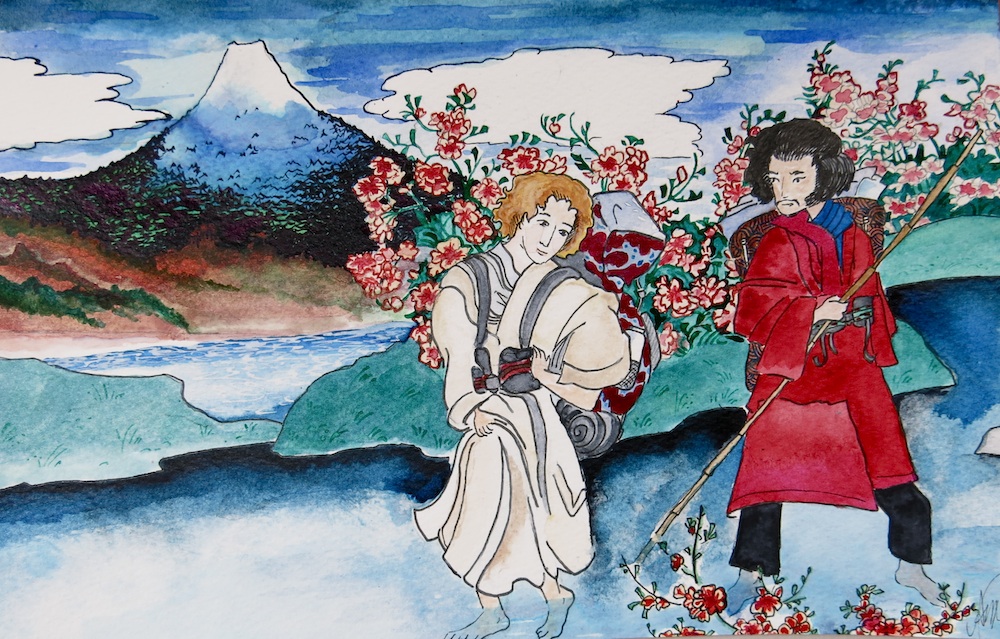
Matsuo Basho (1644–1694) lived his peculiar life on the conviction that art could create an awareness that allowed one to see into and communicate the essence of experience. Throughout his life he searched for the state of being one with the object of his poems, something he believed a poet needed to reach in order to write truthfully. This life-long search brought Basho to wandering. He thought that travelling would lead to a state of karumi (lightness), essential for art. In May 1689, when he was already a renowned poet in Japan, he sold his house and embarked on his greatest trip. Basho travelled light, always on foot and always slowly, looking carefully and deeply. He sought to leave everything behind (even himself) and have a direct experience with the nature around him, and he saw Zen Buddhism and travelling as the way to achieve this. He walked 2000 kilometers around the northern coast of Honshu (Japan’s main island), writing prose and poetry along the way, and compiling it all in a book that changed the course of Japanese literature, The Narrow Road to the Deep North.
We are Pablo Fernández (writer) and Anya Gleizer (painter), the adventurers and artists behind In Basho’s Footsteps. 325 years have passed since Basho began hiking the Narrow Road. This summer, we will retrace his trail, in an effort to come in contact with Basho’s approach to art and travelling. We will hike for three months, camping on the way, travelling as lightly and austerely as possible. We will write and paint along the route, and compile what we produce in an artist’s book. It will be hard, but art avails no compromises. Of course, apart from the physical and mental hardships, there are financial ones (flights and food for three months, and publishing costs). To make the project possible, we have used Kickstarter, a crowdfunding platform. With Kickstarter people are able to fund the projects they like, and receive a reward in exchange (we are giving our backers copies of our book, silk-screen prints and even paintings, depending on the pledge). This is a great way of creating an audience involved in the creation process. We don’t only receive financial support, but also very useful feedback, and we will be able to show our audience how the book is coming together. Because we want our art to reach as many people as possible, we are giving a digital edition of the book to everyone who backs the project with more than $5, before the book is accessible to the general public. Our Kickstarter campaign ends on June 4th. It has been a great success so far: We have already covered the travelling costs and now we are funding the publishing costs. For us, crowd-funding has opened up the traditional obstacles between creators and readers. This summer, with the help of all our supporters, we will retrace Basho’s Footsteps.
Shel Silverstein, beloved poet, songwriter, children’s author, and illustrator, perfected an instantly recognizable visual and literary style that has imprinted itself on several generations. We remember the heartfelt whimsy of stories like The Giving Tree (1964) and poetry collections like Where the Sidewalk Ends (1974) and A Light in the Attic (1981) as we remember childhood best friends, first crushes, and summer camp exploits. Many of us raised on his work have gone on to have kids of our own, so we get to revisit those books we loved, with their weird, irreverent twists and turns and wild imaginative flights. Our kids get a bonus, though, thanks to the web, since they can also see several Silverstein poems and stories in animated form on Youtube. Today, we bring you six of those animations. Sate your nostalgia, share with your kids, and rediscover the utterly distinctive voice of the pre-eminent children’s poet.
We don’t get to hear Silverstein’s actual voice in the animations of “Runny’s Hind Keart”and “Runny on Rount Mushmore,” above, two of many poems made almost entirely of spoonerisms from the book and audio CD Runny Babbit: A Billy Sook, posthumously published in 2005.
Instead, Silverstein sound-alike Dennis Locorriere—former lead singer of the band Dr. Hook—narrates. (Silverstein wrote a number of songs for the band.) The poems are as fun for kids to read aloud as they are to untangle. Read full text here.
Just above, we get vintage Silverstein, read/singing “Ickle Me, Pickle Me, Tickle Me Too” from Where the Sidewalk Ends. Accompanied by an acoustic guitar, Silverstein turns the poem into a folk ballad, his voice rising and cracking off-key. You may know that Silverstein wrote the Johnny Cash hit “A Boy Named Sue”—you may not know that he recorded his own version and several dozen more songs besides. The video above offers a fair representation of his musical style.
Silverstein published his award-winning collection of poetry Falling Up in 1996, three years before his death and many years after my childhood, so I didn’t have the pleasure of reading poems like “The Toy Eater” as a kid. The poem is an excellent example of what Poets.org calls Silverstein’s “deft mixing of the sly and the serious, the macabre, and the just plain silly.”
Hear Silverstein above read “Backwards Bill,” a poem I remember quite well as one of my favorites from A Light in the Attic. His raspy sing-song narration turns the poem into a funny little melody kids will remember and love singing along to.
Finally, we bring you an animated excerpt from Silverstein’s beloved 1963 fable Lafcadio: The Lion Who Shot Back, Silverstein’s first book written exclusively for children. He is so well known as a writer and illustrator for kids that it’s easy to forget that Silverstein first made a career in the fifties and sixties as a cartoonist for adults, publishing most of his work in Playboy. Silverstein never formally studied poetry and hadn’t considered writing it until his editor at Harper & Row, Ursula Nordstrom, urged him to. Without her intervention, he’d surely still be remembered for his iconic visual style and songwriting, but millions of kids would have missed out on the weirdness of his warped imagination. Silverstein showed us we didn’t have to be sentimental or schmaltzy to be open-hearted, caring, and curious. His work endures because he had the unique ability to speak to children in a language they understand without condescending or dumbing things down. See several more short animations at Silverstein’s official website.
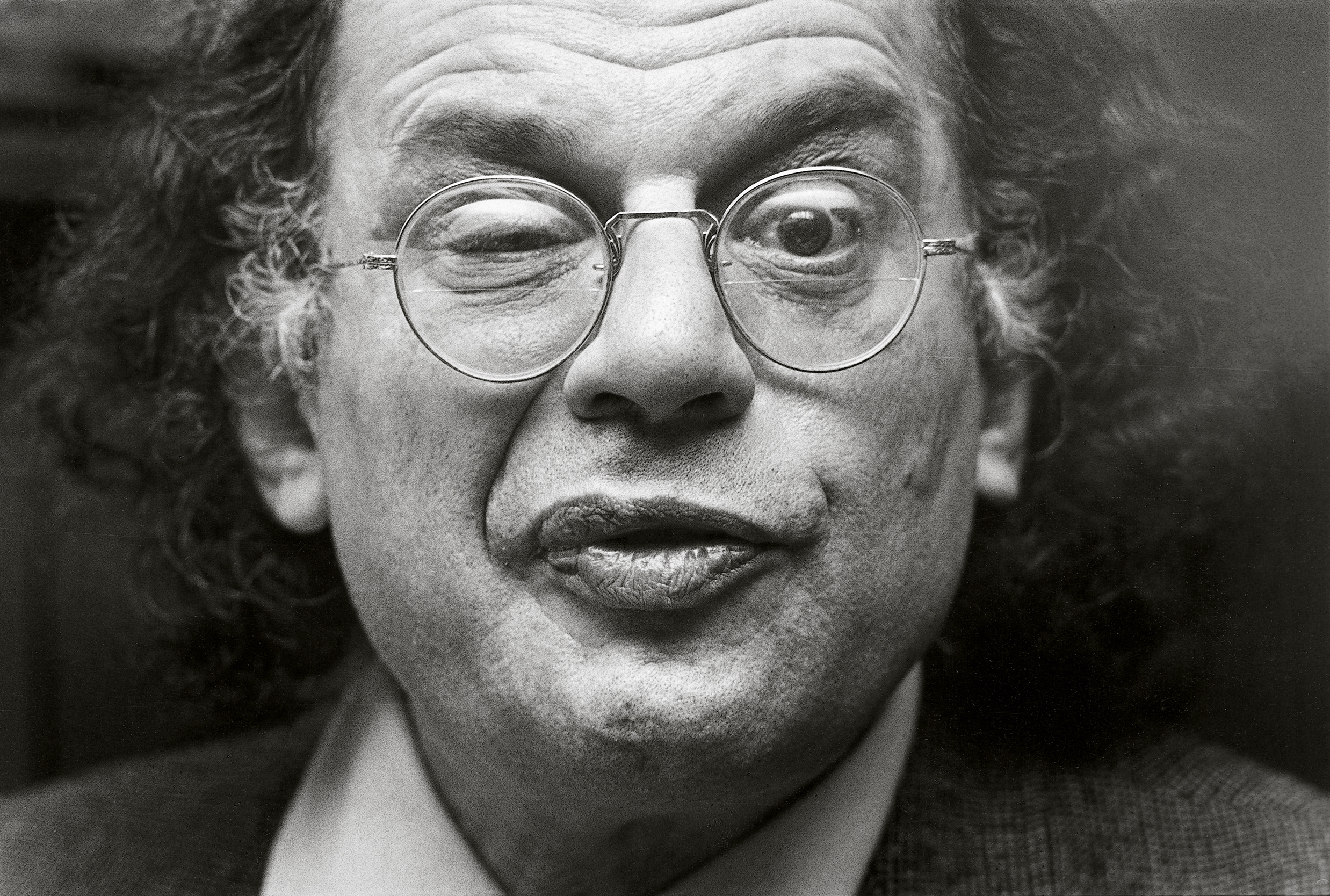
If you want to understand poetry, ask a poet. “What is this?” you ask, “some kind of Zen saying?” Obvious, but subtle? Maybe. What I mean to say is that I have found poetry one of those distinctive practices of which the practitioners themselves—rather than scholars and critics—make the best expositors, even in such seemingly academic subject areas as the history of poetry. Of course, poets, like critics, get things wrong, and not every poet is a natural teacher, but only poets understand poetry from the inside out, as a living, breathing exercise practiced the world over by every culture for all recorded history, linked by common insights into the nature of language and existence. Certainly Allen Ginsberg understood, and taught, poetry this way, in his summer lectures at the Jack Kerouac School of Disembodied poetics, which he co-founded with Anne Waldman at Chogyam Trungpa Rinpoche’s Naropa University in 1974.
We’ve previously featured some of Ginsberg’s Naropa lectures here at Open Culture, including his 1980 short course on Shakespeare’s The Tempest and his lecture on “Expansive Poetics” from 1981. Today, we bring you several selections from his lengthy series of lectures on the “History of Poetry,” which he delivered in 1975. Currently, thirteen of Ginsberg’s lectures in the series are available online through the Internet Archive, and they are each well worth an attentive listen. Actually, we should say there are twelve Ginsberg lectures available, since Ginsberg’s fellow Beat Gregory Corso led the first class in the series while Ginsberg was ill.
Corso taught the class in a “Socratic” style, allowing students to ask him any questions they liked and describing his own process and his relationships with other Beat poets. You can hear his lectures here. When Ginsberg took over the “History of Poetry” lectures, he began (above) with discussion of another natural poet-educator, the idiosyncratic scholar Ezra Pound, whose formally precise interpretation of the Anglo-Saxon poem “The Seafarer” introduced many modern readers to ancient alliterative Old English poetics. (Poet W.S. Merwin sits in on the lecture and offers occasional laconic commentary and correction.)
Ginsberg references Pound’s pithy text The ABC of Reading and discusses his penchant for “ransack[ing] the world’s literature, looking for usable verse forms.” Pound, says Ginsberg—“the most heroic poet of the century”—taught poetry in his own “cranky and personal” way, and Ginsberg, less cranky, does something similar, teaching “just the poems that I like (or the poems I found in my own ear,” though he is “much less systematic than Pound.” He goes on to discuss 18th and 19th century poetics and sound and rhythm in poetry. One of the personal quirks of Ginsberg’s style is his insistence that his students take meditation classes and his claim that “the English verse that was taught in high school” is very close to the “primary Buddhist understanding of transiency.” But one can leave aside Ginsberg’s Buddhist preoccupations—appropriate to his teaching at a Buddhist university, of course—and still profit greatly from his lectures. Below, find links to eleven more of Ginsberg’s “History of Poetry” lectures, with descriptions from the Internet Archive. Unfortunately, it appears that several of the lecture recordings have not been preserved, or at least haven’t made it to the archive, but there’s more than enough material here for a thorough immersion in Ginsberg’s historical poetics. Also, be sure to see AllenGinsberg.org for transcriptions of his “History of Poetry” lectures. You can find these lectures listed in our collection of Free Literature Courses, part of our larger list, 1,700 Free Online Courses from Top Universities.
Part 3: class on the history of poetry by Allen Ginsberg, in a series of classes in the Summer of 1975. Gregory Corso helps teach the class. Percy Bysshe Shelley and Thomas Hood are discussed extensively. The class reads from Shelley, and Ginsberg recites Shelley’s “Ode to the west wind.”
Part 10: A class on the history of poetry by Allen Ginsberg, in a series of classes from 1975. Ginsburg discusses William Shakespeare and Ben Johnson in detail. Putting poetry to music, and the poet James Shirley are also discussed.
Part 11: A class on the history of poetry by Allen Ginsberg, in a series of classes by Ginsberg in the summer of 1975. Ginsberg discusses the metaphysical poets during the seventeenth century, specifically John Donne and Andrew Marvell. Ginsberg reads and discusses several of Donne’s and Marvell’s poems. There is also a discussion of the metaphysical poets and Gnosticism.
Part 12: [Ginsberg continues his discussion of Gnosticism and talks about Milton and Wordsworth]
Part 14: Second half of a class on the history of poetry by Allen Ginsberg, from a series of classes during the summer of 1975. Ginsberg talks about the songs of the poet William Blake. He sings to the class accompanied with his harmonium, performing several selections from Blake’s “Songs of innocence” and “Songs of experience.”
Part 15: First half of a class on the history of poetry by Allen Ginsberg. from a series of classes during the summer of 1975. Ginsberg discusses the 19th century American poet, Walt Whitman, and a French poet of the same period, Arthur Rimbaud. He also discusses the poets’ biographies and their innovative approaches to style and poetics, followed by a reading by Ginsberg of a selection of Whitman’s and Rimbaud’s work.
Part 16: Second half of a class, and first half of the following class, on the history of poetry by Allen Ginsberg, from a class series during the summer of 1975. The first twenty minutes continues a class from the previous recording, on the work and innovation of the American poet Walt Whitman and the French poet Arthur Rimbaud. The remainder of the recording begins an introduction and analysis of the French poet Guillaume Apollinaire.
Part 17: A class on the history of poetry by Allen Ginsberg, from a series of classes during the summer of 1975. Ginsberg discusses the poets Guillaume Apollinaire, Vladimir Mayakovsky, and Federico Garcia Lorca. The New York School poet Frank O’Hara is also briefly discussed. Ginsberg reads a selection of poems from the their works, followed by a class discussion.
Part 18: First half of a class about the history of poetry by Allen Ginsberg, from a series of classes during the summer of 1975. Ginsberg discusses the American poet, and one of his mentors, William Carlos Williams. Ginsberg reads selections from Williams’ work, and discusses his style and background.
Part 19: Second half of a class on the history of poetry by Allen Ginsberg, from a series of classes during the summer of 1975. Ginsberg discusses the poets William Carlos Williams, Gregory Corso and Jack Kerouac. He includes several personal anecdotes about the poets and reads selections from their works. A class discussion follows.
Part 20: A snippet of material that may conclude a class on the history of poetry by Allen Ginsberg, from a class series during the summer of 1975. The recording includes three minutes and six seconds of Ginsberg talking about the morality of William Carlos Williams and the subject of poetry and perception
The poetry of Charles Bukowski deeply inspires many of its readers. Sometimes it just inspires them to lead the dissolute lifestyle they think they see glorified in it, but other times it leads them to create something compelling of their own. The quality and variety of the Bukowski-inspired animation now available on the internet, for instance, has certainly surprised me.
At the top of the post, we have Jonathan Hodgson’s adaptation of “The Man with the Beautiful Eyes,” which puts vivid, colorful imagery to Bukowski’s late poem that draws from his childhood memories of a mysterious, untamed young man in a run-down house whose very existence reminded him “that nobody wanted anybody to be strong and beautiful like that, that others would never allow it.” Below, you can watch Monika Umba’s even more unconventional animation of “Bluebird”:
Without any words spoken on the soundtrack and only the title seen onscreen — a challenging creative restriction for a poetry-based short — Umba depicts the narrator’s “bluebird in my heart that wants to get out.” But the narrator, “too tough for him,” beats back the bluebird’s escape with whiskey, cigarettes, and a policy of only letting him roam “at night sometimes, when everybody’s asleep.”
You’ll find Bradley Bell’s interpretation of “The Laughing Heart,” a poem that advises its readers not to let their lives “be clubbed into dank submission,” to “be on the watch,” for “there are ways out.” “You can’t beat death,” Bukowski writes, “but you can beat death in life, sometimes.” In Bell’s short, these words come from the mouth of the also famously dissolution-chronicling singer-songwriter Tom Waits, certainly Bukowski’s most suitable living reader (and one who, all told, comes second only to the man himself). Only fitting that one inspiring creator delivers the work of another — in the sort of labor of enthusiasm that, too, will inspire its audience to create.
At the bottom the post, you will find “Roll the Dice,” an animation suggested by one of our readers, Mark.
James Franco, like Ethan Hawke before him, is one of those movie stars who gets bashed left and right for daring to behave like any other arty young man. How dare he think he can write a novel, or paint, or make short films? What a pretentious idiot, right?!
I would counter that these activities out him as a passionate reader who cares deeply about art and movies.
I rarely feel sorry for celebs who tweet their wounded feelings, but I was rather moved by Franco’s poetic take on what it’s like to be on the receiving end of all this vitriol. It’s the first of six poems he reads in the video above, when he shared the stage with his 74-year-old mentor Frank Bidart, who no doubt enjoyed performing to a sold out crowd of 800. Franco’s debut poetry collection’s title, Directing Herbert White owes something to Bidart. His poem, “Herbert White,” is the inspiration for a short film directed by Franco.
Those who would consider all that just more evidence of Franco’s insupportable pretentiousness should consider the opposing viewpoint, courtesy of non-movie star poet Bidart, who told the Chicago Tribune:
“I’m almost 75. At some point you know the parameters of your life. The terrifying thing about getting older is the feeling that everything that happens from now on will be a species of something that has already happened. Becoming friends with James changed that: I no longer feel I can anticipate the future. Which is liberating.”
Perhaps all that frantic, cross-media creative expression can result in something more than a snarky one-man show.
Because
Because I played a knight,
And I was on a screen,
Because I made a million dollars,
Because I was handsome,
Because I had a nice car,
A bunch of girls seemed to like me.
But I never met those girls,
I only heard about them.
The only people I saw were the ones who hated me,
And there were so many of those people.
It was easy to forget about the people who I heard
Like me, and shit, they were all fucking fourteen-year-olds.
And I holed up in my place and read my life away,
I watched a million movies, twice,
And I didn’t understand them any better.
But because I played a knight,
Because I was handsome,
This was the life I made for myself.
Years later, I decided to look at what I had made,
And I watched myself in all the old movies, and I hated that guy I saw.
Ayun Halliday is a Freaks and Geek diehard who gets all her Lohan-related intel from the poetry of James Franco and d‑listed. Follow her@AyunHalliday
I’ve only known a few people of Welsh heritage, and most of them have, at one time or another, looked for a way to pay tribute to their comparatively exotic ancestral homeland. Some start going by their unusual vowel-intensive middle name; others simply start reading a lot of Dylan Thomas. The Garnant-born Velvet Underground co-founder John Cale, who spoke no language but Welsh up until mid-childhood, took it a step further when he recorded 1989’s Words for the Dying, his eleventh studio album. Though it contains a few short orchestral and piano pieces, it has more to do with words than music — words written by Cale seven years earlier, during and in response to the Falklands war, that use and re-interpret Thomas’ poetry, most notably his well-known villanelle “Do not go gentle into that good night.”
At the top of the post, you can watch one of Cale’s live renditions of this piece, performed two years before Words for the Dying’s release with the Netherlands’ Metropole Orkest.
Just above, we have another, performed in 1992 at Brussels’ Palais des Beaux Arts. The album enjoyed a re-release that year, and again in 2005, making for another musical victory not just in the illustrious and adventurous career of John Cale, but in the equally illustrious and adventurous career of its producer, Roxy Music founding member, artist of sound and image, and rock musician-inspirer Brian Eno. Though collaboration has famously put Cale and Eno at loggerheads, it has also led to this and other creatively rich results; their 1990 album Wrong Way Up, whose cover depicts the two literally looking daggers at one another, garnered strong critical respect and spawned Eno’s only American hit, “Been There, Done That.” And as for their team effort on Words for the Dying, need we say more than that it made the year-end top-ten list of no less a luminary of alternative artistic-rock culture than Cale’s onetime Velvet Underground bandmate Lou Reed?
So it’s National Poetry Month, and the Academy of American Poets recommends 30 Ways to Celebrate, including some old standbys like memorizing a poem, reading a poem a day, and attending a reading. All sensible, if somewhat staid, suggestions (I myself have been re-reading all of Wallace Stevens’ work—make of that what you will). Here’s a suggestion that didn’t make the list: spend some time digging the poetry of Patti Smith.
A living breathing legend, Smith doesn’t appear in many academic anthologies, and that’s just fine. What she offers are bridges from the Beats to the sixties New York art scene to seventies punk poetry and beyond, with spandrels made from French surrealist leanings and rock and roll obsessions. A 1977 Oxford Literary Review article aptly describes Smith in her heyday:
In the late sixties and early seventies Patti Smith was a member of Warhol’s androgynous beauties living under the fluorescent lights of New York City’s Chelsea Hotel…Her performances were sexual bruisings with the spasms of Jagger and the off-key of Dylan. Her musical poems often came from her poetical fantasies of Rimbaud.
Smith’s work is sensual and wildly kinetic, as is her process, which she once described as “a real physical act.”
When I’m home writing on the typewriter, I go crazy
I move like a monkey
I’ve wet myself, I’ve come in my pants writing
Emily Dickenson she ain’t, but Smith also has an abiding love and respect for her literary forebears, whether now-almost-establishment figures like Virginia Woolf or still-somewhat-outré characters like Antonin Artaud and Jean Genet.
Smith’s first published collection of poetry, Seventh Heaven, appeared in 1972 and included tributes to Edie Sedgwick and Marianne Faithfull. She dedicated the book to gangster writer Mickey Spillane and Rolling Stones’ muse, and partner of both Brian Jones and Keith Richards, Anita Pallenberg.
The book has not been reissued, and print copies are rare. Yet, as the afore-quoted article notes, Patti Smith’s is an “oral poetics” that “uses much of her voice rhythms.” The line between her work as a punk singer and performance poet is ephemeral, perhaps nonexistent—Patti Smith on the page is great, but Patti Smith on stage is greater. Hear for yourself, above, in a 1972 recording of Smith reading twelve poems from her first collection at St. Mark’s Church in New York City. She sounds almost exactly like Linda Manz from Terrence Malick’s Days of Heaven, a streetwise kid with a romantic streak a mile wide.
Over three decades and many more publications later, Smith is now a National Book Award winner and a considerably mellower presence, but she has never strayed far from her roots. Above, see her at back at St. Marks in 2011, reading her poem “Oath,” first written in 1966, whose famous first line “Jesus died for somebody’s sins, but not mine” became the unforgettable opening to her equally unforgettable “Gloria.” For contrast, hear her read the same poem below, in 1973, over squalling guitar feedback (and with the famous line beginning “Christ died…”). Classic, classic stuff.
See and hear many more of her readings on Youtube, and see this site for a partial Patti Smith bibliography, publication history, and selected archive of poems, essays, and reviews.
Smith’s readings of Seventh Heaven will be added to our collection of Free Audio Books.
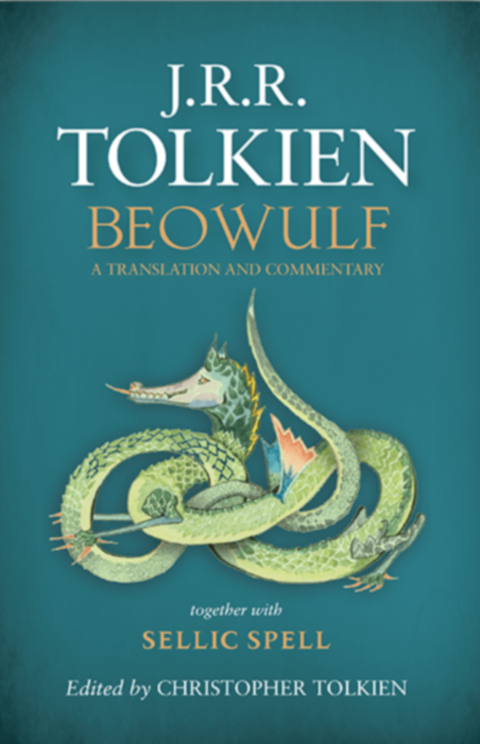
For the first time, J.R.R. Tolkien’s 1926 translation of the 11th century epic poem Beowulf will be published this May by HarperCollins, edited and with commentary by his son Christopher. The elder Tolkien, says his son, “seems never to have considered its publication.” He left it along with several other unpublished manuscripts at the time of his death in 1973. The edition will also include a story called Sellic Spell and excerpts from a series of lectures on Beowulf Tolkien delivered at Oxford in the 1930s. Tolkien did publish one of those lectures, “The Monster and the Critic,” in 1936. In this “epoch-making paper,” writes Seamus Heaney in the introduction to his hugely popular 1999 dual language verse edition, Tolkien treated the Beowulf poet as “an imaginative writer,” not a historical reconstruction. His “brilliant literary treatment changed the way the poem was valued and initiated a new era—and new terms—of appreciation.” This very same thing could be said of Heaney’s translation which, true to his stated goals, brought the poem out of academic conferences and classrooms and into living rooms and coffee shops everywhere. (You can hear Heaney read from that translation here.)
Nowhere in Heaney’s introduction to his version does he mention Tolkien’s translation of the poem, so we must presume he did not know of it. Long before Tolkien’s lectures and translation, Beowulf had been perhaps the most revered poem in the English language, at least since the 18th century, when the sole manuscript was rescued from fire and and translated and disseminated widely. Despite that status, Beowulf was not actually written in English—not an English we would recognize—but in Old English, or Anglo-Saxon. As readers of Heaney’s dual translation will know, that distant provincial ancestor of the modern global language, named for the mixture of Germanic peoples who inhabited England 1000 years ago, appears mostly alien to us now. (To add to the strangeness, its unfamiliar alphabet once consisted entirely of runes).
The poem, moreover, is not set in England, but where Shakespeare set his Hamlet, Denmark. Its titular hero, a prince from Geat (ancient Sweden), stalks a monster named Grendel on behalf of Danish king Hroðgar, killing the monster’s mother along the way. Tolkien’s almost universally beloved body of fiction was deeply influenced by Beowulf. Nevertheless, his translation may be less accessible than Heaney’s, though no less beautiful, perhaps, for different reasons. In Heaney’s verse, one hears Ted Hughes, some echoes of Milton, Heaney’s own voice. If we are to credit the redditor who posted a now-defunct 2003 article from Canadian newspaper National Post that quotes from Tolkien’s translation, the Hobbit author’s verse hews to a more direct correspondence with the Anglo Saxon, a language made of giant rocks and timber and crashing waves, not elegant, elaborated clauses. The National Post article announces the discovery at Oxford of the Tolkien translation by English Professor Michael Drout (a story he’s since debunked), and quotes from both Heaney and Tolkien. See the comparison below:
Heaney’s translation:
Time went by, the boat was
on water,
in close under the cliffs.
Men climbed eagerly up the
gangplank,
sand churned in surf, warriors
loaded
a cargo of weapons, shining
war-gear
in the vessel’s hold, then
heaved out,
away with a will in their
wood-wreathed ship.
Tolkien’s translation of Beowulf and his men setting sail:
On went the hours:
on
ocean afloat
under cliff was their craft.
Now climb blithely
brave man aboard;
breakers pounding
ground the shingle.
Gleaming harness
they hove to the bosom of the
bark, armour
with cunning forged then cast
her forth
to voyage triumphant,
valiant-timbered
fleet foam twisted.
One wonders what the recently departed Irish poet would have said had he lived to read this Tolkien edition. Might it, as Heaney said of his lectures, change the way the poem is valued? Or might he see it resembling other difficult attempts to make modern English replicate the strongly inflected built-in rhythms of Anglo-Saxon—a language, Tolkien once said, from “the dark heathen ages beyond the memory of song.”
We're hoping to rely on loyal readers, rather than erratic ads. Please click the Donate button and support Open Culture. You can use Paypal, Venmo, Patreon, even Crypto! We thank you!
Open Culture scours the web for the best educational media. We find the free courses and audio books you need, the language lessons & educational videos you want, and plenty of enlightenment in between.