Dante’s Divine Comedy Illustrated in a Remarkable Illuminated Medieval Manuscript (c. 1450)

YT 36

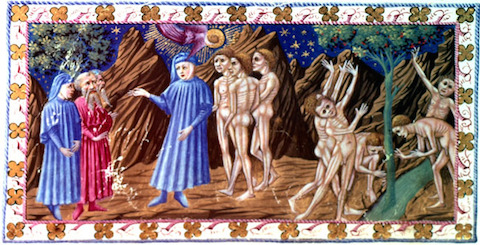
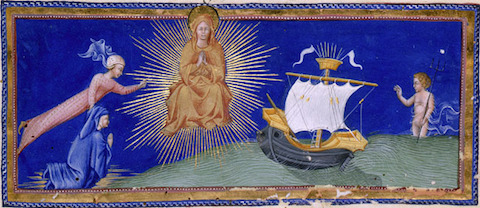
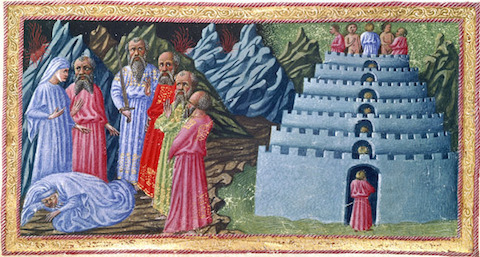
Few writ­ers have inspired so many artists, so deeply and for so long, as Dante Alighieri. His epic poem the Divine Com­e­dy (find in our col­lec­tion of Free eBooks) has received strik­ing illu­mi­na­tions at the hands of Gus­tave Doré, San­dro Bot­ti­cel­li, Alber­to Mar­ti­ni, and Sal­vador Dalí — to name only those we’ve fea­tured before here on Open Cul­ture. The names Pri­amo del­la Quer­cia and Gio­van­ni di Pao­lo may mean rel­a­tive­ly lit­tle to you right now, but they’ll mean much more once you’ve tak­en a look at the illus­tra­tions fea­tured here and at The World of Dante, which come from an illu­mi­nat­ed man­u­script of the Divine Com­e­dy at the British Library known as Yates Thomp­son 36. Pro­duced in Siena around 1450 for an unknown orig­i­nal patron, “the codex belonged to Alfon­so V, king of Aragon, Naples, and Sici­ly,” and includes “110 large minia­tures and three his­to­ri­at­ed ini­tials.” (See all here.) Del­la Quer­cia illus­trat­ed the Infer­no and Pur­ga­to­rio and all three his­to­ri­at­ed ini­tials; di Pao­lo illus­trat­ed Par­adiso.

YatesDante2

“This makes for two dis­tinct­ly dif­fer­ent styles,” con­tin­ues The World of Dan­te’s page. “Pri­amo’s work reflects the more real­is­tic style of late fif­teenth-cen­tu­ry Flo­ren­tine paint­ing, an influ­ence which is par­tic­u­lar­ly notice­able in his use of con­tours and out­lines in the depic­tion of nudes. Gio­van­ni di Paolo’s style is clos­er to that of late four­teenth-cen­tu­ry Sienese artists,” pro­duc­ing results “great­ly admired for their visu­al inter­pre­ta­tion of the poem: the artist does­n’t just tran­scribe Dan­te’s words but seeks to ren­der their mean­ing.”

The British Library’s medieval man­u­scripts blog describes it as “cer­tain­ly a lav­ish pro­duc­tion” that “must have been an expen­sive under­tak­ing,” giv­en the sta­tus of the men doing the illu­mi­nat­ing as “two of the pre­em­i­nent artists of the day.” But when it came to visu­al­iz­ing Dan­te’s jour­ney, quite lit­er­al­ly, to hell and back in 15th-cen­tu­ry Italy, no artist ranked too high­ly. Even today, I can’t imag­ine any artist read­ing the Divine Com­e­dy, illu­mi­nat­ed or no, with­out get­ting a few vivid ideas of their own.

Untitled 107.tif

More images can be found on the British Library web site (scroll down the page). A Yale course entire­ly ded­i­cat­ed to Dante appears in our col­lec­tion, 1,700 Free Online Cours­es from Top Uni­ver­si­ties.

Relat­ed Con­tent:

Botticelli’s 92 Illus­tra­tions of Dante’s Divine Com­e­dy

Gus­tave Doré’s Dra­mat­ic Illus­tra­tions of Dante’s Divine Com­e­dy

Alber­to Martini’s Haunt­ing Illus­tra­tions of Dante’s Divine Com­e­dy (1901–1944)

Sal­vador Dalí’s 100 Illus­tra­tions of Dante’s The Divine Com­e­dy

Col­in Mar­shall hosts and pro­duces Note­book on Cities and Cul­ture and writes essays on cities, lan­guage, Asia, and men’s style. He’s at work on a book about Los Ange­les, A Los Ange­les Primer. Fol­low him on Twit­ter at @colinmarshall or on Face­book.

T.S. Eliot Reads Old Possum’s Book of Practical Cats & Other Classic Poems (75 Minutes, 1955)

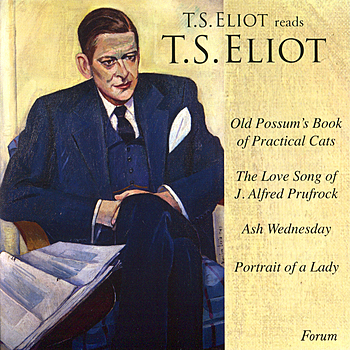
eliot cats readNot only did T.S. Eliot draw the cov­er for the first edi­tion of his Old Pos­sum’s Book of Prac­ti­cal Cats, fea­tured yes­ter­day, he even read it aloud for the audio­book edi­tion. You may think the time of the audio­book, now a pop­u­lar form on dig­i­tal audio devices every­where, must have begun long after the time of Eliot had already end­ed. (Eliot died in 1965.) But as we know from hav­ing pre­vi­ous­ly fea­tured their mid-1970s albums of Leonard Nimoy read­ing Ray Brad­bury, the record label Caed­mon posi­tioned them­selves well ahead of the audio­book game. Using record­ings made from read­ings giv­en in Lon­don in 1955, Caed­mon man­aged to release albums of Eliot speak­ing his own work aloud. Today we offer you T.S. Eliot Reads T.S. Eliot, made avail­able via Spo­ti­fy. The 18 tracks, run­ning some 75 min­utes, most­ly fea­tures Eliot read­ing from Old Pos­sum’s Book of Prac­ti­cal Cats. But he also recites a hand­ful of oth­er clas­sic poems. (If you need Spo­ti­fy, you can down­load the soft­ware here):

Oth­er audio edi­tions of Old Pos­sum’s Book of Prac­ti­cal Cats (some includ­ing a score) would come out lat­er, but, for many Eliot enthu­si­asts, noth­ing else can quite match hear­ing the man him­self intro­duce the likes of Rum Tum Tug­ger, Mr. Mistof­felees, and Busto­pher Jones. Lis­ten­ers in most geo­gra­phies should be able to access the Spo­ti­fy playlist. But if you live in Cana­da and South Africa (where some read­ers have report­ed prob­lems) we can rec­om­mend that you lis­ten (or re-lis­ten) to Eliot’s read­ings of his mod­ernist mas­ter­pieces “The Waste Land” and “The Love Song of J. Alfred Prufrock”, plus his Four Quar­tets. And if, by chance, you feel like hear­ing Eliot’s verse but not Eliot’s voice, how about let­ting Bob Dylan take over read­ing duties?

Eliot’s read­ing of Old Pos­sum’s Book of Prac­ti­cal Cats will be added to our col­lec­tion, 1,000 Free Audio Books: Down­load Great Books for Free.

Relat­ed con­tent:

T.S. Eliot Illus­trates His Let­ters and Draws a Cov­er for Old Possum’s Book of Prac­ti­cal Cats

Lis­ten to T.S. Eliot Recite His Late Mas­ter­piece, the Four Quar­tets

T.S. Eliot Reads His Mod­ernist Mas­ter­pieces “The Waste Land” and “The Love Song of J. Alfred Prufrock”

Bob Dylan Reads From T.S. Eliot’s Great Mod­ernist Poem The Waste Land

Col­in Mar­shall hosts and pro­duces Note­book on Cities and Cul­ture and writes essays on cities, lan­guage, Asia, and men’s style. He’s at work on a book about Los Ange­les, A Los Ange­les Primer. Fol­low him on Twit­ter at @colinmarshall or on Face­book.

Watch John Coltrane Turn His Handwritten Poem Into a Sublime Musical Passage on A Love Supreme

On Vimeo, James Cary describes his video cre­ation:

A few years ago, know­ing I absolute­ly adored the John Coltrane album, “A Love Supreme” my wife gave me this incred­i­ble book by Ash­ley Kahn : “A Love Surpreme/The Sto­ry of John Coltrane’s Sig­na­ture Album.” Read­ing the book, I dis­cov­ered some­thing remark­able: the fourth move­ment, Psalm, was actu­al­ly John Coltrane play­ing the ‘words’ of the poem that was includ­ed in the orig­i­nal lin­er notes. Appar­ent­ly he put the hand­writ­ten poem on the music stand in front of him, and ‘played’ it, as if it were music. I imme­di­ate­ly played the move­ment while read­ing the poem, and the hair stood up on the back of my neck. It was one of the most inspi­ra­tional and spir­i­tu­al moments of my life.
I’ve seen some nice ver­sions of this post­ed on the net, but want­ed to make one using his exact hand­writ­ing. I also want­ed to keep it sim­ple. The music and John’s poem are what’s impor­tant. I hope you enjoy this. I hope this inspires you, no mat­ter what ‘God’ you may believe in.

You can find a tran­script of the poem below the jump. And while we have your atten­tion, we’d also strong­ly encour­age you to explore anoth­er post from our archive: John Coltrane’s Hand­writ­ten Out­line for His Mas­ter­piece A Love Supreme. Housed at the Smithsonian’s Nation­al Muse­um of Amer­i­can His­to­ry, this hand­writ­ten doc­u­ment cap­tures Coltrane’s orig­i­nal sketch for his 33-minute jazz mas­ter­piece. It’s tru­ly a trea­sure of Amer­i­can his­to­ry.

via Ellen McGirt

(more…)

by | Permalink | Make a Comment ( 8 ) |

Young Leonard Cohen Reads His Poetry in 1966 (Before His Days as a Musician Began)

Many a singer-song­writer who first rose to promi­nence in the 1960s has tak­en the label of “poet,” usu­al­ly applied by ador­ing fans, no doubt to the objec­tion of a fair few seri­ous poet­ry enthu­si­asts. But who among them could deny Leonard Cohen’s sta­tus as a poet? Though best known as a musi­cian, Cohen has also racked up indis­putable writer­ly cre­den­tials, hav­ing pub­lished not just the nov­els Beau­ti­ful Losers and The Favorite Game but many books of poet­ry includ­ing Death of a Lady’s Man, Let Us Com­pare Mytholo­gies, and Flow­ers for Hitler. Some of them include not just poems writ­ten as poems but song lyrics — or per­haps works that began as songs but became poems. Sure­ly his albums con­tain songs that began as poems. Those inter­est­ed in fig­ur­ing out Cohen’s simul­ta­ne­ous devel­op­ment as a poet and song­writer would do well to lis­ten to his ear­ly poet­ry read­ings, like that of “Prayer for Mes­si­ah” at the top of the post.

Just above, you can hear Cohen read­ing sev­er­al more poems in the hal­lowed halls of New York’s 92nd Street Y in Feb­ru­ary 1966. Below, you can watch a tele­vi­sion clip from that same year in which the famous­ly Cana­di­an Cohen appears (nat­u­ral­ly) on the CBC in a seg­ment “con­sid­er­ing the poet­ic mind.”

He reads more of his verse and offers a bit of insight into his atti­tude toward the lega­cy of his own art — specif­i­cal­ly, that he pays no atten­tion to its lega­cy at all. Per­haps that more than any­thing allows him the free­dom to move as nec­es­sary between fields of cre­ative tex­tu­al endeav­or, retain­ing his inim­itable sen­si­bil­i­ty no mat­ter what shape his work takes at the end of the day. And, in any case, at least for my mon­ey, if pieces of his more mature work like “First We Take Man­hat­tan” don’t tran­scend their form, what does?

You can read a piece where Pico Iyer reflects on Cohen’s 92nd Y poet­ry read­ings here.

Relat­ed Con­tent:

Ladies and Gen­tle­men… Mr. Leonard Cohen: The Poet-Musi­cian Fea­tured in a 1965 Doc­u­men­tary

The Poet­ry of Leonard Cohen Illus­trat­ed by Two Short Films

Col­in Mar­shall hosts and pro­duces Note­book on Cities and Cul­ture and writes essays on cities, lan­guage, Asia, and men’s style. He’s at work on a book about Los Ange­les, A Los Ange­les Primer. Fol­low him on Twit­ter at @colinmarshall or on Face­book.

Advice to Young Aspiring Artists from Patti Smith, David Byrne & Marina Abramović

If you dream of becom­ing the next Dis­ney Chan­nel star, you’d do well to heed the advice of cast­ing direc­tor Judy Tay­lor, who uses “read” and “tal­ent” accord­ing to their indus­try def­i­n­i­tions, and seems unlike­ly to cut any­one slack for youth or inex­pe­ri­ence.

If, how­ev­er, you’ve got the soul of a poet, a painter, a musi­cal adven­tur­er, all three, or none of the above, I sug­gest falling to your knees and thank­ing Den­mark’s Louisiana Muse­um of Mod­ern Art for pro­vid­ing you with an alter­na­tive. The week­ly videos on art, lit­er­a­ture, design and archi­tec­ture for its Louisiana Chan­nel are a gold­mine of inspi­ra­tion for non-main­stream types both young and old, but cer­tain seg­ments speak explic­it­ly to those just embark­ing on the jour­ney.

As any num­ber of us geezers can attest, Pat­ti Smith and David Byrne speak with author­i­ty. It’s okay if you’ve nev­er heard of them. If you were three or four decades fur­ther along, you would have.

(As to Mari­na Abramović, go easy on your par­ents if they need to spend a moment or two dial­ing her up on Wikipedia. I’ll bet Pat­ti or David would­n’t peer down their noses at some­one for not rec­og­niz­ing one of the world’s great­est liv­ing per­for­mance artists. Excuse the dan­gling prepo­si­tion, but she’s def­i­nite­ly some­one worth find­ing out about.)

I real­ize I don’t speak for most of Amer­i­ca, but for me, these guys loom larg­er than Jay‑Z and Bey­once com­bined. I also real­ize that in terms of both wealth and name recog­ni­tion, there’s a sta­ble full of teen celebri­ties who leave them in the dust.

Inter­est­ing how all three resist the notion of tal­ent as some­thing to be com­mod­i­fied.

Abramović, above, speaks of artis­tic explo­ration in lit­er­al terms. In her view dif­fi­cult work should be pur­sued with the brav­ery of 17th-cen­tu­ry sailors who sal­lied forth, believ­ing that the world was flat. I sus­pect she’s a tougher cook­ie than cast­ing direc­tor Tay­lor. Wit­ness her dif­fer­en­ti­a­tion between gar­den vari­ety artists and great artists, the month long rub­bish bas­ket task she assigned her stu­dents, and the rig­or­ous­ness of her own prac­tice.

Her fel­low trail­blaz­er Smith has a more mater­nal touch. The path she pro­motes is sim­i­lar­ly twisty, low-pay­ing, and hard, but coun­ter­bal­anced with “the most beau­ti­ful expe­ri­ences.”

Byrne tack­les some of the more prac­ti­cal aspects of com­mit­ting to the artis­tic way. To wit, there’s no shame in day jobs, even if it’s been eons since he was in a posi­tion to need one. He also makes some very valid points about tech­nol­o­gy, below, with nary a peep as to the impos­si­bil­i­ty of con­cen­trat­ing on one’s stud­ies when one is check­ing Twit­ter every two sec­onds. We all stand to ben­e­fit.

Ayun Hal­l­i­day is the author of sev­en books, includ­ing No Touch Mon­key! And Oth­er Trav­el Lessons Learned Too Late. Fol­low her @AyunHalliday

Relat­ed Con­tent:

In Touch­ing Video, Artist Mari­na Abramović & For­mer Lover Ulay Reunite After 22 Years Apart

Pat­ti Smith Shares William S. Bur­roughs’ Advice for Writ­ers and Artists

David Byrne’s Grad­u­a­tion Speech Offers Trou­bling and Encour­ag­ing Advice for Stu­dents in the Arts

Pablo Neruda’s Historic First Reading in the US (1966)

Few pub­lic fig­ures of the 20th cen­tu­ry are as dear to the hearts and minds of Latin Amer­i­ca as Chilean poet Nef­tali Ricar­do Reyes Basoal­to — AKA Pablo Neru­da. He became famous for his writ­ing before he was 20 years old and he won the Nobel Prize for Lit­er­a­ture in 1971. In between, he wrote sur­re­al­ist poems, Whit­manesque epics and polit­i­cal man­i­festos. Fel­low Nobel Prize win­ner Gabriel Gar­cía Mar­quez called him “the great­est poet of the 20th cen­tu­ry in any lan­guage.”

Yet Neru­da was known almost as much for his pol­i­tics as for his writ­ing. After Franco’s forces exe­cut­ed his friend Fed­eri­co Gar­cía Lor­ca dur­ing the Span­ish Civ­il War, Neru­da shift­ed hard to the left. In the 30s and 40s, he pub­li­cal­ly sup­port­ed Joseph Stal­in at a time when his tri­umphs were obvi­ous and his crimes were hid­den. Neru­da even wrote a cou­ple odes to the strong­man. When Neru­da was sta­tioned as a diplo­mat in Mex­i­co City, he report­ed­ly helped mural­ist David Alfaro Siqueiros flee the coun­try after he led an assas­si­na­tion attempt against Stalin’s rival Leon Trot­sky.

So it isn’t sur­pris­ing that Neruda’s pol­i­tics would make him unpop­u­lar in some cor­ners of Wash­ing­ton. He was offi­cial­ly barred from com­ing to the Unit­ed States and he was report­ed­ly at the cen­ter of a CIA smear cam­paign. But, in 1966, the poet was invit­ed to the Inter­na­tion­al PEN con­fer­ence in New York City by Arthur Miller. When the play­wright beseeched the White House, Pres­i­dent John­son, dis­play­ing far more polit­i­cal courage than is imag­in­able today, grant­ed Neru­da a visa.

The poet was treat­ed like a rock star. He gave a read­ing of his poems with trans­la­tion, at the 96th St. Y. in Man­hat­tan to a packed audi­ence on June 11th of that year. You can lis­ten to it above, or down­load the audio here. After an intro­duc­tion by Archibald MacLeish, Neru­da begins speak­ing at the 9:00 mark.

When the New York Times asked what he thought of Amer­i­ca, he said, “Your coun­try – how shall I say it? – seems more pre­pared for peace than for war. Peace and poet­ry…”

Neru­da died in 1973, twelve days after a CIA-backed coup in Chile over­threw Neruda’s polit­i­cal ally Sal­vador Allende and installed Gen­er­al Augus­to Pinochet.

You can find oth­er poet­ry read­ings in our col­lec­tion, 1,000 Free Audio Books: Down­load Great Books for Free.

Relat­ed Con­tent:

“The Me Bird” by Pablo Neru­da: An Ani­mat­ed Inter­pre­ta­tion

Poems as Short Films: Langston Hugh­es, Pablo Neru­da and More

Read 10 Short Sto­ries by Gabriel Gar­cía Márquez Free Online (Plus More Essays & Inter­views)

Jonathan Crow is a Los Ange­les-based writer and film­mak­er whose work has appeared in Yahoo!, The Hol­ly­wood Reporter, and oth­er pub­li­ca­tions. You can fol­low him at @jonccrow.

Cartoonist Lynda Barry Reveals the Best Way to Memorize Poetry

Car­toon­ist and Patron Saint of Hon­or­ing the Cre­ative Impulse, Lyn­da Bar­ry, believes that the secret to under­stand­ing poet­ry is to com­mit it to mem­o­ry. Effort­less recall is key. Get that poem lodged inside your brain as if it were a Top 40 hit of your youth.

That’s all well and good, but is there a secret to mem­o­riz­ing poet­ry?

Accord­ing to Bar­ry (or Pro­fes­sor Chew­bac­ca, as she is known to stu­dents in her Mak­ing Comics course at the Uni­ver­si­ty of Wis­con­sin), the secret to mem­o­riz­ing poet­ry is to set it to music.

The work of Emi­ly Dick­in­son, a Bar­ry favorite, is par­tic­u­lar­ly well suit­ed to this tac­tic, as this Inter­net-sourced “hill­bil­ly ren­di­tion” of “I Felt a Funer­al in My Brain” proves.

As Bar­ry demon­strates, above, the Belle of Amherst also lends her­self well to “The Girl from Ipane­ma” and a cer­tain move­ment of Gersh­win’s “Rhap­sody in Blue”.

It does the soul good to see poet­ry offer­ing this lady the sort of joy­ful release her dog expe­ri­ences, rolling around in a dead squir­rel.

Per­haps you, too, are in need of such an out­let. Odds are, we all are. Bar­ry, who traces her pas­sion for poet­ry to the 1974 anthol­o­gy Mad Sad & Glad: Poems from Scholas­tic Cre­ative Writ­ing Awards, claims that the best poems deal with our dark­est feel­ings. Dick­in­son, she posits, wrote what she did to stay alive, a the­o­ry she sup­ports with a hilar­i­ous imper­son­ation of Dick­in­son’s per­ceived hand­writ­ing ver­sus Dick­in­son’s actu­al hand­writ­ing.

Dick­in­son wrote vol­umes, but as Bar­ry points out, she also wrote short. Look at how many there are to choose from, were you to chal­lenge your­self to learn one by heart today. (Don’t think about it. Just do it. What­ev­er hap­pens, it’s sure to be a more grat­i­fy­ing expe­ri­ence than lis­ten­ing to the female robot charged with recit­ing “A Day! Help! Help! Anoth­er Day!” here.)

- Ayun Hal­l­i­day believes that Lyn­da Bar­ry has enough milk of human kind­ness & funk pow­er supreme to be the Patron Saint of Every­thing. Fol­low her @AyunHalliday

Relat­ed Con­tent

Join Car­toon­ist Lyn­da Bar­ry for a Uni­ver­si­ty-Lev­el Course on Doo­dling and Neu­ro­science

The Sec­ond Known Pho­to of Emi­ly Dick­in­son Emerges

Bill Mur­ray Reads Poet­ry at a Con­struc­tion Site

Maya Angelou Reads “Still I Rise” and “On the Pulse of the Morning”

As we mourn Maya Angelou on the day after her death, it’s heart­en­ing to remem­ber that she lived sev­er­al more life­times than most in her 86 years, some filled with pain and strug­gle, some with great joy. While gen­er­al­ly known as a poet, writer, teacher, actress, and activist, Angelou actu­al­ly got her start in the pub­lic eye as a Calyp­so dancer and singer, even appear­ing in a film, Calyp­so Heat Wave and releas­ing an album, Miss Calyp­so, both in 1957. It’s said that Bil­lie Hol­i­day told Angelou in 1958, “you’re going to be famous but it won’t be for singing,” She was right of course, but Angelou retained the air of a per­former as a read­er of her work.

Above, see her deliv­er an ani­mat­ed read­ing of her famous poem, “Still I Rise,” which ref­er­ences many of her past lives, includ­ing lines that seem to allude to her Miss Calyp­so days: “Does my sex­i­ness upset you? / Does it come as a sur­prise / That I dance like I’ve got dia­monds / At the meet­ing of my thighs?” The stan­za is indica­tive of anoth­er qual­i­ty among the many she enu­mer­ates, “sassi­ness.” But she begins the read­ing on a more sober note, with a state­ment about human resilience, the abil­i­ty to get up and face the day, despite the fears we all live with. “Wher­ev­er that abides in a human being,” she says, “there is the noble­ness of the human spir­it.”

That resilience, the tran­scen­dence of painful per­son­al and ances­tral his­to­ries, was the great theme of Angelou’s work, whether in poems like “Still I Rise” or her reveal­ing 1969 auto­bi­og­ra­phy I Know Why the Caged Bird Sings, also the title of a poem from her 1983 col­lec­tion Shak­er, Why Don’t You Sing?. While the caged bird is a very per­son­al sym­bol for Angelou, her poem “On the Pulse of the Morn­ing,” which you can see her read above at Bill Clinton’s 1993 inau­gu­ra­tion, speaks to the whole human species in ele­men­tal terms. Again she twines themes of tran­scend­ing painful and bloody his­to­ries with those of the “noble­ness of the human spir­it.” The speak­er of the poem is the earth itself, who address­es each of us as “a bor­dered coun­try / Del­i­cate and strange­ly made proud.” “His­to­ry,” she writes in much-quot­ed lines from the poem’s ninth stan­za, “despite its wrench­ing pain / Can­not be unlived, but if faced / With courage, need not be lived again.” For all the pain Angelou her­self endured and faced with courage, it’s a sen­ti­ment she earned the right to pro­claim. Her cel­e­bra­tion of not only the par­tic­u­lar African-Amer­i­can strug­gle, but also its part in the uni­ver­sal human strug­gle for dig­ni­ty and pur­pose stands as her endur­ing lega­cy. She ends the poem where she begins her read­ing of “Still I Rise” above, with a call for us to treat each oth­er with care and respect, to not be “wed­ded for­ev­er / To fear, yoked eter­nal­ly / To brutish­ness”:

Here, on the pulse of this new day
You may have the grace to look up and out
And into your sis­ter’s eyes, and into
Your broth­er’s face, your coun­try
And say sim­ply
Very sim­ply
With hope –
Good morn­ing.

Both poems will be added to our col­lec­tion, 1,000 Free Audio Books: Down­load Great Books for Free.

If you would like to sign up for Open Culture’s free email newslet­ter, please find it here. It’s a great way to see our new posts, all bun­dled in one email, each day.

If you would like to sup­port the mis­sion of Open Cul­ture, con­sid­er mak­ing a dona­tion to our site. It’s hard to rely 100% on ads, and your con­tri­bu­tions will help us con­tin­ue pro­vid­ing the best free cul­tur­al and edu­ca­tion­al mate­ri­als to learn­ers every­where. You can con­tribute through Pay­Pal, Patre­on, and Ven­mo (@openculture). Thanks!

Relat­ed Con­tent:

Hear Dylan Thomas Recite His Clas­sic Poem, “Do Not Go Gen­tle Into That Good Night”

Hear Sylvia Plath Read 50+ of Her Dark, Com­pelling Poems

Stream Clas­sic Poet­ry Read­ings from Harvard’s Rich Audio Archive: From W.H. Auden to Dylan Thomas

Josh Jones is a writer and musi­cian based in Durham, NC. Fol­low him at @jdmagness.

« Go BackMore in this category... »
Quantcast