Anne Sexton, Confessional Poet, Reads “Wanting to Die” in Ominous 1966 Video

Many a writer has said they write to save their lives. And many a writer has died by sui­cide. In few cas­es has the con­nec­tion been so direct as in that of the poet Anne Sex­ton. Encour­aged in 1957 by her ther­a­pist to write poet­ry to stave off her sui­ci­dal ideation, she even­tu­al­ly joined a group of mid-cen­tu­ry “con­fes­sion­al” poets based in Boston—including Robert Low­ell and Sylvia Plath—whose per­son­al pathos, fam­i­ly pain, and severe bouts of depres­sion pro­vid­ed much of the mate­r­i­al for their work. Despite Sexton’s tremen­dous career suc­cess at what began, more-or-less, as a hob­by, she became over­whelmed by her ill­ness and com­mit­ted sui­cide in 1974.

There are those who wish to debate whether so-called “con­fes­sion­al poets” were tru­ly tor­ment­ed indi­vid­u­als or navel-gaz­ing nar­cis­sists. This seems fair enough giv­en the will­ing self-expo­sure of poets like Plath, Low­ell, and Sex­ton, but it kind of miss­es the point; their loss­es and trans­gres­sions were as real, or not, as anyone’s, but we remem­ber them, or should, for their writ­ing. Instead I find it inter­est­ing to see their pub­lic selves as per­for­mances, what­ev­er the auto­bi­o­graph­i­cal con­nec­tions in the work. A for­mer fash­ion mod­el, Anne Sex­ton was par­tic­u­lar­ly adept at self-pre­sen­ta­tion, and as her fame as a writer increased—she won the Pulitzer Prize in 1966 and a suc­ces­sion of grants and awards through­out the sixties—her poet­ry became less focused on the strict­ly per­son­al, more on the cul­tur­al (she has become well-known, for exam­ple, for a sar­don­ic, fem­i­nist per­spec­tive in such poems as “Snow White and the Sev­en Dwarfs”). A good deal of her work was pure inven­tion, despite the illu­sion of inti­ma­cy.

Nonethe­less, the short, 1966 film “Anne Sex­ton at Home” (top, with Span­ish sub­ti­tles, con­tin­ued below) lets us engage in some voyeurism. It begins with Sexton’s irri­ta­tion, as she’s inter­rupt­ed by the dog. Then the film cuts away, the scene has changed, and she frankly acknowl­edges the poet’s voice as a “per­sona” (from the Greek for mask); her poems are “mon­sters,” into which she has “pro­ject­ed her­self.” When we cut back again to the first scene, Sex­ton con­fi­dent­ly reads her “Men­stru­a­tion at Forty.” And we cut away again, and Sex­ton, her famil­iar cig­a­rette nev­er far away, riffs on “fam­i­ly & poet­ry” as her hus­band Alfred tries to avoid the cam­era. We see the poet with her daugh­ter, their inter­ac­tions play­ful (and also a lit­tle dis­turb­ing). Through­out it all Sex­ton per­forms, seem­ing­ly pleased and enjoy­ing the camera’s atten­tion.

In the last part of “Anne Sex­ton at Home” (above), the poet reads per­haps her most explic­it work about her many sui­cide attempts, “Want­i­ng to Die.” In a brief intro­duc­tion, she says, “I can explain sex in a minute, but death, I can’t explain.” But the play­ful­ness drains from her demeanor, as she comes to the final two stan­zas:

Bal­anced there, sui­cides some­times meet,
rag­ing at the fruit, a pumped-up moon,
leav­ing the bread they mis­took for a kiss,

leav­ing the page of the book care­less­ly open,
some­thing unsaid, the phone off the hook
and the love, what­ev­er it was, an infec­tion.


Relat­ed Con­tent

For Sylvia Plath’s 80th Birth­day, Hear Her Read ‘A Birth­day Present’

Josh Jones is a writer, edi­tor, and musi­cian. Fol­low him @jdmagness

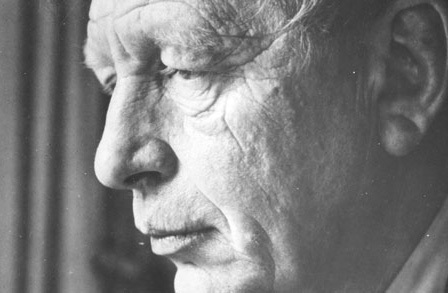
W.H. Auden Recites His 1937 Poem, ‘As I Walked Out One Evening’

w-h-auden

Today we bring you one of the best-loved poems of W.H. Auden, “As I Walked Out One Evening,” read (below) by the poet him­self. Auden wrote the poem in 1937 and first pub­lished it in his 1940 vol­ume, Anoth­er Time. The poem is a vari­ant of the bal­lad form, made up of 15 rhymed qua­trains. It’s a med­i­ta­tion on love and the remorse­less­ness of time, told in three voic­es: the nar­ra­tor, a rap­tur­ous lover, and the reproach­ful clocks that speak back to the lover.

‘The years shall run like rab­bits,
     For in my arms I hold
The Flower of the Ages,
    And the first love of the world.’

But all the clocks in the city
    Began to whirr and chime:
‘O let not Time deceive you,
    You can­not con­quer Time

Auden made a num­ber of audio record­ings over the years, and we were unable to track down the time and place of this one. It may be a 1953 record­ing orig­i­nal­ly released by Caed­mon Records. “As I Walked Out One Evening” is includ­ed in the Ran­dom House audio col­lec­tion, Voice of the Poet: W.H. Auden.

Relat­ed Con­tent:

500 Free Audio Books: Down­load Great Books for Free 

375 Free eBooks: Down­load to Kin­dle, iPad/iPhone & Nook

Hear Tennessee Williams Read Hart Crane’s “The Broken Tower” and “The Hurricane” (1960)

Note: Audio takes about 8 sec­onds to play…

Many Moons Ago, a poet­ry teacher of mine intro­duced me to the term “ter­mi­nal aes­thet­ic,” mean­ing a style that could go no fur­ther, hav­ing burned up all of its resources. It’s a great way to char­ac­ter­ize the poet Hart Crane’s ambiva­lent appraisal of his lit­er­ary fore­fa­ther, T.S. Eliot. Crane spent his poet­ry career try­ing to rem­e­dy what he saw as Eliot’s fail­ure to sal­vage any­thing from the mod­ern world but cramped despair in The Waste Land. As Crane put it, Eliot’s mas­ter­work was “so damned dead” and man­i­fest­ed “a refusal to see cer­tain spir­i­tu­al events and pos­si­bil­i­ties.” It’s prob­a­bly safe to say that near­ly every­one sub­ject­ed to Eliot’s por­ten­tous verse has felt this way at one time or anoth­er. But Crane felt it and per­se­vered; he tried to out-write The Waste Land with his own mod­ernist epic, The Bridge.

The poet’s opti­mism was total­ly at odds with his brief, painful life. As David Dud­ley summed it up recent­ly:

Crane’s short life was a train wreck—a teenage sui­cide attempt, fol­lowed by bit­ter estrange­ments from his moth­er, a Chris­t­ian Sci­en­tist, and his father, a well-to-do Cleve­land can­dy mak­er who dis­ap­proved of his son’s habits. Liv­ing as a semi-clos­et­ed gay man on the fringes of the cul­tur­al lime­light in New York and Europe, Crane had affairs with sailors, drank too much, got in fights, and couldn’t hold a job.

Crane’s depres­sion and feel­ings of fail­ure drove him to sui­cide in 1932, at age 32: he leapt into the Gulf of Mex­i­co from the steam ship Oriz­a­ba (most think; he left no note). His tomb­stone is inscribed with the words “lost at sea.”

That phrase also cap­tures how so many read­ers feel when faced with Crane’s roco­co verse. With its archa­ic (some would say pre­ten­tious) dic­tion, and obscure allu­sions nest­ed inside oblique ref­er­ences, the word “dif­fi­cult” may be an under­state­ment. But Crane’s work has had many cham­pi­ons, among them, Ten­nessee Williams. As an epi­graph to A Street­car Named Desire, Williams chose these lines from Crane’s “The Bro­ken Tow­er”:

And so it was I entered the bro­ken world
To trace the vision­ary com­pa­ny of love, its voice
An instant in the wind (I know not whith­er hurled)
But not for long to hold each des­per­ate choice.

The exquis­ite rhythms of Crane’s lines—Shakespearean by way of Eliot—lend them­selves so well to read­ing aloud. Above, then, we have the priv­i­lege of hear­ing Crane’s defend­er Williams read “The Bro­ken Tow­er” in his reedy, South­ern voice. Fol­low the text of the poem in the video as Williams reads. Both the audio above and that below—of Williams read­ing Crane’s hyp­not­ic “The Hurricane”—come from a near­ly-impos­si­ble-to-find 1960 LP from Caed­mon Records. Thanks again, Inter­net, and thanks to Don Yorty, who post­ed these videos.

Relat­ed Con­tent

The Bro­ken Tow­er, James Franco’s Docu­d­ra­ma On “Dif­fi­cult” Poet Hart Crane: A Pre­view

Mar­lon Bran­do Opens Up to Ten­nessee Williams

British Actors Read Poignant Poet­ry from World War I

Josh Jones is a writer, edi­tor, and musi­cian based in Wash­ing­ton, DC. Fol­low him @jdmagness

Listen to Robert Frost Read ‘The Gift Outright,’ the Poem He Recited from Memory at JFK’s Inauguration

The read­ing from Cuban-Amer­i­can poet Richard Blan­co at Pres­i­dent Barack Oba­ma’s sec­ond inau­gu­ra­tion cer­e­mo­ny today fol­lows a tra­di­tion that began 52 years ago, when John F. Kennedy invit­ed his fel­low New Eng­lan­der Robert Frost to read at his inau­gur­al.

Frost was an ear­ly sup­port­er of Kennedy. On his 85th birth­day (March 26, 1959) he was asked by a reporter about the decline of New Eng­land’s cul­tur­al influ­ence in Amer­i­ca. “The next Pres­i­dent of the Unit­ed States will be from Boston,” replied Frost, accord­ing to Poets.org. “Does that sound as if New Eng­land is decay­ing?” At that time Kennedy had yet to for­mal­ly announce his can­di­da­cy, so Frost was asked to explain who he was talk­ing about. “He’s a Puri­tan named Kennedy. The only Puri­tans left these days are the Roman Catholics. There. I guess I wear my pol­i­tics on my sleeve.” When Pres­i­dent-elect Kennedy invit­ed the 86-year-old poet to read a poem at his inau­gu­ra­tion, if it was not too ardu­ous, Frost cabled his response:

IF YOU CAN BEAR AT YOUR AGE THE HONOR OF BEING MADE PRESIDENT OF THE UNITED STATES, I OUGHT TO BE ABLE AT MY AGE TO BEAR THE HONOR OF TAKING SOME PART IN YOUR INAUGURATION. I MAY NOT BE EQUAL TO IT BUT I CAN ACCEPT IT FOR MY CAUSE–THE ARTS, POETRY, NOW FOR THE FIRST TIME TAKEN INTO THE AFFAIRS OF STATESMEN.

Frost wrote a new poem, “Ded­i­ca­tion,” espe­cial­ly for the occa­sion. But con­di­tions on inau­gu­ra­tion day con­spired against the old poet. A heavy blan­ket of snow fell on Wash­ing­ton the night before, and the sun­light that day was intense. In the harsh glare from the sun and snow, Frost found that he could­n’t read the type­script of his new poem. Kennedy had ear­li­er asked Frost, if he was­n’t going to write a new poem, to con­sid­er read­ing his poem on Amer­i­can his­to­ry, “A Gift Out­right.” So when Frost found that he could­n’t read the new poem, he recit­ed “A Gift Out­right” from mem­o­ry.

In the video above, we hear Frost read­ing the poem, which was writ­ten in the late 1930s and first pub­lished in 1942. Although some have said the audio is from the Kennedy inau­gu­ra­tion, it appar­ent­ly is not, because Frost reads the orig­i­nal text. For the inau­gu­ra­tion, the poet report­ed­ly agreed to Kennedy’s request to make a change in the final line. The phrase “Such as she would become” was changed to a more opti­mistic “Such as she will become.” (You can read the full text of the poem in a new win­dow.) Some­time after the event, Kennedy put Frost’s inau­gur­al appear­ance in per­spec­tive:

I asked Robert Frost to come and speak at the inau­gu­ra­tion because I felt he had some­thing impor­tant to say to those of us who are occu­pied with the busi­ness of gov­ern­ment, that he would remind us that we were deal­ing with life, of hopes and fears of mil­lions of peo­ple. He has said it well in a poem called “Choose Some­thing Like a Star,” in which he speaks of the fairest star in sight and says, “It asks lit­tle of us here./It asks of us a cer­tain height./So when at times the mob is swayed/to car­ry praise or blame too far,/we may choose some­thing like a star/ to stay our mind on and be stayed.”

Relat­ed con­tent:

Robert Frost Recites ‘Stop­ping by Woods on a Snowy Evening’

An Animated Interpretation of Billy Collins’ Poem, “Forgetfulness”

Some twen­ty-five years ago, my act­ing class spent an entire semes­ter on the plays of Anton Chekhov. At the time, it felt very vital, but like so much else I stud­ied in col­lege, what I wound up retain­ing is sad­ly piece­meal. One thing I do remem­ber is the youngest of the Three Sis­ters break­down upon real­iz­ing that they’ll nev­er make it to Moscow. At the heart of this freak-out is her despair that she, and every­one who mat­ters to her, is aging, a con­di­tion she defines as dimin­ish­ment. It seemed a bit over-the-top to me at the time. For god’s sake, she’s only 24. So what if she can’t remem­ber a few words of school­girl Ital­ian? Two and a half decades out, I was mis­re­mem­ber­ing her name as Anya, a momen­tary con­fu­sion eas­i­ly right­ed on my third Google search.

(IRINA. (Sob­bing.) Where? Where has it all gone? Where is it? Oh my God, my God! I have for­got­ten every­thing, for­got­ten every­thing… Every­thing is con­fused in my head… I can’t remem­ber what is the word for win­dow in Ital­ian, or for ceil­ing… I am for­get­ting every­thing, I for­get more every day, and life flies past and nev­er returns, nev­er, and we will nev­er go to Moscow… I see now that we will nev­er go…)

I flashed on this long ago melt­down while watch­ing “For­get­ful­ness,” the love­ly ani­ma­tion of the Bil­ly Collins poem, above. As Collins lists the seem­ing­ly incon­se­quen­tial things lost, it occurred to me that the cen­tral “you” could stand for any­body: you, me, an elder­ly rel­a­tive, Chekhov’s Iri­na. (Not Anya. If we’re to make it to Moscow, we bet­ter get crack­ing.)

We’re lucky to have artists like Chekhov, Collins, and by exten­sion, ani­ma­tor Julian Grey, all pos­sessed of the abil­i­ty to imbue one of mankind’s most depress­ing and time­ly real­i­ties with ten­der­ness and lyri­cism. Per­haps you’ll remem­ber some­one with whom to share “For­get­ful­ness”.

Relat­ed Con­tent:

Bil­ly Collins Poet­ry to Ani­mat­ed Life

The Ani­ma­tion of Bil­ly Collins’ Poet­ry

Ayun Hal­l­i­day describes some of the places she has been (not Moscow) in No Touch Mon­key! And Oth­er Trav­el Lessons Learned Too Late.

British Actors Read Poignant Poetry from World War I

The First World War (1914–1918) changed Britain to a degree that was unthink­able in 1914. Pre-war cer­tain­ties and val­ues such as hon­or, father­land and progress dis­in­te­grat­ed on the bat­tle­fields and trench­es in France and Bel­gium. New tech­nol­o­gy such as tanks, machine guns, grenades, flame throw­ers and poi­son gas were used to destroy the ene­my; con­stant fire for days on end was intend­ed to break the sol­diers in the trench­es. Unspeak­able hor­rors led to psy­cho­log­i­cal prob­lems of unknown pro­por­tions.

Cop­ing with these hor­rors dur­ing and after The Great War (as it’s still called in Britain today) seemed like a Her­culean task to poets — how do you put the unspeak­able into words? Some poets, e.g. Rupert Brooke, still cel­e­brat­ed the hero­ism of the Eng­lish sol­diers (e.g., 1914 II. Safe­ty), where­as oth­ers, such as Wil­fred Owen, tried to describe the hor­rors of this war (e.g., Dulce et Deco­rum Est).

Every year on the Sun­day clos­est to Novem­ber 11, Britain remem­bers the dead of the First World War. For Remem­brance Day 2012, famous British actors were asked to recite First World War poet­ry. The fin­ished clips were to be shown on TV that day. The video above shows three actors recit­ing four poems by Rupert Brooke and Wil­fred Owen (click the names of the actors for infor­ma­tion about them and the titles of the poems for the full text):

  1. Sean Bean reads Wil­fred Owen’s “Anthem for Doomed Youth
  2. Gem­ma Arter­ton reads Wil­fred Owen’s “Arms and the Boy
  3. Sophie Okone­do reads Rupert Brooke’s “The Sol­dier
  4. Sean Bean reads Wil­fred Owen’s “The Last Laugh

Bonus mate­r­i­al:

By pro­fes­sion, Matthias Rasch­er teach­es Eng­lish and His­to­ry at a High School in north­ern Bavaria, Ger­many. In his free time he scours the web for good links and posts the best finds on Twit­ter.

20 Animations of Classic Literary Works: From Plato and Dostoevsky, to Kafka, Hemingway & Bradbury

Yes­ter­day we fea­tured Piotr Dumala’s 2000 ani­ma­tion of Fyo­dor Dostoyevsky’s clas­sic nov­el, Crime and Pun­ish­ment, and it remind­ed us of many oth­er lit­er­ary works that have been won­der­ful­ly re-imag­ined by ani­ma­tors — many that we’ve fea­tured here over the years. Rather than leav­ing these won­drous works buried in the archives, we’re bring­ing them back and putting them all on dis­play. And what bet­ter place to start than with a foun­da­tion­al text — Pla­to’s Repub­lic. We were tempt­ed to show you a clay­ma­tion ver­sion of the sem­i­nal philo­soph­i­cal work (watch here), but we decid­ed to go instead with Orson Welles’ 1973 nar­ra­tion of The Cave Alle­go­ry, which fea­tures the sur­re­al artis­tic work of Dick Oden.

Stay­ing with the Greeks for anoth­er moment … This one may have Sopho­cles and Aeschy­lus spin­ning in their graves. Or, who knows, per­haps they would have enjoyed this bizarre twist on the Oedi­pus myth. Run­ning eight min­utes, Jason Wish­now’s 2004 film fea­tures veg­eta­bles in the star­ring roles. One of the first stop-motion films shot with a dig­i­tal still cam­era, Oedi­pus took two years to make with a vol­un­teer staff of 100. The film has since been screened at 70+ film fes­ti­vals and was even­tu­al­ly acquired by the Sun­dance Chan­nel. Sep­a­rate videos show you the behind-the-scenes mak­ing of the film, plus the sto­ry­boards used dur­ing pro­duc­tion.

Eight years before Piotr Dumala tack­led Dostoyevsky’s Crime and Pun­ish­ment, Dumala pro­duced a short ani­mat­ed film based on The Diaries of Franz Kaf­ka. Once again, you can see his method, known as “destruc­tive ani­ma­tion,” in action. It’s well worth the 16 min­utes. Or you can spend time with this 2007 Japan­ese ani­ma­tion of Kafka’s cryp­tic tale of “A Coun­try Doc­tor.” And if you’re still han­ker­ing for ani­mat­ed Kaf­ka, don’t miss Orson Welles’ Nar­ra­tion of the Para­ble, “Before the Law”. The film was made by Alexan­der Alex­eieff and Claire Park­erwho using a tech­nique called pin­screen ani­ma­tion, cre­at­ed a longer film adap­ta­tion of Niko­lai Gogol’s sto­ry, “The Nose.” You can view it here.

The ani­mat­ed sequence above is from the 1974 film adap­ta­tion of Her­man Hes­se’s 1927 nov­el Step­pen­wolfIn this scene, the Har­ry Haller char­ac­ter played by Max von Sydow reads from the “Trac­tate on the Step­pen­wolf.” The visu­al imagery was cre­at­ed by Czech artist Jaroslav Bradác.

In 1999, Alek­san­dr Petrov won the Acad­e­my Award for Short Film (among oth­er awards) for a film that fol­lows the plot line of Ernest Hemingway’s clas­sic novel­la, The Old Man and the Sea (1952). As not­ed here, Petrov’s tech­nique involves paint­ing pas­tels on glass, and he and his son paint­ed a total of 29,000 images for this work. (For anoth­er remark­able dis­play of their tal­ents, also watch his adap­ta­tion of Dos­to­evsky’s “The Dream of a Ridicu­lous Man”.) The Old Man and the Sea is per­ma­nent­ly list­ed in our col­lec­tion of Oscar Win­ning Films Avail­able Online and our col­lec­tion of 700 Free Movies Online.

Ita­lo Calvi­no, one of Italy’s finest post­war writ­ers, pub­lished Ital­ian Folk­tales in 1956, a series of 200 fairy tales based some­times loose­ly, some­times more strict­ly, on sto­ries from a great folk tra­di­tion. Upon the col­lec­tion’s pub­li­ca­tion, The New York Times named Ital­ian Folk­tales one of the ten best books of the year.  And more than a half cen­tu­ry lat­er, the sto­ries con­tin­ue to delight. Case in point: in 2007, John Tur­tur­ro, the star of numer­ous Coen broth­ers and Spike Lee films, began work­ing on Fiabe ital­iane, a play adapt­ed from Calvi­no’s col­lec­tion of fables. The ani­mat­ed video above fea­tures Tur­tur­ro read­ing “The False Grand­moth­er,” Calvi­no’s rework­ing of Lit­tle Red Rid­ing Hood. Kevin Ruelle illus­trat­ed the clip, which was pro­duced as part of Fly­p­me­di­a’s more exten­sive cov­er­age of Tur­tur­ro’s adap­ta­tion. You can find anoth­er ani­ma­tion of a Calvi­no sto­ry (The Dis­tance of the Moon) on YouTube here.

Emi­ly Dick­in­son’s poet­ry is wide­ly cel­e­brat­ed for its beau­ty and orig­i­nal­i­ty. To cel­e­brate her birth­day (it just passed us by ear­li­er this week) we bring you this lit­tle film of her poem, “I Start­ed Early–Took My Dog,” from the “Poet­ry Every­where” series by PBS and the Poet­ry Foun­da­tion. The poem is ani­mat­ed by Maria Vasilkovsky and read by actress Blair Brown.

E.B. White, beloved author of Char­lot­te’s WebStu­art Lit­tle, and the clas­sic Eng­lish writ­ing guide The Ele­ments of Style, died in 1985. Not long before his death, he agreed to nar­rate an adap­ta­tion of “The Fam­i­ly That Dwelt Apart,” a touch­ing sto­ry he wrote for The New York­er. The 1983 film was ani­mat­ed by the Cana­di­an direc­tor Yvon Malette, and it received an Oscar nom­i­na­tion.

Shel Sil­ver­stein wrote The Giv­ing Tree in 1964, a wide­ly loved chil­dren’s book now trans­lat­ed into more than 30 lan­guages. It’s a sto­ry about the human con­di­tion, about giv­ing and receiv­ing, using and get­ting used, need­i­ness and greed­i­ness, although many fin­er points of the sto­ry are open to inter­pre­ta­tion. Today, we’re rewind­ing the video­tape to 1973, when Sil­ver­stein’s lit­tle book was turned into a 10 minute ani­mat­ed film. Sil­ver­stein nar­rates the sto­ry him­self and also plays the har­mon­i­ca.

Dur­ing the Cold War, one Amer­i­can was held in high regard in the Sovi­et Union, and that was Ray Brad­bury. A hand­ful of Sovi­et ani­ma­tors demon­strat­ed their esteem for the author by adapt­ing his short sto­ries. Vladimir Sam­sonov direct­ed Bradbury’s Here There Be Tygers, which you can see above.  And here you can see anoth­er adap­ta­tion of “There Will Come Soft Rains.”

The online book­seller Good Books cre­at­ed an ani­mat­ed mash-up of the spir­its of Franz Kaf­ka and Hunter S. Thomp­son. Under a buck­et hat, behind avi­a­tor sun­glass­es, and deep into an altered men­tal state, our nar­ra­tor feels the sud­den, urgent need for a copy of Kafka’s Meta­mor­pho­sis. Unwill­ing to make the pur­chase in “the great riv­er of medi­oc­rity,” he instead makes the buy from “a bunch of rose-tint­ed, will­ful­ly delu­sion­al Pollyan­nas giv­ing away all the mon­ey they make — every guilt-rid­den cent.” The ani­ma­tion, cre­at­ed by a stu­dio called Buck, should eas­i­ly meet the aes­thet­ic demands of any view­er in their own altered state or look­ing to get into one.

39 Degrees North, a Bei­jing motion graph­ics stu­dio, start­ed devel­op­ing an uncon­ven­tion­al Christ­mas card last year. And once they got going, there was no turn­ing back. Above, we have the end result – an ani­mat­ed ver­sion of an uber dark Christ­mas poem (read text here) writ­ten by Neil Gaiman, the best­selling author of sci-fi and fan­ta­sy short sto­ries. The poem was pub­lished in Gaiman’s col­lec­tion, Smoke and Mir­rors.

This col­lab­o­ra­tion between film­mak­er Spike Jonze and hand­bag design­er Olympia Le-Tan does­n’t bring a par­tic­u­lar lit­er­ary tale to life. Rather this stop motion film uses 3,000 pieces of cut felt to show famous books spring­ing into motion in the icon­ic Parisian book­store, Shake­speare and Com­pa­ny. It’s called  Mourir Auprès de Toi.

Are there impres­sive lit­er­ary ani­ma­tions that did­n’t make our list? Please let us know in the com­ments below. We’d love to know about them.
by | Permalink | Make a Comment ( 4 ) |

Watch an Animated Film of Emily Dickinson’s Poem ‘I Started Early–Took My Dog’

Today is the birth­day of Emi­ly Dick­in­son, an extra­or­di­nar­i­ly shy woman who rarely left her house but whose poems have gone out to meet the world.

Dick­in­son’s poet­ry is wide­ly cel­e­brat­ed for its beau­ty and orig­i­nal­i­ty. As her biog­ra­ph­er at the Poet­ry Foun­da­tion Web site writes, “To make the abstract tan­gi­ble, to define mean­ing with­out con­fin­ing it, to inhab­it a house that nev­er became a prison, Dick­in­son cre­at­ed in her writ­ing a dis­tinc­tive­ly ellip­ti­cal lan­guage for express­ing what was pos­si­ble but not yet real­ized.”

To cel­e­brate Dick­in­son’s birth­day (she was born on Decem­ber 10, 1830) we bring you this lit­tle film of her poem, “I Start­ed Early–Took My Dog,” from the “Poet­ry Every­where” series by PBS and the Poet­ry Foun­da­tion. The poem is ani­mat­ed by Maria Vasilkovsky and read by actress Blair Brown. You can also read the poem for your­self here.

Relat­ed con­tent:

Bill Mur­ray Reads Emi­ly Dick­in­son to Con­struc­tion Work­ers

A Sec­ond, Pre­vi­ous­ly Unknown Pho­to of Emi­ly Dick­in­son Emerges

Find Emi­ly Dick­in­son Poet­ry in our Free Audio Books and Free eBooks col­lec­tions

« Go BackMore in this category... »
Quantcast

