Why Is English So Hard to Learn?: The Ingenious Poem, “The Chaos,” Documents 800 Irregularities in English Spelling and Pronunciation

In 1920, Dutch writer and trav­el­er Ger­ard Nolst Tren­ité, also known as Chari­var­ius, pub­lished a text­book called Drop Your For­eign Accent: engelsche uit­spraakoe­fenin­gen. In the appen­dix, he includ­ed a poem titled “The Chaos,” a vir­tu­oso, tongue-twist­ing demon­stra­tion of some­where around 800 irreg­u­lar­i­ties in Eng­lish spelling and pro­nun­ci­a­tion. No one now remem­bers the text­book, and the poem might have dis­ap­peared too were it not for efforts of the Sim­pli­fied Spelling Soci­ety, which tracked frag­ments of it through “France, Cana­da, Den­mark, Ger­many, the Nether­lands, Por­tu­gal, Spain, Swe­den and Turkey.”

The poem’s his­to­ry, as told in the Jour­nal of the Sim­pli­fied Spelling Soci­ety (JSSS) in 1994, shows how it trav­eled around Europe, in pieces, con­found­ing and bedev­il­ing aspir­ing Eng­lish speak­ers. Full of homonyms, loan words, and words which—at one time—actually sound­ed the way they’re spelled, the poem’s fifty-eight stan­zas may be the most clever and com­pre­hen­sive “con­cor­dance of caco­graph­ic chaos,” as the JSSS puts it. Admired by lin­guists and his­to­ri­ans of Eng­lish, it has, since its 1994 repub­li­ca­tion, become some­thing of a cult hit for enthu­si­asts of lan­guage every­where.

You can read it here, hear it read above by YouTube’s Lindy­beige, and see a tran­scrip­tion into IPA, the inter­na­tion­al pho­net­ic alpha­bet. Though it’s pop­u­lar­ly rep­re­sent­ed as a kind of sort­ing mech­a­nism for “the Eng­lish-Speak­ing Elite,” that’s hard­ly accu­rate. Eng­lish once sound­ed like this and this, then like this, and now sounds com­plete­ly dif­fer­ent accord­ing to hun­dreds of region­al dialects and accents around the world. The soci­ety ges­tures toward this in their intro­duc­tion, writ­ing, “the selec­tion of exam­ples now appears some­what dat­ed, as do a few of their pro­nun­ci­a­tions. Indeed a few words may even be unknown to today’s read­ers.”

“How many will know what a ‘stud­ding-sail’ is, or that its nau­ti­cal pro­nun­ci­a­tion is ‘stun­sail’?,” asks the JSSS. It seems rea­son­able to won­der how many peo­ple ever did. In any case, Eng­lish, Lindy­beige writes, “is a rapid­ly-chang­ing lan­guage,” and one that has not made much pho­net­ic sense for sev­er­al cen­turies. This is exact­ly what has made it such a bear to learn to spell and pronounce—for both Eng­lish lan­guage learn­ers and native speak­ers. Try your hand at read­ing every word in “The Chaos,” prefer­ably in front of an audi­ence, and see how you do.

via Men­tal Floss/The Poke

Relat­ed Con­tent:

What Eng­lish Would Sound Like If It Was Pro­nounced Pho­net­i­cal­ly

Hear Beowulf Read In the Orig­i­nal Old Eng­lish: How Many Words Do You Rec­og­nize?

Hear What Shake­speare Sound­ed Like in the Orig­i­nal Pro­nun­ci­a­tion

Josh Jones is a writer and musi­cian based in Durham, NC. Fol­low him at @jdmagness

How Emily Dickinson Writes A Poem: A Short Video Introduction

It became fash­ion­able dur­ing the Euro­pean Renais­sance for poets to write what is called an ars poet­i­ca, a “med­i­ta­tion on poet­ry using the form and tech­niques of a poem.” The form fol­lows Horace’s 19th cen­tu­ry, B.C.E. Ars Poet­i­ca, in which the Roman writer rec­om­mends that poet­ry should both “instruct and delight.”

The­o­ries of poet­ry var­ied from one gen­er­a­tion to the next, but the ars poet­i­ca per­sist­ed through­out mod­ern lit­er­ary his­to­ry and into the mod­ernism of Archibald Macleish, Ezra Pound, and Mar­i­anne Moore, all of whom issued mag­is­te­r­i­al dic­ta about poet­ry that has stuck to it ever since.

“A poem should be motion­less in time / As the moon climbs,” writes Macleish in his “Ars Poet­i­ca,” famous­ly con­clud­ing, “A poem should not mean / But be.” In Moore’s “Poet­ry,” which she revised through­out her life, final­ly whit­tling it down to just three lines, she writes of “imag­i­nary gar­dens with real toads in them.”

Such cryp­tic images and ellip­ti­cal apho­risms enact ambi­gu­i­ty as they pre­scribe it, but they make per­fect­ly clear they are mak­ing crit­i­cal judg­ments about the art of poet­ry. Then we have Emi­ly Dickinson’s “Tell all the truth but tell it slant” (1263), a poem that serves as her ars poet­i­ca, argues Evan Puschak, the Nerd­writer, in his video essay above, but pur­ports on its sur­face to be about truth, cap­i­tal “T.”

Tell all the truth but tell it slant —
Suc­cess in Cir­cuit lies
Too bright for our infirm Delight
The Truth’s superb sur­prise
As Light­ning to the Chil­dren eased
With expla­na­tion kind
The Truth must daz­zle grad­u­al­ly
Or every man be blind —

Rarely is Dick­in­son so “direct,” says Puschak. “Known for ambi­gu­i­ty, odd manip­u­la­tions in meter and rhyme” and “images that seem mys­te­ri­ous and some­times out of place,” she wrote “poet­ry brim­ming with slant truth, poet­ry that’s seem­ing­ly laid out here, in per­fect meter and match­ing rhymes.” The poem’s mes­sage is restat­ed four times, from the the­sis in the first line to the sim­i­le of the final four. “The mean­ing could not be more clear,” says Puschak.

But no, of course it’s not. A poem is not a man­u­al or man­i­festo. Like those poems more explic­it­ly about poet­ry, this one enacts the ambi­gu­i­ty it pre­scribes. Are we, for exam­ple, to “tell all the truth” as in “the whole truth?” or as in “tell every­one the truth”? Does “suc­cess” lie “in cir­cuit” like a patient lies on a table? Or does it tell lies, like, well… like poet­ry? Does the word “cir­cuit” refer to an uncer­tain, cir­cuitous path? Or, as one crit­ic has sug­gest­ed, to “cir­cum­fer­ence” (a term Dick­in­son used to refer to one’s lifes­pan or prop­er sphere)?

The next cou­plet, whose ref­er­ence to “infirm Delight” may or may not take Horace to task, push­es us fur­ther out to sea when we begin to read it care­ful­ly. What is this truth that can be told, slant­ed, but also comes as a “sur­prise,” like lightning—terrible, sud­den, and blind­ing? Is this a poem about “Truth” or about poet­ry?

In the final, heav­i­ly trun­cat­ed, ver­sion of “Poet­ry,” Mar­i­anne Moore con­cedes, grumpi­ly, that “one dis­cov­ers in / it, after all, a place for the gen­uine.” As Dickinson’s poem demon­strates, try­ing to find a “place” in poet­ry for any sta­ble mean­ing may be impos­si­ble. Still she insists that truth should “daz­zle grad­u­al­ly,” an oxy­moron­ic phrase, says Puschak, but it’s as evoca­tive, if more abstract, as real toads in made-up gardens—both are para­dox­i­cal means of describ­ing what poet­ry does.

Dick­in­son real­ized that her poem “had to be the phi­los­o­phy… that feel­ing of the text being desta­bi­lized from with­in, oscil­lat­ing from mean­ing to the nega­tion of that mean­ing.” Truth is inex­press­ible, per­haps inac­ces­si­ble, and maybe even fatal. Yet it may strike us, nonethe­less, in the daz­zling ambi­gu­i­ties of poet­ry.

Relat­ed Con­tent:

The Online Emi­ly Dick­in­son Archive Makes Thou­sands of the Poet’s Man­u­scripts Freely Avail­able

Watch an Ani­mat­ed Film of Emi­ly Dickinson’s Poem ‘I Start­ed Early–Took My Dog’

An 8‑Hour Marathon Read­ing of 500 Emi­ly Dick­in­son Poems

Josh Jones is a writer and musi­cian based in Durham, NC. Fol­low him at @jdmagness

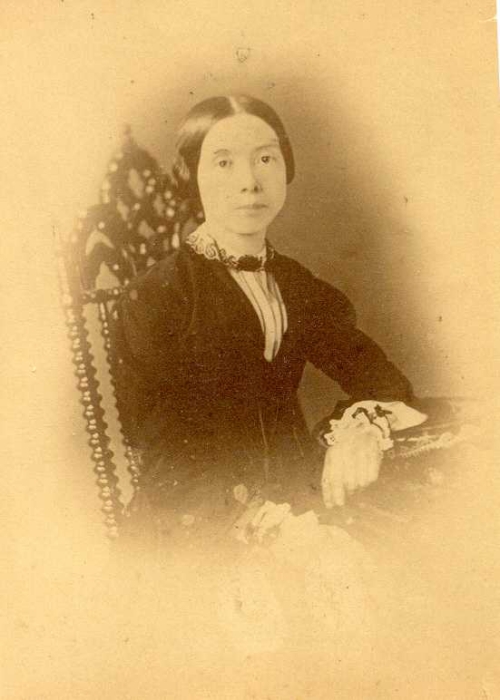
Celebrate Emily Dickinson’s 188th Birthday with Her Own Cake Recipes: Coconut Cake, Gingerbread, Doughnuts & More

Hap­py Emi­ly Dick­in­son Day!

What are you doing to cel­e­brate the poet’s 188th birth­day?

The Emi­ly Dick­in­son Muse­um took advan­tage of the week­end to cel­e­brate the occa­sion a cou­ple of days ear­ly with Vic­to­ri­an crafts, read­ings, fes­tive piano music, a dis­play explor­ing the Dick­in­son fam­i­ly’s gift-giv­ing tra­di­tion, and slices of coconut cake, baked from the birth­day girl’s own recipe.

Giv­en the Belle’s pen­chant for home-baked good­ies, we’re dis­pens­ing with the more high-mind­ed endeav­ors to con­cen­trate on the sweet side of this lit­er­ary hol­i­day.

LitHub reports that

…when­ev­er Dick­in­son saw chil­dren play­ing in her fam­i­ly gar­dens, “she head­ed for the pantry, filled a bas­ket with cook­ies or slices of cake—often gingerbread—carried it upstairs to a win­dow in the rear of the house (so their moth­ers wouldn’t see), and attached the bas­ket to a rope to slow­ly low­er it to the “storm-tossed, starv­ing pirates” or the “lost, roam­ing cir­cus per­form­ers” eager­ly wait­ing below.

Tru­ly, we owe it to her to return the favor.

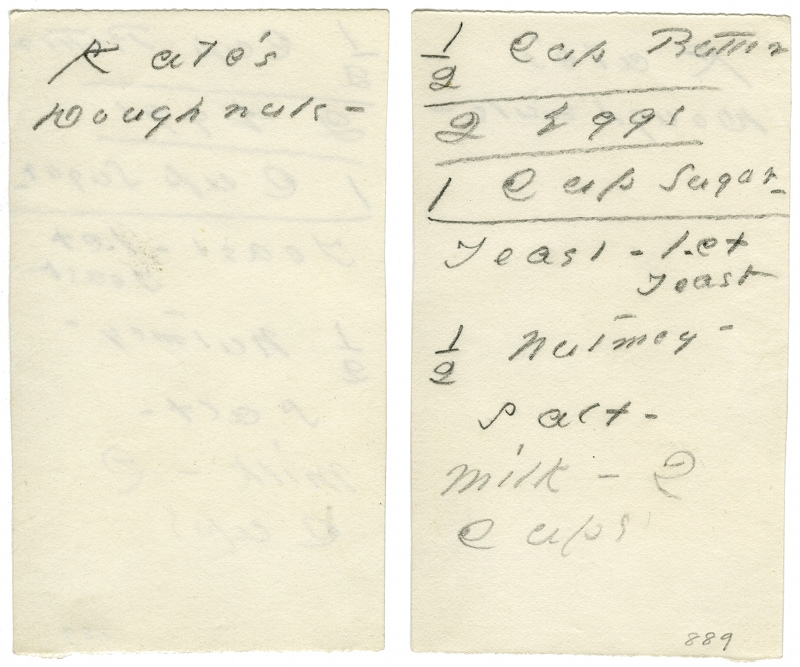
Shall we start with some Emi­ly Dick­in­son dough­nuts?

Like many expe­ri­enced home cooks of the peri­od, Dickinson’s instruc­tions are a bit vague. She seems to have got­ten the recipe from an acquain­tance named Kate, jot­ting down mea­sure­ments and ingre­di­ents, after which, she knew what to do.

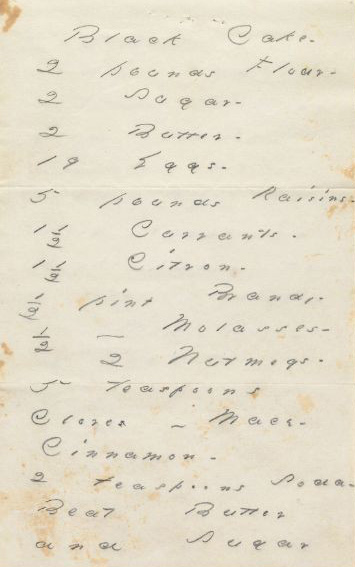
If you’ve nev­er worked with yeast before, you might want to pro­ceed straight to her Black Cake recipe…

Or not. You may have 5 pounds of raisins on hand, but this is no spur-of-the-moment recipe.

As librar­i­ans Heather Cole, Emi­lie Hard­man, and Emi­ly Wal­hout demon­strate below, this whop­per needs to spend 3 weeks wrapped in a brandy-soaked cheese­cloth after it comes out of the oven.

Onward then to Miss Dickinson’s gin­ger­bread.

As if those with Decem­ber birth­days aren’t over­shad­owed enough by the tyran­ny of Christ­mas! Must their spe­cial day’s cake fla­vor be dic­tat­ed by that big goril­la too? (For those who say yes, Rosa Lil­lo of Pem­ber­ley Cup and Cakes breaks the recipe down 21st-cen­tu­ry style, adding a sim­ple icing sug­ar glaze and an embossed flo­ral pat­tern.)

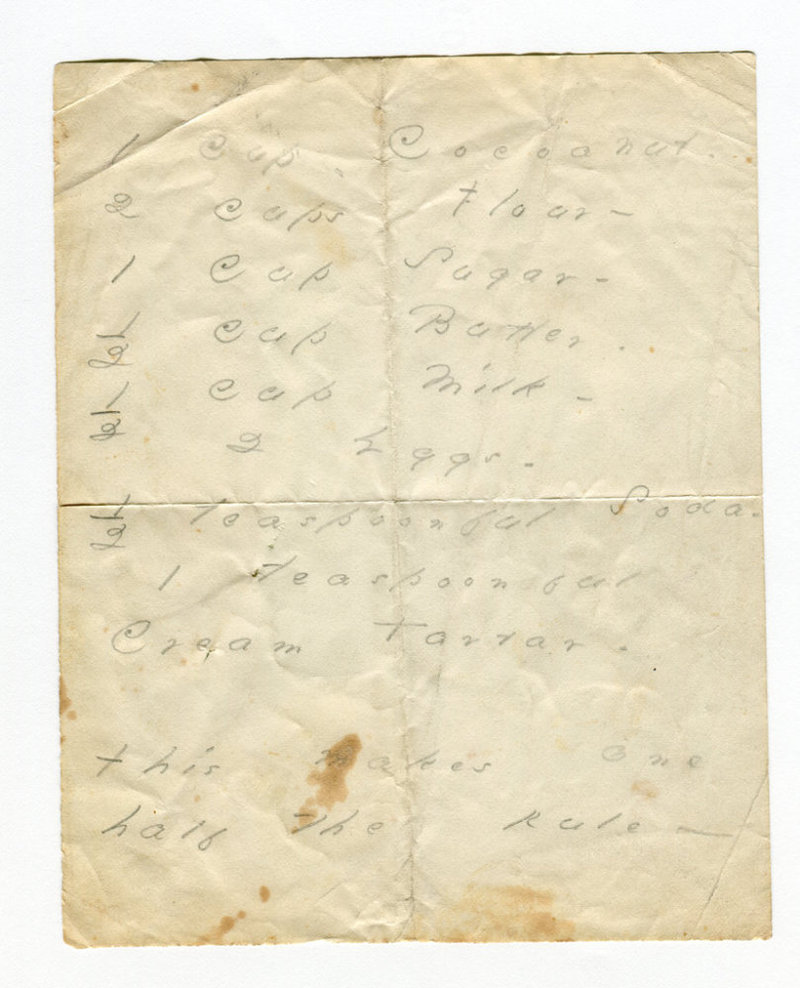
Per­haps that famous coconut cake real­ly is the best choice for observ­ing Emi­ly Dick­in­son Day.

See if you can detect a note of inspi­ra­tion in that but­tery fla­vor. As was her habit, Dick­in­son flipped the scrap of paper on which she’d list­ed the ingre­di­ents, and pen­cilled in the begin­nings of a poem:

The Things that nev­er can come back, are sev­er­al —

Child­hood — some forms of Hope — the Dead —

Though Joys — like Men — may some­times make a Jour­ney —

And still abide —

We do not mourn for Trav­el­er, or Sailor,

Their Routes are fair —

But think enlarged of all that they will tell us

Return­ing here —

“Here!” There are typ­ic “Heres” —

Fore­told Loca­tions —

The Spir­it does not stand —

Him­self — at what­so­ev­er Fath­om

His Native Land —

Those whose Emi­ly Dick­in­son Day gift giv­ing list includes a poet­ry lover / ama­teur cook may wish to stuff their stock­ings with a copy of the 1976 book Emi­ly Dick­in­son: Pro­file of the Poet as Cook with Select­ed Recipes.

Relat­ed Con­tent:

Emi­ly Dickinson’s Hand­writ­ten Coconut Cake Recipe Hints at How Bak­ing Fig­ured Into Her Cre­ative Process

The Online Emi­ly Dick­in­son Archive Makes Thou­sands of the Poet’s Man­u­scripts Freely Avail­able

An 8‑Hour Marathon Read­ing of 500 Emi­ly Dick­in­son Poems

Ayun Hal­l­i­day is an author, illus­tra­tor, the­ater mak­er and Chief Pri­ma­tol­o­gist of the East Vil­lage Inky zine.  See her onstage in New York City through Decem­ber 20th in the 10th anniver­sary pro­duc­tion of Greg Kotis’ apoc­a­lyp­tic hol­i­day tale, The Truth About San­ta, and tonight, as the host of the book-based vari­ety show, Necro­mancers of the Pub­lic Domain. Fol­low her @AyunHalliday.

Hear Dylan Thomas Recite His Classic Poem, “Do Not Go Gentle Into That Good Night”

When Dylan Thomas was a lit­tle boy his father would read Shake­speare to him at bed­time. The boy loved the sound of the words, even if he was too young to under­stand the mean­ing. His father, David John Thomas, taught Eng­lish at a gram­mar school in south­ern Wales but want­ed to be a poet. He was bit­ter­ly dis­ap­point­ed with his sta­tion in life.

Many years lat­er when the father lay on his deathbed, Dylan Thomas wrote a poem that cap­tures the pro­found sense of empa­thy he felt for the dying old man. The poem, “Do not go gen­tle into that good night,” was writ­ten in 1951, only two years before the poet­’s own untime­ly death at the age of 39. Despite the impos­si­bil­i­ty of escap­ing death, the anguished son implores his father to “Rage, rage against the dying of the light.”

The poem is a beau­ti­ful exam­ple of the vil­lanelle form, which fea­tures two rhymes and two alter­nat­ing refrains in verse arranged into five ter­cets, or three-lined stan­zas, and a con­clud­ing qua­train in which the two refrains are brought togeth­er as a cou­plet at the very end. You can hear Thomas’s famous 1952 recital of the poem above. To see the poem’s struc­ture and read along as you lis­ten, click here to open the text in a new win­dow.

And to hear more of Thomas recit­ing his own works (and more), please vis­it our pri­or post 8 Glo­ri­ous Hours of Dylan Thomas Read­ing Poetry–His Own & Oth­ers’.

All poems have been added to our col­lec­tion of Free Audio Books.

Note: an ear­li­er ver­sion of this post orig­i­nal­ly appeared on our site in August 2012.

Relat­ed con­tent:

Antho­ny Hop­kins Reads ‘Do Not Go Gen­tle into That Good Night’

Hear Dylan Thomas Read Three Poems by W.H. Auden, Includ­ing “Sep­tem­ber 1, 1939”

Hear Langston Hughes Read His Poetry Over Original Compositions by Charles Mingus & Leonard Feather: A Classic Collaboration from 1958

Have you looked up Charles Min­gus late­ly? You should. Min­gus, who died in 1979, has a “lost” album com­ing out—live record­ings made in ‘73, aired on the radio once, then dis­ap­peared into obscu­ri­ty until now. Seems there’s always some­thing new to learn about our favorite jazz musicians—and our favorite jazz poets. New­ly-dis­cov­ered poems from Langston Hugh­es, for exam­ple, appeared a few years back, writ­ten in “depths of the cri­sis” of the Great Depres­sion.

These poems are dark and bit­ter, “some of the harsh­est polit­i­cal verse ever penned by an Amer­i­can,” writes Hugh­es schol­ar Arnold Ram­per­sad. They are not the cel­e­bra­to­ry Hugh­es we read in school. While angry con­ser­v­a­tives and McCarthy­ism may have forced this side of him into hid­ing, in Hugh­es’ view, poet­ry, like jazz, had room for every­thing, whether it be love or rage.

“Jazz is a great big sea,” he wrote in his 1956 essay “Jazz as Com­mu­ni­ca­tion.” The music “wash­es up all kinds of fish and shells and spume and waves with a steady old beat, or off-beat.” His task, in poems like “The Weary Blues” had been to put “jazz into words,” with all of its wild mood swings, lovers’ quar­rels, rapid-fire con­ver­sa­tions, and heat­ed argu­ments.

Through­out his career, Min­gus had been mov­ing in the oth­er direc­tion, tak­ing storms of ideas—angry, melan­choly, joy­ful, etc.—and turn­ing them into sounds. But his music, always “supreme­ly vocal,” notes The Nation’s Adam Shatz, spoke in one way or anoth­er. Min­gus “col­lab­o­rat­ed with poets in East Vil­lage Cof­fee­hous­es” and won his only Gram­my for a piece of writ­ing, the lin­er notes for his 1971 album Let My Chil­dren Hear Music.

For Min­gus, crit­ic Whit­ney Bal­li­ett remarked, jazz “was anoth­er way of talk­ing.” For anoth­er com­pos­er, pianist and jour­nal­ist Leonard Feath­er, lan­guage and music played equal roles. Feath­er, notes Jason Anke­ny, was known both as “the acknowl­edged dean of Amer­i­can jazz crit­ics” and author of “peren­ni­al” stan­dards “Evil Gal Blues,” “Blow­top Blues,” and “How Blue Can You Get?”

Two years after Hugh­es read “Jazz as Com­mu­ni­ca­tion” at the New­port Jazz Fes­ti­val, he col­lab­o­rat­ed with Feather’s All-Star Sex­tet and Min­gus and the Horace Par­lan Quin­tet on an album first released as The Weary Blues. It has recent­ly been re-released by Fin­ger­tips as Harlem in Vogue—22 tracks of Hugh­es read­ing poems like “The Weary Blues,” “Blues at Dawn,” and “Same in Blues/Comment on Curb” (top) over orig­i­nal com­po­si­tions by Feath­er and Min­gus, with six addi­tion­al tracks of Hugh­es read­ing solo and two orig­i­nal songs by Bob Dor­ough with the Bob Dor­ough Quin­tet. (Min­gus plays bass on tracks 11–18.)

You can stream the album in full above (and buy it here). Here, lis­ten to the Poet­ry Foundation’s Cur­tis Fox, jazz musi­cian Charley Ger­ard, and poet Hol­ly Bass dis­cuss the record and Hugh­es’ rela­tion­ship to jazz and blues. Hugh­es’ poems, notes Ger­ard, are “struc­tured just like blues,” their meters, rhymes, and rhythms always invok­ing the sounds of Harlem’s musi­cal scene. In these record­ings, Feath­er and Min­gus trans­pose Hugh­es’ lan­guage into music, just as he had turned jazz into words.

Relat­ed Con­tent:

Watch Langston Hugh­es Read Poet­ry from His First Col­lec­tion, The Weary Blues (1958)

Charles Min­gus Explains in His Gram­my-Win­ning Essay “What is a Jazz Com­pos­er?”

Poems as Short Films: Langston Hugh­es, Pablo Neru­da and More

Josh Jones is a writer and musi­cian based in Wash­ing­ton, DC. Fol­low him at @jdmagness

Hear Meryl Streep Read Sylvia Plath’s “Morning Song,” a Poem Written After the Birth of Her Daughter

Image via Wiki­me­dia Com­mons

Preg­nan­cy and par­ent­ing are “extreme expe­ri­ences that stretch our under­stand­ing,” writes Lily Gur­ton-Wachter at the Los Ange­les Review of Books. They “push us beyond com­fort or even com­pre­hen­sion.” Women risk their own lives to give life to a stranger, a tiny human whose future is entire­ly uncer­tain. Par­ents live with con­stant dread of all that could befall their chil­dren, an anx­ious state, but also a vul­ner­a­bil­i­ty that can make us deeply sen­si­tive to the fragili­ty of human life. Gur­ton-Wachter com­pares moth­er­hood to going to war, “a pro­found, fright­en­ing, exhil­a­rat­ing, trans­for­ma­tive expe­ri­ence at the bound­ary of life, an expe­ri­ence from which one comes back a dif­fer­ent per­son.”

It’s a com­par­i­son Sylvia Plath would like­ly appre­ci­ate. With her abil­i­ty to com­press per­son­al expe­ri­ence in col­lec­tions of sur­pris­ing, often vio­lent, images, Plath expressed deep ambiva­lence about moth­er­hood, under­cut­ting a tra­di­tion of sen­ti­men­tal ide­al­iza­tion, giv­ing voice to fear, dis­com­fort, bewil­der­ment, and mys­tery.

In “Metaphors,” from 1960’s Colos­sus, she begins with a play­ful descrip­tion of preg­nan­cy as “a rid­dle in nine syl­la­bles.” With­in a few lines she feels effaced and starts to “see her­self mere­ly as a ‘means,’” notes Shenan­doah, “almost an incu­ba­tor… This cul­mi­nates with the last line, where she real­izes that she is for­ev­er changed, irrev­o­ca­bly”: “Board­ed the train,” she writes, “there’s no get­ting off.”

In 1961, after the birth of her daugh­ter, Frie­da, Plath wrote “Morn­ing Song, which might be read as almost an exten­sion of “Metaphors.” It is “one of her most unusu­al poems,” writes Maria Popo­va at Brain Pick­ings, “both paean and requiem for new motherhood—the love, the strange­ness, the sur­re­al and mag­net­ic dis­ori­en­ta­tion of it.” Pub­lished posthu­mous­ly in Ariel, the poem address­es itself to the new arrival, in a series of stan­zas that cap­ture the awe and anx­i­ety of those first hours after her birth. In the audio above from the Acad­e­my of Amer­i­can Poets’ annu­al Poet­ry & the Cre­ative Mind event, hear Meryl Streep read the poem “with uncom­mon sen­si­tiv­i­ty,” Popo­va writes, “to the innu­mer­able nuances it holds.” As you lis­ten, read along below.

MORNING SONG

Love set you going like a fat gold watch.
The mid­wife slapped your foot­soles, and your bald cry
Took its place among the ele­ments.

Our voic­es echo, mag­ni­fy­ing your arrival. New stat­ue.
In a drafty muse­um, your naked­ness
Shad­ows our safe­ty. We stand round blankly as walls.

I’m no more your moth­er
Than the cloud that dis­tills a mir­ror to reflect its own slow
Efface­ment at the wind’s hand.

All night your moth-breath
Flick­ers among the flat pink ros­es. I wake to lis­ten:
A far sea moves in my ear.

One cry, and I stum­ble from bed, cow-heavy and flo­ral
In my Vic­to­ri­an night­gown.
Your mouth opens clean as a cat’s. The win­dow square

Whitens and swal­lows its dull stars. And now you try
Your hand­ful of notes;
The clear vow­els rise like bal­loons.

Streep­’s read­ing of Plath will be added to the poet­ry sec­tion of our col­lec­tion, 1,000 Free Audio Books: Down­load Great Books for Free.

via Brain Pick­ings

Relat­ed Con­tent

Hear Sylvia Plath Read 50+ of Her Dark, Com­pelling Poems

Dis­cov­er the Paint­ings, Draw­ings & Col­lages of Sylvia Plath: Now on Dis­play at the Smith­son­ian Nation­al Por­trait Gallery

Hear Sylvia Plath’s Bare­ly-Known Radio Play, Three Women

Josh Jones is a writer and musi­cian based in Durham, NC. Fol­low him at @jdmagness

Rapping, Deconstructed: How Some of the Greatest Rappers Make Their Rhymes

If high school Eng­lish teach­ers can chal­lenge skep­ti­cal stu­dents to cul­ti­vate an appre­ci­a­tion for Shake­speare and poet­ry with rap-based assign­ments, might the reverse also hold true?

Many afi­ciona­dos of high cul­ture turn up their noses at rap, believ­ing it to be a sim­ple form, requir­ing more brag­gado­cio than tal­ent.

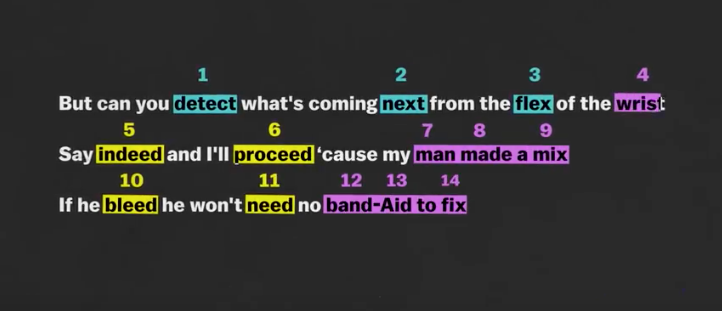
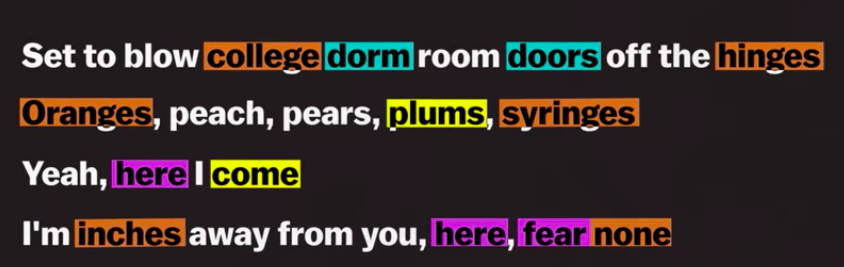
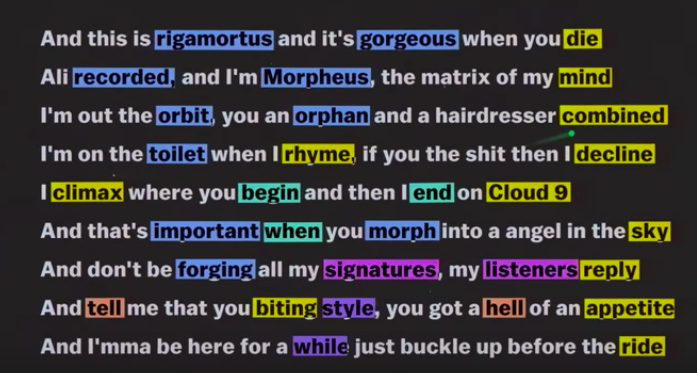
Estelle Caswell, rap fan and pro­duc­er of Vox’s Ear­worm series, may get them to rethink that posi­tion with the above video, show­cas­ing how great rap­pers assem­ble rhymes.

Caswell uses visu­al graph­ing to explain the progress from the A‑A-B‑B scheme of ear­ly rap­per Kur­tis Blow’s “The Breaks” (1980) to the com­plex and sur­pris­ing holorimes of her per­son­al favorite, MF DOOM.

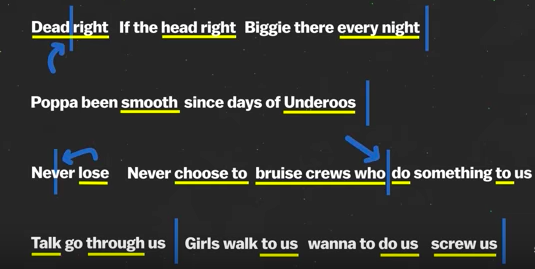
To appre­ci­ate her visu­al break­downs, you must under­stand that raps can be scored like tra­di­tion­al music. Here the bar reigns supreme—each bar con­sist­ing of four beats. The fur­ther out we go from rap’s ori­gins, the more its prac­ti­tion­ers play with place­ment and rhyme.

Above are some lyrics from Eric B. and Rakim’s 1986 cut, “Eric B. Is Pres­i­dent,” fea­tur­ing inter­nal rhymes high­light­ed in yel­low and mul­ti-syl­lab­ic rhymes picked out in pink. You’ll also find them escap­ing the tyran­ny of the bar line, con­tin­u­ing the rhyme on the first beat of the next bar.

Caswell is so intent on exam­in­ing the late Noto­ri­ous B.I.G.‘s “Hyp­no­tize,” that she over­looks a rather siz­able ele­phant in the room, the misog­y­nis­tic POV behind those en and oo sounds.

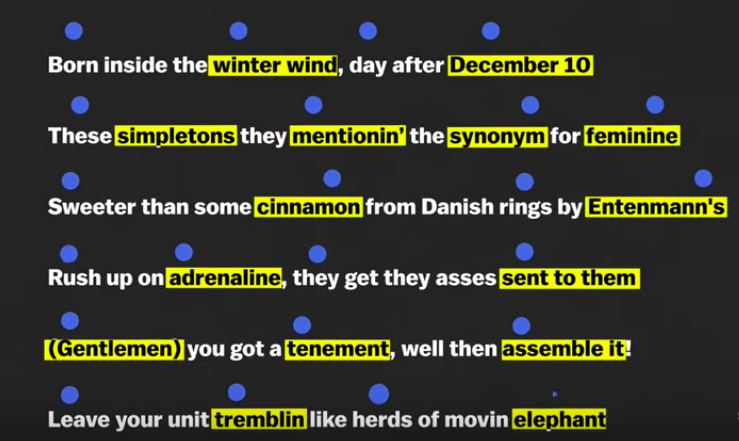
Short­ly there­after, Mos Def ups both the rhyming game and the fem­i­nist account­abil­i­ty, by stuff­ing his com­po­si­tions with mul­ti-syl­lab­ic words and phras­es that sort of rhyme—cinnamon, Entenmann’s, adren­a­line and “sent to them.”

Mean­while, Andre 3000 is play­ing with vary­ing the accent of his rhymes, rel­a­tive to the beat and bar, rather than com­mit­ting to a pre­dictable thud­ding.

Eminem, who has the dis­tinc­tion of pen­ning the first rap to win an Acad­e­my Award, places a pre­mi­um on nar­ra­tive, and refus­es to con­cede that noth­ing rhymes with orange.

Cur­rent chart top­per Kendrick Lamar’s gal­lop­ing “Rig­amor­tis” estab­lish­es a musi­cal motif that Caswell com­pares to Beethoven’s famous fifth.

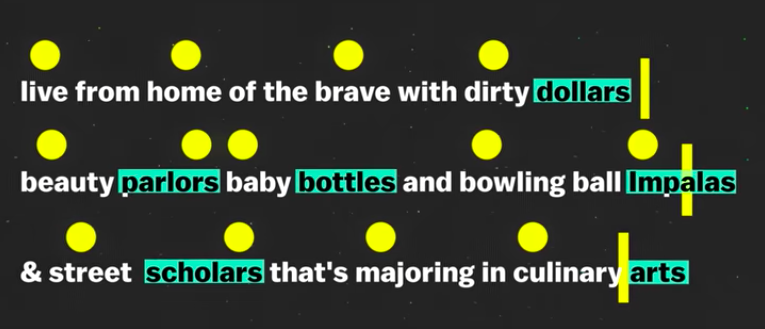
MF DOOM kicks the ball fur­ther down the court with dou­ble enten­dres, word­play and a will­ing­ness to steer clear of the expect­ed “b word.”

Lis­ten to a Spo­ti­fy playlist of the songs ref­er­enced in the video.

Delve fur­ther into the sub­ject by read­ing the thoughts of rap ana­lyst Mar­tin Con­nor, whom Caswell cred­its as a sort of bea­con.

Relat­ed Con­tent:

The His­to­ry of Hip Hop Music Visu­al­ized on a Turntable Cir­cuit Dia­gram: Fea­tures 700 Artists, from DJ Kool Herc to Kanye West

Found­ing Fathers, A Doc­u­men­tary Nar­rat­ed By Pub­lic Enemy’s Chuck D, Presents the True His­to­ry of Hip Hop

150 Songs from 100+ Rap­pers Get Art­ful­ly Woven into One Great Mashup: Watch the “40 Years of Hip Hop”

Ayun Hal­l­i­day is an author, illus­tra­tor, the­ater mak­er and Chief Pri­ma­tol­o­gist of the East Vil­lage Inky zine. Fol­low her @AyunHalliday.

Patti Smith, The Godmother of Punk, Is Now Putting Her Pictures on Instagram

As evi­denced by her Insta­gram feed the God­moth­er is just like you and me. She posts pic­tures of her kids.

She gives her mom a Moth­ers Day shout out…

She cel­e­brates her friends’ birth­days, posts self­ies, trav­el shots, and pet pics

She’s not above self-pro­mo­tion if the sit­u­a­tion war­rants.

But the accom­pa­ny­ing cap­tions set punk’s poet lau­re­ate apart. No LOLs here.  It’s clear that the award-win­ning author of Just Kids  and M Train thinks about her con­tent, care­ful­ly craft­ing each post before she pub­lish­es. Each is a bite-sized reflec­tion, a page-a-day med­i­ta­tion on what it means to be alive:

This is day two of my Venice report.

I bummed around think­ing of 

Venice in the sev­en­ties. It had

a strong Ras­ta vibe with Reg­gae

music drift­ing from the head shops

and boom box­es on the beach. 

Burn­ing Spear and Jim­my Cliff

and Bob Mar­ley. Venice has an 

ever chang­ing atmos­phere but 

I always like walk­ing around, 

anony­mous, just anoth­er freak. 

On Pacif­ic next to the Cafe Col­lage

I had steamed dumplings and 

gin­ger tea at Mao’s Kitchen. 

The food is great and rea­son­able.

Because it was ear­ly it was 

near­ly emp­ty. Since I was awake

since 4am i was near­ly hyp­no­tized 

by the turn­ing of their over­head 

fan. Before I left they gave me a

for­tune cook­ie. It was a true one.

Reflect­ing my past and cer­tain­ly 

my future. A very good day.

Fol­low Pat­ti Smith on Insta­gram here.

via W Mag­a­zine

Relat­ed Con­tent:

Pat­ti Smith’s 40 Favorite Books

Pat­ti Smith Cre­ates a Detailed Pack­ing List for Going on Tour: Haru­ki Muraka­mi Books, Loquat Tea & More

Hear Pat­ti Smith Read the Poet­ry that Would Become Hors­es: A Read­ing of 14 Poems at Colum­bia Uni­ver­si­ty, 1975

Ayun Hal­l­i­day is an author, illus­tra­tor, the­ater mak­er and Chief Pri­ma­tol­o­gist of the East Vil­lage Inky zine.  Her solo show Nurse!, in which one of Shakespeare’s best loved female char­ac­ters hits the lec­ture cir­cuit to set the record straight pre­mieres in June at The Tank in New York City. Fol­low her @AyunHalliday.

« Go BackMore in this category... »
Quantcast