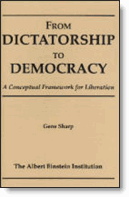
“From Dictatorship to Democracy.” Open Text Changes Face of Egypt.

There’s some­thing won­der­ful about this .… unless you’re a dic­ta­tor. Today, The New York Times shines a good light on Gene Sharp, a shy Amer­i­can intel­lec­tu­al who has spent decades writ­ing on the art of non-vio­lent rev­o­lu­tion. Back in 2002, Sharp pub­lished “From Dic­ta­tor­ship to Democ­ra­cy: A Con­cep­tu­al Frame­work for Lib­er­a­tion,” a 93-page guide to upend­ing auto­crats. Then, he had the text trans­lat­ed into 24 lan­guages and made freely avail­able online, with all copy­right restric­tions removed.  The man­u­al has since inspired dis­si­dents in Bur­ma, Bosnia and Esto­nia, while giv­ing strate­gic direc­tion to the protests in Egypt and Tunisia. Ideas have pow­er. But good ideas have more pow­er when they’re open. You can down­load Sharp’s man­u­al here (PDF), and learn more about his mis­sion through his non­prof­it, The Albert Ein­stein Insti­tu­tion.

Speak­ing of good ideas that are open, feel free to down­load 35o free online cours­es and teach your­self any­thing and every­thing.

via @philosophybites

by | Permalink | Make a Comment ( 1 ) |

Al Jazeera’s Live Stream of Egyptian Uprising

A quick fyi: We may be wit­ness­ing a water­shed moment in the his­to­ry of Egypt and The Mid­dle East, with police bat­tling mas­sive protests across Cairo and oth­er Egypt­ian cities. These protests are being cov­ered on the ground by Al Jazeera in Eng­lish, and you can watch the live stream on the web right here, or down­load the free Al Jazeera iPhone app and watch the stream on the iPhone.

Note: If you’re look­ing for some resources that explain what’s hap­pen­ing in Egypt, you might want to vis­it these resources here and here. Both come at the rec­om­men­da­tion of Jad Abum­rad, the host of Radio Lab.

by | Permalink | Make a Comment ( 1 ) |

JFK’s Inauguration: 50 Years Ago Today

We have been going a lit­tle vin­tage late­ly, and we’ll have to do it one more day. For today marks the 50th anniver­sary of John F. Kennedy’s inau­gu­ra­tion, the begin­ing of a pres­i­den­cy that inspired many, even though it last­ed scarce­ly more than 1000 days. Kennedy’s inau­gur­al speech ran 1364 words and took 14 min­utes to deliv­er. That makes it sig­nif­i­cant­ly short­er than the longest inau­gur­al address (William Hen­ry Har­ri­son took 8,445 words in 1841) but longer than the ters­est one – George Wash­ing­ton spoke mere­ly 135 words dur­ing his sec­ond address. With 50 years of hind­sight, we still con­sid­er Kennedy’s speech one of the finest inau­gur­al address­es because, as E.J. Dionne writes this week, it chal­lenged the nation (and still does today) “to har­ness real­ism to ide­al­ism, patri­o­tism to ser­vice, nation­al inter­est to uni­ver­sal aspi­ra­tion,” espe­cial­ly with the eter­nal line: “And so, my fel­low Amer­i­cans: ask not what your coun­try can do for you — ask what you can do for your coun­try.” You can revis­it the speech in full above, and also find oth­er great archival footage with­in the new YouTube Chan­nel spon­sored by the JFK Pres­i­den­tial Library.

by | Permalink | Make a Comment ( 2 ) |

William F. Buckley Threatens to “Smash” Noam Chomsky in the Face (1969)


So much for the Gold­en Age of Civil­i­ty in Amer­i­ca – but at least it was said with a lit­tle smile and the ensu­ing debate had some sub­stance…

Note: A read­er sug­gests in our com­ments that Buck­ley was jok­ing­ly allud­ing here to a pre­vi­ous con­fronta­tion­al moment with Gore Vidal, and it sounds about right. (“I’ll sock you in the god­damn face and you’ll stay plas­tered.”)

by | Permalink | Make a Comment ( 6 ) |

Ayn Rand Argues That Believing in God Is an Insult to Reason on The Phil Donahue Show (Circa 1979)

Ayn Rand — she’s often con­sid­ered the intel­lec­tu­al dar­ling of Amer­i­ca’s polit­i­cal right. Rand’s free mar­ket think­ing rubbed off on Alan Greenspan in a big way. At the Cato Insti­tute, Stephen Moore writes, “Being con­ver­sant in Ayn Rand’s clas­sic nov­el about the eco­nom­ic car­nage caused by big gov­ern­ment run amok [Atlas Shrugged] was prac­ti­cal­ly a job require­ment.” Supreme Court Jus­tice Clarence Thomas acknowl­edges a deep debt to The Foun­tain­head, Rand’s cel­e­bra­tion of the indi­vid­ual, and makes his law clerks watch the 1949 film adap­ta­tion of the nov­el. Rand Paul, the new Tea Par­ty sen­a­tor, calls him­self a fan of both books. And Ayn Rand book sales surged once Oba­ma came into office. You get the pic­ture.

Giv­en this love affair, it’s a lit­tle incon­gru­ous to redis­cov­er old footage (cir­ca 1979) that fea­tures Rand com­ing out “against God,” call­ing faith an abdi­ca­tion of indi­vid­ual respon­si­bil­i­ty (so impor­tant to her phi­los­o­phy), an insult to the human intel­lect, and a sign of psy­cho­log­i­cal weak­ness. If she were alive today, Rand would eas­i­ly give the “new athe­ists” (Richard Dawkins, Christo­pher Hitchens, Daniel Den­nett, etc.) a very good run for their mon­ey. It’s not exact­ly the stuff that tra­di­tion­al­ly makes you a con­ser­v­a­tive saint, but stranger things have hap­pened. Maybe.

Relat­ed Con­tent:

Athe­ism: A Rough His­to­ry of Dis­be­lief, with Jonathan Miller

Neil deGrasse Tyson Explains Why He’s Uncom­fort­able Being Labeled an ‘Athe­ist’

Athe­ist Ira Glass Believes Chris­tians Get the Short End of the Media Stick

by | Permalink | Make a Comment ( 15 ) |

The Gettysburg Address Animated

On Novem­ber 19, 1863, Abra­ham Lin­coln deliv­ered one of the best-known speech­es in his­to­ry: The Get­tys­burg Address. To pay homage to it, design­er Adam Gault and illus­tra­tor Ste­fanie Augus­tine have ren­dered the immor­tal words in beau­ti­ful black-and-white typo­graph­ic ani­ma­tion that visu­al­ly cap­tures the essence of Lin­col­n’s words as they are spo­ken.

For more on The Get­tys­burg Address, the Library of Con­gress has a fas­ci­nat­ing exhi­bi­tion of mate­ri­als relat­ed to the address, includ­ing the ear­li­est known draft and a short video on how the speech came to be. And for anoth­er visu­al treat, we rec­om­mend Jack Lev­in’s Abra­ham Lin­col­n’s Get­tys­burg Address Illus­trat­ed — a poignant and pow­er­ful selec­tion of images which, cou­pled with Lin­col­n’s equal­ly poignant and pow­er­ful words, are bound to put a lump in your throat.

Maria Popo­va is the founder and edi­tor in chief of Brain Pick­ings, a curat­ed inven­to­ry of eclec­tic inter­est­ing­ness and indis­crim­i­nate curios­i­ty. She writes for Wired UK, GOOD Mag­a­zine, Big­Think and Huff­in­g­ton Post, and spends a dis­turb­ing amount of time curat­ing inter­est­ing­ness on Twit­ter.

Relat­ed Con­tent:

Stephen Col­bert & Louis CK Recite The Get­tys­burg Address, With Some Help from Jer­ry Sein­feld

Hear John­ny Cash Deliv­er Lincoln’s Get­tys­burg Address

Behold Charles Laughton Deliv­er­ing the Get­tys­burg Address in its Entire­ty in Rug­gles of Red Gap

An Ani­mat­ed Neil deGrasse Tyson Gives an Elo­quent Defense of Sci­ence in 272 Words, the Same Length as The Get­tys­burg Address

The Dalai Lama on the Neuroscience of Compassion

Last week, the Dalai Lama spent sev­er­al days at Stan­ford Uni­ver­si­ty, where he made com­pas­sion his focus. He laid the foun­da­tion with a large pub­lic address before an audi­ence of 7,000. (Watch an excerpt above or the full talk below.) Then things got more focused when the spir­i­tu­al leader of Tibet par­tic­i­pat­ed in a day­long con­fer­ence about the neu­ro­bi­o­log­i­cal under­pin­nings of com­pas­sion. Host­ed by Stan­ford’s Cen­ter for Com­pas­sion and Altru­ism Research and Edu­ca­tion, the con­fer­ence brought togeth­er impor­tant sci­en­tists from many dis­ci­plines – psy­chol­o­gy, neu­ro­science, med­i­cine, and eco­nom­ics. You can watch a record­ing of the con­fer­ence here. It’s all in video and ready to go.

If you would like to sign up for Open Culture’s free email newslet­ter, please find it here. It’s a great way to see our new posts, all bun­dled in one email, each day.

If you would like to sup­port the mis­sion of Open Cul­ture, con­sid­er mak­ing a dona­tion to our site. It’s hard to rely 100% on ads, and your con­tri­bu­tions will help us con­tin­ue pro­vid­ing the best free cul­tur­al and edu­ca­tion­al mate­ri­als to learn­ers every­where. You can con­tribute through Pay­Pal, Patre­on, and Ven­mo (@openculture). Thanks!

Nelson Mandela’s First-Ever TV Interview (1961)

Note: This post was orig­i­nal­ly fea­tured on our site in 2010. In light of the news that Nel­son Man­dela has passed away at age 95, we’re bring­ing this vin­tage clip back to the fore. Here you can see a young Man­dela mak­ing his­to­ry, and with­out per­haps real­iz­ing it, build­ing the remark­able lega­cy that remains with us today.

In 1962, Nel­son Man­dela was arrest­ed on alle­ga­tions of sab­o­tage and oth­er charges and sen­tenced to life in prison, where he spent 27 years before becom­ing South Africa’s first pres­i­dent elect­ed in a ful­ly demo­c­ra­t­ic elec­tion. His sto­ry, among mod­ern his­to­ry’s most pro­found­ly inspi­ra­tional, is beau­ti­ful­ly and poet­i­cal­ly cap­tured in Clint East­wood’s 2009 gem, Invic­tus. But what East­wood’s account leaves out are the events that pre­ced­ed and led to Man­de­la’s arrest.

In May of 1961, a 42-year-old Man­dela gave his first-ever inter­view to ITN reporter Bri­an Wid­lake as part of a longer ITN Rov­ing Report pro­gram about Apartheid. At that point, the police are already hunt­ing for Man­dela, but Wid­lake pulls some strings and arranges to meet him in his hide­out. When the reporter asks Man­dela what Africans want, he prompt­ly responds:

“The Africans require, want the fran­chise, the basis of One Man One Vote – they want polit­i­cal inde­pen­dence.”

But per­haps more inter­est­ing is the dia­logue towards the end of the inter­view, where Man­dela explores the com­plex rela­tion­ship between peace and vio­lence as protest and nego­ti­a­tion tac­tics. We’re left won­der­ing whether his seem­ing­ly sud­den shift from a com­plete­ly peace­ful cam­paign strat­e­gy up to that point towards con­sid­er­ing vio­lence as a pos­si­bil­i­ty may be the prod­uct of South African police going after him with full force that week. Vio­lence, it seems, does breed vio­lence even in the best and noblest of us.

Relat­ed Con­tent:

Nel­son Man­dela Archive Goes Online (With Help From Google)

The Nel­son Man­dela Dig­i­tal Archive Goes Online

U2 Releas­es a Nel­son Man­dela-Inspired Song, “Ordi­nary Love”

Maria Popo­va is the founder and edi­tor in chief of Brain Pick­ings, a curat­ed inven­to­ry of eclec­tic inter­est­ing­ness and indis­crim­i­nate curios­i­ty. She writes for Wired UK, GOOD Mag­a­zine, Big­Think and Huff­in­g­ton Post, and spends a dis­turb­ing amount of time curat­ing inter­est­ing­ness on Twit­ter.

« Go BackMore in this category... »
Quantcast