Conformity Isn’t a Recipe for Excellence: Wisdom from George Carlin & Steve Jobs (NSFW)

Dur­ing the 1960s, George Car­lin had some­thing of an epiphany. Con­front­ed by the coun­ter­cul­ture, the young come­di­an real­ized that he was­n’t stay­ing true to him­self — that he was try­ing to be Dan­ny Kaye, a very main­stream star, when he was real­ly an out­law and a rebel at heart. (Watch him on The Tonight Show in 1966). Even­tu­al­ly, Car­lin learned “not to give a shit,” to break with mil­que­toast con­ven­tions that restrained oth­er come­di­ans, and that’s when his com­ic genius bloomed. Note that some of Car­lin’s com­ments here are … not sur­pris­ing­ly … not safe for work.

Steve Jobs, anoth­er child of the coun­ter­cul­ture, did­n’t learn Car­lin’s les­son over time. As Wal­ter Isaac­son makes clear in his new biog­ra­phy, Jobs under­stood from the begin­ning that excel­lence is rarely achieved by walk­ing down the path of con­for­mi­ty. In a 1995 inter­view, Jobs boiled down his basic approach to life. The mas­ter­mind behind the leg­endary Think Dif­fer­ent tele­vi­sion cam­paign (watch the ver­sion nar­rat­ed by Jobs him­self) said:

When you grow up, you tend to get told the world is the way it is, and your life is just to live your life inside the world. Try not to bash into the walls too much. Try to have a nice fam­i­ly, have fun, save a lit­tle mon­ey.

That’s a very lim­it­ed life. Life can be much broad­er once you dis­cov­er one sim­ple fact: Every­thing around you that you call life was made up by peo­ple that were no smarter than you and you can change it, you can influ­ence it, you can build your own things that oth­er peo­ple can use. Once you learn that, you’ll nev­er be the same again.

You can find more pearls of wis­dom from Jobs over at Brain­Pick­ings, and we’ll leave you below with more cul­tur­al fig­ures med­i­tat­ing on life:

Stephen Fry: What I Wish I Had Known When I Was 18

Paulo Coel­ho: Suc­cess Nev­er Hap­pens With­out Tak­ing Risks

One of the Biggest Risks is Being Too Cau­tious…

Bono Tells Grad­u­ates “Pick a Fight, Get in It” (2004)

Conan O’Brien: Through Dis­ap­point­ment You Can Gain Clar­i­ty

J.K. Rowl­ing Tells Har­vard Grad­u­ates What They Need to Know

by | Permalink | Make a Comment ( 2 ) |

This is Your Brain on Sex and Religion: Experiments in Neuroscience

If you attend­ed the recent Soci­ety for Neu­ro­science con­fer­ence, you had the chance to see some unprece­dent­ed 3D imag­ing of the brain — images that showed the exact order in which wom­en’s brain regions (80 in total) are acti­vat­ed in the sequence lead­ing to an orgasm. For Bar­ry Komis­aruk (pro­fes­sor of psy­chol­o­gy at Rut­gers Uni­ver­si­ty), this imag­ing isn’t gra­tu­itous. The whole point is to demys­ti­fy how the brain expe­ri­ences plea­sure, some­thing that could even­tu­al­ly inform our under­stand­ing of addic­tion and depres­sion. Komis­aruk said:

It’s a beau­ti­ful sys­tem in which to study the brain’s con­nec­tiv­i­ty. We expect that this movie [above], a dynam­ic rep­re­sen­ta­tion of the grad­ual buildup of brain activ­i­ty to a cli­max, fol­lowed by res­o­lu­tion, will facil­i­tate our under­stand­ing of patho­log­i­cal con­di­tions such as anor­gas­mia by empha­siz­ing where in the brain the sequen­tial process breaks down.

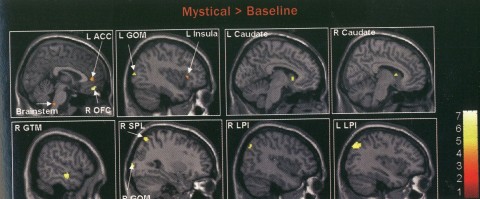
Mean­while, back at the neu­ro­science ranch, researchers are also using imag­ing tech­nol­o­gy to observe the human brain in anoth­er state, the state where peo­ple expe­ri­ence mys­ti­cal awak­en­ings dur­ing prayer and med­i­ta­tion or oth­er spir­i­tu­al epipha­nies. Sci­en­tif­ic Amer­i­can took a fair­ly deep look at this cut­ting-edge field sev­er­al years ago (read the full piece here), and now NPR has pro­duced a mul­ti­me­dia glimpse into the evolv­ing sci­ence of spir­i­tu­al­i­ty. The pre­sen­ta­tion (click here or the image above) com­bines audio, video, arti­cles, book excerpts, etc. and delves into the fun­da­men­tal ques­tion: Is God a delu­sion cre­at­ed by brain chem­istry, or is brain chem­istry a nec­es­sary con­duit for peo­ple to reach God?

If you want to learn more about the brain and neu­ro­science, don’t miss the cours­es list­ed in the Psychology/Neuroscience sec­tion of our big col­lec­tion of Free Online Cours­es.

Time and The Guardian have more on the first sto­ry above here and here.

by | Permalink | Make a Comment ( 1 ) |

The Decline of Civilization’s Right Brain: Animated

The mind, they say, is a house divid­ed: The right hemi­sphere of the brain is pre­dom­i­nant­ly intu­itive; the left, pre­dom­i­nant­ly ratio­nal.

In his recent book, The Mas­ter and His Emis­sary: The Divid­ed Brain and the Mak­ing of the West­ern World, the British psy­chi­a­trist and writer Iain McGilchrist looks at the evo­lu­tion of West­ern Civ­i­liza­tion through a neu­ropsy­cho­log­i­cal prism. In McGilchrist’s view our left hemi­sphere has, over the past four cen­turies, pro­gres­sive­ly pushed aside our right hemi­sphere. “My belief,” McGilchrist told The Morn­ing News last year, “is that it has now tak­en over our self-under­stand­ing, for a vari­ety of rea­sons, and is lead­ing us all down the road to ruin.”

McGilchrist is quick to point out that the old left-brain, right-brain clichĂ©s of the 1960s and 1970s were great­ly over­sim­pli­fied. Recent research has shown that both sides of the brain are deeply involved in func­tions such as rea­son and emo­tion. But the dichoto­my is still use­ful, McGilchrist says, and should not be aban­doned.

“The right hemi­sphere gives sus­tained, broad, open, vig­i­lant alert­ness, where­as the left hemi­sphere gives nar­row, sharply focused atten­tion to detail,” McGilchrist says in a new RSA Ani­mate fea­ture (see above). “Peo­ple who lose their right hemi­spheres have a patho­log­i­cal nar­row­ing of the win­dow of atten­tion.”  McGilchrist sees this nar­row­ing process occur­ring at the soci­etal lev­el. The left brain, he argues, con­ceives of the world as a set of decon­tex­tu­al­ized, sta­t­ic, mate­r­i­al, abstract things, where­as the right brain holis­ti­cal­ly embraces a world of evolv­ing, spir­i­tu­al, empath­ic, con­crete beings.

Both hemi­spheres are nec­es­sary, McGilchrist says in the Morn­ing News inter­view, “but one is more fun­da­men­tal­ly impor­tant than the oth­er, and sees more than the oth­er, even though there are some things that it must not get involved with, if it is to main­tain its broad­er, more complete–in essence more truthful–vision. This is the right hemi­sphere, which, as I demon­strate from the neu­ropsy­cho­log­i­cal lit­er­a­ture, lit­er­al­ly sees more, and grounds the under­stand­ing of the left hemisphere–an under­stand­ing which must ulti­mate­ly be re-inte­gret­ed with the right hemi­sphere, if it is not to lead to error. The left hemi­sphere is extra­or­di­nar­i­ly valu­able as an inter­me­di­ate, but not as a final author­i­ty.”

McGilchrist is not with­out his crit­ics. The British philoso­pher A.C. Grayling writes in the Lit­er­ary Review, “Unfor­tu­nate­ly, if one accepts the log­ic of his argu­ment that our West­ern civil­i­sa­tion has declined from a right-hemi­sphere to a left-hemi­sphere dis­pen­sa­tion, we do not have to imag­ine what the for­mer would be like, because his­to­ry itself tells us: in it most of us would be super­sti­tious and igno­rant peas­ants work­ing a strip farm that we would nev­er leave from cra­dle to grave, under the thumb of slight­ly more left-hemi­spher­ic bul­lies in the form of the local baron and priest.”

After The Mas­ter and His Emis­sary was pub­lished, McGilchrist dis­cov­ered a quo­ta­tion attrib­uted to Albert Ein­stein that he felt neat­ly sup­port­ed his the­sis. He uses this quote at the end of his RSA talk: “The intu­itive mind is a sacred gift and the ratio­nal mind is a faith­ful ser­vant. We have cre­at­ed a soci­ety that hon­ors the ser­vant and has for­got­ten the gift.” But did Ein­stein actu­al­ly say that? The Inter­net is awash with dubi­ous Ein­stein quo­ta­tions, and we were unable to locate the orig­i­nal source of this one. If any read­er can ver­i­fy its authen­tic­i­ty (by cit­ing the orig­i­nal text, speech or con­ver­sa­tion) please leave a note in our com­ments sec­tion. Mean­while, you can watch McGilchrist’s entire half-hour RSA lec­ture here.

via Brain Pick­ings

The Power of Conformity

This vin­tage stunt from a 1962 episode of Can­did Cam­era makes for a good laugh. But it also cap­tures some­thing impor­tant about human psy­chol­o­gy — some­thing that social psy­chol­o­gist Philip Zim­bar­do, famous for his Stan­ford Prison Exper­i­ment, describes on a web­site relat­ed to his 2007 book The Lucifer Effect: Under­stand­ing How Good Peo­ple Turn Evil. He writes:

One of the most pop­u­lar sce­nar­ios in the long his­to­ry of Alan Fun­t’s inge­nious Can­did Cam­era pro­grams is “Face The Rear.” An ele­va­tor is rigged so that after an unsus­pect­ing per­son enters, four Can­did Cam­era staff enter, and one by one they all face the rear. The doors close and then reopen; now reveal­ing that the pas­sen­ger had con­formed and is now also fac­ing the rear. Doors close and reopen, and every­one is fac­ing side­ways, and then face the oth­er way. We laugh that these peo­ple are manip­u­lat­ed like pup­pets on invis­i­ble strings, but this sce­nario makes us aware of the num­ber of sit­u­a­tions in which we mind­less­ly fol­low the dic­tates of group norms and sit­u­a­tion­al forces.

Often times, the mind­less sub­mis­sion to group norms has entire­ly innocu­ous results. But, in oth­er cas­es, it can lead to “good peo­ple engag­ing in evil actions.” Wit­ness what hap­pened with­in the con­trolled envi­ron­ment of the Stan­ford Prison Exper­i­ment. Or, worse, the dev­as­tat­ing abus­es at Abu Ghraib, which brought oth­er­wise aver­age peo­ple to com­mit atro­cious acts. For more read The Lucifer Effect.

H/T Sci­ence Dump

Steven Pinker on the History of Violence: A Happy Tale

In July, the Edge.org held its annu­al “Mas­ter Class” in Napa, Cal­i­for­nia and brought togeth­er some influ­en­tial thinkers to talk about “The Sci­ence of Human Nature.” The high­lights includ­ed:

Prince­ton psy­chol­o­gist Daniel Kah­ne­man on the mar­vels and the flaws of intu­itive think­ing; Har­vard math­e­mat­i­cal biol­o­gist Mar­tin Nowak on the evo­lu­tion of coop­er­a­tion; Har­vard psy­chol­o­gist Steven Pinker on the his­to­ry of vio­lence; UC-San­ta Bar­bara evo­lu­tion­ary psy­chol­o­gist Leda Cos­mides on the archi­tec­ture of moti­va­tion; UC-San­ta Bar­bara neu­ro­sci­en­tist Michael Gaz­zani­ga on neu­ro­science and the law; and Prince­ton reli­gious his­to­ri­an Elaine Pagels on The Book of Rev­e­la­tions.

The Edge.org has now start­ed mak­ing videos from the class avail­able online, includ­ing, this week, Steven Pinker’s talk on the his­to­ry of vio­lence. You can watch Pinker’s full 86 minute talk here (sor­ry, we could­n’t embed it on our site.) Or, if you want the quick gist of Pinker’s think­ing, then watch the short clip above. In five min­utes, Pinker tells you why vio­lence is steadi­ly trend­ing down, and why some things are actu­al­ly going right in our momentarily/monetarily trou­bled world.

The Great Dr. Fox Lecture: A Vintage Academic Hoax (1970)

Back in 1970, three psy­chol­o­gy pro­fes­sors pulled off a hoax that dou­bled as med­ical research. They brought Dr. Myron L. Fox, “an author­i­ty on the appli­ca­tion of math­e­mat­ics to human behav­ior,” to a con­fer­ence near Lake Tahoe and let him talk about “Math­e­mat­i­cal Game The­o­ry as Applied to Physi­cian Edu­ca­tion.” Lit­tle did the audi­ence know that Fox was­n’t actu­al­ly a researcher or schol­ar. He was actu­al­ly an actor who had played parts in Hogan’s Heroes and Bat­man. And he was giv­en a gib­ber­ish-filled script to learn only the day before. Nonethe­less, the edu­ca­tors in the crowd ate up his mean­ing­less talk, and it allowed the researchers to draw the con­clu­sion that “style was more influ­en­tial than con­tent in pro­vid­ing learn­er sat­is­fac­tion.” A nice way of say­ing that jar­gon and cant can some­times take you a long way in the acad­e­my — in the human­i­ties and sci­ences alike. More back­sto­ry here. H/T Metafil­ter

Relat­ed Con­tent:

The Stan­ford Prison Exper­i­ment on YouTube

Carl Gus­tav Jung Talks About Death

Ray Brad­bury: Lit­er­a­ture is the Safe­ty Valve of Civ­i­liza­tion

Movie Tearjerkers: What’s the Saddest Scene in Cinema?

Accord­ing this fas­ci­nat­ing piece in The Smith­son­ian, Fran­co Zef­firelli’s 1979 weep­fest The Champ is the most con­sis­tent­ly effec­tive tear­jerk­er in the his­to­ry of film. It’s also the tear­jerk­er most often used in sci­en­tif­ic stud­ies of grief and sad­ness:

The Champ has been used in exper­i­ments to see if depressed peo­ple are more like­ly to cry than non-depressed peo­ple (they aren’t). It has helped deter­mine whether peo­ple are more like­ly to spend mon­ey when they are sad (they are) and whether old­er peo­ple are more sen­si­tive to grief than younger peo­ple (old­er peo­ple did report more sad­ness when they watched the scene). Dutch sci­en­tists used the scene when they stud­ied the effect of sad­ness on peo­ple with binge eat­ing dis­or­ders (sad­ness didn’t increase eat­ing).

We would have gone with either the last scene of West Side Sto­ry or that dev­as­tat­ing 1989 Negro Col­lege Fund com­mer­cial with the pen­nies. Feel free to post your own can­di­dates in the com­ments.

via Neatora­ma

Sheer­ly Avni is a San Fran­cis­co-based arts and cul­ture writer. Her work has appeared in Salon, LA Week­ly, Moth­er Jones, and many oth­er pub­li­ca­tions. You can fol­low her on twit­ter at @sheerly.

Renata Salecl: The Paradox of Choice

With free­dom come choic­es. Every choice is an oppor­tu­ni­ty to select the best pos­si­ble out­come, the one that would make us hap­pi­est. More choic­es lead to more hap­pi­ness, right? Of course we find the oppo­site to be true. As choic­es increase, so does anx­i­ety. In the lat­est install­ment of the RSA ani­mat­ed lec­ture series, Sloven­ian social and legal the­o­rist Rena­ta Sale­cl argues that this anx­i­ety, cou­pled with the cap­i­tal­ist ide­al of the self-made per­son, leads to a kind of social paral­y­sis. “Today’s ide­ol­o­gy of choice,” says Sale­cl, “actu­al­ly paci­fies peo­ple and makes us con­stant­ly turn crit­i­cism to our­selves instead of orga­niz­ing our­selves and mak­ing a cri­tique of the soci­ety we live in.” The ani­mat­ed fea­ture was adapt­ed from a lec­ture Sale­cl gave last sum­mer in Lon­don. (You can watch the entire lec­ture here.) It draws on ideas pre­sent­ed in her book, Choice.

Oth­er RSA Videos:

Sir Ken Robin­son: A Cre­ative Edu­ca­tion

Good Cap­i­tal­ist Kar­ma: Zizek Ani­mat­ed

Smile or Die: The Per­ils of Pos­i­tive Psy­chol­o­gy

Steven Pinker: How Innu­en­do Makes Things Work

« Go BackMore in this category... »
Quantcast