The Benefits of Being Awestruck

In Decem­ber 1972, astro­nauts aboard the Apol­lo 17 space­craft snapped a pho­to­graph of our Earth from an alti­tude of 45,000 kilo­me­tres. The pho­to­graph, known as “The Big Blue Mar­ble,” let every­one see their plan­et ful­ly illu­mi­nat­ed for the first time. The pic­ture, show­ing the Earth look­ing iso­lat­ed and vul­ner­a­ble, left every­one awestruck. And “The Big Blue Mar­ble” became the most wide­ly-dis­trib­uted image of the 20th cen­tu­ry. Now, less than a half cen­tu­ry lat­er, pic­tures of our plan­et bare­ly move us. And we hard­ly bat an eye­lash at videos giv­ing us remark­able views from the Inter­na­tion­al Space Sta­tion.

We’re los­ing our sense of awe at our own per­il, how­ev­er. The title of a new Stan­ford study tells you all you need to know: Awe Expands People’s Per­cep­tion of Time, Alters Deci­sion Mak­ing, and Enhances Well-Being. Appar­ent­ly, watch­ing awe-inspir­ing vidoes makes you less impa­tient, more will­ing to vol­un­teer time to help oth­ers, more like­ly to pre­fer expe­ri­ences over mate­r­i­al prod­ucts, more present in the here and now, and hap­pi­er over­all. (More on that here.) All of this pro­vides film­mak­er Jason Sil­va the mate­r­i­al for yet anoth­er one of his “philo­soph­i­cal shots of espres­so,” The Bio­log­i­cal Advan­tage of Being Awestruck. It’s the first video above.

Find more awe in our col­lec­tion of Great Sci­ence Videos.


by | Permalink | Make a Comment ( 2 ) |

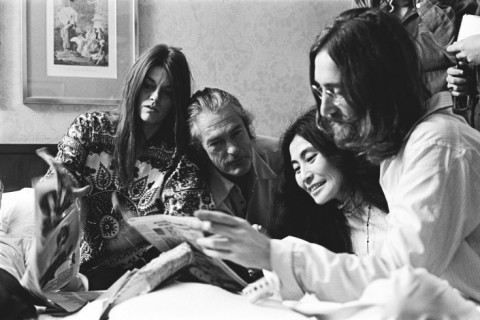
Discovered: Conversation with John Lennon, Yoko Ono, and Timothy Leary at Montreal Bed-In (1969)

On May 26, 1969, John Lennon and Yoko One began their sec­ond “Bed-In,” a form of anti-Viet­nam War protest that com­bined the media impact of a press con­fer­ence with the com­fort of hotel sheets. Their first Bed-In, which hap­pened in var­i­ous rooms of the Ams­ter­dam Hilton in late March of that year, saw them grant inter­view after inter­view about peace all day long with­out mov­ing from the bed in which they had ensconced them­selves. They’d sched­uled its fol­low up in New York City, but Lennon found he could­n’t enter the Unit­ed States due to a pre­vi­ous con­vic­tion for mar­i­jua­na pos­ses­sion. They relo­cat­ed it to the Bahamas, where the heat soon prompt­ed them to move again to the entire­ly cool­er Queen Eliz­a­beth Hotel in Mon­tre­al. There they record­ed the song “Give Peace a Chance,” aid­ed by such vis­i­tors as Tom­my Smoth­ers, Dick Gre­go­ry, Mur­ray the K, and psy­che­del­ic drug advo­cate Tim­o­thy Leary.

But Leary did­n’t just come to pro­vide a back­ing vocal. With his wife Rose­mary, he record­ed a con­ver­sa­tion with Lennon and Ono about… well, about a vari­ety of sub­jects, but they’d all fall under the broad head­ing of Leary’s one great pur­suit, “con­scious­ness.” Only recent­ly did Leary archivist Michael Horowitz dis­cov­er the tran­script of this ses­sion in “an unmarked enve­lope in a box of mis­cel­la­neous papers,” and this week the Tim­o­thy Leary Archives made it avail­able to the pub­lic for the first time ever. The con­ver­sa­tion begins with the fin­er points of teepee life, moves on to the effects of place on one’s state of mind, touch­es on both cou­ples’ hav­ing found them­selves on the wrong side of drug law enforce­ment, and ends with Lennon and Leary com­par­ing notes on how they use the media to con­vey their mes­sage:

TIMOTHY: John, about the use of the mass media … the kids must be taught how to use the media. Peo­ple used to say to me–I would give a rap and some­one would get up and say, “Well, what’s this about a reli­gion? Did the Bud­dha use drugs? Did the Bud­dha go on tele­vi­sion? I’d say, “Ahh—he would’ve. He would’ve….”

JOHN: I was on a TV show with David Frost and Yehu­di Menuhin, some cul­tur­al vio­lin­ist y’know, they were real­ly attack­ing me. They had a whole audi­ence and every­thing. It was after we got back from Amsterdam…and Yehu­di Menuhin came out, he’s always doing these Hin­du num­bers. All that pious bit, and his school for vio­lin­ists, and all that. And Yehu­di Menuhi said, “Well, don’t you think it’s nec­es­sary to kill some peo­ple some times?” That’s what he said on TV, that’s the first thing he’s ever said. And I said, “Did Christ say that? Are you a Chris­t­ian?” “Yeah,” I said, and did “Christ say any­thing about killing peo­ple?” And he said, “Did Christ say any­thing about tele­vi­sion? Or gui­tars?”

To learn more about Lennon and Ono’s Bed-Ins, you can vis­it the 70-minute doc­u­men­tary Bed Peace (below), pre­vi­ous­ly fea­tured on Open Cul­ture and still freely view­able on YouTube:

Relat­ed con­tent:

Tim­o­thy Leary’s Wild Ride and the Fol­som Prison Inter­view

Beyond Tim­o­thy Leary: 2002 Film Revis­its His­to­ry of LSD

Bed Peace Star­ring John Lennon & Yoko Ono (Free for Lim­it­ed Time)

Col­in Mar­shall hosts and pro­duces Note­book on Cities and Cul­ture. Fol­low him on Twit­ter at @colinmarshall.

Bruce Springsteen Singin’ in the Rain in Italy, and How He Creates Powerful Imaginary Worlds

David Brooks, the sage New York Times op-ed writer, begins yes­ter­day’s thought piece, The Pow­er of the Par­tic­u­lar, with these lines:

They say you’ve nev­er real­ly seen a Bruce Spring­steen con­cert until you’ve seen one in Europe, so some friends and I threw finan­cial san­i­ty to the winds and went to fol­low him around Spain and France. In Madrid, for exam­ple, we were reward­ed with a show that last­ed 3 hours and 48 min­utes, pos­si­bly the longest Spring­steen con­cert on record and one of the best. But what real­ly fas­ci­nat­ed me were the crowds.…

Here were audi­ences in the mid­dle of the Iber­ian Penin­su­la singing word for word about High­way 9 or Greasy Lake or some oth­er exot­ic locale on the Jer­sey Shore. They held up signs request­ing songs from the deep­est and most dis­tinct­ly Amer­i­can recess­es of Springsteen’s reper­toire.

The odd­est moment came mid­con­cert when I looked across the foot­ball sta­di­um and saw 56,000 enrap­tured Spaniards, pump­ing their fists in the air in fer­vent uni­son and bel­low­ing at the top of their lungs, “I was born in the U.S.A.! I was born in the U.S.A.!” Did it occur to them at that moment that, in fact, they were not born in the U.S.A.?

Brooks goes on to explain this phe­nom­e­non by intro­duc­ing the psy­cho­log­i­cal con­cept of “para­cosms,” which describes the cre­ation of pow­er­ful fan­ta­sy worlds. And he sug­gests that only the most dis­tinc­tive artists, the ones who come from a tru­ly par­tic­u­lar place, can cre­ate this spe­cial con­nec­tion with fans.  Spring­steen does just that. But part of his appeal is some­times his tran­scen­dence — his abil­i­ty to tran­scend his own music and embrace the uni­ver­sal spir­it of rock ‘n roll. Case in point: The Boss singing The Bea­t­les clas­sic “Twist and Shout” in Flo­rence ear­li­er this month. It’s rain­ing, rain­ing hard, but did any­one notice?

Thanks to Wired writer Steve Sil­ber­man for flag­ging that clip for us.…

by | Permalink | Make a Comment ( 5 ) |

Sigmund Freud’s Home Movies: A Rare Glimpse of His Private Life

Not long ago we post­ed the only known record­ing of Sig­mund Freud’s voice. Today we present rare home movies of the founder of mod­ern psy­chol­o­gy, cap­tured dur­ing the last decade of his life.

The scenes are nar­rat­ed by Freud’s youngest daugh­ter Anna, who allowed the footage to be shown only with­in the psy­cho­an­a­lyt­ic com­mu­ni­ty before her death in 1982. The first scenes in the clip above were filmed in 1932 at Freud’s sum­mer home in Pöt­zleins­dorf, a sub­urb of Vien­na. He is shown vis­it­ing with his old friend Emanuel Löwy, an archae­ol­o­gist, and pet­ting his dog Jofi. The next sequence was shot between 1934 and 1937 at Freud’s lat­er sum­mer home in Grinz­ing, now a dis­trict of Vien­na. It shows Freud relax­ing with a book while his wife Martha and her sis­ter, Min­na Bernays, do their sewing. The movies were made by Freud’s friend and patient Mark Brunswick, hus­band of the psy­cho­an­a­lyst Ruth Mack Brunswick, a close asso­ciate of Freud’s.

You can watch the com­plete 24-minute film from which these scenes were tak­en on YouTube. And you can view or down­load a series of anno­tat­ed clips at the Freud Muse­um Web site.

If you would like to sign up for Open Culture’s free email newslet­ter, please find it here. It’s a great way to see our new posts, all bun­dled in one email, each day.

If you would like to sup­port the mis­sion of Open Cul­ture, con­sid­er mak­ing a dona­tion to our site. It’s hard to rely 100% on ads, and your con­tri­bu­tions will help us con­tin­ue pro­vid­ing the best free cul­tur­al and edu­ca­tion­al mate­ri­als to learn­ers every­where. You can con­tribute through Pay­Pal, Patre­on, and Ven­mo (@openculture). Thanks!

Charles Bukowski: Depression and Three Days in Bed Can Restore Your Creative Juices (NSFW)


Pico Iyer once called Charles Bukows­ki the “lau­re­ate of Amer­i­can lowlife,” and that’s because he wrote poems for and about ordi­nary Amer­i­cans — peo­ple who expe­ri­enced pover­ty, the tedi­um and grind of work, and some­times frayed rela­tion­ships, bouts of alco­holism, drug addic­tion and the rest. Bukows­ki could write so elo­quent­ly about this because he came from this world. He grew up in a poor immi­grant house­hold with an abu­sive father, took to the bot­tle at an ear­ly age, worked at a Los Ange­les post office for a decade plus, and had a long and tumul­tuous rela­tion­ship with Jane Cooney Bak­er, a wid­ow eleven years his senior, who drank to excess and died at 51, leav­ing Bukows­ki bro­ken.

And then there’s the depres­sion. Bukows­ki expe­ri­enced that too. But he knew how to chan­nel it, how to turn days of dark­ness into sources of per­son­al and cre­ative renew­al. He explains it in some char­ac­ter­is­ti­cal­ly NSFW detail above.

To gain a more in-depth under­stand­ing of depres­sion and its bio­log­i­cal basis, we’d rec­om­mend watch­ing this lec­ture by Stan­ford’s Robert Sapolksy.

Here’s a tran­script of what Bukows­ki has to say:

I have peri­ods where, you know, when I feel a lit­tle weak or depressed. Fuck it! The Wheaties aren’t going down right. I just go to bed for three days and four nights, pull down all the shades and just go to bed. Get up. Shit. Piss. Drink a beer down and go back to bed. I come out of that com­plete­ly re-enlight­ened for 2 or 3 months. I get pow­er from that.

I think someday…they’ll say this psy­chot­ic guy knew some­thing that…you know in days ahead and med­i­cine, and how they fig­ure these things out. Every­body should go to bed now and then, when they’re down low and give it up for three or four days. Then they’ll come back good for a while.

But we’re so obsessed with, we have to get up and do it and go back to sleep. In fact there’s a woman I’m liv­ing with now, get’s around 12:30, 1pm, I say: “I’m sleepy. I want to go to sleep.” She says: “What? You want to go to sleep, it’s only 1pm!” We’re not even drink­ing, you know. Hell, there’s noth­ing else to do but sleep.

Peo­ple are nailed to the process­es. Up. Down. Do some­thing. Get up, do some­thing, go to sleep. Get up. They can’t get out of that cir­cle. You’ll see, some­day they’ll say: “Bukows­ki knew.” Lay down for 3 or 4 days till you get your juices back, then get up, look around and do it. But who the hell can do it cause you need a dol­lar. That’s all. That’s a long speech, isn’t it? But it means some­thing.

via Bib­liok­lept

If you would like to sign up for Open Culture’s free email newslet­ter, please find it here. It’s a great way to see our new posts, all bun­dled in one email, each day.

If you would like to sup­port the mis­sion of Open Cul­ture, con­sid­er mak­ing a dona­tion to our site. It’s hard to rely 100% on ads, and your con­tri­bu­tions will help us con­tin­ue pro­vid­ing the best free cul­tur­al and edu­ca­tion­al mate­ri­als to learn­ers every­where. You can con­tribute through Pay­Pal, Patre­on, and Ven­mo (@openculture). Thanks!

Relat­ed Bukows­ki:

Tom Waits Reads Charles Bukows­ki

The Last Faxed Poem of Charles Bukows­ki

Charles Bukows­ki Reads His Poem “The Secret of My Endurance”

by | Permalink | Make a Comment ( 7 ) |

Hitchcock on the Filmmaker’s Essential Tool: The Kuleshov Effect

Alfred Hitch­cock once said that all art is emo­tion, and that the task of the film­mak­er is to use the tools of his medi­um to manip­u­late the audi­ence’s emo­tion­al expe­ri­ence. In the scene above from the 1964 CBC doc­u­men­tary A Talk with Hitch­cock, the great direc­tor demon­strates one of the most fun­da­men­tal tools at a film­mak­er’s dis­pos­al: the Kuleshov effect.

In the ear­ly 20th cen­tu­ry, Russ­ian film­mak­er and the­o­rist Lev Kuleshov dis­cov­ered that a sin­gle shot of an actor with an ambigu­ous expres­sion on his face could con­vey a mul­ti­tude of very dis­tinct mean­ings in the mind of the view­er, depend­ing on the nature of the shot imme­di­ate­ly pre­ced­ing it. In 1918 he con­duct­ed his famous exper­i­ment (below) using a sin­gle shot of the silent film actor Ivan Moz­zhukhin’s face look­ing at some­thing off-cam­era.

Kuleshov spliced it in with a series of quite dif­fer­ent images–a bowl of soup, a dead child, a scant­i­ly clad woman–and dis­cov­ered that the audi­ence would inter­pret Moz­zhukhin’s emo­tion (hunger, pity, lust) depend­ing on the jux­ta­po­si­tion.

Kuleshov’s dis­cov­ery was the out­come of a very delib­er­ate process. In 1916 he and sev­er­al col­leagues made a sys­tem­at­ic study of audi­ence reac­tions at movie the­aters across Moscow. They quick­ly found that the bour­geoisie were too reserved, so they spent most of their time at the­aters in work­ing class neigh­bor­hoods, where the emo­tions flowed freely. They noticed that audi­ences react­ed dif­fer­ent­ly depend­ing upon where the film was pro­duced. As Kuleshov writes in his essay, “The Prin­ci­ples of Mon­tage”:

When we began to com­pare the typ­i­cal­ly Amer­i­can, typ­i­cal­ly Euro­pean, and typ­i­cal­ly Russ­ian films, we noticed that they were dis­tinct­ly dif­fer­ent from one anoth­er in their con­struc­tion. We noticed that in a par­tic­u­lar sequence of a Russ­ian film there were, say, ten to fif­teen splices, ten to fif­teen dif­fer­ent set-ups. In the Euro­pean film there might be twen­ty to thir­ty such set-ups (one must not for­get that this descrip­tion per­tains to the year 1916), while in the Amer­i­can film there would be from eighty, some­times upward to a hun­dred, sep­a­rate shots. The Amer­i­can films took first place in elic­it­ing reac­tions from the audi­ence; Euro­pean films took sec­ond; and the Russ­ian films, third. We became par­tic­u­lar­ly intrigued by this, but in the begin­ning we did not under­stand it.

Kuleshov even­tu­al­ly con­clud­ed that the essence of cin­e­ma is mon­tage, that a film sto­ry is best told by cut­ting between dis­crete pieces of film. His stu­dent Sergei Eisen­stein saw the basic struc­ture as a col­li­sion between shot A (“the­sis”) and shot B (“antithe­sis”) to cre­ate a com­plete­ly new idea (“syn­the­sis”) in the mind of the view­er.

The noto­ri­ety of Kuleshov’s exper­i­ment with Moz­zhukhin tends to focus atten­tion on the human face (it has even inspired sci­en­tif­ic research on the con­tex­tu­al fram­ing of emo­tion­al attri­bu­tions), but the effect is far more gen­er­al. “We are accus­tomed,” writes Eisen­stein in Film Sense, “to make, almost auto­mat­i­cal­ly, a def­i­nite and obvi­ous deduc­tive gen­er­al­iza­tion when any sep­a­rate objects are placed before us side by side.”

Kuleshov showed this in sev­er­al oth­er exper­i­ments. In one, he depict­ed a sin­gle woman through a series of shots show­ing the body parts of mul­ti­ple women. In anoth­er he cre­at­ed an “arti­fi­cial land­scape” by splic­ing an image of the White House into a sequence of images of Moscow. The will­ing­ness of audi­ences to make mean­ing­ful con­nec­tions between unre­lat­ed images gives a film­mak­er con­sid­er­able expres­sive pow­er.  In his book On Direct­ing Film, David Mamet writes:

Doc­u­men­taries take basi­cal­ly unre­lat­ed footage and jux­ta­pose it in order to give the view­er the idea the film­mak­er wants to con­vey. They take footage of birds snap­ping a twig. They take footage of a fawn rais­ing his head. The two shots have noth­ing to do with each oth­er. They were shot days or years, and miles, apart. And the film­mak­er jux­ta­pos­es the images to give the view­er the idea of great alert­ness. The shots have noth­ing to do with each oth­er. They are not a record of what the pro­tag­o­nist did. They are not a record of how the deer react­ed to the bird. They’re basi­cal­ly unin­flect­ed images. But they give the view­er the idea of alert­ness to dan­ger when they are jux­ta­posed. That’s good film­mak­ing.

There is an old say­ing that a work of art is only com­plet­ed in the mind of the behold­er. Kuleshov showed that it’s true.

If you would like to sign up for Open Culture’s free email newslet­ter, please find it here. It’s a great way to see our new posts, all bun­dled in one email, each day.

If you would like to sup­port the mis­sion of Open Cul­ture, con­sid­er mak­ing a dona­tion to our site. It’s hard to rely 100% on ads, and your con­tri­bu­tions will help us con­tin­ue pro­vid­ing the best free cul­tur­al and edu­ca­tion­al mate­ri­als to learn­ers every­where. You can con­tribute through Pay­Pal, Patre­on, and Ven­mo (@openculture). Thanks!

Relat­ed Con­tent:

Alfred Hitch­cock Reveals The Secret Sauce for Cre­at­ing Sus­pense

Alfred Hitch­cock Explains the Plot Device He Called the ‘MacGuf­fin’

The Eyes of Hitch­cock: A Mes­mer­iz­ing Video Essay on the Expres­sive Pow­er of Eyes in Hitchcock’s Films

Alfred Hitchcock’s 7‑Minute Mas­ter Class on Film Edit­ing

Neuroscience and Propaganda Come Together in Disney’s World War II Film, Reason and Emotion

Last Fri­day, we post­ed Saul Bass’ Why Man Cre­ates. For anoth­er short film which drew Acad­e­my recog­ni­tion by using ani­ma­tion to illu­mi­nate basic human impuls­es, you could do worse than Dis­ney’s Rea­son and Emo­tion. Just as Bass’ pic­ture, a prod­uct of 1968, bears the mark of that era’s ascen­dant free-your-mind coun­ter­cul­ture, Dis­ney’s pic­ture reflects the con­cerns of 1943 Amer­i­ca. Mankind has always and prob­a­bly will always strug­gle with the con­flicts between what we con­sid­er our ratio­nal minds and what we con­sid­er our emo­tion­al impuls­es, but at that par­tic­u­lar time and in that par­tic­u­lar nation, mankind found itself even more con­cerned with the con­flict between the Axis and the Allies. Under­stand­ing how per­sua­sive a mes­sage they could send by unit­ing the cur­rent with the eter­nal, Dis­ney’s wartime pro­pa­gan­da came up with this eight-minute comedic illus­tra­tion of how our rea­son and emo­tion coex­ist, what an ide­al bal­ance between them looks like, and why you, a good Amer­i­can, should hold your emo­tion in check. “That’s right, emo­tion,” insists the nar­ra­tor, “go ahead, put rea­son out of the way. That’s great, fine — for Hitler.”

Enlight­ened 21st-cen­tu­ry view­ers will find plen­ty of the stiff, the square, and the stereo­typ­i­cal to object to here. Ven­tur­ing inside the head of an aver­age Amer­i­can man, the film sees a sober, bespec­ta­cled embod­i­ment of Rea­son at the steer­ing wheel. Behind him sits the jit­tery, club-swing­ing cave­man Emo­tion. When our man spies a “classy dish” on the side­walk, Emo­tion wrests con­trol from Rea­son, but suc­ceeds only in get­ting their humanoid vehi­cle slapped.

We then enter the mind of the slap­per to find Rea­son’s female equiv­a­lent, a syn­the­sis of all char­ac­ters ever named “Pru­dence,” at the wheel. Back-seat dri­ving is a rotund, excitable, (rel­a­tive­ly) skimpi­ly dressed Emo­tion. Rea­son believes she has done jus­tice with the slap, but Emo­tion argues, “He was cute! You wan­na be an old maid?” She then pro­pos­es an eat­ing binge, while Rea­son looks on in hor­ror at their con­trol room’s rapid­ly bal­loon­ing, sag­ging, “CHIN,” PROFILE,” and “FIGURE” charts.

Yet in its old-fash­ioned, super­cil­ious, and sim­plis­tic way, Rea­son and Emo­tion looks frankly at the chal­lenges we all face on a reg­u­lar basis when decid­ing, whether we be male or female, what to do, which foods to eat, and whom to try to meet. Research on what our cen­ters of rea­son and emo­tion actu­al­ly are and how they deter­mine our choic­es has risen to the height of neu­ro­sci­en­tif­ic fash­ion, and as for the film’s indict­ment of the Third Reich as a vast emo­tion-manip­u­la­tion machine, the unset­tling but sub­stan­tial field of dic­ta­to­r­i­al mind con­trol in all its forms has accu­mu­lat­ed its own enor­mous body of aca­d­e­m­ic study. We’ve grown just a lit­tle smarter about rea­son and emo­tion, war and peace, and men and women in the past 69 years, which makes Rea­son and Emo­tion a rich­er and more fas­ci­nat­ing watch now than it would have been then. The film has been added to the Ani­ma­tion sec­tion of our col­lec­tion of Free Movies Online.

Find more Dis­ney Pro­pa­gan­da Films Here:

The Mak­ing of a Nazi: Disney’s 1943 Ani­mat­ed Short

Don­ald Duck’s Bad Nazi Dream (1942)

Don­ald Duck Wants You to Pay Your Tax­es (1943)

Col­in Mar­shall hosts and pro­duces Note­book on Cities and Cul­ture. Fol­low him on Twit­ter at @colinmarshall.

John Cleese, Monty Python Icon, on How to Be Creative

A cou­ple of years ago, Maria Popo­va high­light­ed for us a 2009 talk by John Cleese that offered a hand­book for cre­at­ing the right con­di­tions for cre­ativ­i­ty. Of course, John Cleese knows some­thing about cre­ativ­i­ty, being one of the lead­ing forces behind Mon­ty Python, the beloved British com­e­dy group.

Now, we have anoth­er talk, record­ed cir­ca 1991, where Cleese uses sci­en­tif­ic research to describe what cre­ativ­i­ty is … and what cre­ativ­i­ty isn’t. He starts by telling us, cre­ativ­i­ty is not a tal­ent. It has noth­ing to do with IQ. It is a way of doing things, a way of being — which means that cre­ativ­i­ty can be learned. The rest he explains in 37 thought-filled min­utes.

Relat­ed Con­tent:

Mal­colm McLaren: The Quest for Authen­tic Cre­ativ­i­ty

Amy Tan: The Sources of Cre­ativ­i­ty

The Uni­ver­sal Mind of Bill Evans: Advice on Learn­ing to Play Jazz & The Cre­ative Process

Fol­low us on Face­bookTwit­ter and now Google Plus and share intel­li­gent media with your friends! They’ll thank you for it.

by | Permalink | Make a Comment ( 4 ) |

« Go BackMore in this category... »
Quantcast