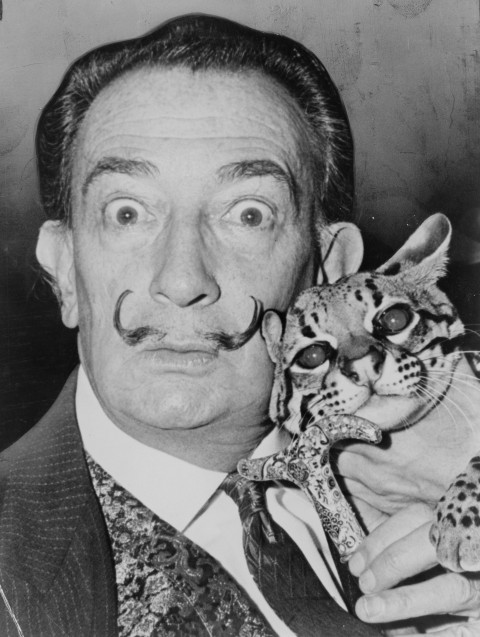
230 Cultural Icons: A New Collection


Time to roll out a new media col­lec­tion — a big col­lec­tion of Cul­tur­al Icons. Here you will find great writ­ers, daz­zling film­mak­ers and musi­cians, bril­liant philoso­phers and sci­en­tists — fig­ures who have changed our cul­tur­al land­scape through­out the years. You’ll see them in video, or hear their voic­es in audio.

The list cur­rent­ly fea­tures 230 icons, all speak­ing in their own words. The col­lec­tion will inevitably grow as we add more mate­r­i­al, or as you send sug­ges­tions our way. For now, how about we whet your appetite with 10 favorites? Then you can rum­mage through the full col­lec­tion of Cul­tur­al Icons here.

(Note: Down the road, you can access this col­lec­tion by click­ing “Cul­tur­al Icons” in the top nav­i­ga­tion bar.)

Sal­vador Dali Video – Sur­re­al­ist artist appears on â€śWhat’s My Line?” (1952)

John­ny Depp Video – The ver­sa­tile actor reads a let­ter from Gonzo jour­nal­ist Hunter S. Thomp­son.

Anne Frank Video – It is the only known footage of Anne Frank, author of the world’s most famous diary, and it’s now online.

Pat­ti Smith — Video — The â€śgod­moth­er of punk” recalls her friend­ship with artist Robert Map­plethor­pe.

Quentin Taran­ti­no Video – Pulp Fic­tion direc­tor lists his favorites films since 1992.

Leo Tol­stoy – Video – Great footage of the last days of the tow­er­ing Russ­ian nov­el­ist. 1910.

Mark Twain – Video – America’s fabled writer cap­tured on film by Thomas Edi­son in 1909.

Andy Warhol Video – In 1979, Warhol cre­at­ed pub­lic access tele­vi­sion pro­grams. In this episode, he chats with Bian­ca Jag­ger & Steven Spiel­berg.

Tom Waits Video – The raspy singer reads “The Laugh­ing Heart” by Charles Bukows­ki.

Vir­ginia Woolf — Audio — Record­ing comes from a 1937 BBC radio broad­cast. The talk, enti­tled “Crafts­man­ship,” was part of a series called “Words Fail Me.” The only known record­ing of her voice.

Get the rest here. Don’t miss us on Face­book and Twit­ter!


by | Permalink | Make a Comment ( 1 ) |

Carl Gustav Jung Ponders the Meaning of Death (1959)

On June 6, 1961, the great psy­chol­o­gist Carl Gus­tav Jung died at his vil­la at KĂĽs­nacht, on the shore of Lake Zurich, Switzer­land. He was 86 years old.

Jung viewed death as a ful­fill­ment, rather than a nega­tion, of life. “As a doc­tor,” he wrote in his 1930 essay, The Stages of Life, “I am con­vinced that it is hygienic–if I may use the word–to dis­cov­er in death a goal toward which one can strive, and that shrink­ing away from it is some­thing unhealthy and abnor­mal which robs the sec­ond half of life of its pur­pose.”

To this end, wrote Jung many years lat­er in Mem­o­ries, Dreams, Reflec­tions, a per­son should fol­low his instinct and embrace myth: “for rea­son shows him noth­ing but the dark pit into which he is descend­ing. Myth, how­ev­er, can con­jure up oth­er images for him, help­ful and enrich­ing pic­tures of life in the land of the dead.”

Jung cer­tain­ly embraced the myth of an after­life, as evi­denced in this excerpt from an Octo­ber, 1959 inter­view with John Free­man for the BBC pro­gram Face to Face. The 40-minute interview–in which Jung talks about for­ma­tive events of his child­hood, his friend­ship and falling-out with Sig­mund Freud, and his views on reli­gion and death–can be viewed in its entire­ty here.

If you would like to sign up for Open Culture’s free email newslet­ter, please find it here. It’s a great way to see our new posts, all bun­dled in one email, each day.

If you would like to sup­port the mis­sion of Open Cul­ture, con­sid­er mak­ing a dona­tion to our site. It’s hard to rely 100% on ads, and your con­tri­bu­tions will help us con­tin­ue pro­vid­ing the best free cul­tur­al and edu­ca­tion­al mate­ri­als to learn­ers every­where. You can con­tribute through Pay­Pal, Patre­on, and Ven­mo (@openculture). Thanks!

Relat­ed Con­tent:

Free Psy­chol­o­gy Cours­es from Top Uni­ver­si­ties

Carl Jung Writes a Review of Joyce’s Ulysses and Mails It To The Author (1932)

Zen Mas­ter Alan Watts Explains What Made Carl Jung Such an Influ­en­tial Thinker

Carl Jung’s Fas­ci­nat­ing 1957 Let­ter on UFOs

Charismatic Psychoanalyst Jacques Lacan Gives Public Lecture (1972)

The footage above is from an extreme­ly rare – and unex­pect­ed­ly enter­tain­ing – video of the philoso­pher and psy­cho­an­a­lyst Jacques Lacan (1901–1981), giv­ing a lec­ture at The Catholic Uni­ver­si­ty of Lou­vain in 1972. The film is notable for a cou­ple of rea­sons:

1. In France, Lacan’s rock star sta­tus owed much to his pop­u­lar pub­lic sem­i­nars. The charis­mat­ic icon­o­clast had been giv­ing free pub­lic lec­tures for decades, and those lec­tures were usu­al­ly packed with stu­dents, col­leagues, skep­tics, young rad­i­cals … and fans. The video gives you an idea of what the fuss was all about. Even at 70, Lacan still owns the room, and he has the pres­ence of a stage actor, com­plete with dra­mat­ic paus­es, iron­ic self-reflec­tion, and pitch-per­fect storms of emo­tion (see minute 15:07).

2. At minute 21:37, a polit­i­cal­ly inspired heck­ler tries to ambush him. It’s a moment right out of a com­e­dy show, if the com­e­dy show were chic and grainy and edit­ed by Jean-Luc God­dard. Note the grace with which Lacan neu­tral­izes the poor guy, lights his cig­ar and then con­cludes the lec­ture, even though the fall­out from their encounter is still stuck in his hair.

Lacan’s ideas have fall­en a bit out of fash­ion in the past two decades, par­tic­u­lar­ly in the U.S., where psy­cho­analy­sis has been nudged out of the spot­light by neu­ro­science and post-struc­tural­ism has lost ground to post-colo­nial stud­ies. But Lacan still has his fans, notably the “Elvis of Phi­los­o­phy,” Slavoj Zizek, who dom­i­nates YouTube the way his pre­de­ces­sor once did salons.

Sheer­ly Avni is a San Fran­cis­co-based arts and cul­ture writer. Her work has appeared in Salon, LA Week­ly, Vari­ety, Moth­er Jones, and many oth­er pub­li­ca­tions. You can fol­low her on twit­ter at @sheerly.

Steven Pinker: How Innuendo Makes Things Work

RSA has rolled out its lat­est ani­mat­ed video, and it’s a good one. This time we have Steven Pinker, the famed Har­vard lin­guist and cog­ni­tive sci­en­tist, try­ing to make sense of innu­en­do. Why do we often say things in veiled terms, espe­cial­ly when every­one knows what’s real­ly being said? Pinker breaks it all down, and explains how lan­guage pro­vides the grease that lubri­cates every­day social rela­tion­ships.

This clip is an excerpt from a longer lec­ture pre­sent­ed at the Roy­al Soci­ety of the Arts in Lon­don. Watch the full talk here, and scroll through pre­vi­ous RSA Ani­mat­ed videos right here.

The Secrets to Living an Awesome Life

You have heard the mes­sage before – the secrets to liv­ing an excel­lent life. But they bear repeat­ing from time to time. And Neil Pas­richa, edi­tor of the 1000 Awe­some Things blog, com­mu­ni­cates it all in a rather touch­ing and earnest­ly straight­for­ward way. This talk comes from TEDx­Toron­to, staged in Sep­tem­ber 2010.…

Relat­ed Con­tent:

Every Ted Talk Under the Sun

Daniel Pink: The Sur­pris­ing Truth about What Moti­vates Us

Vik­tor Fran­kl on Our Search for Mean­ing

by | Permalink | Make a Comment ( 6 ) |

Neuroscience and Free Will

We have free will. We make our own deci­sions. We have long tak­en these basic assump­tions for grant­ed. But what does neu­ro­science make of this? In this excerpt from the BBC Hori­zon spe­cial, “The Secret You,” Mar­cus Du Sautoy (Oxford Uni­ver­si­ty) par­tic­i­pates in a brain imag­ing exper­i­ment con­duct­ed by John-Dylan Haynes, a neu­ro­sci­en­tist based in Berlin. And the results? Well, they force us to rethink things a bit. Good­bye Descartes. Good­bye mind before mat­ter. Good­bye to con­scious­ness and free will, as we tra­di­tion­al­ly like to think about them. And wel­come to the world of neu­rons, to brain activ­i­ty that makes your deci­sions before your con­scious self is even aware of them. To delve deep­er into all of this, you can watch Haynes give a 90 minute lec­ture here called “Uncon­scious deter­mi­nants of free deci­sions in the human brain.”

by | Permalink | Make a Comment ( 6 ) |

The Dalai Lama on the Neuroscience of Compassion

Last week, the Dalai Lama spent sev­er­al days at Stan­ford Uni­ver­si­ty, where he made com­pas­sion his focus. He laid the foun­da­tion with a large pub­lic address before an audi­ence of 7,000. (Watch an excerpt above or the full talk below.) Then things got more focused when the spir­i­tu­al leader of Tibet par­tic­i­pat­ed in a day­long con­fer­ence about the neu­ro­bi­o­log­i­cal under­pin­nings of com­pas­sion. Host­ed by Stan­ford’s Cen­ter for Com­pas­sion and Altru­ism Research and Edu­ca­tion, the con­fer­ence brought togeth­er impor­tant sci­en­tists from many dis­ci­plines – psy­chol­o­gy, neu­ro­science, med­i­cine, and eco­nom­ics. You can watch a record­ing of the con­fer­ence here. It’s all in video and ready to go.

If you would like to sign up for Open Culture’s free email newslet­ter, please find it here. It’s a great way to see our new posts, all bun­dled in one email, each day.

If you would like to sup­port the mis­sion of Open Cul­ture, con­sid­er mak­ing a dona­tion to our site. It’s hard to rely 100% on ads, and your con­tri­bu­tions will help us con­tin­ue pro­vid­ing the best free cul­tur­al and edu­ca­tion­al mate­ri­als to learn­ers every­where. You can con­tribute through Pay­Pal, Patre­on, and Ven­mo (@openculture). Thanks!

David Lynch Talks Meditation with Paul McCartney

David Lynch has been prac­tic­ing Tran­scen­den­tal Med­i­ta­tion for decades, and, last year, he inter­viewed anoth­er long­time TM prac­ti­tion­er – Sir Paul McCart­ney. The inter­view (find Part 1 above and Part 2 here) turned quick­ly to The Bea­t­les, their involve­ment with the Mahar­ishi Mahesh Yogi (guru of the TM move­ment), and their famous trip to his ashram in Rishikesh (India) in Feb­ru­ary 1968. There, among oth­er things, they wrote 48 songs – many of which con­tributed to The White Album – before hav­ing a falling out with the guru and leav­ing town.

The film­mak­er sat down with McCart­ney before a ben­e­fit con­cert staged by The David Lynch Foun­da­tion in April 2009. Lynch’s orga­ni­za­tion pro­vides schol­ar­ships to schools so that stu­dents can learn TM. Both Paul and Ringo per­formed at ben­e­fit that night…

If you would like to sign up for Open Culture’s free email newslet­ter, please find it here. It’s a great way to see our new posts, all bun­dled in one email, each day.

If you would like to sup­port the mis­sion of Open Cul­ture, con­sid­er mak­ing a dona­tion to our site. It’s hard to rely 100% on ads, and your con­tri­bu­tions will help us con­tin­ue pro­vid­ing the best free cul­tur­al and edu­ca­tion­al mate­ri­als to learn­ers every­where. You can con­tribute through Pay­Pal, Patre­on, and Ven­mo (@openculture). Thanks!

by | Permalink | Make a Comment ( 1 ) |

« Go BackMore in this category... »
Quantcast