The concept of emptiness—shūnyatā—in Mahayana Buddhism is perhaps a subject best avoided in casual conversation. It so vexes everyone not least because of issues of translation: “emptiness,” many scholars think, hardly suffices as a substitute. In English it has a more distinctly nihilist flavor than was intended. Yet emptiness is so indispensable that it can hardly go unmentioned when the practice and purpose of meditation come up in Buddhist thought.
Leave it to Zen to put things in such succinct and down-to-earth ways: the practice of meditation is to develop “’no mind,’” says Suzuki Roshi. It is to have “no gaining idea.” The reason is to have no reason. But from the same point of view, there is a point: “the point we should make clear in our practice,” the Zen master tells us: we should “put more emphasis on big mind rather than small mind.”
If you need more clarification, you might turn to another Zen popularizer who also began to draw audiences in California in the 50s: Alan Watts. Watts came to San Francisco not with a lifetime of monastic training in Japan, but through his training as an academic, Episcopal priest, and Zen enthusiast in Britain. He is wordier, less poetic, and more essayistic in his delivery, but in discussing the purpose of meditation, you will find him saying the very same things as the Zen masters:
Meditation is the discovery that the point of life is always arrived at in the immediate moment. And therefore, if you meditate for an ulterior motive — that is to say, to improve your mind, to improve your character, to be more efficient in life — you’ve got your eye on the future and you are not meditating!
As for Suzuki’s “big mind,” Watts has his own version: “The art of meditation is a way of getting into touch with reality… our basic inseparability from the whole universe.” These are not necessarily synonyms for “emptiness,” but the idea of having no idea maybe comes close to summarizing the concept. “Not knowing,” as the koan says, “is most intimate.”
Maybe it’s hair-splitting and belabors the comparison, but Suzuki Roshi did not talk about meditation as a way to stop all thinking. This is futile, he would argue. Watts seems to suggest otherwise when he says that “we become interiorally silent and cease from the interminable chatter that goes on inside our skulls. Because you see, most of us think compulsively all the time.” Most honest people will tell you they think compulsively during meditation as well. But in his guided meditation above, Watts acknowledges just this fact.
Indeed, his matter-of-fact way of recognizing the ever-presence of thought is what makes the instructions he gives so useful, even if they are also, ultimately, pointless. Hear the original fifteen minute guided meditation at the top of the post and an edit, with some, maybe distracting, background music, just above. To let thinking recede into the background, we must engage our other senses, letting every sound and sensation come and go and the autonomous nervous system take over.
How to let go of thinking about thinking? Let Watts guide you in an exercise and see what happens. Then listen to Suzuki Roshi describe the Buddhist philosophy of emptiness. As far as meditation, or “zazen practice,” goes, he says, our zazen practice is based on… the teaching of shūnyatā or emptiness,” which is not an idea but an experience of “letting go of fixed ideas,” writes another Zen master who brought his practice to the U.S., “in order to go beyond them.”
In an 1846 speech to the British and Foreign Anti-Slavery Society, Frederick Douglass summed up the twisted bond between slavery and religion in the U.S. He began with a short summary of atrocities that were legal, even encouraged, against enslaved people in Virginia and Maryland, including hanging, beheading, drawing and quartering, rape, “and this is not the worst.” He then made his case:
No, a darker feature is yet to be presented than the mere existence of these facts. I have to inform you that the religion of the Southern states, at this time, is the great supporter, the great sanctioner of the bloody atrocities to which I have referred. While America is printing tracts and Bibles; sending missionaries abroad to convert the heathen; expending her money in various ways for the promotion of the gospel in foreign lands, the slave not only lies forgotten, uncared for, but is trampled underfoot by the very churches of the land.
Douglass did not intend his statement to be taken as an indictment of Christianity, but rather the hypocrisy of American religion, both that “of the Southern states” and of “the Northern religion that sympathizes with it.” He speaks, he says, to reject “the slaveholding, the woman-whipping, the mind-darkening, the soul-destroying religion” of the country, while professing a religion that “makes its followers do unto others as they themselves would be done by.”
Douglass harshly condemns slave society in the U.S., but, perhaps given his audience, he also politically elides the extensive role many churches in the British Empire played in the slave trade and Atlantic slave economy—a continued role, to Douglass’s dismay, as he found during his UK travels in the 1840s. I’m not sure if he knew that forty years earlier, British missionaries traveled to slave plantations in the Caribbean armed with heavily-edited Bibles in which “any passage that might incite rebellion was removed,” as Brigit Katz writes at Smithsonian. But he would hardly have been surprised.
The use of religion to terrorize and control rather than liberate was something Douglass understood well, having for decades keenly observed slaveowners finding what they needed in the text and ignoring or suppressing the rest. In 1807, the Society for the Conversion of Negro Slaves went so far as to literally excise the central narrative of the Old Testament, creating an entirely different book for use by missionaries to the West Indies. “Gone,” Katz points out, “were references to the exodus of enslaved Israelites from Egypt,” references that were integral to the self-understanding of millions of Diaspora Africans.
Gone also were verses that might explicitly contradict the few proof texts slaveholders quoted to justify themselves. Especially dangerous was Exodus 21:16: “And he that stealeth a man, and selleth him, or if he be found in his hand, he shall surely be put to death.” The typical 66 books of a Protestant Bible had been reduced to parts of just 14. How is it possible to publish a Bible without what amounts to the mythic origin story of ancient Israel? One answer is that this was a different religion, one whose aim, says Anthony Schmidt, curator of the Museum of the Bible, was to make “better slaves.”
The “Slave Bible” did not cut out the subject completely. Joseph’s enslavement in Egypt remains, but this is likely as an example, says Schmidt, of someone who “accepts his lot in life” and is rewarded for it, a story U.S. churches used in a similar fashion. Passages in the New Testament that seemed to emphasize equality were cut, as was the entire book of Revelation. The infamous Ephesians 6:5—“servants be obedient to them that are your masters according to the flesh, in fear and trembling”—remained.
Whether or not the Bible really did sanction slavery is a question still up for debate—and maybe an unanswerable one given differences in interpretive frameworks and the patchwork nature of the disparate, redacted texts stitched together as one. But the fact that British and American churches deliberately used it as a weaponized tool of propaganda and indoctrination is beyond dispute. The so-called “Slave Bible” is both a fascinating historical artifact, a very literal symbol of a practice that was integral to the institution of slavery—the total control of the narrative.
Such practices became more extreme after the Haitian Revolution and the many bloody slave revolts in the U.S., as the planter class became increasingly desperate to hold on to power. One of only three extant “Slave Bibles,” the abridged version—called Parts of the Holy Bible, selected for the use of the Negro Slaves, in the British West-India Islands—is now on display at the Museum of the Bible in Washington, DC, on loan from Fisk University. In the NPR interview above, Schmidt explains the book’s history to All Things Considered’s Michel Martin, who herself describes the text’s purpose in the most concise way: “To associate human bondage and human slavery with obedience to the higher power.”
If you need to get some serious thinking done, go to the mountains. That notion holds across a wide range of cultures, but it has a particular force in Japan, where solo hiking, sometimes greatly extended solo hiking, has long been a popular treatment for a wide variety of troubles both personal and professional. But no group has taken it to quite the extreme as have the Yamabushi, ascetic mountain hermits who have practiced Shugendō, a hybridization of versions of esoteric Buddhism, Taoism, and Shinto that goes back to the eighth century. What sort of lifestyle, one wonders, would such serious religious dedication in such a harsh, remote location produce?
Visual journalist Fritz Schumann, previously featured here on Open Culture for his documentaries on a 1300-year-old Japanese hotel and a nearly extinct Japanese printing technique, gives us a sense of that in his new short Mountain Monks. “Walking barefoot through rivers, meditating under waterfalls and spending the nights on mountaintops — that is the way of the Yamabushi,” he writes.
“They walk into the forest to die and be born again.” Their Shugendō teachings “peaked in popularity during the 17th century, when Yamabushi visited around 90 percent of all villages in northern Japan,” and when its monks “were said to have magical powers and served as advisors to samurai and warlords.” But then, “in the late 19th century, when Japan opened itself to the west and moved from a feudal state towards industrialization, their religion was forbidden.”
Though the proscription on Yamabushi has long since been lifted, as a religion it no longer possesses quite the following it once did. A group of monks has kept its flame alive in secret in isolation, up in northern Japan’s Yamagata prefecture, and now anyone can sign up for private courses through the official Yamabushido web site, even foreigners. The simple rigors of their daily life may sound appealing indeed to those fed up with whichever modern, technology-saturated society they’ve come from, and Schumann’s film may well convince a fair few to look into the experience themselves. Not to say that he sugar-coats it: “The idea,” declares one Yamabushi member right at the beginning, “is to experience the tortures of hell.”
Based in Seoul, Colin Marshall writes and broadcasts on cities, language, and culture. His projects include the book The Stateless City: a Walk through 21st-Century Los Angeles and the video series The City in Cinema. Follow him on Twitter at @colinmarshall or on Facebook.
While life lasts, let us live it, not pass through as zombies, and let us find in art a glorious passageway to a deeper understanding of our essential humanity.
- Sister Wendy Beckett (1930–2018)
Sister Wendy, a cloistered nun whose passion for art led her to wander out into the world, where she became a star of global proportions, entertained the television masses with her frank humanist assessments.
Unfazed by nudity, carnality, and other sensual excesses, she initially came across as a funny-looking, grandma-aged virgin in an old-fashioned habit, lisping rhapsodically about appendages and entanglements we expect most Brides of Christ to shy away from.
Having beaten the jokers to the punch, she took her rapt audience along for the ride, barnstorming across the continent, eager to encounter works she knew only from the reproductions Church higher ups gave her permission to study in the 1980s.
She was grateful to the artists—1000s of them—for providing her such an excellent lens with which to contemplate God’s creations. Eroticism, greed, physical love, horrific violence—Sister Wendy never flinched.
“Great art offers more than pleasure; it offers the pain of spiritual growth, drawing us into areas of ourselves that we may not wish to encounter. It will not leave us in our mental or moral laziness,” she wrote in the foreword to Sister Wendy’s 1000 Masterpieces, her handpicked selection of the greatest paintings of Western art. (“A thousand sounded like so many until we got down to it and then began the anguish of choice,” she later opined.)
A lover of color and texture, she was unique in her ability to appreciate shades of grey, delving deeply into the psychological motivations of both the subjects and the artists themselves.
Here, he shows the pope, father of the Catholic Church, both enthroned and imprisoned by his position. Bacon’s relationship with his own father was a very stormy one, and perhaps he has used some of that fear and hatred to conjure up this ghostly vision of a screaming pope, his face frozen in a rictus of anguish.
On Henri De Toulouse-Lautrec’s The Clown Chau-u-Kao (1895):
Toulouse-Lautrec, as the last descendant of an ancient French family, must have been bitterly conscious of his own physical deformities and to many people he, too, was a figure of fun…He shows us Chau-U-Kao preparing for her act with dignity and serenity, the great swirl of her frill seems to bracket the clown so that we can truly look at her, see the pathos of that blowzy and sagging flesh, and move on to the nobility of the nose and the intense eyes. This is a degradation, but one that has been chosen by the performer and redeemed by intelligence and will power.
On Nicolas Lancret’s The Four Times of the Day: Morning (1739):
Morning is filled with witty observation — a delightful young woman (who is clearly no better than she should be) is entertaining a young cleric, seemingly unaware of the temptation offered by that casually exposed bosom. He holds out his cup, but his eyes are fied, alas, on that region of the feminine anatomy that his profession forbids him.
On François Clouet’s Diane De Poitiers (c. 1571)
The implication would seem to be that this shameless beauty with her prominent nipples and overflowing bowl of ripe fruit, is a woman of dubious morals. Yet one cannot but feel that the artist admires the natural freedom of his subject. Her children and her grinning wet-nurse are at her side, and, in the background, the maid prepares hot water. /surely this domestic scene is no more than a simple and endearing vignette.
Her generous takes on these and other artworks are irresistible. How wonderful it would be to approach every piece of art with such thought and compassion.
Fortunately, Sister Wendy, who passed away last week at the age of 88, left behind a how-to of sorts in the form of her 2005 essay, “The Art of Looking at Art,” from which we have extracted the following 10 rules.
Sister Wendy Beckett’s 10 Rules for Engaging with Art
Visit museums
They are the prime locus where the uniqueness of an artist’s work can be encountered.
Prioritize quality time over quantity of works viewed
Sociologists, lurking inconspicuously with stopwatches, have discovered the average time museum visitors spend looking at a work of art: it is roughly two seconds. We walk all too casually through museums, passing objects that will yield up their meaning and exert their power only if they are seriously contemplated in solitude.
Fly solo
If Sister Wendy could spend over four decades sequestered in a small mobile home on the grounds of Carmelite monastery in Norfolk, surely you can go alone. Do not complicate your contemplation by tethering yourself to a friend who cannot wait to exit through the gift shop.
Buy a postcard
…take it home for prolonged and (more or less) distractionless contemplation. If we do not have access to a museum, we can still experience reproductions—books, postcards, posters, television, film—in solitude, though the work lacks immediacy. We must, therefore, make an imaginative leap (visualizing texture and dimension) if reproduction is our only possible access to art. Whatever the way in which we come into contact with art, the crux, as in all serious matters, is how much we want the experience. The encounter with art is precious, and so it costs us in terms of time, effort, and focus.
Pull up a chair, whenever possible
It has been well said that the basic condition for art appreciation is a chair.
Don’t hate on yourself for being a philistine.
However inviolate our self-esteem, most of us have felt a sinking of the spirit before a work of art that, while highly praised by critics, to us seems meaningless. It is all too easy to conclude, perhaps subconsciously, that others have a necessary knowledge or acumen that we lack.
Take responsibility for educating yourself…
Art is created by specific artists living in and fashioned by a specific culture, and it helps to understand this culture if we are to understand and appreciate the totality of the work. This involves some preparation. Whether we choose to “see” a totem pole, a ceramic bowl, a painting, or a mask, we should come to it with an understanding of its iconography. We should know, for example, that a bat in Chinese art is a symbol for happiness and a jaguar in Mesoamerican art is an image of the supernatural. If need be, we should have read the artist’s biography: the ready response to the painting of Vincent van Gogh or Rembrandt, or of Caravaggio or Michelangelo, comes partly from viewers’ sympathy with the conditions, both historical and temperamental, from which these paintings came.
…but don’t be a prisoner to facts and expert opinions
A paradox: we need to do some research, and then we need to forget it…We have delimited a work if we judge it in advance. Faced with the work, we must try to dispel all the busy suggestions of the mind and simply contemplate the object in front of us. The mind and its facts come in later, but the first, though prepared, experience should be as undefended, as innocent, and as humble as we can make it.
Celebrate our common humanity
Art is our legacy, our means of sharing in the spiritual greatness of other men and women—those who are known, as with most of the great European painters and sculptors, and those who are unknown, as with many of the great carvers, potters, sculptors, and painters from Africa, Asia, the Middle East, and Latin America. Art represents a continuum of human experience across all parts of the world and all periods of history.
Listen to others but see with your own eyes
We should listen to the appreciations of others, but then we should put them aside and advance toward a work of art in the loneliness of our own truth.
Sister Wendy’s television shows can be found on PBS, the BBC, and as DVDs. Her books are well represented in libraries and from booksellerslike Amazon. (We have learned so much in the year her dictionary-sized 1000 Paintings has been parked next to our commode…)
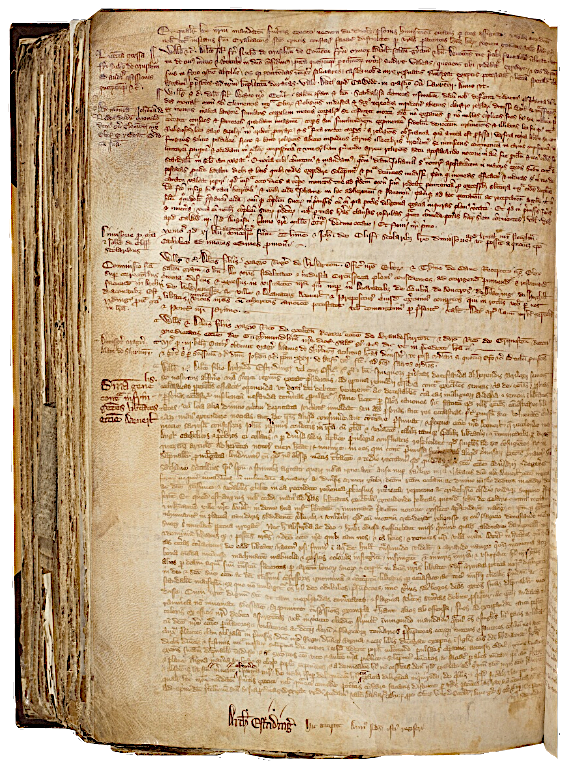
One might assume from a modern viewpoint that the hairstyles worn by monks arose to deal with male pattern baldness anxiety. As in the school uniform approach, you can’t single out one person’s baldness when everyone is bald. But this, again, would be a modern view, full of the vanity the tonsured—those with religiously shaven heads—ostensibly vowed to renounce. According to the Catholic Encyclopedia, the tonsure (from the Latin verb for “to shear”) began as a “badge of slavery” among Greeks and Romans. It was adopted “on this very account” by early monastic orders, to mark the total surrender of the will.
Would it surprise you, then, to learn that there were tonsure wars? Probably not if you know anything about church history. Every article of clothing and of faith has sparked some major controversy at one time or another. So too with the tonsure, of which—we learn in the Vox video above—there were three styles. The first, the coronal (or Roman or Petrine) tonsure, is the one we see in countless Medieval and Renaissance paintings: a bald pate at the crown surrounded by a fringe of hair, possibly meant to evoke the crown of thorns. Next is the Pauline, a fully shaved head, seen much less in Western art since it was “used more commonly in Eastern Orthodoxy.”
The third style of tonsure caused all the trouble. Or rather, it was this style that served as a visible sign of religious differences between the Roman Catholic Church and the churches in Britain and Ireland. “Celtic Catholicism was ‘out of sync’ with the Roman Catholic Church,” notes Vox. “Roman Catholics would use the differences between them to portray Celtic Catholicism as pagan, or even as an offshoot, celebrating the power-hungry magician, Simon Magus.” The Celtic tonsure fell under a cloud, but how exactly did it differ from the others? Since it disappeared in the early Middle Ages and few images seem to have survived, no one seems sure.
Daniel McCarthy, fellow emeritus at Trinity College, Dublin set out to solve the mystery. He speculates the Celtic tonsure, as you’ll see on a computer-simulated monk’s head, was a triangular shape, with the apex at the front. When the Roman Catholics took over Ireland, all of the vestments, dates, and haircuts were slowly brought into line with the dominant view. The practice of tonsure officially ended in 1972, and fell out of favor in English-speaking countries centuries earlier, according to the Catholic Encyclopedia. But in any case, McCarthy sees the tonsure not as a spurning of fashion, but as a cult-like devotion to style. In that sense, we can see people who adopt similar haircuts around the world as still visually signaling their membership in some kind of order, religious or otherwise.
It can be both a blessing and curse for an artist to toil at the behest of an influential patron. Financial support and powerful connections are among the obvious perks. Being hamstrung by someone else’s ego and timeframe are some of the less welcome realities on the flip side.
Although af Klint was an accomplished botanical and landscape painter who trained at the Royal Academy in Stockholm, “Paintings for the Temple,” 193 works produced between 1906 and 1915 upon order of her spirit guide, are brightly colored abstractions.
In his 1920 essay, Creative Confession, Klee wrote, “art does not reproduce the visible; rather, it makes visible.”
It was a sentiment Klint shared, but the spiritual message encoded in her work was intended for a future audience. She instructed her nephew that her work was to be kept under wraps until twenty years after her death. (She died in 1944, the same year as Kandinsky and Mondrian, but her work was not publicly shown until 1986, when the Los Angeles County Museum of Art organized an exhibition titled The Spiritual in Art.)
Perhaps af Klint did not foresee how dramatically the respectability of spiritualism and seances—a popular pursuit of her time, and one shared by Mondrian and Kandinsky—would decline.
Her dedication to carrying out her spirit guide’s mission may remind some modern viewers of Henry Darger, the Chicago janitor who created hundreds of artworks and thousands of pages of text documenting the Glandeco-Angelinian War Storm, a strange and gory series of events taking place in an alternate reality that was very real to him.
Thus far no one has fully divined the spirit’s message af Klint devoted so much of her life to preserving.
As critic Roberta Smith notes in her New York Times review of the Guggenheim show, af Klint, a member of the Swedish Lodge of the Theosophical Society, was well versed in occult spiritualism, Rosicrucianism, Buddhism, Darwinism, and the science of subatomic particles.
Hints of these interests are threaded throughout her work.
Color also helps to unlock the narrative. She used blue and lilac to represent female energy, rose and yellow for male, and green for the unity of the two. The Guardian’s Kate Kellaway reports that the artist may have been influenced by Goethe’s 1810 Theory of Colours.
Moving on to geometry, overlapping discs also stand for unity. U‑shapes reference the spiritual world and spirals denote evolution.
Af Klint’s spiral obsession was not confined to the canvas. Roberta Smith reveals that af Klint envisioned a spiral-shaped building for the exhibition of The Paintings for the Temple. Visitors would ascend a spiral staircase toward the heavens, the exact configuration described by architect Frank Lloyd Wright’s interior ramps at the Guggenheim.
Perhaps we are getting closer to understanding.
Since his death in 1973, the popular British philosopher, writer, speaker, and onetime-Episcopal-priest-turned-student-of-Zen-and-wildly-eclectic-countercultural-spiritual-thinker Alan Watts has become a cottage industry of sorts. And if you were unfamiliar with his work, you might think—given this description and the mention of the word “industry”—that Watts founded some sort of self-help seminar series, the kind in which people make a considerable investment of time and money.
In a sense, he did: the Alan Watts Organization (previously known as the Alan Watts Electronic University, the Alan Watts Center, or the Alan Watts Project) maintains Watts’ prolific audio and video archives. Founded in the last year of his life by Watts and his son Mark, the Organization charges for access to most of his work. The collections are pricey. Albums of talks on such subjects as Buddhism and Comparative Philosophy and Religion are extensive, but come at a cost.
Though the organization offers free content, you could find yourself spending several hundred dollars to hear the collected Watts lectures. It’s money the Mark Watts suggests covers the “substantial undertaking” of digitizing hundreds of hours of recordings on lacquered disks and magnetic reels. These are noble and necessary efforts, but fans of Watts will know that hundreds of selections from his deeply engaging talks are also freely available on YouTube, many of them with nifty animations and musical accompaniment, like the videos here from After Skool.
Watts would likely have been pleased with this situation—he loved to give out wisdom widely and kept no esoteric trade secrets. But he was also, by his own admission, “a spiritual/philosophical entertainer,” who made a living telling people some of the most unsettling, counterintuitive metaphysical truths there are. He did it with humor, erudition and compassion, with intellectual clarity and rhetorical aplomb.
So what did he have to tell us? That we should join the church of Alan Watts? Attend his next lecture and buy his book? Shape our lives into an emulation of Alan Watts? Though he wore the trappings of a Western expositor of Eastern thought, and embraced all kinds of non-traditional beliefs and practices, Watts was too ironical and detached to be a guru. He couldn’t take himself seriously enough for that.
If there’s any one thread that runs through the incredibly broad range of subjects he covered, it’s that we should never take ourselves too seriously either. We buy into stories and ideas and think of them as concrete entities that form the boundaries of identity and existence: stories like thinking of life as a “journey” on the way to some specific denouement. Not so, as Watts says in the animated video at the top. Life is an art, a form of play: “the whole point of the dancing is the dance.”
But what about the meaning of life? Is Alan Watts going to reveal it in the last course of his ten-week session (payable in installments)? Will we discover it in a series of self-improvement packages? No. The meaning of life he says, is life. “The situation of life is optimal.” But how is anyone supposed to judge what’s good without unchanging external standards? A classic Zen story about a Chinese farmer offers a concise illustration of why we may have no need—and no real ability—to make any judgments at all.
You’ll find many more free excerpts of Watts’ lectures—of varying lengths and with or without animations, on YouTube. To get a further taste of his spiritual and philosophical distillations, see the links below.
Even if you’ve never watched it before, you always know a Studio Ghibli movie when you see one, and even more so in the case of a Studio Ghibli movie directed by Hayao Miyazaki. That goes for his work’s common aesthetic qualities as well as its common thematic ones, the latter of which run deep, all the way down to the traditional Japanese religion of Shinto. Or so, anyway, argues “The Philosophy of Miyazaki,” the Wisecrack video essay above that finds in Shinto, a belief system premised on the notion that “we share our world with a variety of gods and spirits called kami,” the qualities that give “the films of Miyazaki and his team of badasses at Studio Ghibli that extra Miyazaki feel.”
Even viewers with no knowledge of Shinto and its role in Japanese society — where 80 percent of the population professes to practice its traditions — can sense that “a recurrent theme running throughout all of Miyazaki’s films is a love for nature.” Going back at least as far as 1984’s World Wildlife Federation-approved Nausicaä of the Valley of the Wind, whose heroine takes up the fight on behalf of a race of large bugs, Miyazaki’s work has depicted the exploitation of nature by the many and the defense of nature by the few.
None of his films have rendered kami quite so vividly as My Neighbor Totoro, the titular creature being just one of the woodland spirits that surround and even inhabit a human family’s house. In the worldviews of both Shinto teaching and Miyazaki’s cinema, nature isn’t just nature but “part of the divine fabric of reality, and as such deserves our respect.”
This contrasts sharply with Aristotle’s claim that “nature has made all things specifically for the sake of man,” and indeed to America’s idea of Manifest Destiny and the consequent subjugation of all things to human use. Anyone who’s only seen one or two of Miyazaki’s movies would be forgiven for assuming that he considers all technology evil, but a closer viewing (especially of his “final” film The Wind Rises about the designer of the Zero fighter plane, which depicts the invention itself as a thing of beauty despite its use in war) reveals a subtler message: “Because we’re focused on nature only through the lens of science and technology, we’re blinded to the true essence of things.” We’ll learn to live in a proper balance with nature only when we learn to see that essence, and Miyazaki has spent his career doing his part to reveal it to us.
Based in Seoul, Colin Marshall writes and broadcasts on cities, language, and culture. His projects include the book The Stateless City: a Walk through 21st-Century Los Angeles and the video series The City in Cinema. Follow him on Twitter at @colinmarshall or on Facebook.

We're hoping to rely on loyal readers, rather than erratic ads. Please click the Donate button and support Open Culture. You can use Paypal, Venmo, Patreon, even Crypto! We thank you!
Open Culture scours the web for the best educational media. We find the free courses and audio books you need, the language lessons & educational videos you want, and plenty of enlightenment in between.