How Ada Lovelace, Daughter of Lord Byron, Wrote the First Computer Program in 1842–a Century Before the First Computer

I’ve nev­er quite under­stood why the phrase “revi­sion­ist his­to­ry” became pure­ly pejo­ra­tive. Of course, it has its Orwellian dark side, but all knowl­edge has to be revised peri­od­i­cal­ly, as we acquire new infor­ma­tion and, ide­al­ly, dis­card old prej­u­dices and nar­row frames of ref­er­ence. A fail­ure to do so seems fun­da­men­tal­ly regres­sive, not only in polit­i­cal terms, but also in terms of how we val­ue accu­rate, inter­est­ing, and engaged schol­ar­ship. Such research has recent­ly brought us fas­ci­nat­ing sto­ries about pre­vi­ous­ly mar­gin­al­ized peo­ple who made sig­nif­i­cant con­tri­bu­tions to sci­en­tif­ic dis­cov­ery, such as NASA’s “human com­put­ers,” por­trayed in the book Hid­den Fig­ures, then dra­ma­tized in the film of the same name.

Like­wise, the many women who worked at Bletch­ley Park dur­ing World War II—helping to deci­pher encryp­tions like the Nazi Enig­ma Code (out of near­ly 10,000 code­break­ers, about 75% were women)—have recent­ly been get­ting their his­tor­i­cal due, thanks to “revi­sion­ist” researchers. And, as we not­ed in a recent post, we might not know much, if any­thing, about film star Hedy Lamarr’s sig­nif­i­cant con­tri­bu­tions to wire­less, GPS, and Blue­tooth tech­nol­o­gy were it not for the work of his­to­ri­ans like Richard Rhodes. These few exam­ples, among many, show us a fuller, more accu­rate, and more inter­est­ing view of the his­to­ry of sci­ence and tech­nol­o­gy, and they inspire women and girls who want to enter the field, yet have grown up with few role mod­els to encour­age them.

We can add to the pan­theon of great women in sci­ence the name Ada Byron, Count­ess of Lovelace, the daugh­ter of Roman­tic poet Lord Byron. Lovelace has been renowned, as Hank Green tells us in the video at the top of the post, for writ­ing the first com­put­er pro­gram, “despite liv­ing a cen­tu­ry before the inven­tion of the mod­ern com­put­er.” This pic­ture of Lovelace has been a con­tro­ver­sial one. “His­to­ri­ans dis­agree,” writes prodi­gious math­e­mati­cian Stephen Wol­fram. “To some she is a great hero in the his­to­ry of com­put­ing; to oth­ers an over­es­ti­mat­ed minor fig­ure.”

Wol­fram spent some time with “many orig­i­nal doc­u­ments” to untan­gle the mys­tery. “I feel like I’ve final­ly got­ten to know Ada Lovelace,” he writes, “and got­ten a grasp on her sto­ry. In some ways it’s an ennobling and inspir­ing sto­ry; in some ways it’s frus­trat­ing and trag­ic.” Edu­cat­ed in math and music by her moth­er, Anne Isabelle Mil­banke, Lovelace became acquaint­ed with math­e­mat­ics pro­fes­sor Charles Bab­bage, the inven­tor of a cal­cu­lat­ing machine called the Dif­fer­ence Engine, “a 2‑foot-high hand-cranked con­trap­tion with 2000 brass parts.” Bab­bage encour­aged her to pur­sue her inter­ests in math­e­mat­ics, and she did so through­out her life.

Wide­ly acknowl­edged as one of the fore­fa­thers of com­put­ing, Bab­bage even­tu­al­ly cor­re­spond­ed with Lovelace on the cre­ation of anoth­er machine, the Ana­lyt­i­cal Engine, which “sup­port­ed a whole list of pos­si­ble kinds of oper­a­tions, that could in effect be done in arbi­trar­i­ly pro­grammed sequence.” When, in 1842, Ital­ian math­e­mati­cian Louis Mene­brea pub­lished a paper in French on the Ana­lyt­i­cal Engine, “Bab­bage enlist­ed Ada as trans­la­tor,” notes the San Diego Super­com­put­er Cen­ter’s Women in Sci­ence project. “Dur­ing a nine-month peri­od in 1842–43, she worked fever­ish­ly on the arti­cle and a set of Notes she append­ed to it. These are the source of her endur­ing fame.” (You can read her trans­la­tion and notes here.)

In the course of his research, Wol­fram pored over Bab­bage and Lovelace’s cor­re­spon­dence about the trans­la­tion, which reads “a lot like emails about a project might today, apart from being in Vic­to­ri­an Eng­lish.” Although she built on Bab­bage and Menebrea’s work, “She was clear­ly in charge” of suc­cess­ful­ly extrap­o­lat­ing the pos­si­bil­i­ties of the Ana­lyt­i­cal Engine, but she felt “she was first and fore­most explain­ing Babbage’s work, so want­ed to check things with him.” Her addi­tions to the work were very well-received—Michael Fara­day called her “the ris­ing star of Science”—and when her notes were pub­lished, Bab­bage wrote, “you should have writ­ten an orig­i­nal paper.”

Unfor­tu­nate­ly, as a woman, “she couldn’t get access to the Roy­al Society’s library in Lon­don,” and her ambi­tions were derailed by a severe health cri­sis. Lovelace died of can­cer at the age of 37, and for some time, her work sank into semi-obscu­ri­ty. Though some his­to­ri­ans have  seen her as sim­ply an expos­i­tor of Babbage’s work, Wol­fram con­cludes that it was Ada who had the idea of “what the Ana­lyt­i­cal Engine should be capa­ble of.” Her notes sug­gest­ed pos­si­bil­i­ties Bab­bage had nev­er dreamed. As the Women in Sci­ence project puts it, “She right­ly saw [the Ana­lyt­i­cal Engine] as what we would call a gen­er­al-pur­pose com­put­er. It was suit­ed for ‘devel­op­ping [sic] and tab­u­lat­ing any func­tion what­ev­er… the engine [is] the mate­r­i­al expres­sion of any indef­i­nite func­tion of any degree of gen­er­al­i­ty and com­plex­i­ty.’ Her Notes antic­i­pate future devel­op­ments, includ­ing com­put­er-gen­er­at­ed music.”

In a recent episode of the BBC’s In Our Time, above, you can hear host Melvyn Bragg dis­cuss Lovelace’s impor­tance with his­to­ri­ans and schol­ars Patri­cia Fara, Doron Swade, and John Fue­gi. And be sure to read Wolfram’s bio­graph­i­cal and his­tor­i­cal account of Lovelace here.

Relat­ed Con­tent:

How 1940s Film Star Hedy Lamarr Helped Invent the Tech­nol­o­gy Behind Wi-Fi & Blue­tooth Dur­ing WWII

The Con­tri­bu­tions of Women Philoso­phers Recov­ered by the New Project Vox Web­site

Real Women Talk About Their Careers in Sci­ence

Josh Jones is a writer and musi­cian based in Durham, NC. Fol­low him at @jdmagness

Albert Einstein Writes the 1949 Essay “Why Socialism?” and Attempts to Find a Solution to the “Grave Evils of Capitalism”

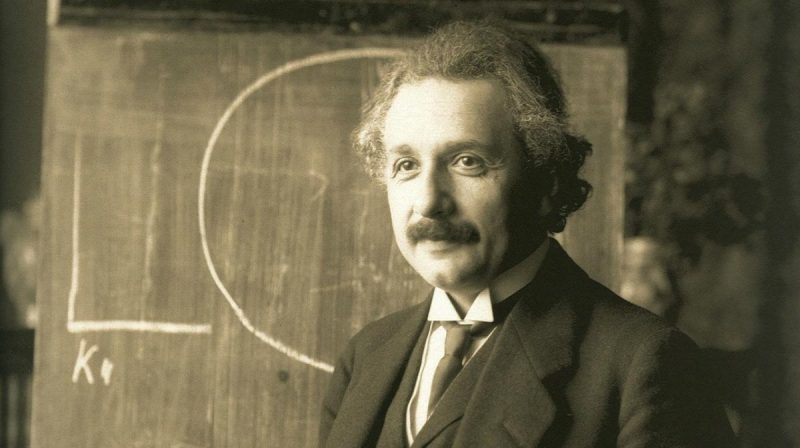
Image by Fer­di­nand Schmutzer, via Wiki­me­dia Com­mons

Albert Ein­stein was a com­pli­cat­ed human being, with a wide range of inter­ests. His per­son­al­i­ty seemed bal­anced between a cer­tain chill­i­ness when it came to per­son­al mat­ters, and a great deal of warmth and com­pas­sion when it came to the wider human fam­i­ly. The physi­cist struck up friend­ships with famed Amer­i­can activists Paul Robe­son, Mar­i­an Ander­son, and W.E.B. Du Bois, and he cham­pi­oned the cause of Civ­il Rights in the U.S. He pro­fessed a deep admi­ra­tion for Gand­hi, and praised him sev­er­al times in let­ters and speech­es. And in 1955, just days before his death, Ein­stein col­lab­o­rat­ed with anoth­er out­spo­ken pub­lic intel­lec­tu­al, Bertrand Rus­sell, on a peace man­i­festo, which was signed by six oth­er sci­en­tists.

Ein­stein saw a pub­lic role for sci­en­tists in mat­ters social, polit­i­cal, and even eco­nom­ic. In 1949, he pub­lished an arti­cle in the Month­ly Review titled “Why Social­ism?” Antic­i­pat­ing his crit­ics, he begins by ask­ing “is it advis­able for one who is not an expert on eco­nom­ic and social issues to express views on the sub­ject of social­ism?” To which he replies, “I believe for a num­ber of rea­sons that it is.”

Ein­stein goes on, sound­ing some­thing like a com­bi­na­tion of Karl Marx and E.O. Wil­son, to elab­o­rate the the­o­ret­i­cal basis for social­ism as he sees it, first describ­ing what Marx called “prim­i­tive accu­mu­la­tion” and what the social­ist econ­o­mist Thorstein Veblen called “’the preda­to­ry phase’ of human devel­op­ment.”

…most of the major states of his­to­ry owed their exis­tence to con­quest. The con­quer­ing peo­ples estab­lished them­selves, legal­ly and eco­nom­i­cal­ly, as the priv­i­leged class of the con­quered coun­try. They seized for them­selves a monop­oly of the land own­er­ship and appoint­ed a priest­hood from among their own ranks. The priests, in con­trol of edu­ca­tion, made the class divi­sion of soci­ety into a per­ma­nent insti­tu­tion and cre­at­ed a sys­tem of val­ues by which the peo­ple were thence­forth, to a large extent uncon­scious­ly, guid­ed in their social behav­ior.

The sci­ence of eco­nom­ics, as it stands, writes Ein­stein, still belongs “to that phase.” Such “laws as we can derive” from “the observ­able eco­nom­ic facts… are not applic­a­ble to oth­er phas­es.” These facts sim­ply describe the preda­to­ry state of affairs, and Ein­stein implies that not even econ­o­mists have suf­fi­cient meth­ods to defin­i­tive­ly answer the ques­tion “why socialism?”—“economic sci­ence in its present state can throw lit­tle light on the social­ist soci­ety of the future.” We should not assume, then, he goes on, “that experts are the only ones who have a right to express them­selves on ques­tions affect­ing the orga­ni­za­tion of soci­ety.” Ein­stein him­self doesn’t pre­tend to have all the answers. He ends his essay, in fact, with a few ques­tions address­ing “some extreme­ly dif­fi­cult socio-polit­i­cal prob­lems,” of the kind that attend every debate about social­ism:

…how is it pos­si­ble, in view of the far-reach­ing cen­tral­iza­tion of polit­i­cal and eco­nom­ic pow­er, to pre­vent bureau­cra­cy from becom­ing all-pow­er­ful and over­ween­ing? How can the rights of the indi­vid­ual be pro­tect­ed and there­with a demo­c­ra­t­ic coun­ter­weight to the pow­er of bureau­cra­cy be assured?

Nev­er­the­less, Ein­stein is “con­vinced” that the only way to elim­i­nate the “grave evils” of cap­i­tal­ism is “through the estab­lish­ment of a social­ist econ­o­my, accom­pa­nied by an edu­ca­tion­al sys­tem which would be ori­ent­ed toward social goals.” For Ein­stein, the “worst evil” of preda­to­ry cap­i­tal­ism is the “crip­pling of indi­vid­u­als” through an edu­ca­tion­al sys­tem that empha­sizes an “exag­ger­at­ed com­pet­i­tive atti­tude” and trains stu­dents “to wor­ship acquis­i­tive suc­cess.” But the prob­lems extend far beyond the indi­vid­ual and into the very nature of the polit­i­cal order.

Pri­vate cap­i­tal tends to become con­cen­trat­ed in few hands… The result of these devel­op­ments is an oli­garchy of pri­vate cap­i­tal the enor­mous pow­er of which can­not be effec­tive­ly checked even by a demo­c­ra­t­i­cal­ly orga­nized polit­i­cal soci­ety. This is true since the mem­bers of leg­isla­tive bod­ies are select­ed by polit­i­cal par­ties, large­ly financed or oth­er­wise influ­enced by pri­vate cap­i­tal­ists who, for all prac­ti­cal pur­pos­es, sep­a­rate the elec­torate from the leg­is­la­ture. The con­se­quence is that the rep­re­sen­ta­tives of the peo­ple do not in fact suf­fi­cient­ly pro­tect the inter­ests of the under­priv­i­leged sec­tions of the pop­u­la­tion. More­over, under exist­ing con­di­tions, pri­vate cap­i­tal­ists inevitably con­trol, direct­ly or indi­rect­ly, the main sources of infor­ma­tion (press, radio, edu­ca­tion). It is thus extreme­ly dif­fi­cult, and indeed in most cas­es quite impos­si­ble, for the indi­vid­ual cit­i­zen to come to objec­tive con­clu­sions and to make intel­li­gent use of his polit­i­cal rights.

The polit­i­cal econ­o­my Ein­stein describes is one often lam­bast­ed by right lib­er­tar­i­ans as an impure vari­ety of crony cap­i­tal­ism, one not wor­thy of the name, but the physi­cist is skep­ti­cal of the claim, writ­ing “there is no such thing as a pure cap­i­tal­ist soci­ety.” Pri­vate own­ers always secure their priv­i­leges through the manip­u­la­tion of the polit­i­cal and edu­ca­tion­al sys­tems and the mass media.

The preda­to­ry sit­u­a­tion Ein­stein observes is one of extreme alien­ation among all class­es; “All human beings, what­ev­er their posi­tion in soci­ety, are suf­fer­ing from this process of dete­ri­o­ra­tion. Unknow­ing­ly pris­on­ers of their own ego­tism, they feel inse­cure, lone­ly, and deprived of the naïve, sim­ple, and unso­phis­ti­cat­ed enjoy­ment of life. Man can find mean­ing in life, short and per­ilous as it is, only through devot­ing him­self to soci­ety.” Ein­stein believed that devo­tion should take the form of a social­ist econ­o­my that pro­motes both the phys­i­cal well­be­ing and the polit­i­cal rights of every­one. But he did not pre­sume to know exact­ly what such an eco­nom­ic future would look like, nor how it might come into being. Read his full essay, “Why Social­ism?” here.

Relat­ed Con­tent:

Albert Ein­stein Explains How Slav­ery Has Crip­pled Everyone’s Abil­i­ty (Even Aristotle’s) to Think Clear­ly About Racism

Albert Ein­stein Express­es His Admi­ra­tion for Mahat­ma Gand­hi, in Let­ter and Audio

Albert Ein­stein Impos­es on His First Wife a Cru­el List of Mar­i­tal Demands

Josh Jones is a writer and musi­cian based in Durham, NC. Fol­low him at @jdmagness

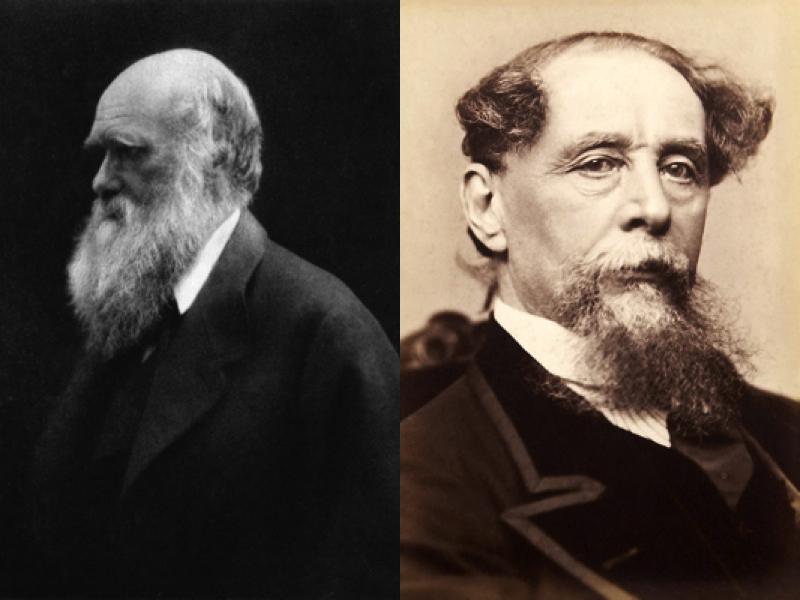
Charles Darwin & Charles Dickens’ Four-Hour Work Day: The Case for Why Less Work Can Mean More Productivity

We all oper­ate at dif­fer­ent lev­els of ambi­tion: some just want to get by and enjoy them­selves, while oth­ers strive to make achieve­ments with as long-last­ing an impact on human­i­ty as pos­si­ble. If we think of can­di­dates for the lat­ter cat­e­go­ry, Charles Dar­win may well come to mind, at least in the sense that the work he did as a nat­u­ral­ist, and more so the the­o­ry of evo­lu­tion that came out of it, has ensured that we remem­ber his name well over a cen­tu­ry after his death and will sure­ly con­tin­ue to do so cen­turies hence. But research into Dar­win’s work­ing life sug­gests some­thing less than worka­holism — and indeed, that he put in a frac­tion of the num­ber of hours we asso­ciate with seri­ous ambi­tion.

“After his morn­ing walk and break­fast, Dar­win was in his study by 8 and worked a steady hour and a half,” writes Nau­tilus’ Alex Soo­jung-kim Pang. “At 9:30 he would read the morn­ing mail and write let­ters. At 10:30, Dar­win returned to more seri­ous work, some­times mov­ing to his aviary, green­house, or one of sev­er­al oth­er build­ings where he con­duct­ed his exper­i­ments. By noon, he would declare, ‘I’ve done a good day’s work,’ and set out on a long walk.” After this walk he would answer let­ters, take a nap, take anoth­er walk, go back to his study, and then have din­ner with the fam­i­ly. Dar­win typ­i­cal­ly got to bed, accord­ing to a dai­ly sched­ule drawn from his son Fran­cis’ rem­i­nis­cences of his father, by 10:30.

“On this sched­ule he wrote 19 books, includ­ing tech­ni­cal vol­umes on climb­ing plants, bar­na­cles, and oth­er sub­jects,” writes Pang, and of course not fail­ing to men­tion “The Ori­gin of Species, prob­a­bly the sin­gle most famous book in the his­to­ry of sci­ence, and a book that still affects the way we think about nature and our­selves.” Anoth­er tex­tu­al­ly pro­lif­ic Vic­to­ri­an Eng­lish­man named Charles, adher­ing to a sim­i­lar­ly non-life-con­sum­ing work rou­tine, man­aged to pro­duce — in addi­tion to tire­less let­ter-writ­ing and cam­paign­ing for social reform — hun­dreds of short sto­ries and arti­cles, five novel­las, and fif­teen nov­els includ­ing Oliv­er Twist, A Tale of Two Cities, and Great Expec­ta­tions

“After an ear­ly life burn­ing the mid­night oil,” writes Pang, Charles Dick­ens “set­tled into a sched­ule as ‘method­i­cal or order­ly’ as a ‘city clerk,’ his son Charley said. Dick­ens shut him­self in his study from 9 until 2, with a break for lunch. Most of his nov­els were seri­al­ized in mag­a­zines, and Dick­ens was rarely more than a chap­ter or two ahead of the illus­tra­tors and print­er. Nonethe­less, after five hours, Dick­ens was done for the day.” Pang finds that may oth­er suc­cess­ful writ­ers have kept sim­i­lar­ly restrained work sched­ules, from Antho­ny Trol­lope to Alice Munro, Som­er­set Maugh­am to Gabriel Gar­cía Márquez, Saul Bel­low to Stephen King. He notes sim­i­lar habits in sci­ence and math­e­mat­ics as well, includ­ing Hen­ri Poin­caré and G.H. Hardy.

Research by Pang and oth­ers into work habits and pro­duc­tiv­i­ty have recent­ly drawn a great deal of atten­tion, point­ing as it does to the ques­tion of whether we might all con­sid­er work­ing less in order to work bet­ter. “Even if you enjoy your job and work long hours vol­un­tar­i­ly, you’re sim­ply more like­ly to make mis­takes when you’re tired,” writes the Har­vard Busi­ness Review’s Sarah Green Carmichael. What’s more, “work too hard and you also lose sight of the big­ger pic­ture. Research has sug­gest­ed that as we burn out, we have a greater ten­den­cy to get lost in the weeds.” This dis­cov­ery actu­al­ly dates back to Dar­win and Dick­ens’ 19th cen­tu­ry: “When orga­nized labor first com­pelled fac­to­ry own­ers to lim­it work­days to 10 (and then eight) hours, man­age­ment was sur­prised to dis­cov­er that out­put actu­al­ly increased – and that expen­sive mis­takes and acci­dents decreased.”

This goes just as much for aca­d­e­mics, whose work­weeks, “as long as they are, are not near­ly as lengthy as those on Wall Street (yet),” writes Times High­er Edu­ca­tion’s David Matthews in a piece on the research of Uni­ver­si­ty of Penn­syl­va­nia pro­fes­sor (and ex-Gold­man Sachs banker) Alexan­dra Michel. “Four hours a day is prob­a­bly the lim­it for those look­ing to do gen­uine­ly orig­i­nal research, she says. In her expe­ri­ence, the only peo­ple who have avoid­ed burnout and achieved some sort of bal­ance in their lives are those stick­ing to this kind of sched­ule.” Michel finds that “because aca­d­e­mics do not have their hours strict­ly defined and reg­u­lat­ed (as man­u­al work­ers do), ‘oth­er con­trols take over. These con­trols are peer pres­sure.’ ” So at least we know the first step on the jour­ney toward viable work habits: regard­ing the likes of Dar­win and Dick­ens as your peers.

via Nau­tilus

Relat­ed Con­tent:

The Dai­ly Habits of High­ly Pro­duc­tive Philoso­phers: Niet­zsche, Marx & Immanuel Kant

The Dai­ly Habits of Famous Writ­ers: Franz Kaf­ka, Haru­ki Muraka­mi, Stephen King & More

John Updike’s Advice to Young Writ­ers: ‘Reserve an Hour a Day’

Thomas Edison’s Huge­ly Ambi­tious “To-Do” List from 1888

Leonar­do Da Vinci’s To Do List (Cir­ca 1490) Is Much Cool­er Than Yours

Based in Seoul, Col­in Mar­shall writes and broad­casts on cities and cul­ture. He’s at work on the book The State­less City: a Walk through 21st-Cen­tu­ry Los Ange­les, the video series The City in Cin­e­ma, the crowd­fund­ed jour­nal­ism project Where Is the City of the Future?, and the Los Ange­les Review of Books’ Korea Blog. Fol­low him on Twit­ter at @colinmarshall or on Face­book.

Carl Sagan Sent Music & Photos Into Space So That Aliens Could Understand Human Civilization (Even After We’re Gone)

A pop­u­lar thought exper­i­ment asks us to imag­ine an advanced alien species arriv­ing on Earth, not in an H.G. Wells-style inva­sion, but as advanced, bemused, and benev­o­lent observers. “Wouldn’t they be appalled,” we won­der, “shocked, con­fused at how back­ward we are?” It’s a pure­ly rhetor­i­cal device—the sec­u­lar equiv­a­lent of tak­ing a “god’s eye view” of human fol­ly. Few peo­ple seri­ous­ly enter­tain the pos­si­bil­i­ty in polite com­pa­ny. Unless they work at NASA or the SETI pro­gram.

In 1977, upon the launch­ing of Voy­ager 1 and Voy­ager 2, a com­mit­tee work­ing under Carl Sagan pro­duced the so-called “Gold­en Records,” actu­al phono­graph­ic LPs made of cop­per con­tain­ing “a col­lec­tion of sounds and images,” writes Joss Fong at Vox, “that will prob­a­bly out­last all human arti­facts on Earth.” While they weren’t prepar­ing for a vis­i­ta­tion on Earth, they did—relying not on wish­ful think­ing but on the con­tro­ver­sial Drake Equa­tion—ful­ly expect that oth­er tech­no­log­i­cal civ­i­liza­tions might well exist in the cos­mos, and assumed a like­li­hood we might encounter one, at least via remote.

Sagan tasked him­self with com­pil­ing what he called a “bot­tle” in “the cos­mic ocean,” and some­thing of a time cap­sule of human­i­ty. Over a year’s time, Sagan and his team col­lect­ed 116 images and dia­grams, nat­ur­al sounds, spo­ken greet­ings in 55 lan­guages, print­ed mes­sages, and musi­cal selec­tions from around the world–things that would com­mu­ni­cate to aliens what our human civ­i­liza­tion is essen­tial­ly all about. The images were encod­ed onto the records in black and white (you can see them all in the Vox video above in col­or). The audio, which you can play in its entire­ty below, was etched into the sur­face of the record. On the cov­er were etched a series of pic­to­graph­ic instruc­tions for how to play and decode its con­tents. (Scroll over the inter­ac­tive image at the top to see each sym­bol explained.)

Fong out­lines those con­tents, writ­ing, “any aliens who come across the Gold­en Record are in for a treat.” That is, if they are able to make sense of it and don’t find us hor­ri­bly back­ward. Among the audio selec­tions are greet­ings from then-UN Sec­re­tary Gen­er­al Kurt Wald­heim, whale songs, Bach’s Bran­den­berg Con­cer­to No. 2 in F, Sene­galese per­cus­sion, Abo­rig­ine songs, Peru­vian pan­pipes and drums, Nava­jo chant, Blind Willie Johnson’s “Dark Was the Night” (play­ing in the Vox video), more Bach, Beethoven, and “John­ny B. Goode.” Chal­lenged over includ­ing “ado­les­cent” rock and roll, Sagan replied, “there are a lot of ado­les­cents on the plan­et.” The Bea­t­les report­ed­ly want­ed to con­tribute “Here Comes the Sun,” but their record com­pa­ny wouldn’t allow it, pre­sum­ably fear­ing copy­right infringe­ment from aliens.

Also con­tained in the space­far­ing archive is a mes­sage from then-pres­i­dent Jim­my Carter, who writes opti­misti­cal­ly, “We are a com­mu­ni­ty of 240 mil­lion human beings among the more than 4 bil­lion who inhab­it plan­et Earth. We human beings are still divid­ed into nation states, but these states are rapid­ly becom­ing a sin­gle glob­al civ­i­liza­tion.” The mes­sages on Voy­agers 1 and 2, Carter fore­casts, are “like­ly to sur­vive a bil­lion years into our future, when our civ­i­liza­tion is pro­found­ly altered and the sur­face of the Earth may be vast­ly changed.” The team chose not to include images of war and human cru­el­ty.

We only have a few years left to find out whether either Voy­ager will encounter oth­er beings. “Incred­i­bly,” writes Fong, the probes “are still com­mu­ni­cat­ing with Earth—they aren’t expect­ed to lose pow­er until the 2020s.” It seems even more incred­i­ble, forty years lat­er, when we con­sid­er their prim­i­tive tech­nol­o­gy: “an 8‑track mem­o­ry sys­tem and onboard com­put­ers that are thou­sands of times weak­er than the phone in your pock­et.”

The Voy­agers were not the first probes sent to inter­stel­lar space. Pio­neer 10 and 11 were launched in 1972 and 1973, each con­tain­ing a Sagan-designed alu­minum plaque with a few sim­ple mes­sages and depic­tions of a nude man and woman, an addi­tion that scan­dal­ized some puri­tan­i­cal crit­ics. NASA has since lost touch with both Pio­neers, but you may recall that in 2006, the agency launched the New Hori­zons probe, which passed by Plu­to in 2015 and should reach inter­stel­lar space in anoth­er thir­ty years.

Per­haps due to the lack of the depart­ed Sagan’s involve­ment, the lat­est “bot­tle” con­tains no intro­duc­tions. But there is time to upload some, and one of the Gold­en Record team mem­bers, Jon Lomberg, wants to do just that, send­ing a crowd­sourced “mes­sage to the stars.” Lomberg’s New Horizon’s Mes­sage Ini­tia­tive is a “glob­al project that brings the peo­ple of the world togeth­er to speak as one.” The lim­i­ta­tions of ana­log tech­nol­o­gy have made the Gold­en Record selec­tions seem quite nar­row from our data-sat­u­rat­ed point of view. The new mes­sage might con­tain almost any­thing we can imag­ine. Vis­it the pro­jec­t’s site to sign the peti­tion, donate, and con­sid­er, just what would you want an alien civ­i­liza­tion to hear, see, and under­stand about the best of human­i­ty cir­ca 2017?

via Ezra Klein/Vox

Relat­ed Con­tent:

Carl Sagan Presents a Mini-Course on Earth, Mars & What’s Beyond Our Solar Sys­tem: For Kids and Adults (1977)

NASA Releas­es a Mas­sive Online Archive: 140,000 Pho­tos, Videos & Audio Files Free to Search and Down­load

NASA’s New Online Archive Puts a Wealth of Free Sci­ence Arti­cles Online

Josh Jones is a writer and musi­cian based in Durham, NC. Fol­low him at @jdmagness

Evelyn Glennie (a Musician Who Happens to Be Deaf) Shows How We Can Listen to Music with Our Entire Bodies

Com­pos­er and per­cus­sion­ist Dame Eve­lyn Glen­nie, above, feels music pro­found­ly. For her, there is no ques­tion that lis­ten­ing should be a whole body expe­ri­ence:

Hear­ing is basi­cal­ly a spe­cial­ized form of touch. Sound is sim­ply vibrat­ing air which the ear picks up and con­verts to elec­tri­cal sig­nals, which are then inter­pret­ed by the brain. The sense of hear­ing is not the only sense that can do this, touch can do this too. If you are stand­ing by the road and a large truck goes by, do you hear or feel the vibra­tion? The answer is both. With very low fre­quen­cy vibra­tion the ear starts becom­ing inef­fi­cient and the rest of the body’s sense of touch starts to take over. For some rea­son we tend to make a dis­tinc­tion between hear­ing a sound and feel­ing a vibra­tion, in real­i­ty they are the same thing. It is inter­est­ing to note that in the Ital­ian lan­guage this dis­tinc­tion does not exist. The verb ‘sen­tire’ means to hear and the same verb in the reflex­ive form ‘sen­tir­si’ means to feel.

It’s a phi­los­o­phy born of necessity—her hear­ing began to dete­ri­o­rate when she was 8, and by the age of 12, she was pro­found­ly deaf. Music lessons at that time includ­ed touch­ing the wall of the prac­tice room to feel the vibra­tions as her teacher played.

While she acknowl­edges that her dis­abil­i­ty is a pub­lic­i­ty hook, it’s not her pre­ferred lede, a conun­drum she explores in her “Hear­ing Essay.” Rather than be cel­e­brat­ed as a deaf musi­cian, she’d like to be known as the musi­cian who is teach­ing the world to lis­ten.

In her TED Talk, How To Tru­ly Lis­ten, she dif­fer­en­ti­ates between the abil­i­ty to trans­late nota­tions on a musi­cal score and the sub­tler, more soul­ful skill of inter­pre­ta­tion. This involves con­nect­ing to the instru­ment with every part of her phys­i­cal being. Oth­ers may lis­ten with ears alone. Dame Eve­lyn encour­ages every­one to lis­ten with fin­gers, arms, stom­ach, heart, cheek­bones… a phe­nom­e­non many teenagers expe­ri­ence organ­i­cal­ly, no mat­ter what their ear­buds are plug­ging.

And while the vibra­tions may be sub­tler, her phi­los­o­phy could cause us to lis­ten more atten­tive­ly to both our loved ones and our adver­saries, by stay­ing attuned to visu­al and emo­tion­al pitch­es, as well as slight vari­a­tions in vol­ume and tone.

Relat­ed Con­tent:

How Did Beethoven Com­pose His 9th Sym­pho­ny After He Went Com­plete­ly Deaf?

Hear a 20 Hour Playlist Fea­tur­ing Record­ings by Elec­tron­ic Music Pio­neer Pauline Oliv­eros (RIP)

How Inge­nious Sign Lan­guage Inter­preters Are Bring­ing Music to Life for the Deaf: Visu­al­iz­ing the Sound of Rhythm, Har­mo­ny & Melody

Ayun Hal­l­i­day is an author, illus­tra­tor, the­ater mak­er and Chief Pri­ma­tol­o­gist of the East Vil­lage Inky zine.  She’ll is appear­ing onstage in New York City this June as one of the clowns in Paul David Young’s Faust 3. Fol­low her @AyunHalliday.

Rare Footage Shows US and British Soldiers Getting Dosed with LSD in Government-Sponsored Tests (1958 + 1964)

We’re usu­al­ly right to reserve judge­ment when it comes to con­spir­a­cy the­o­ries. But the rea­son they often sound plau­si­ble is a com­pelling one: What we do know about the secret activ­i­ties of agen­cies like the CIA, FBI, KGB, NSA, etc. often points to a sur­re­al, nefar­i­ous, extra-legal dimen­sion full of plots Kurt Von­negut or Philip K. Dick might have writ­ten. In such a dimen­sion was born Project MK-ULTRA, the mind con­trol pro­gram devel­oped by the CIA in the ear­ly fifties and only offi­cial­ly stopped in 1973.

Most famous for intro­duc­ing a young hos­pi­tal order­ly named Ken Kesey to LSD when he vol­un­teered for an experiment—and thus act­ing as a pri­ma­ry cause of the Acid-fueled Haight-Ash­bury move­ment to come—MK-ULTRA test­ed drugs, hyp­no­sis, sen­so­ry depri­va­tion, and psy­cho­log­i­cal tor­ture as a means of manip­u­lat­ing inter­ro­ga­tion sub­jects. At the same time as the CIA drugged will­ing and unwill­ing par­tic­i­pants, Army intel­li­gence con­duct­ed research into using LSD as a mind con­trol agent.

Raf­fi Khatch­adouri­an tells the sto­ry in The New York­er of Dr. Van Mur­ray Sim, founder of the Army’s Edge­wood Arse­nal pro­gram of clin­i­cal research on psy­cho­chem­i­cals. To his col­leagues, Sim “was like Dr. Strangelove; he was a leader; he was the ‘Men­gele of Edge­wood’… manip­u­la­tive and venge­ful, eth­i­cal­ly short­sight­ed, inco­her­ent­ly ram­bling… and devot­ed to chem­i­cal-war­fare research.” He vol­un­teered him­self as a test sub­ject for VX, a lethal nerve agent, for Red Oil, a “high­ly potent syn­thet­ic ver­sion of mar­i­jua­na,” and for oth­er hal­lu­cino­gens designed for “psy­cho­chem­i­cal war­fare.”

Sim dosed him­self sev­er­al times with LSD and in 1957 pro­posed a series of “prac­ti­cal exper­i­ments” with the drug at Edge­wood. “It was deemed impor­tant,” writes Khatch­adodouri­an, “to con­duct LSD tests on peo­ple who were pro­vid­ed no infor­ma­tion about what the drug would do.” You can see film of one of those tests above, con­duct­ed in 1958 on Army vol­un­teers who, the nar­ra­tor tells us, “respond­ed like well-trained sol­diers to the request: imme­di­ate­ly and with­out ques­tion.”

The sol­diers are put through a series of drills. Then they are dosed and drilled again. There is much laugh­ter among the squad, but one man suc­cumbed to such severe depres­sion that five min­utes after they begin, the med­ical offi­cers “end his par­tic­i­pa­tion.” After a few more min­utes, “the men found it dif­fi­cult to obey orders. And soon the results were chaos,” the nar­ra­tor says. In real­i­ty, as we can see, the sol­diers seemed hap­py and relaxed, not in a “chaot­ic” state, though their unwill­ing­ness to obey would cer­tain­ly seem so to the brass.

British intel­li­gence also test­ed LSD on its troops. In the film above from 1964, sev­er­al armed British Marines are giv­en a dose and sent out into the field exer­cis­es. The results are strik­ing­ly sim­i­lar. Imme­di­ate­ly after tak­ing the field the drugged marines begin to gig­gle, laugh, and relax. But one man “is more severe­ly affect­ed than the oth­ers, los­ing all con­tact with real­i­ty, drop­ping his rifle, and becom­ing unable to take part in the oper­a­tion. In fact, he has to be with­drawn from the exer­cise a few min­utes lat­er.” The remain­der of the test sub­jects col­lapse in fits of hilar­i­ty.

“In the end,” writes Rich Rems­berg at NPR, the U.S. Army decid­ed that LSD “was too expen­sive” and “unsta­ble once air­borne,” though it did lead to some­thing called Agent BZ, “which was weaponized but nev­er used in com­bat.” But at the peak of its test­ing pro­grams, Army intel­li­gence, the CIA, and even Oper­a­tion Paperclip—the secre­tive pro­gram that recruit­ed for­mer Nazi sci­en­tists into its ranks—showed an obses­sion with the drug, amass­ing huge sup­plies of it, and test­ing it on wit­ting and unwit­ting sub­jects alike.

In one oper­a­tion, called “Mid­night Cli­max,” unsus­pect­ing clients “at CIA broth­els in New York and San Fran­cis­co were slipped LSD and then mon­i­tored through one-way mir­rors to see how they react­ed,” writes David Ham­bling at Wired. “Col­leagues were also con­sid­ered fair game for secret test­ing, to the point where a memo was issued instruct­ing that the punch bowls at office Christ­mas par­ties were not to be spiked” with acid.

While the CIA pulled pranks—and inspired Kesey’s Mer­ry Pranksters—the Army took its pro­gram over­seas to Europe under the aegis of “Oper­a­tion Spe­cial Pur­pose.” Even today, Khatch­adouri­an writes, “the non-Amer­i­cans who were test­ed have still not been iden­ti­fied.” Oper­a­tion Spe­cial Purpose’s exper­i­ments “were dis­as­trous, offer­ing lit­tle or no use­ful intel­li­gence, and risk­ing untold psy­cho­log­i­cal dam­age to the sub­jects.” The Cold War­riors in charge thought of the drug as a weapon, and threw ethics and sci­en­tif­ic cau­tion to the wind. In cer­tain tests, inter­roga­tors intend­ed “to cause max­i­mum anx­i­ety and fear.” They degrad­ed and threat­ened sub­jects “as long as the drug was effec­tive: eight hours, or pos­si­bly more.”

In recent years, LSD research has made a promis­ing return, and has shown that, when used for pur­pos­es oth­er than mind con­trol, tor­ture, and manip­u­la­tion, the hal­lu­cino­genic com­pound might actu­al­ly have ben­e­fi­cial effects on men­tal health and well-being. Today’s research builds on exper­i­ments con­duct­ed by psy­chi­a­trists at the same time as MK-ULTRA and Oper­a­tion Spe­cial Pur­pose. “From the 1950s through the ear­ly 1970s,” writes the Mul­ti­dis­ci­pli­nary Asso­ci­a­tion for Psy­che­del­ic Stud­ies (MAPS), “psy­chi­a­trists, ther­a­pists, and researchers admin­is­tered LSD to thou­sands of peo­ple for alco­holism, as well as for anx­i­ety and depres­sion” in ter­mi­nal patients.

As in the tests in the films above, they found that—with notable exceptions—the drug made peo­ple hap­pi­er, more relaxed, and less afraid of death. “When used by peo­ple with­out a fam­i­ly his­to­ry or risk of psy­cho­log­i­cal prob­lems,” report­ed The Wash­ing­ton Post in a sto­ry last year on new research, “psy­che­delics can make us kinder, calmer and bet­ter at our jobs. They can help us solve prob­lems more cre­ative­ly and make us more open-mind­ed and gen­er­ous.” Per­haps part of the gov­ern­ment con­spir­a­cy to use hal­lu­cino­genic drugs for ill involved sup­press­ing all of the ways they could be used for good.

Relat­ed Con­tent:

Hofmann’s Potion: 2002 Doc­u­men­tary Revis­its His­to­ry of LSD

Ken Kesey’s First LSD Trip Ani­mat­ed

Ken Kesey Talks About the Mean­ing of the Acid Tests

Aldous Huxley’s Most Beau­ti­ful, LSD-Assist­ed Death: A Let­ter from His Wid­ow

A Short Anti-LSD Hor­ror Film Made by the Lock­heed Cor­po­ra­tion (1969)

Josh Jones is a writer and musi­cian based in Durham, NC. Fol­low him at @jdmagness

Experts Predict When Artificial Intelligence Will Take Our Jobs: From Writing Essays, Books & Songs, to Performing Surgery and Driving Trucks

Image via Flickr Com­mons

We know they’re com­ing. The robots. To take our jobs. While humans turn on each oth­er, find scape­goats, try to bring back the past, and ignore the future, machine intel­li­gences replace us as quick­ly as their design­ers get them out of beta test­ing. We can’t exact­ly blame the robots. They don’t have any say in the mat­ter. Not yet, any­way. But it’s a fait accom­pli say the experts. “The promise,” writes MIT Tech­nol­o­gy Review, “is that intel­li­gent machines will be able to do every task bet­ter and more cheap­ly than humans. Right­ly or wrong­ly, one indus­try after anoth­er is falling under its spell, even though few have ben­e­fit­ed sig­nif­i­cant­ly so far.”

The ques­tion, then, is not if, but “when will arti­fi­cial intel­li­gence exceed human per­for­mance?” And some answers come from a paper called, appro­pri­ate­ly, “When Will AI Exceed Human Per­for­mance? Evi­dence from AI Experts.” In this study, Kat­ja Grace of the Future of Human­i­ty Insti­tute at the Uni­ver­si­ty of Oxford and sev­er­al of her col­leagues “sur­veyed the world’s lead­ing researchers in arti­fi­cial intel­li­gence by ask­ing them when they think intel­li­gent machines will bet­ter humans in a wide range of tasks.”

You can see many of the answers plot­ted on the chart above. Grace and her co-authors asked 1,634 experts, and found that they “believe there is a 50% chance of AI out­per­form­ing humans in all tasks in 45 years and of automat­ing all human jobs in 120 years.” That means all jobs: not only dri­ving trucks, deliv­er­ing by drone, run­ning cash reg­is­ters, gas sta­tions, phone sup­port, weath­er fore­casts, invest­ment bank­ing, etc, but also per­form­ing surgery, which may hap­pen in less than 40 years, and writ­ing New York Times best­sellers, which may hap­pen by 2049.

That’s right, AI may per­form our cul­tur­al and intel­lec­tu­al labor, mak­ing art and films, writ­ing books and essays, and cre­at­ing music. Or so the experts say. Already a Japan­ese AI pro­gram has writ­ten a short nov­el, and almost won a lit­er­ary prize for it. And the first mile­stone on the chart has already been reached; last year, Google’s AI Alpha­Go beat Lee Sedol, the South Kore­an grand­mas­ter of Go, the ancient Chi­nese game “that’s expo­nen­tial­ly more com­plex than chess,” as Cade Metz writes at Wired. (Humane video game design, on the oth­er hand, may have a ways to go yet.)

Per­haps these feats part­ly explain why, as Grace and the oth­er researchers found, Asian respon­dents expect­ed the rise of the machines “much soon­er than North Amer­i­ca.” Oth­er cul­tur­al rea­sons sure­ly abound—likely those same quirks that make Amer­i­cans embrace cre­ation­ism, cli­mate-denial, and fear­ful con­spir­a­cy the­o­ries and nos­tal­gia by the tens of mil­lions. The future may be fright­en­ing, but we should have seen this com­ing. Sci-fi vision­ar­ies have warned us for decades to pre­pare for our tech­nol­o­gy to over­take us.

In the 1960s Alan Watts fore­saw the future of automa­tion and the almost patho­log­i­cal fix­a­tion we would devel­op for “job cre­ation” as more and more nec­es­sary tasks fell to the robots and human labor became increas­ing­ly super­flu­ous. (Hear him make his pre­dic­tion above.) Like many a tech­nol­o­gist and futur­ist today, Watts advo­cat­ed for Uni­ver­sal Basic Income, a way of ensur­ing that all of us have the means to sur­vive while we use our new­ly acquired free time to con­scious­ly shape the world the machines have learned to main­tain for us.

What may have seemed like a Utopi­an idea then (though it almost became pol­i­cy under Nixon), may become a neces­si­ty as AI changes the world, writes MIT, “at break­neck speed.”

via Big Think/MIT Tech­nol­o­gy Review

Relat­ed Con­tent:

Hear Alan Watts’s 1960s Pre­dic­tion That Automa­tion Will Neces­si­tate a Uni­ver­sal Basic Income

Bertrand Rus­sell & Buck­min­ster Fuller on Why We Should Work Less, and Live & Learn More

Arti­fi­cial Intel­li­gence Pro­gram Tries to Write a Bea­t­les Song: Lis­ten to “Daddy’s Car”

Hayao Miyaza­ki Tells Video Game Mak­ers What He Thinks of Their Char­ac­ters Made with Arti­fi­cial Intel­li­gence: “I’m Utter­ly Dis­gust­ed. This Is an Insult to Life Itself”

Arti­fi­cial Intel­li­gence: A Free Online Course from MIT

Josh Jones is a writer and musi­cian based in Durham, NC. Fol­low him at @jdmagness

Omni, the Iconic Sci-Fi Magazine, Now Digitized in High-Resolution and Available Online

There was a time, not so long ago, when not only could a block­buster Hol­ly­wood com­e­dy make a ref­er­ence to a sci­ence mag­a­zine, but every­one in the audi­ence would get that ref­er­ence. It hap­pened in Ghost­busters, right after the tit­u­lar boys in gray hit it big with their first high-pro­file bust­ing of a ghost. In true 1980s style, a suc­cess mon­tage fol­lowed, in the mid­dle of which appeared the cov­er of Omni mag­a­zine’s Octo­ber 1984 issue which, accord­ing to the Ghost­busters Wiki, “fea­tured a Pro­ton Pack and Par­ti­cle Throw­er. The tagline read, ‘Quan­tum Leaps: Ghost­busters’ Tools of the Trade.’ ”

The movie made up that cov­er, but it did­n’t make up the pub­li­ca­tion. In real­i­ty, the cov­er of Omni’s Octo­ber 1984 issue, a spe­cial anniver­sary edi­tion which appears at the top of the mag­a­zine’s Wikipedia page today, promised pre­dic­tions of “Love, Work & Play in the 21st Cen­tu­ry” from the likes of beloved sci-fi writer Ray Brad­bury, social psy­chol­o­gist Stan­ley Mil­gram, physi­cist Ger­ard O’Neill, trend-watch­er John Nais­bitt — and, of course, Ronald Rea­gan. Now you can find that issue of Omni, as well as every oth­er from its 1978-to-1995 run, dig­i­tized in high-res­o­lu­tion and made avail­able on Ama­zon.

Omni was a mag­a­zine about the future,” writes Moth­er­board­’s Claire Evans, telling the sto­ry of “the best sci­ence mag­a­zine that ever was.” In its hey­day, it blew minds by reg­u­lar­ly fea­tur­ing exten­sive Q&As with some of the top sci­en­tists of the 20th century–E.O. Wil­son, Fran­cis Crick, Jonas Salk–tales of the para­nor­mal, and some of the most impor­tant sci­ence fic­tion to ever see mag­a­zine pub­li­ca­tion” by William Gib­son, Orson Scott Card, Har­lan Elli­son, George R. R. Mar­tin — and even the likes of Stephen King, Joyce Car­ol Oates, and William S. Bur­roughs. “By cou­pling sci­ence fic­tion and cut­ting-edge sci­ence news, the mag­a­zine cre­at­ed an atmos­phere of pos­si­bil­i­ty, where even the most out­ra­geous ideas seemed to have basis in fact.”

Orig­i­nal­ly found­ed by Kathy Kee­ton (for­mer­ly, accord­ing to Evans, “a South African bal­le­ri­na who went from being one of the high­est-paid strip­pers in Europe”) and Pent­house pub­lish­er Bob Guc­cione, Omni not only had an impact in unex­pect­ed areas (the eccen­tric musi­cal per­former Klaus Nomi, him­self a cul­tur­al inno­va­tor, took his name in part from the mag­a­zine’s) but took steps into the dig­i­tal realm long before oth­er print pub­li­ca­tions dared. It first estab­lished its online pres­ence on Com­puserve in 1986; sev­en years lat­er, it opened up its archives, along with forums and new con­tent, on Amer­i­ca Online, a first for any major mag­a­zine. Now Ama­zon users can pur­chase Omni’s dig­i­tal back issues for $2.99 each, or read them for free if they have Kin­dle Unlim­it­ed accounts. (You can sign up for a 30-day free tri­al for Kin­dle Unlim­it­ed and start binge-read­ing Omni here.)

Jer­rick Media, own­ers of the Omni brand, have also begun to make avail­able on Vimeo on Demand episodes of Omni: The New Fron­tier, the 1980s syn­di­cat­ed tele­vi­sion series host­ed by Peter Usti­nov. And with­out pay­ing a dime, you can still browse the fas­ci­nat­ing Omni mate­r­i­al archived at Omni Mag­a­zine Online, an easy way to get a hit of the past’s idea of the future — and one pre­sent­ing, in the words of 1990s edi­tor-in-chief Kei­th Far­rell, “a fas­ci­na­tion with sci­ence and spec­u­la­tion, lit­er­a­ture and art, phi­los­o­phy and quirk­i­ness, seri­ous spec­u­la­tion and gonzo spec­u­la­tion, the health of the plan­et and its cul­tures, our rela­tion­ship to the uni­verse and its (pos­si­ble) cul­tures, and a sense that what­ev­er else, tomor­row would be dif­fer­ent from today.”

via The Verge

Relat­ed Con­tent:

The Pop­u­lar Sci­ence Dig­i­tal Archive Lets You Explore Every Sci­ence and Tech­nol­o­gy-Filled Edi­tion Since 1872

Down­load Issues of “Weird Tales” (1923–1954): The Pio­neer­ing Pulp Hor­ror Mag­a­zine Fea­tures Orig­i­nal Sto­ries by Love­craft, Brad­bury & Many More

Spy Mag­a­zine (1986–1998) Now Online

Down­load Influ­en­tial Avant-Garde Mag­a­zines from the Ear­ly 20th Cen­tu­ry: Dadaism, Sur­re­al­ism, Futur­ism & More

Rock Scene: Browse a Com­plete Online Archive of the Irrev­er­ent Mag­a­zine That Chron­i­cled the 1970s Rock & Punk Scene

A Com­plete Dig­i­ti­za­tion of the 1960s Mag­a­zine Avant Garde: From John Lennon’s Erot­ic Lith­o­graphs to Mar­i­lyn Monroe’s Last Pho­tos

A Com­plete Dig­i­ti­za­tion of Eros Mag­a­zine: The Con­tro­ver­sial 1960s Mag­a­zine on the Sex­u­al Rev­o­lu­tion

Down­load the Com­plete Archive of Oz, “the Most Con­tro­ver­sial Mag­a­zine of the 60s,” Fea­tur­ing R. Crumb, Ger­maine Greer & More

Based in Seoul, Col­in Mar­shall writes and broad­casts on cities and cul­ture. He’s at work on a book about Los Ange­les, A Los Ange­les Primer, the video series The City in Cin­e­ma, the crowd­fund­ed jour­nal­ism project Where Is the City of the Future?, and the Los Ange­les Review of Books’ Korea Blog. Fol­low him on Twit­ter at @colinmarshall or on Face­book.


« Go BackMore in this category... »
Quantcast