An important American string theorist, Brian Greene hasn’t shied away from bringing heady theoretical physics to the broader public. His 1999 bestselling book, The Elegant Universe, introduced string theory to non specialists, and it was later adapted into a three hour, Emmy award-winning television series by NOVA. (You can buy it on DVD, or simply watch it online here.) Now, on RichardDawkins.Net, Greene hosts a short video that takes us into the speculative world of “hidden dimensions.” If borne out, these theories could entirely reframe our understanding of the Big Bang and where our world fits into the larger cosmos. You can find more videos along these lines on RichardDawkins.net, and also on his related YouTube Channel (which happens to appear in our collection of Intelligent YouTube Channels).
What the Big Spill Means for Sea Life
The BP oil spill has taken us into some uncharted waters. We still don’t know how much oil is pouring into the ocean each day. (Here’s the latest estimate.) Nor do we know the exact toll this disaster will take on the ecosystem of the Gulf. We only know that things are moving in a very discouraging direction. Above Dr. Lisa Suatoni, a marine expert at the Natural Resources Defense Council, answers some basic questions: “Where is the oil? What is it harming? What unique habitats and biological diversity are at risk?” You can keep abreast of these issues at the NRDC’s Disaster in the Gulf blog, and also help save Gulf Coast wildlife by making a donation to the NRDC.
Space Shuttle Discovery: From Prep to Launch in Three Minutes
Three minutes of time lapse video distills six weeks of footage showing the Space Shuttle Discovery getting ready for launch. It moves you from the Orbiter Processing Facility to the launching pad, and everywhere in between. Air & Space has more details on the whole shebang. Props to Joshua for sending this video our way.
Martin Gardner: A Video Remembrance
This past weekend, Martin Gardner, a gifted and prolific popularizer of mathematics and science, passed away at 95. During his life, Gardner published more than 70 books and wrote the popular “Mathematical Games” column for Scientific American magazine for 25 years. As The New York Times obit notes, his mathematical writings “intrigued a generation of mathematicians,” and he earned the admiration of many leading intellectuals, including W. H. Auden, Arthur C. Clarke, Stephen Jay Gould, Vladimir Nabokov, and Carl Sagan. Not bad for a man who never took a college-level math course. Above, you will find a 46-minute video profile of Gardner from David Suzuki’s CBC television series “The Nature of Things.” It’s a great introduction to Gardner and his unique approach to math and science.
Thanks goes to Mike for sending the video our way.
Can Monkeys Talk?
If we believe that Homo sapiens (a.k.a. people) and monkeys evolved from a common ancestor, then it makes sense to ask: Can monkeys use language like we do? Do they make mere sounds? Or do they use specific sounds to communicate a range of different intended things? Robert Seyfarth, a professor at the University of Pennsylvania, uses the case of the Vervet Monkeys to answer these questions. You can read more about his work in The New York Times.
James Joyce Encoded in Venter’s Artificial Life
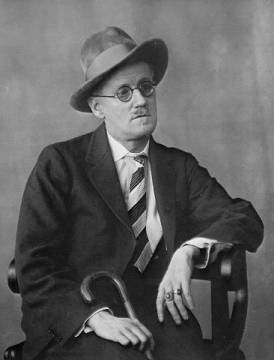 You may have heard the news last week: J. Craig Venter and a team of scientists created the first living organism – a “synthetic cell” – by way of a computer-generated genome. We’re now seeing the beginnings of artificial life. And it’s a big story, with many far-reaching implications. But where does James Joyce fit into this picture? Let me add this little factoid to the mix: According to The Christian Science Monitor, Venter’s team inserted DNA watermark codes into the genome so that they can distinguish between natural and synthetic bacteria moving forward. And when this code is translated into English, it will “spell out the names of the 46 researchers who helped with the project, quotations from James Joyce, physicist Richard Feynman and J. Robert Oppenheimer, and a URL that anyone who deciphers the code can e‑mail.” Lots of smarts packed into the tiniest of packages.
UPDATE: The quotes in watermark apparently read: “TO LIVE, TO ERR, TO FALL, TO TRIUMPH, TO RECREATE LIFE OUT OF LIFE.” — James Joyce’s A Portrait of the Artist as a Young Man; “SEE THINGS NOT AS THEY ARE, BUT AS THEY MIGHT BE.”-A quote from an Oppenheimer biography, American Prometheus; “WHAT I CANNOT BUILD, I CANNOT UNDERSTAND.” — Richard Feynman.
Iron Man: The Science in Science Fiction
As Robert Bly noted in his book, The Science in Science Fiction, some of the most intriguing scientific ideas have originated not in labs, but in sci-fi books and movies. With Iron Man 2 hitting the screens, Sidney Perkowitz, a physicist at Emory University, talks about whether the science in the new pop movie has any roots in scientific reality – or, for that matter, whether it might inspire any new scientific thinking down the road. He offers his thoughts above. In addition to writing Hollywood Science: Movies, Science and the End of the World, Perkowitz sits on the advisory board of the Science and Entertainment Exchange, a National Academy of Sciences program that tries to bring more scientific accuracy to mass market entertainment.
Thanks Nicole for the tip on this one.
Piano Stairs
How can you change behavior for the better? It’s simple. Make it fun. The next thing you know, people will climb stairs instead of ride the escalator. And they’ll properly throw their trash away too (the subject of another engaging video)…
Thanks Adolfo for the great finds.
Support Us
We're hoping to rely on loyal readers, rather than erratic ads. Please click the Donate button and support Open Culture. You can use Paypal, Venmo, Patreon, even Crypto! We thank you!

About Us

Open Culture scours the web for the best educational media. We find the free courses and audio books you need, the language lessons & educational videos you want, and plenty of enlightenment in between.
Advertise With Us

