Free Vintage Cartoons: Bugs Bunny, Betty Boop and More

Don’t vis­it Vin­tage Toon­Cast (or its iTunes chan­nel) at the begin­ning of a busy work­day. You’ll start by promis­ing your­self to watch just one, like, say, “The Wab­bit Who Came to Sup­per,” which we post­ed above. But then, of course, you’ll want to check out the famous Bet­ty Boop episode, “Min­nie the Moocher,” fea­tur­ing Cab Cal­loway, which will lead you to “Cas­par the Friend­ly Ghost,” “Pop­eye,” and final­ly 16 glo­ri­ous episodes of “Super­man.”

The site hosts more than 80 videos, most of them stel­lar, which means you could end up killing the whole day. Don’t say we did­n’t w‑w-w-arn you (sor­ry).

Relat­ed Con­tent:

Orig­i­nal Super­man Car­toon Series Now Online

Disney’s Oscar-Win­ning Adven­tures in Music

Fan­tas­magorie: The First Ani­mat­ed Film


Sheer­ly Avni is a San Fran­cis­co-based arts and cul­ture writer. Her work has appeared in Salon, LA Week­ly, Moth­er Jones, and many oth­er pub­li­ca­tions. You can fol­low her on twit­ter at @sheerly.


More than 20 Years Before “Lost” — “The New People”

There was a good deal of time-trav­el in the ABC hit series Lost, one of the more ambi­tious and pop­u­lar shows of the past decade. But nei­ther Jack, Sawyer, Hur­ley, nor any of our oth­er beloved 21st cen­tu­ry cast­aways ever went back to the year 1969. If they had, and if they’d had access to a TV, they might have found them­selves watch­ing a show about — them­selves.

Well, sort of. The New Peo­ple ran on Fri­day nights on ABC from Sep­tem­ber 1969 through Jan­u­ary 1970 (It last­ed only 17 episodes). We’ll take a shot at sum­ma­riz­ing the gen­er­al premise, which might ring a cou­ple of bells:

A plane crash­es on a remote island in the Pacif­ic, leav­ing its mot­ley group of sur­vivors strand­ed and fight­ing about what to do next.… As they explore their new home, they find an entire town, ful­ly stocked with pro­vi­sions and weapons, but creep­i­ly emp­ty. Soon the sur­vivors dis­cov­er that this island was once set up .…to be an Atom­ic Ener­gy Com­mis­sion test­ing site!

No Lost fan can live with­out a con­spir­a­cy the­o­ry, but we’re pret­ty sure there was noth­ing fishy in the com­mon­al­i­ties, and in the end, are we not all chil­dren of Gilli­gan? Fur­ther­more, there’s a good deal more to the plot, which includes racial con­flict, ado­les­cent angst (the sur­vivors are all col­lege stu­dents), and a healthy dose of Lord of the Flies-style chaos. Full episodes are not online, but at TVob­scu­ri­ties you can find a wealth of relat­ed con­tent, clips, links to reviews, and even the theme song, with lyrics.

Also, be sure to check out the episode guide, which real­ly does intrigue. Num­ber 12, for exam­ple:

The Pied Piper of Pot. Step­pen­wolf  thinks his fel­low islanders are too uptight, so he grows potent mar­i­jua­na that threat­ens to send the stu­dents into a har­row­ing, one-way trip.

The New Peo­ple was pro­duced by Aaron Spelling, who went on to bring us Char­lie’s Angels, The Love Boat, Hart to Hart, and Bev­er­ly Hills 90210, among many, many oth­ers. But we’re not sure if he ever did come up with anoth­er char­ac­ter as com­pelling as Step­pen­wolf.

(Thanks to Bryan Thomas)

Sheer­ly Avni is a San Fran­cis­co-based arts and cul­ture writer. Her work has appeared in Salon, LA Week­ly, Moth­er Jones, and many oth­er pub­li­ca­tions. You can fol­low her on twit­ter at @sheerly.


The Wire as Great Victorian Novel

A while back, W. Daniel Hillis made the case that The Wire may rise to the lev­el of – if not sur­pass – Tol­stoy’s War & Peace. Writ­ing for the Edge.org, Hillis went so far as to say:

As much as I liked War and Peace, I prob­a­bly got more out of The Wire. And why should that be sur­pris­ing? More human effort can be put into a tele­vi­sion series than a nov­el and more time is spent con­sum­ing it. If both are exe­cut­ed to their high­est stan­dards, with equal care, skill and insight, we might well expect less from the book.

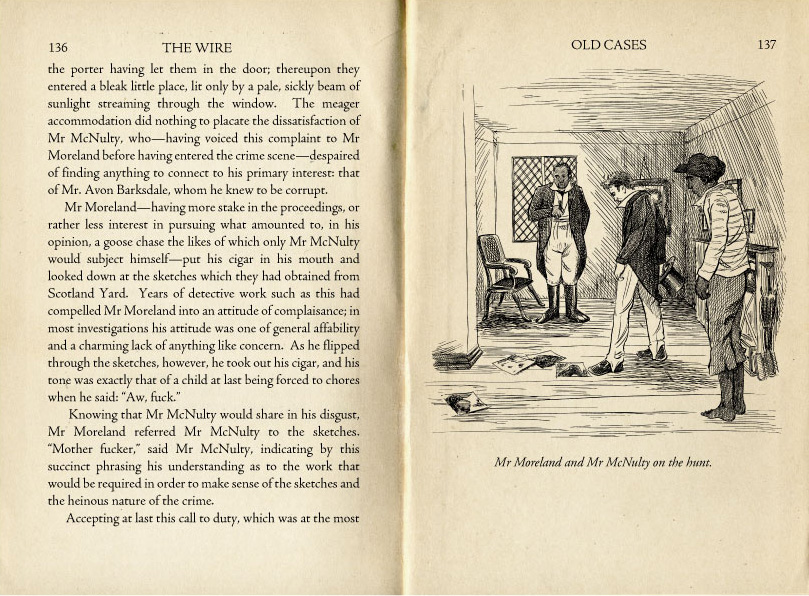
If we can men­tion The Wire in the same breath as Tol­stoy, then why not anoth­er giant of nine­teenth cen­tu­ry lit­er­a­ture, Charles Dick­ens? Yes, The Wire has been called “Dick­en­sian” too, and this week the Hood­ed Util­i­tar­i­an has re-imag­ined The Wire as a seri­al­ized Vic­to­ri­an nov­el. The premise? Imag­ine The Wire writ­ten in 60 install­ments over the course of six years, start­ing in 1846, by Hor­a­tio Buck­les­by Ogden, a Dick­ens con­tem­po­rary who wrote with a “nuance and atten­tion to detail that Dick­ens nev­er achieved.” Each install­ment ran 30 pages and sold for one shilling apiece.

The Hood­ed Util­i­tar­i­an has­n’t actu­al­ly print­ed these 60 install­ments (because they don’t actu­al­ly exist). But they have pro­duced a few won­der­ful mock pages, and writ­ten a faux piece of lit­er­ary crit­i­cism to accom­pa­ny them. A great job by Joy Delyr­ia and Sean Michael Robin­son.

via Boing­Bo­ing

by | Permalink | Make a Comment ( 6 ) |

Elizabeth Taylor on “What’s My Line?” (1954)

Eliz­a­beth Tay­lor, a star for sev­en decades, died ear­li­er today of con­ges­tive heart fail­ure. She was 79 years old. To pay quick trib­ute, we’re high­light­ing Tay­lor’s 1954 appear­ance on “What’s My Line?,” the longest-run­ning game show in Amer­i­can tele­vi­sion his­to­ry (1950 — 1967). A good way to remem­ber Tay­lor – hav­ing a lit­tle fun in her prime.

The film men­tioned at the end of the scene – The Last Time I Saw Paris stars – also hap­pens to be avail­able at the Inter­net Archive for free. Enjoy

Relat­ed Con­tent:

Sal­vador Dali (and Oth­er VIPs) on “What’s My Line?”

by | Permalink | Make a Comment ( 4 ) |

Live Japan Earthquake & Tsunami Coverage on Al Jazeera

A quick news bul­letin: Japan was struck by a mas­sive 8.9 earth­quake today, fol­lowed by some dev­as­tat­ing tsunamis (see clip below). Al Jazeera is pro­vid­ing live cov­er­age (in Eng­lish) on the web. Start watch­ing here. Or find anoth­er live stream from NHK in Japan. What’s more, The Wall Street Jour­nal has a live blog ded­i­cat­ed to the earth­quake, and Google has set up a peo­ple find­er for those liv­ing in the coun­try. Our best wish­es to the peo­ple of Japan…

Tsuna­mi:

by | Permalink | Make a Comment ( 5 ) |

Mr. Rogers Goes to Washington

We take you back to anoth­er era when fund­ing for pub­lic broad­cast­ing was in doubt – to 1969, when Richard Nixon planned to cut PBS’ fund­ing from $20 mil­lion to $10 mil­lion. Here Fred Rogers, the gen­tle cre­ator of Mis­ter Rogers’ Neigh­bor­hood, gets six short min­utes before Sen­a­tor John Pas­tore, the chair­man of the Sub­com­mit­tee on Com­mu­ni­ca­tions, and makes his pitch for pub­licly-fund­ed edu­ca­tion­al tele­vi­sion. In those 360 sec­onds, Rogers gets the gruff sen­a­tor to do a com­plete 180 – to end up say­ing “It looks like you just earned the 20 mil­lion dol­lars.” And, indeed, it turned out just that way. Those were the days…

via @webacion

by | Permalink | Make a Comment ( 2 ) |

Gay Talese: Drinking at New York Times Put Mad Men to Shame

Mad Men brings us back to a bygone era, the ear­ly 60s, when alco­hol flowed freely through­out the work­ing day. (Watch this mon­tage to get up to speed.) An act of his­tor­i­cal revi­sion­ism, many might think. But, appar­ent­ly not so. Accord­ing to a piece in The New York Times, the show basi­cal­ly gets it right. Alco­hol was as com­mon in offices as office sup­plies. And then we have this: Gay Talese, the best­selling author and jour­nal­ist, remem­ber­ing the Times news­room dur­ing the same era – a crew bare­ly fit to pub­lish the news that’s fit to print.

by | Permalink | Make a Comment ( 1 ) |

Bruce Lee’s Lost Interview


Bruce Lee’s act­ing career began on tele­vi­sion in 1966, when he land­ed a part in The Green Hor­net. (Watch his amaz­ing audi­tion here). But it took anoth­er five years before he gave his first (and only) tele­vi­sion inter­view. For 25 min­utes in Decem­ber 1971, the mar­tial arts star sat down with Pierre Berton, a Cana­di­an jour­nal­ist, in Hong Kong. And their con­ver­sa­tion cov­ered a fair amount of ground – Lee’s suc­cess star­ring in Man­darin films .… despite only speak­ing Can­tonese; his dif­fi­cul­ty devel­op­ing a career in a coun­try still hos­tile toward Chi­na; and his work train­ing oth­er Hol­ly­wood stars in the mar­tial arts. Berton prob­a­bly nev­er scored many points for his inter­view­ing style. But Berton is not the point here. It’s all about Lee. via Brain­Pick­ings

by | Permalink | Make a Comment ( 3 ) |

« Go BackMore in this category... »
Quantcast