Samuel Beckett Play Brought to Life in an Eerie Short Film Starring Alan Rickman & Kristin Scott Thomas

Here at Open Cul­ture, when we think of authors who write work made for the movies, we do, of course, think of names like Dan Brown, J.K. Rowl­ing, and Robert Lud­lum — but even more so of names like Samuel Beck­ett, whose push­ing of aes­thet­ic and intel­lec­tu­al bound­aries on the stage we wel­come now more than ever on the screen. And in a way, his works have under­gone more com­plete film adap­ta­tion than have the books of many best­selling main­stream writ­ers, thanks to the 2002 omnibus project Beck­ett on Film, which round­ed up nine­teen auteurs to direct films, rang­ing in length from sev­en min­utes to two hours, of each and every one of his nine­teen plays.

Beck­ett on Film’s ros­ter of direc­tors includes Michael Lind­say-Hogg doing Wait­ing for Godot, Atom Egoy­an doing Krap­p’s Last Tape, Neil Jor­dan doing Not I, the artist Damien Hirst doing Breath, and Antho­ny Minghel­la, he of The Eng­lish Patient and The Tal­ent­ed Mr. Rip­ley, doing Play, which you can watch above. The six­teen-minute pro­duc­tion adapts Beck­et­t’s 1963 one-act, a dis­tinc­tive­ly pur­ga­to­r­i­al sort of roman­tic dra­ma which presents a man (“M”), his wife (“W1”), and his mis­tress (“W2”), each trapped in an urn, each forced to speak about the details of their tri­an­gu­lar rela­tion­ship when, on stage, the spot­light turns to them. On film, Minghel­la choos­es to swap out the spot­light for the cam­era itself, which cuts, swings, and shifts focus swift­ly between the three, com­mand­ing the his­to­ry of the affair from all three per­spec­tives, each deliv­ered with flat, rapid-fire insis­tence yet with sur­pris­ing clar­i­ty and feel­ing as well.

Those qual­i­ties nat­u­ral­ly owe to Beck­et­t’s mas­tery of the word, but also to the per­for­mances of the three actors, giv­en under absurd cir­cum­stances, caked with filth and stuffed into pots: Kristin Scott Thomas as the wife, Juli­et Steven­son as the mis­tress, and the late Alan Rick­man as the hic­cup­ing adul­ter­er. Every line they speak dis­tills some aspect of the Beck­et­t­ian world­view: “Silence and dark­ness were all I craved,” says Thomas’ W1. “Well, I get a cer­tain amount of both. They being one. Per­haps it is more wicked­ness to pray for more.” “Things may dis­im­prove,” says Steven­son’s W2. “Adul­ter­ers, take warn­ing,” says Rick­man’s M, “nev­er admit.” And the ulti­mate ques­tion: “When will all this have been… just play?” But in Beck­et­t’s real­i­ty, there’s noth­ing so “just” about it.

Relat­ed Con­tent:

Take a “Breath” and Watch Samuel Beckett’s One-Minute Play

Hear Samuel Beckett’s Avant-Garde Radio Plays: All That Fall, Embers, and More

Samuel Beck­ett Directs His Absur­dist Play Wait­ing for Godot (1985)

Mon­ster­piece The­ater Presents Wait­ing for Elmo, Calls BS on Samuel Beck­ett

Rare Audio: Samuel Beck­ett Reads Two Poems From His Nov­el Watt

Based in Seoul, Col­in Mar­shall writes and broad­casts on cities and cul­ture. He’s at work on a book about Los Ange­les, A Los Ange­les Primer, the video series The City in Cin­e­ma, the crowd­fund­ed jour­nal­ism project Where Is the City of the Future?, and the Los Ange­les Review of Books’ Korea Blog. Fol­low him on Twit­ter at @colinmarshall or on Face­book.

Professional Pickpocket Apollo Robbins Explains the Art of Misdirection

You’ve got to pick-a-pock­et or two, boys 

You’ve got to pick-a-pock­et or two. 

Unlike the Art­ful Dodger and oth­er light-fin­gered urchins brought to life by Charles Dick­ens and, more recent­ly, com­pos­er Lionel Bartpro­fes­sion­al pick­pock­et Apol­lo Rob­bins con­fines his prac­tice to the stage.

Past exploits include reliev­ing actress Jen­nifer Gar­ner of her engage­ment ring and bas­ket­ball Hall-of-Famer Charles Barkley of a thick bankroll. In 2001, he vir­tu­al­ly picked for­mer U.S. pres­i­dent Jim­my Carter’s Secret Ser­vice detail clean, net­ting badges, a watch, Carter’s itin­er­ary, and the keys to his motor­cade. (Rob­bins wise­ly steered clear of their guns.)

How does he does he do it? Prac­tice, prac­tice, prac­tice… and remain­ing hyper vig­i­lant as to the things com­mand­ing each indi­vid­ual vic­tim­s’s atten­tion, in order to momen­tar­i­ly redi­rect it at the most con­ve­nient moment.

Clear­ly, he’s a put lot of thought into the emo­tion­al and cog­ni­tive com­po­nents. In a TED talk on the art of mis­di­rec­tion, above, he cites psy­chol­o­gist Michael Posner’s “Trin­i­ty Mod­el” of atten­tion­al net­works. He has deep­ened his under­stand­ing through the study of aiki­do, crim­i­nal his­to­ry, and the psy­chol­o­gy of per­sua­sion. He under­stands that get­ting his vic­tims to tap into their mem­o­ries is the best way to tem­porar­i­ly dis­arm their exter­nal alarm bells. His easy­go­ing, seem­ing­ly spon­ta­neous ban­ter is but one of the ways he gains marks’ trust, even as he pen­e­trates their spheres with a preda­to­ry grace.

Watch his hands, and you won’t see much, even after he explains sev­er­al tricks of his trade, such as secur­ing an already depock­et­ed wal­let with his index fin­ger to reas­sure a jack­et-pat­ting vic­tim that it’s right where it belongs. (Half a sec­ond lat­er, it’s drop­ping below the hem of that jack­et into Rob­bins’ wait­ing hand.) Those paws are fast!

I do won­der how he would fare on the street. His act depends on a fair amount of chum­my touch­ing, a phys­i­cal inti­ma­cy that could quick­ly cause your aver­age straphang­er to cry foul. I guess in such an instance, he’d lim­it the take to one pre­cious item, a cell phone, say, and leave the wal­let and watch to a non-the­o­ret­i­cal “whiz mob” or street pick­pock­et team.

Though he him­self has always been scrupu­lous about return­ing the items he lib­er­ates, Rob­bins does not with­hold pro­fes­sion­al respect for his crim­i­nal broth­ers’ moves. One real-life whiz mob­ber so impressed him dur­ing a tele­vi­sion inter­view that he drove over four hours to pick the perp’s brains in a min­i­mum secu­ri­ty prison, a con­fab New York­er reporter Adam Green described in col­or­ful detail as part of a lengthy pro­file on Rob­bins and his craft.

One small detail does seem to have escaped Rob­bins’ atten­tion in the sec­ond demon­stra­tion video below, in which reporter Green will­ing­ly steps into the role of vic’. Per­haps Rob­bins doesn’t care, though his mark cer­tain­ly should. The sit­u­a­tion is less QED than XYZPDQ.

While you’re tak­ing notice, don’t for­get to remain alert to what a poten­tial pick­pock­et is wear­ing. Such atten­tion to detail may serve you down at the sta­tion, if not onstage.

Relat­ed Con­tent:

Watch Björk’s 6 Favorite TED Talks, From the Mush­room Death Suit to the Vir­tu­al Choir

The Sci­ence of Willpow­er: 15 Tips for Mak­ing Your New Year’s Res­o­lu­tions Last from Dr. Kel­ly McGo­ni­gal

The Kit­ty Gen­ovese Myth and the Pop­u­lar Imag­i­na­tion

Ayun Hal­l­i­day is an author, illus­tra­tor, and Chief Pri­ma­tol­o­gist of the East Vil­lage Inky zine. The sleep­ing bag-like insu­lat­ing prop­er­ties of her ankle-length faux leop­ard coat make her very pop­u­lar with the pick­pock­ets of New York. Fol­low her @AyunHalliday

John Astin, From The Addams Family, Recites “The Raven” as Edgar Allan Poe

How fit­ting that the head of The Addams Fam­i­ly would har­bor a life­long obses­sion with author Edgar Allan Poe.

In the spir­it of full dis­clo­sure, we should clar­i­fy that the true Poe fan­boy is not the fic­tion­al Gomez Addams, but rather the first actor to bring the char­ac­ter to life, John Astin, of tele­vi­sion fame.

Astin’s intro­duc­tion to the Mas­ter of the Macabre came as a child, when his moth­er retold him the sto­ry of “The Mur­ders in the Rue Morgue,” fol­low­ing it up with a copy of “The Pur­loined Let­ter.”

His fas­ci­na­tion with those tales foment­ed a rav­en­ous (sor­ry) appetite for all things Poe.

As Astin told the Bal­ti­more Sun:

His dis­cov­er­ies about human nature were so right, and so accu­rate, that it’s almost a won­der to read, or reread. There are con­tin­u­al­ly dis­cov­er­ies, in the read­ing of Poe, about humankind.

Now the direc­tor of Johns Hop­kins’ Under­grad­u­ate Pro­gram in The­atre Arts and Stud­ies, Astin col­lab­o­rat­ed with writ­ers Ron Magid and Paul Day Clemens on Edgar Allan Poe — Once Upon a Mid­night, a one-man show that toured exten­sive­ly through­out the late 90s and ear­ly 2000s. In addi­tion to get­ting across a pas­sel of grim bio­graph­i­cal details, the play­wrights tasked Astin’s Poe with an unabridged recita­tion of his best known poem, “The Raven,” above.

Philip Bran­des, review­ing a per­for­mance in the Los Ange­les Times wrote:

Recit­ing “The Raven” in its entire­ty, Astin can­not afford to milk each line for atmos­phere à la Vin­cent Price; it would take him most of the sec­ond act.

Instead, he races through the poem as an author would in recall­ing his own famil­iar words, grad­u­al­ly get­ting caught up in their pow­er and fin­ish­ing on a dra­mat­ic crescen­do.

Pow­er­ful stuff. Nev­er­more!

Relat­ed Con­tent:

The Great Stan Lee Reads Edgar Allan Poe’s “The Raven”

5 Hours of Edgar Allan Poe Sto­ries Read by Vin­cent Price & Basil Rath­bone

Gus­tave Doré’s Splen­did Illus­tra­tions of Edgar Allan Poe’s “The Raven” (1884)

Ayun Hal­l­i­day is an author, illus­tra­tor, and Chief Pri­ma­tol­o­gist of the East Vil­lage Inky zine. Fol­low her @AyunHalliday

Muhammad Ali Sings in Broadway’s First Black Power Musical (1970)

The Great White Way is lit­tered with flops.

Crit­ic Frank Rich evis­cer­at­ed a 1988 musi­cal based on Stephen King’s Car­rie, lament­ing that a poten­tial camp mas­ter­piece wound up as “a typ­i­cal musi­cal-the­ater botch.”

Pro­duc­er David Mer­rick pulled the plug on a 1966 musi­cal adap­ta­tion of Break­fast at Tiffany’s star­ring Mary Tyler Moore long before its offi­cial open­ing night, thus spar­ing the dra­ma crit­ics and the pub­lic “an excru­ci­at­ing­ly bor­ing evening.”

And then there is 1970’s Big Time Buck White, activist Oscar Brown, Jr.’s adap­ta­tion of Joseph Dolan Tuotti’s play. It fea­tured Muham­mad Ali—tem­porar­i­ly benched from box­ing for draft evasion—in the tit­u­lar role of a mil­i­tant lec­tur­er, deliv­er­ing a Black Pow­er mes­sage to a char­ac­ter named Whitey.

The pri­mar­i­ly white Broad­way-going audi­ence that embraced the coun­ter­cul­tur­al “Trib­al Love-Rock Musi­cal” Hair two years ear­li­er with­held its love. In a col­or­blind world, we might be able to chalk that up to the champ’s sub-par singing chops or some clunky lyrics, but it would be a mis­take to turn a blind eye to the polit­i­cal cli­mate.

(Eight years lat­er, Ain’t Mis­be­havin’, a trib­ute to Fats Waller and the Harlem Renais­sance was a bonafide hit.)

Big Time Buck White ran for just sev­en per­for­mances, post­ing its clos­ing notice well in advance of its Jan­u­ary 18th appear­ance on the Ed Sul­li­van Show, above.

These days, the pro­duc­ers would prob­a­bly scram­ble to find a replace­ment, but Sul­li­van, a staunch sup­port­er of Civ­il Rights, hon­ored the book­ing, com­mand­ing his stu­dio audi­ence to give the cos­tumed play­ers “a fine recep­tion.”

After­ward, the champ thanked Sul­li­van for invit­ing him and “the group” so that view­ers who didn’t get a chance to could see “what type of play i was par­tic­i­pat­ing in.”

A bit of triv­ia. Play­bill cred­its actor Don­ald Suther­land, in the role of Black Man. He may be a movie star, but he’s some­thing of a Broad­way flop him­self, his only oth­er cred­it that of Hum­bert Hum­bert in 1980’s Loli­ta, Peo­ple Magazine’s Bomb of the Year.

Above is anoth­er scene from the musi­cal, shared by Ali’s admir­er, Mike Tyson.

via Messy N Chic

Relat­ed Con­tent:

The Art of The Black Pan­thers: A Short Doc­u­men­tary on the Rev­o­lu­tion­ary Artist Emory Dou­glas

Dick Van Dyke, Paul Lyn­de & the Orig­i­nal Cast of Bye Bye Birdie Appear on The Ed Sul­li­van Show (1961)

Leonard Cohen’s 1983 Musi­cal for Cana­di­an Tele­vi­sion: I Am a Hotel

Watch Stephen Sond­heim Teach a Kid How to Sing “Send In the Clowns”

David Byrne Dis­cuss­es Here Lies Love, His Dis­co Musi­cal with Fat­boy Slim on the Life of Imel­da Mar­cos

- Ayun Hal­l­i­day is an author, illus­tra­tor, and Chief Pri­ma­tol­o­gist of the East Vil­lage Inky zine. Fol­low her @AyunHalliday

How Marcel Marceau Started Miming to Save Children from the Holocaust

Image via Wiki­me­dia Com­mons

If we think about the times evil has most notably reared its head, many of our minds go right to the Holo­caust — as, no doubt, did Mar­cel Marceau’s, espe­cial­ly since he had first-hand expe­ri­ence with the hor­ror of the Nazis, hav­ing lost his father in Auschwitz, and even used the art of mime against it.

The Jew­ish Marceau (née Man­gel) got his first expo­sure to mime from a Char­lie Chap­lin film, which he saw at the age of five. Lat­er, when France entered the Sec­ond World War, he and his fam­i­ly moved around the coun­try to flee the Nazis, from whom it became increas­ing­ly dif­fi­cult to hide as time went on. “I was hid­den by my cousin Georges Loinger who was a hero­ic Resis­tance fight­er,” Marceau recount­ed in a 2001 speech. “He said, ‘Mar­cel must hide for a while. He will play an impor­tant part in the the­ater after the war.’ How did he know that? Because he knew that when I was a child I cre­at­ed a the­ater for chil­dren already.”

The skills Marceau cul­ti­vat­ed per­form­ing for oth­er chil­dren came in more than handy not just after the war but dur­ing it, as he per­formed for young­sters on the run from Hitler. ”Marceau start­ed mim­ing to keep chil­dren qui­et as they were escap­ing,” said doc­u­men­tar­i­an Philippe Mora, son of the Resis­tance fight­er who smug­gled refugees along­side Marceau. “It had noth­ing to do with show busi­ness. He was mim­ing for his life.”

“Paris was lib­er­at­ed after the Amer­i­cans entered in August,” said Marceau, “but the war was­n’t fin­ished. Two months before the lib­er­a­tion of France, I entered a famous the­ater school and a mas­ter of mime, Éti­enne Decroux, said to the young stu­dents, ‘Who wants a part?’ And I said I. And I mimed the killer. And the killer was a Nazi, but of course I did­n’t say Nazi.” Impressed with his impromp­tu embod­i­ment of evil, Decroux asked his name. “I said Mar­cel Marceau,” his new sur­name inspired by a gen­er­al who fought in the French Rev­o­lu­tion, the “Marceau on the Rhine” of Vic­tor Hugo’s poem (“and I was born in Stras­bourg on the Rhine,” the artist adds). “That’s a beau­ti­ful name,” said Decroux. And thus the career of a mime leg­end tru­ly began.

Relat­ed Con­tent:

Mar­cel Marceau Mimes the Pro­gres­sion of Human Life, From Birth to Death, in 4 Min­utes

How Alice Herz-Som­mer, the Old­est Holo­caust Sur­vivor, Sur­vived the Hor­rif­ic Ordeal with Music

Mem­o­ry of the Camps (1985): The Holo­caust Doc­u­men­tary that Trau­ma­tized Alfred Hitch­cock, and Remained Unseen for 40 Years

The Touch­ing Moment When Nicholas Win­ton Met the Chil­dren He Saved Dur­ing the Holo­caust

Behind-the-Scenes Footage of Jer­ry Lewis’ Ill-Con­ceived Holo­caust Movie The Day The Clown Cried

Based in Seoul, Col­in Mar­shall writes and broad­casts on cities and cul­ture. He’s at work on a book about Los Ange­les, A Los Ange­les Primer, the video series The City in Cin­e­ma, the crowd­fund­ed jour­nal­ism project Where Is the City of the Future?, and the Los Ange­les Review of Books’ Korea Blog. Fol­low him on Twit­ter at @colinmarshall or on Face­book.

Google Gives You a 360° View of the Performing Arts, From the Royal Shakespeare Company to the Paris Opera Ballet

We’ve long been able to read books online. More recent­ly, the inter­net has also become a favored dis­tri­b­u­tion sys­tem for movies, and cer­tain­ly we’ve all heard more than enough about the effects of down­load­ing and stream­ing on the music indus­try. No new tech­nol­o­gy can quite sub­sti­tute, yet, for a vis­it to the muse­um, but as we’ve often post­ed about here, many of the muse­ums them­selves have gone ahead and made their paint­ings, sculp­tures, and oth­er arti­facts view­able in great detail online. At this point, will the expe­ri­ence of any art form at all remain unavail­able to us on the inter­net?

Not long ago, I would have named any of the per­form­ing arts, but the brains at the Google Cul­tur­al Insti­tute have now got around to those most liv­ing of all forms as well. The New York Times’ Michael Coop­er writes of our new­found abil­i­ty, through a series of 360-degree videos, to “stand, vir­tu­al­ly, on the stage of the Palais Gar­nier, among the dancers of the Paris Opera Bal­let,” ” jour­ney to Strat­ford-upon-Avon, where you can try to keep up with a fre­net­ic Alex Has­sell of the Roy­al Shake­speare Com­pa­ny as Hen­ry V, exhort­ing his troops to go ‘once more unto the breach,’ ” or “go onstage at Carnegie Hall, where the video places you smack in the mid­dle of the Philadel­phia Orches­tra as it plays a rous­ing ‘In the Hall of the Moun­tain King.’ ”

These come as part of a vir­tu­al exhi­bi­tion involv­ing “an inno­v­a­tive assem­blage of per­form­ing arts groups” that went live ear­li­er this month at the Google Cul­tur­al Insti­tute’s site. The orga­ni­za­tions, now more than 60 in total, include not just the Paris Opera, the Roy­al Shake­speare Com­pa­ny, and Carnegie Hall, but the Berlin Phil­har­mon­ic, the Vien­na State Opera, the Amer­i­can Bal­let The­ater, the Amer­i­can Muse­um of Mag­ic, the Brook­lyn Acad­e­my of Music, the Coun­try Music Hall of Fame, the John F. Kennedy Cen­ter for the Per­form­ing Arts, the Met­ro­pol­i­tan Opera, and the Rome Opera. You can find the per­for­mances neat­ly divid­ed into cat­e­gories: Music, OperaThe­atre, Dance, and Per­for­mance Art.

Google’s blog describes some of the tech­nol­o­gy behind all this, includ­ing the 360-degree per­for­mance record­ings, the “indoor Street View imagery” of the grand venues where many of the per­for­mances hap­pen, and the “ultra-high res­o­lu­tion Gigapix­el” images avail­able for your scruti­ny. When you play the video above of the Philadel­phia Orches­tra, you can click and drag to view the per­for­mance from every pos­si­ble angle from your van­tage right there in the midst of the musi­cians. I can’t imag­ine what the Google Cul­tur­al Insti­tute will come up with next, but sure­ly it won’t be long before we can see things from the Black Swan’s point of view.

You can start explor­ing the 360s per­for­mances here.

via The New York Times/Google

Relat­ed Con­tent:

Bal­let Dancers Do Their Hard­est Moves in Slow Motion

New Web Site, “The Opera Plat­form,” Lets You Watch La Travi­a­ta and Oth­er First-Class Operas Free Online

40,000 Art­works from 250 Muse­ums, Now View­able for Free at the Redesigned Google Art Project

Based in Seoul, Col­in Mar­shall writes and broad­casts on cities and cul­ture. He’s at work on a book about Los Ange­les, A Los Ange­les Primer, the video series The City in Cin­e­maand the crowd­fund­ed jour­nal­ism project Where Is the City of the Future? Fol­low him on Twit­ter at @colinmarshall or on Face­book.

Striking Poster Collection from the Great Depression Shows That the US Government Once Supported the Arts in America

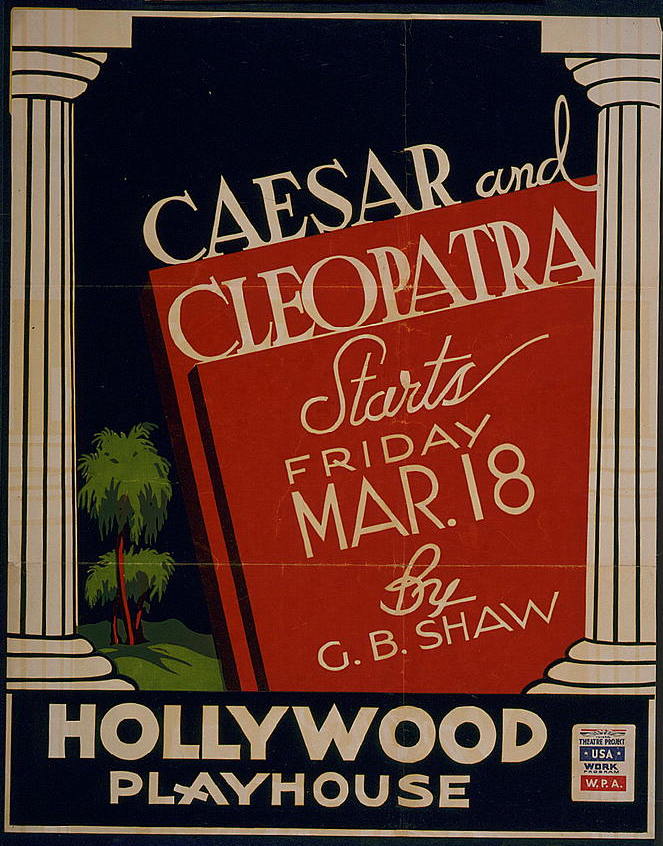
WPA Caesare & Cleopatra

Of the rare and extra­or­di­nary times in U.S. his­to­ry when the U.S. gov­ern­ment active­ly fund­ed and pro­mot­ed the arts on a nation­al scale, two peri­ods in par­tic­u­lar stand out. There is the CIA’s role in chan­nel­ing funds to avant-garde artists after the Sec­ond World War as part of the cul­tur­al front of the Cold War—a boon to painters, writ­ers, and musi­cians, both wit­ting and unwit­ting, and a strange way in which the intel­li­gence com­mu­ni­ty used the anti-com­mu­nist left to head off what it saw as more dan­ger­ous and sub­ver­sive trends. Most of the high­ly agen­da-dri­ven fed­er­al arts fund­ing dur­ing the Cold War pro­ceed­ed in secret until decades lat­er, when long-sealed doc­u­ments were declas­si­fied and agents began to tell their sto­ries of the peri­od.

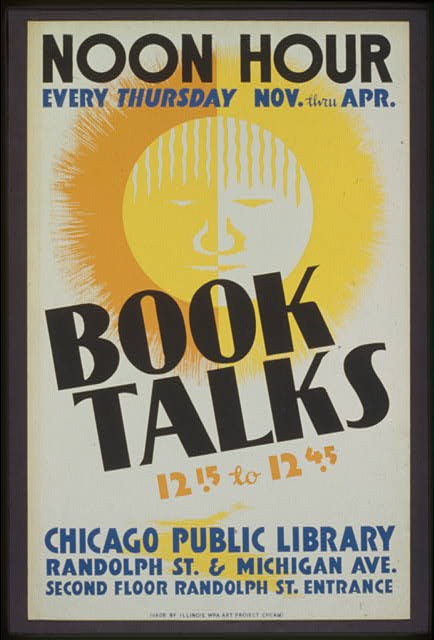
BOOK TALKS

Of a much less covert­ly polit­i­cal nature was the first major fed­er­al invest­ment in the arts, begun under Franklin Delano Roosevelt’s New Deal and cham­pi­oned in large part by his wife, Eleanor. Under the 1935-estab­lished Works Progress Admin­is­tra­tion (WPA)—which cre­at­ed thou­sands of jobs through large-scale pub­lic infra­struc­ture projects—the Fed­er­al Project Num­ber One took shape, an ini­tia­tive, write Don Adams and Arlene Gold­bard, that “marked the U.S. government’s first big, direct invest­ment in cul­tur­al devel­op­ment.” The project’s goals “were clear­ly stat­ed and demo­c­ra­t­ic; they sup­port­ed activ­i­ties not already sub­si­dized by pri­vate sec­tor patrons… and they empha­sized the inter­re­lat­ed­ness of cul­ture with all aspects of life, not the sep­a­rate­ness of a rar­efied art world.”

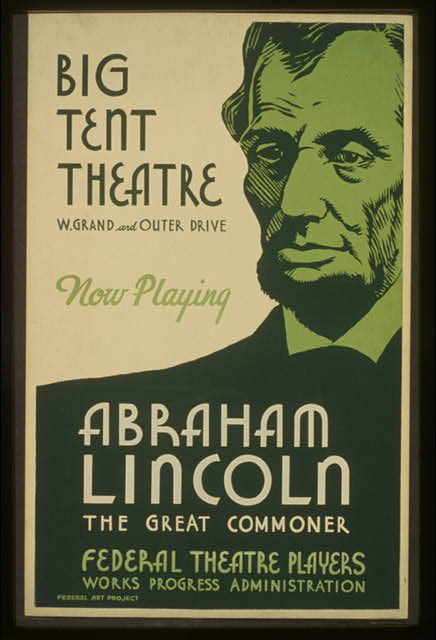
Big Tent Theatre

Under the pro­gram, known sim­ply as “Fed­er­al One,” Orson Welles made his direc­to­r­i­al debut, with a huge­ly pop­u­lar, all-Black pro­duc­tion of Mac­beth; Walk­er Evans, Dorothea Lange, and oth­ers doc­u­ment­ed the Great Depres­sion in their now icon­ic pho­to­graph­ic series; Diego Rivera paint­ed his huge murals of work­ing peo­ple; folk­lorists Alan Lomax, Stet­son Kennedy, and Har­ry Smith col­lect­ed and record­ed the pop­u­lar music and sto­ries of SouthZora Neale Hurston con­duct­ed anthro­po­log­i­cal field research in the Deep South and the Caribbean; Amer­i­can writ­ers from Ralph Elli­son to James Agee found sup­port from the WPA. This is to name but a few of the most famous artists sub­si­dized by the New Deal.

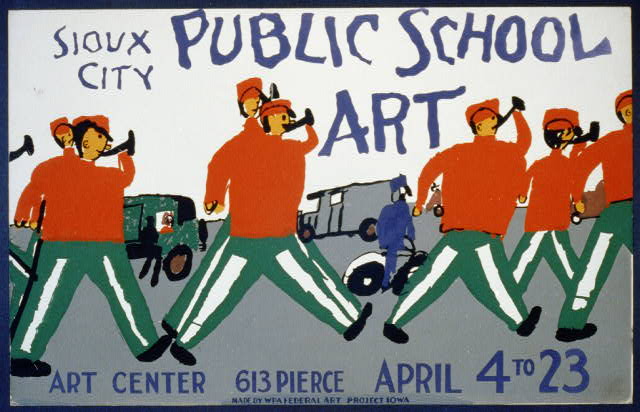
Sioux City Public Art School

Thou­sands more whose names have gone unrecord­ed were able to fund com­mu­ni­ty the­ater pro­duc­tions, lit­er­ary lec­tures, art class­es and many oth­er works of cul­tur­al enrich­ment that kept peo­ple in the arts work­ing, engaged whole com­mu­ni­ties, and gave ordi­nary Amer­i­cans oppor­tu­ni­ties to par­tic­i­pate in the arts and to find rep­re­sen­ta­tion where they oth­er­wise would be over­looked or ignored. Fed­er­al One not only “put legions of unem­ployed artists back to work,” writes George Wash­ing­ton Uni­ver­si­ty’s Eleanor Roo­sevelt Papers Project, “but their cre­ations would invari­ably enter­tain and enrich the larg­er pop­u­la­tion.”

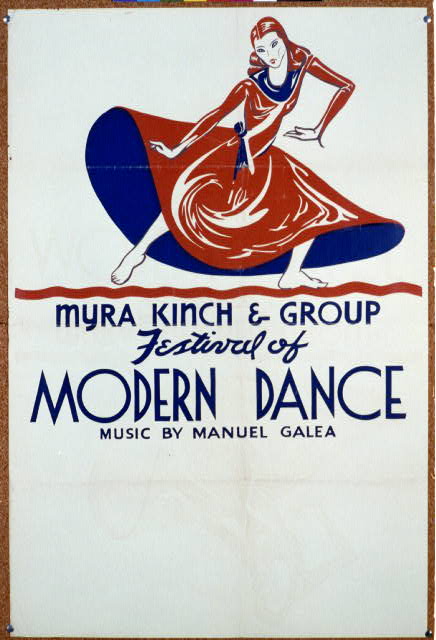
modern dance

“If FDR was only luke­warm about Fed­er­al One,” GWU points out, “his wife more than made up for it with her enthu­si­asm. Eleanor Roo­sevelt felt strong­ly that Amer­i­can soci­ety had not done enough to sup­port the arts, and she viewed Fed­er­al One as a pow­er­ful tool with which to infuse art and cul­ture into the dai­ly lives of Amer­i­cans.”

macbeth wpa

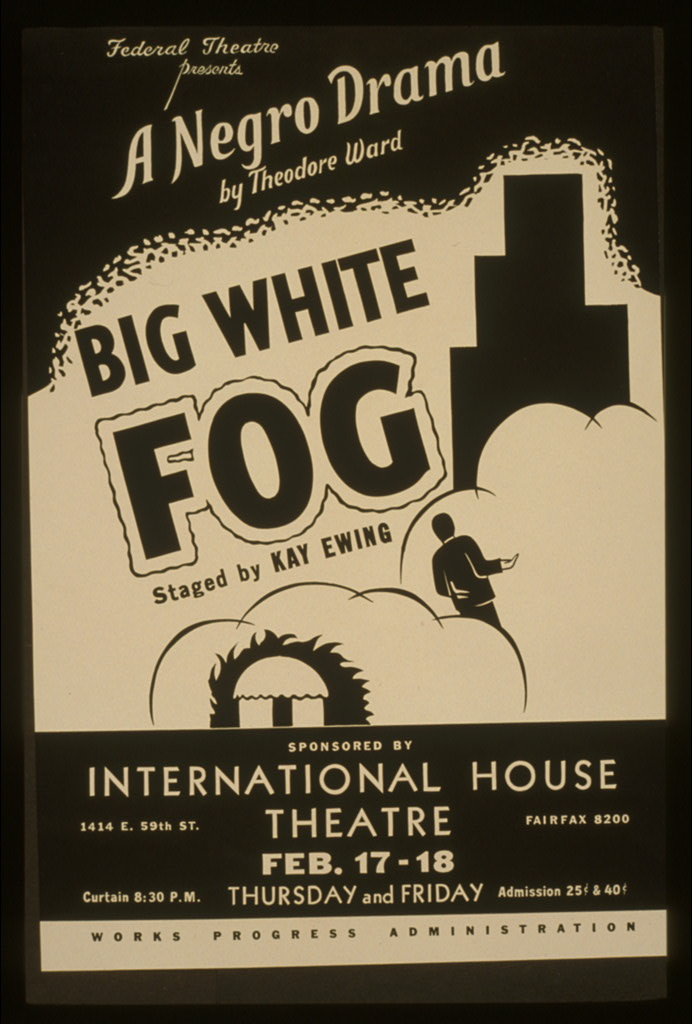
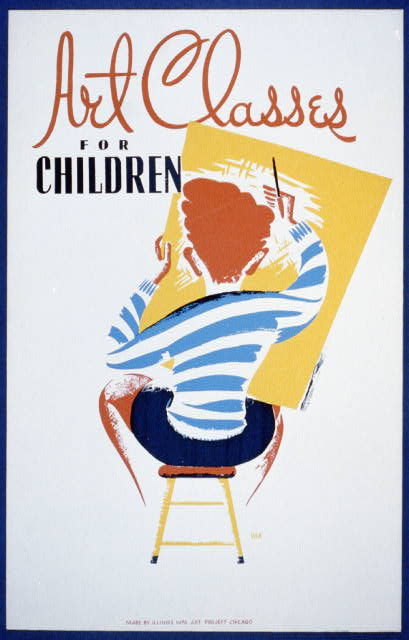
Now, thanks to the Library of Con­gress, we can see what that infu­sion of cul­ture looked like in col­or­ful poster form. Of the 2,000 WPA arts posters known to exist, the LoC has dig­i­tized over 900 pro­duced between 1936 and 1943, “designed to pub­li­cize exhibits, com­mu­ni­ty activ­i­ties, the­atri­cal pro­duc­tions, and health and edu­ca­tion al pro­grams in sev­en­teen states and the Dis­trict of Colum­bia.”

Big White Fog

These posters, added to the Library’s hold­ings in the ‘40s, show us a nation that looked very dif­fer­ent from the one we live in today—one in which the arts and cul­ture thrived at a local and region­al lev­el and were not sim­ply the pre­serves of celebri­ties, pri­vate wealth, and major cor­po­ra­tions. Per­haps revis­it­ing this past can give us a mod­el to strive for in a more demo­c­ra­t­ic, equi­table future that val­ues the arts as Eleanor Roo­sevelt and the WPA admin­is­tra­tors did. Click here to browse the com­plete col­lec­tion of WPA arts posters and to down­load dig­i­tal images as JPEG or TIFF files.

Art_classes_for_children_LCCN98510141

Relat­ed Con­tent:

Down­load Vin­tage Film Posters in High-Res: From The Philadel­phia Sto­ry to Attack of the Crab Mon­sters

Yale Launch­es an Archive of 170,000 Pho­tographs Doc­u­ment­ing the Great Depres­sion

Young Orson Welles Directs “Voodoo Mac­beth,” the First Shake­speare Pro­duc­tion With An All-Black Cast: Footage from 1936

Josh Jones is a writer and musi­cian based in Durham, NC. Fol­low him at @jdmagness

Marcel Marceau Mimes the Progression of Human Life, From Birth to Death, in 4 Minutes

What do you think of when you hear the word “mime.”

A cheeky, stripe-shirt­ed, invis­i­ble lad­der-climb­ing pub­lic nui­sance?

The soli­tary prac­ti­tion­er Dustin Hoff­man word­less­ly top­pled in the 1982 film Toot­sie?

Or Mar­cel Marceau?

Ah ha, and what does the name “Mar­cel Marceau” bring to mind?

The cheeky, stripe shirt­ed, but­ter­fly chas­ing Bip (who maybe caus­es you to cringe a lit­tle, despite his creator’s rep­u­ta­tion as a great artist)?

I was sur­prised to learn that he was a for­mer French Resis­tance fight­er, whose first review was print­ed in Stars and Stripes after he accept­ed an Amer­i­can general’s spur of the moment invi­ta­tion to per­form for 3,000 GIs in 1945 Frank­furt.

The film above doc­u­ments a 1965 per­for­mance of his most cel­e­brat­ed piece, Youth, Matu­ri­ty, Old Age, and Death, giv­en at 42, the exact mid­point of his life. In four abstract min­utes, he pro­gress­es through the sev­en ages of man, rely­ing on nuances of gait and pos­ture to con­vey each stage.

He per­formed it count­less times through­out his extra­or­di­nary career, nev­er stray­ing from his own pre­cise­ly ren­dered chore­og­ra­phy. The play­ing area is just a few feet in diam­e­ter.

Observe the 1975 per­for­mance that film­mak­er John Barnes cap­tured for his series Mar­cel Marceau’s Art of Silence, below. Noth­ing left to chance there, from the tim­ing of the small­est abdom­i­nal iso­la­tions to the angle of his head in the final tableau.

Time’s effects may have pro­vid­ed the sub­ject for the piece, but its peren­ni­al­ly lithe author claimed not to con­cern him­self with age, telling the New York Times in 1993 that his focus was on “life-force and cre­ation.”

Lat­er in the same inter­view, he reflect­ed:

When I start­ed, I hunt­ed but­ter­flies. Lat­er, I began to remem­ber the war and I began to dig deep­er, into mis­ery, into soli­tude, into the fight of human souls against robots.

This would seem to sup­port the the­o­ry that matu­ri­ty is a side effect of age.

His alter ego Bip’s lega­cy may be the infer­nal invis­i­ble ropes and glass cages that are a mime’s stock in trade, but dis­till­ing human expe­ri­ence to its purest expres­sion was the basis of Marceau’s silent art.

In a recent appre­ci­a­tion pub­lished in the Paris Review, author Mave Fel­lowes con­sid­ers the many stages of Marceau, from the for­ma­tive effects of child­hood encoun­ters with Char­lie Chap­lin films to his death at 84:

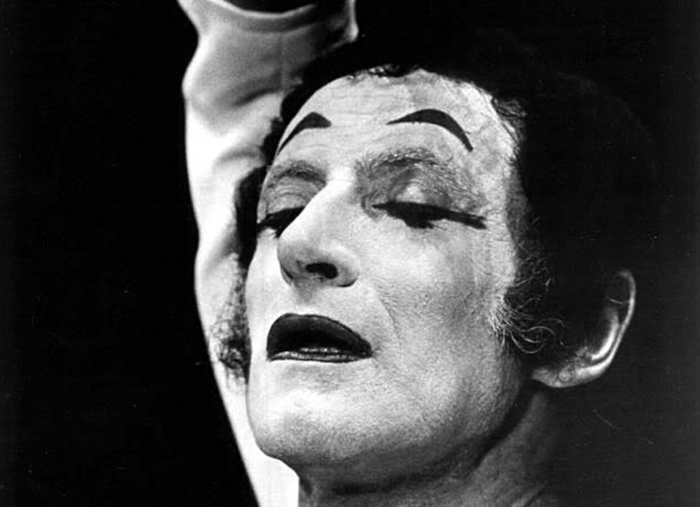
He feels his advanc­ing age and fears that the art of mime will die with him. It’s a tran­si­to­ry, ephemer­al art, he explains, as it exists only in the moment. As an old man, he works hard­er than ever, per­form­ing three hun­dred times a year, teach­ing four hours a day. He is named the UN Ambas­sador for Aging. Five nights a week he smears the white paint over his face, draws in the red bud at the cen­ter of his lips, fol­lows the line of his eye­lid with a black pen­cil. And then takes to the stage, his side­burns frayed, his hair dyed chest­nut and combed for­ward, look­ing like a toupee.

His body is as elas­tic as ever, but the old suit of Bip hangs loose on him now. Beneath the whitened jaw­line is a bag­gy, sinewy neck. With each con­tor­tion of his face, the white paint reveals deep lines. At the end of his show, he folds in a deep bow and the knobs of his spine show above the low cut of Bip’s Bre­ton top.

Relat­ed Con­tent:

Édith Piaf’s Mov­ing Per­for­mance of ‘La Vie en Rose’ on French TV, 1954

David Bowie Launch­es His Act­ing Career in the Avant-Garde Play Pier­rot in Turquoise (1967)

Klaus Nomi: The Bril­liant Per­for­mance of a Dying Man

Ayun Hal­l­i­day is an author, illus­tra­tor, and Chief Pri­ma­tol­o­gist of the East Vil­lage Inky zine. In col­lege, she earned a hun­dred dol­lars for appear­ing as a mime before a con­ven­tion of hun­gover glass­ware sales­men, an expe­ri­ence briefly recalled in her mem­oir, Job Hop­per. Fol­low her @AyunHalliday


« Go BackMore in this category... »
Quantcast