Orson Welles Presents Thornton Wilder’s Our Town, the Most Popular High School Play of All Time (1939)

If you went to high school in Amer­i­ca, you almost cer­tain­ly saw a pro­duc­tion of Our Town. If you par­tic­i­pat­ed in your high school’s dra­ma pro­gram, you almost cer­tain­ly act­ed in a pro­duc­tion of Our Town. I myself built sets for a pro­duc­tion of Our Town, doing what I could to prop­er­ly real­ize the fic­tion­al, small ear­ly 20th-cen­tu­ry Amer­i­can town of Grover’s Cor­ners on my high school’s stage while remain­ing with­in its long-respect­ed tra­di­tion of min­i­mal­ist scenery. Some­times I won­der if it would have tak­en the wind out of my sails had I known that no less an auteur than the 24-year-old Orson Welles had pro­duced his own Our Town more than six­ty years before using no sets or props at all — using, in fact, noth­ing but sound.

Since its first per­for­mance in 1938, Thorn­ton Wilder’s quaint yet dark, sen­ti­men­tal yet metafic­tion­al sig­na­ture dra­mat­ic work has become the most pop­u­lar high-school play of them all (though George S. Kauf­man and Moss Hart’s com­e­dy You Can’t Take It with You gives it a run for its mon­ey). Welles adapt­ed it for radio in 1939, the year after its pre­miere on stage as well as the year after the broad­cast of his much more infa­mous radio adap­ta­tion of H.G. Wells’ The War of the Worlds (and, notably, the year before Cit­i­zen Kane). Welles and Wilder had first met at a par­ty in 1933, not long after Welles had put in a per­form­ing stint at Dublin’s Gate The­atre. “To Welles’ amaze­ment,” writes Charles High­am in Orson Welles: The Rise and Fall of an Amer­i­can Genius, “Wilder knew all about his career at the Gate,” recall­ing praise the young actor received from the New York Times.

“Wilder whisked Welles away from the par­ty on a round of late night speakeasies,” High­am con­tin­ues, “and as dawn broke, Wilder scrib­bled out notes of intro­duc­tion to friends in New York, all of whom were influ­en­tial in the the­ater.” Giv­en Wilder’s non-triv­ial role in facil­i­tat­ing the devel­op­ment of Welles’ ear­ly career, it makes sense that Welles would want to do right by Wilder’s work, and it still holds up well against the ver­sions of Our Town in any form that have fol­lowed. For a taste of how the play trans­lates to the cin­e­ma, you could do worse than Sam Wood’s 1940 adap­ta­tion star­ring William Hold­en, free to watch at the Inter­net Archive, although it uses rel­a­tive­ly elab­o­rate pro­duc­tion design and turns the orig­i­nal trag­ic end­ing into a hap­py one. For a pur­er Our Town, you’ll want to stick with Welles’ inter­pre­ta­tion — or that of an Amer­i­can high school near you.

Relat­ed Con­tent:

The War of the Worlds: Orson Welles’ 1938 Radio Dra­ma That Pet­ri­fied a Nation

Orson Welles Turns Heart of Dark­ness Into a Radio Dra­ma, and Almost His First Great Film

Orson Welles’ Radio Per­for­mances of 10 Shake­speare Plays

A Christ­mas Car­ol, A Vin­tage Radio Broad­cast by Orson Welles and Lionel Bar­ry­more (1939)

Stream 61 Hours of Orson Welles’ Clas­sic 1930s Radio Plays: War of the WorldsHeart of Dark­ness & More

Hear 22-Year-Old Orson Welles Star in The Shad­ow, the Icon­ic 1930s Super Crime­fight­er Radio Show

Based in Seoul, Col­in Mar­shall writes and broad­casts on cities and cul­ture. He’s at work on a book about Los Ange­les, A Los Ange­les Primer, the video series The City in Cin­e­ma, the crowd­fund­ed jour­nal­ism project Where Is the City of the Future?, and the Los Ange­les Review of Books’ Korea Blog. Fol­low him on Twit­ter at @colinmarshall or on Face­book.

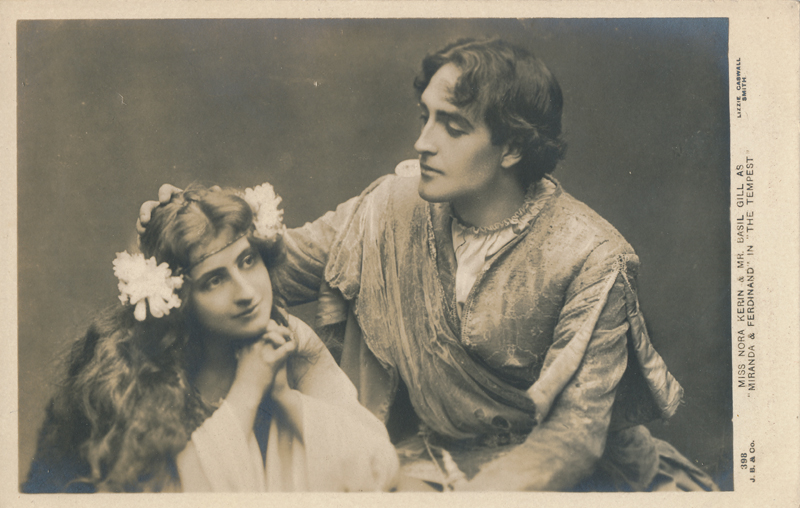
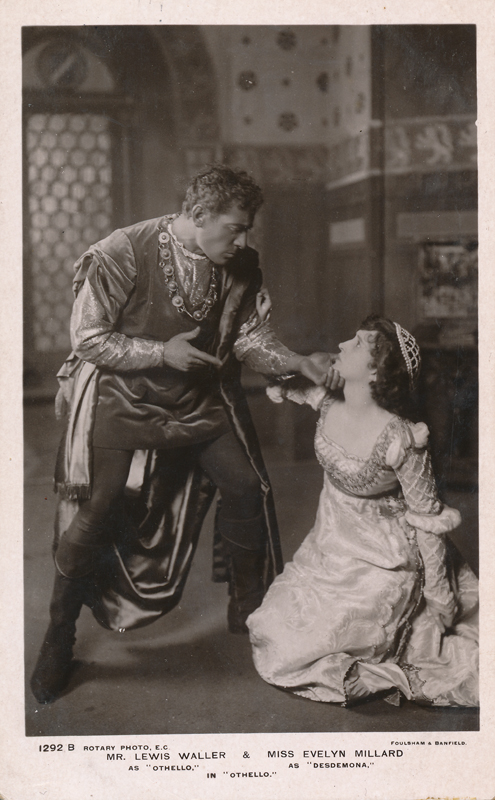
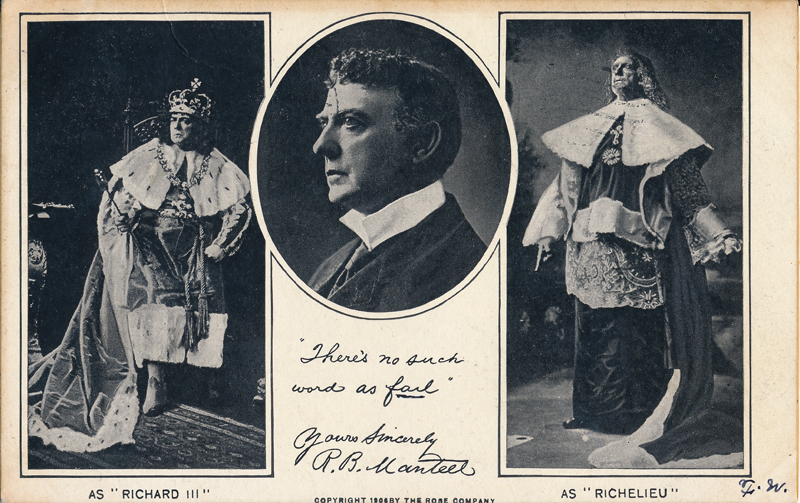
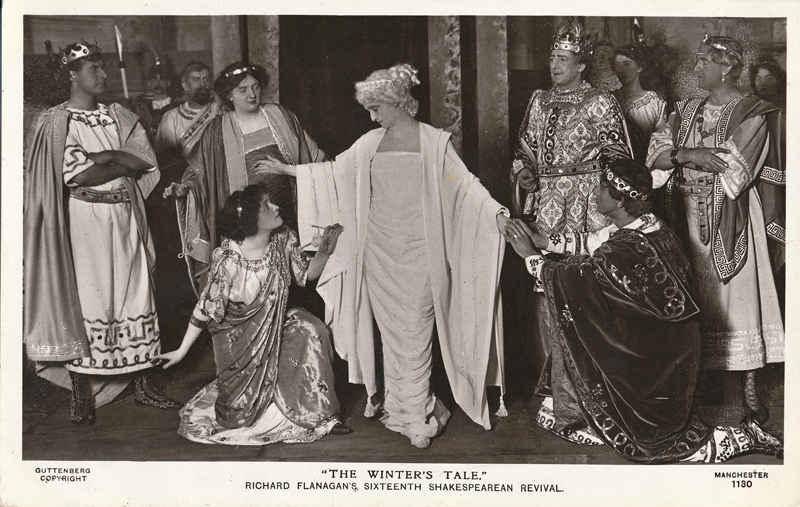
1,000 Vintage Postcards Show Famous Actors Performing Shakespeare’s Plays from 1880 to 1914

TEMP_Kerin_Gill_01_front

We’ll nev­er ful­ly know how any­thing looked in Shake­speare’s time, much less how the Bard’s own plays did when first per­formed on the stage of the Globe The­atre. Thor­ough schol­ar­ship of his­to­ry in gen­er­al and Shake­speare in par­tic­u­lar has enabled us to imag­ine and recon­struct such a sight with rea­son­able cred­i­bil­i­ty, but only so much direct accu­ra­cy, since the devel­op­ment of pho­tog­ra­phy would­n’t hap­pen for a cou­ple hun­dred years. But not long after human­i­ty got its pho­tog­ra­phers did those pho­tog­ra­phers begin tak­ing pic­tures of human­i­ty’s best-known dra­mas, and a set of par­tic­u­lar­ly vivid exam­ples sur­vives on Emory Uni­ver­si­ty’s relaunched web site Shake­speare and the Play­ers.

OTH_Waller_Millard_01_front

The site describes itself as “an online exhi­bi­tion of near­ly 1,000 post­cards fea­tur­ing many famous Eng­lish and Amer­i­can actors who per­formed Shakespeare’s plays for late Vic­to­ri­an and Edwar­dian audi­ences,” speci­fi­cial­ly from around 1880 to 1914. It “show­cas­es post­cards fea­tur­ing the dom­i­nat­ing actors of the time in roles from some of the more pop­u­lar and oft-per­formed plays, like Ham­let and Romeo & Juli­et, as well as those from plays not often per­formed, like Cym­be­line and The Mer­ry Wives of Wind­sor.”

R3_Mantell_R_01_front

Slate’s Rebec­ca Onion refers to schol­ar Lawrence W. Levine, who writes of how, in the 19th cen­tu­ry, “many Amer­i­cans, even if illit­er­ate, knew and loved Shake­speare’s plays; they were the source mate­r­i­al for end­less par­o­dies, skits, and songs on the Amer­i­can stage. Nor was Shake­speare fan­dom con­fined to the elite; in the first half of the 19th cen­tu­ry, the­ater ‘played the role that movies played in the first half of the twen­ti­eth … a kalei­do­scop­ic, demo­c­ra­t­ic insti­tu­tion pre­sent­ing a wide­ly vary­ing bill of fare to all class­es and socioe­co­nom­ic groups.’ ”

WINTERS_cast_01_front

Shake­speare and the Play­ers first went live back in the 1990s, a project of Eng­lish pro­fes­sor Har­ry Rusche, who has writ­ten an infor­ma­tive pref­ace for the site in its recent­ly redesigned form (with its images com­plete­ly re-dig­i­tized). “Post­cards on Shake­speare appeared in a dizzy­ing array of con­texts,” he explains, “some humor­ous and some seri­ous; these cards of actors were only a small part of Shake­speare and of the card-indus­try as a whole.” A “mania for col­lect­ing” swept up their con­tem­po­rary buy­ers, not to men­tion an appre­ci­a­tion for the stars of the day: “hand­some men and beau­ti­ful women are always pop­u­lar in any medi­um.”

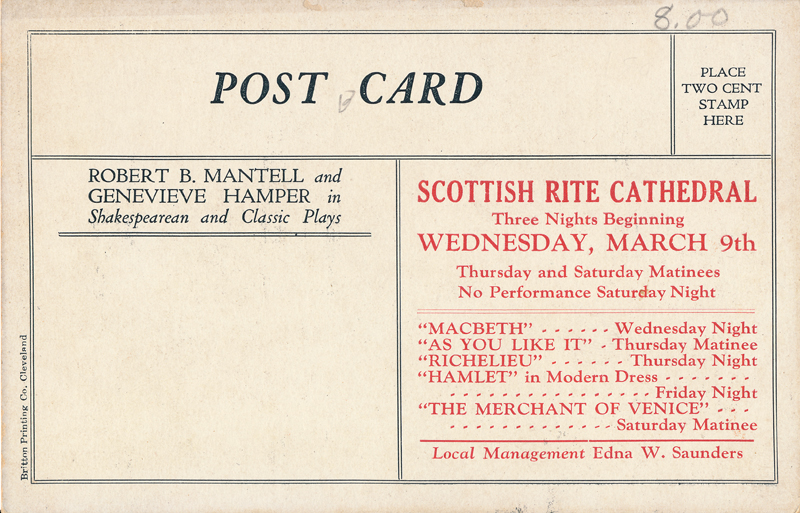
LEAR_Mantell_R_03_back

But plen­ty of them actu­al­ly used these post­cards for their intend­ed pur­pose, about which you can learn more on the site’s post­card backs sec­tion. It notes that “the philoso­pher Jacques Der­ri­da, in The Post­card, encour­ages us to read the two con­flict­ing, yet res­onat­ing scenes — in our case, the Shake­speare image and the hand­writ­ing on the back — two sides of the post­cards togeth­er,” an expe­ri­ence that may “be espe­cial­ly inter­est­ing to those of us born in the age of email, video con­fer­ences, Twit­ter, and text mes­sag­ing,” those who will now won­der when a set of Shake­speare emo­ji will come along, pro­vid­ing us a means of con­tin­u­ing to incor­po­rate these eter­nal char­ac­ters into our cor­re­spon­dence today.

via Slate

Relat­ed Con­tent:

Free Online Shake­speare Cours­es: Primers on the Bard from Oxford, Har­vard, Berke­ley & More

Read All of Shakespeare’s Plays Free Online, Cour­tesy of the Fol­ger Shake­speare Library

Shakespeare’s Rest­less World: A Por­trait of the Bard’s Era in 20 Pod­casts

Take a Vir­tu­al Tour of Shakespeare’s Globe The­atre

What Shake­speare Sound­ed Like to Shake­speare: Recon­struct­ing the Bard’s Orig­i­nal Pro­nun­ci­a­tion

Hear What Ham­let, Richard III & King Lear Sound­ed Like in Shakespeare’s Orig­i­nal Pro­nun­ci­a­tion

Drunk Shake­speare: The Trendy Way to Stage the Bard’s Plays in the US & the UK

Tol­stoy Calls Shake­speare an “Insignif­i­cant, Inartis­tic Writer”; 40 Years Lat­er, George Orwell Weighs in on the Debate

Based in Seoul, Col­in Mar­shall writes and broad­casts on cities, lan­guage, and style. He’s at work on a book about Los Ange­les, A Los Ange­les Primer, the video series The City in Cin­e­ma, the crowd­fund­ed jour­nal­ism project Where Is the City of the Future?, and the Los Ange­les Review of Books’ Korea Blog. Fol­low him on Twit­ter at @colinmarshall or on Face­book.

Helen Mirren Holds Her Own (and Then Some) in a Cringe-Inducingly Sexist TV Interview, 1975

Say what you will about Kim Kar­dashi­an. (Go ahead, I’ll wait.)

Yes, she may only be famous for being rich and famous—not a par­tic­u­lar­ly admirable cul­tur­al achieve­ment. But, “and this is the big word: B‑U-T-T‑,” says Helen Mir­ren, “it’s won­der­ful that you’re allowed to have a butt nowa­days… Thanks to Madame Kar­dashi­an.” Should you think Madame Kardashian’s butt-bar­ing shame­ful, you’ll have Dame Helen to deal with, and she may not deal with you kind­ly.

Though the Kar­dashi­ans are “a phe­nom­e­non I just don’t find inter­est­ing,” Mir­ren said recent­ly, she admires Kim and oth­er women in pop cul­ture for their body pos­i­tiv­i­ty: “When I was grow­ing up, it was thought to be unbe­liev­ably slut­tish to even have a bra strap show­ing. Every­thing was about women con­form­ing…. Women were con­trolled by being shamed…. I love shame­less women. Shame­less and proud.”

Mir­ren knows well of what she speaks. Though an accom­plished stage actress since the mid-six­ties, she has been pigeon­holed by crit­ics as a sex sym­bol through­out her career in the­atre and film. While per­form­ing with the Roy­al Shake­speare Com­pa­ny, one paper dubbed her “Stratford’s very own sex queen.” Mirren’s ear­ly film work includ­ed nude scenes in 1969’s Age of Con­sent and the 1979 Bob Guc­cione-pro­duced Caligu­la, and she has called the decade between those two films the most sex­ist time in recent his­to­ry, “worse than the 1940s or 50s,” she says, “It was hor­ri­ble. That decade, after the sex­u­al rev­o­lu­tion but before fem­i­nism, was per­ilous for women.”

Some evi­dence is on dis­play in the clips above from an infa­mous 1975 inter­view Mir­ren gave with a leer­ing Michael Parkin­son. The inter­view begins, at the top, with Parkin­son quot­ing sev­er­al crit­ics on Mirren’s “slut­tish eroti­cism,” among oth­er things. It quick­ly goes down­hill from there. Mir­ren shrugs off the sex­ist lin­go; Parkin­son can’t shut up about it, ask­ing if “what can best be described as your ‘equip­ment’ hin­ders you, per­haps, in that pur­suit” of being, he says, “in quotes a ‘seri­ous actress.’” Asked to clar­i­fy, he stum­bles, then says that her body “might detract from the per­for­mance, if you know what I mean.” She doesn’t.

Mir­ren doesn’t make this belit­tling sex­ism easy for Parkin­son, but he can’t seem to stop him­self. It’s hard to watch, but also inspir­ing to see her poise and con­fi­dence in the face of his boor­ish­ness. (She calls his ques­tions “bor­ing” and he final­ly vows to “leave off this sexy image thing,” though he comes back to it.) Yvonne Roberts in The Guardian calls the inter­view “far from unusu­al,” and the kind of thing that “gave Jim­my Sav­ile his cov­er.” She also says that though “Mir­ren is right on the impact of the sex­u­al rev­o­lu­tion,” she is “wrong on chronol­o­gy. The 70s was the decade when fem­i­nism took hold—and per­haps that’s why sex­ism became still more marked.” Pro­nounced back­lash always fol­lows social change, a phe­nom­e­non we’ve seen so often that it seems inevitable.

The Parkin­son inter­view was Mirren’s first talk show appear­ance, and she remem­bers being “ter­ri­fied” at the time. On re-watch­ing the inter­view in 2011, she said, “I actu­al­ly thought, bloody hell! I did real­ly well. I was so young and inex­pe­ri­enced. And he was such a f***ing sex­ist old fart. He was.” She remem­bers him as “an extreme­ly creepy inter­view­er” and told BUST mag­a­zine in 2010 she was “far more polite than I should have been.” Mir­ren got the chance to con­front Parkin­son about that creepy 1975 appear­ance when she returned as a guest on his show in 2006 to talk about her title role in The Queen.

In the clip above from that appear­ance, Parkin­son returns to the sub­ject of Mirren’s breasts in dis­cussing her lead part in the BBC police pro­ce­dur­al series Prime Sus­pect. She forth­right­ly takes him to task. “I’m glad you men­tioned that, Michael,” she says, “because you can’t resist, can you?” Of the 1975 inter­view, she says, “I hat­ed you. I thought you were a sex­ist per­son.” Parkin­son hasn’t changed, it’s clear, but Mir­ren says she’s “mel­lowed.” The exchange is a lot less awk­ward, per­haps because Parkin­son knows he can’t bul­ly Mir­ren the movie star as he did the young stage actress.

Though Mir­ren now says she’s hap­py to no longer be a sex sym­bol, she also express­es admi­ra­tion for “women who have claimed their own bod­ies…. They all raise their mid­dle fin­gers to this epi­thet of ‘slut.’ They wear what they want to wear, behave as they want to behave.” Though she did not have chil­dren, she tells BUST she would have taught her daugh­ter to “say ‘f*ck off’ in the face of sex­ism”: “It’s quite valu­able to have the courage and the con­fi­dence to say, ‘No, f*ck off, leave me alone, thank you very much.” Sad­ly, as we see again and again, in a cul­ture that still shames and deval­ues women, and enables rape and sex­u­al vio­lence, that courage and con­fi­dence, incred­i­bly valu­able as it is, isn’t enough to stop con­tin­ued ram­pant sex­ism and abuse in the enter­tain­ment indus­try and every­where else.

Relat­ed Con­tent:

Helen Mir­ren Now Teach­ing Her First Online Course on Act­ing

Down­load All 239 Issues of Land­mark UK Fem­i­nist Mag­a­zine Spare Rib Free Online

1933 Arti­cle on Fri­da Kahlo: “Wife of the Mas­ter Mur­al Painter Glee­ful­ly Dab­bles in Works of Art”

Simone de Beau­voir Tells Studs Terkel How She Became an Intel­lec­tu­al and Fem­i­nist (1960)

Josh Jones is a writer and musi­cian based in Durham, NC. Fol­low him at @jdmagness

Thomas Edison’s Silent Film of the “Fartiste” Who Delighted Crowds at Le Moulin Rouge (1900)

In 1900, Thomas Edi­son trav­eled to Paris to doc­u­ment the many won­ders of the Expo­si­tion Uni­verselle, and the city itself. Among the sights cap­tured with his kine­to­scope cam­eras were the Expo’s mov­ing side­walks, the Champs-Élysées, and the pre­vi­ous Expo­si­tion Uni­verselle’s crown jew­el, the Eif­fel Tow­er, now eleven years old.

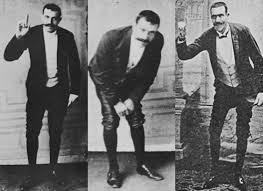
It wasn’t all so high-mind­ed. Edi­son and his kine­to­scope also caught a per­for­mance by for­mer Moulin Rouge star, Joseph Pujol, aka Le Pétomane, above. This ele­gant­ly attired gen­tle­men achieved fame and for­tune with a series of impres­sions, car­ried out by a rather eccen­tric ori­fice. He was not so much artiste as fartiste, a title he wore with pride.

Pujol claimed to have dis­cov­ered his unusu­al tal­ent as a child, and soon set about achiev­ing dif­fer­ent effects by using his abdom­i­nal mus­cles to expel not gas, but odor­less air. By vary­ing the pres­sure, he was able to play sim­ple tunes. By the time he turned 30, his act had expand­ed to include imper­son­ations of celebri­ties, musi­cal instru­ments, birds, a thun­der­storm and such stock char­ac­ters as a ner­vous bride. His grand finale includ­ed such feats as blow­ing out can­dles, smok­ing cig­a­rettes and play­ing an oca­ri­na (below), all with the aid of a rub­ber hose insert­ed into his anus via a mod­est trouser slit.

oc-fluted-top

What a tragedy that Edison’s short film is silent! No live piano accom­pa­ni­ment could do jus­tice to this mag­i­cal artis­tic fruit, and if there were oth­er record­ings of Pujol, they’ve been lost to his­to­ry.

He lives on in the imag­i­na­tions of artists who fol­lowed him.

Actor Ugo Tog­nazzi, below, assumed the title role in a 1983 Ital­ian lan­guage fea­ture.

Direc­tor Mel Brooks inject­ed a bit of sub­tle­ty into Blaz­ing Sad­dles’  beans-around-the-camp­fire humor when he appeared as a char­ac­ter named Gov­er­nor William J. LeP­etomane.

Sad­ly, Pujol was left on the cut­ting room floor of direc­tor Baz Luhrmann’s Moulin Rouge, but all is not lost. Report­ed­ly, John­ny Depp has indi­cat­ed inter­est in bring­ing this his­toric fig­ure back to life. (Gen­tle­men, start your screen­plays…)

Fartiste

Then there is the half hour biopic, below, direct­ed by Mon­ty Python alum Ian McNaughton and star­ring Leonard Rossiter as Pujol. Pre­pare to hear the open­ing ses­sion of the Con­gress of Vien­na, a toad, and a four-part har­mo­ny.

via Messy Nessy Chic

Relat­ed Con­tent:

Hear Thomas Edison’s Creepy Talk­ing Dolls: An Inven­tion That Scared Kids & Flopped on the Mar­ket

Thomas Edison’s Box­ing Cats (1894), or Where the LOL­Cats All Began

Thomas Edi­son Recites “Mary Had a Lit­tle Lamb” in Ear­ly Voice Record­ing

Ayun Hal­l­i­day is an author, illus­tra­tor, and Chief Pri­ma­tol­o­gist of the East Vil­lage Inky zine. Fol­low her @AyunHalliday

Sir Ian McKellen Releases New Apps to Make Shakespeare’s Plays More Enjoyable & Accessible

tempest app

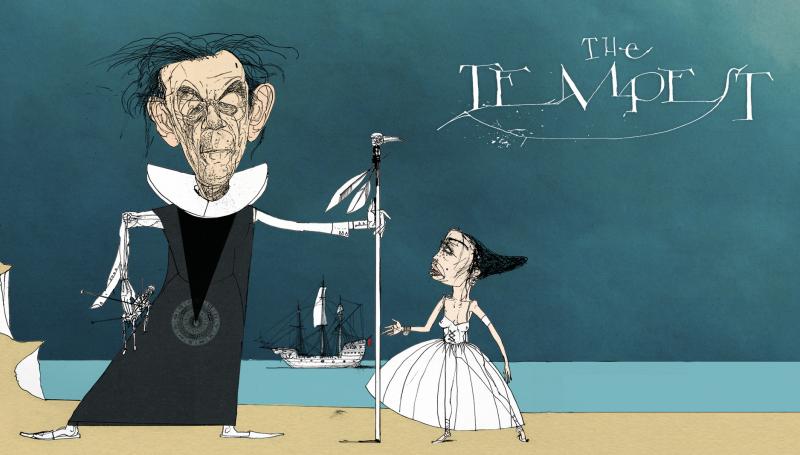
FYI: Ian McK­ellen, who first made his rep­u­ta­tion per­form­ing at the Roy­al Shake­speare Com­pa­ny in the 1970s and 80s, has just released the first of a series of iPad apps meant to make Shake­speare’s plays more acces­si­ble, espe­cial­ly for high school and col­lege stu­dents.

As McK­ellen explains above, Shake­speare’s plays were orig­i­nal­ly meant to be seen per­formed live in a the­atre, not read as books. And so these apps fea­ture actors per­form­ing dra­mat­ic scenes from the plays, while text scrolls by. They’ve just launched the first of 37 apps. It’s devot­ed to The Tem­pest, runs $5.99 on iTunes, and frankly seems well worth the price. Bene­dict Cum­ber­batch likes it. See below.

The app also includes these fea­tures:

  • The full text of The Tem­pest as pub­lished in the First Folio.
  • A full dig­i­tal ver­sion of Arden Shake­speare The Tem­pest.
  • The abil­i­ty to switch between three dif­fer­ent lev­els of notes depend­ing on the lev­el of reader’s needs.
  • A full break­down and expla­na­tion of every char­ac­ter and all of their lines across every scene.
  • A linked his­tor­i­cal time line of Shake­speare’s life, his plays, his the­atres, and con­tem­po­rary con­text to put it all into per­spec­tive.
  • Video expla­na­tions and dis­cus­sions by both Sir Ian McK­ellen and Pro­fes­sor Sir Jonathan Bate on char­ac­ters, themes, and the mean­ing of the play.
  • A full “play at a glance” with illus­tra­tions and sum­maries to explain the play’s plot with key quotes and events.
  • A his­to­ry of all the major pro­duc­tions of The Tem­pest from the 17th cen­tu­ry to the present day.
  • The option to make notes, copy and high­light text that can be col­lect­ed, cor­re­lat­ed and export­ed for lat­er use.
  • The option to search the play’s full text and essays.

Keep your eye on Heuris­tic Shake­speare’s iTunes site for new Shake­speare apps down the line.

Relat­ed Con­tent:

Ian McK­ellen Stars in King Lear

Sir Ian McK­ellen Puts on a Daz­zling One-Man Shake­speare Show

A 68 Hour Playlist of Shakespeare’s Plays Being Per­formed by Great Actors: Giel­gud, McK­ellen & More

by | Permalink | Make a Comment ( 19 ) |

30 Days of Shakespeare: One Reading of the Bard Per Day, by The New York Public Library, on the 400th Anniversary of His Death

April 23 is the 400th anniver­sary of Shakespeare’s death, an event so far in the past that it can be cel­e­brat­ed as a sec­ond birth­day of sorts.

The New York Pub­lic Library’s con­tri­bu­tion to the fes­tiv­i­ties has an endear­ing­ly home­made qual­i­ty.

This august insti­tu­tion boasts over 500 audio record­ings of the Bard’s work, not to men­tion 40 years’ worth of the New York Shake­speare Fes­ti­val’s records. But rather than draw­ing on the col­lec­tion to high­light the work of such supreme inter­preters as John Giel­gud, John Bar­ry­more, or Edwin Booth, the library has invit­ed thir­ty of its staffers to recite their favorite Shake­speare­an speech, mono­logue, or son­net.

Sean Fer­gu­son, of Chinatown’s Chatham Square branch, tack­les the open­ing of Richard III from a dig­ni­fied remove.

Grand Central’s man­ag­ing librar­i­an, Gen­oveve Stow­ell, goes for it with a lusty ren­di­tion of King Lear’s third act rage against the storm.

Liz Den­linger, who helms the main branch’s Carl H. Pforzheimer Col­lec­tion of Shel­ley and His Cir­cle went with Shakespeare’s tem­po­ral­ly-obsessed 12th sonnet.

Make no mis­take these are librar­i­ans, not trained actors, but their ama­teur­ish­ness is part of the fun.

The library plans to release one record­ing dai­ly through­out the month of April, adding to the playlist until the tracks num­ber thir­ty.

We are hop­ing that the pro­jec­t’s archi­tects will define “staff” to include sup­port­ing depart­ments. We would love to hear a mem­ber of the secu­ri­ty or main­te­nance team take a stab—pardon the pun—at Oth­el­lo or Juli­et.

For more Shake­speare read­ings, see our post: A 68 Hour Playlist of Shakespeare’s Plays Being Per­formed by Great Actors: Giel­gud, McK­ellen & More.

Relat­ed Con­tent:

The Late, Great Alan Rick­man Reads Shake­speare, Proust & Thomas Hardy

Watch Very First Film Adap­ta­tions of Shakespeare’s Plays: King John, The Tem­pest, Richard III & More (1899–1936)

Read All of Shakespeare’s Plays Free Online, Cour­tesy of the Fol­ger Shake­speare Library

Ayun Hal­l­i­day is an author, illus­tra­tor, and Chief Pri­ma­tol­o­gist of the East Vil­lage Inky zine. Her 15-year-old son will be play­ing Puck lat­er this month in the world pre­miere of Mark York’s musi­cal stag­ing of A Mid­sum­mer Night’s Dream. Mean­while, his moth­er dreams of being cast as the Nurse. Fol­low her @AyunHalliday

Hear Oscar Wilde’s The Importance of Being Earnest Performed by Sir John Gielgud & Other Legends (1953)

importance of being earnest

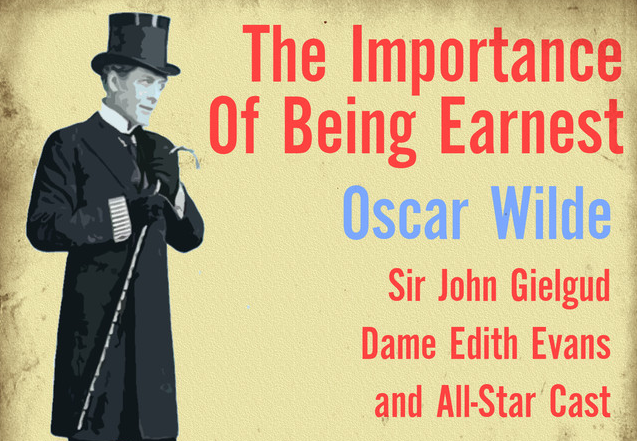
We here at Open Cul­ture hard­ly have to tell you that, when a play often called the wit­ti­est com­e­dy in the Eng­lish lan­guage meets the Eng­lish actor often called the great­est of his gen­er­a­tion, you won’t want to miss the result­ing per­for­mance. Unfor­tu­nate­ly, if you want­ed to catch Sir John Giel­gud’s turn as Jack Wor­thing in Oscar Wilde’s The Impor­tance of Being Earnest, you’d have had to do so in the 1930s or 1940s. Though it came decades after the Vic­to­ri­an-era play’s 1895 debut in Lon­don (as well as Wilde’s own death), it defined the sen­si­bil­i­ty of this “Triv­ial Com­e­dy for Seri­ous Peo­ple” for gen­er­a­tions to come.

That owes not just to Giel­gud’s Jack Wor­thing, but to Dame Edith Evans’ Lady Brack­nell. Look­ing back at The Impor­tance of Being Earnest’s 1939 revival at the Globe, the Guardian’s Saman­tha Ellis quotes a con­tem­po­rary Times crit­ic describ­ing Evans as “born to play the part … Her appear­ance is mas­ter­ly — per­fect­ly uphol­stered, with a fem­i­nine art now lost, before and behind; and her voice is cor­re­spond­ing­ly uphol­stered so that every phrase, harsh or drawl­ing, comes from the com­fort­able heart of Lady Brack­nel­l’s arro­gance.” The two togeth­er gave full life to the dynam­ic Wilde wrote for the char­ac­ters, seem­ing­ly under­stand­ing well the pains he took to craft a per­fect union of form and sub­stance, rais­ing social triv­i­al­i­ty to a kind of artis­tic sub­lim­i­ty.

But while the win­dow to see Giel­gud and Evans per­form live on stage has long since closed, you can still savor their mas­ter­ful exchange of these seri­ous­ly light lines — in this piece of the­ater where words are all — through this 1953 record­ing avail­able on Spo­ti­fy. (If you don’t have Spo­ti­fy’s free soft­ware, you can down­load it here. You can also hear the play on Youtube: Act 1 above, Act 2 here, Act 3 here.) Before these two mas­ter thes­pi­ans took it on, some crit­ics won­dered whether Wilde’s sig­na­ture work as a play­wright had grown dat­ed, the years hav­ing exposed its emp­ty friv­o­li­ty. But now that even more years have passed, The Impor­tance of Being Earnest has under­gone count­less new pro­duc­tions, adap­ta­tions, and inter­pre­ta­tions, becom­ing the most quot­ed Eng­lish-lan­guage play after the works of Shake­speare and, in a way, prov­ing one of its most oft-quot­ed lines: “In mat­ters of grave impor­tance, style, not sin­cer­i­ty, is the vital thing.”

You can find works by Oscar Wilde in our col­lec­tions of Free eBooks and Free Audio Books.

Relat­ed Con­tent:

Alice’s Adven­tures in Won­der­land Read by Sir John Giel­gud: A Great Way to Cel­e­brate the Novel’s 150th Anniver­sary

A 68 Hour Playlist of Shakespeare’s Plays Being Per­formed by Great Actors: Giel­gud, McK­ellen & More

Stephen Fry Reads Oscar Wilde’s Children’s Sto­ry “The Hap­py Prince”

Based in Seoul, Col­in Mar­shall writes and broad­casts on cities, lan­guage, and style. He’s at work on a book about Los Ange­les, A Los Ange­les Primer, the video series The City in Cin­e­ma, the crowd­fund­ed jour­nal­ism project Where Is the City of the Future?, and the Los Ange­les Review of Books’ Korea Blog. Fol­low him on Twit­ter at @colinmarshall or on Face­book.

Alan Rickman Recites “If Death Is Not the End,” a Moving Poem by Robyn Hitchcock

Odd­ball singer-song­writer Robyn Hitch­cock is a man who knows how to mark mile­stones. Back in 2003, he staged a con­cert at London’s Queen Eliz­a­beth Hall in hon­or of his own 50th birth­day, and in so doing, cre­at­ed a time release mile­stone of sorts for his friend, actor Alan Rick­man.

Mark­ing a half-cen­tu­ry with pas­sive aggres­sive-gag gifts and cards may suf­fice for the rab­ble, but a lyri­cist as gift­ed as Hitch­cock deserves bet­ter. No one can deny Rick­man of fail­ing to deliv­er, when he regaled the crowd in Queen Eliz­a­beth Hall with a recita­tion of Hitchcock’s own poem, “If Death Is Not the End,” above.

It’s an inim­itable per­for­mance that becomes all the more poignant when one lis­tens to it again, fol­low­ing Rickman’s recent death at the age of 69:

Life is what hap­pened to the dead.

For­ev­er we do not exist

Except for now.

Birth­day Boy Hitch­cock cap­tured Rickman’s appeal in a trib­ute post­ed to his Face­book page:

His morose erot­ic drawl and glo­ri­ous­ly dis­dain­ful demeanor shel­tered a pas­sion­ate artist and made for a charis­mat­ic per­former whom I was proud to have as a friend. I just can’t believe I’ll nev­er see him again.

As the poem says, he was made of life.

If Death Is Not the End

If death is not the end, I’d like to know what is.

For all eter­ni­ty we don’t exist,

except for now.

In my gumshoe mac, I shuf­fled to the clifftop,

Stood well back,

and struck a match to light my life;

And as it flared it fell in dark­ness

Light­ing noth­ing but itself.

I saw my life fall and thought:

Well, kiss my physics!

Time is over, or it’s not,

But this I know:

Life pass­es through us like the blade

Of bam­boo grow­ing through the pris­on­er pegged down in the glade

It pierces your blood, your scream­ing head -

Life is what hap­pened to the dead.

For­ev­er we do not exist

Except for now.

Life pass­es through us like a beam

Of char­coal green — a gold­en gleam,

The oppo­site of how it seems:

It’s not you that goes through life

- life is the knife that cuts your dream

Around the seam

And leaves you turned on in the stream, laugh­ing with your mouth

open,

Until the stream is gone,

Leav­ing you cracked mud,

Not even there to be absent,

From the heart­beat of a dying fish.

In bed, upstairs, I feel your pulse run with the clock

And reach your hand

And lock us with our fin­gers

As if we were bump­ing above the Pole.

Yet I know by dawn

Your hand will be dry bone

I’ll have slept through your good­bye, no mat­ter how long I wake.

Life winds on,

Through Cheri and Karl who can no longer smell choco­late,

Or see with won­der wind inflate the sail,

Or answer mail

Life flies on

Through Katy who was Cather­ine but is bound for Kate

Who looks over her shoul­der at the demon Azmodeus,

And sees the Dai­ly Mail

(I clutch my purse. I had it just now.)

Life slices through

The frozen but­ter in the Alpine wreck.

(I found your pho­to upside down

I nev­er kissed a girl so long,

So long, so love­ly or so wrong)

Life is what kills you in the end

And I can cry

But you won’t be there to be sor­ry

You were made of life

For ever we did not exist

We woke and for a sec­ond kissed.

via Audi­boom

Relat­ed Con­tent:

The Late, Great Alan Rick­man Reads Shake­speare, Proust & Thomas Hardy

Samuel Beck­ett Play Brought to Life in an Eerie Short Film Star­ring Alan Rick­man & Kristin Scott Thomas

Ayun Hal­l­i­day is an author, illus­tra­tor, and Chief Pri­ma­tol­o­gist of the East Vil­lage Inky zine. Her play, Fawn­book, opens in New York City lat­er this fall. Fol­low her @AyunHalliday

« Go BackMore in this category... »
Quantcast