Ernest Hemingway Creates a Reading List for a Young Writer, 1934

Hemingway Reading List

In the spring of 1934, a young man who want­ed to be a writer hitch­hiked to Flori­da to meet his idol, Ernest Hem­ing­way.

Arnold Samuel­son was an adven­tur­ous 22-year-old. He had been born in a sod house in North Dako­ta to Nor­we­gian immi­grant par­ents. He com­plet­ed his course­work in jour­nal­ism at the Uni­ver­si­ty of Min­neso­ta, but refused to pay the $5 fee for a diplo­ma. After col­lege he want­ed to see the coun­try, so he packed his vio­lin in a knap­sack and thumbed rides out to Cal­i­for­nia. He sold a few sto­ries about his trav­els to the Sun­day Min­neapo­lis Tri­bune.

In April of ’34 Samuel­son was back in Min­neso­ta when he read a sto­ry by Hem­ing­way in Cos­mopoli­tan, called “One Trip Across.” The short sto­ry would lat­er become part of Hem­ing­way’s fourth nov­el, To Have and Have Not. Samuel­son was so impressed with the sto­ry that he decid­ed to trav­el 2,000 miles to meet Hem­ing­way and ask him for advice. “It seemed a damn fool thing to do,” Samuel­son would lat­er write, “but a twen­ty-two-year-old tramp dur­ing the Great Depres­sion did­n’t have to have much rea­son for what he did.”

And so, at the time of year when most hobos were trav­el­ing north, Samuel­son head­ed south. He hitched his way to Flori­da and then hopped a freight train from the main­land to Key West. Rid­ing on top of a box­car, Samuel­son could not see the rail­road tracks under­neath him–only miles and miles of water as the train left the main­land. “It was head­ed south over the long bridges between the keys and final­ly right out over the ocean,” writes Samuel­son. “It could­n’t hap­pen now–the tracks have been torn out–but it hap­pened then, almost as in a dream.”

When Samuel­son arrived in Key West he dis­cov­ered that times were espe­cial­ly hard there. Most of the cig­ar fac­to­ries had shut down and the fish­ing was poor. That night he went to sleep on the turtling dock, using his knap­sack as a pil­low. The ocean breeze kept the mos­qui­tos away. A few hours lat­er a cop woke him up and invit­ed him to sleep in the bull pen of the city jail. “I was under arrest every night and released every morn­ing to see if I could find my way out of town,” writes Samuel­son. After his first night in the mos­qui­to-infest­ed jail, he went look­ing for the town’s most famous res­i­dent.

When I knocked on the front door of Ernest Hem­ing­way’s house in Key West, he came out and stood square­ly in front of me, squin­ty with annoy­ance, wait­ing for me to speak. I had noth­ing to say. I could­n’t recall a word of my pre­pared speech. He was a big man, tall, nar­row-hipped, wide-shoul­dered, and he stood with his feet spread apart, his arms hang­ing at his sides. He was crouched for­ward slight­ly with his weight on his toes, in the instinc­tive poise of a fight­er ready to hit.

“What do you want?” said Hem­ing­way. After an awk­ward moment, Samuel­son explained that he had bummed his way from Min­neapo­lis just to see him. “I read your sto­ry ‘One Trip Across’ in Cos­mopoli­tan. I liked it so much I came down to have a talk with you.” Hem­ing­way seemed to relax. “Why the hell did­n’t you say you just want­ed to chew the fat? I thought you want­ed to vis­it.” Hem­ing­way told Samuel­son he was busy, but invit­ed him to come back at one-thir­ty the next after­noon.

After anoth­er night in jail, Samuel­son returned to the house and found Hem­ing­way sit­ting in the shade on the north porch, wear­ing kha­ki pants and bed­room slip­pers. He had a glass of whiskey and a copy of the New York Times. The two men began talk­ing. Sit­ting there on the porch, Samuel­son could sense that Hem­ing­way was keep­ing him at a safe dis­tance: “You were at his home but not in it. Almost like talk­ing to a man out on a street.” They began by talk­ing about the Cos­mopoli­tan sto­ry, and Samuel­son men­tioned his failed attempts at writ­ing fic­tion. Hem­ing­way offered some advice.

“The most impor­tant thing I’ve learned about writ­ing is nev­er write too much at a time,” Hem­ing­way said, tap­ping my arm with his fin­ger. “Nev­er pump your­self dry. Leave a lit­tle for the next day. The main thing is to know when to stop. Don’t wait till you’ve writ­ten your­self out. When you’re still going good and you come to an inter­est­ing place and you know what’s going to hap­pen next, that’s the time to stop. Then leave it alone and don’t think about it; let your sub­con­scious mind do the work. The next morn­ing, when you’ve had a good sleep and you’re feel­ing fresh, rewrite what you wrote the day before. When you come to the inter­est­ing place and you know what is going to hap­pen next, go on from there and stop at anoth­er high point of inter­est. That way, when you get through, your stuff is full of inter­est­ing places and when you write a nov­el you nev­er get stuck and you make it inter­est­ing as you go along.”

Hem­ing­way advised Samuel­son to avoid con­tem­po­rary writ­ers and com­pete only with the dead ones whose works have stood the test of time. “When you pass them up you know you’re going good.” He asked Samuel­son what writ­ers he liked. Samuel­son said he enjoyed Robert Louis Steven­son’s Kid­napped and Hen­ry David Thore­au’s Walden. “Ever read War and Peace?” Hem­ing­way asked. Samuel­son said he had not. “That’s a damned good book. You ought to read it. We’ll go up to my work­shop and I’ll make out a list you ought to read.”

His work­shop was over the garage in back of the house. I fol­lowed him up an out­side stair­way into his work­shop, a square room with a tile floor and shut­tered win­dows on three sides and long shelves of books below the win­dows to the floor. In one cor­ner was a big antique flat-topped desk and an antique chair with a high back. E.H. took the chair in the cor­ner and we sat fac­ing each oth­er across the desk. He found a pen and began writ­ing on a piece of paper and dur­ing the silence I was very ill at ease. I real­ized I was tak­ing up his time, and I wished I could enter­tain him with my hobo expe­ri­ences but thought they would be too dull and kept my mouth shut. I was there to take every­thing he would give and had noth­ing to return.

Hem­ing­way wrote down a list of two short sto­ries and 14 books and hand­ed it to Samuel­son. Most of the texts you can find in our col­lec­tion, 800 Free eBooks for iPad, Kin­dle & Oth­er Devices. If the texts don’t appear in our eBook col­lec­tion itself, you’ll find a link to the text direct­ly below.

  • The Blue Hotel” by Stephen Crane
  • The Open Boat” by Stephen Crane
  • Madame Bovary by Gus­tave Flaubert
  • Dublin­ers by James Joyce
  • The Red and the Black by Stend­hal
  • Of Human Bondage by Som­er­set Maugh­am
  • Anna Karen­i­na by Leo Tol­stoy
  • War and Peace by Leo Tol­stoy
  • Bud­den­brooks by Thomas Mann
  • Hail and Farewell by George Moore
  • The Broth­ers Kara­ma­zov by Fyo­dor Dos­toyevsky
  • The Oxford Book of Eng­lish Verse
  • The Enor­mous Room by E.E. Cum­mings
  • Wuther­ing Heights by Emi­ly Bronte
  • Far Away and Long Ago by W.H. Hud­son
  • The Amer­i­can by Hen­ry James

Hem­ing­way reached over to his shelf and picked up a col­lec­tion of sto­ries by Stephen Crane and gave it to Samuel­son. He also hand­ed him a copy of his own nov­el,  A Farewell to Arms. “I wish you’d send it back when you get through with it,” Hem­ing­way said of his own book. “It’s the only one I have of that edi­tion.” Samuel­son grate­ful­ly accept­ed the books and took them back to the jail that evening to read. “I did not feel like stay­ing there anoth­er night,” he writes, “and the next after­noon I fin­ished read­ing A Farewell to Arms, intend­ing to catch the first freight out to Mia­mi. At one o’clock, I brought the books back to Hem­ing­way’s house.” When he got there he was aston­ished by what Hem­ing­way said.

“There is some­thing I want to talk to you about. Let’s sit down,” he said thought­ful­ly. “After you left yes­ter­day, I was think­ing I’ll need some­body to sleep on board my boat. What are you plan­ning on now?”

“I haven’t any plans.”

“I’ve got a boat being shipped from New York. I’ll have to go up to Mia­mi Tues­day and run her down and then I’ll have to have some­one on board. There would­n’t be much work. If you want the job, you could keep her cleaned up in the morn­ings and still have time for your writ­ing.”

“That would be swell,” replied Samuel­son. And so began a year-long adven­ture as Hem­ing­way’s assis­tant. For a dol­lar a day, Samuel­son slept aboard the 38-foot cab­in cruis­er Pilar and kept it in good con­di­tion. When­ev­er Hem­ing­way went fish­ing or took the boat to Cuba, Samuel­son went along. He wrote about his experiences–including those quot­ed and para­phrased here–in a remark­able mem­oir, With Hem­ing­way: A Year in Key West and Cuba. Dur­ing the course of that year, Samuel­son and Hem­ing­way talked at length about writ­ing. Hem­ing­way pub­lished an account of their dis­cus­sions in a 1934 Esquire arti­cle called “Mono­logue to the Mae­stro: A High Seas Let­ter.” (Click here to open it as a PDF.) Hem­ing­way’s arti­cle with his advice to Samuel­son was one source for our Feb­ru­ary 19 post, “Sev­en Tips From Ernest Hem­ing­way on How to Write Fic­tion.”

When the work arrange­ment had been set­tled, Hem­ing­way drove the young man back to the jail to pick up his knap­sack and vio­lin. Samuel­son remem­bered his feel­ing of tri­umph at return­ing with the famous author to get his things. “The cops at the jail seemed to think noth­ing of it that I should move from their mos­qui­to cham­ber to the home of Ernest Hem­ing­way. They saw his Mod­el A road­ster out­side wait­ing for me. They saw me come out of it. They saw Ernest at the wheel wait­ing and they nev­er said a word.”

Relat­ed Con­tent

18 (Free) Books Ernest Hem­ing­way Wished He Could Read Again for the First Time

Sev­en Tips From Ernest Hem­ing­way on How to Write Fic­tion

Christo­pher Hitchens Cre­ates a Read­ing List for Eight-Year-Old Girl

Neil deGrasse Tyson Lists 8 (Free) Books Every Intel­li­gent Per­son Should Read

Ernest Hemingway’s Favorite Ham­burg­er Recipe

7 Nobel Speeches by 7 Great Writers: Hemingway, Faulkner, and More

William Faulkn­er, 1949:

Almost every year since 1901, the Swedish Acad­e­my has appor­tioned one fifth of the inter­est from the for­tune bequeathed by dyna­mite inven­tor Alfred Nobel to hon­or, as Nobel said in his will, “the per­son who shall have pro­duced in the field of lit­er­a­ture the most out­stand­ing work in an ide­al direc­tion.”

Many of the great­est writ­ers of the past 112 years have received the Nobel Prize in Lit­er­a­ture, but there have been some glar­ing omis­sions right from the start. When Leo Tol­stoy was passed over in 1901 (the prize went to the French poet Sul­ly Prud­homme) he was so offend­ed he refused lat­er nom­i­na­tions. The list of great writ­ers who were alive after 1901 but nev­er received the prize is jaw-drop­ping. In addi­tion to Tol­stoy, it includes James Joyce, Vir­ginia Woolf, Mark Twain, Joseph Con­rad, Anton Chekhov, Mar­cel Proust, Hen­ry James, Hen­rik Ibsen, Émile Zola, Robert Frost, W.H. Auden, F. Scott Fitzger­ald, Jorge Luis Borges and Vladimir Nabokov.

But the Nobel com­mit­tee has hon­ored many wor­thy writ­ers, and today we’ve gath­ered togeth­er sev­en speech­es by sev­en lau­re­ates. Our choice was restrict­ed by the lim­i­ta­tions of what is avail­able online in Eng­lish. We have focused on the short speech­es tra­di­tion­al­ly giv­en on Decem­ber 10 of every year at the Nobel ban­quet in Stock­holm. With the excep­tion of short excerpts from Bertrand Rus­sel­l’s lec­ture, we have passed over the longer Nobel lec­tures (which typ­i­cal­ly run about 40 min­utes) pre­sent­ed to the Swedish Acad­e­my on a dif­fer­ent day than the ban­quet.

We begin above with one of the most often-quot­ed Nobel speech­es: William Faulkn­er’s elo­quent accep­tance of the 1949 prize. There was actu­al­ly no prize in lit­er­a­ture giv­en in 1949, but the com­mit­tee decid­ed to award that year’s medal 12 months lat­er to Faulkn­er, cit­ing his “pow­er­ful and artis­ti­cal­ly unique con­tri­bu­tion to the mod­ern Amer­i­can nov­el.” Faulkn­er gave his speech on Decem­ber 10, 1950, in the same cer­e­mo­ny with Bertrand Rus­sell. Unfor­tu­nate­ly the audio cuts off just before the fin­ish. To fol­low along and read the miss­ing end­ing, click here to open the full text in a new win­dow. Faulkn­er stum­bles a few times dur­ing his deliv­ery. You can lis­ten to his smoother 1954 read­ing of a pol­ished ver­sion of the speech here.

Bertrand Rus­sell, 1950:

The British logi­cian and philoso­pher Bertrand Rus­sell was one of sev­er­al prize-win­ners in lit­er­a­ture who were pri­mar­i­ly known for their work in oth­er fields. (The short list includes states­man Win­ston Churchill and philoso­pher Hen­ri Berg­son.) In addi­tion to his ground-break­ing con­tri­bu­tions to math­e­mat­ics and ana­lyt­ic phi­los­o­phy, Rus­sell wrote many books for the gen­er­al read­er. In 1950 the Nobel com­mit­tee cit­ed his “var­ied and sig­nif­i­cant writ­ings in which he cham­pi­ons human­i­tar­i­an ideals and free­dom of thought.” Above are two short audio clips from Rus­sel­l’s Decem­ber 11, 1950 Nobel lec­ture, “What Desires are Polit­i­cal­ly Impor­tant?” You can click here to open the full text in a new win­dow.

Ernest Hem­ing­way, 1954:

The Amer­i­can writer Ernest Hem­ing­way was award­ed the 1954 prize “for his mas­tery of the art of nar­ra­tive, most recent­ly demon­strat­ed in The Old Man and the Sea, and for the influ­ence that he has exert­ed on con­tem­po­rary style.” Hem­ing­way was not feel­ing well enough in Decem­ber of 1954 to trav­el to Stock­holm, so he asked John C. Cabot, Unit­ed States Ambas­sador to Swe­den, to deliv­er the speech for him. For­tu­nate­ly we do have this record­ing from some­time that month of Hem­ing­way read­ing his speech at a radio sta­tion in Havana, Cuba. You can click here to open the full text in a new win­dow.

John Stein­beck, 1962:

The Amer­i­can writer John Stein­beck, author of The Grapes of Wrath and Of Mice and Men, was award­ed the Nobel in 1962 “for his real­is­tic and imag­i­na­tive writ­ings, com­bin­ing as they do sym­pa­thet­ic humor and keen social per­cep­tion.” To read along as you watch Stein­beck give his speech, click here to open the text in a new win­dow.

V.S. Naipaul, 2001:

Jump­ing ahead from 1962 all the way to 2001, we have video of the speech giv­en by the Trinida­di­an-British writer V.S. Naipaul, author of such books as In a Free State and A Bend in the Riv­er. Naipaul was cit­ed by the Nobel com­mit­tee “for hav­ing unit­ed per­cep­tive nar­ra­tive and incor­rupt­ible scruti­ny in works that com­pel us to see the pres­ence of sup­pressed his­to­ries.” You can click here to open a text of Naipaul’s ban­quet speech in a new win­dow.

Orhan Pamuk, 2006:

The Turk­ish writer Orhan Pamuk, author of such books as The Muse­um of Inno­cence and Snow, received the prize in 2006. The Nobel com­mit­tee praised the Istan­bul-based writer, “who in the quest for the melan­cholic soul of his native city has dis­cov­ered new sym­bols for the clash and inter­lac­ing of cul­tures.” To read Pamuk’s ban­quet speech, click here to open the text in a new win­dow.

Mario Var­gas Llosa, 2010:

The pro­lif­ic Peru­vian-Span­ish writer Mario Var­gas Llosa, author of such nov­els as Con­ver­sa­tion in the Cathe­dral and Death in the Andes, was cit­ed by the Nobel com­mit­tee in 2010 “for his car­tog­ra­phy of struc­tures of pow­er and his tren­chant images of the indi­vid­u­al’s resis­tance, revolt, and defeat.” To read along with Var­gas Llosa as he speaks, click here to open the text in a new win­dow.

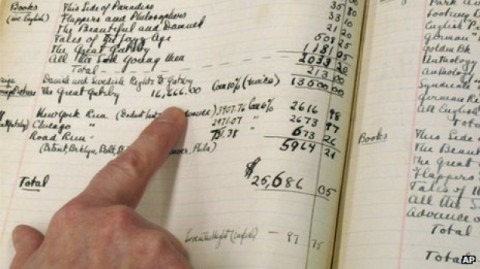
The Meticulous Business Ledger F. Scott Fitzgerald Kept Between Hangovers and Happy Hour

fitzgerald ledger
It used to be that accept­ing an advance on an unwrit­ten nov­el was as good as admit­ting fail­ure before the work is even fin­ished. Can you imag­ine blue-blood nov­el­ists Edith Whar­ton or Hen­ry James tak­ing a check before fin­ish­ing their books?

F. Scott Fitzger­ald may have been a long-suf­fer­ing wannabe when it came to high soci­ety, but he nev­er pre­tend­ed to be any­thing but a busi­ness­man when it came to writ­ing. For near­ly his entire pro­fes­sion­al life he kept a detailed ledger of his income from writ­ing, in which he not­ed the $3,939 advance he received for his in-progress nov­el, The Great Gats­by. The new Gats­by film out this sum­mer is the fifth adap­ta­tion. The first earned Fitzger­ald $16,666. (See the sur­viv­ing footage here.)

Recent­ly dig­i­tized by the Uni­ver­si­ty of South Car­oli­na, the lined note­book, which the writer prob­a­bly packed with him on all of his trav­els, paints a pic­ture of a prag­mat­ic busi­ness­man repeat­ed­ly on and off the wag­on. Sound like Gats­by? Maybe a lit­tle.

The famous­ly hard-drink­ing Fitzger­ald must have done his admin work after the hang­over wore off and before hap­py hour. He metic­u­lous­ly not­ed every pen­ny of every com­mis­sion earned, divid­ing the book into five sec­tions: a detailed “Record of Pub­lished Fic­tion,” a year-by-year account­ing of “Mon­ey Earned by Writ­ing Since Leav­ing Army,” “Pub­lished Mis­ce­lani (includ­ing nov­els) for which I was Paid,” an unfin­ished list of “Zelda’s Earn­ings” and, most inter­est­ing of all, “An Out­line Chart of My Life.”

A true Jazz Age sto­ry­teller, Fitzger­ald sets up the droll social scene of his own ear­ly days: Not long after his birth on Sep­tem­ber 24, 1896, the infant “was bap­tized and went out for the first time—to Lambert’s cor­ner store on Lau­rel Avenue.”

It’s worth a stroll through Fitzgerald’s clipped account of his child­hood, for the humor and the poignant ref­er­ences to birth­day par­ties and child­hood mis­chief. By 1920 the writer is mar­ried and has some pro­fes­sion­al momen­tum. In the mar­gins of that year’s page, he writes “Work at the begin­ning but dan­ger­ous toward the end. A slow year, dom­i­nat­ed by Zel­da & on the whole hap­py.”

By the last entry, the state of Fitzgerald’s life is grim—“work and wor­ry, sick­ness and debt.” The book reads like a whirl­wind of drink­ing, writ­ing, trav­el and jet-set­ting. Fitzger­ald holds his gaze steady on social dynam­ics, not­ing gath­er­ings and argu­ments with friends along­side the notes about his cre­ative bursts and dry spells.

Kate Rix writes about edu­ca­tion and dig­i­tal media. Vis­it her web­site at and fol­low her on Twit­ter @mskaterix.

Ira Glass on the Art and Craft of Telling Great Radio Stories

As tele­vi­sion news con­tin­ues its pathet­ic slide into the abyss of celebri­ty wor­ship, polit­i­cal par­ti­san­ship and 24-hour pun­dit­ry, its encour­ag­ing to note that in one area of tra­di­tion­al broad­cast­ing there is actu­al­ly some­thing of a renais­sance going on. Pub­lic radio is buck­ing the trend with pro­grams like Radi­o­lab and This Amer­i­can life, shows that do noth­ing to con­firm our bias­es, but instead engage our curios­i­ty and teach us some­thing new.

In this fun­ny and thought-pro­vok­ing talk from the 2007 Gel Con­fer­ence, Ira Glass, host of This Amer­i­can Life, explains a lit­tle of what goes into a good radio sto­ry.  “Nar­ra­tive,” he says, “is basi­cal­ly a machine that’s rais­ing ques­tions and answer­ing them.” Glass’s talk is very much like his radio show. In exchange for a lit­tle patience, you will be reward­ed with a good sto­ry and per­haps an insight or two.

Relat­ed Con­tent:

Ken Burns on the Art of Sto­ry­telling: “It’s Lying Twen­ty-Four Times a Sec­ond”

The Moth Now Streams its Bril­liant & Qui­et­ly Addic­tive Sto­ries on the Web

Ira Glass on Why Cre­ative Excel­lence Takes Time

Flannery O’Connor Reads ‘Some Aspects of the Grotesque in Southern Fiction’ (c. 1960)

Here is a rare record­ing of Flan­nery O’Con­nor read­ing an ear­ly ver­sion of her wit­ty and reveal­ing essay, “Some Aspects of the Grotesque in South­ern Fic­tion.”

O’Con­nor gives an elo­quent out­line of her vision as both a South­ern and a Catholic writer. She defends her work against crit­ics who say it is high­ly unre­al­is­tic. “All nov­el­ists are fun­da­men­tal­ly seek­ers and describers of the real,” she says, “but the real­ism of each nov­el­ist will depend on his view of the ulti­mate reach­es of real­i­ty.” In the pub­lished ver­sion of the essay, she writes:

When­ev­er I’m asked why South­ern writ­ers par­tic­u­lar­ly have a pen­chant for writ­ing about freaks, I say it is because we are still able to rec­og­nize one. To be able to rec­og­nize a freak, you have to have some con­cep­tion of the whole man, and in the South the gen­er­al con­cep­tion of man is still, in the main, the­o­log­i­cal. That is a large state­ment, and it is dan­ger­ous to make it, for almost any­thing you say about South­ern belief can be denied in the next breath with equal pro­pri­ety. But approach­ing the sub­ject from the stand­point of the writer, I think it is safe to say that while the South is hard­ly Christ-cen­tered, it is most cer­tain­ly Christ-haunt­ed. The South­ern­er, who isn’t con­vinced of it, is very much afraid that he may have been formed in the image and like­ness of God. Ghosts can be very fierce and instruc­tive. They cast strange shad­ows, par­tic­u­lar­ly in our lit­er­a­ture. In any case, it is when the freak can be sensed as a fig­ure for our essen­tial dis­place­ment that he attains some depth in lit­er­a­ture.

This pas­sage can be heard, in dif­fer­ent form, begin­ning at the 3:40 mark in the record­ing. Like many of O’Con­nors essays, “Some Aspects of the Grotesque in South­ern Fic­tion” was writ­ten not for pub­li­ca­tion, but for pub­lic read­ing. She was known to rewrite and rearrange these pieces between read­ings. In this record­ing, O’Con­nor is using the piece as a prepara­to­ry state­ment for a read­ing of her clas­sic sto­ry, “A Good Man is Hard to Find.”

We don’t know the date of the record­ing, but the text dif­fers sig­nif­i­cant­ly from the posthu­mous­ly pub­lished ver­sion, so per­haps it is an ear­ly ver­sion. The ear­li­est extant record­ing of the essay that we know of was made on Octo­ber 28, 1960 for the Dorothy Lamar Blount Lec­ture Series at Wes­leyan Col­lege in Macon, Geor­gia. There is also known to be a record­ing of O’Con­nor read­ing the piece on Novem­ber 16, 1962 at East Texas State Uni­ver­si­ty.

To com­pare the record­ed ver­sion to the one even­tu­al­ly pub­lished in Mys­tery and Man­ners: Occa­sion­al Prose, you can click here to open the essay in a new win­dow.

Relat­ed Con­tent:

Rare 1959 Audio: Flan­nery O’Connor Reads ‘A Good Man is Hard to Find’

Hear Flan­nery O’Connor’s Short Sto­ry, “Rev­e­la­tion,” Read by Leg­endary His­to­ri­an & Radio Host, Studs Terkel

Flan­nery O’Connor’s “Every­thing That Ris­es Must Con­verge” Read by Estelle Par­sons

Dennis Hopper Reads From Rainer Maria Rilke’s Timeless Guide to Creativity, Letters to a Young Poet

For almost a cen­tu­ry, writ­ers and oth­er cre­ative peo­ple have found inspi­ra­tion and a pro­found sense of val­i­da­tion in the Bohemi­an-Aus­tri­an poet Rain­er Maria Rilke’s posthu­mous­ly pub­lished Let­ters to a Young Poet. Many a sen­si­tive soul has felt as if Rilke’s let­ters, writ­ten to a young man who had asked him for advice on whether to become a poet, were addressed direct­ly to him or her. One of those peo­ple was the actor Den­nis Hop­per.

“Rilke’s Let­ters to a Young Poet is a great book,” Hop­per says in this short film from 2007. “For me the let­ters are a cre­do of cre­ativ­i­ty and a source of inspi­ra­tion. After read­ing Rilke it became clear to me that I had no choice in the mat­ter. I had to cre­ate.” The ten-minute film, Must I Write?, was direct­ed by Her­mann Vaske and pho­tographed by Rain Li. Hop­per reads the first of the book’s ten let­ters, in which Rilke tells the young man to stop seek­ing approval from oth­ers:

You are look­ing out­ward, and that above all you should not do now. Nobody can help and coun­sel you, nobody. There is only one sin­gle way. Go into your­self. Search for the rea­son that bids you write; find out whether it is spread­ing out its roots in the deep­est places in your heart, acknowl­edge to your­self whether you would have to die if it were denied you to write. This above all–ask your­self in the stillest hour of your night: must I write? Delve into your­self for a deep answer. And if this should be affir­ma­tive, if you may meet this earnest ques­tion with a strong and sim­ple “I must,” then build your life accord­ing to this neces­si­ty; your life even into its most indif­fer­ent and slight­est hour must be a sign of this urge and a tes­ti­mo­ny to it.

Hop­per is read­ing from the 1934 trans­la­tion by M.D. Hert­er Nor­ton. There are a few minor slips, in which Hop­per devi­ates slight­ly from the text. Most seri­ous­ly, he inverts the mean­ing of a pas­sage near the end by adding (at the 7:23 mark) the word “not” to Rilke’s phrase, “Per­haps it will turn out that you are called to be an artist.” That pas­sage, one of the most mem­o­rable in the book, reads:

A work of art is good if it has sprung from neces­si­ty. In this nature of its ori­gin lies the judge­ment of it: there is no oth­er. There­fore, my dear sir, I know no oth­er advice for you save this: to go into your­self and test the deeps in which your life takes rise; at its source you will find the answer to the ques­tion whether you must cre­ate. Accept it, just as it sounds, with­out inquir­ing into it. Per­haps it will turn out that you are called to be an artist. Then take that des­tiny upon your­self and bear it, its bur­den and its great­ness, with­out ever ask­ing what rec­om­pense might come from out­side. For the cre­ator must be a world for him­self and find every­thing in him­self and in Nature to whom he has attached him­self.

Relat­ed con­tent:

Den­nis Hop­per Reads Rud­yard Kipling on the John­ny Cash Show

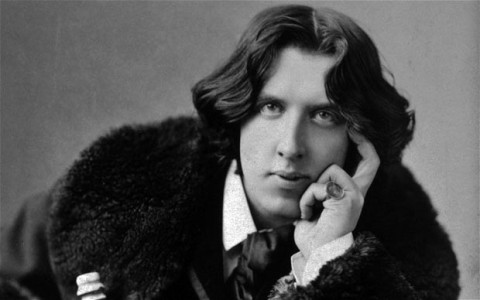
Oscar Wilde Offers Practical Advice on the Writing Life in a Newly-Discovered Letter from 1890

Oscar-Wilde_LetterAccord­ing to The Tele­graph, experts rum­mag­ing through a dusty box recent­ly uncov­ered a let­ter penned by Oscar Wilde in 1890 (or there­abouts). Addressed to a “Mr. Mor­gan,” the let­ter runs 13 pages, and it offers what amounts to prac­ti­cal advice for an aspir­ing writer. Details on the let­ter’s con­tents remain scarce, although we will prob­a­bly know more when the doc­u­ment gets auc­tioned off in two weeks time. But, so far, we know that Wilde offered Mr. Mor­gan two points to con­sid­er:

“Make some sac­ri­fice for your art, and you will be repaid, but ask of art to sac­ri­fice her­self for you and a bit­ter dis­ap­point­ment may come to you,”

“The best work in lit­er­a­ture is always done by those who do not depend on it for their dai­ly bread and the high­est form of lit­er­a­ture, Poet­ry, brings no wealth to the singer.”

It’s essen­tial­ly the nine­teenth cen­tu­ry ver­sion of what Charles Bukows­ki lat­er said in much more sim­ple terms: “if you’re doing it for mon­ey or fame, don’t do it.”

Relat­ed Con­tent:

So You Want to Be a Writer?: Charles Bukows­ki Explains the Dos & Don’ts

William Faulkn­er Explains Why Writ­ing is Best Left to Scoundrels … Prefer­ably Liv­ing in Broth­els (1956)

Writ­ing Tips by Hen­ry Miller, Elmore Leonard, Mar­garet Atwood, Neil Gaiman & George Orwell

by | Permalink | Make a Comment ( 3 ) |

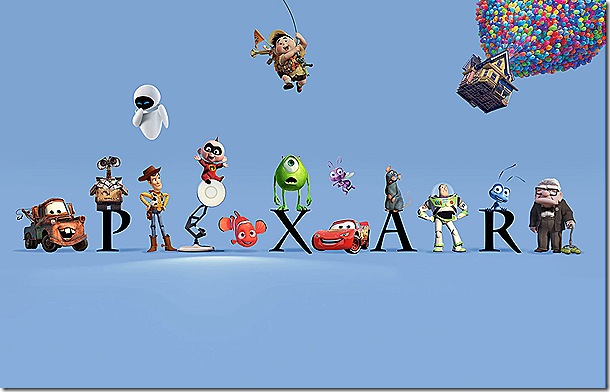
Pixar’s 22 Rules of Storytelling

Every­one from Kurt Von­negut to Ernest Hem­ing­way has shared his ideas on craft­ing sol­id nar­ra­tive writ­ing. One of the most recent sages to join the canon is Emma Coates, Pixar’s for­mer sto­ry artist. Her list of the 22 Rules of Good Sto­ry­telling gleaned on the job has been gain­ing Inter­net trac­tion since it was pub­lished last June.

Twen­ty two? That’s twen­ty more than Tol­stoy. I know some peo­ple enjoy a lot of direc­tion, but those of us who rel­ish bush­whack­ing start to chafe when the road is that heav­i­ly sign­post­ed.

By all means, sam­ple Coates’ Pixar 22 (see them all below). Apply any and all that work for you, though don’t get your hopes up if your ulti­mate goal is to sell a sto­ry to Dream­works or Dis­ney. They’ve got for­mu­las of their own.

As for myself, I am repur­pos­ing #4 — the only rule that does­n’t con­tain an implied order or some deriv­a­tive of “you” — as an extreme­ly jol­ly par­lor game.

Here it is in its orig­i­nal form:

Once upon a time there was ___. Every day, ___. One day ___. Because of that, ___. Because of that, ___. Until final­ly ___.

While it’s entire­ly pos­si­ble to fill in those blanks with the fruits of your own imag­i­na­tion, it’s a true joy to sub­ject one’s most cher­ished lit­er­ary, cin­e­mat­ic, and dra­mat­ic works to this retroac­tive Mad Lib. (It works pret­ty well with estab­lished reli­gions too, but I’m not here to tread on the faith­ful’s toes.)

Warn­ing: there are some major spoil­ers below. Now that that’s out of the way, let the guess­ing begin!

Once upon a time there was a poor fam­i­ly in Okla­homa. Every day, they tried to make it work on their hard­scrab­ble farm. One day their last speck of top soil blew away. Because of that, they decid­ed to seek a bet­ter life in Cal­i­for­nia. Because of that, every able bod­ied young male left the fam­i­ly. Until final­ly their old­est daugh­ter ends up breast­feed­ing a starv­ing stranger.

How about this?

Once upon a time there was a poor young sol­dier. Every day, he dreamed of ris­ing above his sta­tion. One day he met a beau­ti­ful rich girl named Daisy. Because of that, he bought a man­sion where he threw enor­mous par­ties. Because of that, he hooked back up with Daisy. Until final­ly, he gets shot to death in his pool.

There’s no deny­ing that it fits this one like a glove:

Once upon a time there was a kid. Every day, he played with his cow­boy doll. One day he got a space­man doll. Because of that, his inter­est in the cow­boy took a seri­ous nose­dive. Because of that, the cow­boy and the space­man each swore vengeance upon the oth­er’s house. Until final­ly there’s a blood­bath from which no one emerges unscathed.

I could keep go on for­ev­er, but I don’t want to come off as a toy hog. Instead, I invite you to share your filled out Num­ber Fours in the com­ments section…or tell us which of the oth­er twen­ty-one seem most suit­ed to its intend­ed pur­pose.

Pixar’s 22 Rules for Sto­ry­telling

#1: You admire a char­ac­ter for try­ing more than for their suc­cess­es.

#2: You got­ta keep in mind what’s inter­est­ing to you as an audi­ence, not what’s fun to do as a writer. They can be v. dif­fer­ent.

#3: Try­ing for theme is impor­tant, but you won’t see what the sto­ry is actu­al­ly about til you’re at the end of it. Now rewrite.

#4: Once upon a time there was ___. Every day, ___. One day ___. Because of that, ___. Because of that, ___. Until final­ly ___.

#5: Sim­pli­fy. Focus. Com­bine char­ac­ters. Hop over detours. You’ll feel like you’re los­ing valu­able stuff but it sets you free.

#6: What is your char­ac­ter good at, com­fort­able with? Throw the polar oppo­site at them. Chal­lenge them. How do they deal?

#7: Come up with your end­ing before you fig­ure out your mid­dle. Seri­ous­ly. End­ings are hard, get yours work­ing up front.

#8: Fin­ish your sto­ry, let go even if it’s not per­fect. In an ide­al world you have both, but move on. Do bet­ter next time.

#9: When you’re stuck, make a list of what WOULDN’T hap­pen next. Lots of times the mate­r­i­al to get you unstuck will show up.

#10: Pull apart the sto­ries you like. What you like in them is a part of you; you’ve got to rec­og­nize it before you can use it.

#11: Putting it on paper lets you start fix­ing it. If it stays in your head, a per­fect idea, you’ll nev­er share it with any­one.

#12: Dis­count the 1st thing that comes to mind. And the 2nd, 3rd, 4th, 5th – get the obvi­ous out of the way. Sur­prise your­self.

#13: Give your char­ac­ters opin­ions. Passive/malleable might seem lik­able to you as you write, but it’s poi­son to the audi­ence.

#14: Why must you tell THIS sto­ry? What’s the belief burn­ing with­in you that your sto­ry feeds off of? That’s the heart of it.

#15: If you were your char­ac­ter, in this sit­u­a­tion, how would you feel? Hon­esty lends cred­i­bil­i­ty to unbe­liev­able sit­u­a­tions.

#16: What are the stakes? Give us rea­son to root for the char­ac­ter. What hap­pens if they don’t suc­ceed? Stack the odds against.

#17: No work is ever wast­ed. If it’s not work­ing, let go and move on — it’ll come back around to be use­ful lat­er.

#18: You have to know your­self: the dif­fer­ence between doing your best & fuss­ing. Sto­ry is test­ing, not refin­ing.

#19: Coin­ci­dences to get char­ac­ters into trou­ble are great; coin­ci­dences to get them out of it are cheat­ing.

#20: Exer­cise: take the build­ing blocks of a movie you dis­like. How d’you rearrange them into what you DO like?

#21: You got­ta iden­ti­fy with your situation/characters, can’t just write ‘cool’. What would make YOU act that way?

#22: What’s the essence of your sto­ry? Most eco­nom­i­cal telling of it? If you know that, you can build out from there.

via Boing­Bo­ing

- Ayun Hal­l­i­day was not raised to ques­tion author­i­ty.

« Go BackMore in this category... »
Quantcast