Here’s a quick follow up to our post on Susan Jacoby’s new book, The Age of American Unreason. Since the original post, we have pulled together some media featuring Jacoby and her views on America’s drift toward anti-intellectualism.
First, you can watch her recent interview with Bill Moyers: Video — Mp3 — iTunes — Feed.
Next, listen to this radio program — “Anti-Intellectualism in the US” — that features Jacoby and a panel of thinkers: Mp3 — iTunes — Feed — Web site.
Liberals outnumber conservatives in the academy. That’s a known fact. What explains this divergence? Some have attributed it to liberals creating a hostile environment for conservatives. But new research calls that view into question and offers an intriguing alternative explanation.
As described in The Chronicle of Higher Education, Matthew Woessner (a conservative academic) and April Kelly-Woessner (a liberal academic) looked at surveys completed by 15,569 college seniors, and what an analysis of the data suggests is that “the personal priorities of those on the left are more compatible with pursuing a Ph.D.” “Liberalism is more closely associated with a desire for excitement, an interest in creative outlets, and an aversion to a structured work environment. Conservatives express greater interest in financial success and stronger desires to raise families. From this perspective, the ideological imbalance that permeates much of academia may be somewhat intractable.” Or, put differently, this imbalance may not be going away any time soon.
To delve further into their research, you can read their report online here.
There is a lot of publicity this week around Susan Jacoby’s new book, The Age of American Unreason. The new work fits into the tradition of Richard Hofstadter’s 1963 classic, Anti-Intellectualism in American Life. And it seemingly moves in the same orbit as Al Gore’s The Assault on Reason (2007). The upshot of Jacoby’s argument is that “Americans are in serious intellectual trouble — in danger of losing our hard-won cultural capital to a virulent mixture of anti-intellectualism, anti-rationalism and low expectations.” As she goes on to say in this op-ed appearing in The Washington Post, we’re now living in a moment when Americans are reading fewer books than ever, and they know staggeringly little about the world: Only 23 percent of Americans with some college education can identify Iraq, Iran, Saudi Arabia and Israel on a map, even though the US has a tremendous amount at stake there. (Source: NY Times book review.) And one fifth of American adults think that the sun revolves around the Earth. This is all pretty bad. But what makes matters worse is the “alarming number of Americans who have smugly concluded that they do not need to know such things in the first place.” Ignorance has somehow strangely gone from vice to virtue.
What are the solutions? I guess you’ll have to get the book, or get millions of your friends to read Open Culture (wink).
UPDATE: You can catch Bill Moyers’ interview with Susan Jacoby here: video — mp3 — iTunes — feed. This will let you take a closer look at Jacoby’s argument. Thanks Muriel for the tip!
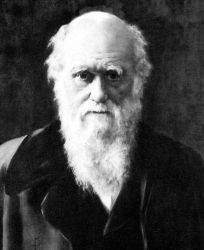
At least in America, Charles Darwin has become the favorite whipping boy for many fundamentalists on the right. In one neat package, you get in Darwin all things deplorable. A godless “secular humanist” who denied the sanctity of humanity, God’s providence, and the integrity of the Bible. What more could you love to hate?
Somewhere lost in today’s culture wars is the real Charles Darwin. Aired first in October, this program, produced by American Public Media’s Speaking of Faith (MP3 — iTunes — Feed — Web Site), revisits Darwin’s life & thought with James Moore, a Cambridge University scholar who has written Darwin: The Life of a Tormented Evolutionist. And here’s the picture that we get. Like many important scientists who came before him — Galileo, Copernicus and Newton — Darwin believed that science could help explain the laws of nature created by God. Further, he saw his Origin of Species as describing the forms of life that owed their existence to God’s law — a law that expressed itself in natural selection. Readers will find that Darwin’s text is littered with references to creation. And Darwin, himself, was noted for saying that when he wrote the book, his faith in God was as strong as that of a bishop, although his faith did wane latter in life. Simply put, Darwin was hardly the enemy of religion that many consider him today.
That’s one estimate of the size of our universe, and this video (added to our YouTube Playlist), using pictures from the Hubble Space Telescope, tries to put it in perspective. For more amazing photos from the Hubble, see this collection.
Yesterday, Harvard University passed a motion (see proposal here) that will require its faculty members to publish their scholarly articles online. On the face of things, this marks a big victory for the open access movement, which is all about making information free and accessible to all. In reality, however, the real winner may eventually be Harvard’s library budget (and the future of scholarship itself).
One of the figures behind the opening of Harvard’s scholarship is Robert Darnton, an eminent historian who now oversees Harvard’s libraries. And, in a piece called The Case for Open Access, Darnton underscores how digital publishing can relieve some important financial pressures on the academy. Under the current publishing model, academics write articles for scholarly journals and then the journals get sold back to the university libraries at exorbitant prices, with some costing more than $20,000 per year. And here the real problem begins: “in order to purchase the journals, libraries have had to reduce their acquisitions of monographs; the reduced demand among libraries for monographs has forced university presses to cut back on the publication of them; and the near impossibility of publishing their dissertations has jeopardized the careers of a whole generation of scholars in many fields.” Digital publishing solves this spiraling problem in a straightforward way. The cost of publishing directly to the web is negligible. There’s no pulp to buy, no publisher’s overhead to pay; no corporation (e.g., Reed Elsevier, the owner of many scholarly journals) looking to pad its profits and get thanked by Wall Street. The cost savings are everywhere.
The traditional publishers will be quick to point out a flaw in the digital publishing model — namely, that it generally means working outside of a peer-review system that ensures the overall integrity of research. But my sense is that there’s no reason that digital publishing and peer review can’t go together. It’s not hard to imagine ways in which conventional forms of peer review could be preserved. But digital publishing also makes possible new forms of peer review that didn’t exist before. Publishing to the web will almost necessarily increase the overall readership of articles, which will encourage more fact checking and critical commentary in turn. And, because we’re publishing on the web, these scholarly articles can become living documents that get better over time. It’s a new way of doing things. It may take a generation to get all the kinks worked out and habits changed. But we will get there.
As a final aside, if you’re interested in the Open Educational Resources (OER) movement, then you’ll want to check this new site sponsored by the Hewlett Foundation. It aggregates blogs that regularly focus on all things OER, offering you a great starting point for reading in this area.
Note: We posted this find back in 2008. But, since then, we’ve found a better audio version of the text. Please find it here.
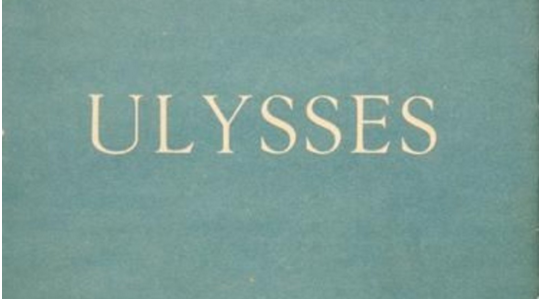
This is a book that needs no introduction, but we will give it a short one anyway. Published in serial format between 1918 and 1920, James Joyce’s Ulysses was initially reviled by many and banned in the US and UK until the 1930s. Today, it’s widely considered a classic in modernist literature, and The Modern Library went so far as to call it the most important English-language novel published during the 20th century. Although chronicling one ordinary day in the life of Leopold Bloom in 1904 Dublin, Ulysses is no small work. It sprawls over 750 pages, using over 250,000 words, and takes over 32 hours to read aloud. Or, at least that’s how long it took the folks over at Librivox. In the Bloomsday tradition, a cast of readers participated in the project, offering creative readings with “pub-like background noise.” The audio files can be downloaded as many individual mp3 files here, or as one big zip file here. You can also stream an excellent alternative version at Archive.org.
This is not the only Joycean audio that you can download for free. Also at Librivox, you can find several key stories from Dubliners — including, The Sisters (mp3), Araby (mp3), Eveline (mp3), and The Dead (mp3 in zip file).
For more free classics on audio, see our collection of Free Audio Books.
What set the stage for Silicon Valley to change the entire landscape of technology? What made companies like Google, Yahoo and Hewlett Packard possible? According to this talk presented at Google by Steve Blank, it all goes back to the aftermath of World War II. It starts when Stanford University and its engineering/electronics department began to focus heavily on military R&D. And it continues during the Korean War, when the University starts developing new technologies that contribute to military intelligence (or what Blank calls “spook work”) and various weapons systems. The next thing you know you’ve got a brain trust in the Bay Area that starts spinning out companies lik Fairchild Semiconductor, the father of all semiconductor companies, and, with that, Silicon Valley becomes Silicon Valley.
On Friday, we mentioned the BBC production called “What on Earth is Wrong with Gravity.” Below is another video by the same producers called “Psychedelic Science,” which surveys the past and present of psychedelic drugs, and the new era of scientists exploring ways to use these drugs again for therapeutic purposes (i.e., the treatment of schizophrenia and addiction).
We're hoping to rely on loyal readers, rather than erratic ads. Please click the Donate button and support Open Culture. You can use Paypal, Venmo, Patreon, even Crypto! We thank you!
Open Culture scours the web for the best educational media. We find the free courses and audio books you need, the language lessons & educational videos you want, and plenty of enlightenment in between.