Where Is Technology Taking Us?
A recent Frontline documentary, Digital Nation: A Life on the Virtual Frontier, asks just this question–particularly with regard to education. Subjects include attention span, multi-tasking, and the doubts of one-time technology evangelist Douglas Rushkoff. But while some see technology as an obstacle to clear thinking and human interaction, others see it as essential to contemporary education.
I have to say the whole subject resonates with my own ambivalent technophilia. You can watch the documentary above or here (and the trailer follows), but don’t forget to check your news feeds, twitter, and facebook while it’s on in the background.
Wes Alwan lives in Boston, Massachusetts, where he works as a writer and researcher and attends the Institute for the Study of Psychoanalysis and Culture. He also participates in The Partially Examined Life, a podcast consisting of informal discussions about philosophical texts by three philosophy graduate school dropouts.
Read More...Deep Thinking on the Web
This morning, a New York Times editorial is helping get the word out. Deep thinking is alive and well on the web:
There is a lot of talk about how the Internet is driving culture ever lower, but it also makes a wealth of serious thinking available. From the comfort of home, one can download free audio books by authors like Jane Austen and Joseph Conrad and free podcasts of university lectures (openculture.com has an assortment of both).
The rest of the piece rightly focuses on a BBC podcast called In Our Time (iTunes — Feed — Web Site). It’s listed in our Ideas & Culture Podcast Collection, along with many other thoughtful programs that make meaningful subjects relevant to a broader, global audience. (For something similar in video, see our collections of Intelligent Video Sites and Smart YouTube Channels.)
Yes, intelligent media doesn’t dominate the web. But, it’s flourishing in the niches and crevices, and we want to bring it to the surface. Perhaps you’ll want to join us? If you’re interested in contributing to Open Culture, we’re always looking for your suggestions. I have put together a page that outlines our editorial approach. Take a look, and if you find great pieces of intelligent media while surfing the web, please send them our way. We thank you in advance.
Read More...F. Scott Fitzgerald Reads Shakespeare
The University of South Carolina hosts a few gems, including F. Scott Fitzgerald (The Great Gatsby) reading lines from Shakespeare’s Othello. Or, more specifically, Othello’s oration to Venetian senators.
This comes to us via Mike. Thanks to all who started sending good links our way. Whenever you see something good, please fire us a quick email. It will take one minute out of your day and make the day for many others.
Follow us on Facebook, Twitter, Google Plus and LinkedIn and share intelligent media with your friends. And if you want to make sure that our posts definitely appear in your Facebook newsfeed, just follow these simple steps.
Read More...Top 10 Reasons Why iPad Marks Kindle’s Death
Caveat: If you missed it, yesterday’s post was 10 Reasons iPad Will Not Kill Kindle. So take everything here with appropriate grains of salt.
10.) Books with graphics. Many books contain photos, graphics and diagrams that the Kindle does not handle well, if at all. When people realize that the iPad will do this flawlessly, they’ll head in that direction. Example: while reading the new Carver biography on my Kindle, an experience that I loved, I had to miss out on all of the pictures collected from Carver’s life. Once you take into account newspapers and magazines, there’s even more weight on iPad’s side.
9.) Cost: Seriously, Amazon really overstepped their boundaries when they set Kindle’s price at around $300, as they did. If they had made it $100 or less, they would have probably have sold 4 or 5 times the number of devices, hooking more readers to their bookstore and their device. Look at Gillette as an example: which costs more—the razor or the razor blades?
8.) “I love my Kindle!” – less than two million people have bought the Amazon product. By comparison, over forty million iPhones and iPod Touches have been sold. No one knows how many folks will rush out to buy an iPad, but if previous iPhone sales and the buzz around the iPad are any indication, this is going to be another big win for Apple.
7.) iPad is a Kindle: just use that free Kindle app on your iPad and you’ve got the whole Kindle store wide open to you. You can even take your whole Kindle library right over to Apple’s iPad with the Kindle App.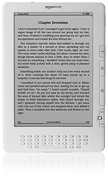
6.) Cost, again: with iPad coming in at a low $499 for a device that’s much better made and features much more capability than the Kindle, with at least four times the memory… well, you get the picture. Oh jeez… I just found out the Kindle DX goes for $489. Oh, Mr. Bezos… what are you thinking?
5.) Capability. People don’t want a dedicated reading device: if you can carry around a device the size of your e‑reader, but also use it to check email, surf the web, watch TV and movies, listen to music, use office-type apps, etc. then that’s going to win in today’s economy.
4.) Book pricing. It looks like Apple, the diabolical pricers of all songs at $.99, might wind up being the publishers’ darling in the e‑book market by pricing their titles higher than Amazon has been. So far it looks like ibooks will be closer to the $14.99 price point that publishers like. Right now, as evinced by this past weekend’s squabble between Amazon and Macmillan, publishers appear to be fed up with Amazon’s pricing strategy. Apple may just become publishers’ white knight. (more…)
Read More...Hayek vs. Keynes Rap
Russ Roberts, the George Mason University economist and host of EconTalk (iTunes – RSS Feed – Web Site) recently teamed up with John Papola, a television exec, to produce “Fear the Boom and Bust.” It’s a rap song/video with intellectual substance that follows this premise:
John Maynard Keynes and F. A. Hayek, two of the great economists of the 20th century, come back to life to attend an economics conference on the economic crisis. Before the conference begins, and at the insistence of Lord Keynes, they go out for a night on the town and sing about why there’s a boom and bust cycle in modern economies and good reason to fear it.
This clip is now added to our YouTube favorites. You can get the full lyrics, story and free download of the song in high quality MP3 and AAC files at: http://www.econstories.tv
via the always great Planet Money Podcast
Read More...A History of the World in 100 Objects
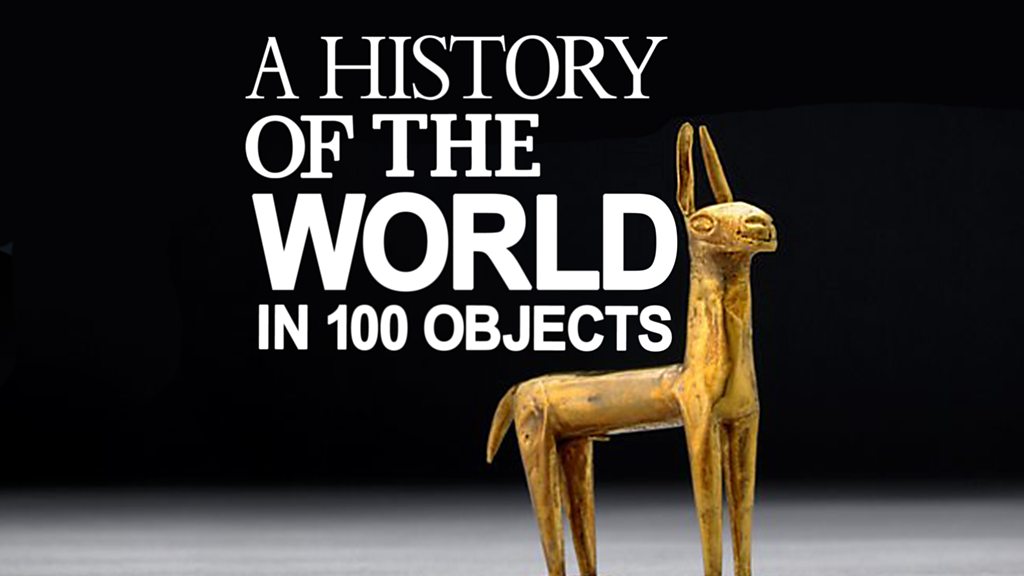
Working with the BBC, Neil MacGregor, the Director of the British Museum, has launched a downright smart project. A History of the World in 100 Objects uses important pieces from the museum’s collections to recount the long history of humanity. Throughout the year, the serialized radio program will air 100 episodes, each averaging 15 minutes, and they will cover two million years of human innovation and artistic creation. Below, I’ve included a recent episode that revisits the Olduvai hand axe, a tool invented some 1.2 million years ago that proved vital to human evolution and our migration out of Africa. You can access the full series in audio via iTunes, RSS Feed, as well as other formats found here. A big thanks to Stephen in the UK for flagging this production for us.
Jared Diamond Explains Haiti’s Enduring Poverty
Jared Diamond, the Pulitzer Prize-winning author of Guns, Germs & Steel (and Collapse: How Societies Choose to Fail or Succeed), offers some timely thoughts on why Haiti, once a fairly prosperous country, has sunk into enduring poverty — a condition not comparatively shared by its neighbor on the same island, the Dominican Republic. According to Diamond, Haiti’s environmental conditions offer a partial explanation. But you will also find clues in the country’s language, and in the legacy of slavery that has shaped Haiti’s economic relationship with Europe and the US. This interview — quite a good one — aired this morning in San Francisco. You can listen to it below, or access it via MP3, iTunes or RSS Feed.
Read More...Experiments in Publishing: Kindle Rush Results
Click here to listen to this post as audio. (Right-click to download.)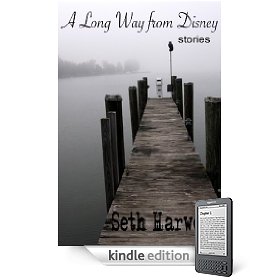
As some of you already know, back on December 27th, I released a sample of my first short story collection A Long Way from Disney on Amazon’s Kindle store and used social media strategies to market it. I did this for various reasons, but mainly because, as I’ve said here on OC before, I believe authors need to take on the role of scientists and experiment with what’s possible in today’s publishing world. (If you’re interested in how I publicized this, see my recent posts at AuthorBootCamp.com.)
From a scientific point of view, the experiment was a great success. I learned a great deal, which I’ll discuss below. I sold a lot of books (at $.99 each)–around 350 in the first week–and I got my name and stories in front of a lot of new people. I also heard from a number of them who read the book right away and really loved it! For you authors out there, I hope you can relate: Getting positive feedback on your work from total strangers is about the best feedback there is.
[For those of you keeping score at home, those sales put $260 into Amazon’s pocket and $140 into mine. Not too shabby, I think, but also not the split an author might hope for.]
Okay, without any further delay: Here are the Results (what I’ve learned) from Experiment 1:
1) Timing can be essential. I positioned myself to hit the Kindle store just after Xmas, thinking that with many newly gifted Kindles out there, a lot more Kindle ebooks would be selling and that I could cash in on this rush. I was correct in this prediction (Amazon sold more ebooks than paper copies over Christmas), but what I didn’t predict was how much harder this made it to reach the Top 100 Kindle bestseller list, a goal I had set for myself. I wanted to hit the Top 100 because it would give the book additional exposure and stimulate more buying from newbie Kindle owners looking for quick, cheap content. (more…)
Read More...Michael Sandel: Our Bodies in the Marketplace
 Last year, Michael Sandel made a splash when he put online his popular Harvard philosophy course, Justice: What’s the Right Thing to Do? Over the past 30 years, more than 14,000 Harvard students have taken his course. And now you can access the course online at no cost. (Details here.) In recent days, Sandel has surfaced one again, this time on Philosophy Bites (iTunes — Feed — Web Site), a British podcast that features top philosophers being interviewed on bite-sized topics. In this conversation (listen here or below), Sandel and Nigel Warburton tackle some big questions: What are the limits of free market thinking, especially when it comes to what we can do with our bodies in the marketplace? Can we sell blood consensually? Perhaps. But what about selling our kidneys on the open market? Or “renting wombs”? (There are whole villages in India where women act as “paid surrogates” for Western couples.) Or what about consensual prostitution? Or engaging, however willingly, in degrading forms of wage labor? Are these inherent freedoms, as some free market/libertarian thinkers might hold? Or do these acts violate our collective sense of the “good life”? And do they diminish our freedoms in some kind of larger sense? The conversation gets more heated (in a good way) as it goes along. Give it some time, hang with it, and see what you think. For more philosophy, see our collection of Free Philosophy Courses.
Free eBooks for Your PC, iPhone, Kindle & Beyond
Today, we’re rolling out a sizable collection of Free eBooks, most of them classics, that features major works written by James Joyce, F. Scott Fitzgerald, Jane Austen, Nietzsche and others. (We have even thrown in a little Paulo Coelho.) You’ll find 100+ free ebooks in total, and you can download the texts to your computer, smart phone (iPhone, Android, etc.) or Kindle, depending on the format you choose. Our eBooks Primer overviews the different download options, so please give it a quick read over. Below, we’ve posted a quick sample from the new collection (plus a link to the entire list of Free eBooks). Feel free to offer feedback and share the list with friends. Down the road, you can always find this collection in the top navigation bar. Just looks for eBooks.
- Austen, Jane — Pride & Prejudice — Google Mobile — Gutenberg — Kindle — Feedbooks
- Coelho, Paulo — Warrior of the Light — Feedbooks
- Dostoevsky, Fyodor — Crime and Punishment — Google Mobile — Kindle — Feedbooks
- Fitzgerald, F. Scott — This Side of Paradise — Google Mobile — Gutenberg — Kindle
- Melville, Herman — Moby Dick — Google Mobile — Gutenberg — Kindle — Feedbooks
- Nietzsche, Friedrich — Beyond Good and Evil — Google Mobile — Gutenberg — Feedbooks
For more ebooks, please visit Free eBooks: Great Books on Your PC, iPhone, Kindle & Beyond
Note: Don’t forget to check in on Seth Harwood’s big Kindle experiment. What happens when you sell your book for 99 cents on the Kindle? Find out as the experiment unfolds. Story here.
Read More...Support Us
We're hoping to rely on loyal readers, rather than erratic ads. Please click the Donate button and support Open Culture. You can use Paypal, Venmo, Patreon, even Crypto! We thank you!

About Us

Open Culture scours the web for the best educational media. We find the free courses and audio books you need, the language lessons & educational videos you want, and plenty of enlightenment in between.
Advertise With Us
FREE UPDATES!
GET OUR DAILY EMAIL
Get the best cultural and educational resources on the web curated for you in a daily email. We never spam. Unsubscribe at any time.
FOLLOW ON SOCIAL MEDIA
Open Culture editor Dan Colman scours the web for the best educational media. He finds the free courses and audio books you need, the language lessons & movies you want, and plenty of enlightenment in between.
Advertise With Us

