The Ancient Greek Who Speaks to All History and Military Buffs
Open Source, a radio program hosted by Christopher Lydon, recently pulled off something rather unusual. The broadcast (iTunes — mp3) made it abundantly clear why an Ancient Greek text, Thucydides’ History of the Peloponnesian War, remains fascinating and highly relevant to modern day readers. Written 2400+ years ago, Thucydides has something important to offer history and military buffs alike, and also those who want to delve into the complicated human psyche. For historians, Thucydides’ work gives us the first modern history — the first historical narrative that looked to render the past in an analytical, empirical and objective way (a departure from the more literary, myth-based histories that came before it). For military thinkers, including students at West Point, the work holds such appeal because it recounts the epic, 27-year war (431–404 BC) between the two greatest Greek powers — on the one side, Athens, a democratic but increasingly imperialist power, and, on the other side, Sparta, a harsh oligarchic power that held no particular imperial aspirations. Thucydides, an Athenian general, gives you the blow-by-blow account of a landmark historical war. But he also gives you more. What particularly engages readers, both past and present, are Thucydides’ philosophical insights into human nature — into how our passions and fears, particularly during times of war, can counter-productively undermine our civility and humanity. This applies to leaders and citizens of Athens, who overreached and eventually lost their war. Yet it also potentially applies to modern America because it is Thucydides’ assumption that human nature remains fundamentally the same across time and place. And, in that sense, there is a cautionary tale for all of us in this seminal Greek work.
Read More...Open Culture Podcast Directories Viewable in Feed Readers
The only downside to using a feed reader (Bloglines, Google Reader, MyYahoo, etc.) to access Open Culture is that you won’t be able to see our podcast directories which reside in our left nav bar. To assist you, we have pasted links below that will give you direct access to the podcast collections. Bookmark & enjoy.
- Arts & Culture Podcasts
- Audio Book Podcasts
- Foreign Language Lesson Podcasts
- News & Information Podcasts
- Technology Podcasts
- University Podcasts
Ali G at Harvard; or How Sacha Baron Cohen Got Blessed by America’s Cultural Establishment
Oodles of print have been written about Sacha Baron Cohen’s film, “Borat: Cultural Learnings of America for Make Benefit Glorious Nation of Kazakhstan.” And there’s perhaps not a great deal more to say about it, other than it’s remarkable how well the film has been received by America’s cultural establishment. Edgy, shock comedy that uses racial and gender stereotypes to subvert racial and gender stereotypes usually doesn’t go down so well with highbrow critics. But, in this case it did. The Washington Post called the film “a perfect combination of slapstick and satire, a Platonic ideal of high- and lowbrow that manages to appeal to our basest common denominators while brilliantly skewering racism, anti-Semitism, … [and] sexism.” (Platonic ideal? Borat?) Of the film, The New York Times said “The brilliance of ‘Borat’ is that its comedy is as pitiless as its social satire, and as brainy.” Then, we heard Terry Gross, of NPR’s Fresh Air, gush over the comic in her amusing interview with Baron Cohen. And lastly, the British comic has been nominated for an Oscar by Hollywood’s film elite.
If any further proof was needed that Baron Cohen has been embraced by the cultural vanguard, then let this video serve as final witness. In 2004, Harvard invited Baron Cohen to speak at “Class Day,” the big traditional event that takes place the day before commencement. And here you get him speaking to students and parents not as Baron Cohen, but as Ali G., all in a light-hearted way. (For more on this visit, see the article in the Harvard Gazette.)
Read More...
How to Get Started Podcasting on Your Campus
For every university that has started podcasting lectures or courses, dozens have proved slow to take this step. If you’re an educator who thinks that your university should go digital at long last, you’ll want to take a look at this article appearing in The Chronicle of Higher Education. How to Podcast Campus Lectures overviews the basic questions that you’ll need to consider: What software and hardware will your school need to launch this kind of initiative? What’s the best way to get faculty involved in the project? How will students use these podcasts? What educational value will they have? And what copyright and contractual issues will your school need to consider? This piece will get you off to a good start. If you want to learn more about the nuts and bolts of making effective podcasts, spend some time with our primer: Making Your Own Podcasts: Resources to Get You Started.
Read More...The American Idol for Thinking People: The New Twist on Book Publishing

It was probably only a matter of time before this happened. According to The New York Times, Touchstone, an imprint of Simon & Schuster, has agreed to publish a work by whichever new writer takes first prize in a contest sponsored by the social-networking site, Gather.com. A la American Idol, everyday people and panel of experts will read and vote on the first chapter of books submitted by everyday people. And although the winner will need to sign the “standard Simon & Schuster contract,” he/she will get their work fast tracked to publication and forgo the hassle of shopping a book. Also, there’s a $5,000 cash prize and the promise of promotion at local Borders’ book stores.
The underlying logic behind the contest, called “First Chapters,” comes down to this: It’s ultimately people who buy books, so why not let a good sample demographic (Gather.com’s 175,000 older and more mature users) preview the submissions, decide what they like, and save the editor the effort of guessing what will fly. That makes a certain amount of sense if you’re a publisher, working in a sluggish industry with narrow margins, who is always looking to maximize the odds of putting out winners. However, whether it will further the publisher’s mission of bringing quality books to our culture is an altogether different question, and the jury remains out on this one. You can get more information about the contest by clicking here.
Read More...Harvard Now on iTunes: A New Model for University Podcasts?
|
|
Harvard’s iTunes strategy is rather unique. While most major universities are simply giving away podcasts/information, Harvard Extension is evidently using the Apple platform more for business purposes than for public service. In a vacuum, it’s not a bad idea. In fact, seen in a certain light, it’s innocuous, even savvy. Why not offer teasers to generate more sales for sophisticated online courses? Why not give customers a real sense of what they’re getting into? If there’s a problem with these ideas, it’s simply that they risk clashing with existing expectations — expectations that universities offer podcasts for free and for the public good. And there’s the risk that iTunes users will fail to make a critical distinction between your average free podcast, and a podcast that’s really meant to be part of a very well rounded, fee-based online course. One way or another, the business motive will likely raise some eyebrows. But, our guess is that Harvard will be able to clarify the reason for the new model, and they’ll find in iTunes, as others will too, a new and potentially powerful way of giving visibility to certain forms of online educational content. |

50+ Free Courses from UC Berkeley on iTunes
This is nothing short of impressive. Last April, UC Berkeley, one of the premiere universities in the country, announced its plan to put complete academic courses on iTunes. Fast forward nine months, and you can already find 59 full courses available as podcasts. Simply click here to access Berkeley’s iTunes site (or here for the Rss feed).No matter where you live, you can access at no cost the very same courses attended by students paying full tuition. And, given the critical mass of courses being offered across a range of disciplines, you can put together your own personalized curriculum and expand your horizons on the fly.
If the humanities are your thing, you can take US History: From Civil War to Present, Existentialism in Literature & Film, or European Civilization from the Renaissance to Present. If you’re into the social sciences, you may want to consider World Religions, Peoples and States, US Foreign Policy after 9/11, Human Emotions, or Introduction to Statistics. Turning to the hard sciences, you can take your pick from Physics for Future Presidents, Introduction to Chemistry, General Astronomy, and General Biology. Finally, for those with a technology bent, you can consider listening in on An Introduction to Computers, The History of Information or even The Foundations of American CyberCulture. But, if these particular courses aren’t for you, there are many more to choose from.
Berkeley’s collection has generally remained off of people’s radar screen, which is too bad. It’s an excellent podcast collection, one of the best out there. Hopefully we can help readers find out what they are missing.
For more, please see our collection of Free Courses from top universities.
Read More...Yale’s 15 Lectures on Democracy
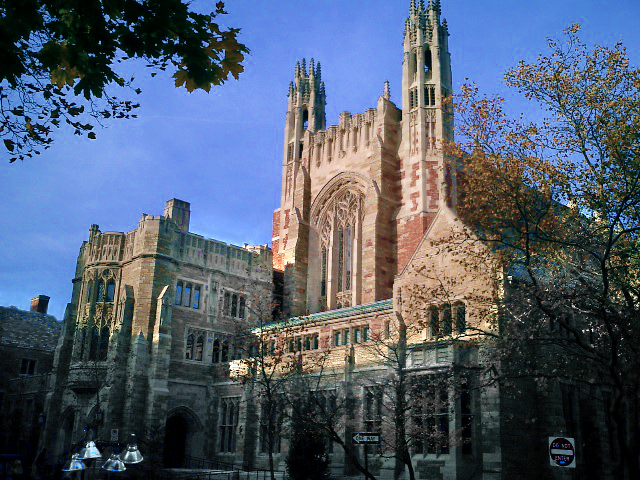
As part of its 300th anniversary celebration, Yale University gathered together some of its foremost faculty and offered an extended series of lectures on the state of American democracy. Collectively entitled “Democratic Vistas,” this wide-ranging series explores American democracy in historical and contemporary terms and looks at how it meshes with other fixtures of our social life — religion, family, economic markets, technological innovation, etc. From this page, you can access all of the illuminating presentations in audio and video, including those by Yale’s President Richard Levin and Richard Brodhead, the former Dean of Yale College and now President of Duke University.
The one caveat worth mentioning is that these talks were recorded not long before 9/11. And, in some respects, this may give the lectures an out-dated feel. Can we really have a valuable discussion about American democracy without addressing 9/11, the war on terror, and the war in Iraq? In some ways no, but in many ways yes. America is still largely America, the same country it was six years ago, and, for the most part, these discerning lectures remain highly relevant today. Indeed, Yale has already uploaded some of them to its new podcast collection on iTunes.
Read More...Culture Kiosque: The Euro Guide to Culture
|
|
|

Support Us
We're hoping to rely on loyal readers, rather than erratic ads. Please click the Donate button and support Open Culture. You can use Paypal, Venmo, Patreon, even Crypto! We thank you!

About Us

Open Culture scours the web for the best educational media. We find the free courses and audio books you need, the language lessons & educational videos you want, and plenty of enlightenment in between.
Advertise With Us

FREE UPDATES!
GET OUR DAILY EMAIL
Get the best cultural and educational resources on the web curated for you in a daily email. We never spam. Unsubscribe at any time.
FOLLOW ON SOCIAL MEDIA

Open Culture editor Dan Colman scours the web for the best educational media. He finds the free courses and audio books you need, the language lessons & movies you want, and plenty of enlightenment in between.
Advertise With Us

