The Great Elephant Escape
Let me set the scene: Not long after the attack on Pearl Harbor, Japan invaded Burma, a “backwater of the British Empire,” hoping to put the Chinese and British at a strategic disadvantage. (Get more details here.) Initially the Japanese campaign met with success, and, in early 1942, the British and local allies beat a retreat, trying to escape over the border to India. But when they reached the border, they found rivers, flooded by monsoons, blocking their way. That’s when a British tea planter named Gyles Mackrell stepped in and moved 200 refugees across the border using the only means available to them — elephants. This amazing story is now being told for the first time, thanks to the Centre of South Asian Studies at the University of Cambridge and its short film (13 minutes) shown above. You can read more about the great elephant escape here.
Read More...Down to the Bone
Every November 2nd, Mexicans celebrate the Day of the Dead. Closely associated with other Catholic holidays (All Saints’ Day and All Souls’ Day), the Day of the Dead gives participants a chance to pray for and remember dearly departed family members and friends. And it’s often carried out in a festive spirit, not one marked by melancholy. As Carlos Fuentes, one of Mexico’s most celebrated writers, once said about death: “We Mexicans don’t advance towards death, we return to it, because death is not the end but the beginning, the start of everything: we descend from death.”
Today, on the Day of the Dead, we give you a claymation film that captures the mood of the holiday — Hasta los huesos or Down to the Bone. René Castillo, a self-taught animator from Guadalajara, wrote and directed the film back in 2001. And it went on to win many international awards for excellence in film. Down to the Bone runs nine minutes, and it’s a wild ride throughout. H/T M.S.
Read More...The Milky Way over Texas
This 45 second timelapse video of the “Galactic Center of the Milky Way” rising over Texas Star Party (2009) just gets more spectacular as it rolls along. William Castleman created this sequence using a Canon EOS-5D, with exposures at 20 and 40 second intervals. This complements nicely Stéphane Guisard’s panoramic view of the Milky Way taken from the Atacama desert in Chile. See the The Milky Way in 360 Degrees here.
Find us on Facebook and Twitter!
Read More...The Best American Science Writing 2010: Free Essays
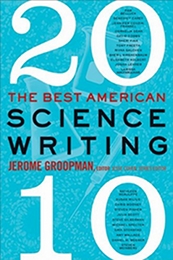 Jerome Groopman, the New Yorker staff writer and Harvard med school prof, has edited The Best American Science Writing 2010 - a new collection that brings together “the most crucial, thought-provoking, and engaging science writing” during the past 12 months. The 368 page book runs $10.19 online. But before you run out and buy it, let me say this: you can read many of the collected essays online for free. The Truth About Grit by Jonah Lehrer; My Genome, My Self by Steven Pinker; Are We Still Evolving? by Kathleen McAuliffe – they’re among 16 essays available online, and they’re all included in a handy list pulled together by Metafilter. Meanwhile, if you want to read these essays later on (when you have some time to delve into longer articles) give Instapaper a try. As I’ve mentioned before, it’s a great way to read texts in a clean format on the iPad, iPhone, and Kindle.
Shakespeare in the Original Voice
This fall, Paul Meier, a theatre professor at the University of Kansas, is working with students to stage the first-ever American rendition of a Shakespeare play – A Midsummer Night’s Dream – in its original pronunciation. As The History Blog writes, there have only been “three other productions of original pronunciation (OP) Shakespeare before this one, 2 at The Globe theater in London, and 1 at Cambridge in the 1950s.” But this difficult project became possible when Meier and his students started working with David Crystal, a linguistics scholar who wrote Pronouncing Shakespeare (Cambridge University Press) in 2005. Prior to the KU production, Crystal consulted on a production of Romeo and Juliet at the Globe theatre on London’s South Bank (mentioned above), and you can listen to audio clips taken from that English performance right here.
Related Content:
What Did Shakespeare Really Look Like
Shakespeare Free on the iPhone
Read More...The Milky Way in 360 Degrees
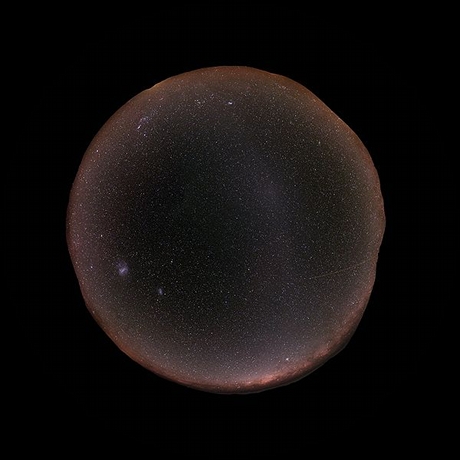
Stéphane Guisard traveled to the Paranal observatory, situated in Chile’s remote Atacama desert, in search of the “darkest sky.” The result? Some amazing zoomable, fisheye images that reveal the darkest of dark skies (including a glimpse of the Gegenschein). And then also this “byproduct”: a 360 degree panoramic view of the Milky Way that lies on the dark sky horizon. You can view Los Cielos de Chile here.
Please note that the page can take a little time to load. But once you’re there, you can toggle around the images and control the views.
Read More...Free Movies: Watch the Classics & Gems Online
 Almost a year ago, we started scouring the web for free movies — for films worth your precious time. We started with 75, and now we’re above 200. What will you find on the ever-growing list of Free Movies Online? Films by Orson Welles, Francis Ford Coppola, Alfred Hitchcock, Stanley Kubrick, David Lynch, Brian DePalma, Jean-Luc Godard, Andrei Tarkovsky, Fritz Lang, Elia Kazan, Howard Hawks, Ida Lupino, Ken Loach, Akira Kurosawa, Billy Wilder, and Martin Scorsese. The list covers many different genres (comedies, film noir, indies, documentaries, short and animated films, even some noteworthy B movies) and spans the entire history of cinema, moving from early silent films to contemporary movies. It also features brilliant performances by major actresses and actors — too many to name right here. For copyright reasons, there’s generally a heavy emphasis on the classics. If you have time to spare, check out the full collection of Free Movies Online. And if we’re missing any good ones, please feel free to send us your tips or add them to the comments section below.
Follow Open Culture on Facebook and Twitter!
Read More...The Office Meets the Twilight Zone
‘The Black Hole’ runs two minutes. Be sure to hang with it until the end. H/T @ellmcgirt
Follow Open Culture on Facebook and Twitter!
Read More...Nikon Small World Photography: The Winners
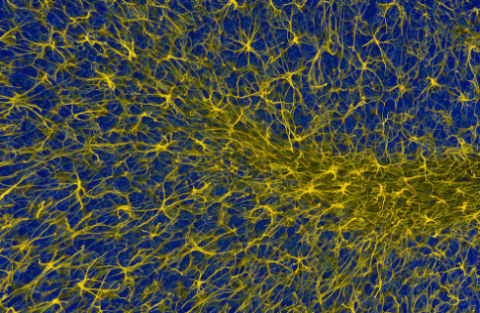
The Nikon International Small World Competition first began in 1974 as a “means to recognize and applaud the efforts of those involved with photography through the light microscope.” A good 36 years later, Nikon named the winners of the 2010 competition, which means we can take another artistic look inside the world of small things, getting down to the very micro level of animals, plants and minerals. Above, you’re looking at an image of glial cells in the cerebellum magnified 400 times. This image and 28 others appear in the always excellent The Big Picture section of the Boston Globe. Also visit a gallery of images on the Nikon site. Thanks to @wesalwan for sending our way.
Read More...Vintage Literary T‑Shirts
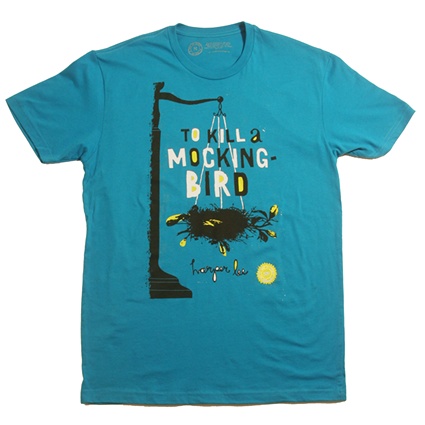
Out of Print Clothing “celebrates the world’s great stories through fashion,” working with artists to design t‑shirts that feature iconic book covers. The catalog lets you choose from Orwell’s Animal Farm, Salinger’s Catcher in the Rye, William S. Burroughs’ Naked Lunch, Bulgakov’s Russian classic Master and Margarita or 29 other vintage shirts, each of which costs a fairly reasonable $28. See the full list of shirts here.
via @AndrewHazlett
Follow Open Culture on Facebook and Twitter!!
Read More...Support Us
We're hoping to rely on loyal readers, rather than erratic ads. Please click the Donate button and support Open Culture. You can use Paypal, Venmo, Patreon, even Crypto! We thank you!

About Us

Open Culture scours the web for the best educational media. We find the free courses and audio books you need, the language lessons & educational videos you want, and plenty of enlightenment in between.
Advertise With Us

FREE UPDATES!
GET OUR DAILY EMAIL
Get the best cultural and educational resources on the web curated for you in a daily email. We never spam. Unsubscribe at any time.
FOLLOW ON SOCIAL MEDIA

Open Culture editor Dan Colman scours the web for the best educational media. He finds the free courses and audio books you need, the language lessons & movies you want, and plenty of enlightenment in between.
Advertise With Us

